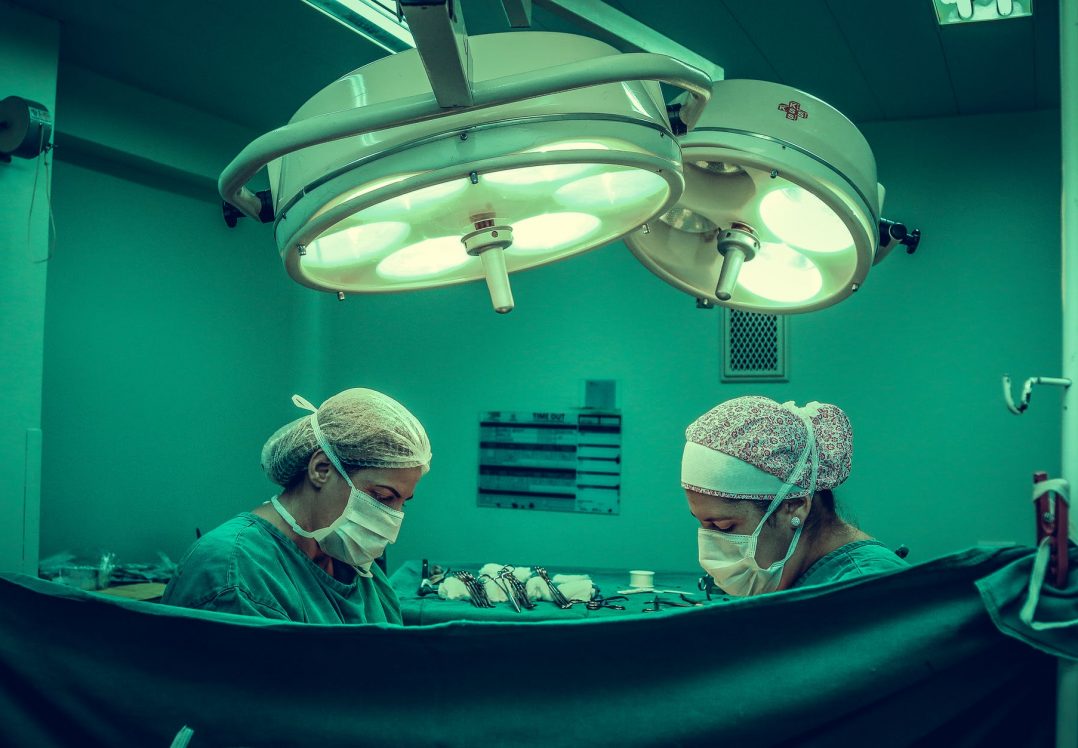


What has changed for the Ukrainians with the introduction of the Law “On the use of transplantation of anatomical materials to human”?
Many hopes were pinned on the new law on transplantation of organ transplants from corpses, which in Ukraine was finally normalized because it is an opportunity to save many lives. But experts warned that with the introduction of it into action, there will be many problems because this requires mechanism ‒ by-laws that will allow the law to work fully. In January, there were indeed claims that the transplant of organs was blocked by the current law, because doctors were afraid of criminal liability. Therefore, DUMKA decided to find out what the main risks of the new law are and are there any grounds for those horror stories that are being discussed in society.
Problem with numbers
According to statistics, 89 kidney transplants from a related donor and 6 from a deceased, 9 liver transplants from a related donor were performed last year in Ukraine. Also, in the Kyiv center of transplantations there were more than 60 autologous bone marrow transplants (this is when a person receives its own anatomical material) and at “Okhmatdyt”, 12 transplants from a related donor, 1 autologous and 4 transplants from one of the parents.
In previous years, averages of 130-140 organ transplantations were performed annually. Transplantation of organs from the dead is 4-15% of the total number of such operations. And in the past two decades, only 8 heart transplants have been performed, while the annual need for them is up to 1,500. That is, real needs are hundreds of times more than what is being done. The main reason for the inhibition in Ukraine of the development of this area of medicine, according to the authors of the law, is precisely the lack of the necessary number of organs for transplantation. Thus, according to approximate estimates, between 40 and 60 potential donors die every year per million citizens, and experts say that this is almost 3,000 donors, who could save the lives of 10,000 patients.

Therefore, this law was awaited primarily by those people, whose lives can be saved only due to the organs, transplanted from the deceased. As the lawyer in the field of medical and pharmaceutical law Radmila Hrevtsova noted in the commentary to DUMKA, the new law primarily expanded the possibilities of lifetime donation. “In addition to the allowed and earlier family donation, the so-called “cross-donation” is also provided, the decision of which can be taken by the council of doctors if the recipient cannot be transplanted from a living donor from his close relatives or family members (for example, through immunological incompatibility). At the same time, the law establishes important guarantees for alive donors,” she explained.
The presumption of consent is not perceived by the society
The most terrifying story and at the same time the biggest myth, which a considerable part of the society perceives at face value, is that with the introduction of the new law on organ transplantation from corpses, the Ukrainians would be caught in the dark lanes and would be disassembled. But since January of this year, this is nothing more than a horror story and nothing more than a myth. And that’s why. The fact is that at the drafting stage of the bill, which lasted more than one year (its first version came to the Verkhovna Rada in August 2015), besides normalizing some purely medical things and responsibility for violations in this area, an important for society is the question: which approach – the presumption of consent or disagreement should be put at the heart of the law.
In short, in the case of presumption of consent, this means that a person by default agrees that after his death his organs can be used for transplantation to those, who need it. The presumption of disagreement means that by default organs cannot be used, but only when a person gave his consent for this during his lifetime, which was recorded accordingly (in a notarized statement). In other countries, there are both practices, and it works well there. Thus, the presumption of disagreement is legislatively fixed, for example, in the United States, Portugal, and Denmark, but consent is in Spain, Belgium, and France.
However, Ukrainian society feared that in our country the presumption of consent could lead to unpredictable things ‒ for example kidnapping people for organs. The attitude of the Ukrainians towards the presumption of consent is well characterized by the level of support for a petition, registered more than 2 years ago on the website of the head of state, the authors of which asked for the presumption of consent to be provided for in the law. This petition was signed by as many as… 199 people, so the answer to the question “Does our society support the presumption of consent?” is more than obvious. However, with the adoption of the new law, all these fears lose any basis ‒ now we have the presumption of disagreement laid down by law. That is, if a person oneself, with clarity of mind and aware of own actions, does not give a written consent to use its organs after death (and this must be entered in a special register, which should appear later), then one’s organs must not be touched, if authorized relatives do not give permission for this.
Transplant doctors note that the abuses in this area are impossible purely technically: in Ukraine, not so many hospitals do organ transplants, and all of them are state-owned. For example, if we are talking about a heart, kidney or liver transplant, only 6 medical institutions have the right and qualification: in Kyiv ‒ the Shalimov Institute of Surgery and Transplantology, in Kharkiv ‒ the Regional Clinical Center for Urology and Nephrology named after Shapoval, and Lviv, Odesa, Zaporizhia and Dnipropetrovsk regional clinical hospitals. Private clinics are not on this list. A lot of people are usually involved in the operation itself, and not only medical teams, but also logisticians, when the body needs to be quickly delivered to the operating room, and a bunch of other specialists. In the postoperative period also a lot of people are involved, who help the patient recover. To organize all this in such a way that no one suspects anything is unreal.
By the way, the experts, with whom we talked on this issue, note that the average number of organ transplants in countries with the presumption of disagreement and presumption of consent is almost the same. In the opinion of lawyers, the procedure for the taking of organs, established by this law, makes it possible to better protect the rights and legitimate interests of people. According to Radmila Hrevtsova, you can even revoke previously submitted consent, and if the deceased did not express own consent or disagreement to the posthumous donation during lifetime, if he or she did not identify one’s plenipotentiary representative, the consent to the removal of anatomical materials for transplantation is requested from one’s spouse or from close relatives of this person. If a person has no relatives left, then this question will be decided by the one, who buries the deceased. At the same time, it is not possible at all to take organs for transplantation from deceased orphan children or children, deprived of parental care, from incapacitated and unidentified persons, as well as from those, who died during the hostilities.
They want to delay the creation of the USTIS
If everything is clear with this question, then the remaining innovations, introduced by the law, still create more problems than help transplantologists save someone’s life. The transplantologists themselves are now reluctant to contact, explaining that they need a little time for everything to get into its place. Human rights activists say that the biggest stumbling block was the fact that the Ministry of Health couldn’t cope with all of it timely; doctors need to work in the legal field with secondary legislation. But in the Ministry of Health they say that transplantation does not stop and at that stage, their orders, which have worked so far, continue to operate.
“Today it was important to adopt the resolution of the Cabinet of Ministers, which approved the forms of consent to donation,” a member of the working group under the Ministry of Health on transplantation Maryna Slobodnichenko explains to DUMKA. “Other regulations, the same orders of the Ministry of Health, which regulate, for example, the diagnosis of brain death, the procedure for family transplantation and others, remain in force. But since we have a new law, the ministry is now simply updating these bylaws. But the norms of these acts themselves, the procedure for transplantation remain unchanged since they do not contradict the law.”
So far, the USTIS (The Unified State Transplant Information System), which should have appeared before October of last year, has not been created. And now, according to the deputy chairman of the Verkhovna Rada Committee on Public Health, MP Iryna Sysoyenko, we have to “save the transplants”. Therefore, there are up to 2 draft amendments to the law, which has just been enacted, already registered in the Parliament. In particular, they propose to postpone the beginning of the work of the USTIS for a year ‒ until January 2020.
“According to the law, which started to work from January 1 of this year, the Unified State Information System of Transplantation could indeed have been created last year until October,” Maryna Slobodnichenko notes, “but such a requirement of the law turned out to be unfounded. Because in the 4 months that have been allocated for the development of this serious software product, which should include 9 registries ‒ donors, recipients, anatomical materials (organs, tissues, cells), health care institutions carrying out such transplants, transplant coordinators, etc., ‒ to create such a complex and voluminous product is impossible physically. After all, we are talking not only about the system with registries itself but also about the corresponding security system. And in order for the USTIS to start functioning, it is necessary to start the process of filling these registries with the necessary data.”
So far, there is no transplant-coordination system in Ukraine, which should provide, relatively speaking, the opportunity for the recipient to find the necessary donor body. And people wait for years, most, without any successes are dying. And those, who find the money for this, go for operations in Belarus, where a kidney transplant costs $ 70,000, or India. In the profile ministry, they only managed to develop qualification requirements for new specialists, and in the Zaporizhia Medical Academy of Postgraduate Education ‒ a program for training doctors of a new specialty.
However, the Ministry of Health added that no one is sitting idly by and they had already acquired software for bone marrow donors with international access PROMETEUS, even financed the purchase of new software for the USTIS, which should be available soon. They also donated funds from one of the international organizations, which should purchase the most necessary modern medical equipment for basic hospitals, where they perform transplants in Ukraine.
Insurance against black transplantologists
And those, who are so conscious that they plan to share their organs after death with those, who need it, and those, who refrain from taking such a step so far, will sleep better if they know what those, who may resort to abuse are at risk in this industry. The new law introduced certain changes to the current Criminal Code of Ukraine ‒ and now the punishment for violating the transplant procedure established by law is clearly spelled out in its 143rd article. For such actions may face 50 non-taxable minimum fine, and three years in prison.
If, on the other hand, an organ is removed from a person by deception or coercion, it can end up with 5 years in prison. And if a person, who, for example, was financially dependent, will be forced to become a donor, it will be 7 years in prison. Illegal trafficking in anatomical materials of a human is punishable by up to five years in prison. If we are talking about such actions, committed by a group of people in prior agreement or participation in transnational organizations, engaged in such activities, then this is already imprisonment for a term from 5 to 8 years, not to mention depriving them of the right to engage in certain activities.
By the way, the topic of criminal liability appeared a few days ago, even from this angle ‒ they began to say that the new law practically stopped the transplants that had been planned since last year, because of the delay in the creation of the USTIS, doctors are afraid of breaking the law. “This is not the case,” Maryna Slobodnichenko explains, “the lack of the USTIS does not affect the transplantation process itself or stop operations, in any way. The fact is that the transplantation itself is divided into familial and cadaveric. In Ukraine, only family transplantation was actually carried out, that is, transplants from relatives. Such operations are going now. For example, at the National Children’s Specialized Hospital “Okhmatdyt”, bone marrow transplantation from a related donor was recently carried out. The USTIS is mainly concerned with cadaveric transplantation when it is necessary to search for a donor-recipient. But while this system is not yet available, the donor-recipient couple can be selected on the basis of consultation of doctors, who are guided only by the requirements of the law on transplantation and by-laws. Such a system has worked so far and will work until the creation of the USTIS.”
As the Deputy Minister of Health Roman Ilyk, who deals with the problems of transplantation, on his Facebook page, specifies that doctors, who perform planned operations, have nothing to fear of, since criminal responsibility is established precisely for violating the procedure of transplantation (algorithm of operations), which is clearly stated in 13th article of the new law. If there are such violations that qualify as inaction, sabotage, or negligence of health workers, then criminal liability can be applied, the official explains, and the process of entering information into the electronic database of the USTIS by transplant coordinator is not an algorithm of transplantation, but its organization. For this, there is no criminal liability, and the issue is settled. Therefore, it is manipulation to say that if we do not have the Unified State Transplant Information System the doctor, who will perform the transplantation, may be behind the bars. However, we shouldn’t delay the creation of this system, as well as the establishment of transplant coordination: people, for whom organ transplantation from the deceased is the last hope for life cannot wait for their turn.
By Larysa Vyshynska