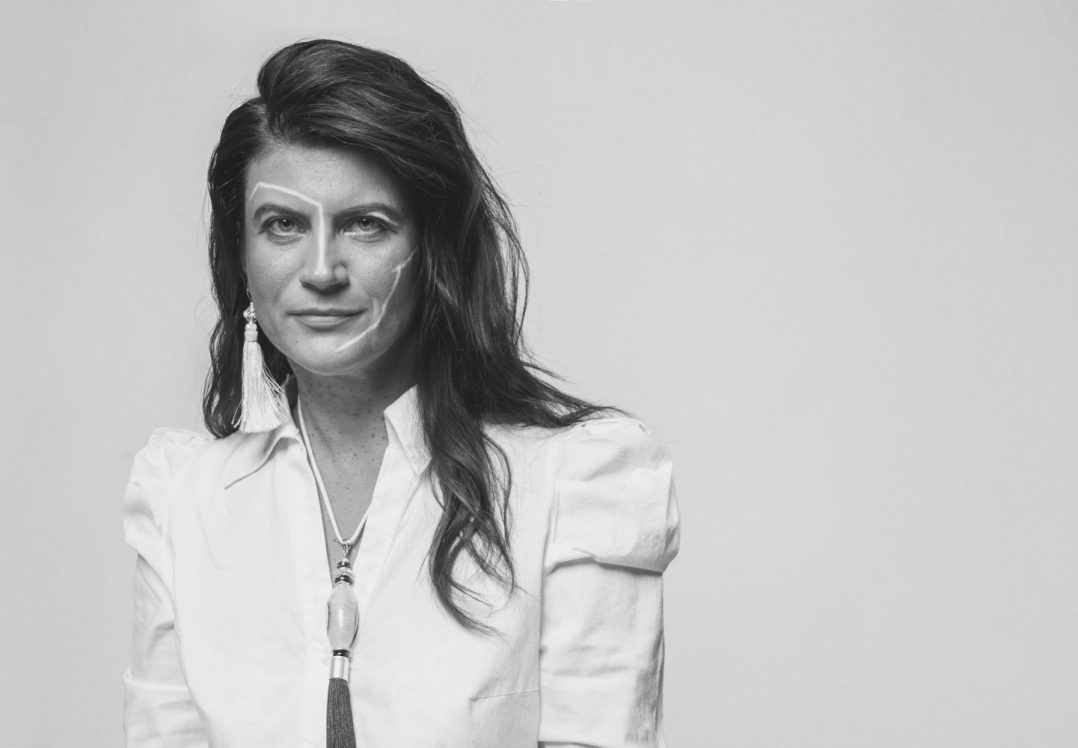


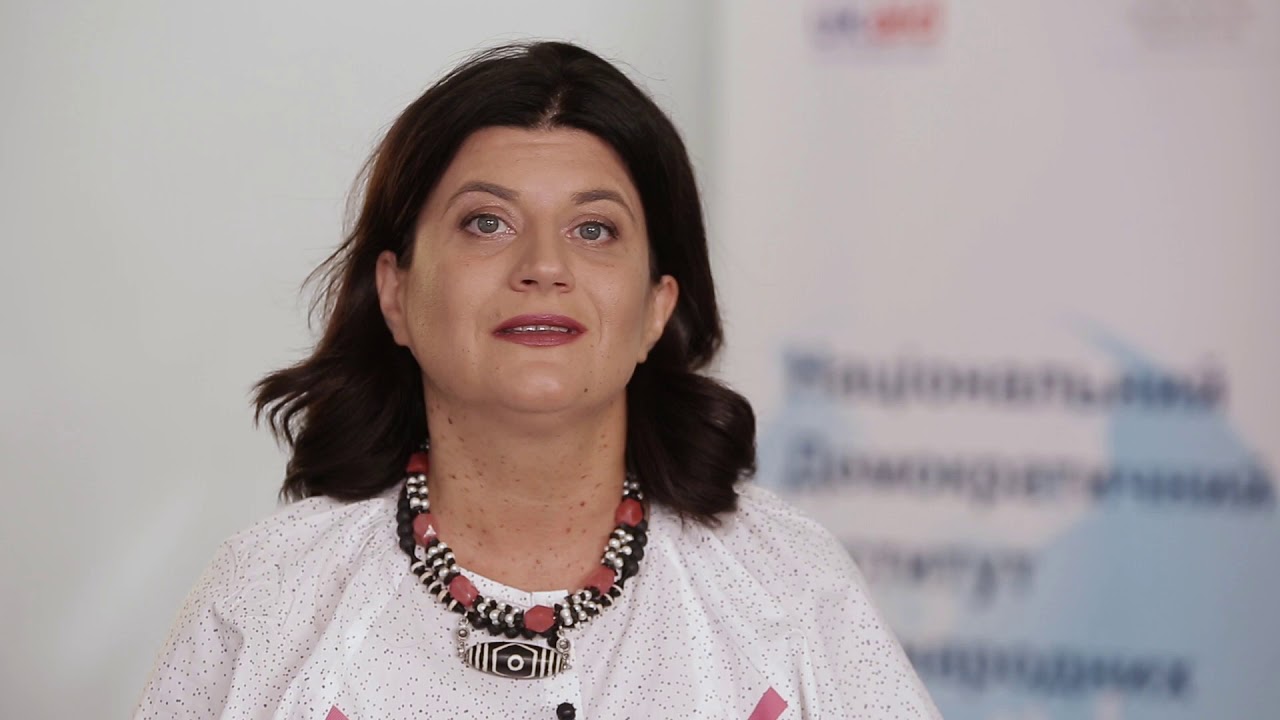
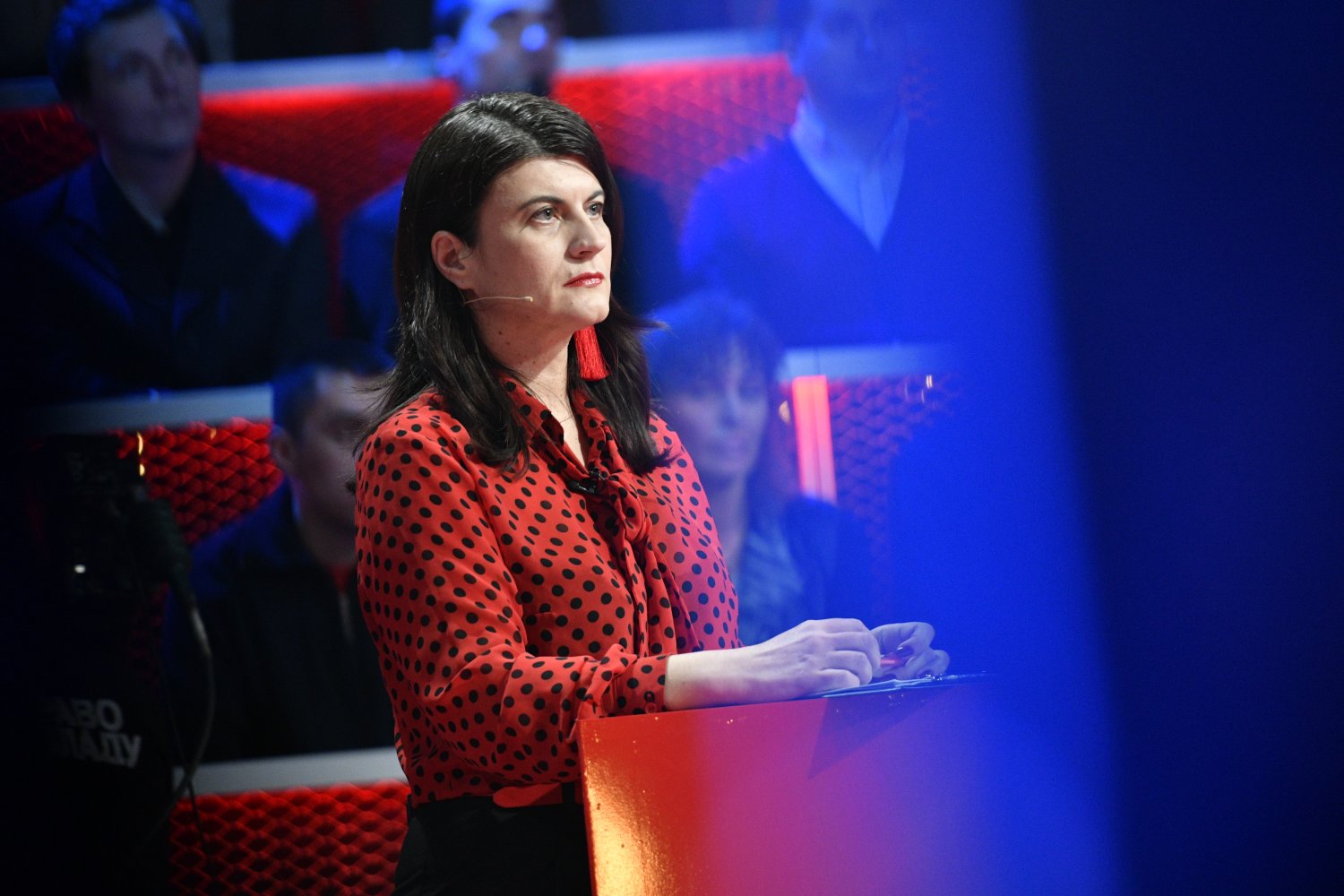
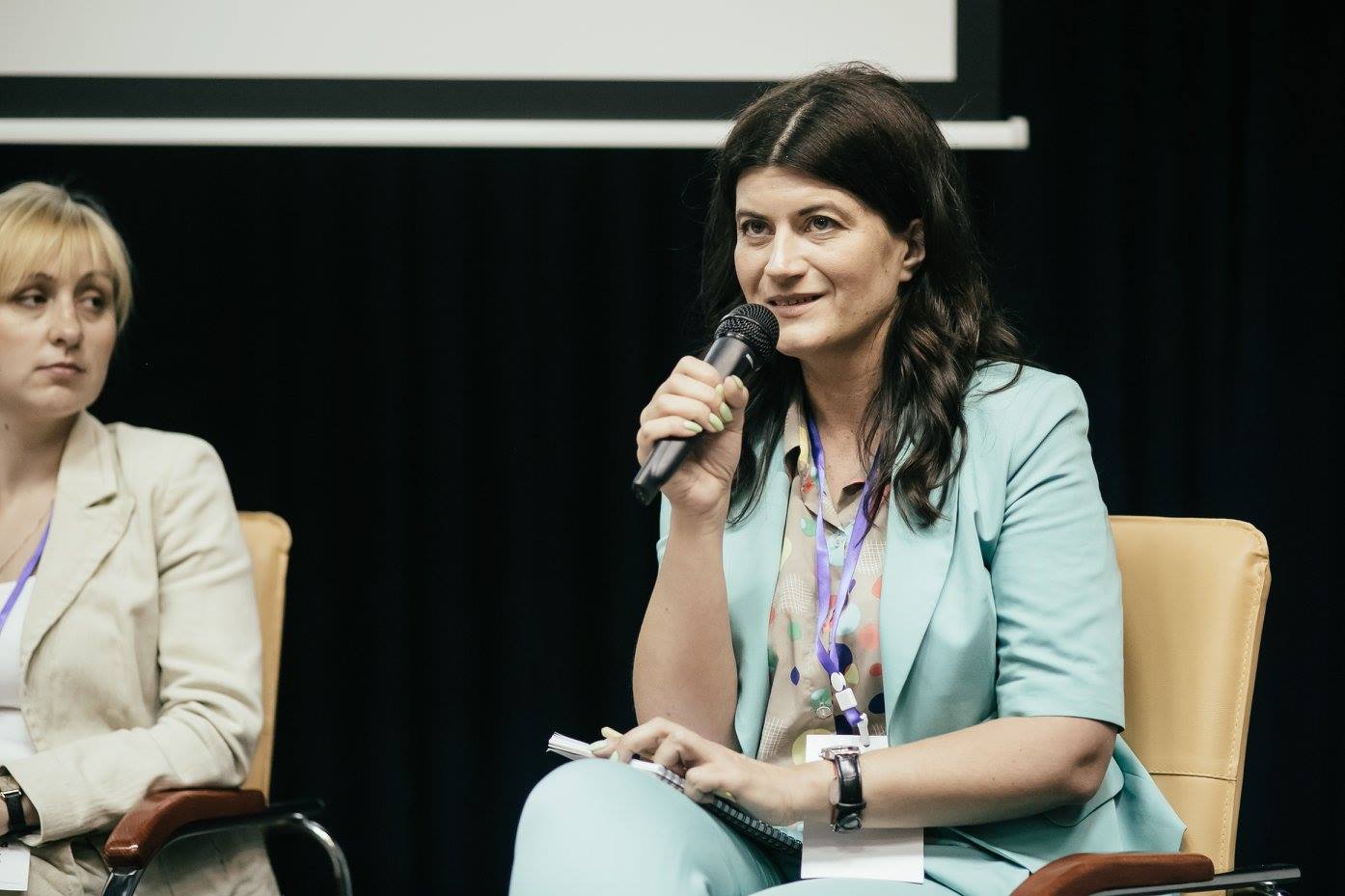
As a child, she used to collect sweats, scattered at funerals, and dreamed of exposing criminals and defending justice. The top three values that have shaped her are dignity, respect and justice. About childhood, the path to human rights and writing, open society and moments when it is not necessary to turn the second cheek, – the way Larysa Denysenko, a writer, lawyer and a journalist, herself sees it in the section “Who is” on DUMKA.
About childhood
Remembering her childhood, the writer confesses that as a child she was lively and… dangerous. She could pick up the sweats scattered at funerals and treat her parents, or swing… on the coffin lid because it looked like a boat.
“I wrote threatening notes to Maksym Rylsky, whose portrait I was scared of in Holosiivsky Park. I tracked down the criminals and troubled decent adults. I created real marshes near the house where the Baskervilles dog lived, hid in the bushes and howled like a dog from the film. I stole watermelon to convince my friends that a) I can steal it; b) the sellers won’t get me; c) I can hold it; d) I won’t be caught by the police. I can talk about my “feats” for a very long time.”
About the values that she learned
Dignity, respect and justice – Denysenko calls these three values paramount and adds that her parents never tied her up to clichés. The only thing they asked for was not to give up what she started working on.
“Psychologists say that a child understands what justice is when she is four years old. That is, she does not yet make a definition but can already talk about it. That’s why I love to play this kind of game with my kids – we imagine the situation: in the garden, everyone does something bad but you were the only one caught, is that right? Kids usually say no. Then I say, “Wait, but you did it.” Children think and say that it is better not to do wrong.
I remember that in my childhood it was important for me that no one was unjustifiably offended. I am a pretty peaceful person, but twice in my life, I got into fights. The first time when they beat a little boy. The second time when they tortured a cat in front of me. I think when one resorts to force, you must always intervene. Although, when you are not asked for this help, you should stand aside.”
How a lawyer became a writer
More than ten years ago, answering questions from journalists, how it happened that a successful lawyer suddenly became a writer, Larysa Denysenko noted: in fact, she always wrote. Finally, one has to be able to write the law.
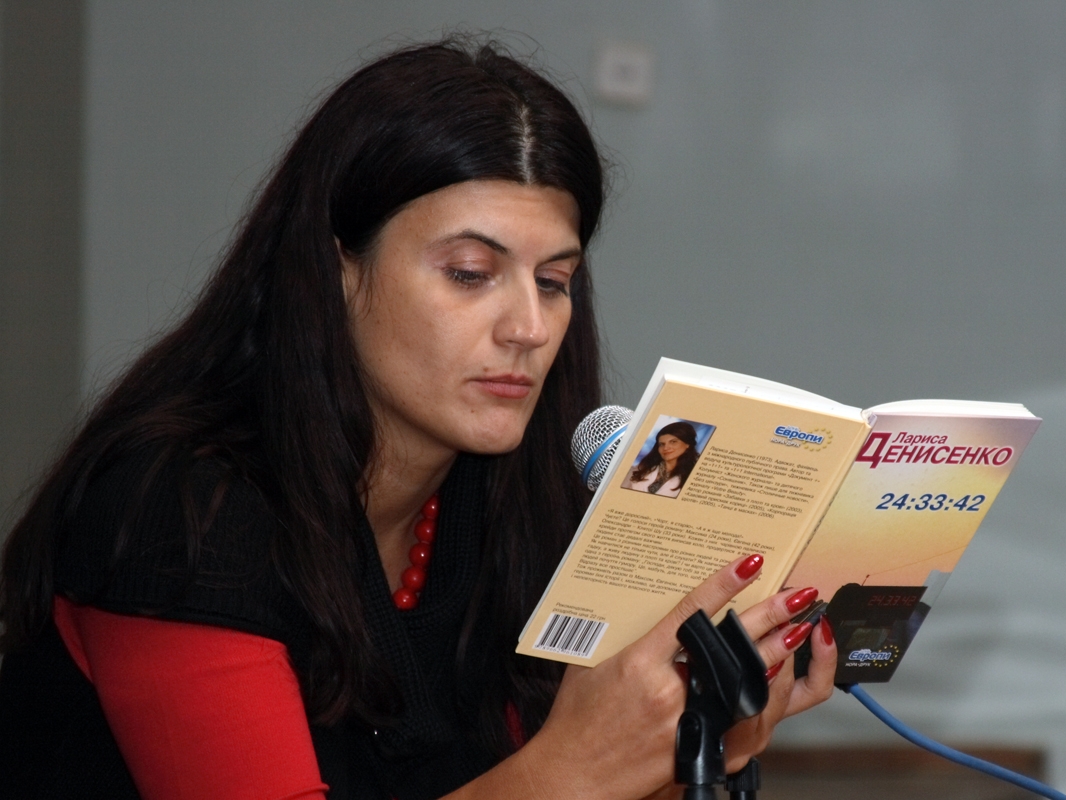
“I’m joking, of course, but there’s something in it. Since childhood, I wrote something: for school, for friends, for relatives, for strangers. I liked to send letters to different cities to fictitious addresses. The stories were dedicated to friends and my beloved ones. Some of my poems are kept by my classmates, we recently reread those poems, laughed because they are funny and not very decent. However, I never saw myself as a writer. But once I saw an advertisement for the Coronation of the Word contest, I grunted under my breath that there were no modern urban novels, and then I knuckled down and forced myself to write my own modern urban novel, if I’m such a smart girl. So everything began. Writing the first text about “a toy made of flesh and blood” prompted me to write the next one – “coffee flavour of cinnamon”. So my texts continue to push me, and characters to push around.”
About the combination of different activities
She combines advocacy, columnism, writing, journalism and even has time to be an active user of social networks. It seems that Denysenko has learned to combine completely unlike activities, but she denies: in fact, it is all similar.
“These spheres are related to the Word. Law degree is a great base for any humanitarian profession. In my life, all this is harmoniously combined, I have the opportunity to develop, to change focus and to be active and efficient. A lawyer who is not only good at the process but also at the entire legal news stream can give a head start to colleagues. A writer who is good at law also has advantages. A media woman who can expertly speak with lawyers is also a huge plus.”
About time and rest
Continuous work, of course, requires appropriate rest. However, the journalist confesses: she doesn’t rest but simply changes the type of work.
“Sometimes there are states that make you want to either stay in the hospital or take a rest, rather than work 16 hours a day with fever and cough. But it quickly goes down. Because I really love work and my pace. One of my husbands said, “What can I do? I was made by largo. And you – by allegro.” He taught me to respect the rhythms and tempo of other people, to realize it and accept, but it is still annoying sometimes. When you are completely ready for a party, and others sit in the bathroom, smoke on the balcony, drink coffee – they are largoing, don’t rush.
About slap and the second cheek
The author points out that there are times when one doesn’t have to blindly adhere to Christian principles and turn the second cheek for a slap. Sometimes the right answer is the best reaction to bad behaviour.
“When during the interview, one calls me in a pettishly diminutive manner – Larysochko, I call it a suffix disrespect. It is worth pointing out how inappropriate it is. It is not necessary to call the interlocutor “Sashechko” or “Kolichko”, you can just answer “spasybichky” (thank you) – a sensible person would get it.
I had a producer who liked to humiliate people, regardless of gender. For women, he had one strategy, for men another. He spoke very quietly so that you have to strain your ears. When one talks this way, you lean forward to catch it – even this pose was humiliating. People came out of his office in tears.
When it was time for me and my two colleagues to come in, I sat on the edge of the chair and began to speak quietly. He had nothing to say, so he cleared his throat and said, “Let’s sit down at the negotiating table.” And he began to treat us quite differently.
I don’t like responding to unfriendly behaviour the same way, but sometimes it’s one of the easiest ways to gain back respect for yourself and the people of your team. There are times when you don’t want to be a Christian and turn the second cheek for a slap.”
About the values of the open society
Values of the open society, that is, a society where everyone recognizes the views, rights and interests of others, according to Larysa Denysenko, everyone sees in their own way.
“Research about what the Ukrainians know and think about human rights calls freedom, tolerance, respect for other people, independence – the values. It seems to me to be the top five values.
When we talk about freedom, we must be aware that there is no freedom without responsibility. When we talk about tolerance, we must be aware that there should be no tolerance for discrimination and violence. If we are talking about independence, we must again be aware of the level of responsibility and freedom.
The rule of law is also not easy to interpret since laws can be enacted differently. The rule of law means that the primacy of human rights must work for us, that is, in the court, when they see a law that is contrary to human rights, they must make decisions based on this principle. Not so often do our courts use it, but the rule of law, democracy are the values of the open society, and democracy without freedom, responsibility and independence cannot function properly, as we would like it to be.”
On the main challenges of the modern human rights movement
According to Denysenko, there are challenges both internal and external. Yes, internal problems are not enough openness, understanding and involvement. The lawyer emphasizes: it is necessary to develop joint projects, set more ambitious tasks, act together.
“However, there are now examples of unity. The efforts of different organizations should be supported, not devalued. And, I think, it is necessary to cooperate and create joint projects with NGOs that are believed to be far from human rights issues, that is not true. We can organize co-training because all organizations are expert-saturated.
The main challenge is armed conflict. It makes our efforts more understandable, the work needed, and us – more visible. But it affects people by dividing the world into black and white. By prioritized and not important. It denies the other colours. And we should not be weary of explaining that, yes, we live in difficult times, but human rights and freedoms are not secondary, there is no hierarchy of rights, we must defend here and now and not wait for the ideal situation.”
About weird reactions to feminism, gender and sexual orientation
Ms Denysenko stresses that the whole problem is a misunderstanding of what is going on. Yes, still people believe that feminism is about helping with bags, giving flowers and holding the doors, not about payment rates, responsibility in the family and towards yourself.
“I call these stereotypes ‘xenophobosaurus’. Someone has a ponytail. Someone has a stuck claw. And someone has a whole xenophobosaurus that exhales xenophobic fire. A person may not even admit it.
Some women who have succeeded in their spheres have an interesting transformation of misogyny. Like, if I suffered and broke through, then “you don’t complain that someone gets on your way”. This position humiliates other people.
Myths about feminism are created by both the church and the secular state. In the folk songs and proverbs, the theme of domestic violence is widespread, there are many anecdotes and jokes about the mother-in-law, daughter-in-law… They concentrate on women and take it out on them. This is one of the usual frames of cohabitation. So when you try to straighten up and raise your shoulders, you are driven again into that frame.”
Many authorities when hearing about the Istanbul Convention, immediately assert that gender and sexual orientation are not something inherent in our mentality. Denysenko responds: the most difficult task is to explain ignorance.
“I cannot explain why there is such a wild behaviour of people who represent the authorities and who are able to read what gender is. People have chosen them – populism works very well for us. In addition, politicians are often aware of who can be a partner in any political game. And in this case, the Council of Churches came on the scene. I cannot explain why the church is scared of the word ‘gender’.
I really don’t like that they start speculating and putting on the forefront not the main but terminological things. If they scare you, you should read more. In general, it is not too cosy to live in a country where the words ‘juvenile justice’ and ‘gender’ scare people more than ‘corruption’ and ‘violence’.”
Text by Dmytro Zhuravel
The material was collected from numerous interviews, speeches, presentations, and messages of Larysa Denysenko.