

This city is known as a point on the map, from where the civil war and occupation have begun, as the locals themselves believe. But it has its own, not yet revealed legend, much bigger than these sad historical events.
Magic of Nelya Shtepa
Vasyl Khomenko, head of the civic association “Sich”, the Union of Patriots of the Sloviansk Region and businessman himself says that he drives guests through the town free of charge in order for them to “take off rose-colored glasses”. His own business (he sells household chemical goods) wasn’t going very well, but he really likes living in Sloviansk. He came here in the 1970’s from Russia, where he lived in Tashara village of Moskovsky district in Novosibirsk region. He recalls: “It was a terrible dump, and my mother saved me from there. Just imagine: there was wooden asphalt! It is still there. It’s like columns, and on them – half a meter of a deck. People walk on it both in winter and in the fall. Otherwise, you won’t move further at all, because during the winter snow level reaches your chest”. We are walking down the streets of Sloviansk, which from the plethora of trees, sometimes are similar to the forest. Vasyl says: “Till 2014 here, I felt as a lodger, and today this is my life, my city. Now I can ask the authorities: “Why there is no money, why there is no order? Why in schools and kindergartens for four years, mercury is being collected, and nobody takes it out?”
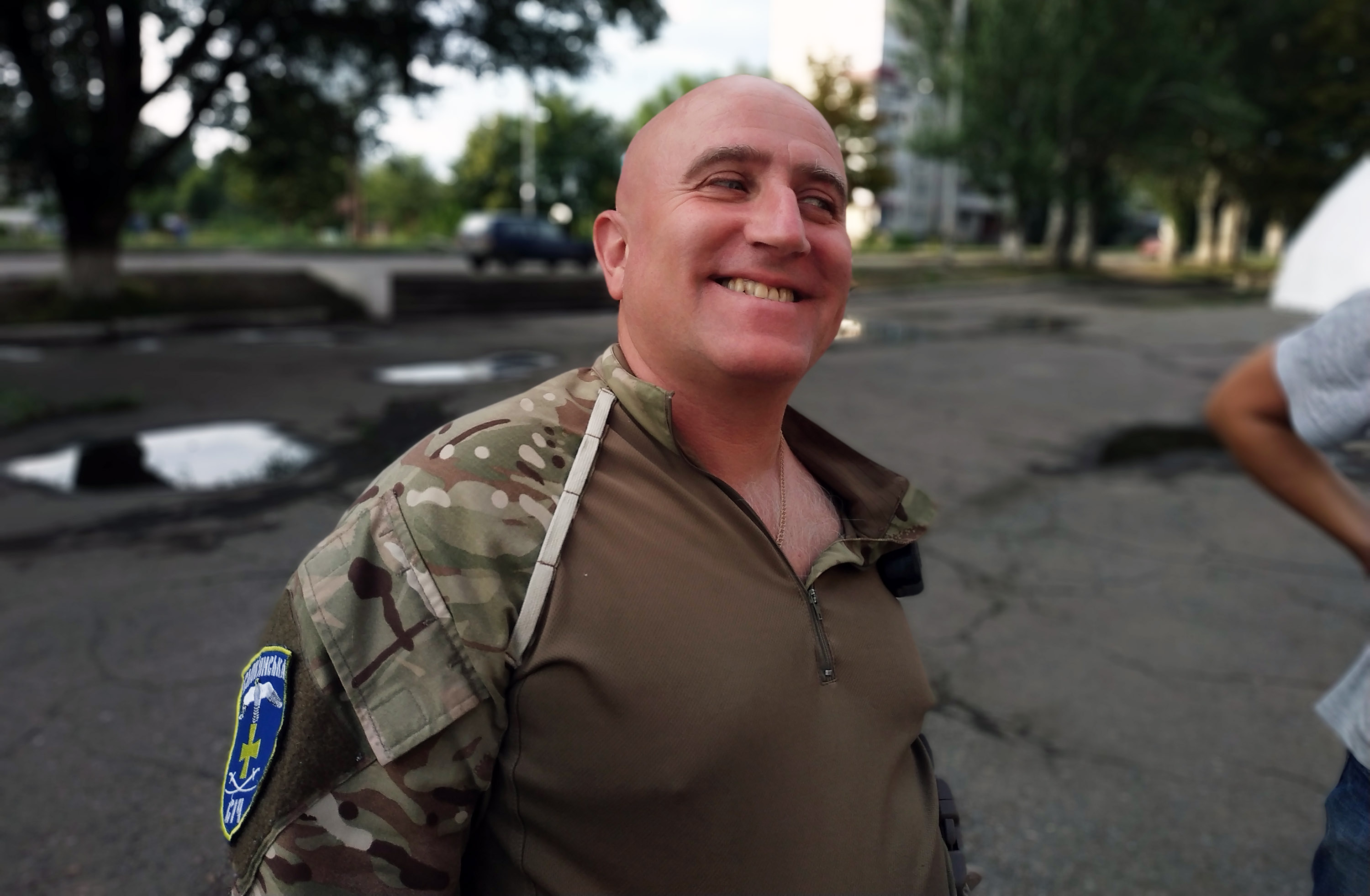
Vasyl Khomenko
Vasyl made a political performance: he brought a can with the label “Mercury” on it to the meeting of the city councils. The deputy mayor was very frightened. Because of this, they urgently called the police, evacuated everybody who was present, and a criminal case was opened against the Vasyl under Article 259 “Deliberately false report on the threat to the safety of citizens, destruction or damage to the objects of property”. But he liked it even more: now journalists are coming to the courtroom, and he has an opportunity to put his demands in front of the cameras of TV channels. It seems that this struggle gave its result: according to him, mercury lamps together with wastes, at last, were utilized.
Vasyl’s biggest concerns are the old authorities, representatives of which have not disappeared. Nelya Shtepa the one that is accused of creating a terrorist group is now free and has a real influence on the politics in the town. In June, one local website offered residents of the city to express their opinion on whether Nelya Shtepa will run for the mayor on next elections in Sloviansk. Only 174 people have voted, 66 have chosen the answer “what kind of elections – her place is in prison”, the other 64 chose – “of course, she is the best head of Sloviansk for all the independence years”. Persona of the ex-mayor here is in the spotlight: literally, all her statements are immediately quoted in social networks if it’s a record of a telephone conversation, it is sent to each other, for the comments. Vasyl couldn’t resist and turned on the record of her conversations to me as well. “All Russia supporters are delighted with her because she is lying, pleasantly”, he says. Vasyl explains that by means of the kickbacks and corruption, Shtepa managed to attract huge donations to the city budget, but now it’s stopped, so dissatisfied people are waiting for a return of the former head of the city.
Vasyl says: “All this turmoil began with the fact that local officials decided to separate themselves from Kyiv. They armed the separatists from local marginal groups, they thought they will control this process; however, Russia has unexpectedly intervened. Nevertheless, everything turned out in the way they hadn’t expected”.
They were shooting from the mental hospital
Suddenly I notice an interesting sculpture. This is a monument to the first shuttle-entrepreneur that was opened at the entrance to the market 12 years ago. In the back pocket of his jeans, there is a university diploma. It appeared to be completely unnecessary for shuttle trade. Shuttle-entrepreneur crosses a deep rift – a symbolic image of the old Soviet era and a new world. Today, this sculpture is a little bit obsolete: for a long time Vasyl hasn’t been using a hand truck, now he has a big minibus. At the same time, this sculpture got a new meaning: shuttle-entrepreneurs constantly operating between free and occupied territories. And from there, behind the demarcation line refugees are fleeing with the same bags and suitcases that shuttle-traders had.
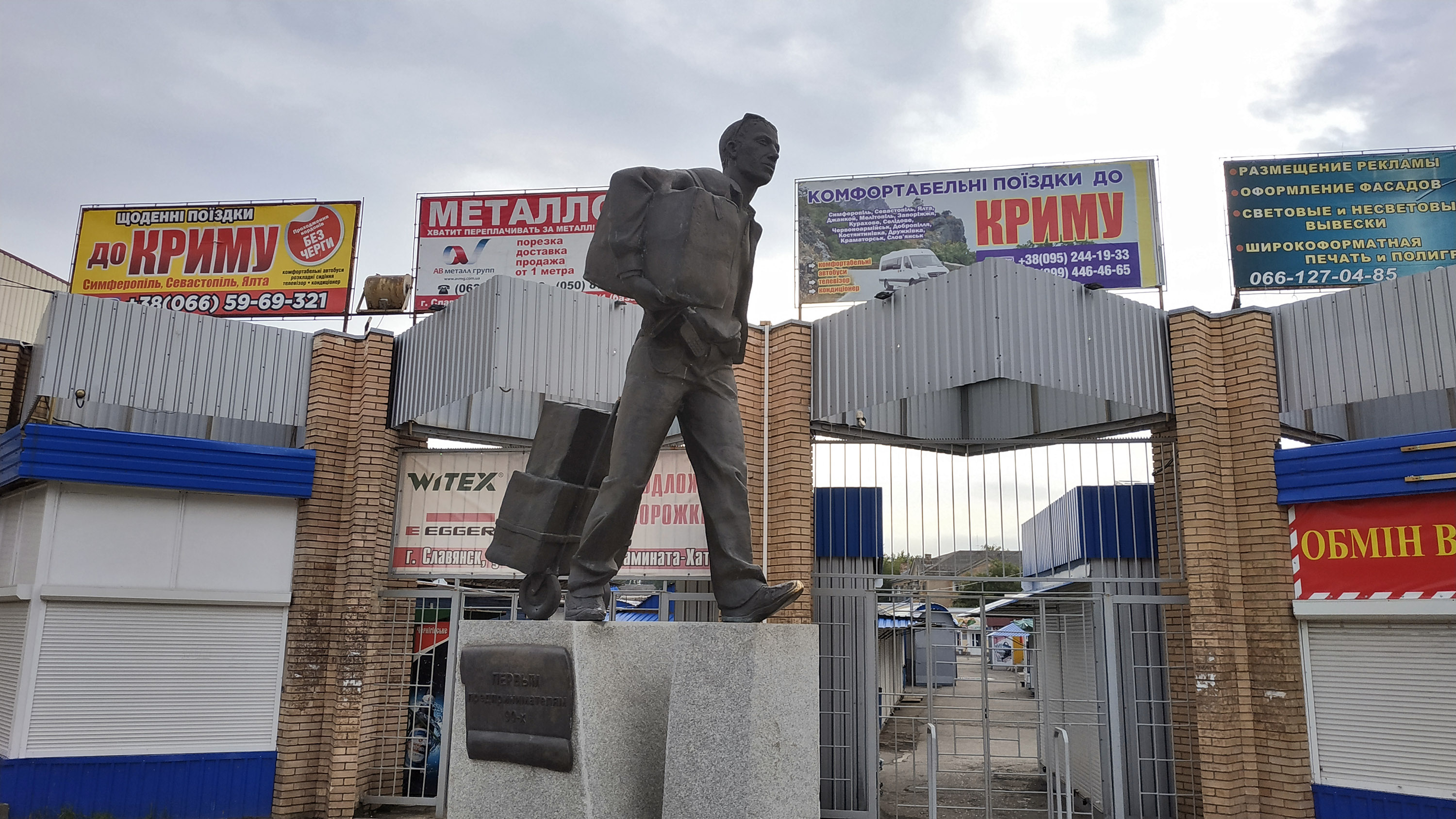
“Shuttle-entrepreneur”
Local journalist Oleksandr Slovyanets asks not to mention his real surname, because his web-page is on “the blacklist of DPR (Donetsk People’s Republic)”. Together with him and Vasyl Khomenko we finally arrive at the hill of the Semenivka district on the outskirts of Sloviansk. The local mental hospital is situated over there. In spring 2014 there were 420 patients, including Chernobyl and Afghanistan veterans, people who suffered from ventures of the Soviet Union. There were also a lot of children and veterans of the Second World War. In May 2014 there were battles here. Strelkov’s gang chose the buildings of the psychiatric hospital as their stronghold. Apparently, it is very symbolic that the separatists lived in the wards, instead of patients affected by schizophrenia and persecution mania. They were firing directly from the windows, at the city that could be seen clearly from the hill, it was an easy spot. “Our guys were coming from the Izyum side. It was very important for them to keep the strategic crossroads on the exit from the city,” Oleksandr recalls. The Ukrainian military, of course, fired back. The militants drove patients and staff out before the fight. However, when the first shoot-outs began, doctors literally had to lie down on the ground.
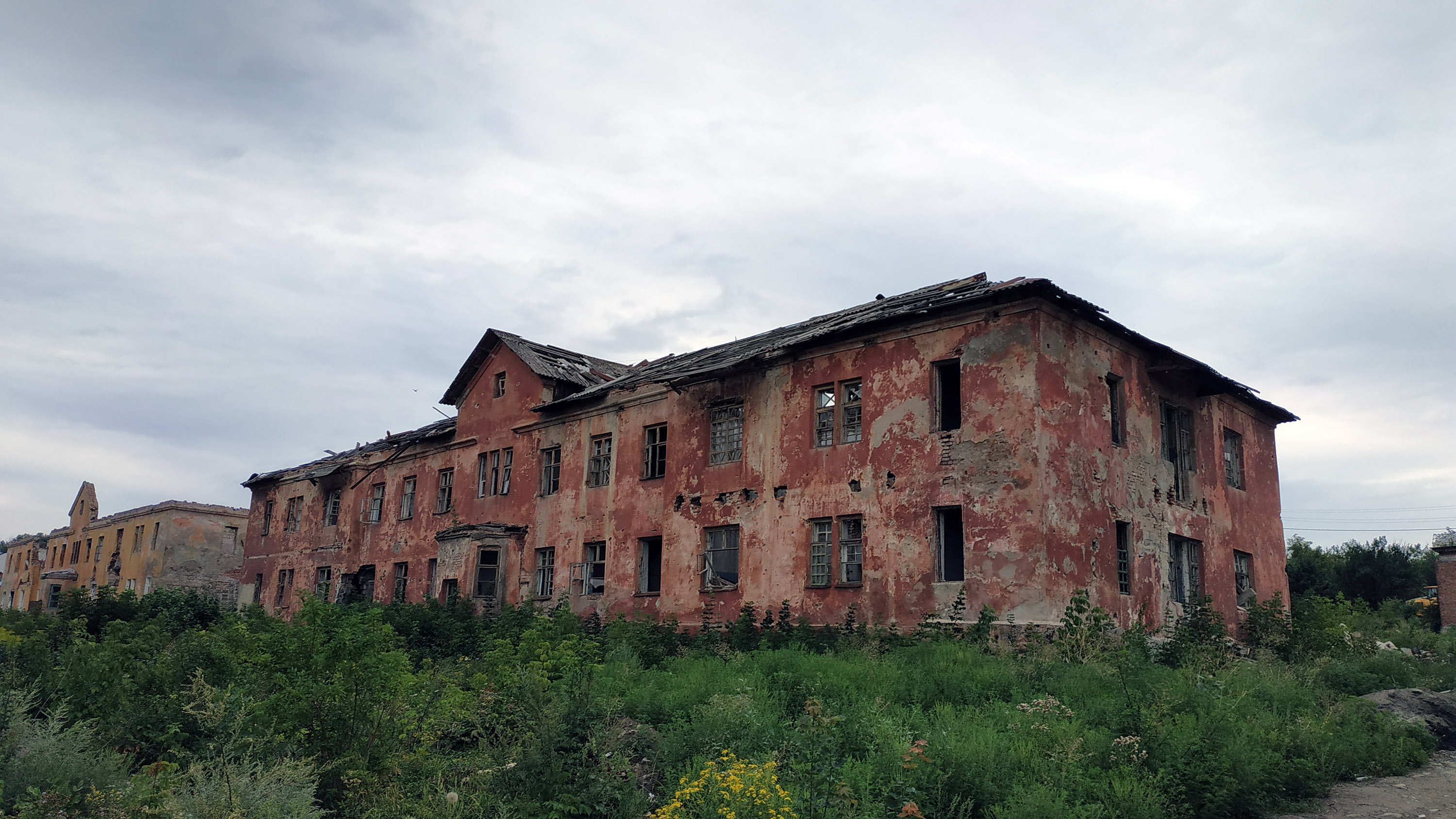
Sloviansk Mental Hospital
Now the buildings of the mental hospital resemble the scenery of war films. Damage is so great that there’s no sense to restore it. However, one of the children’s wing has been repaired. Director of the hospital Yuriy Smal says that the departments are filled up because the number of psychiatric patients has increased since military activities have started. Among them, there are even ATO soldiers.
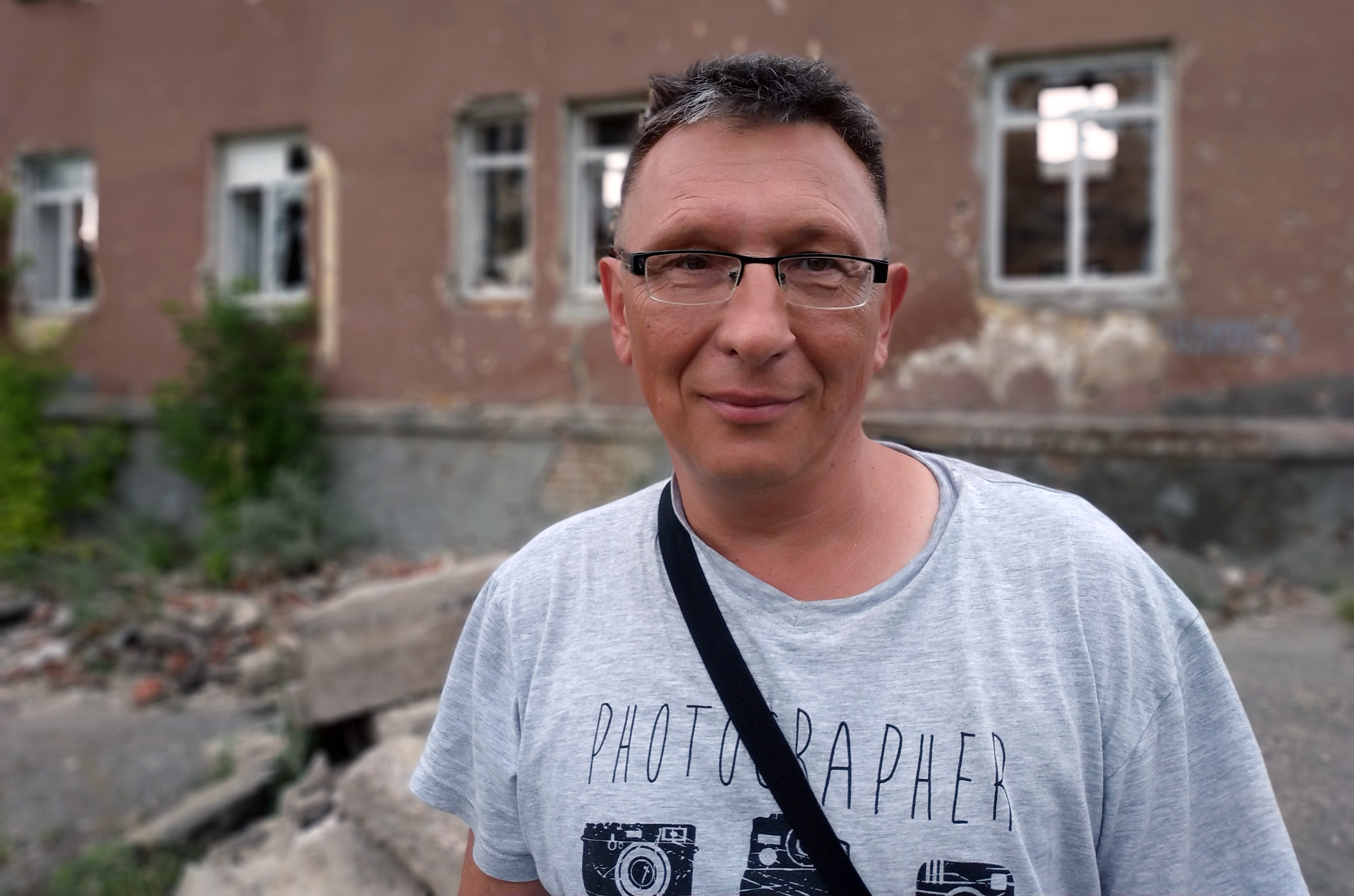
Oleksandr Slovyanets
Oleksandr says that 75% of the Sloviansk population welcomed the gangs of the separatists and saw them as the liberators from the “Kyivan Junta”. He recalls: “Propaganda was very pushy all that time they told horror stories about the Right Sector. I don’t know what doctors were feeling about this, but bandits just came here the same way they entered the school and kindergartens. They had “barracks” in communal institutions. One of the points was in the house of culture, where Sloviansk book fair takes place now”.
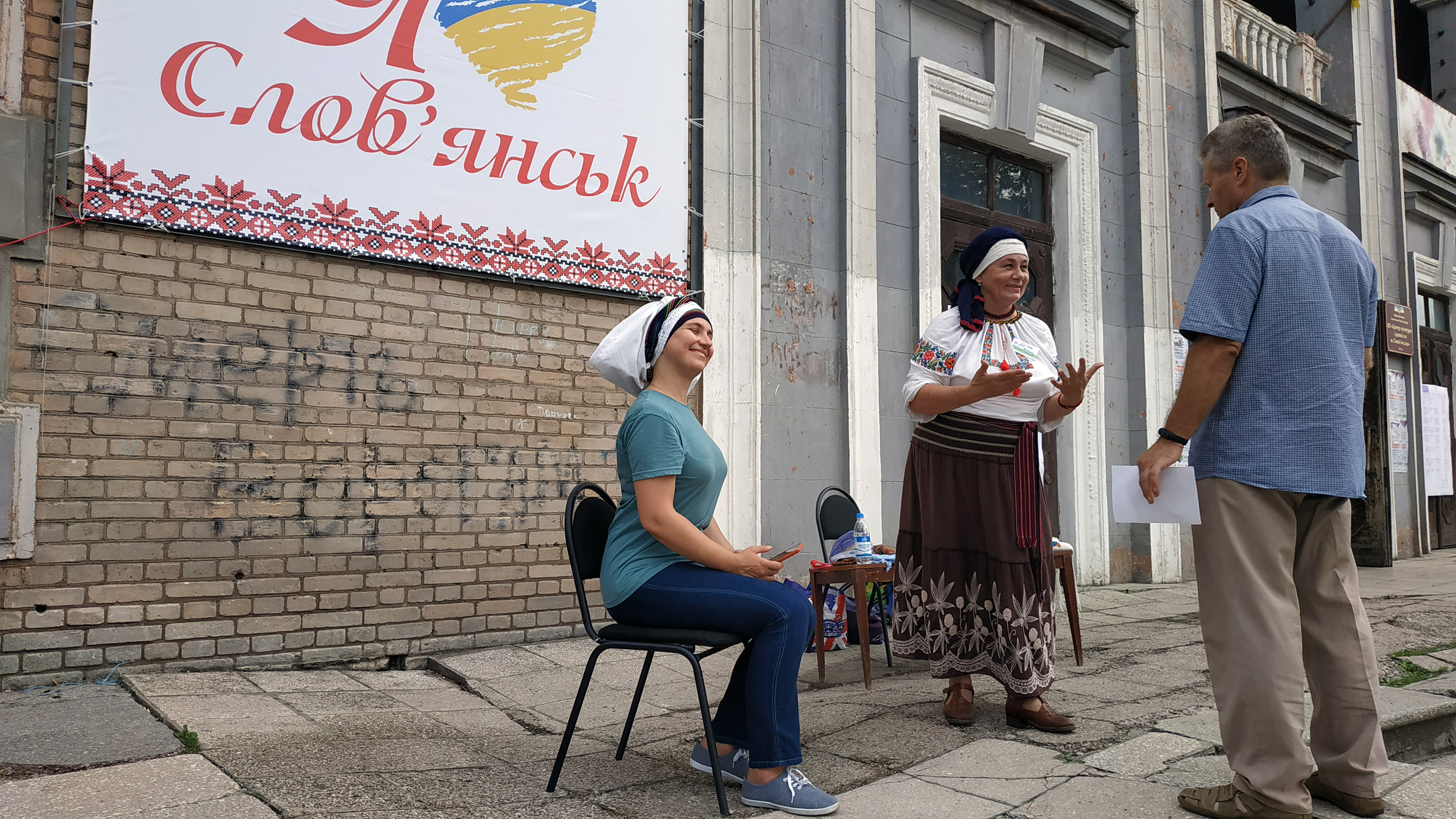
House of culture
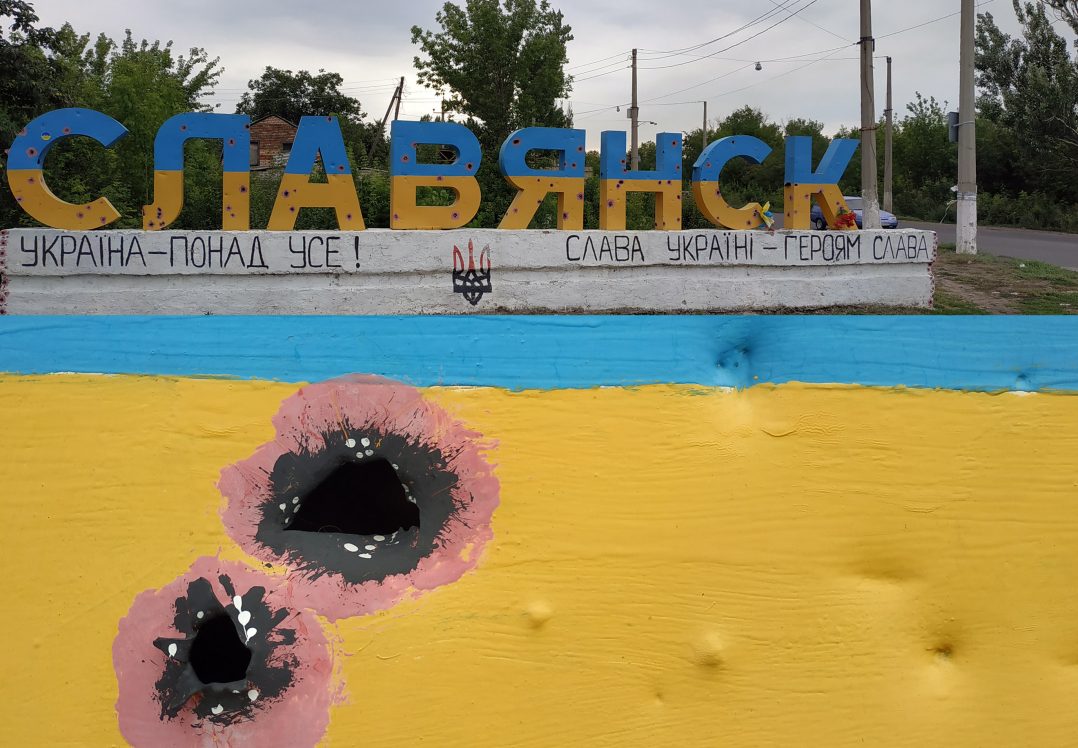
“The occupation of Sloviansk ended when the Ukrainian military came to the crossroads near the hospital,” recalls Alexander. I took a picture of the coffee shop “Metelytsya” ruins and inscription “Sloviansk” itself, covered with the holes from machine-gun bursts. Coming closer, I noticed that it was turned into an art object: Now every black hole is decorated with red petals and reminds you of a poppy flower.
Oleksandr says: “Life in Sloviansk reminds of a sluggish schizophrenia. The majority of officials who supported Girkin and his gang in 2014, stay in power now”. Slovyanets suspects that these people have been “validated”. By those words he means the fact that authorities paid a bribe to law enforcers in order to stay in power, and in exchange they received a certain “validation” that guarantees their inviolability. I argue with Oleksandr, in my opinion, there is too much of conspiracy in his theory – it’s hard to imagine a massive bribe by local officials to Ukrainian law enforcement agencies. I make an assumption: “Obviously, they were left here because the new officials from pro-Ukrainian regions would look here somehow odd. They wouldn’t have such an authority as the local ones, therefore the central government decided to split the differences. Maybe there was also some kind of a secret oral agreement when the prosecution was stopped in exchange for a guarantee of stopping the support of separatism”. Oleksandr agrees: Of course, there were “fixed matches”.
Congratulations on the day of trouble
We sit in the car of Vasyl Khomenko and drive further. He says: “You need to talk to the locals who don’t like new Ukrainian government. They are here, working at the market. Constantly they are going to the Crimea and to the “DPR”. I think that doing it will be almost impossible because such people are unlikely to be frank with me. It would be good to listen to people’s conversations on the streets, but all the streets are empty. A few guys are standing next to the beer store. I come closer to them and ask what the life in Sloviansk is like. They silently throw up their hands: Don’t you see? I see the old blocks of flats built during the Khrushchev time. On the one of its walls, there are three huge posters. One of them portrays MP Yuriy Solod that congratulates local veterans on a “Victory Day”, but the edge of the poster has torn off and now greetings have a new meaning and look a little bit ominous: “Congratulations on a day of trouble”. On the other poster, the mayor Vadym Lyah congratulates on the Day of the Constitution of Ukraine. Below is the advertising of the beauty contest “Mini-Miss Sloviansk-2018 “, which was held two months ago. The roads around the blocks of flats are damaged; pits in them are filled with water.
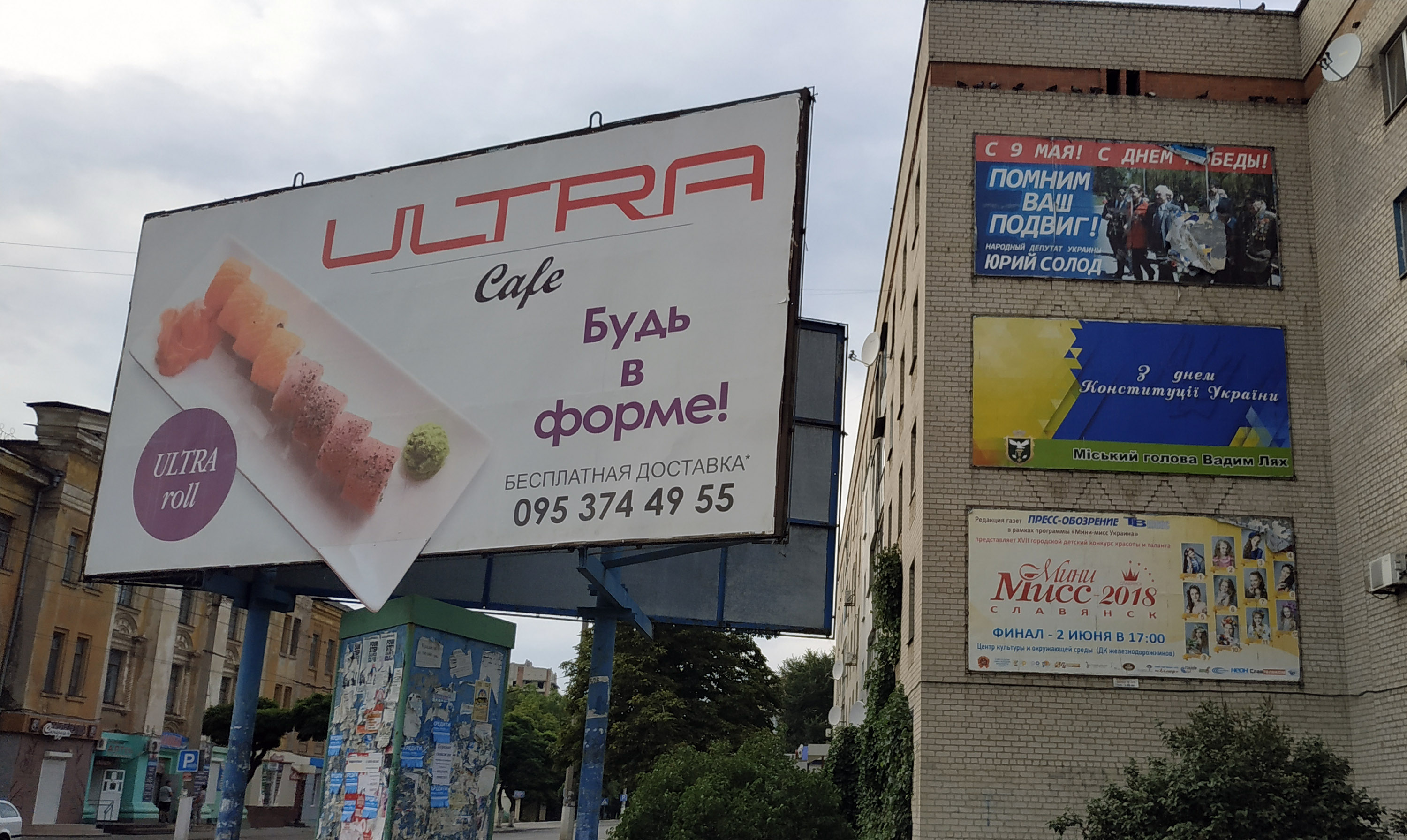
“Congratulations on the day of trouble”
Finally, we return to the house of culture. There’s a deputy head of the civic association “Initiative platform “Teplytsya” (greenhouse)” Darya Nikolayenko is waiting for us. She is 22 years old, she gets her Master degree in Donbas Pedagogical University, which is located in Sloviansk, and works with disabled children. She says: “To live in Sloviansk, to me, it’s like freedom. I’m delimiting very clearly life in Sloviansk until the warfare, during it and after. Now, we have a voice, we understand our rights and are ready to defend them. Previously, we didn’t have such a feeling. Now we think that every person can change something in this city, and it depends only on us.”
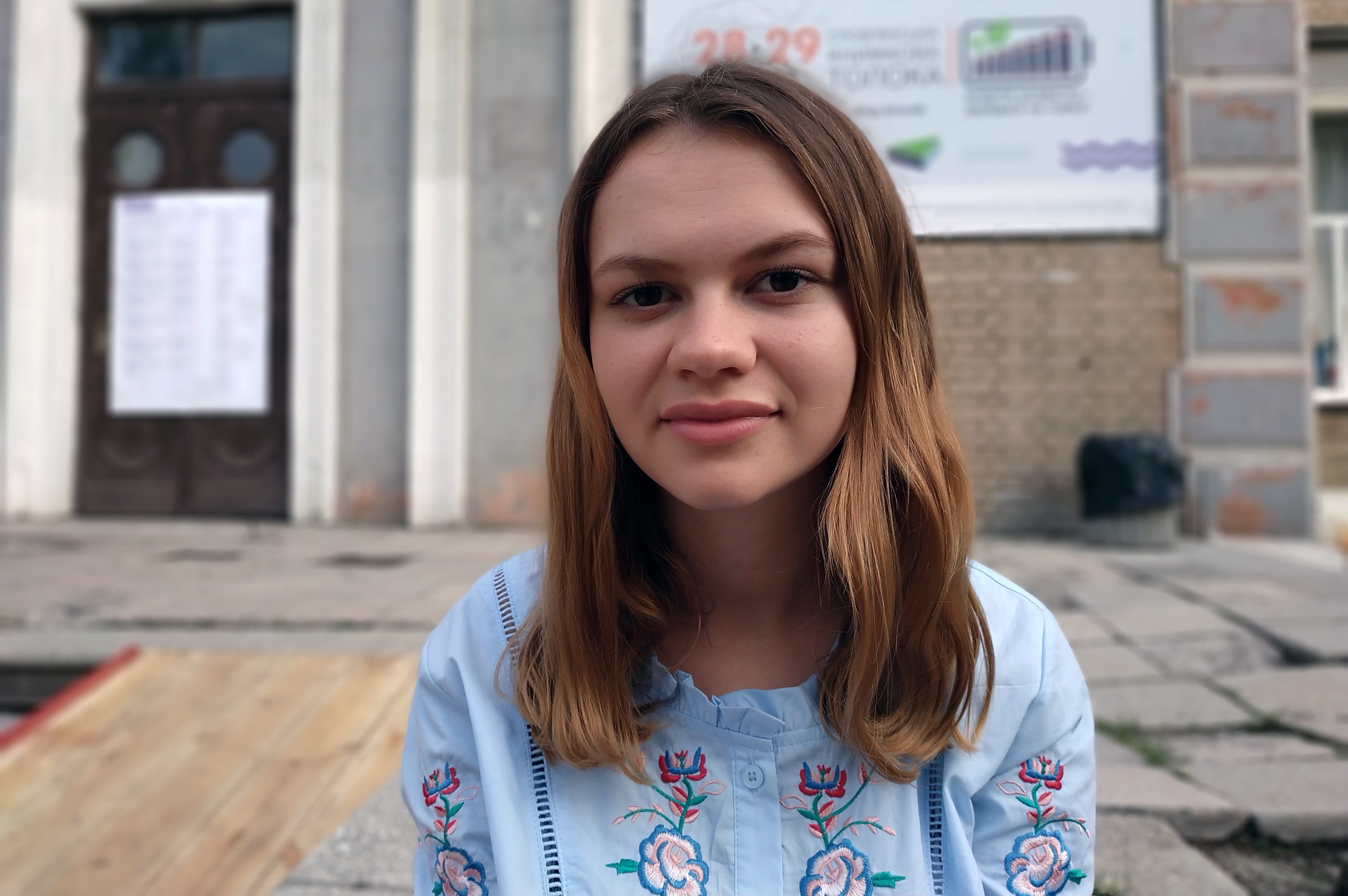
Darya Nikolayenko
Darya has no spare time: she’s constantly working in the public sector. She says that, of course, in Sloviansk there are those who dream of the old times’ return, for her a person’s bias is not important, but the person itself, because the views are changeable over time. “The main thing is not to turn away from a person, not pointing fingers at it,” says Darya.
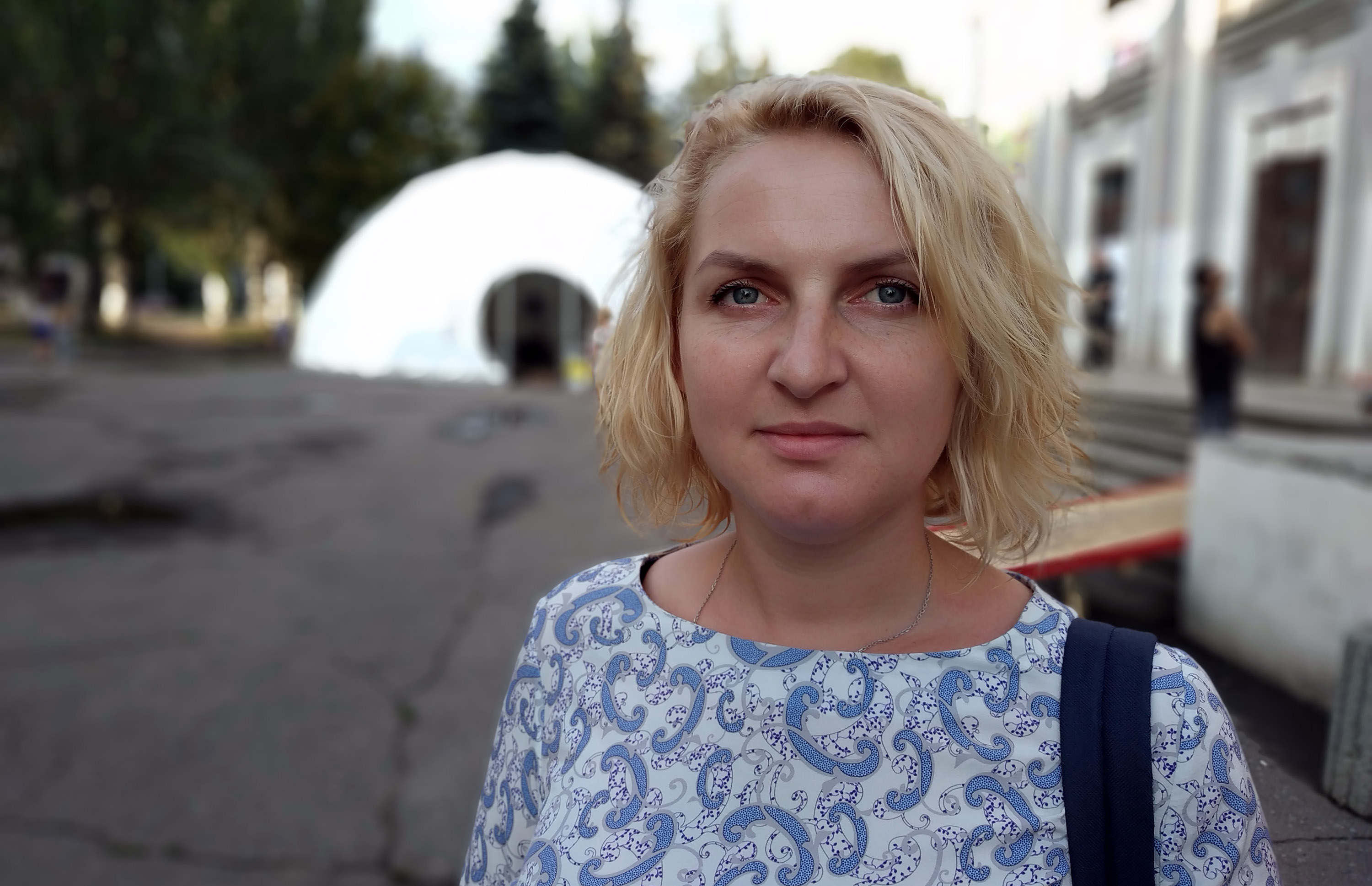
Hanna Avdiyants
The chairman of the civic association “Initiative platform “Teplytsya” Hanna Avdiyants came to the book fair with her little son Garegin. When the Girkin’s gang broke into the Sloviansk, Garegin was only two years old, so he doesn’t remember anything about those times. Hanna says: “Garegin is going to school soon. So far he’s always been online and even started his own a video channel there. He loves the game Minecraft and wants to make his video blog about it.”
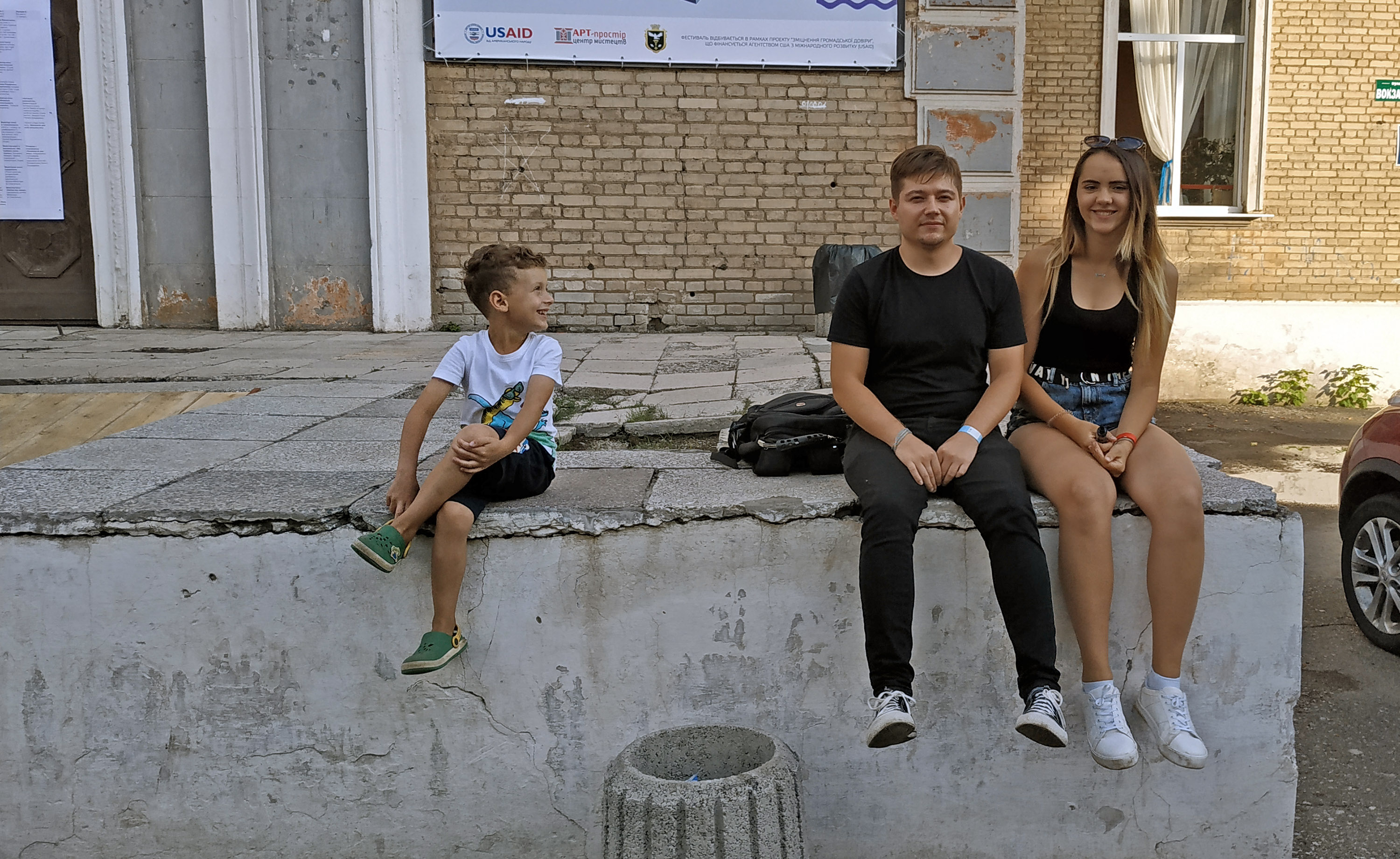
Garegin Avdiyants
For Hanna, the life in Sloviansk is similar to the swing of the things she organizes with her friends and colleagues. She says: “Unfortunately, there are very few people who are interested in all those events in our city, maybe there is only two per cent of the general population. We were very disappointed when the authorities hadn’t changed after the occupation. The central government doesn’t listen to us. This silly slogan “Listen to Donbas!” However it’s somewhat fair: after being liberated, free elections were held in Sloviansk, and the old authorities returned in power. The same authorities that brought a war here. This happened because they hadn’t lost credibility among the locals. Most of the people are used to dictatorship, authoritarianism; they see how it works in Russia and want the same here. They haven’t been outside the Donetsk region, so they have nothing to compare to. It was not necessary then to play the democracy and to hold free elections: it was better to appoint a civil-military administration”. I noticed that Hanna, like all the inhabitants of the city, would also like to introduce here authoritarianism.
Unexpected interior design
Seventeen-year-old Lena better speaks Russian with a slight Ukrainian accent. She’s just graduated from the school and dreams of joining the Academy of Design in Kharkiv. She says: “Sloviansk is a small town, everyone knows everyone here, all people are kind and sensitive, and living here is pretty nice. Our town is blossoming, every next year the living conditions here are better and better. I would like to stay here, but I have to go to Kharkiv, because there is no such a major here. In five years, I’ll be back. I’ll open my own business here and it will be connected with the design of interiors”.
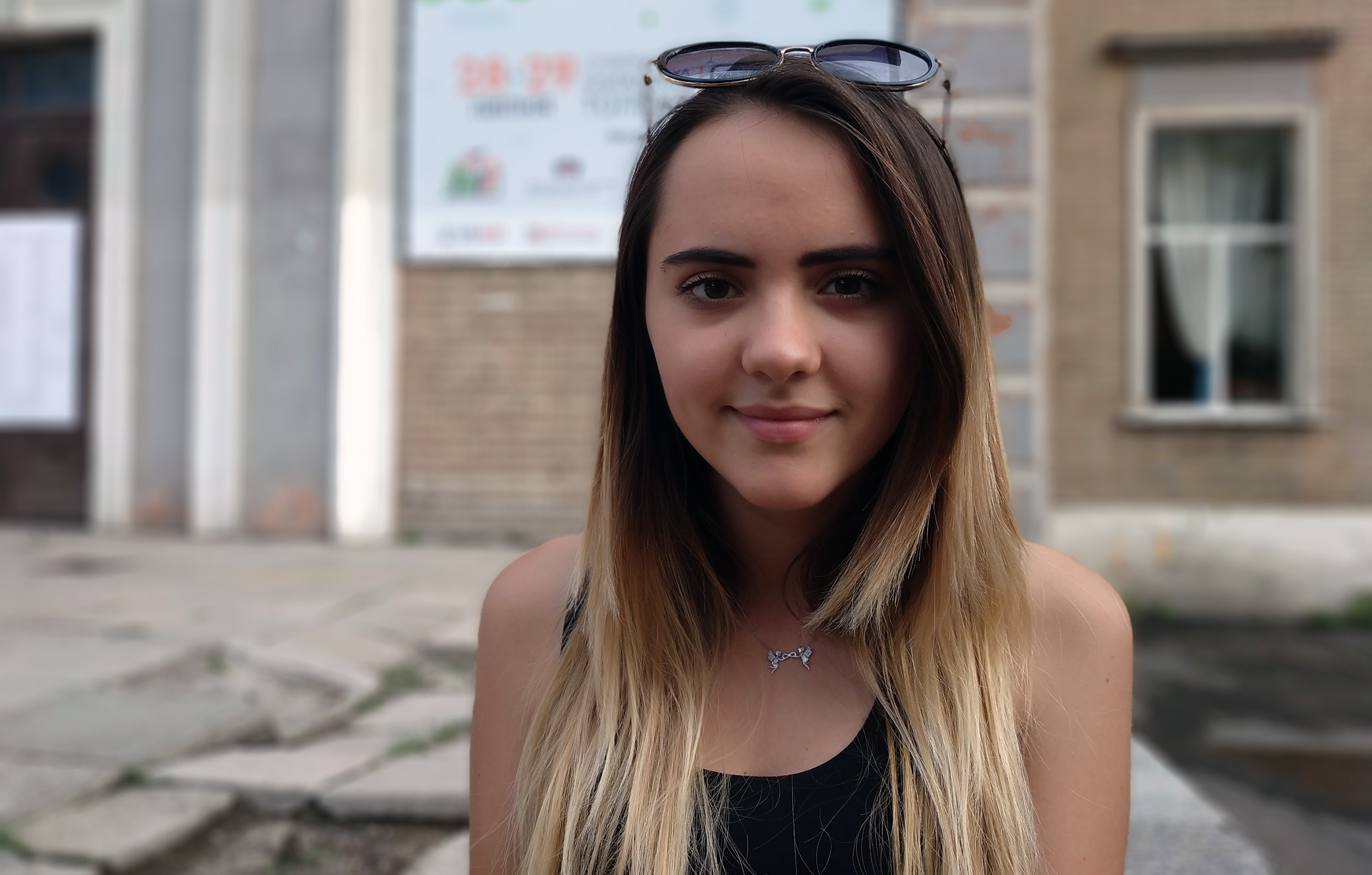
Lena
I’ve entered the house of culture and walked to the headquarters of the book fair. It was situated in a small room with a unique interior: all the walls were decorated with protuberant ceramic tiles that depicted the images of fantastic beasts. For a moment it seemed to me that the Sloviansk symbol was those creatures made by the imagination of an unknown artist. It wasn’t an exhausted shuttle-trader with a hand truck, neither Nelya Shtepa, nor ruins of a mental hospital. It’s them, those fantastic beasts that we need to preserve at any cost because Sloviansk is a town from a fairy tale, it’s magical, and it has its own secret that still nobody couldn’t notice and understand.
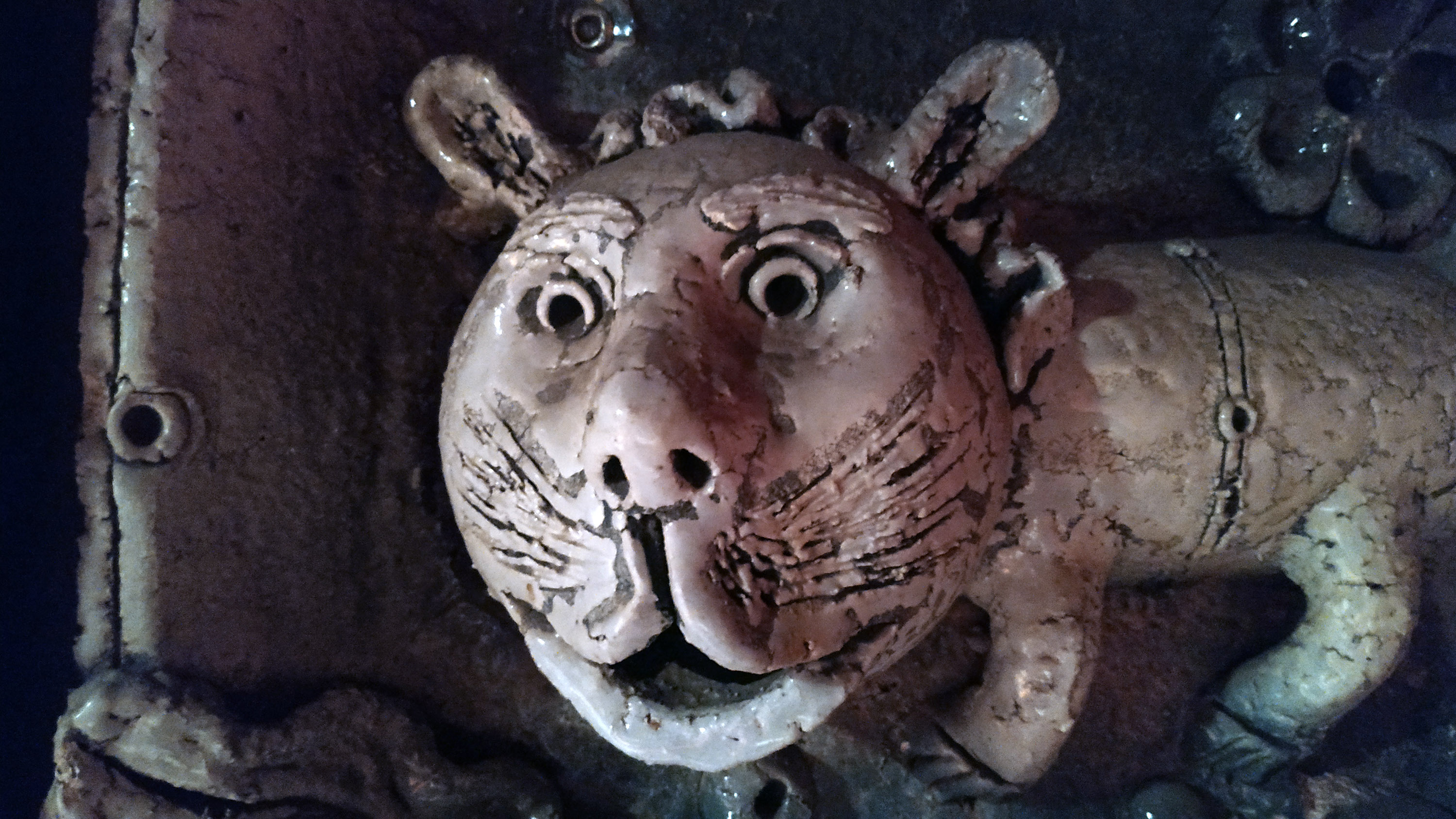
Fantastic beasts
Text and photo by Oleg Shynkarenko