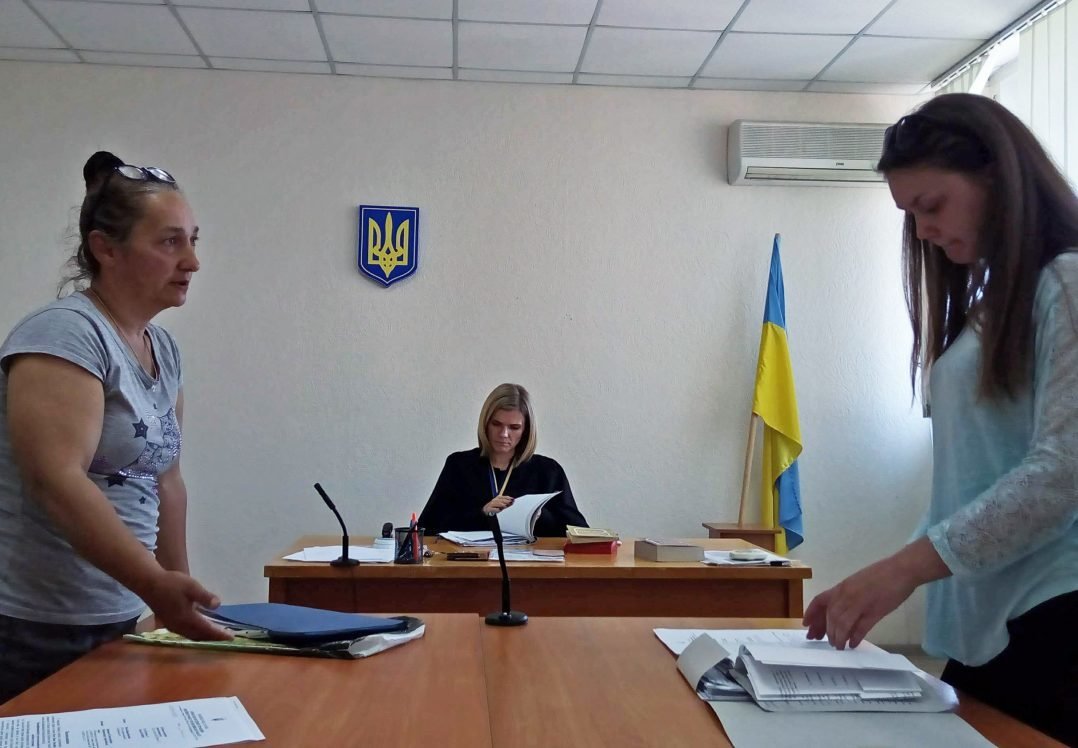


The Kyiv District Administrative Court ordered the Pension Fund to grant a pension to a Roma woman. This trial is just the pinnacle of the iceberg of discrimination against Roma citizens of Ukraine.
“I try to hide my nationality to the last…”
Zhanna Pinchuk was not lucky to be born in Ukraine in a Roma family. Because of this, she and her family face a wide variety of life-long discrimination forms. “Although I speak Ukrainian, my Romanian nationality is slightly noticeable in my appearance”, she says. “Therefore, the attitude towards me is always with apprehension, with disdain. I try to hide my nationality to the last, even when I go with a child to see a doctor, I tell her to speak Ukrainian. After all, as soon as people understand who we are, then immediately hint that we have to pay”.
Zhanna’s daughter goes to school in the fourth grade and there she is constantly humiliated, harassed, shouted: “Gypsy! Gypsy!”. Her son Oleg studied at the university, but he was subject to ill health and he could not continue his studies. It was very difficult for him to find a job: only employers noticed that he is Roma, he was rejected flatly. Now he works as a merchandiser in one of the Ukrainian companies.
Zhanna Pinchuk herself has been working since 16 years (in 1983-1985) as the confectioner of the Chernobyl public catering. When the Chernobyl catastrophe occurred, she was evacuated together with other residents of the city to the Kyiv region. There she received an apartment on the outskirts of Bucha and very far from the infrastructure: near there were no hospitals, no kindergartens, no schools, no shops. “We actually lived in the middle of a bare field”, Zhanna recalled. “My son was often sick, so I could not be there alone. I had to sell that apartment and buy a plot of land in Brovary”. In 2000, together with her parents, she began to build her house there, but due to lack of funds, the construction is not yet completed: only last year it was possible to bring the water supply to the house.
Jeanne’s husband has gone to Russia, he is not interested in his own family, he does not help at all. “When his son was in the hospital, I even sent him telegrams, but it’s useless”, Zhanna recalled. “When I was younger, I traded on the market in Troyeschyna, I also worked as a cleaner, but I was not officially working, they want to save on taxes”. She works even now, but the owners of the company tell her, after official employment, her small enough wage will be reduced by half.
Poor, dark Roma
The family Pinchuk could have saved aid from the state, and she has the right to it. After all, according to the Law of Ukraine “On the Status and Social Protection of Citizens Affected by the Chernobyl Catastrophe”, the Pension Fund of Ukraine (PFU) is obliged to enroll in the work experience of one of the parents the time for caring for the injured child before reaching the age of 12 years. The right to draw an early pension is granted to mothers of persons with disabilities since childhood, who raised them up to the specified age – after reaching 50 years and with an insurance period of at least 15 years. With this knowledge in mind, in October last year, Zhanna appealed to the local branch of the PFU with a plea on the appointment of a pension. Workers of the Brovary United Administration of the PFU of Kyiv region immediately refused to give it in a rough way. “They offended me for my nationality”, Zhanna recalls. “They said: “You are a poor, dark Roma, you know nothing and you will get no aid”.

This time Zhanna Pinchuk did not tolerate resentment, but turned to the public reception of the Ukrainian Helsinki Human Rights Union, where she was provided with a free professional lawyer. The lawyer helped her to file a lawsuit against the PFU, and the trial began.
13 years 9 months and 29 days
In the court the Pension Fund put forward such arguments in favor of its decision: Zhanna Pinchuk’s work experience would indeed be more than 15 years, but the period from 2004 to 2006 cannot be added to it, since from 2004, the mandatory condition for obtaining seniority is the personification and stay on the register in the Office of Social Protection of the Population. And Zhanna Pinchuk was not registered at the time, so her work experience is 13 years 9 months and 29 days. So, to get help, she lacks one year and two months of work experience.
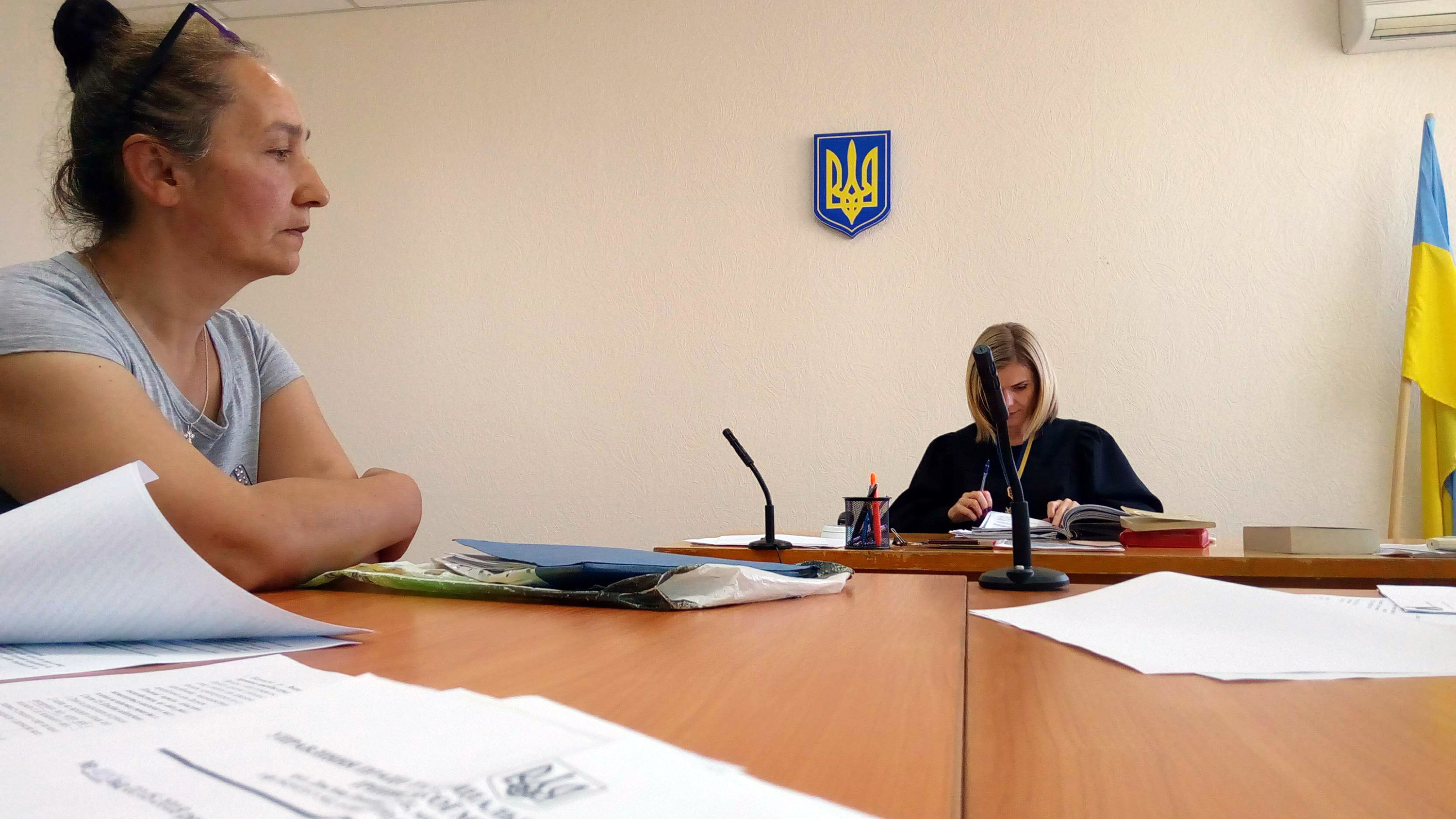
The court did not accept such arguments from the PFU and noted that the time for caring for the injured child from the Chernobyl disaster before reaching the age of 12 for one of the parents, is established on the basis of the birth certificate of this child, as well as other documents. This means that no personification in the Social Security Administration is needed for this. The court added that Zhanna Pinchuk has a 10-year-old daughter, Svitlana Pinchuk, who is also dependent on her, and she is also recognized as a child, who suffered from the Chernobyl disaster.
So the Roma woman received a pension through a court. But this does not mean that she will receive benefits from the state. Lawyer Olena Sapozhnikova says that until July 21, they still need to wait for the decision of the Pension Fund, because it can disagree with the verdict of the court and appeal. And this will happen with a very high probability because officials are simply obliged to do this, we are talking about state funds after all.
Pensions for Romas
Zhanna Pinchuk has a passport, a card of the tax bearer and the certificate of the citizen, evacuated in 1986 from a zone of alienation around of ChNPP. All this helped her successfully sued the Pension Fund, since her lawyer had documented arguments, and the judge was able to make a decision, citing undeniable facts. And how do Ukrainian Romas live without documents?
Vice-president of the Roma Women’s Fund “Chirikli” and human rights activist Zola Kondur said that now in Ukraine not more than 3.5% of citizens of the Romani nationality draw pensions. This figure appeared as a result of studies of public organizations because state bodies are prohibited from collecting such statistics on a national basis.
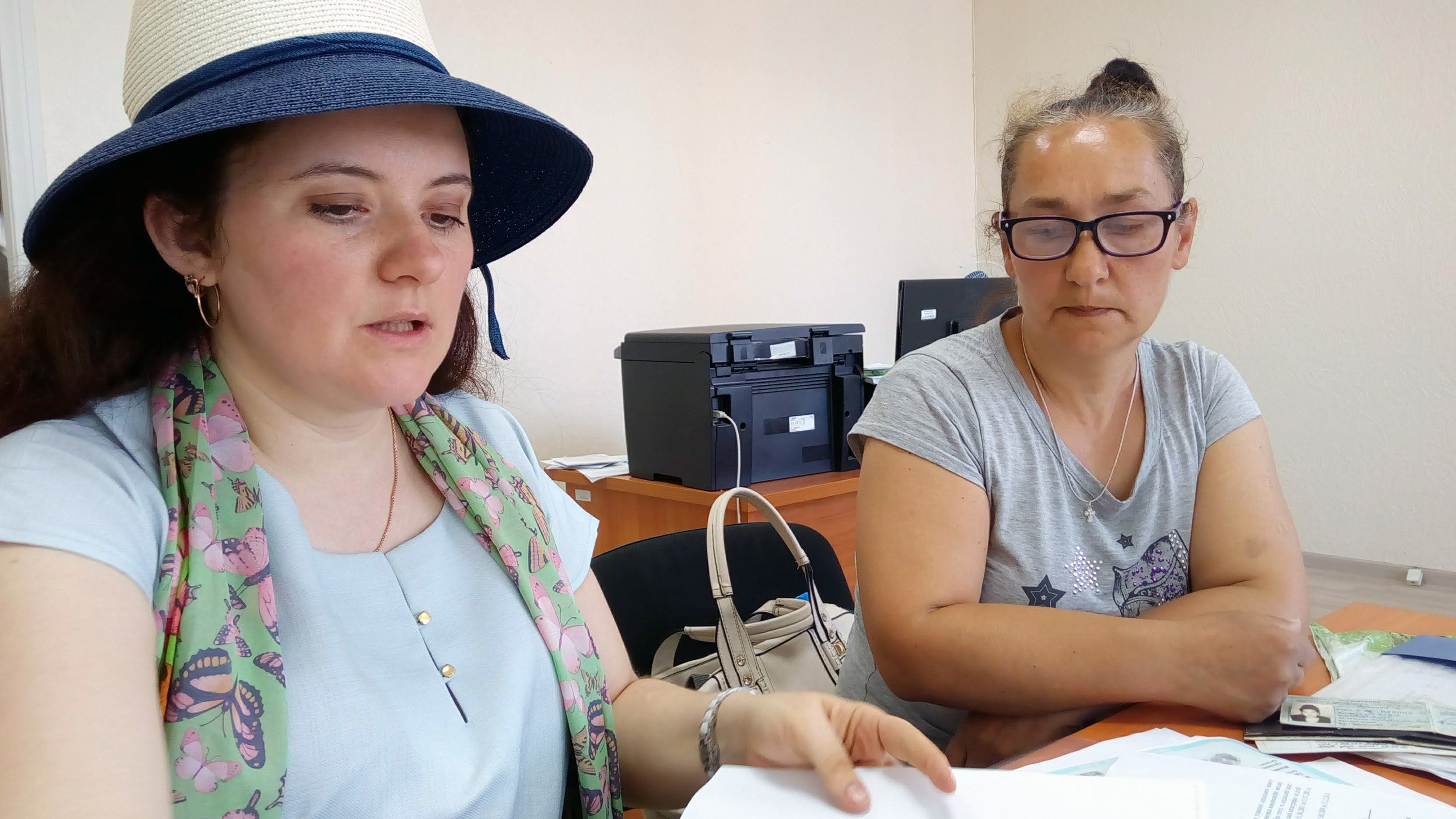
The reason for this situation, according to Zola Kondur, is that most Romas work unofficially, and when it comes to drawing a pension, they simply do not have the necessary documents for this. “The case with Zhanna Pinchuk, who decided to defend her legal right for a pension in court, is unique”, says the human rights activist. “But the Roma organizations of Ukraine help the Roma women receive a child benefits”.
What does our state do to solve this problem? There is a “Strategy for the Protection and Integration of the Roma National Minority into Ukrainian Society for the Period until 2020”, which was signed by the President Viktor Yanukovych in April 2013. The plan of measures to implement this strategy was posted in September of the same year on the website of the Ministry of Culture, signed by the Prime Minister Mykola Azarov. This plan provides that the various state bodies annually submit information to the Ministry of Culture on the status of its implementation. And they carefully do it. I turned to the Cabinet with a request and received several huge documents with reports. One of the typical events at the local level was described as follows: “We conducted a concert of a gypsy music”. The main problem of this Strategy, according to Zola Kondur, lies in the fact that funds from the budget were not allocated to it, which means that it is simply a declarative document. Oksana Filipishina, representative of the Ombudsman’s Office, also spoke about the same: “For four years, no penny was paid from the state budget for the solution of the Roma issues. And the plan of the Government’s measures to integrate the Roma into Ukrainian society did not envisage spending budget funds at all”.
The situation in public organizations that deal with Roma problems is slightly better. For example, the budget of the Roma programs of the International Renaissance Foundation for this year is about 300 thousand dollars. In addition to the already mentioned above, Roma Women’s Fund “Chirikli”, there is, for example, “Union of Uzhgorod Roma” and many others. According to the State Register (USREU), today more than 40 Romani and pro-Romani non-governmental organizations are registered in Ukraine. All of them are trying to tackle the problem, which the state, it seems, simply cannot cope with.
According to the All-Ukrainian Census in Ukraine, about 48 thousand Roma lived in Ukraine in 2001. Since then, there have been no formal calculations, but non-governmental organizations believe that today this figure has grown by 5-10 times. Such a number of citizens of Ukraine is impossible not to notice, and even more, to pretend that they do not exist.
Text: Oleg Shynkarenko