

When a child with Down syndrome is born, not every mother is ready to accept it. Two out of ten babies are now left to the state’s care. But for all of them, it’s important not just to survive, but to find themselves in this cruel world.
Ivan
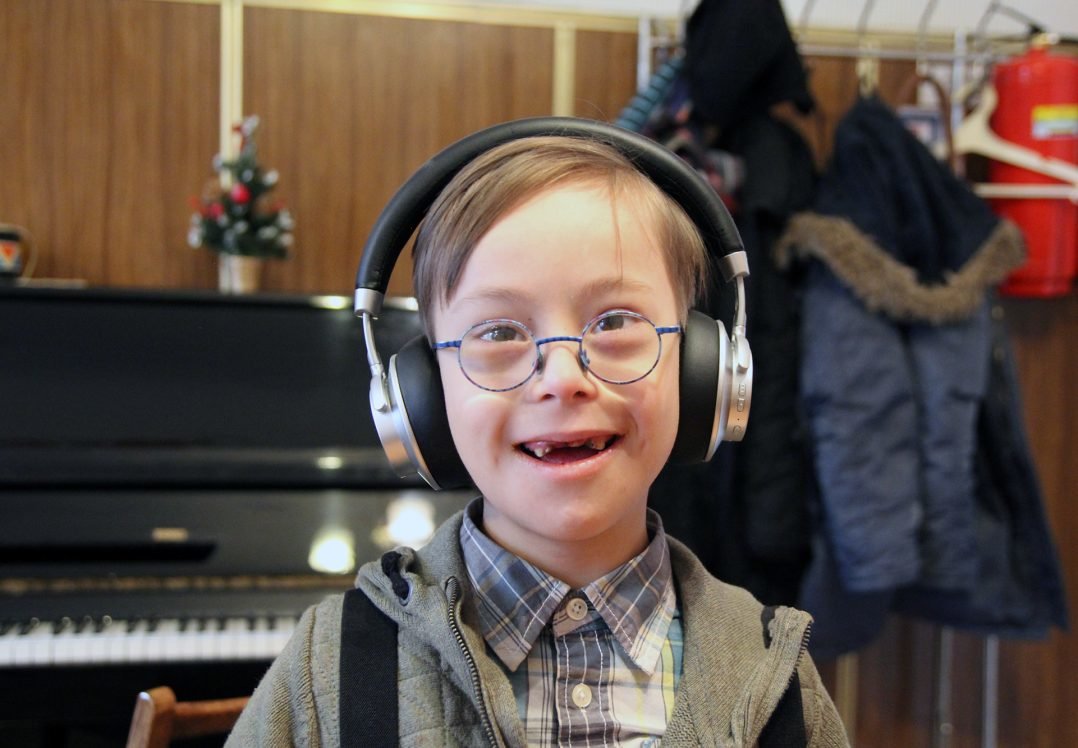
Eight-year-old Vanya diligently writes sheet music on a blackboard in the classroom of music school number 21 in Darnytsya. The sticks are like a fence, and the bass notes on additional lines are like funny faces with a moustache. So, it is easier for him to remember. Vanya has trisomy 21, better known as Down syndrome. This is not a disease, but a genetic anomaly. Accordingly, it is impossible to cure, but only to adjust the life for it. And here everything depends on the parents, who should love their child.
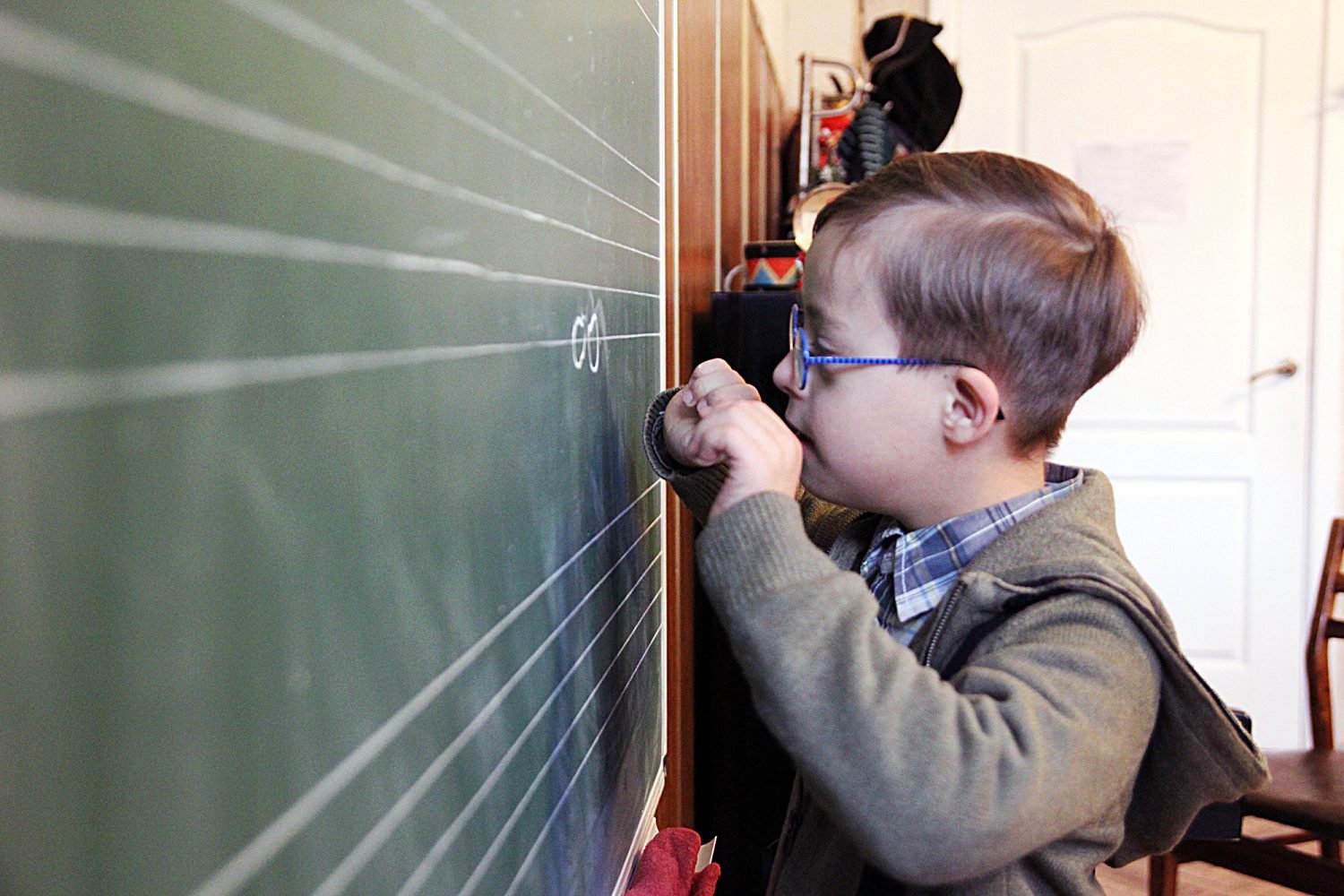
Vanya’s mother Lyudmyla says that he visits up to 13 sections. Here, you immediately recall the famous aphorism from the book “Alice in Wonderland”: “Now, here, you see, it takes all the running you can do, to keep in the same place. If you want to get somewhere else, you must run at least twice as fast as that!”. Vanya is running. Not very fast yet, but he is trying very hard.
Vanya’s teacher Valentyna Morozova teaches him to catch a ball and helps his naughty children’s hands to play simple melodies on the keys. “He has one problem ‒ weak muscle tone, so I have to help him,” she says. “And when he grows up and the tone appears, he will play by himself. I saw that such children at 12 years old are playing on their own”.
Pianist Graham Campbell with Down syndrome:
Vanya’s mother, whom I met in Kyiv at “Down Syndrome conference: Best Practices for Positive Change”, told me that doctors in maternity wards urge mothers to leave such children in a special state centre. And some even agree. “A doctor came to me with a psychiatrist and began to brainwashing”, she recalls. “Apart from Ivan, I still have two children without the syndrome, but I will never leave him.”
But many doctors still succeed in persuading the parents, although this trend is also changing. According to Olena Bolshanina, the president of the All-Ukrainian Charitable Organization “Down Syndrome”, who uses statistics from the Ministry of Health, fifteen years ago, only 20% of these children remained in their families, and now there are 80%. By the way, 450 children with Down syndrome are born annually in Ukraine and about 30 of them ‒ in Kyiv. In general, according to the WHO statistics, every 700th child in the world is born with Down syndrome. This ratio is the same in different countries. A genetic malfunction occurs regardless of the way of life of parents, their health, habits, and education.
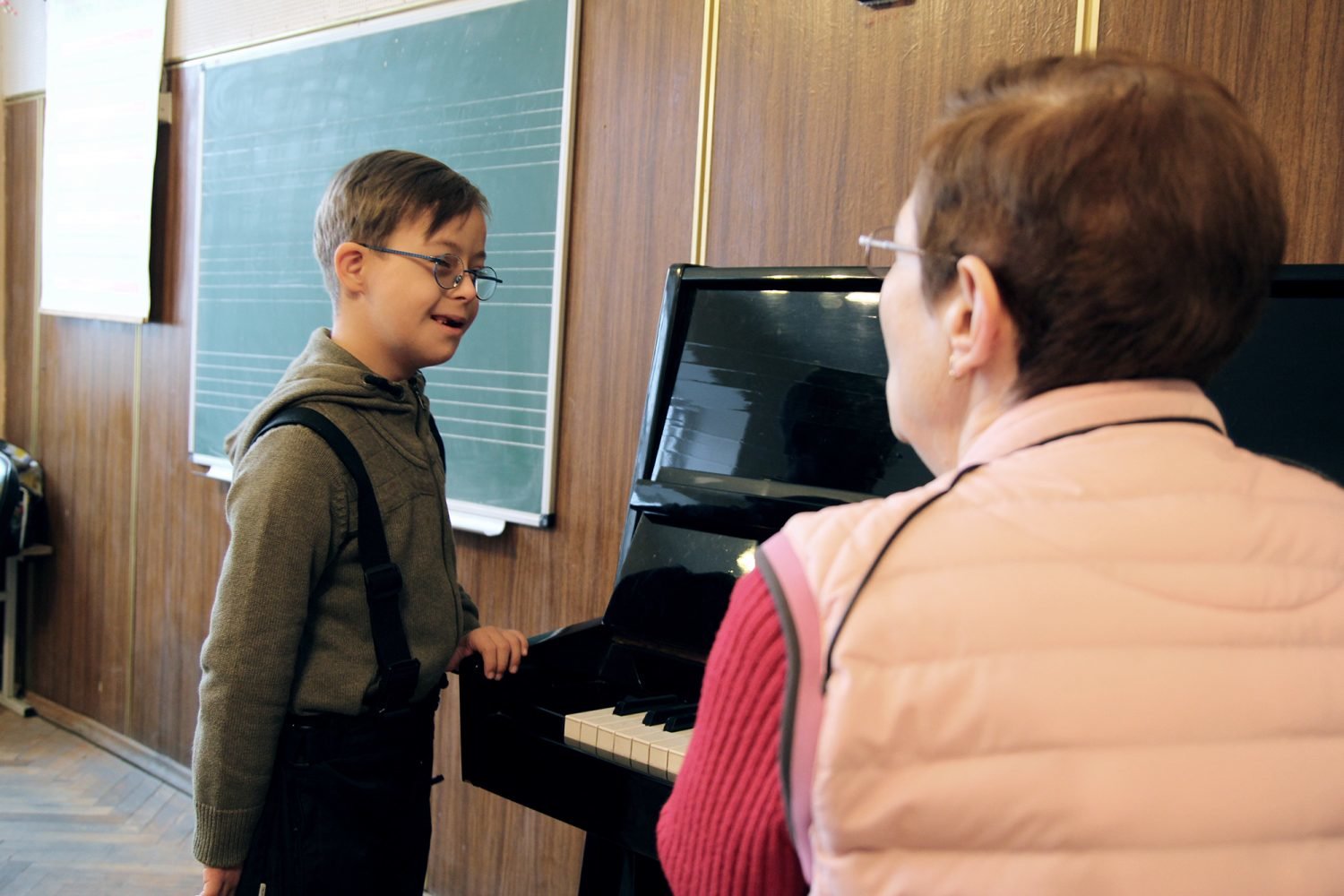
Now Ivan goes to a private school, because, according to Lyudmyla, there are no schools with inclusive education for children with Down syndrome. “I can say: in order for your child to be admitted to the school, you need to find a good psychologist, who will write that your child has no mental disabilities,” she explained. “I would like to ask our minister how exactly “money is following the child”? It is not following!”
Lyudmila means the principle that is in the new law “On Education”, which was told by the Minister of Education Liliya Grynevych. Here we are talking about the fact that the budget will not give money to an educational institution, but an educational service for specific children in institutions of any form of ownership will be bought. Truly speaking, it should be said that this principle should be applied, according to the minister, only from 2019.
Lyudmyla says that the attitude towards such a child in the family determines the attitude towards it in society. “No one perceives my child as having this syndrome,” she explains, “They say: “We need to take a good look at him to notice.” And there are many parents, who are embarrassed and afraid of the sight of their children, they try to quickly take them to the bus so that no one notices”. Because of this fear, prejudice arises in other people.
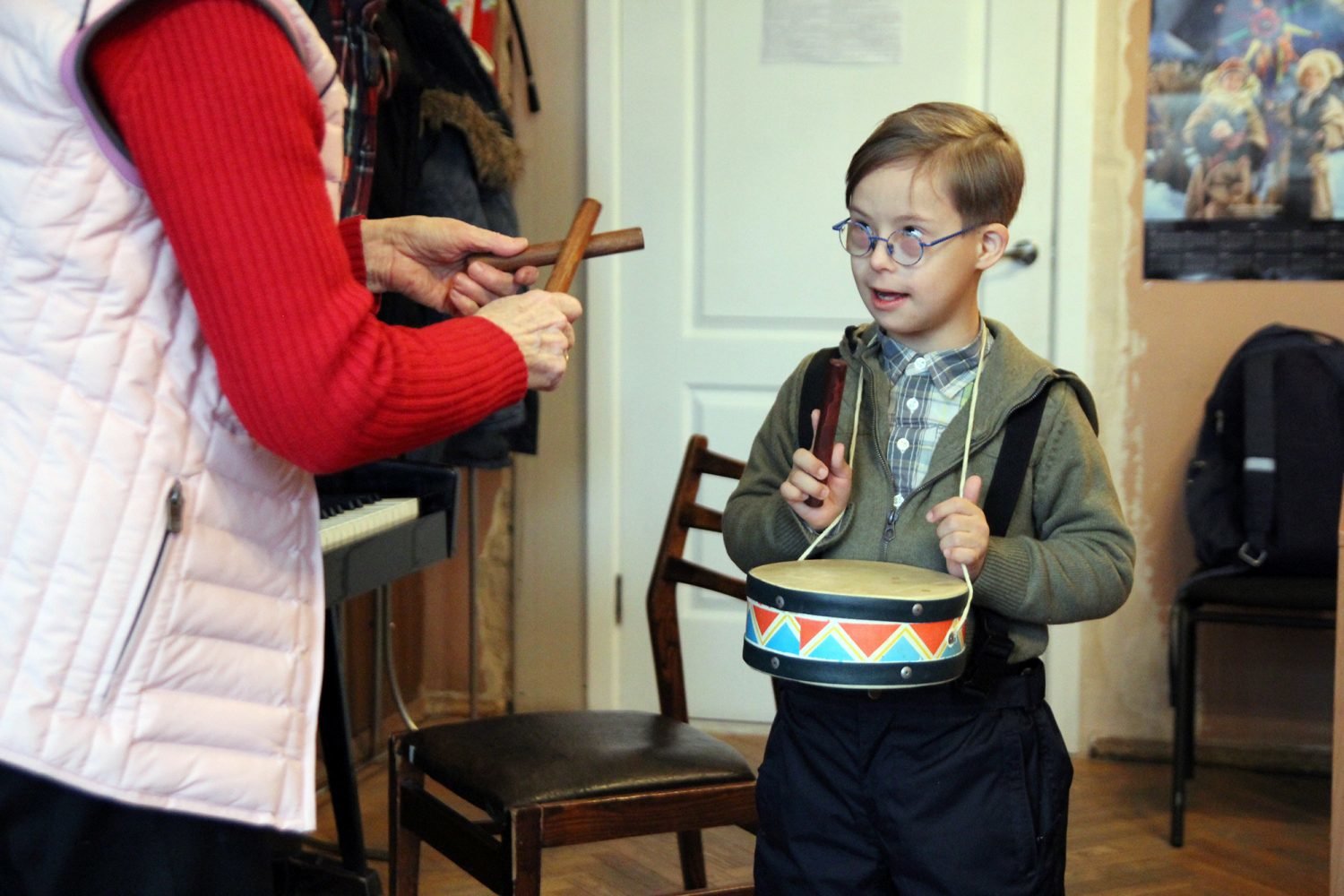
If adults do not specifically teach children that their classmate with the syndrome is inadequate and ridiculous, then they will never think so and mock him. Lyudmyla says that in the school, where Ivan is studying, there is no bullying: the children are simply interested why he speaks poorly. But some teachers in other schools are used to literally pointing fingers, they say, “If you do not study well, you will become like that one”. Lyudmyla is sure that the mental retardation of her son is a temporary phenomenon. If we work on it, then Ivan will be able to achieve success in life.
Ivanka
President of the Ukrainian Charitable Organization “Down Syndrome” Olena Bolshanina also have a four-year-old Ivanka with such a syndrome. “When I found out about this, then, like most parents, I felt a shock,” she said. “At first, it took me a while to get used to this thought, to recover a little bit.” And then Olena, together with other such parents, went to the maternity hospitals to talk there with the mothers of children with the syndrome, in order to teach them to perceive the situation correctly. For this purpose, they offered them special literature.
Ivanka has been going to a private kindergarten for a year now because the state one is overcrowded. “I didn’t want my child to go to a kindergarten in a group with 30-40 children,” Olena says. “And even in private, they were not lucky at once: the first had to be changed because there was no individual approach to Ivanka and several unpleasant situations happened. In the second kindergarten, they already have been working with children with autism, so the first results appeared: the girl happily goes to the kindergarten, and her mother quietly works and does not think that her child feels bad.
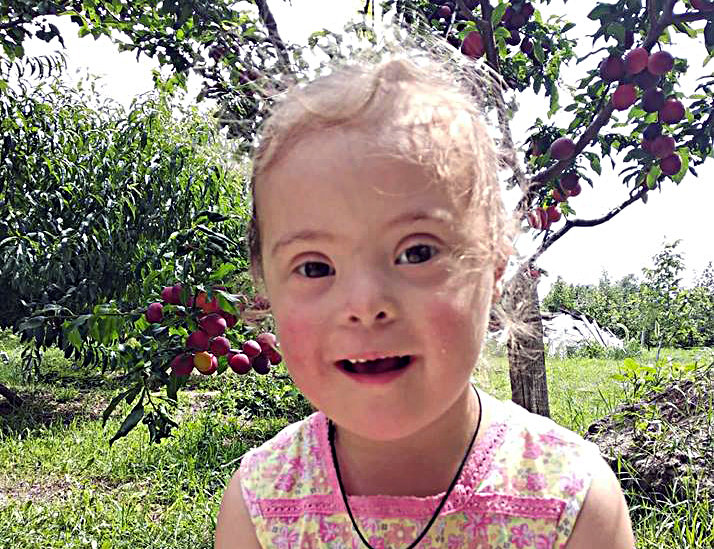
In addition to the kindergarten, Ivanka goes to a private correctional teacher. “If the family wants their child with the syndrome to really develop, then they should have a list of individual teachers and sections,” Olena says.
Thanks to all these efforts, in a relatively short time, Ivanka’s social and emotional skills were developed. She loves to talk, look at books, draw, build from cubes and dance to music. All this was achieved by parents and teachers of the private kindergarten.
But such kindergartens and parents are a rare exception. “Unfortunately, in our country laws are first adapted and then the society adapts to them,” Olena Bolshanina says. “In other countries, the first 5-7 years they are preparing society, and only then they adopt the law.”
The goal of the ACO “Down Syndrome”, which is headed by Olena, is not only to provide information to parents, but also to change the attitude of people, and above all ‒ educators, towards such children. “If a teacher has some personal myths and prejudices, then no laws on inclusive education will ever work,” she says.
Andrii
The psychotherapist Oksana Kompletova also brings up a six-year-old Andrii, a boy with Down syndrome. When she learned about the special features of her child, she went through all the stages: from shock, despair, denial, aggression, struggle ‒ and to the absolute acceptance of her child. “I was ready to accept my child, but the difficulty was in finding like-minded people,” Oksana recalls. “I was looking for some special pill or a universal method and later came to the conclusion that every child ‒ with or without the syndrome ‒ is unique.”
Children with this syndrome perceive the educational material visually very well, you need to look them in the eyes, reinforce with praise, encourage. It is also necessary to pay attention to physical development. Andrii visits the pool and moves a lot since he was 4 months.
From the age of three, the boy has been attending state kindergarten. There were many preconceptions to him, which, however, were not pronounced out loud, but were read emotionally. The teachers said: we do not know how to work with such children, we have not been taught this. But step by step, things were moving forward: a year ago, the group that Andrii has been visiting, received an inclusive status. An assistant teacher was attracted to it, and this teacher specifically deals with Oksana’s son. “These are the second hands and the second eyes of my son,” she says. “If the teacher tells the children, the assistant directs his attention to this, tells him what he could do with other children.”
According to Oksana, such an assistant from the state is rare, although it is easy to get it: parents simply have to write a request to the kindergarten. After that, the child undergoes a comprehensive survey in an inclusive-resource center, where experts conclude that an inclusive form of education is needed. There are no contraindications to this option. But usually, children with Down syndrome and other features are accompanied by the parents themselves.
In eight years, Andrii will go to the first grade of an ordinary school. “This will not be a special institution,” Oksana says, “because this will deprive him of the chance to try to get an education in a regular environment. Therefore, we will start with inclusion.”
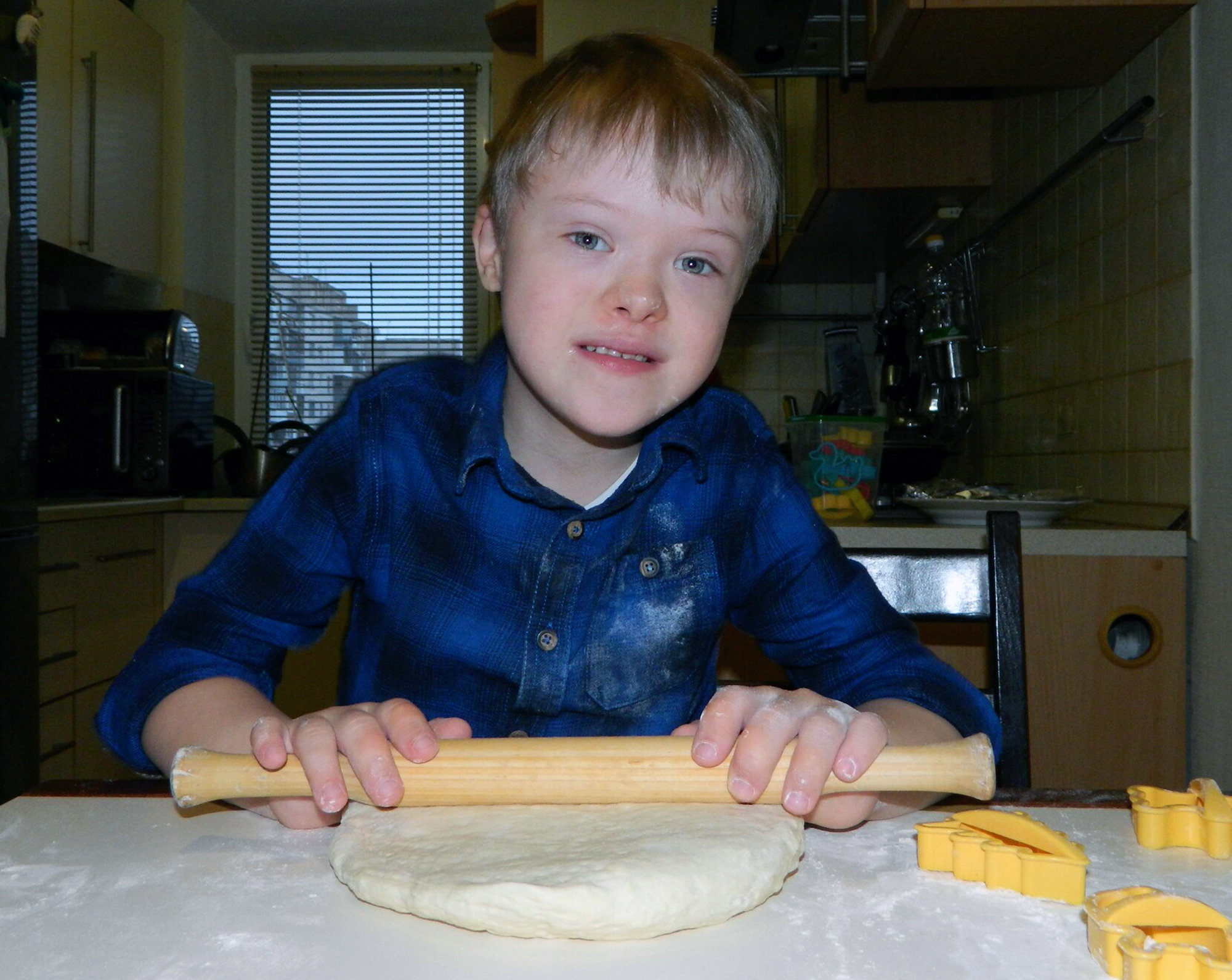
Today, Andrii enjoys watching Paw Patrol cartoons, learns the ABC and loves books with various vehicles. He is still talking poorly, but he is already starting to read some words. Most of all he likes to cook, and especially ‒ to knead the dough.
Oksana Kompletova is also a spokeswoman for the All-Ukrainian Forum “Parents for Early Intervention” in Vinnytsya region. The program of early intervention helps the family to restore its normal rhythm of life, to take the child and incorporate it into society; it contributes to the better development of the child. Oksana advises, “I recommend that parents of children with Down syndrome not sit at home, but seek like-minded people, specialists, and ‒ love their child.”
Reference
The risk of having a baby with Down syndrome depends on the age of the mother. For women under the age of 25, the probability of having a sick child is 1/1,400, up to 30 ‒ 1/1,000, at 35 years the risk increases at 1/350, at 42 years old ‒ up to 1/60, and at 49 years old ‒ up to 1/12. However, since young women, in general, give birth to much more children, the majority (80%) of all children with Down syndrome actually were born by young women under the age of 30 years.
A study conducted by scientists at the University of Mysore (India), discovered four factors that affect the likelihood of Down syndrome in a child. This is the age of the mother, the age of the father, close-kindred marriages, as well as, oddly enough, the age of the maternal grandmother. And the last of the four factors was the most significant. The older the grandmother was, when she gave birth to a daughter, the higher the probability of having a grandchild or granddaughter with Down syndrome. This probability increases by 30% every year that was “lost” by the future grandmother.
Every day, on average, three women in England have an abortion due to the discovery of Down syndrome in their unborn children. On average, 9 out of 10 women decide to terminate a pregnancy after they learn that their child is different. Studies show that about 1,100 children in England and Wales are not born annually because of the detected Down syndrome. This figure has grown significantly over the past two decades (in 1989 it was 30 babies). If women did not undergo a procedure of screening, specific to this syndrome, then the number of children born with Down syndrome would double and would now be 1,422 people in England and Wales.
50 per cent of newborns has congenital abnormalities of the heart, stomach, and intestines. Previously, they lived to 40 years, because these diseases are not treated. Now life expectancy is 60-65 years.
Text by Oleg Shynkarenko
Photos provided by the participants of the publication