

In the original play of Andrii Ivanov, there is no hint to Southern Palmyra with all its sea views and criminal adventures. In the performance of Stas Zhyrkov, with its metropolitan charm and fashionable director’s techniques, topography and toponymy, undoubtedly, they have great importance – especially for the spectator and the director himself.
Without quoting the classic literally, but if immersing his famous stanza in a stage subtext, the director hints – “I returned to my city, familiar to tears”!
Returned, so to speak, not to whine about his youthful disappointment or romantic defeat on the shore of his native Black Sea, but returned as the winner. Wearing the stylish clothes of the favorite of theatrical Fortune, with the status of the leader of our various stage charts. That’s how it goes now.
And I feel that even in the energy of the premiere performance, there is something of a benefit, but a directorial one, there is something so provocatively sincere and from a rematch, but rather moderate.
The city, which the director makes one of the characters of his stage text, meanwhile, lives “simultaneously” outside the theater and directly on the stage of the theater.
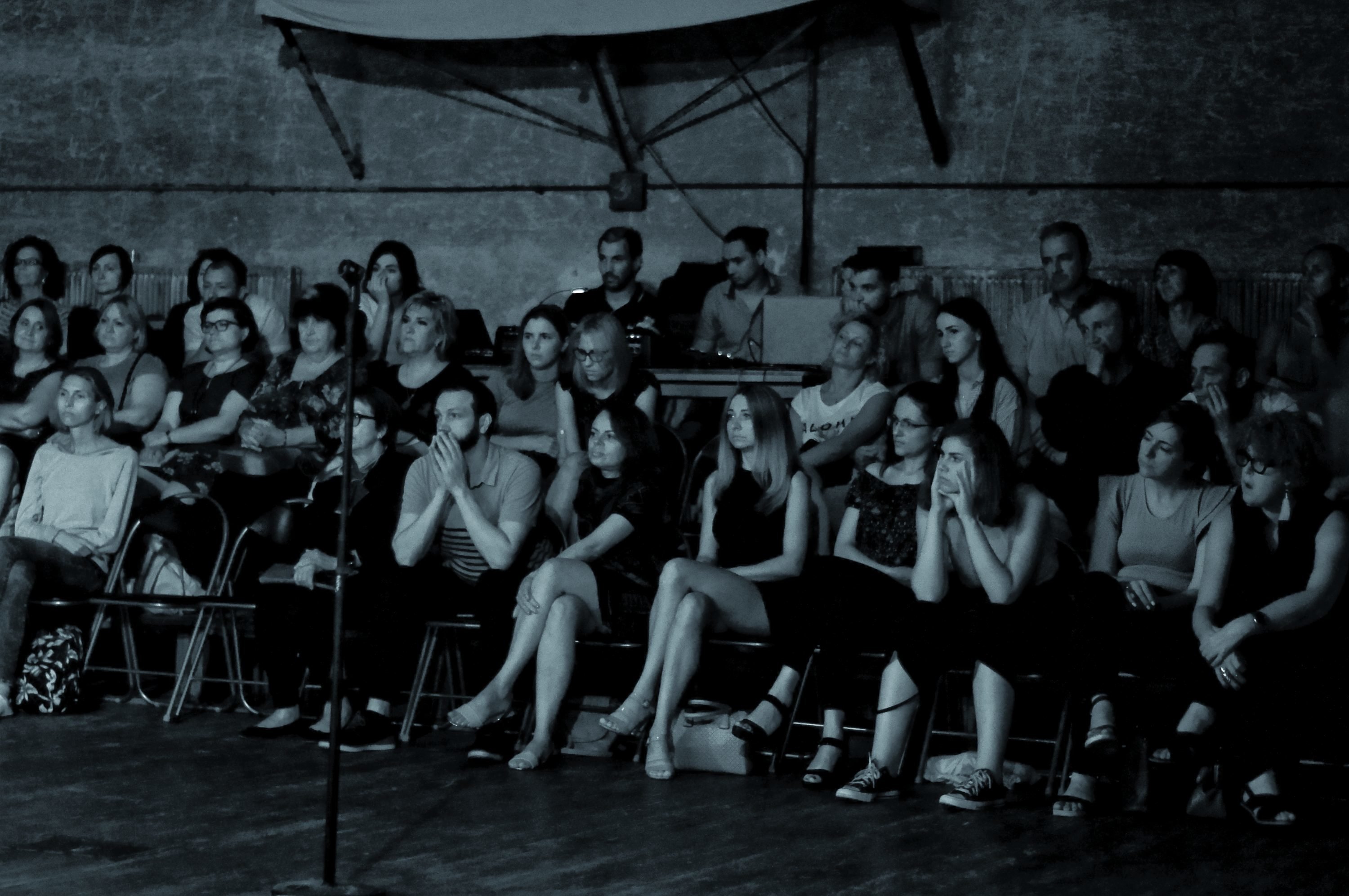
After all, it is on the stage – both the audience and the actors.
And it is here and now the small tragedies of “defective people” and “Odesa stories”, but not according to Babel.
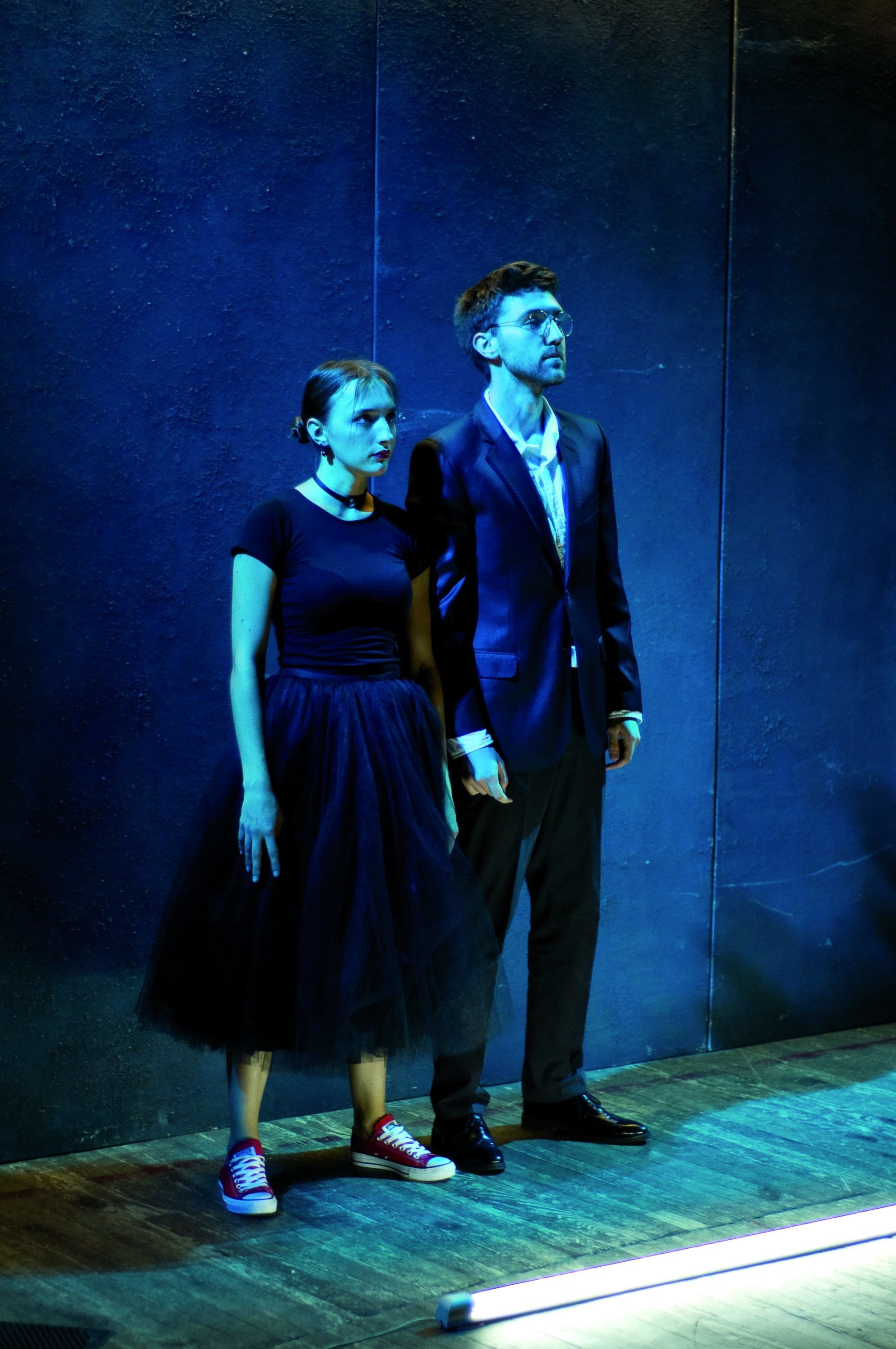
He is a teacher of philosophy, she is his unlucky student in love, next to them a little caricature, but recognizable “defective people” (father, mother, convict-groom). And around them and us – a continuous parallel reality, this damn global social network, which has become already a mainstream reality for many.
After all, we live “this way” – we like, we peep, we expose.
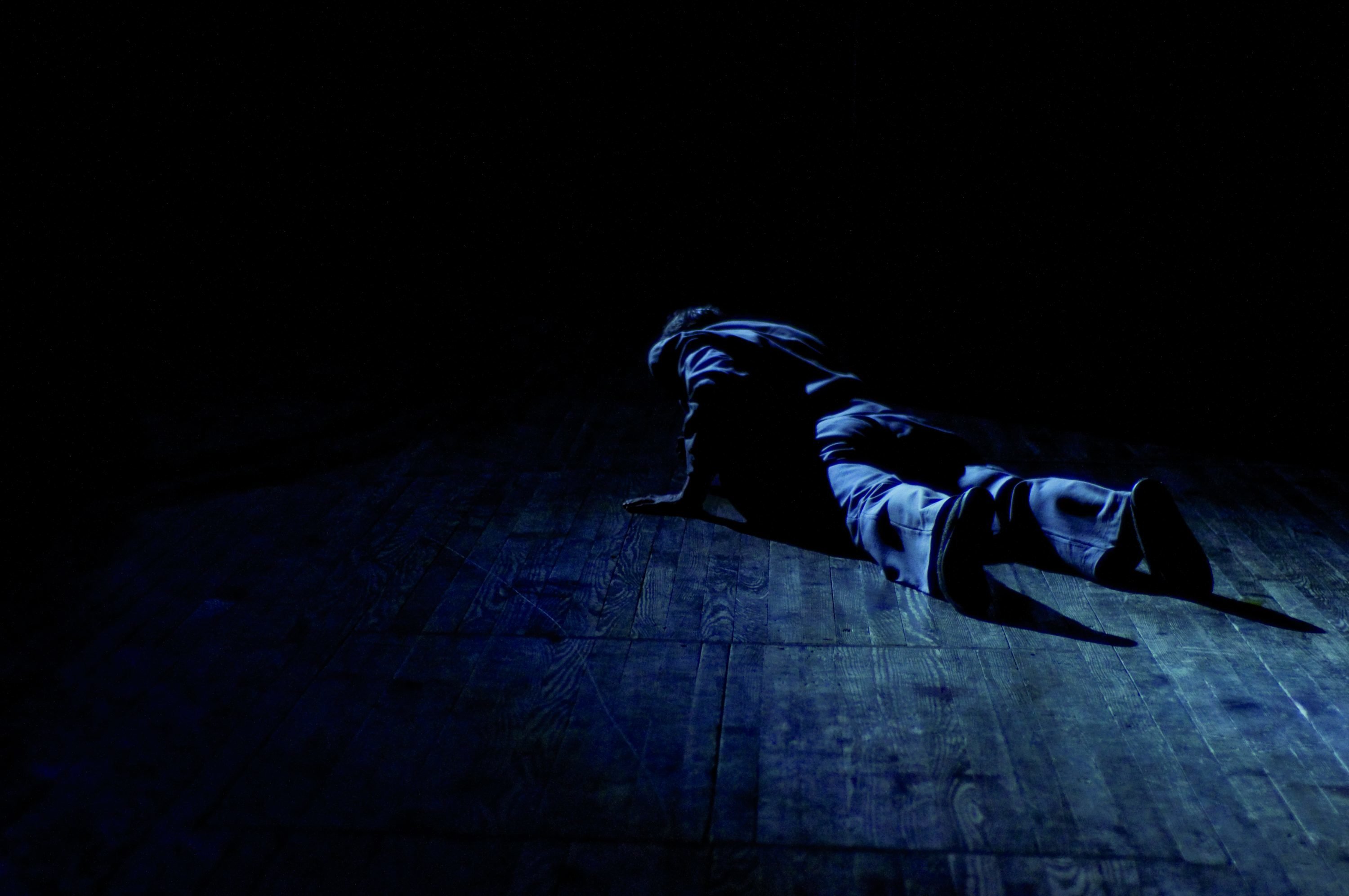
Parallel reality in this play is a determining reality. Without external characters and avatars, without fake hounds and outposts. The director does not consciously visualize anything, does not verbalize. Because this is the reality. As a spectator at the play.
And the spectator himself – here and now – as an element of a certain social table and a separate director’s world. With a hint of Odesa.
The world, I report to you, is not so joyful, it is not that kind of Odesa that is cheerful. The unfolding of the stage plot – about love, seduction, public shame and the alleged death of the young protagonist – notably in the twilight of the night. In the black darkness of the educational institution, where the light was turned off forever.

And now, in the midst of such a dark night, our most important element of the social table (that is, the spectator) perceives the director’s plot as a student perceives lesson.
Life lesson, author’s lesson, personal lesson (because there are so many recognizable things).
The front of the school board on the front of the stage cuts off the audience from the empty auditorium. And a big stage, as dictated by the director-demiurge, turns into the same educational audience, where everything happened – lovey-dovey stuff, sex, lies and video.
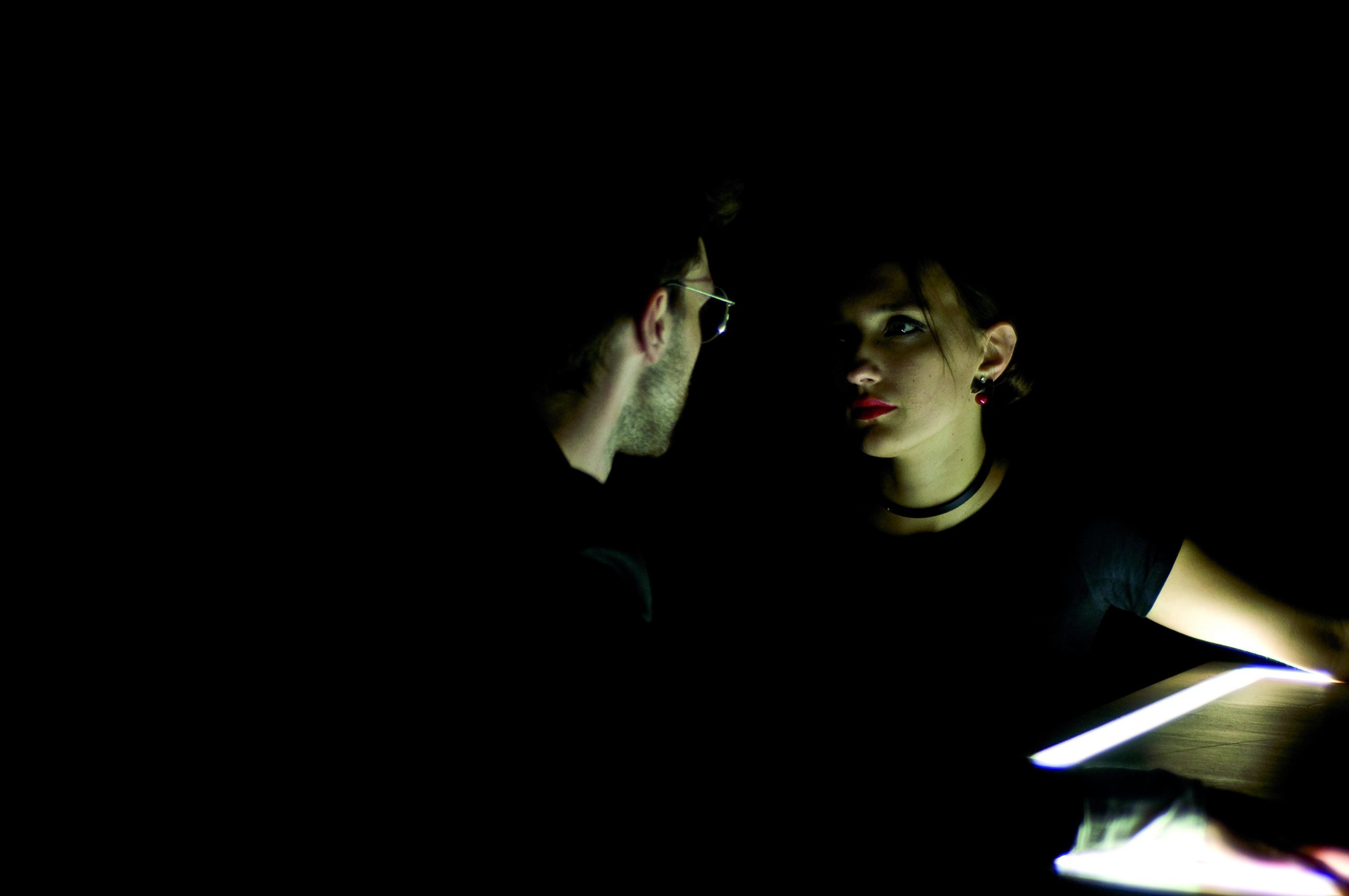
Here it is – the third bell in the theater! The lesson started.
And here is an interesting question on the basis of the already loud Odesa premiere – what was that “lesson”? And was it learned by its dear audience?
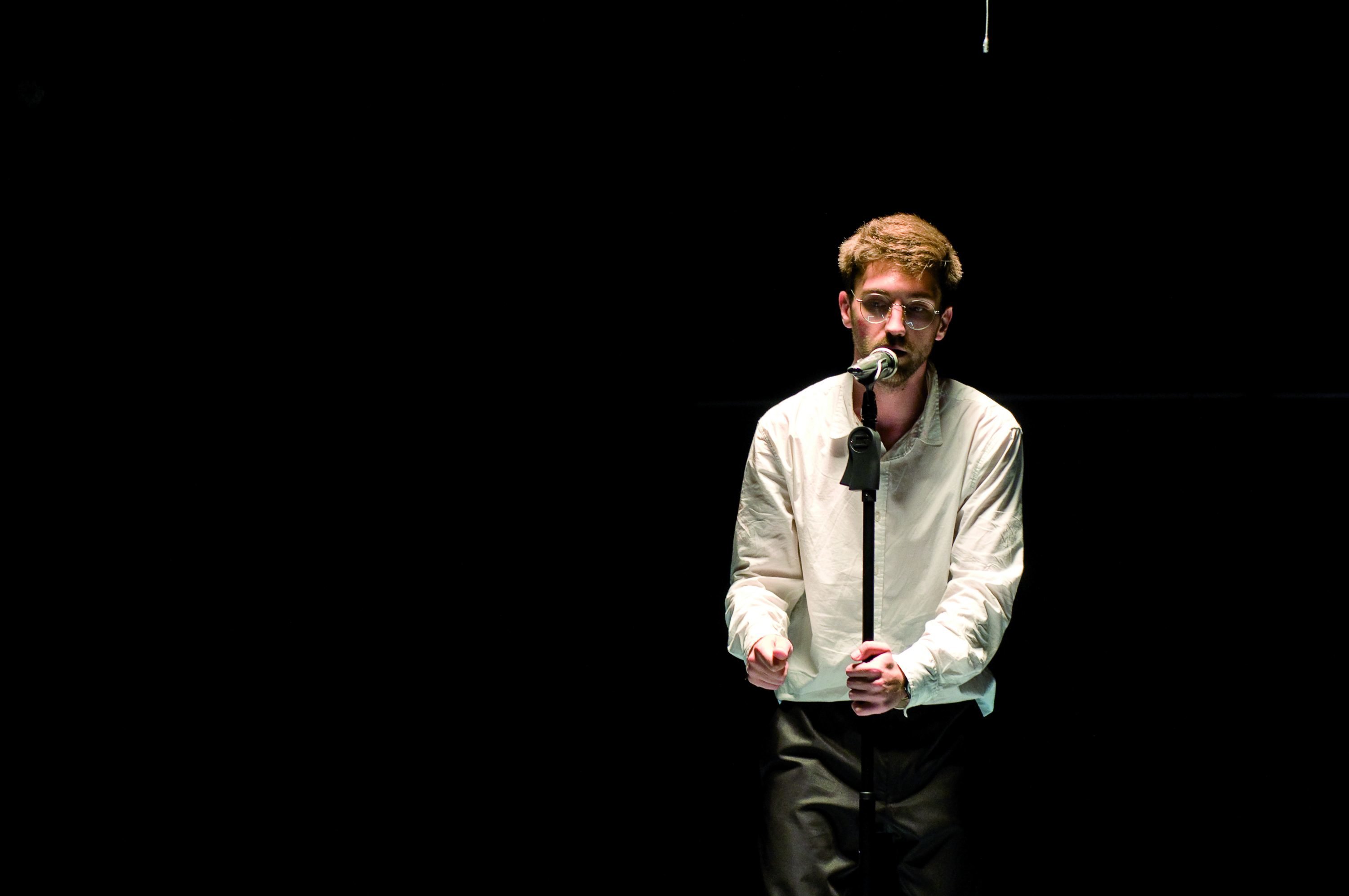
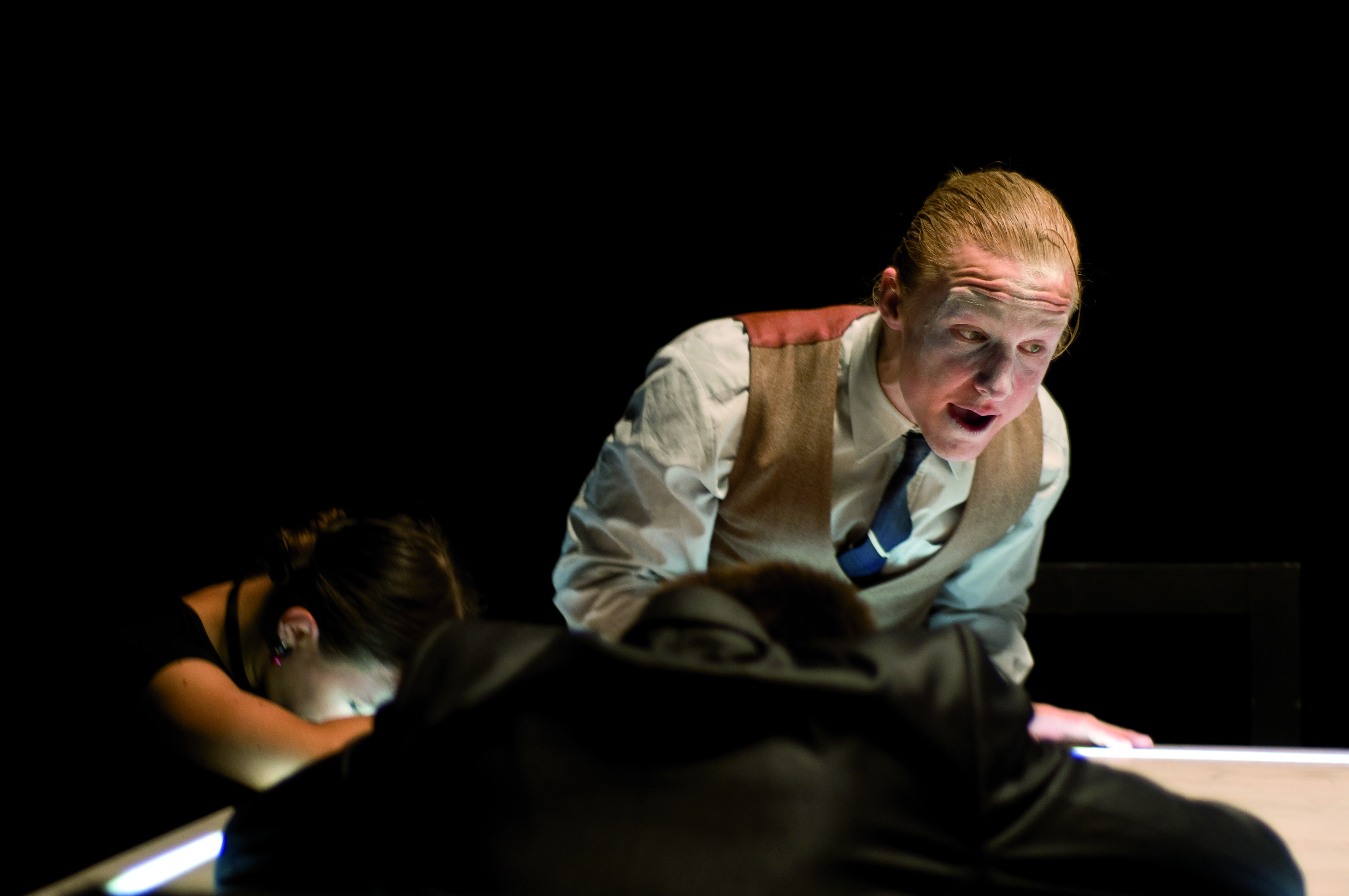
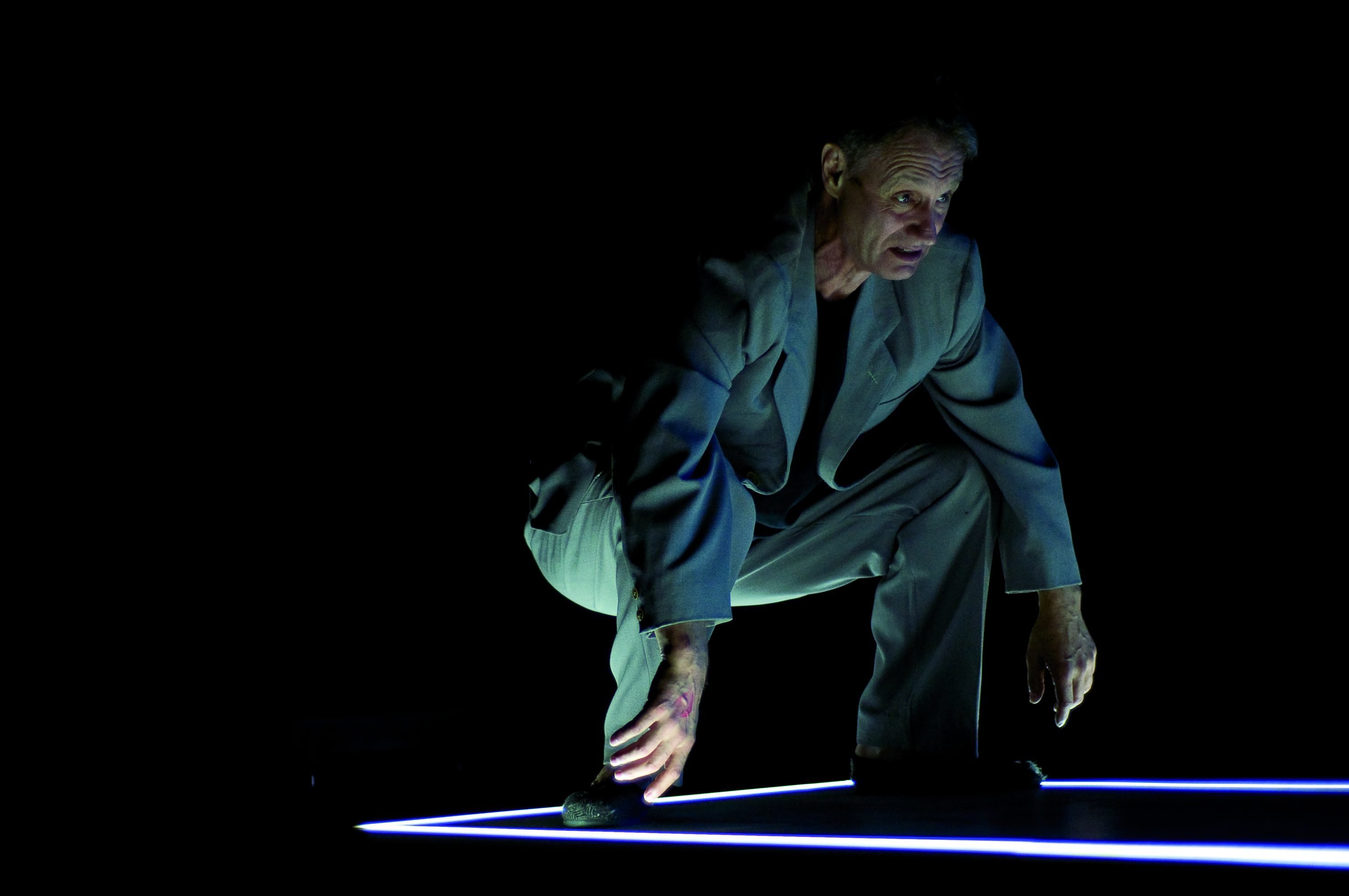
Philosophy lesson? Yes. The main lover is a philosopher in a modest specialized school. He is an oxymoron himself. Combination of the incompatible. The talented actor Vadym Golovko plays this philosophical game in such a way – the Chekhovian type in the garbage of life, the tender soul among the marginal hell, the lecture about Heidegger for the inhabitants of the madhouse. According to the plot, this philosopher drunk out his conscience! He did not take into account the philosophical consequences of his connection with the student and the public menagerie. He was tempted, did not pass the test. As M. Tsvetaeva wrote, “Ruddy man don’t love a pale woman, Rich man don’t love a poor woman!”. (translated by Ilya Shambat)
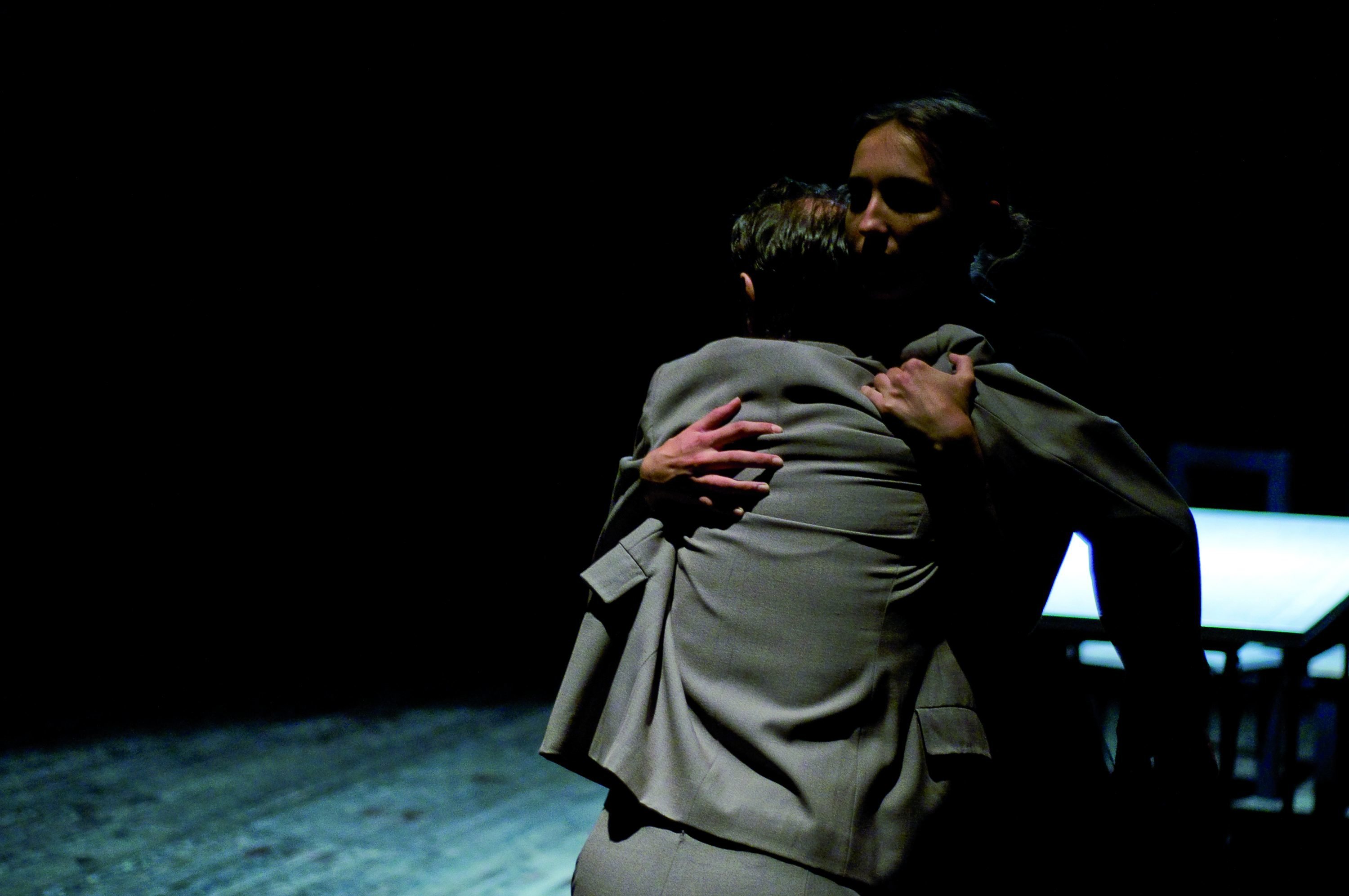
Hence – the second lesson in the play.
The lesson of love.
It is without frank scenes, without instructions “as it should be”. After all, in fact, this is about the notion of “dislike” in the world, where love was replaced by likes, streams, posts, where tactile sensations in love relationships for some have long been an oxymoron. And here there is no directorial moralizing, mentoring, some kind of longing. In the play there is an exclusive medical diagnosis of this “reality” – dislike.
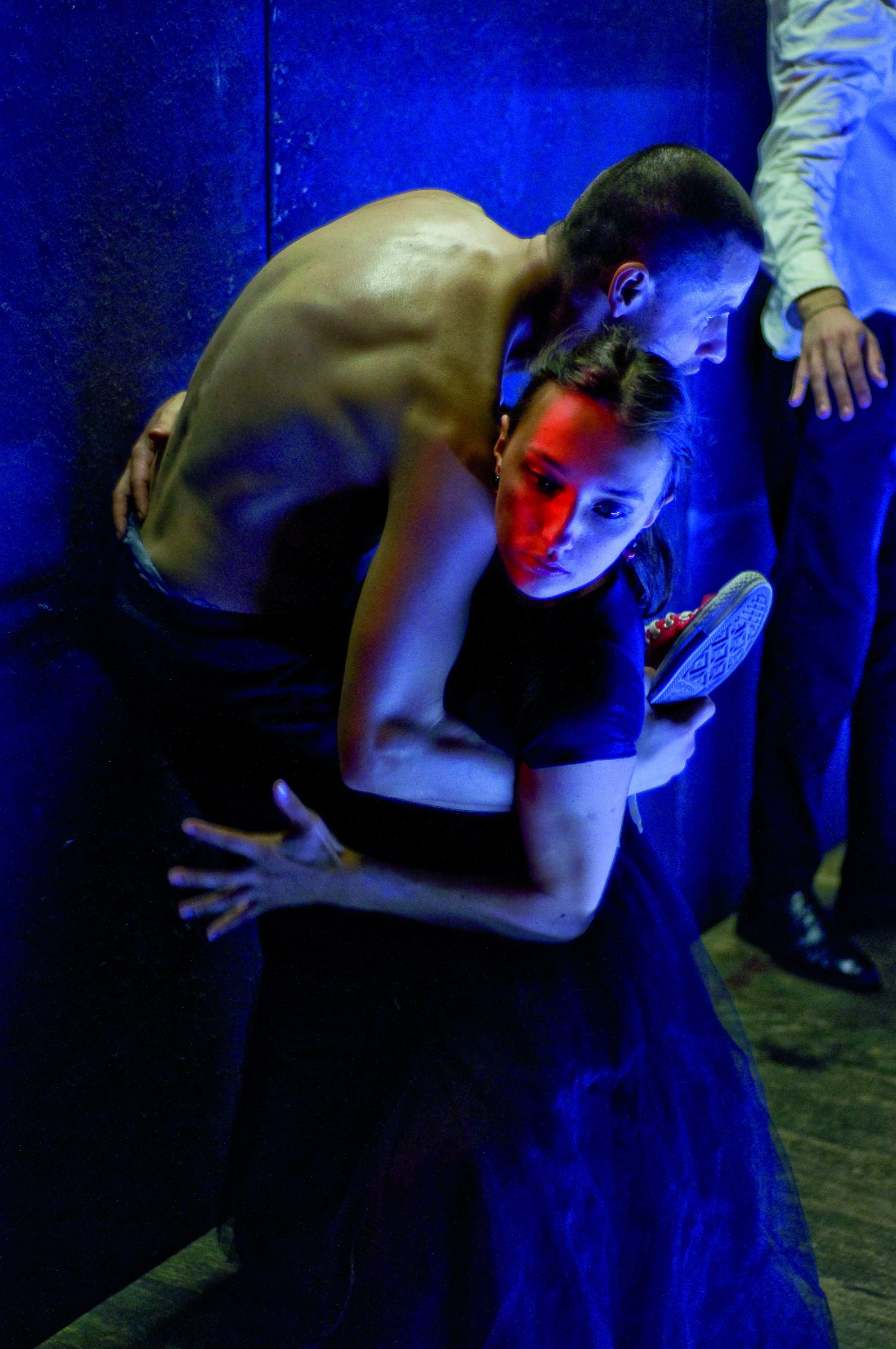
The Time: Night. Part Two.
The actress Maryna Klimova, a young theater star, is perfectly playing the “dislike”. A strict demand for love is always in her eyes, a passionate desire to pray for her, a thirst to fight for her to the last. And suddenly – bang! – her hooligan dejection, her teenage superiority, her maiden existence are in a parallel reality, where love doesn’t live for a long time.
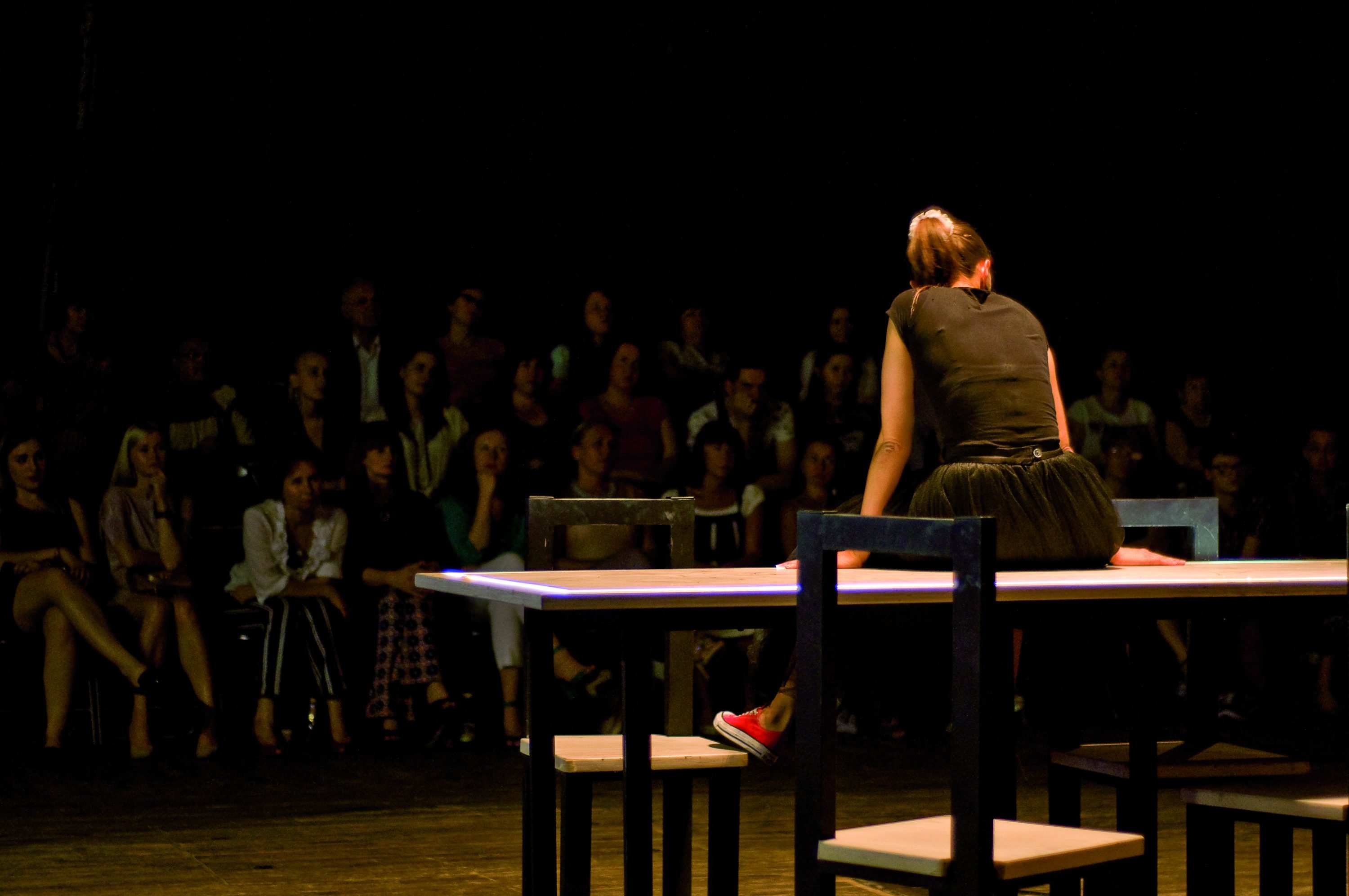
Finally, the third “lesson”, based on this performance. Relatively speaking, the lesson of history.
He returns the director and the spectator to the 90s of the 20th century. In a popular black drama at that time, the origins and consequences of which are also in the poetics of this new play. Currently, the plays and prose Petrushevskaya, which stigmatized that difficult era – “The Time: Night ” (the name of one of her works). This is the time when the director is still small, and we (the spectators) – we still believe that the strange darkness of the 90s will soon dissipate and a sunny morning will inevitably come for all.
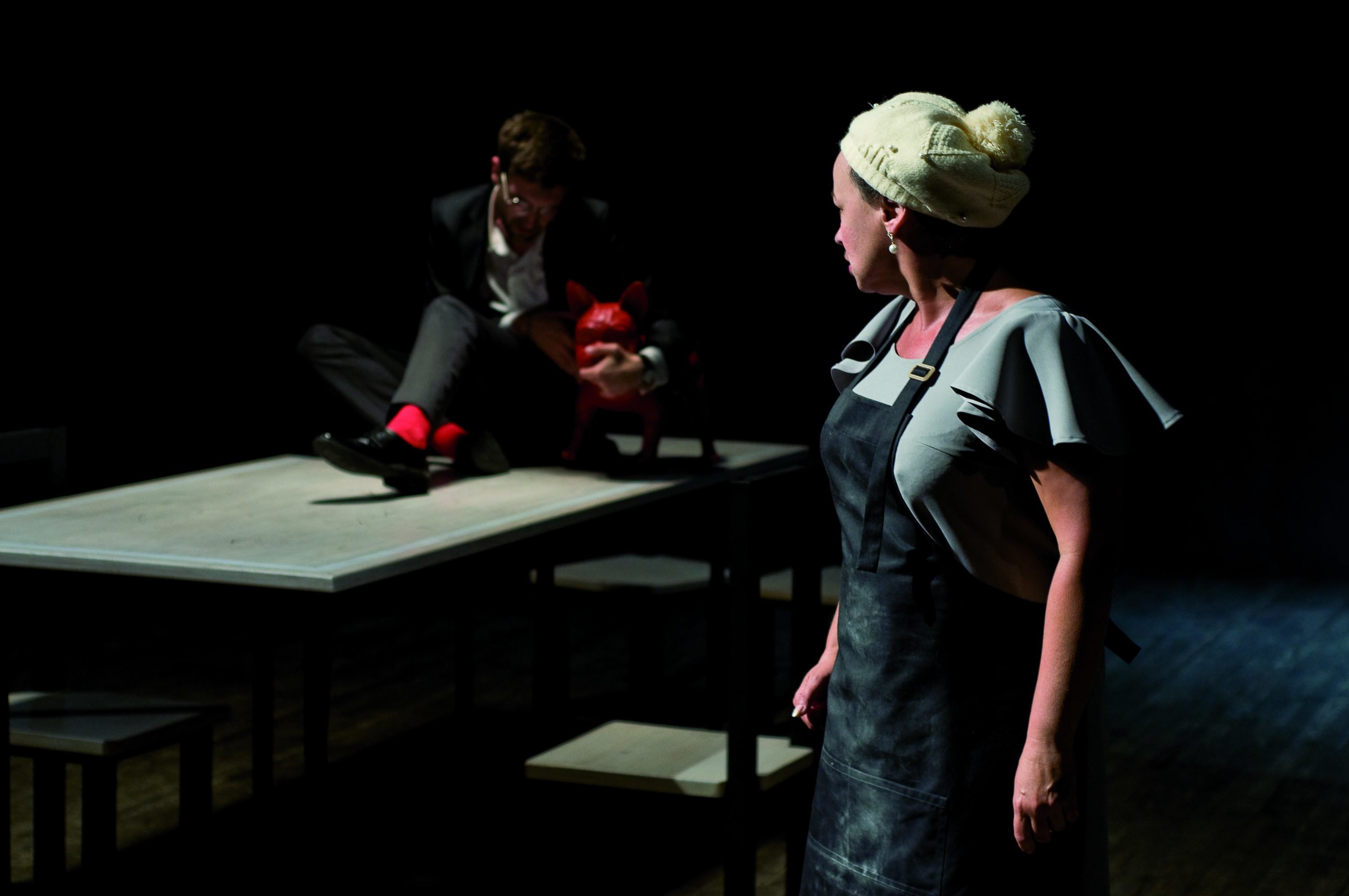
Actually, this talented play is about the fact that darkness, unfortunately, does not disappear, that the mad 90s, even despite the social network parallel reality, come back again and again – in the third millennium, into our city, in this unevaluated life. So, the lesson of dislike is not over yet? The director still feels something.
Text: Oleg Vergelis
Photo: Irina Rohava, Press Service of the V. Vasilko Odessa Ukrainian Theater