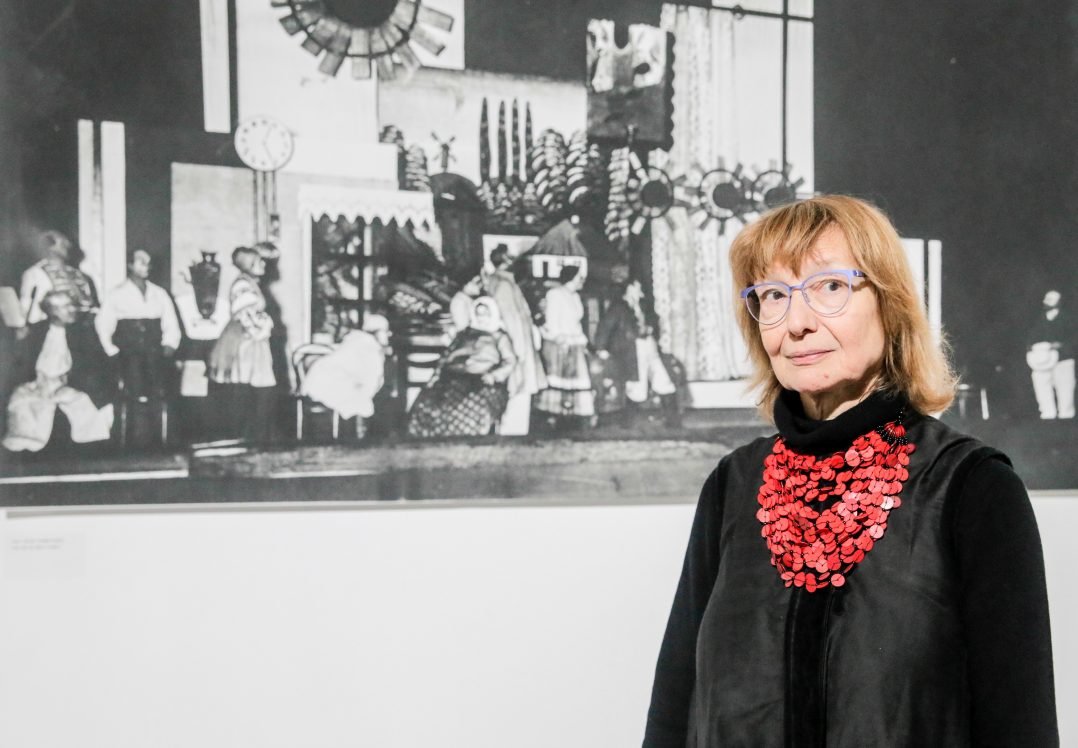


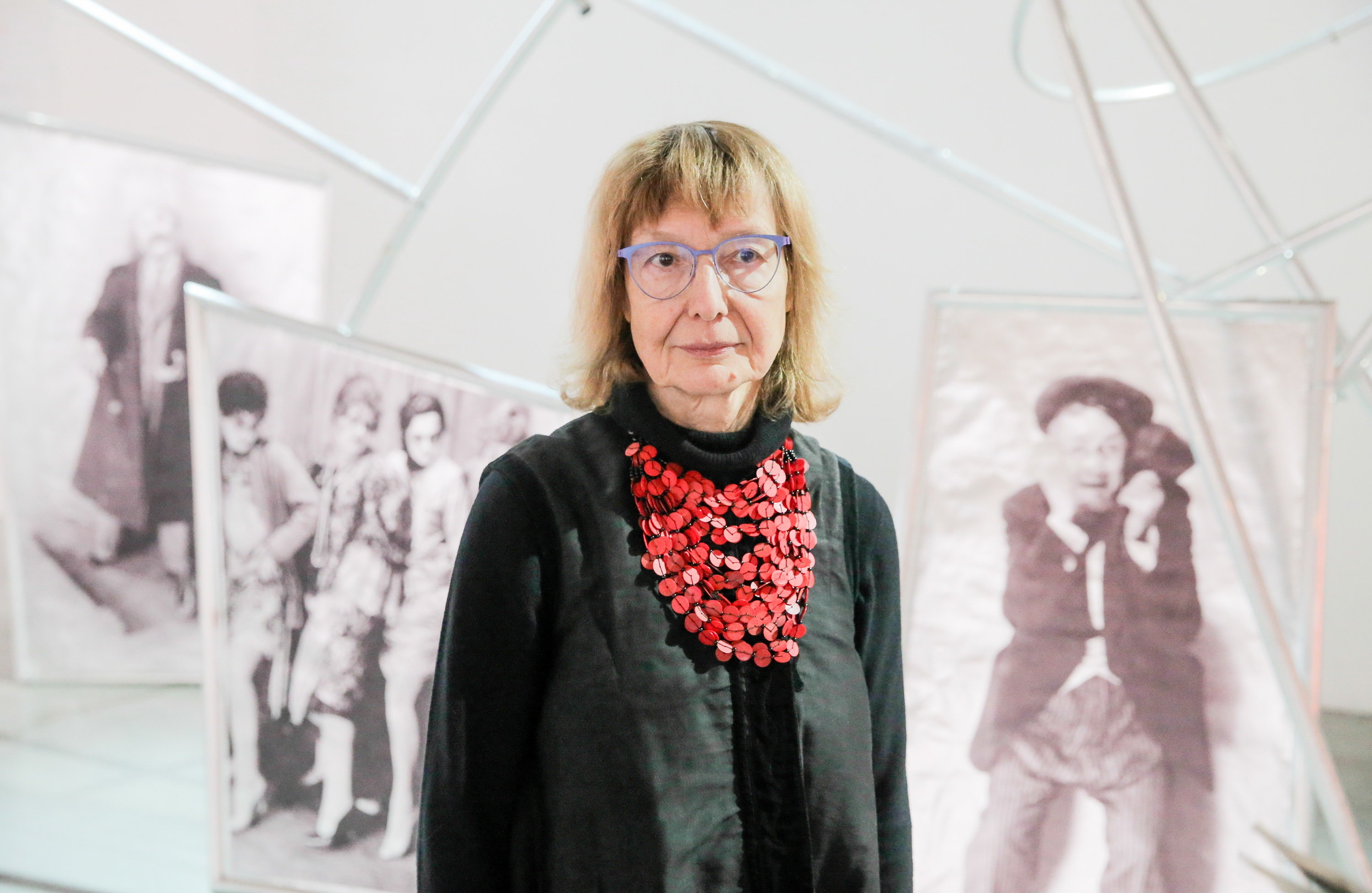
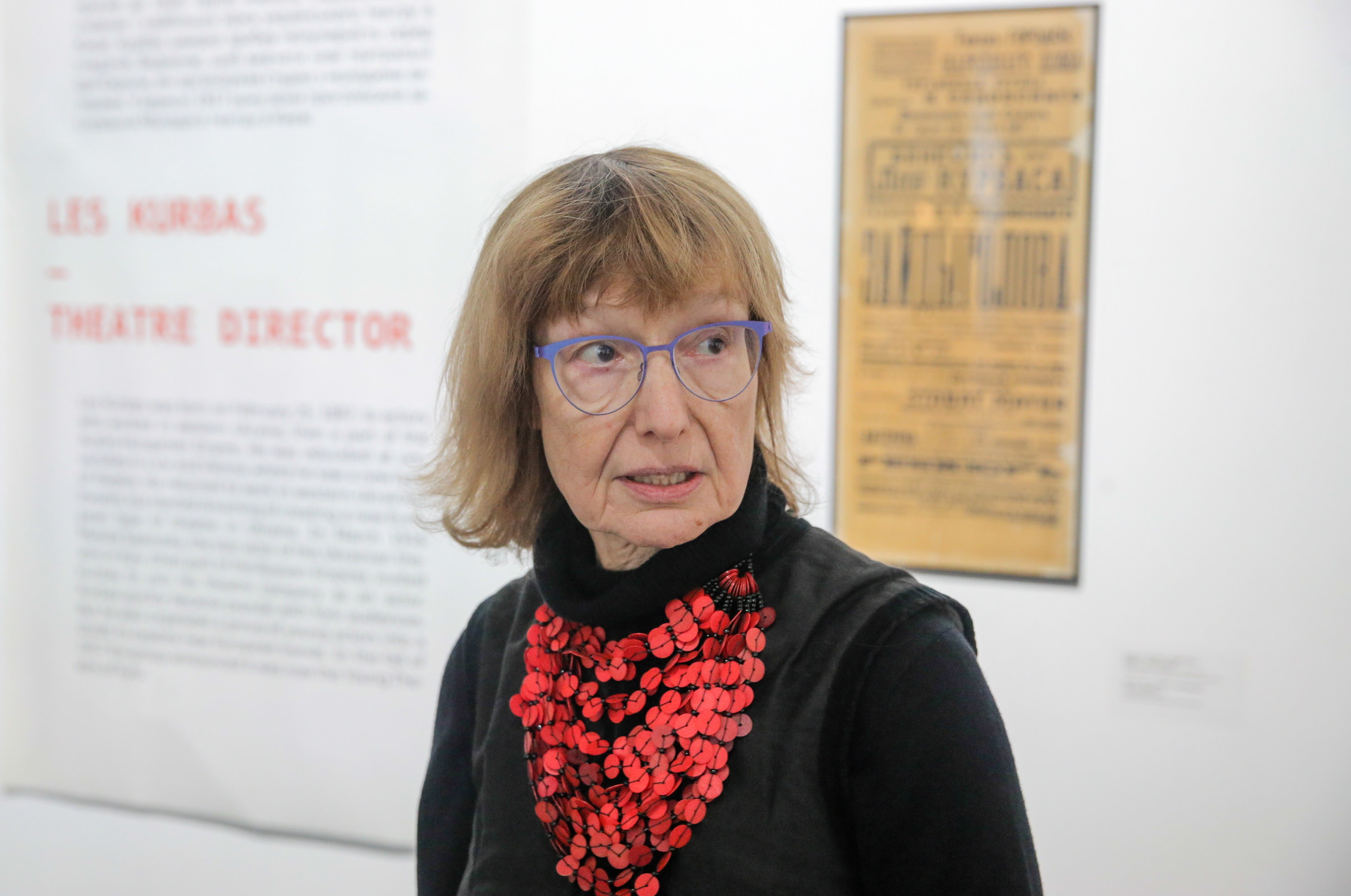
Virliana Tkach, an American director of Ukrainian origin, combines in her plays absolutely alien to each other cultures, languages and genres. She works at the New York Theatre La MaMa which created an experimental American theatre. In 1990, Virliana Tkach started her own La MaMa’s art group “Yara”. She is the only person in the group with the Ukrainian origin, despite this, this group became an unofficial promoter of the Ukrainian culture. Due to Virliana Tkach, New Yorkers saw The Forest Song by Lesia Ukrianka (one of the most prominent Ukrainian writers of the XIX – beginning XX centuries), poems by Pavlo Tychyna (a famous Ukrainian XX century poet) and music of a modern Ukrainian band Zhadan I Sobaky (Zhadan and Dogs. Serhii Zhadan – a famous Ukrainian writer and musician). The director came to Ukraine for the first time in 1990. Since then, she has often visited Ukraine with her plays and exhibitions. This time, I met Virliana Tkach in the Kyiv Art Arsenal where she arranged an exhibition called Kurbas: New Worlds (Les Kurbas is a prominent Ukrainian director of the 1920s who reformatted the Ukrainian theatre and was world-known).
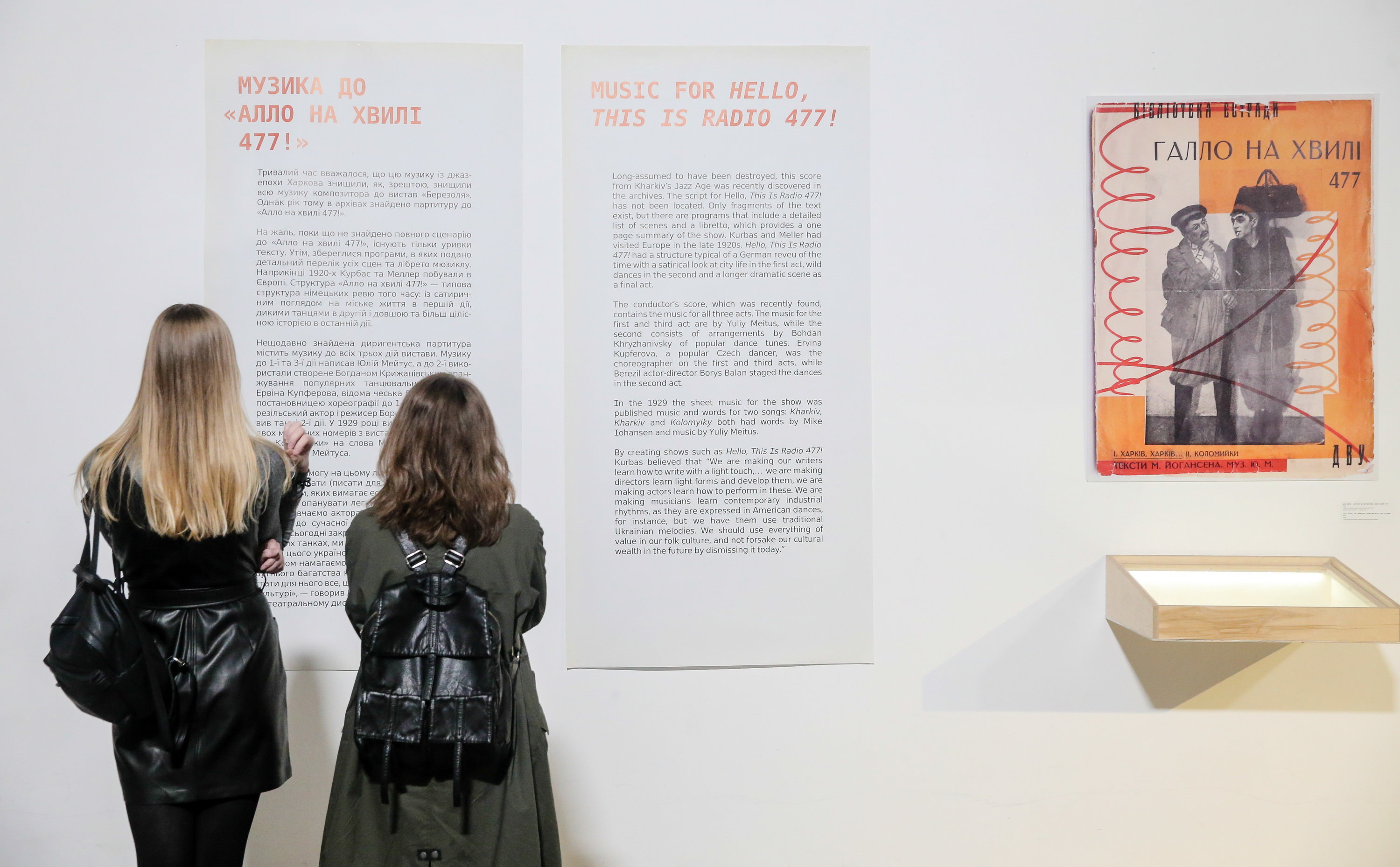
“We staged a decisive goal – to show Les Kurbas’s as a director,” Virliana Tkach says, guiding us through the exhibition. “It is challenging because we have no artifacts which he created. The originals we have are ads, programmes, posters – they don’t say much about his work. That’s why we created installations which were aimed at explaining what new he had brought. People often can vaguely imagine his achievements, that’s why the simpler we speak, the better”.
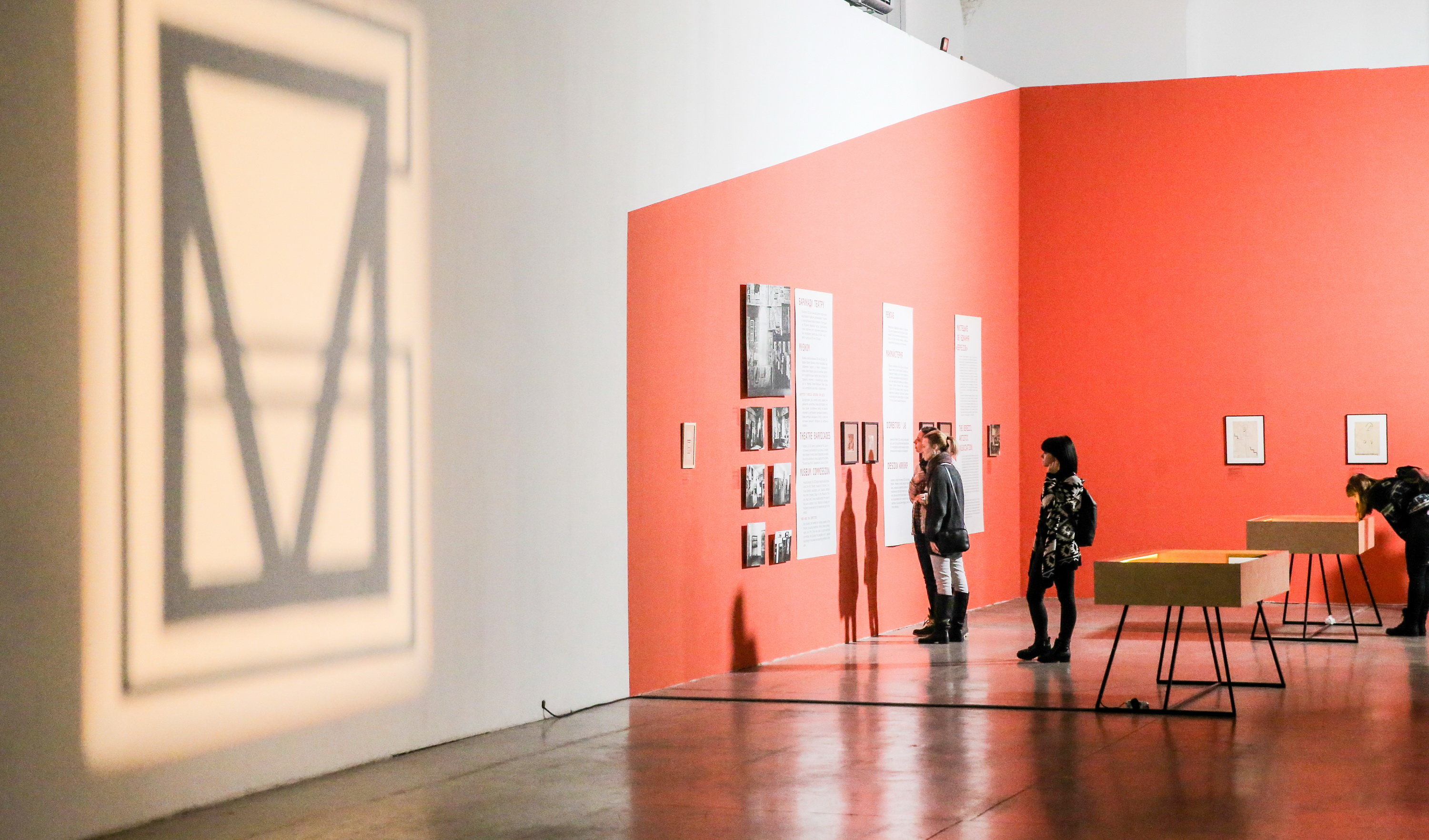
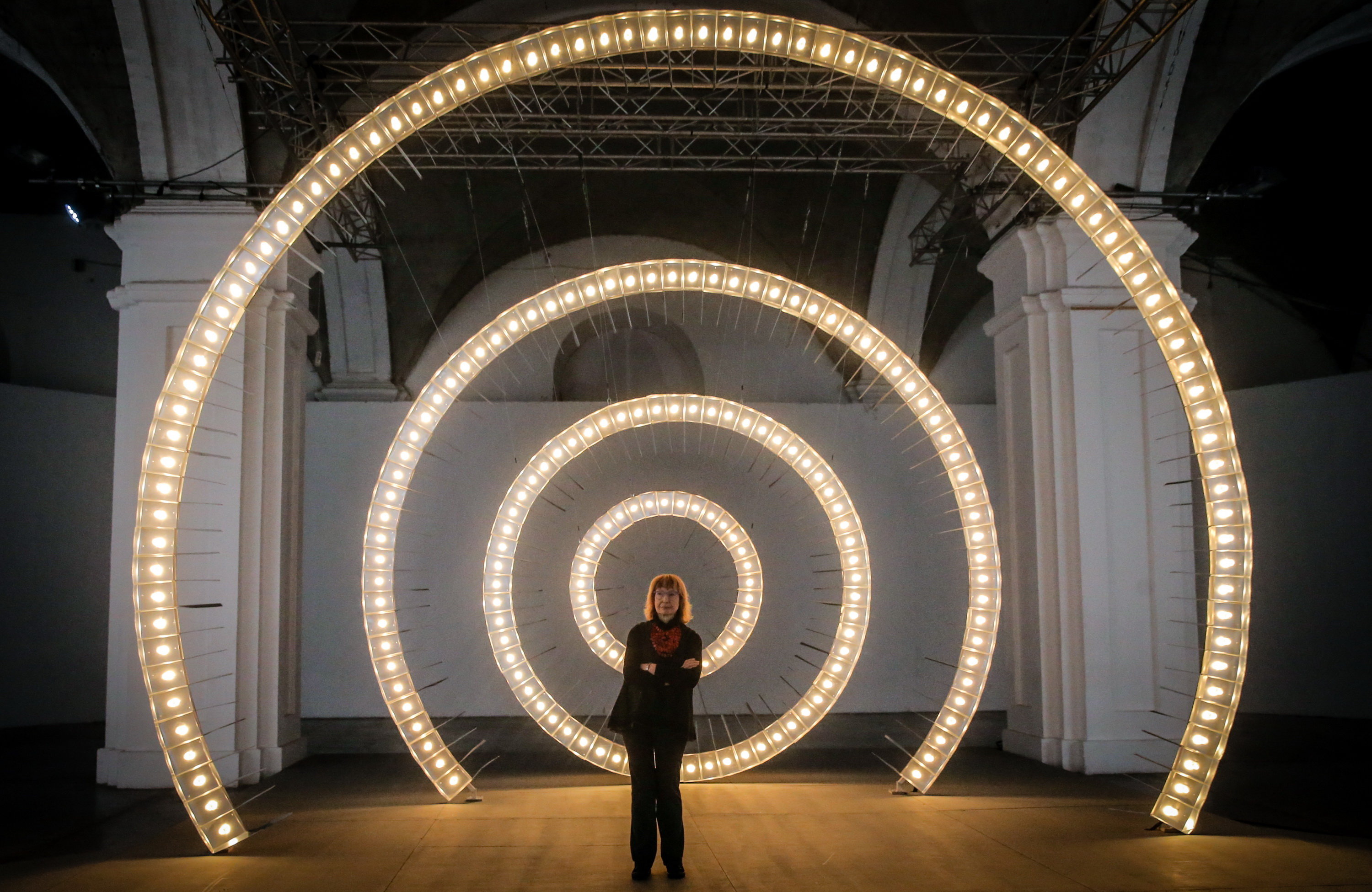
There are six installations, each tells about a minute of a play. For example, through maximized photos on light boxes and recordings of actors speaking which you can listen to in the headphones, we tell about one moment from the Gas play. In this play, actors acted workers at first, then machines, and finally, they become gas which blows up. This is the wave of transformation which is shown in the photo. Kurbas uses bodies and moves of actors to show a blow-up on the stage. At that time, these ideas were a breakthrough in the world.
You were born in Newark. When and how did you begin being interested in Kurbas and culture of your parents’ country in general?
I grew up in the family which spoke Ukrainian. My grandad was the first to create Ukrainian schools in the USA. But I decided to enter a leading art college where there were no Ukrainians. For four years, I spoke Ukrainian only with my cat so I could feel like at home.
I was very keen on the Experimental American Theatre. My teachers didn’t know even where Ukraine was on the map, not speaking about Les Kurbas. There is still not much information about him.
It began when during my master’s program, I stage an avant-garde play based on the work by Eugene O’Neill (American playwright and Nobel Laureate in Literature). My drama academic advisor said, “Virliana, you will never finish if you begin writing a dissertation about him. There are 600 books about him, you will have to read all of them. There must be a Ukrainian director.” Then I recalled that my grandpa had once told me about Kurbas. He said he studied with him in Wien. I found only two books about him in the library. I was happy that I could finish my work at the weekend (smiles). I am still studying him.
What made you deepen your knowledge about Kurbas?
Plays Gas and Jimmy Higgins, namely the way how he puts moves and cinema there. When I read about that, I realized that Kurbas was a great director who is unknown to most people.
Are there any memories from your grandpa?
No, I was too little, so I didn’t ask much. I regret it every day. But last year, we were moving an old exhibition in the Theatre Museum, I sat down to have some rest and saw a programme of a 1910 event dedicated to national poet Taras Shevchenko in Wien. It said that Kurbas was reading a poem Caucasus, the last name of my grandpa – Kostia Kisilevsky – was written below. It turned out he also recited poems that night. So we are connected with Kurbas in some way. I believe there are more artifacts and things concerning him we will find. People say to me, “We know everything about Kurbas.” It makes me laugh.
You said that you were interested in the avant-garde theatre and at first, ethnic things were alien to you. What made you appreciate traditional culture values?
I got interested in values due to Nina Matvienko (famous Ukrainian folk-singer) when I heard her singing old songs. We made with her a play about water – Waterfall/Reflections which was quite amusing. Later, I visited Buryatia and loved their customs, stage 6 or 7 plays. Sometimes, you come to your culture through alien ones.
In another play Circle with Nina Matvienko, you raise a topic concerning the loss of the traditional culture. What is your idea of saving it?
Everybody has to care about it in their families, a mother has to tell about it to her daughter. It is a responsibility up to a family and society. However, I guess artists also do it. When they take something traditional – like Kurbas took vertep (a portable puppet theatre and drama in Ukraine) – and turn it into new art, give it a new consideration according to the current reality. Then it stays alive. When folk calendar songs are combined with jazz, it is good not only for jazz but for folk calendar songs as well.
You combine different cultures in your plays. What made you start to do it?
It is very natural for me because in Newark, all my neighbours were speaking another language and we always perfectly understood each other. Some children spoke Italian, I spoke Ukrainian and we could have fun together without a problem. I don’t remember now what language we spoke with each other. It didn’t matter, children often need no language.
What is your audience’s attitude toward bilingual plays?
Sometimes there are three and four languages engaged in a play. It is the same as in childhood. There is no comprehension problem. When we were staging The Forest Song for the first time, actors of the Lviv Les Kurbas Theatre were speaking Ukrainian while my actors were speaking English. One of the leading New York critics said after the play, “How was it possible that I understood everything when the half of them were speaking another language?” She came up to Oleh Drach (an actor, director, one of the founders of the Lviv Les Kurbas Theatre) to take an interview and only then realised that he didn’t speak English. After the play, she wrote a very good review.
It is interesting to realize how you work on your plays. What do they begin from?
Everything begins from a verse. Then, it is wrapped with other things. Much is connected with Tychyna’s poems. For example, for a play 1917-2017: Tychyna, Zhadan I Sobaky, I took poems from a collection Instead of Sonnets and Octaves. It is much sync with what I have heard from young residents of Donbas about the war now. It was important for me to convey these parallels between 1917 and 2017.
What are your requirements for an actor?
My actors are co-creators of our projects. I am not interested in those who only say someone’s words. For me, an actor is the one who is fond of creating.
What is an indicator of a successful play for you?
When I like to work on it every day. If I don’t – then something is wrong. I must like a play because I am the person who sees it the most often – at numerous rehearsals, on the stage. I can hardly think about the audience, maybe just about friends of mine whom I respect immensely.
Before the war, you often visited Kharkiv and Donetsk with plays and exhibitions. Why is the east of Ukraine attractive to you?
I have been always especially interested in the east. I was a big patriot of Kharkiv, everybody was surprised by that. In 1990, when I came to Ukraine for the first time, I wanted to go back the same day. Everything here was so strange, grey. I thought. “Am I crazy to have come here?” I stayed only due to the Kharkiv building Slovo (Word – the building where writers, directors, artists lived). Roman Cherkashyn (an actor and director, worked in the Berezil Theatre with Les Kurbas) took me to the building and showed, “Here, Tychyna is writing his poems, there, Kurbas is preparing his exhibition, and here Khvyliovy is shooting himself (Ukrainian writer of the 1920s. He was famous for his anti-Moscow struggle. Khvyliovy made a journey in the Poltava region, where he saw Holodomor. He returned home with a broken heart and witnessed the beginning of Soviet repressions towards Ukrainian intelligentsia. After his friend, writer Mykhailo Yalovy was arrested In 1933, Khvyliovy committed suicide).” It was a cosmic minute for me, all my ancestors seemed to appear in front of me. It seemed to me I knew something about this place. I could speak about those artists who had lived there. Very long. Cherkachyn was constantly surprised, “How can you know?” This theme was interesting for me already in the USA, I learnt many things while speaking with Yosyp Hirniak (an actor and director, an actor of the Berezil Theatre, emigrated to the USA) who wrote one of two books about Kurbas.
In comparison with the 1990s, when you came to Ukraine for the first time, what key changes can you see?
People are less scared now. That imperial fear is gradually fading away. But it is a very slow process. In the 1990s, the worst thing was to witness inferiority of a Ukrainian product to Russian’s one. Everybody constantly looked to Russia, referred to some Russians and I didn’t know anybody of them. Who in the world cares about those people? I guess it impressed me the most. It still exists but much less. A young generation, which can’t even speak Russian, is very interesting.
In 2008, in one of the interviews, you said that the Ukrainian culture was enclosed. Do you feel something has changed in this regard?
The situation is gradually changing but it is a time-consuming process. Ukraine needs more overseas institutions, translations. We do much but we should do 20-30 times as much to catch up.
What can the Ukrainian culture offer to the world?
It can offer Les Kurbas and everything which our modernists made. They can teach us many things.
Interview by Liliya Shpotenko
Photo by Ivan Pecheny