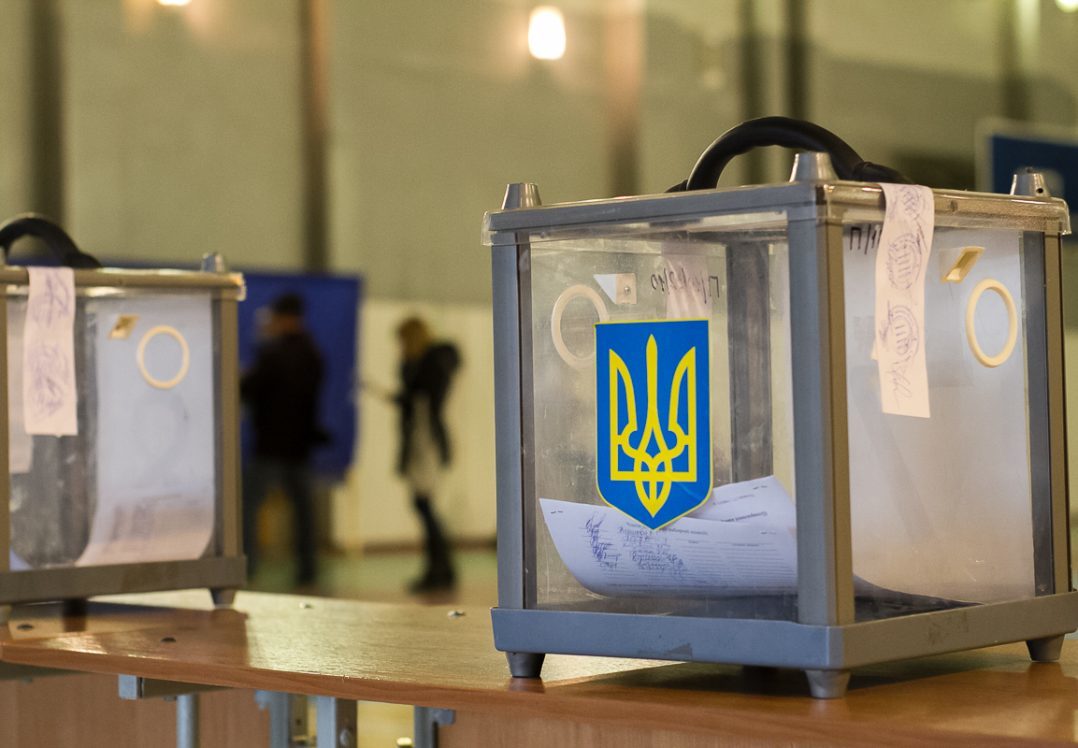


Less than two months left until the voting day of the presidential election. Considering active discussions of the topic and forecasts of specialists, the voters’ turnout should be quite good. At least, verbal “disputes” between supporters and opponents of one or another candidate are on the top of emotions. Will all Ukrainians be able to exercise their constitutional right to elect the authorities? What should you know and do, so as not to be aside from the active part of voters on the election day?
Register – there are no queues yet
Almost five years ago, during the special presidential elections, millions of Ukrainian citizens were not able to vote. And, they did not take part in the campaign, not because of their own inactivity, but because of the annexation of the Crimea by Russia and the hostilities in Donbas which became an obstacle. The next elections – parliamentary and local – were also missed by many because of the objective and subjective reasons. Internally displaced persons (IDP) settled down at new places, often changing them.
“In the presidential elections of 2014, 81.8% of the voters in Donetsk oblast (about 2 million citizens) could not vote because of the occupation of District Electoral Commissions and the terrorist threat,” said Tetiana Durneva, the executive director of the Impact Group public holding to DUMKA. “During the parliamentary elections in autumn 2014, the relatively small number of voters with a ‘residence permit’ in the temporarily occupied territory used the procedure of temporary change of place of voting. Even those who were able to vote received only one ballot paper, having no opportunity to elect a deputy in the single-member district. During the local elections in 2015, IDP did not vote at all in their new communities, apart from two citizens who had gained the right to vote in a court”.
Over the years, IDP have reached a certain degree of stability, became interested in their electoral rights. In general, the issue of providing the possibility for the citizens of Ukraine (not only the IDP) to vote during the presidential elections on March 31 is extremely urgent. The state has to take care of it, and it is supported by public organizations.
“Currently, there is a simplified procedure for changing the place of voting in the presidential election without changing the electoral address,” Ms. Durneva continued. “You just have to visit the nearest department of the electoral register with a passport, to write an application on the temporary change of the voting place without changing the electoral address and thus define your new election district. It has been possible to do so since December 31 of the last year and until March 25, that is, not later than 5 days prior to the day of voting. We call everyone, who knows that on March 31 he or she will be out of a place of official registration, to contact the registry departments without waiting till the last minute. The procedure of writing an application takes a few minutes, and now, with no queues, you will need no more than 10 minutes.”
According to the Central Election Commission, as of January 31, more than 6,500 voters have changed their temporary voting place. Of course, most of them are the residents of Donetsk and Luhansk oblasts. The amount of people from Crimea is much smaller. But as the election day is coming, this number will increase.
Reference
There are departments of the electoral register in all cities and regional centers. All addresses and phone numbers are on the State Voters’ Register website.
Specialists convince that in preparation for the upcoming elections, the President of the CEC has simplified certain procedures. These steps should simplify the access to voting for citizens who are far from their official registration area.
“In addition, the services on the CEC web resources have been updated, in particular, the website of the State Voters’Register,” Tetiana Durneva emphasized. “It is now very easy to find the nearest polling station if you enter your address or check your personal data in the Voters’ Register. It takes two-three minutes (DUMKA has checked, it really works quickly – ed.). No need for registration, you don’t have to wait for two days, as it was in autumn. Information is available and full. The feedback form is also working”.
Legislative changes are frozen
Six months after the presidential elections, Ukrainians will have parliamentary elections. You also cannot ignore local elections. With these campaigns, the opportunity to take part in voting does not look optimistic.
“As for the parliamentary elections of 2019, taking into account the existing proportional plurality voting system, in the part of proportional national lists, the same rules as during the presidential elections work there,” said Leontіi Shypilov, a member of the Central Election Commission. “Regarding plurality component of parliamentary elections, the general rule for registering a voter within a particular electoral district is determined by law. Regarding local elections, according to the Law, there is a working regulation of communication with the local community, which is confirmed by the fact of registration within the relevant administrative unit.”
When it comes to simplifying the access of IDP to local elections, here, unlike the presidential race, the possibilities of the CEC are quite limited. After all, the procedure for changing the place of voting is only applied during national elections.
“The problem can be solved by legislative changes in the approach of determining the electoral address, for example, through the adoption by the Parliament of the draft law № 6240 on the election rights of IDP and other migrants within the country,” said Tetiana Durneva. “Our organization is one of the developers of the document and we have been working with partners and deputies for almost two years now on its approval.”
Recently, the draft law has finally received the opinion of the Verkhovna Rada’s Committee on Legal Policy and Justice. It is possible that it will soon be reviewed in the session hall, and may be adopted.
“Draft Law № 6240 applies not only to IDP. Among all the groups whose electoral rights it affects, the IDP’s share is only 20-30%,” explained the People’s Deputy Ruslan Sydorovych, a member of a specialized parliamentary committee. “However, there are no problems in exercising the right to vote during the presidential elections. This bill is relevant for local elections, and if the Election Code has not been approved before the parliamentary campaign, then it will become important for the plurality part of the elections to the Verkhovna Rada.”
Despite the positive opinion of the Committee, Mr. Sydorovych does not know when the bill will be reviewed in the parliamentary hall – the agenda of the plenary week is formed by the head of the Verkhovna Rada. Leontii Shypilov also doesn’t want to predict the time of the document’s adoption, although he also emphasized its importance.
Gaps on the election map
Unfortunately, the war continues, and regular elections will not take place on the whole territory of Ukraine.
“Today it is impossible to hold the elections of the President of Ukraine on the territories temporarily occupied by Russia – Donetsk and Luhansk oblasts and the Autonomous Republic of Crimea,” said Leontii Shypilov. “In the front-line zone, everything needed to the exercise of the electoral right of local residents and military personnel of the Armed Forces of Ukraine must be done.”
In general, voting problems are not limited by IDP and residents of temporarily occupied territories. There is also a rather numerous category of internal labor migrants, and there is no exact data of their amount. They should also take seriously the possibility of exercising their right to vote.
“A person who is not at the place of registration on the day of voting must also change this place in advance, but, unlike the IDP, for this category of citizens it is necessary to provide an explanation of why they actually want to change the place for voting,” Oleksii Koshel, the chairman of the board of the Committee of Voters of Ukraine told to DUMKA. “This can be a certificate from the place of work, training, real estate title if the citizen is not registered, but actually lives there. And this is a significant obstacle, because if IDP have to make only one step – to find a state register’s department where they can fill the application, for migrant workers it’s much more serious. They will have to get an official document”.
Why will I vote?
Famous Ukrainians, former residents of Donbas and Crimea, told DUMKA about their electoral experience of the last five years and whether they will vote this time.

Volodymyr Fomichov, the analyst at the Ukrainian Radio, the former captive:
“I did not participate in the presidential election in 2014, because in Makiivka, where I was at that time, the militants prevented the opening of at least one polling station. But during parliamentary elections, I was in Kyiv and voted. For Hromadianska Pozytsia, in the lists of which there were Vitalii Shabunin and Natalka Sokolenko, whom I know personally and really like. Immigrants must vote. On the Internet, there are recommendations for doing it right. Last time it was easy”.

Alyona Lunova, an expert of the Human Rights Information Center:
“After leaving Crimea at the end of April 2014, I believed that it was really important to take part in the presidential elections. That year, I simply changed the voting address and made my choice, because I am convinced that if we do not do it ourselves, be sure that someone else will do it for us. This year I also think that it is necessary to participate in the elections, despite the general level of frustration and distrust to the authorities. I have already checked myself in the Voters Register, I know where I will go to change the voting address, and where is my polling station (later Ms. Alyona wrote on her Facebook page that temporarily changed the place of voting, which took something like 7 minutes. No applications – the data was filled in electronic form, she only said the name of the document confirming her place of registration in the ARC, and signed it. – Ed.). But, in addition to the technical aspects of changing the data in the register, it is important to make a conscious choice based on the understanding of the programs of candidates and their attitude on important issues for the whole of Ukraine and for IDP.”
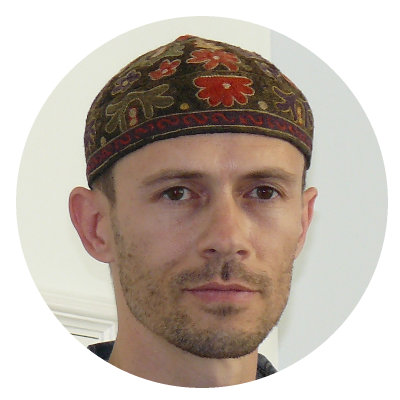
Ihor Kozlovskyi, a historian, religious scholar:
“It is clear that in 2014, people who lived in that territory (in the East of Ukraine – ed.) could not vote. Because there was a very difficult situation there, all the structures were captured. And now I’m going to vote. You must register for this. Be sure to come with a passport, because any other IDs or documents confirming that you are an in-migrating person are not required. You choose where you want to vote, the exact area, and exact polling station. I plan to do it soon. After the seizure, I have been living in Kyiv for two years”.

Rustem Skybin, an artist, ceramist:
“I have not voted since 2014. This year I will. I do not want to give my vote to someone else. ”
By Viktor Tsvilikhovskyi