

This year Ukraine celebrates the one-hundredth anniversary of a significant event. On January 22, 1919, at the square in front of St. Sophia’s Cathedral in Kyiv, the solemn proclamation of the Act Zluky took place, that is, unification of two formally separate states: The Ukrainian People’s Republic (UNR – translator’s note) (formed on November 20, 1917) and the Western Ukrainian People’s Republic (ZUNR – translator’s note) (formed on October 19, 1918). This day has become one of the most important holidays for Ukrainian patriots. And during Ukraine’s independence, this day gained the status of a state holiday. However, recall that the date of January 22 is important for us not only as the Day of Unity. On this day there were several important events in the history of Ukrainian people’s struggle for their rights and statehood in the twentieth century.
The first event occurred in 1905. On January 22, according to the “old style” (Julian calendar) on January 9, the beginning of the First Russian Revolution of 1905 – 1907, also known as “Bloody Sunday” took place. In the aftermath of this revolution, the Ukrainians of Dnieper Ukraine for the first time under Russian control won their civil rights and freedoms, including those that gave the opportunity to have their own national schools, to publish books in their native language, to open their national cultural and public organizations (first of all, Prosvita, the creation experience of which was borrowed from Galicia), to legally participate in political life. Later, these achievements were almost lost during the Stolypin reaction. However, a respectful attitude to the memory of the events of 1905-1907 revolution in Ukrainian national-democratic circles remained. For this reasons, it is not surprising that during a revival of Ukrainian statehood – the Ukrainian People’s Republic, its Third Universal of November 7, 1917, appointed the day of the convocation of the supreme body of the state – Ukrainian Constituent Assembly on January 9 (22), 1918. It was impossible to hold the upper mentioned elections and gather the assembly due to Bolshevik aggression. Therefore, on January 9, 1918, the Ukrainian Central Rada, in its Universal adopted on January 9, 1918, stating that “elections to the Ukrainian Constituent Assembly could not be held… and this Assembly planned for the present day, could not be held to receive temporary revolutionary authority over Ukraine…” has proclaimed Ukraine Independent by its own will. “From now on, the Ukrainian People’s Republic becomes independent, free and sovereign State of the Ukrainian people,” was said in Universal.
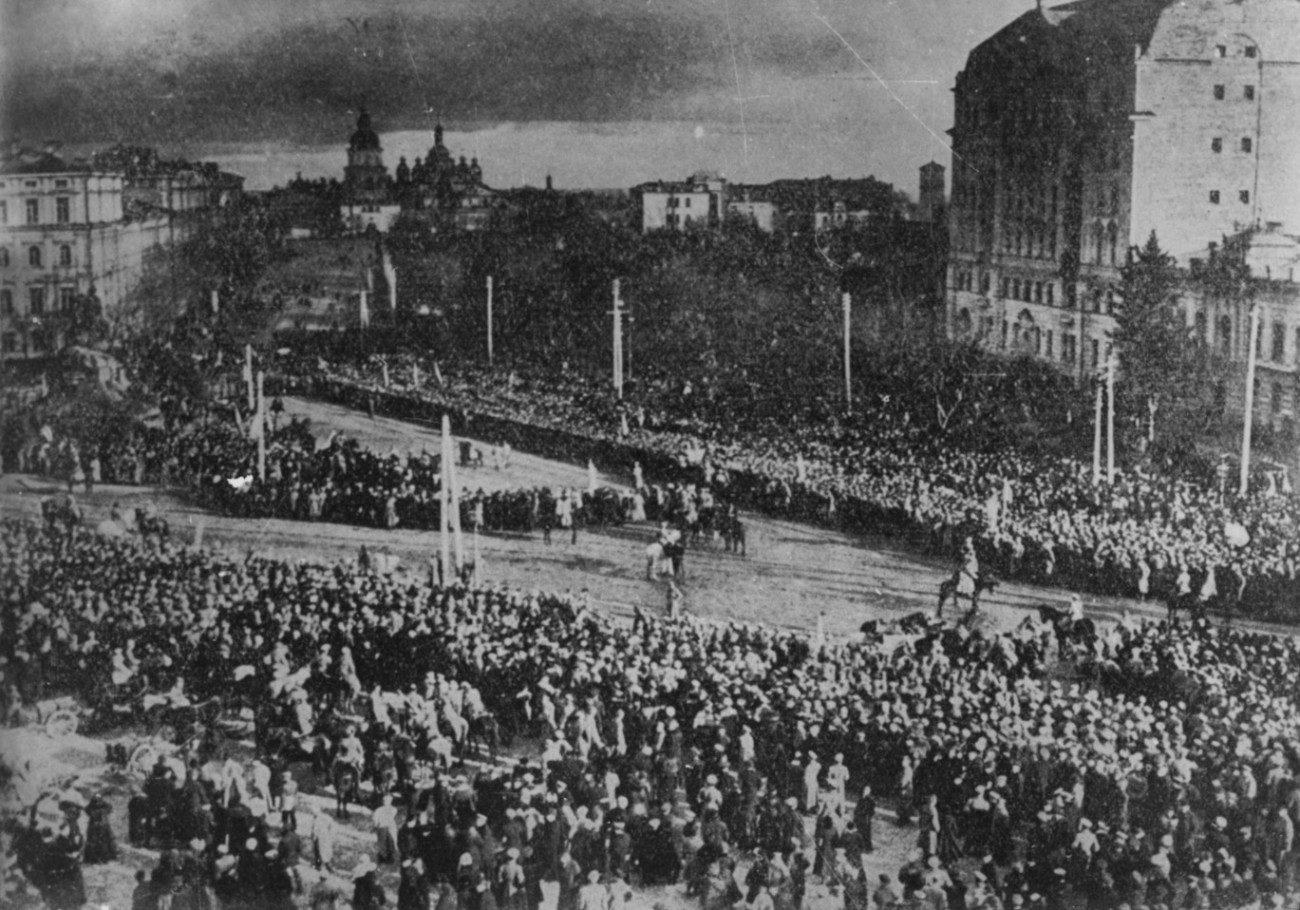
Solemn proclamation of UNR and ZUNR unification at the square of St. Sofia on January 22, 1919
Thus, the second important event that happened to Ukraine on January 9 (22) in the twentieth century was the proclamation of its Independence. And the day of this proclamation, as we see, was chosen not accidentally. In 1918, Independence was proclaimed (reinstated) not only by Ukrainians. During that remarkable year, a lot of peoples declared their rights to manage their own lives. So, on February 16, 1918 independence was proclaimed by Lithuania; on February 24 – Estonia; on March 25 – Belarus; on May 26 – Georgia; on May 28 – Azerbaijan and Armenia; on November 11 – Poland, on November 18 – Latvia. Last year, many of these countries celebrated very loudly the centenary of the proclamation (restoration) of their independence. In Ukraine, it seems that it happened almost without notice. And it’s not that it is needed now to spend money on celebrations, during the war. More important were informational activities. To explain to those who are ready to take it – Ukraine didn’t emerge recently, but it is among those states of Eastern Europe, which on the ruins of the Russian Empire restored its statehood, it was, to put it mildly, not the last (it seems only Finland, that declared its Independence on December 6, 1917, was earlier).
The third and the most important event for Ukraine that happened on January 22 is the aforementioned Act Zluky or Unification of Ukrainian lands. This event was timed to the first anniversary of the proclamation of Ukraine’s Independence – a state holiday of the UNR (actually, on December 1, 1917, an agreement on association was already signed between the UNR and the ZUNR). The Act on the unification of Ukraine, which was proclaimed one hundred years ago, on a frosty day before the delegations of the two republics and thousands of participants, said: “From now on separated from one another by centuries parts of Ukraine – Galicia, Bukovyna, Transcarpathia and Dnieper Ukraine are merging in one entity, in one Great Ukraine. The eternal dreams, for which the best sons of Ukraine lived and died, were fulfilled. From now on there is only one independent Ukrainian People’s Republic. From now on, the Ukrainian people, liberated by a powerful impulse of their own forces, can unite all the efforts of its sons and create an indivisible independent Ukrainian State for the good and happiness of the Ukrainian people.” The next day, January 23, 1919 – Act Zluky was approved at the Labor Congress of Ukraine (back then Ukrainian Parliament), where deputies from the UNR and ZUNR were present.
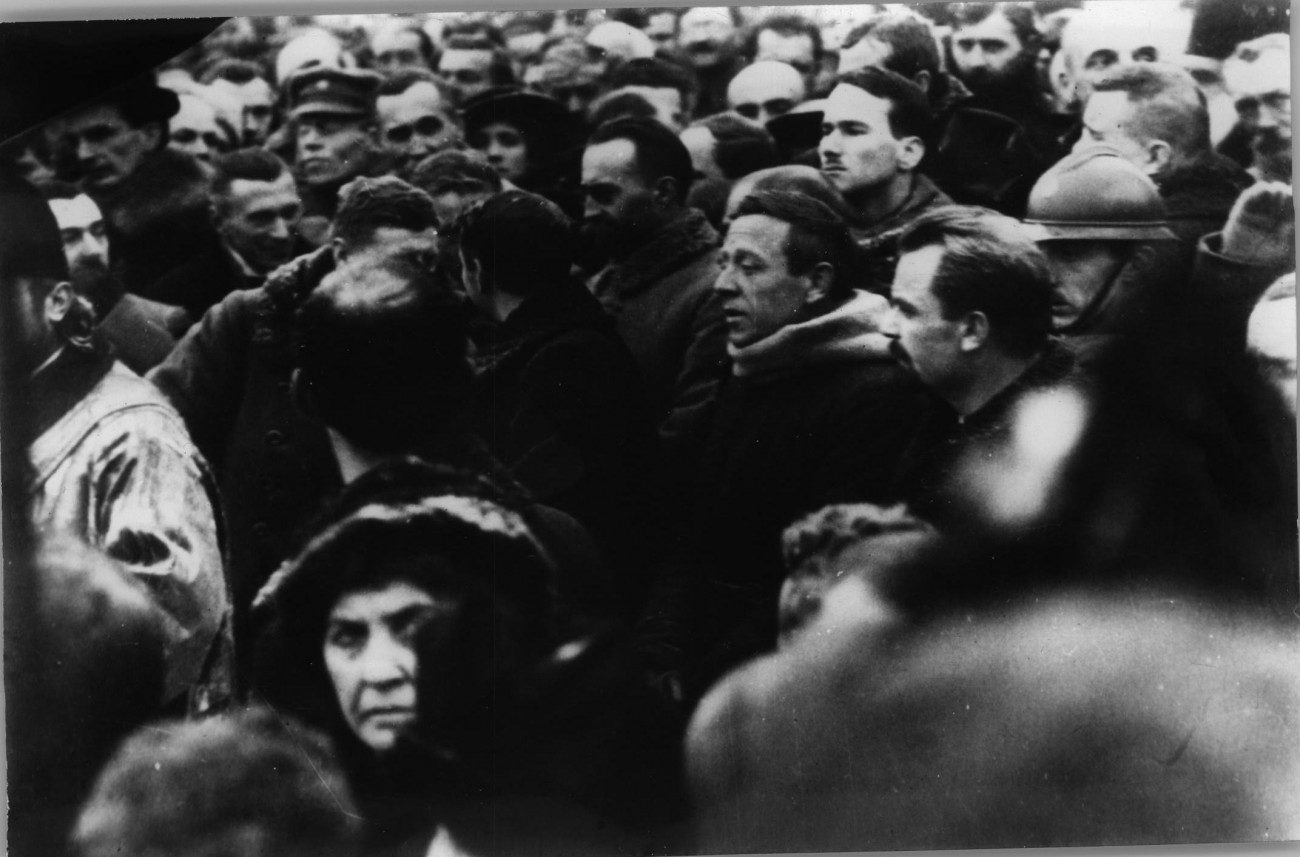
The head of UNR Directorate Volodymyr Vynnychenko the Directorate’s member Symon Petliura during a prayer devoted to the unification of UNR and ZUNR. January 22, 1919
In order to realize the importance of this act, we need to recall our previous history. For centuries, Ukrainians have remained people that are deprived of their own state and divided between different countries. Of course, we were not the only ones. Some peoples are still stateless and divided. Back in time, Western Ukrainian lands were united with other Ukrainian territories within Kyivan Rus and Kingdom of Galicia-Volhynia. However, after the collapse of the latter, in 1349 Galicia was under the Polish rule, Transcarpathians were already in Hungary, Bukovyna belonged to Moldova, and the rest of the lands stayed under the Grand Duchy of Lithuania. In 1569, the Ukrainian lands that were part of Poland and Lithuania were united in a single state – Polish–Lithuanian Commonwealth. This union only led to an increase in the economic, national and cultural oppression of Ukrainians. Ukrainian elite of that times – military one (Cossacks) and clergy – strived to another kind of union – their own country. It is not surprising that when this state was restored again during the war of liberation of the Ukrainian people of the mid-17th century, its leader Bohdan Khmelnytsky, in his words, wished to liberate the “entire Kyivan Rus descendants (ie, Ukrainians) from Polish slavery to Lviv, Holm, and Halych”. His successors yearned for the same thing. They were Ukrainian hetmans and patriots Ivan Vyhovsky, Petro Doroshenko, Pylyp Orlyk, and others. However, history had completely different plans.
After the liquidation of the Ukrainian Cossack statehood, at the end of the XVIII century, Ukrainian lands were torn apart by two empires, both of which had the coat of arms with two-headed eagles on it – Russian and Austrian. However, the pressure of imperial claws and state borders couldn’t interfere with the representatives of the Ukrainian national elite of the nineteenth and early twentieth centuries. The Dnieper and Western Ukraine felt the mutuality of their goals. The symbol of unity had become the history of Ukrainian national anthem’s creation, the words of which (where the Ukrainian border is defined “from San to Don”) were written by Dnieper Ukrainian Pavlo Chubynsky, and music by the Galician Mykhailo Verbytsky. And when the idea of the Independent Ukrainian state restoration arose, it arose immediately, as the idea of the creation of the united state. The founder of Ukrainian nationalism, Mykola Mikhnovsky, in his famous “Independent Ukraine” of 1900, noted: “We wrote on our flag: “One, united, indivisible, free, independent Ukraine from the Carpathian Mountains up to the Caucasus”. So, without exaggeration, what happened on January 22 at St. Sofia square in Kyiv was the embodiment of the best sons of Ukraine dreams.
The attraction of many Ukrainians to freedom and unity allowed them to make almost impossible thing. Escaping from the “embrace” of two empires, they created two democratic states. Moreover, these states were not “fake” (if to use modern words), that is, created by the efforts of the other states, they were authentic where people themselves declared their desire to unite and realized this unity. This event is truly unique for the New European history. However, the tragedy of Ukrainians was that neither neighboring nor distant power-brokers did not want to see Ukraine on the map of Europe back then, not even united one, but the state per se. By war and political pressure, external powers forced the leadership of UNR and ZUNR to betray each other’s interests.
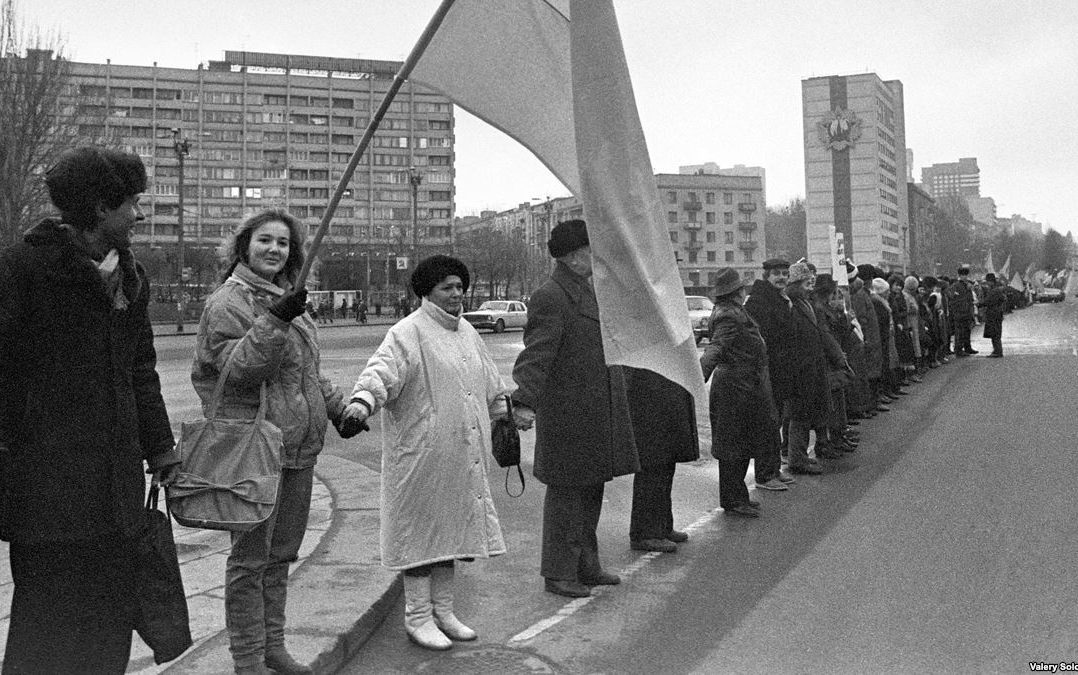
At the end of the Liberation Movement of 1917-1921, the Ukrainian lands were under the control of various foreign powers again. Ukrainians were oppressed culturally, exploited economically, and exterminated physically again. In 1939, 1940 and 1945. The USSR united in the quasi-republic of “Soviet Ukraine” most of the lands of Galicia, Northern Bukovyna and Transcarpathia. However, this union in Stalin’s “prison of nations” could not satisfy Ukrainian patriots, fighters for the freedom of Ukraine. Ukrainian Insurgent Army (UPA) fighters, dissidents and politicians in exile continued their struggle for independent and united Ukrainian state. And when one more empire (now the Soviet one) weakened, this struggle had come to the victorious ending. On the way to this final victory in the life of Ukraine, there was another (already fourth in the twentieth century) important event that is associated with the Day of Unity. On January 21, 1990, the human chain “Ukrainian Wave”, organized by the People’s Movement of Ukraine, united the cities of Ivano-Frankivsk, Lviv, and Kyiv on the Day of Unity. Although the communist leadership of UkrSSR reduced official information about the length of this chain and the number of its participants, it was obviously the most massive of those human chains that preceded the collapse of the USSR.
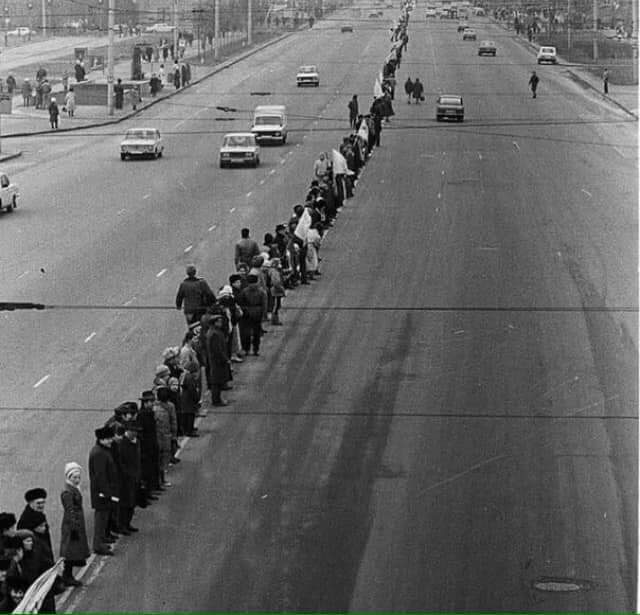
Human chain, 1990
Thus, in our opinion, the Day of Unity (as well as other mentioned events that took place on January 22 in the national history of the twentieth century) matters not only for our state. It can also give the other peoples of Europe an example of the unique struggle of Ukrainians against imperial oppression, fight for freedom and the unification of its own people. The struggle, that seemed for many outside observers completely hopeless back then. The struggle that at the end of the twentieth century ended with the victory.
By a doctor of history, professor Taras Honcharuk