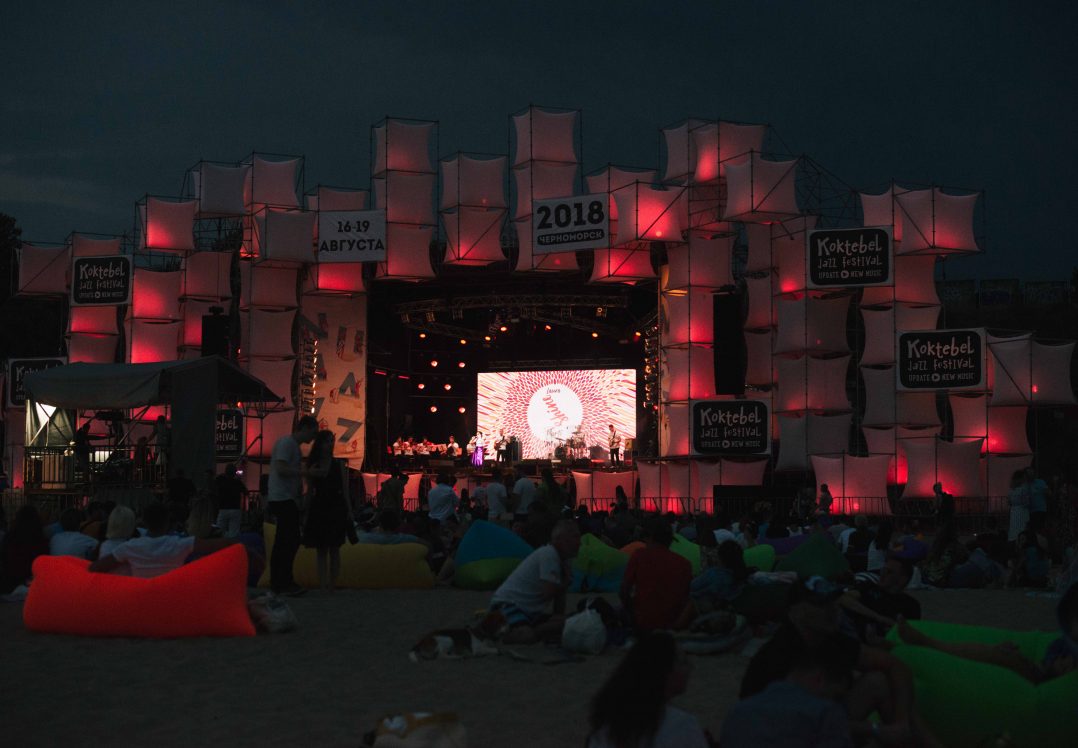


Koktebel Jazz Festival begins with a rule of conventionality. As long as Chornomorsk is a kind of Koktebel, the festival there is kind of jazz-festival. It seems that the “jazz festival” term itself is fading from year to year, marking not the music style but the place where different musicians with different instruments can spread their sound. Thankfully, due to the weather conditions, these transformations become even more dynamic. Genre borders are blurred by the sea waves and keep melting in a +30 summer air. Attention, there will be a lot of “jazz” in this text.
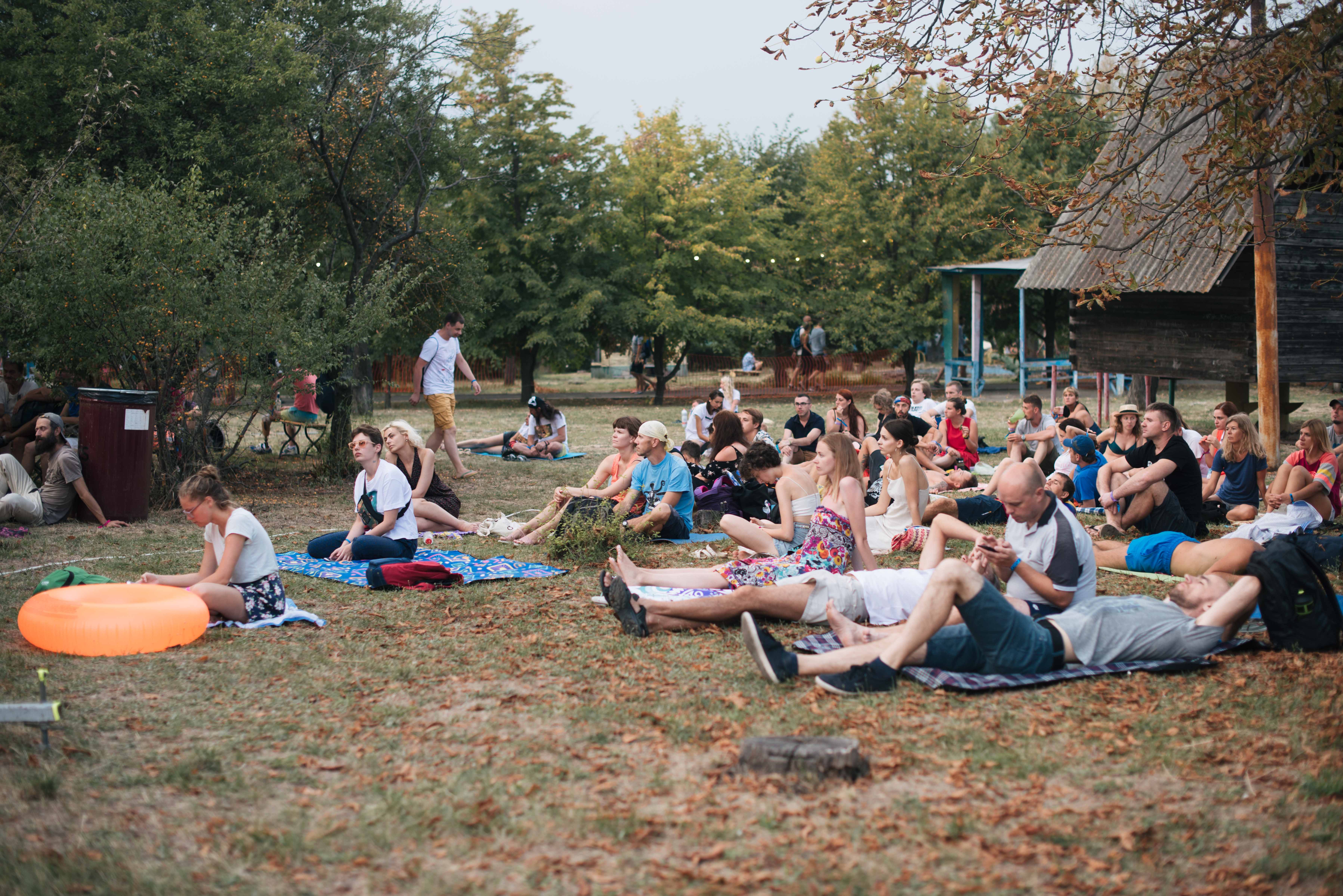
The first stage I go to is Jazz & Blues Cafe. This is a real jazz island. It is cut off the noisy beach where the rest of the concerts will be taking place later along with the foodcourts and numerous festival entertainment spots. It is mostly chamber and acoustic music here and the audience is here for a reason. You need to listen carefully, thoughtfully here.
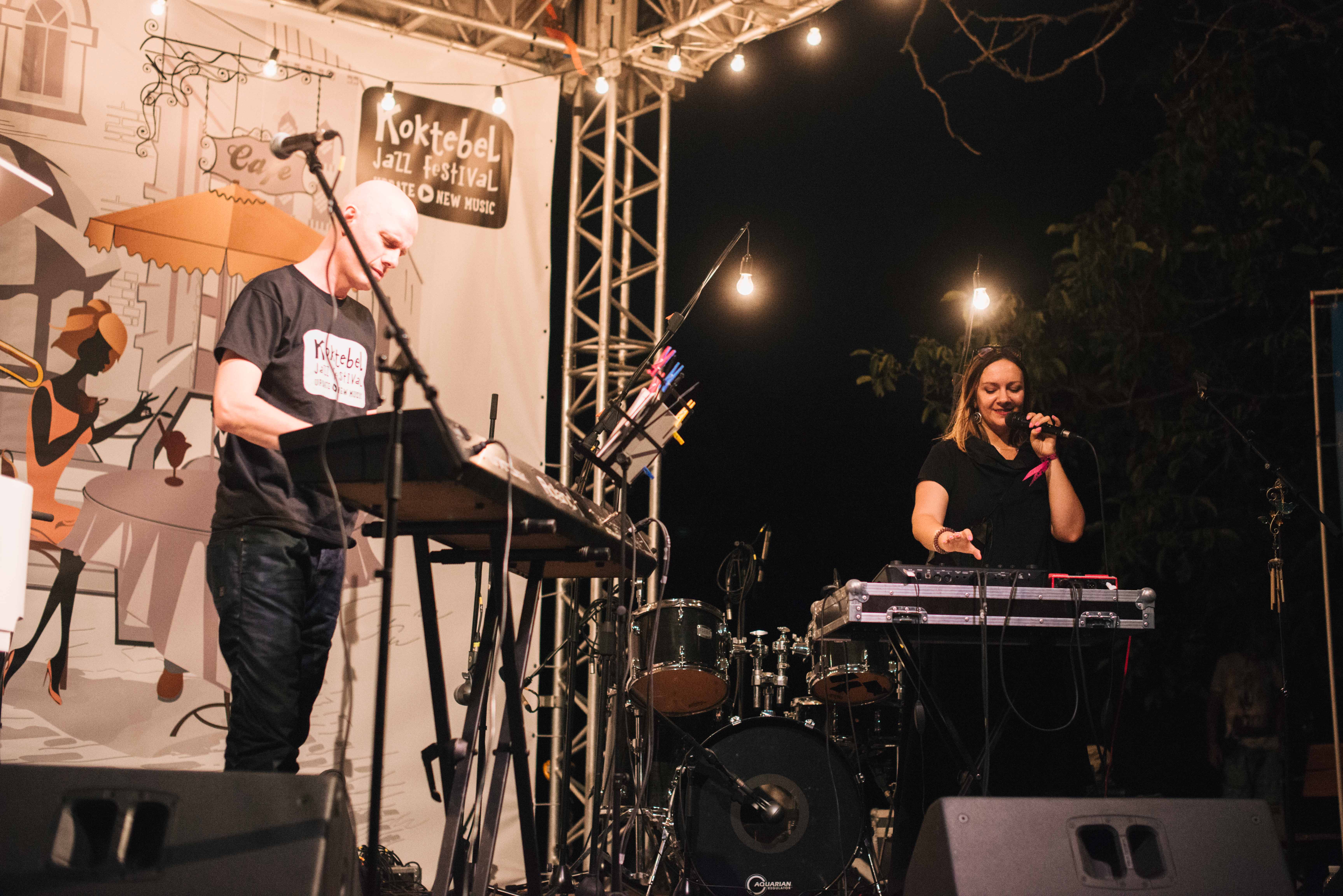
This place reminds me of one of the spots at another jazz festival in Lviv. And it’s clear why – Oleksiy Kogan is a master here. He’s one of Ukrainian jazz biggest figures, jazz stage curator, journalist and art-curator of Leopolis Jazz Fest at the same time. I always thought that if you see Kogan around – there will be a good jazz too. Seems like he’s the one uniting all those bright diversity of musicians and genres that we see in the line-up. He’s repeating my thoughts by telling “Jazz festival is a kind of pizza where every slice can have different ingredients on the top of it. You can try each of them to understand what you like”. Jazz musicians could be a dough for this pizza to combine all the others. Pavlo Ignatiev and Katiko Purtseladze, Cherkasy Jazz Quintet, Kyiv Tango Project, Natali Lebedeva Trio, Tingvall Trio, Bullet Blues Band – these are only a few of those who fill this smallest but the jazziest stage of a festival with music.
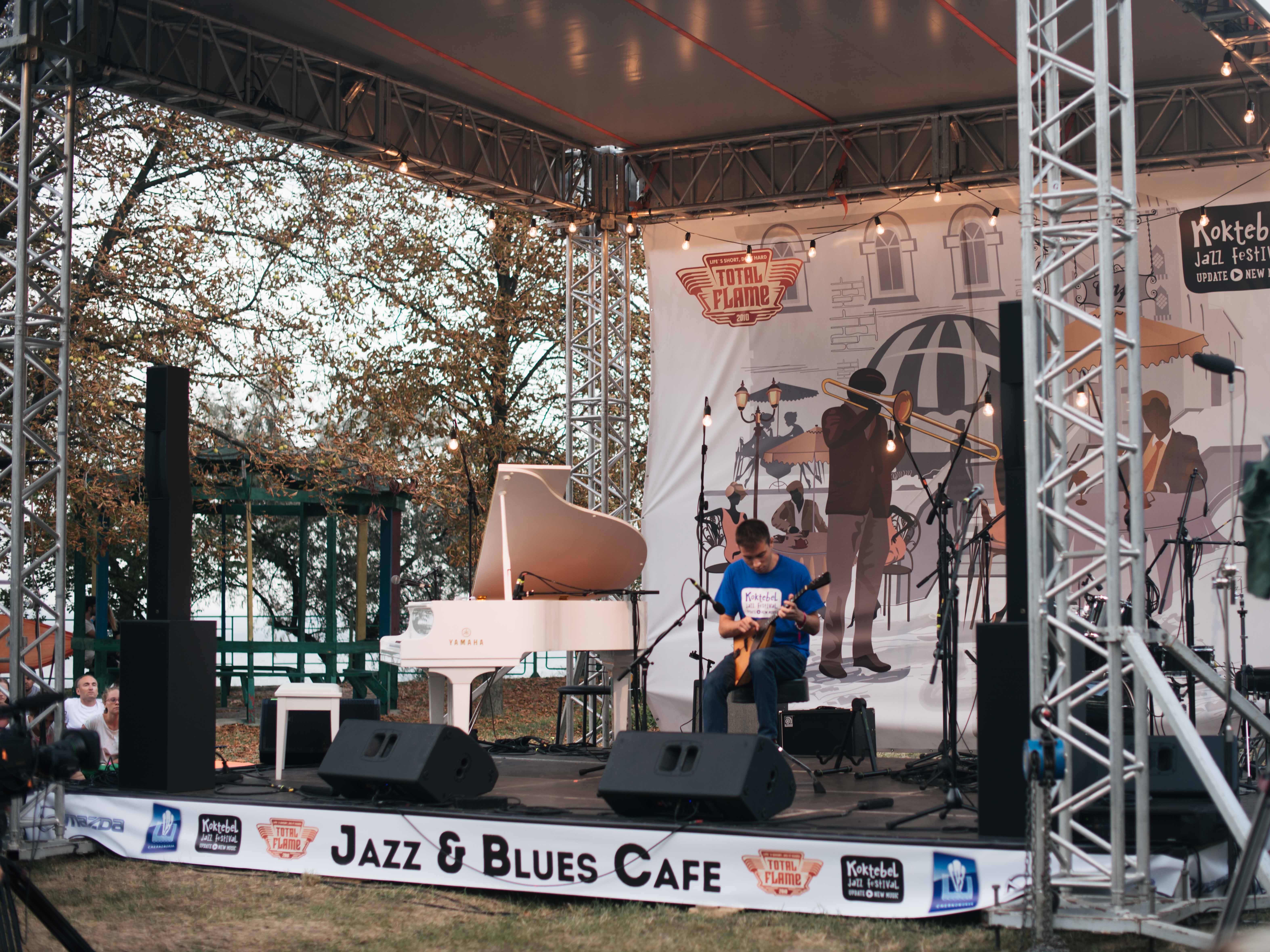
I’ve got my strongest impressions from the artists’ collaboration within the Art of Tolerance International Project. It included – Marinita (vocals, piano), Marc Eliahu (kemancha – middle-east violin), Orkhan Agabeyli (percussions), Evgen Sedko (guitar). Unexpected rhythms and melodies born in Azerbaijan, Israel and Crimea combined with folk and academical sound will be remembered as one of the most outstanding festival performances.
There are also some surprises here at the Jazz & Blues Cafe stage. You can hear both renaissance and classical blues here by solo-guitar player Oleksii Revenko. Kogan teaches what the blues itself is while performing. There are a lot of versions here – it is when a good person feels bad, also serenade for an empty balcony, also when my hair grows back again, Mississippi flows backward and my dog resurrects.
But it’s time to visit Nu Jazz – the main stage.
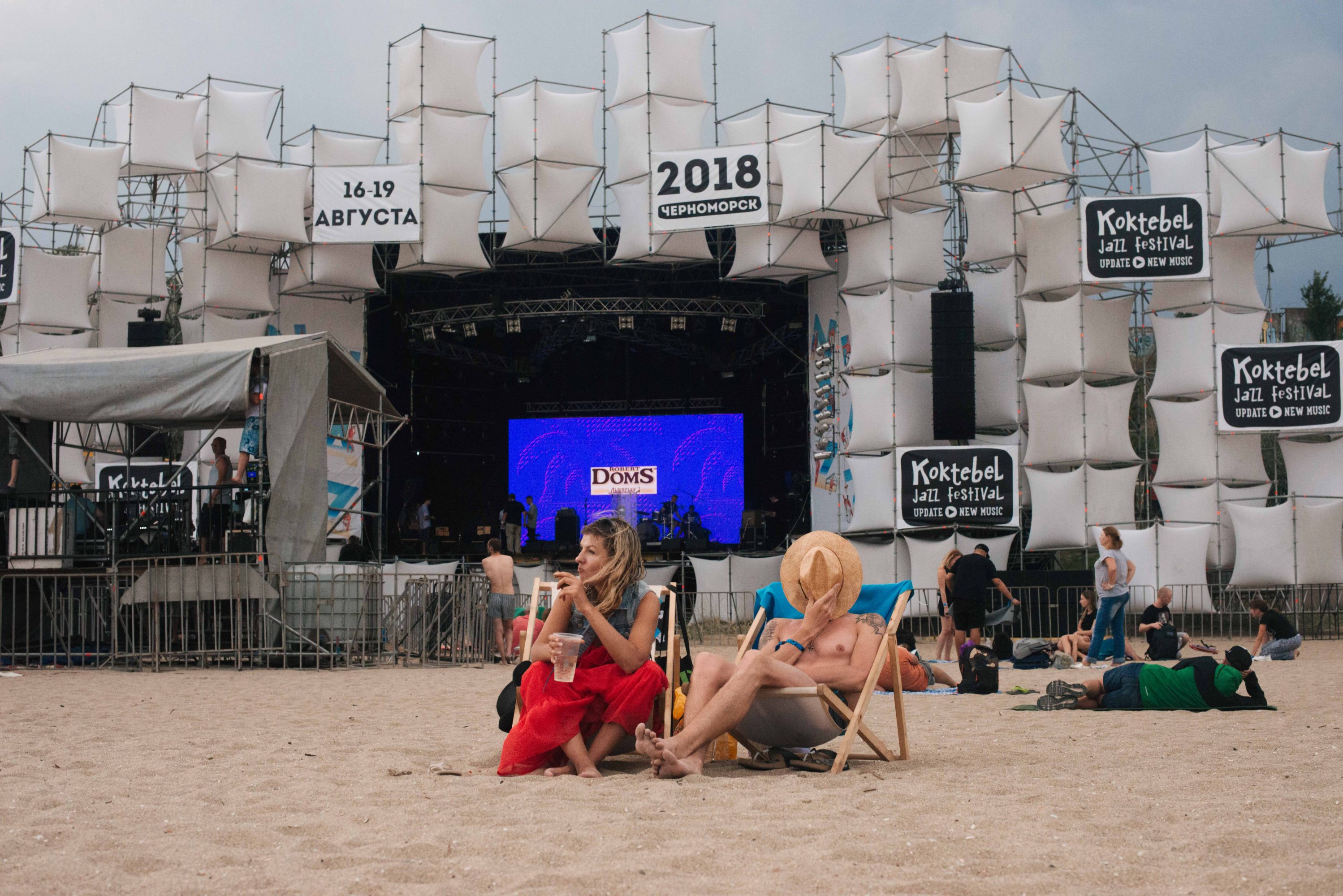
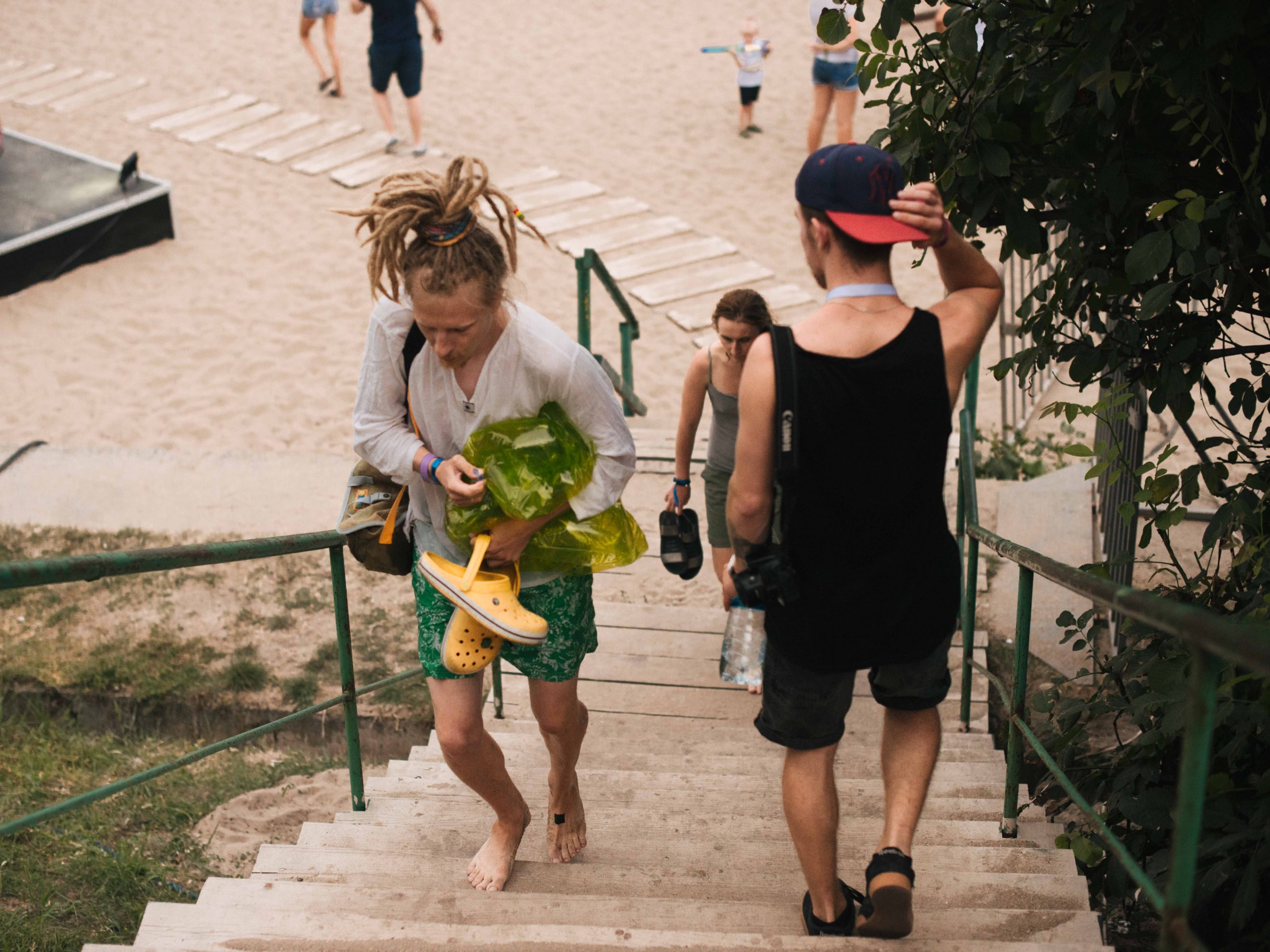
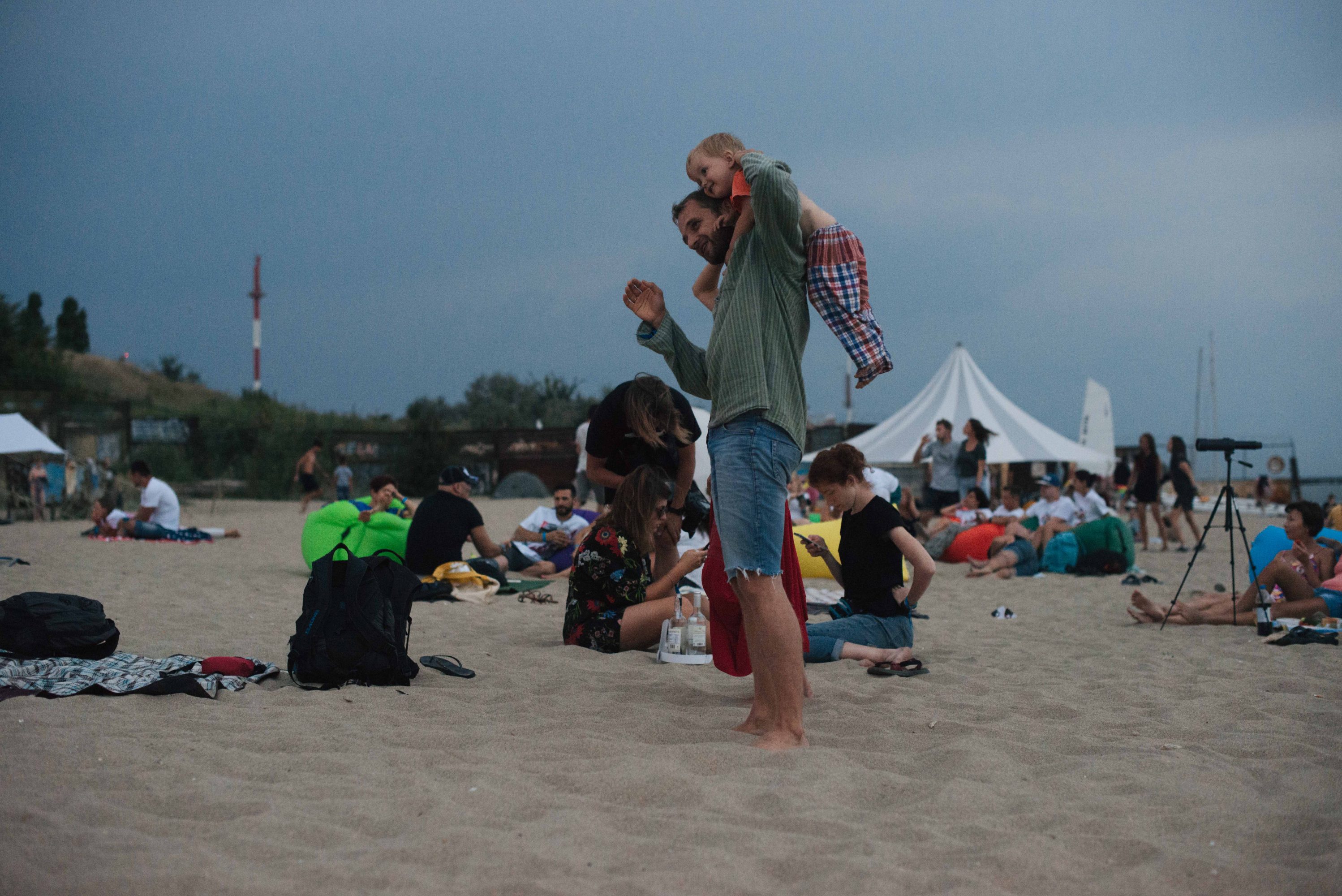
Everything starts here only when the sky is dark. The place is full of sand and sea. People applauding with pale and tanned hands.
Everything can happen at this stage. ONUKA, Oleh Skrypka and NAONI sound very differently but still powerfully. Transcarpathian singer Alina Pash that debuted this spring, unexpectedly starts an expromt by inviting balalaika-player Denis Kinchev and singing DakhaBrakha song after performing Russian-language hip-hop.
Dakh Daughters finish their performing by coming up with a Ukrainian flag, and the next day the activists try to break a concert of the mysterious special guest. Long awaited and hid under special guests title Ivan Dorn suddenly appears on the stage a few hours earlier dedicating his first song “The penguin dance” to Kuzma’s birthday. Shortly after the beginning, he disappears again. Dorn can be treated in different ways but the fact is that his Juzzy Funky Dorn program perfectly fits the second day’s mood, making half of the beach audience dance.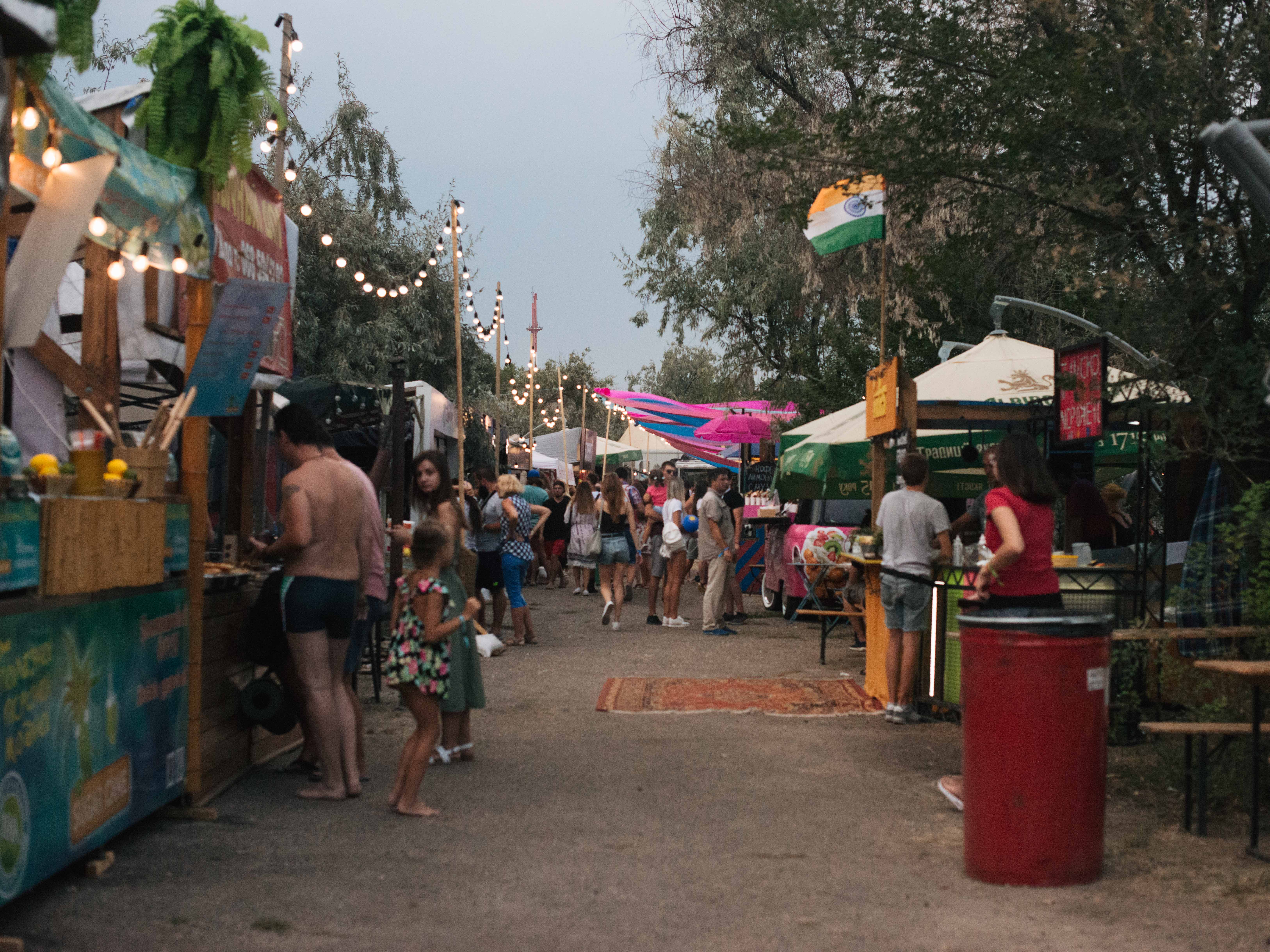
Martina Topley-Bird cools down the heat with a trip-hop and Morcheeba teases visitors by making them move to a massive beat and relax their ears with almost a lullaby tracks after. They also perform jazz standards, Bowie songs and their own.
Someone from the stage is looking for an owner of the dog that was found by a festival worker and is living with organizers for the last two days.
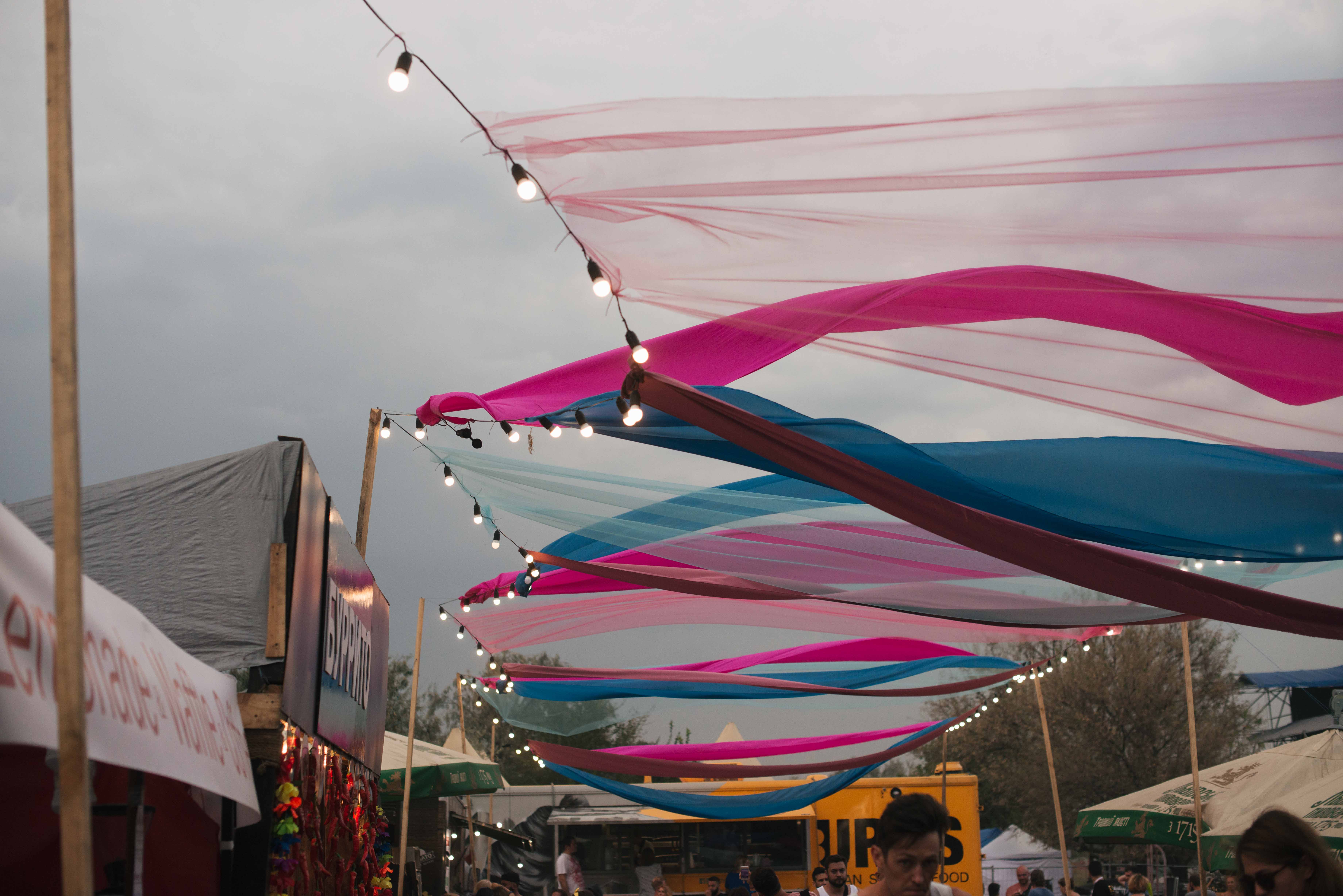
Children are sleeping on the blankets and even the beat can’t break through their musical dreams.
Skeptic mood regarding “jazziness” of the festival evaporates under the sun and flies away with the sea breeze. I come to a thought that everything that’s happening is jazz itself. Or blues.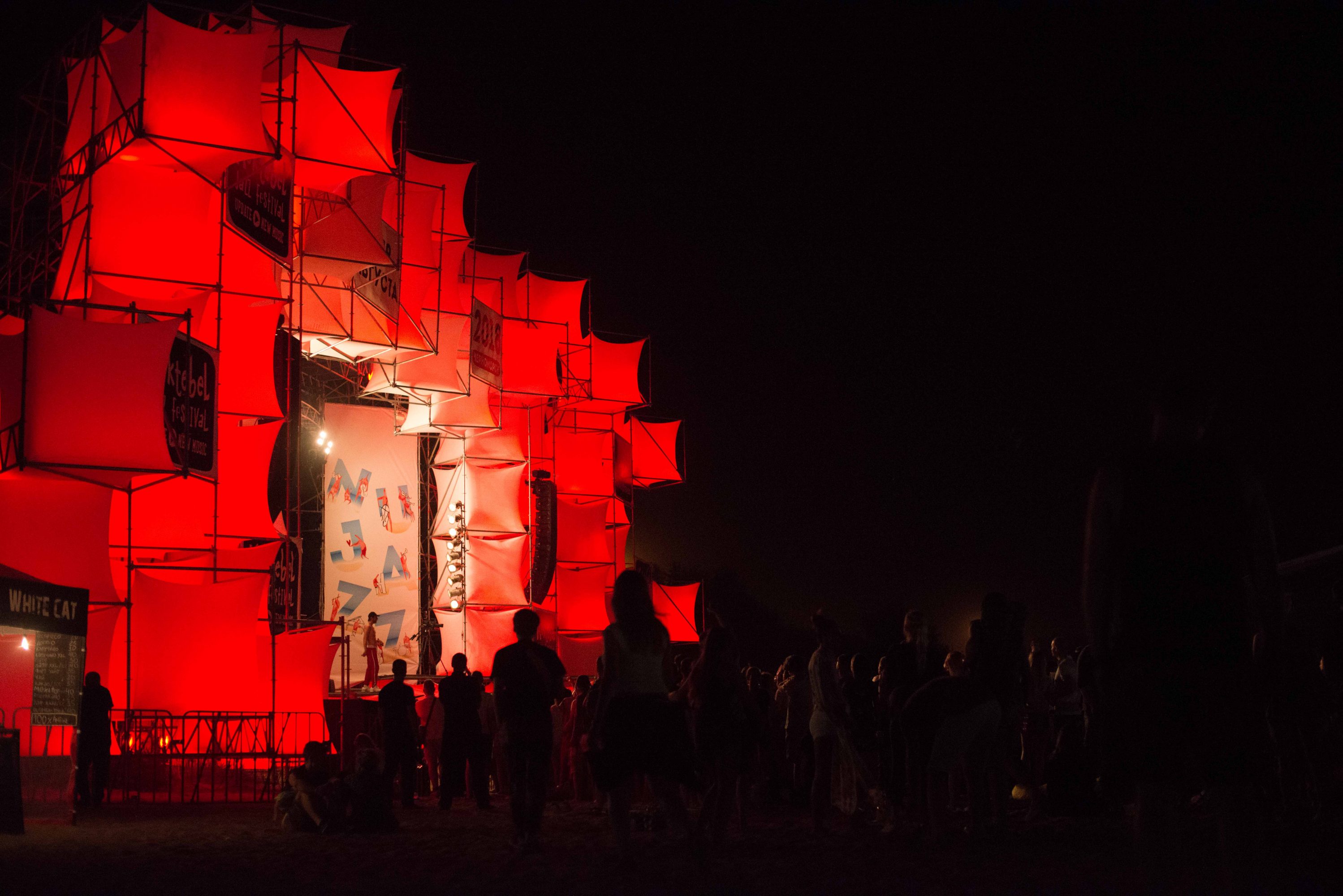
Text by Anastasia Boichenko
Photo by Stefania Amamdzhyan