


The provision of communal and housing services, their quality and tariffs – for Ukrainians is one of the most painful problems. On the one hand, radiators are barely warm in winter, the water from the tap is not hot, but hardly warm, garbage taken out every two days later, on the third at best. And on the other hand, the cost of all these services is constantly growing and it is not going to stop at what has been achieved – officials lull people into fables that tariffs should be economically justified, although they are somehow forgotten about the transparency of their formation.
Fascinated by the reforms in all spheres of our life, domestic reformers, appealing to the European experience, decided to modernize the sphere of housing and communal services. One of the foundations of this reform is the Law “On Housing and Communal Services”, adopted in November last year and signed by the President in early December, which came into force on the day of its publication, that is December 10, 2017. However, it must come into force on June 10 this year, and even then not completely – for some of the norms, the start was delayed until January 2019. Since June is just around the corner, we decided to find out what will change in the life of consumers of housing and communal services from the second decade of the first summer month.
After talking with colleagues and friends, I was once again convinced: people identify these changes primarily with… figures in the payments. The majority of Ukrainians remember well how the price of gas increased, and what it ultimately led to. It was then, realizing that the level of non-payment of the population would simply be sky-high, officials developed a mechanism for subsidies. This, on the one hand, dampened people’s discontent, and on the other hand, they began to transfer money from the state budget to the accounts of monopoly companies in the sphere of providing housing and communal services quite officially.
None of the leaders of the state, it seems, cares that these services were of low quality, and remained so. And no matter how many people argue about the reforms in the sphere of housing and communal services, there is no clearly prescribed responsibility of the service provider since there are no effective mechanisms for appealing the quality of services and penalties for non-compliance.
Legislative grounds for large-scale changes in the sphere of housing and communal services, in addition to the Law on Housing and Communal Services, cover three more documents. It is about “On the peculiarities of exercising the right of ownership in an apartment building”, “On energy efficiency of buildings” and “On commercial accounting of public services”, which were adopted a little earlier. However, to assert in advance that they come into full force and this had a positive effect on the quality is too early. It is worth remembering the law, with which residents of apartment buildings were obliged to create housing cooperatives, and which failed.
As for the law on housing and communal services, in the opinion of Gennadii Zubko, Deputy Prime Minister – Minister of Regional Development, Construction and Housing and Communal Services, it must provide the population with quality public services at a fair price. At the same time, the official noted that this is the first step, but we still have to work on the tools that will increase the control over the service providers.
For yourself and for the other guy…
The most important thing in the words of the Head of the Ministry of Regional Development is that the services must be of high quality, and the price should be fair. But this moment is still far away: in the apartment building, where I live, the hot water was switched off again (during the winter and early spring it was turned off at least ten times). Communal Services “inventors” created something in the basement with communications, as with fully closed water taps, both the counter – for hot and cold water – were spinning at a frenzied speed, winding cubic meters, which no one consumed. That is, you will not have to pay at all. There is no fair price for such services at all. But this is the topic of another conversation.
And now we return to the law, which will come into force soon. For consumers, first of all, the procedure for concluding agreements for housing and communal services should change. We are talking about management, water supply and electricity and gas supply. For heat supply, as well as for the removal of domestic garbage, the law provides for the need for a separate contract.
The new law aims to force residents to take care of their own homes, repairing pipes, roofs, attics and cellars at their own expense. Whether they are able to do this, especially if they obtained a Khrushchevka (the informal name of cheap houses that were built under the Soviet Union) or even a Stalinka (unofficial name of apartment buildings built during the reign of Stalin) inheritance, nobody cares (and the percentage of old houses in Ukraine is sufficient). Together with the requirements of the law on commercial accounting, the situation looks quite unhappy. After all, it will not be necessary to pay for the same water or electricity according to the indicators of individual meters that are installed in the apartments, but for those that are to be installed at the entrance to the house. That is, to what you really consume, you get some more of what the house used as a whole. The main thing is that the monopolists, who provide services to you, should not be the loser. A consumer will endure all.
“It will be simply horror, – Mariya Opanasenko, the woman from Kyiv shared her fears with DUMKA – and that’s why. In our 16-storey house electric wires are connected in some strange way; the go to the car wash across the road and the station, engaged in tire service. It is said that they use electricity, supplied to the house for lifts. That’s why they constantly deteriorate, the engines burn – the network does not stand the tension. The wire that runs from the house to the car wash is attached to the roof, and you can see it. How the car wash was connected to the house (and this, of course, happened with the permission of the housing office), no one explained the tenants and did not intend to explain. If people would need to pay for the fact that someone makes a business on our electricity, it will be just mean. After all, it’s me, who, as a resident of the house, should do something to get rid of these two “sticks”, but no one explains how doing it anywhere”.
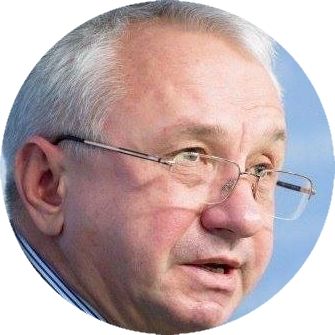
“Quite just remarks, they could steal electricity and water in this way, – commented Oleksii Kucherenko, the Chairman of the Union of co-owners of housing of Ukraine, in a comment for DUMKA. – And no one has answers for such questions yet. In any case, the officials, whom I asked how should the consumers act in such situations, throw up their hands”. And this despite the fact that there is a little more than a month until June 10.

“The key issue of reform, which is the individual consumption of services under collective responsibility, has not been resolved by this law, – the director of the Research and Analytical Center “City Institute” Oleksandr Sergienko explains to DUMKA. – All these laws, allegedly reforming the sphere of housing and communal services, are written out so that people will pay for themselves and for the other guy. Take, for example, the legislation on accounting for water and heat supply: there, in addition, it is written in detail that residents must establish a house-keeping counter. There is no alternative to this. They can only choose whoever installs this counter. And the sanctions are written in detail – in case people ignore this demand. The procedure is set out so that the residents have nowhere to go, they are forced to take money out of their own pocket and pay for that counter, but it is not cheap. By the way, they can face all this in June”.
Three variants of the transaction: consumers of HCS will choose
As people’s deputy Yehor Soboliev wrote in the social network, the law allows each of us “leave Communal Service the manager of the house, transfer this right to a private company or person, or to organize themselves with neighbors and conclude direct contracts with suppliers of heat, water and other services”. And now – about those contracts, without which consumers of housing and communal services cannot even step foot. The fact that the model of contractual relations with enterprises-suppliers of housing and communal services will have to be chosen by consumers is one of the main innovations of the law, three options are prescribed.
The first – individual contracts, each owner of the apartment will conclude independently (with this type of contracts are dealt now in those houses, where there is a condominium).
The second option is collective agreements: in this case, managers, co-owners’ associations or authorized representatives must conclude the contracts on behalf of all co-owners.
And the third option is an agreement with a collective consumer (for example, housing cooperative as a legal entity). And they conclude it for a year – so that then the contract can be prolonged automatically.
As lawyers explain, people will choose one of the variants of contractual relations. Moreover, if for some services one can conclude direct contracts with apartment owners for some services, for others – party, which will represent the interests of the consumer in the contract, will be a manager. This does not apply to gas and electricity – they are provided to people solely on the condition of individual contracts. Deputy Chairman of the Parliamentary Committee for Construction, Urban Development and Housing Alyona Babak is convinced that people should be given the right to calculate how much a direct contract is and how much is a collective one. At the same time, many experts believe that consumers of housing and communal services should imitate the collective agreement as the cheapest and most profitable. After all, such a contract will make the non-payers the monopolist’s problem. Then, in case of an agreement with the collective consumer, housing cooperative will take responsibilities for the non-payers. Therefore, this option is the most unprotected, and therefore less attractive for people.
There are no subordinate acts, so as the time
For now, people complain about the quality of housing and communal services: the press service of the Government Contact Center claims that last year they had more than 130,000 complaints about the poor quality of housing services. More often, we are talking about problems with heat supply, lack of hot water, when the tap is running hardly warm water, for which it is necessary to pay just like for hot, irregular light. The prognostic research, carried out by the specialists of the center, on the topic “The results of reforming the housing and communal services: ensuring consumer rights by the Communal Service and housing cooperatives” only confirmed that the quality of the services, provided to people, is often really unsatisfactory.
Thus, almost 40% of respondents noted that the quality of their housing and utility services leaves much to be desired. More often, people complained about problems with current repairs in the house (35%), hot water supply (30.5%), house and home territory cleaning (25.6%). At the same time, the general assessment of the quality of services is almost not affected by the type of settlement, where respondents live, that is, there are enough problems both in large cities and in small towns and even in villages. Can a new law correct the situation at least a little?

“We should not hope for it this summer, – Vira Radchenko, the HHHHHHHead of the Housing and Communal Services Department of the Department of Housing and Communal Infrastructure of the Kyiv City State Administration, explains to DUMKA. – Theoretically, the law should begin to operate on June 10, but before that date it is necessary to develop about 30 bylaws, approve them by Cabinet decisions, and about 20 orders of the ministry. There is a specific schedule for the implementation of this law, approved by the Government a month ago. And at present, to the best of my knowledge, out of three dozen documents for discussion and submission of proposals, three have been promulgated. In the meantime, all 30 bylaws will not be approved by the Cabinet of Ministers decisions, it is simply impossible to regulate the processes that must be launched by law”.
According to the expert, the main thing is absent – a standard contract for the service for managing houses. “According to the current law, – Vira Radchenko continues, – in case people did not create a condominium and did not elect a manager, it should be appointed by the local government. Under the new law, which should start working on June 10, changes have been made to this provision – and now the administrator of the local self-government has the right to choose only when people from this house turned to it and sent the minutes of the meeting with this decision. That is, it is not just a matter of treatment: the residents must assemble and try to choose their own manager. And if they do not succeed, they should vote more than 50% for asking the local government for help, only then they will have the right to appoint a manager”.
The problem here is not only that we have to gather our people at one time and in one place, especially if the house is, for example, a 16-storey house, on 5-6 entrances, in which tenants live in half of the apartments, and not the owners of housing. The problem, the official notes, is also that the market of managers in our country is still not competitive. “It has not yet been created, – Vira Radchenko explains. – That is, people do not understand whom to choose, from whom to choose, how to choose, and this will create many annoying moments”.
I am glad that until the law is fully operational (and in order to develop and agree on each of the three dozens of required bylaws, it takes at least six months of time, because there are up to a dozen concerned ministries and departments that should work each document, and each of them they must agree on the final, that is, the consolidated version of the regulatory document), there should not be radical changes. Even the tariffs that are of most interest to our people must remain valid for today, because under the new law, they will not be changed after June 10 without agreement with consumers.
However, to hope that service providers, who continue to be virtually unpunished (if the service is of poor quality, the consumer should use the old Soviet-style mechanism: collect a commission, draw up an act and complain to the person, who provided this service, and only after that, if his complaint will not be satisfied – to the court), will work at a loss for themselves – is useless. Therefore, this time, while working out the regulatory bylaws, should be used at least to familiarize oneself with one’s duties. And try to find among them one’s rights as well. And it would be appropriate for officials, along with legislators, to use this time also to create tools that will strengthen control over service providers, as emphasized by the Deputy Prime Minister Gennadii Zubko. Otherwise, it again will be a game in one gate…
Text: Larysa Vyshynska