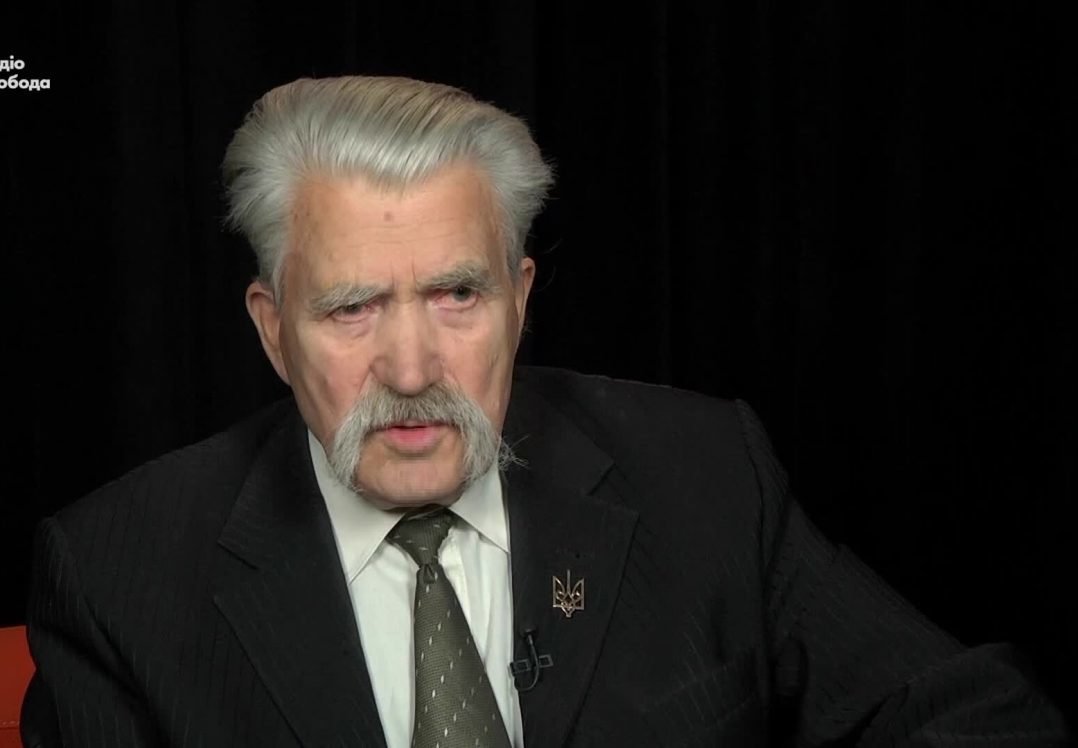


I was nourishing the idea if an interview with the Great Ukrainian. I was going to do it by the 90th anniversary of Mr. Levko Lukyanenko, which is also the Independence Day in Ukraine – 24 August. Independence and Levko Lukyanenko are interrelated, it is not a coincidence that they even have birthdays on the same day. However, God has his own plans – Levko Lukyanenko died on 7 July. Instead of the interview, there is the obituary.
Last time I saw him at the ethno festival Kraina Mriy in Pyrohov three years ago. Mr. Lukyanenko was a participant of a book fair, he was selling his books there. We had a 10-minute talk, I bought his book about his experience in soviet camps; we agreed that I would connect through his young assistant, who gave his card, if I needed an interview.
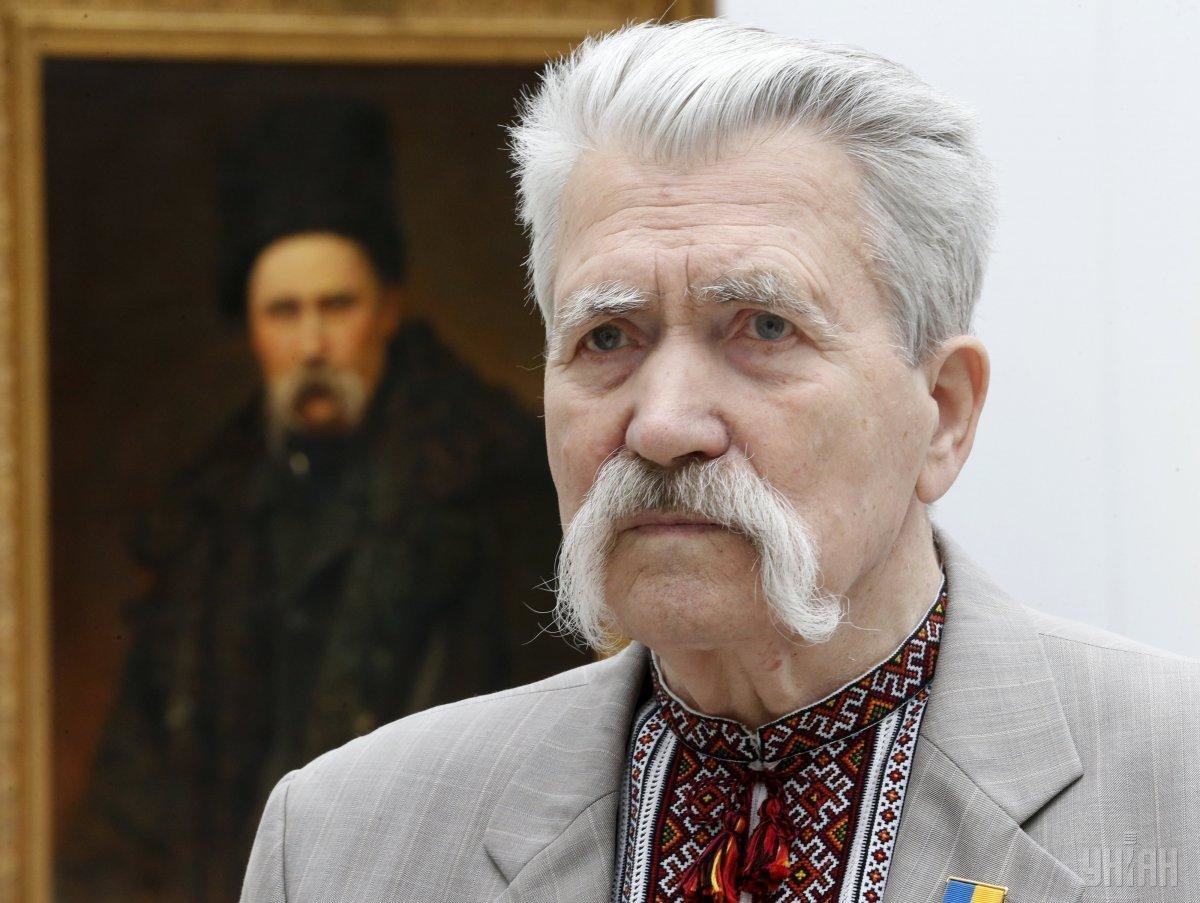
Levko Lukyanenko: after almost a third of life imprisoned, he didn’t lose humanity
I have been thinking and choosing questions for the interview inside my head lately. I knew that I shouldn’t ask stupid questions a man of such respectable age. However, I had to present information for audience that way so they would realize what a great man of a unique fate was living beside them. Unfortunately, he was. I also wanted to overcome stereotypes and myths again. Because most of our fellow citizens know that Levko Lukyanenko was fighting for an independent Ukraine, was imprisoned for long time, is an author of the Act of the Declaration of the Independence of Ukraine. However, they know virtually nothing about his life.
The soviet propaganda was trying to make people think that only “banderivts” and people of the Western Ukraine wanted Ukraine to be independent. However, dissidents of the 1960-80-ss came from different Ukrainian regions. Even more, many Eastern-Ukraine-born people who also lived in Donbas were fighting for the independence: Vasyl Stus, Ivan Dziuba, Oleksa Tyhyi, Ivan and Nadia Svitlychni, Mykola Rudenko and others. The following people were born in the centre of Ukraine: Viacheslav Chornovil, Yurii Lytvyn, Lina Kostenko, Vasyl Symonenko, Ivan Drach.
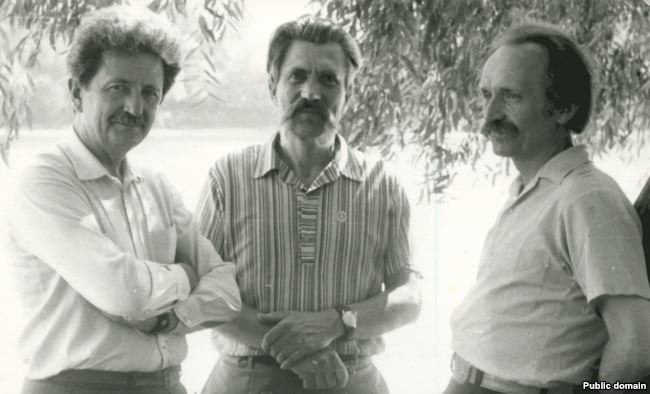 (from L to R): Myhailo Horyn, Levko Lukyanenko, Viacheslav Chornovil
Levko Lukyanenko was born on 24 August, 1928 in the village in the North of Ukraine. It happened not far from the border of three friendly, as the USSR claimed, republics – Ukraine, Russia and Belarus. There were several dozens of kilometers from his native village of Hrypivka of the Chernihiv region to Russian Briansk and Belarusian Homel regions. It means the boy was fated to internationalism.
At the beginning, it really was so. Young Levko served in the soviet army. In the early 1950-s he became a member of Komsomol and the party. Some people think he graduated from Lviv or Kyiv university, but it is not true. He was studying not in Ukraine… in Moscow, actually. At the age of 25, in 1953, a 25-year Ukrainian entered the Law Faculty of the most prestigious USSR university – Lomonosov Moscow State University.
Should we remind, how thousands of young men and women who were lucky to study in the capital were craving to stay in Moscow? Prestige, career opportunities and higher life standards… 30-year Levko Lukyanenko came back to Ukraine. That time, to the Western Ukraine. His biography says, “He was appointed as a propaganda party agent in the council of Radehiv district, Lviv region, where he settled down with his wife.”
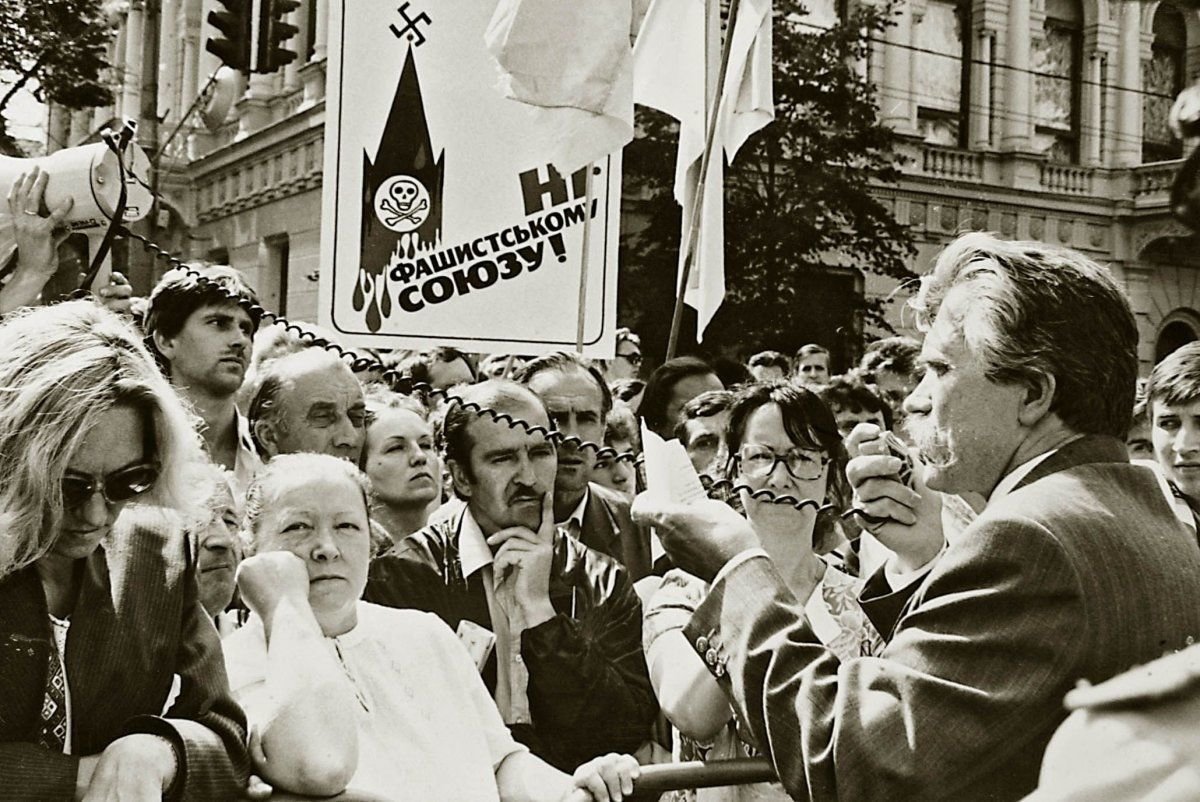
Levko Lukyanenko, a MP is talking to people by the Verkhovna Rada (Ukrainian Parliament). Kyiv, 24 August, 1991. The poster says, “No Fascist USSR”.
All that means that having a prestigious education and position in the party, communist Lukyanenko could make a successful career and be prosperous. But he dramatically changed his fate. He paid for it. Almost the third of his life, 27 years, the most fruitful part of it, he spent in prisons and camps. Instead of a private “Volga” car, special food and resorts in Crimea and Caucasus, he got barracks, plank beds and “beautiful” landscapes of Mordovia and the Perm Krai.
In fact, Levko Lukyanenko’s life could end already in 1961, when he was sentenced to death. He was accused of “undermining the credibility of the CPSU, and defaming the theory of Marxism-Leninism.” However a “human” Supreme Court substituted execution for a 15-year imprisonment. By the way, the soviet Constitution declared the right for republics’ secession from the USSR. But that what a freedom of speech was like there and then, it was all different in reality.
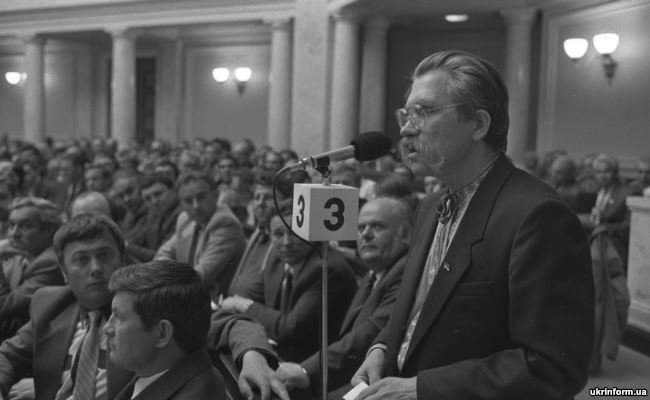
Levko Lukyanenko, a MP of the Ukrainian SSR, is having a speech at the Verkhovna Rada meeting. 16 May, 1990.
While imprisoned and being a lawyer, Lukyanenko was fighting for human rights. In 1976, he became a member of the Ukrainian Helsinki Group. The next year, he was arrested again and sentenced to 10 years of imprisonment and 5 years of camps in Mordovia. He was acknowledged as a dangerous habitual criminal.
At the age of 60, soviet men became pensioners. But Levko Lukyanenko only started his official activity. He was granted pardon in the autumn of 1988 during the Perestroika. In a year and a half, he was elected as the head of the Republic Party of Ukraine. Levko Lukyanenko became a MP, ran presidential races.
While election campaigns, some people (could it be those who put dissidents to prisons?) spread discreditable myths: it doesn’t matter what a person was imprisoned for, the point is that after many years of imprisonment he or she has a damaged mental health and is not able to run the country. I know that many people believed that, claiming that dissidents went bananas. As for Mr. Lukyanenko, it is a total lie. I didn’t know him close, but several minutes talking to him was enough to realize that he was a wise, strong, experienced and, what is important, humane and not embittered man.
I first met Levko Lukyanenko in his party magazine office. I was looking for a job then. As I saw a famous person, I got confused that much that Mr. Lukyanenko greeted me first. It was 2001 at the times of the protest movement “Ukraine without Kuchma”. Our second meeting happened in 10 years. I was creating a project on the Ukrainian radio called “20 moments of the Independence”. I asked Mr. Lukyanenko to recall historical events. He showed me a legendary notebook at the studio (this notebook is said to be at museum already), in which he wrote the Act of the Declaration of the Independence of Ukraine in 1991. It was a handwrite with many corrections. Words the universal (archaism), law (long-term document) were struck through. The word act was added.
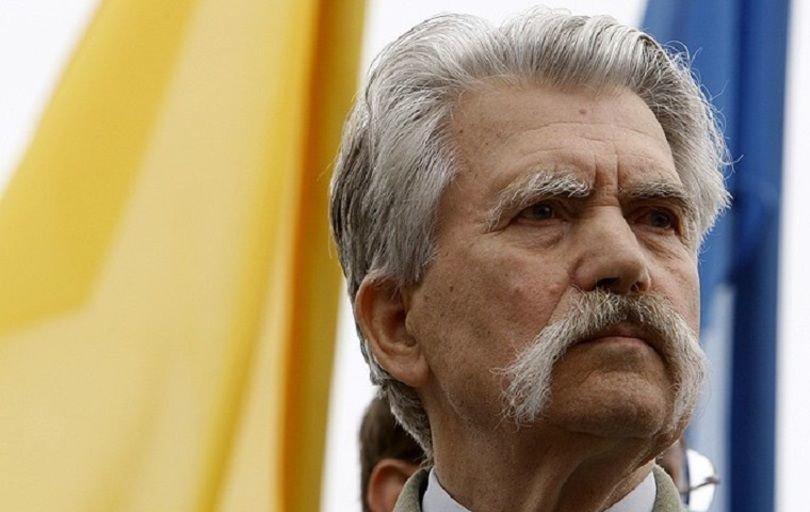
Photo by focus.ua
Levko Lukyanenko said that 24 August was such a busy day that he even forgot about his birthday. When he came home late at night in the village nearby Kyiv, his wife had set the table – she was waiting for him to congratulate.
There are plenty of his photos in feed on Facebook these days. Someone said that Levko Lukyanenko was the last romantic among fighters for better future for Ukraine. It is true. Having gone through many extremely hard moral and physical challenges he stayed a Human. An honest, principle, unbreakable. A real son of Ukraine. It is not a pathos – it is reality.
Rest in Peace!
By Viktor Tsvilihovskyi