

The fate of Ukrainians after the annexation of the Crimea and the war in the East sometimes resembles action films. This happened to the family of Valentyna, whose last name is not mentioned in this text at her request. This memory is a real indicator of the Ukrainian events of the beginning of 2014. To lose property, friends, relatives, plans for the future, and most importantly hope for a happy retirement is exactly what happened to Valentyna and her family. Now she lives in Europe and dreams of returning to her native land because, without the Crimea and the Donbas, she does not see her life.
Donetsk + Crimea in one destiny, it is possible:
The son of Valentyna was seriously ill in his childhood. Doctors advised the family to move from Donetsk to the Crimea to save the lungs of the boy. Thus, the family was in Yalta at the beginning of the 2000s. 10 years of happy life and future plans were destroyed by the Crimean events of spring 2014.
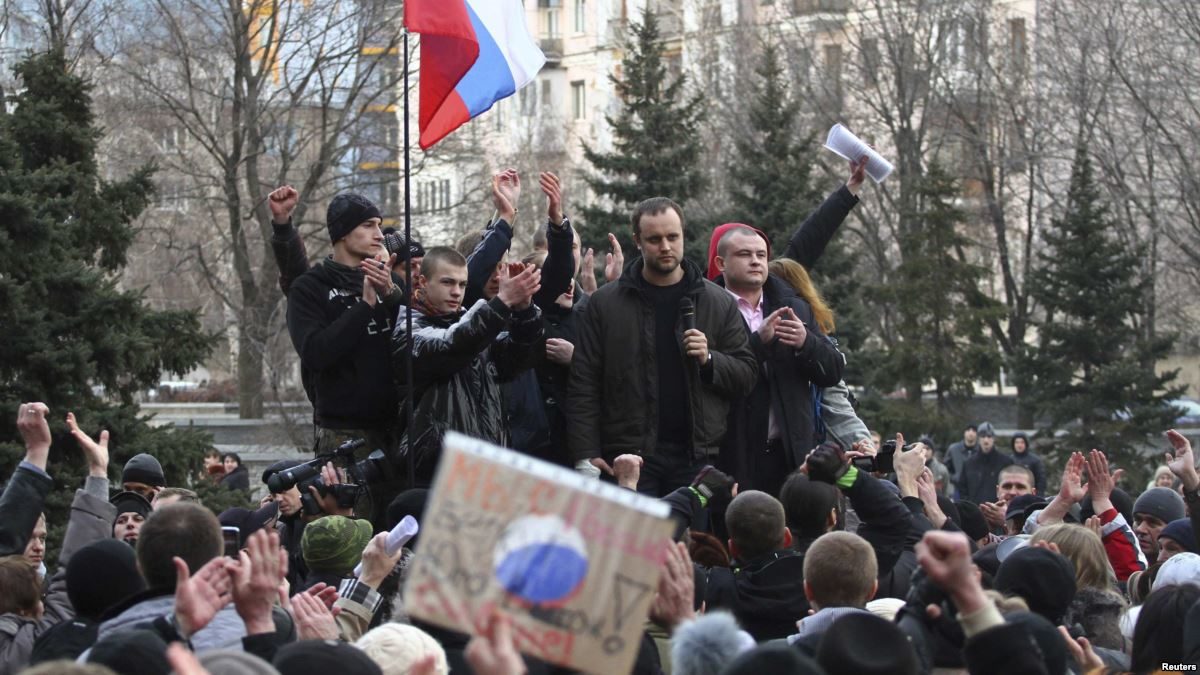
“We were happy only because we imagined the future. And then, out of the blue ‒ annexation. Although there were prerequisites, everyone saw and understood this. In February 2014, I felt that there would be a war. Then I had started to call everyone in Donetsk because all my friends, comrades, classmates, and peers were there. However, they had already begun their demonstrations in Donetsk. I told them to sit, not to get dirty, but no one listened to me. It was some kind of Crimean-Donetsk madness”.
The “first robin” of annexation in the Crimea and confrontations in Donetsk:
Valentyna recalls that in Yalta in 2014, during the annexation, neighbors had begun to rejoice at the prospects for the Russian occupation. They were absolutely happy, it was just euphoria:
“Russia will take us, pensions will be twice as high, and wages will rise. I spoke with everyone, asked everyone: what did you do for Russia so that you would be paid high pensions? There was one answer ‒ we were always Russia. And I said: ‘nothing works in the Crimea, what kind of salaries? Here, everything is set up for a tourist.’ And they said: ‘well, the rich tourists will come.’ I asked: ‘how will one do it?’ They said that Putin will do something ‒ build a bridge…”
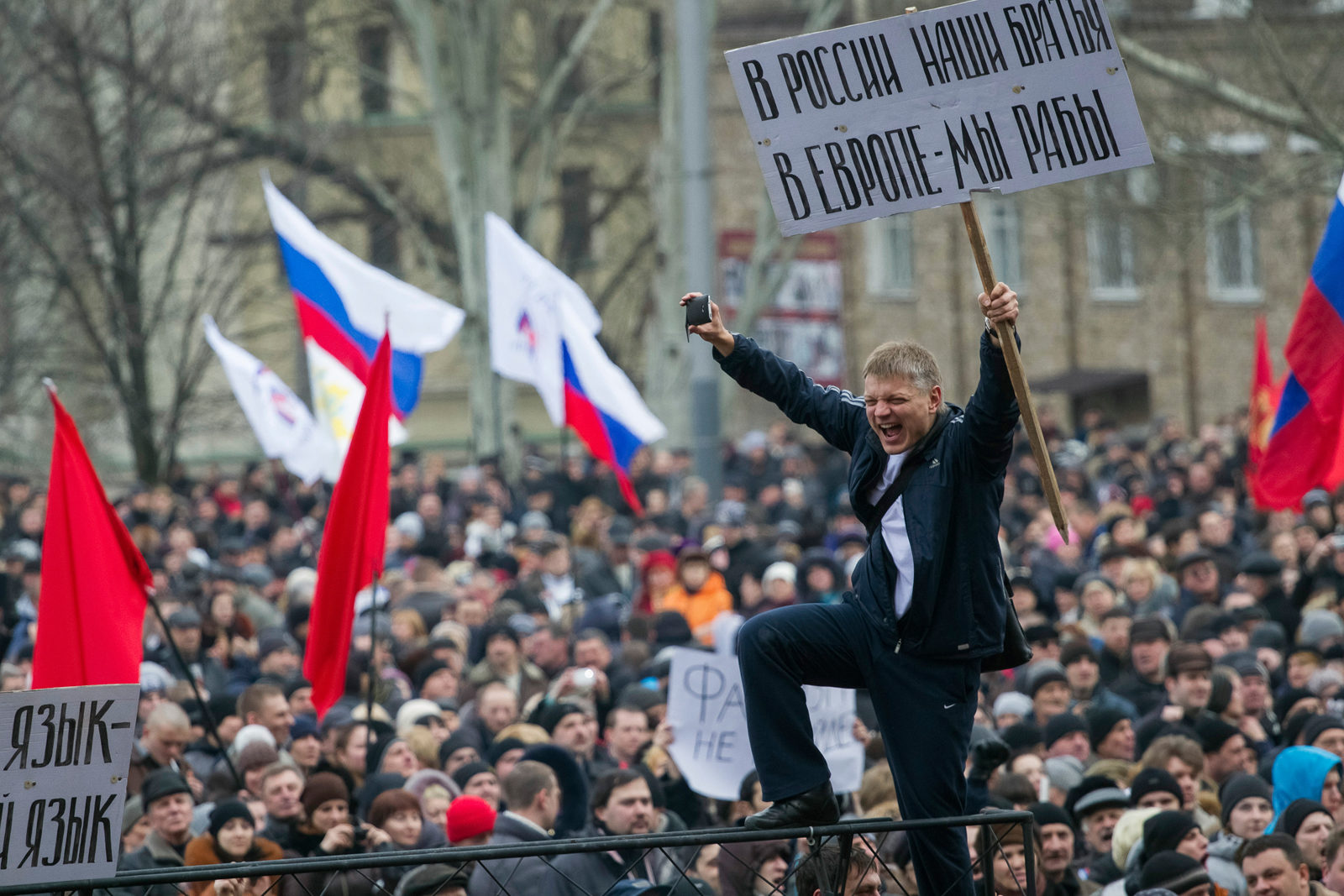
Photo: styler.rbc.ua
It was only the beginning of the “Crimean events”, the days, when it was still possible to speak openly with people, the protagonist recalls.
“As soon as we began to gather regularly at the fountain on the seafront, some suspicious athletic guys came out of nowhere, they were watching us. Later we found out that they live in the Oreanda Hotel. Their task was to quickly respond to our behavior, to disperse us so that no one would go to gather there again.”
There was also Valentyna’s attempt to say “No” to the anti-Ukrainian mood in Donetsk, where she went on family matters back in December 2013. There, near the Shevchenko monument and the library named after Krupskaya, were gathering those, who sincerely expressed support for Kyiv Maidan.
“With the Ukrainian flag and symbolics, pro-Ukrainian people were gathering in the evenings and on weekends. Along the perimeter, we were guarded by our own police. And then the representatives of AntiMaidan began to beat us.”
How the annexation of Crimea had begun:
Returning home to Yalta from Donetsk, Valentyna found the first days of the Russian occupation of the peninsula: “February 24 – 25. The first thing that the Yalta TV station showed on TV was how tented cars drive up to the Black Sea Fleet territory. They fold back the tent and there were the guys with arms in their hands on the territory of public facilities. Who they are, what kind of people they were ‒ was unknown, but obvious.”
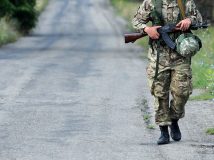
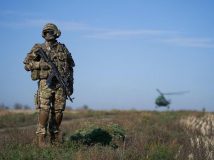
Then there was a meeting of the Crimean Tatars under the Crimean Parliament, followed by the seizure of the Crimean Council. Then Valentyna first felt intolerable fear, because the inevitable tragedy was already in the air: “I was alone at home then and I heard military helicopters, so low and low. It was very scary. They flew right over the roof, vibrated so loudly, the walls of the house were shaking. I already knew that they were Russian helicopters. By that time, every day they were talking on the news about some kind of army that was heading for Simferopol.”
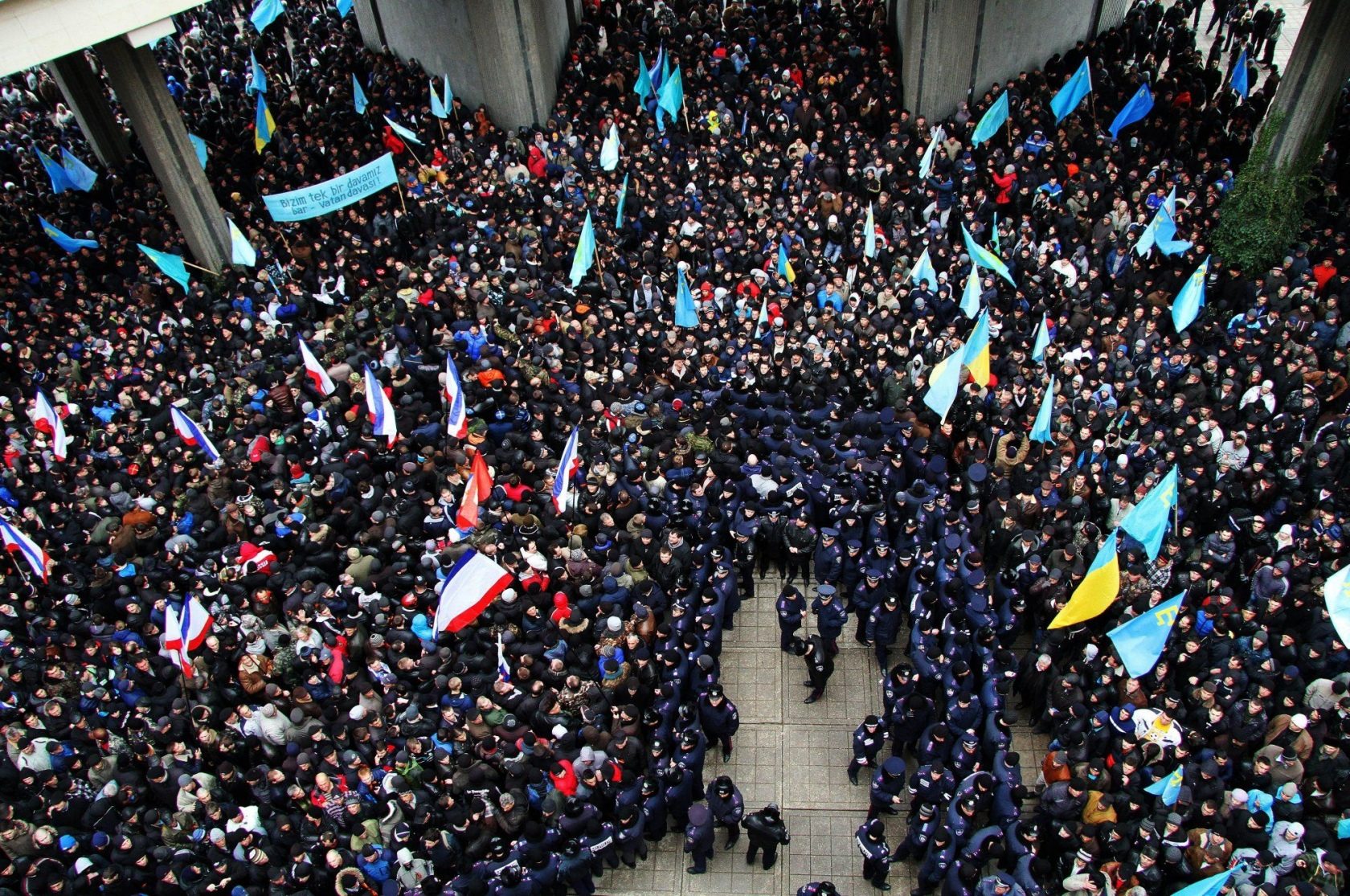
Photo: pravda.com.ua
At that time, they didn’t even hear about the Ukrainian Army, as the protagonist recalls. People had the impression that they were simply left alone: “We found out about their existence only when stories about how our military was blocked right in military units were shown. Also, they showed how Tatar women brought food to our military. Later I found them on the Internet and joined this action.”
Analyzing such incomprehensible army behavior, the heroine recalls her correspondence with one People’s Deputy: “I will not mention his name. He was even a presidential candidate in previous elections. So, I wrote to him ‒ take the guys out of there, do not make them traitors, save them. At the end of all negotiations, he wrote to me: “The authorities gave up the Crimea.” Now, when they say that you wanted this, I just have no words. I remember everything ‒ how before the referendum buses with Krasnodar license plates were moving to Yalta with people, who were brought out of nowhere to vote.”
“Referendum”
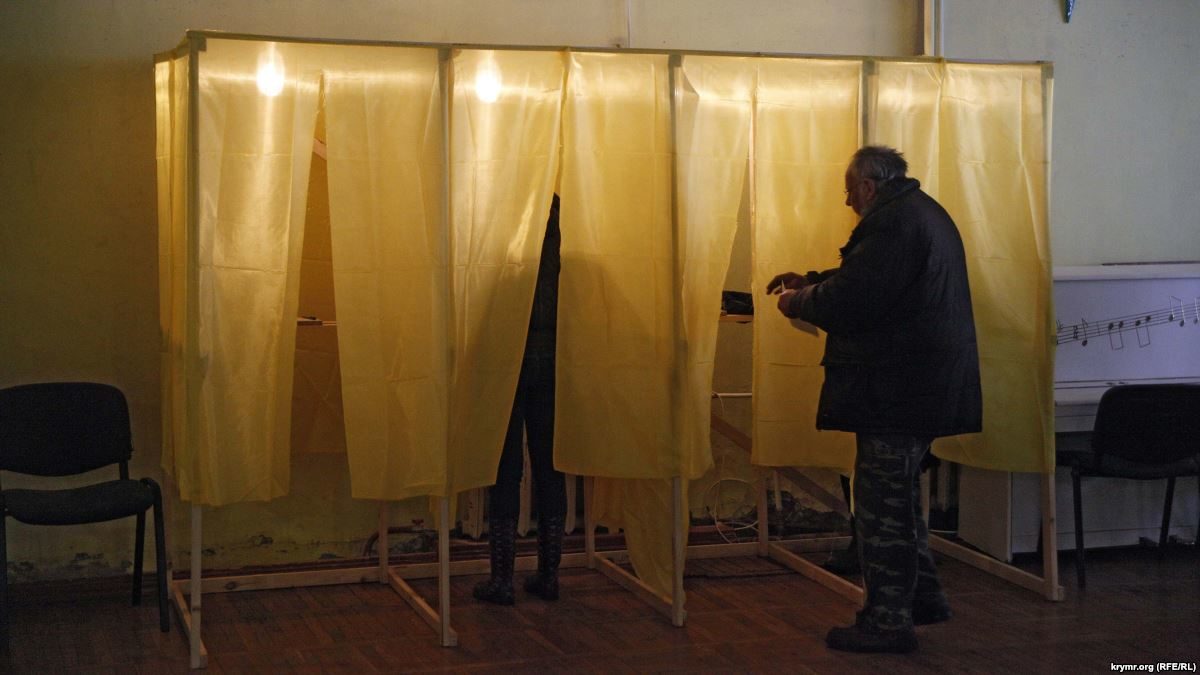
Photo: ua.krymr.com
On April 16, Valentyna and her husband went out into the street to shop for cigarettes. But what they saw was just shocking: a crowd of people, who were everywhere, even on the road, drunken rage, the inadequacy of the public: “Bikers, the marginalized, nobody knows who was on our street ‒ the mass. And this is understandable, because there is a school, and there is a polling station in it. On that day, there was even a political strategist of Putin there ‒ Sergey Markov. I remember how we met our neighbor on the street. He was so happy about what was going on, he said: look, at what mother-Ukraine made me! It was good that it was a sunny day and I was wearing sunglasses, my tear-stained eyes were not visible. I didn’t answer anything, just quietly wiped my tears. I already knew that you just need to be silent, to say something is useless.”
On the day of the referendum, Valentyna and her husband collected their belongings, brought everything to the car and drove from the peninsula to Donetsk region. There was still no war, there were still hopes that they could be saved in their own native land, at a cottage near Slovyansk. Where a real hell will soon unfold.
“Salvation” near Slovyansk:
“I remember how Russian invaders appeared in Donetsk region. They were well equipped, all with a Russian accent. At the checkpoints, we were constantly met, stopped, and I remember how we were stopped at one DPR blockhouse, they saw the Crimean numbers and asked: ‘well, how is it, in the Crimea, do you live good with Russia?’ And I answer: ‘we have always been quite well there. Well, I do not know how to lie…’ ”
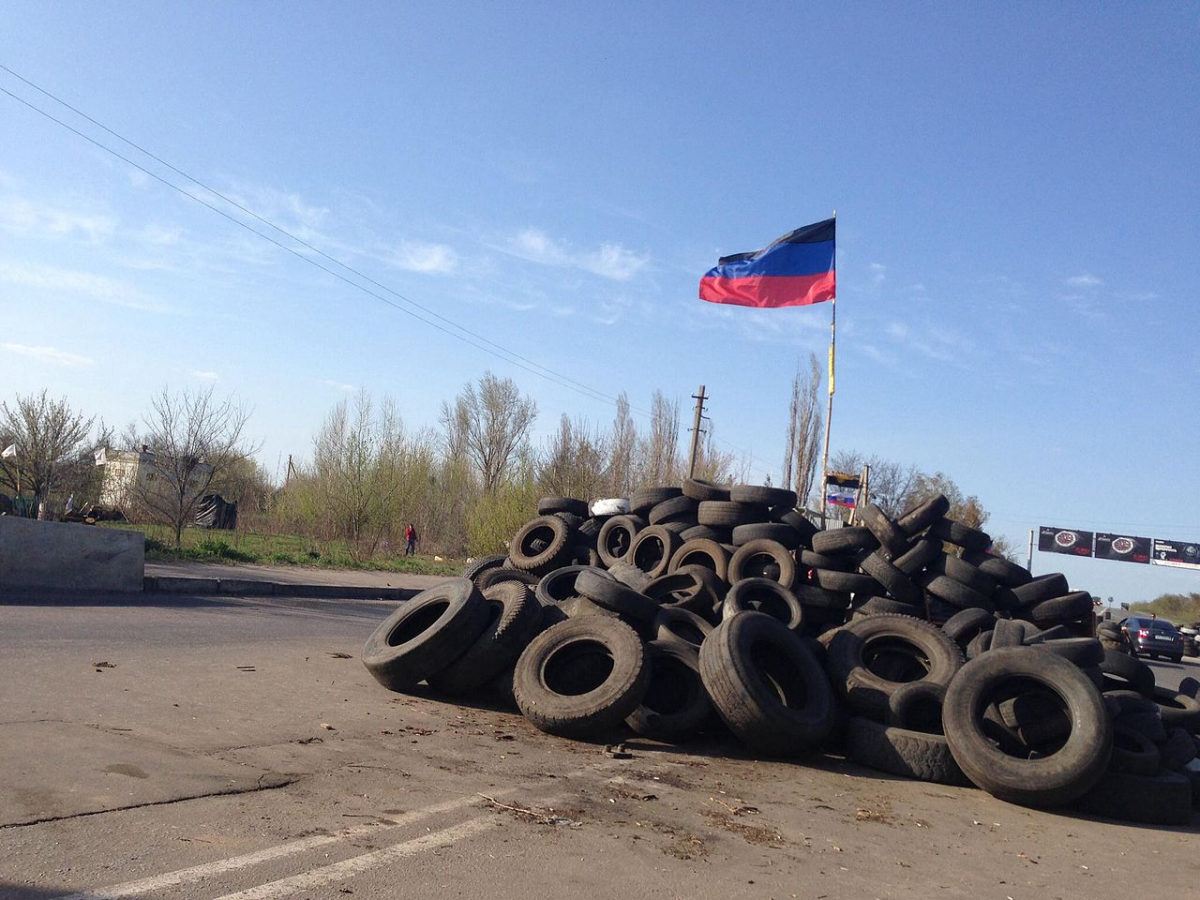
Photo: galinfo.com.ua
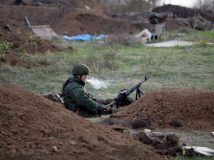
Active hostilities took place near the cottage village somewhere in April-May 2014. The village residents, who were held hostage by large-scale shelling of this territory, saved their lives as best they could. Valentyna and her husband built their cottage with their own hands. The garden, in which marigolds were planted everywhere, vegetables, fruits, berries that were grown on sand, in the spring of 2014 turned into a territory of salvation. Valentyna’s basement was the only place on their street that saved several families. In this basement, Valentyna recalls, her neighbors, who had not spoken before, even made up. However, not everyone showed real humanity then: “Neighbors came to my husband to borrow cigarettes quite often. And then, one day, they come so happy and treat him. And he asks: ‘where did you get this?’ They say: ‘Have you heard, there was a battle yesterday, all the fields are dotted with corpses there.’ That is, they just pillaged them, they took the money, cigarettes, and then they left… But my husband thanked and said: ‘No, I’ll manage without it.’ ”
After the liberation of the cottage village, the victory of the Ukrainian Army and filtration measures, Valentyna and her husband returned to Yalta. Her daughter and grandson were currently there. The woman could not recognize her native land. In the summer of 2014, Yalta was already overflowed with Russian symbolics, Putin’s slogans sounded everywhere, people turned into whisperers, it seemed like it was 1937, Valentyna recalls.
Denunciation:
“I don’t know who wrote it about me, there are three versions, but it doesn’t matter anymore. It was like this: several people led by a policeman came to us. They were without a search warrant, said that they should examine there. The policeman whispered that we should not be afraid ‒ this is now the standard procedure. It all lasted for 40 minutes. During this time, they turned the whole 14- square meter room. They were looking for something on the computer, checked the phone. I asked the district police officer what does all this mean for us? He answered quietly to my ear that it would be better for us to leave…”
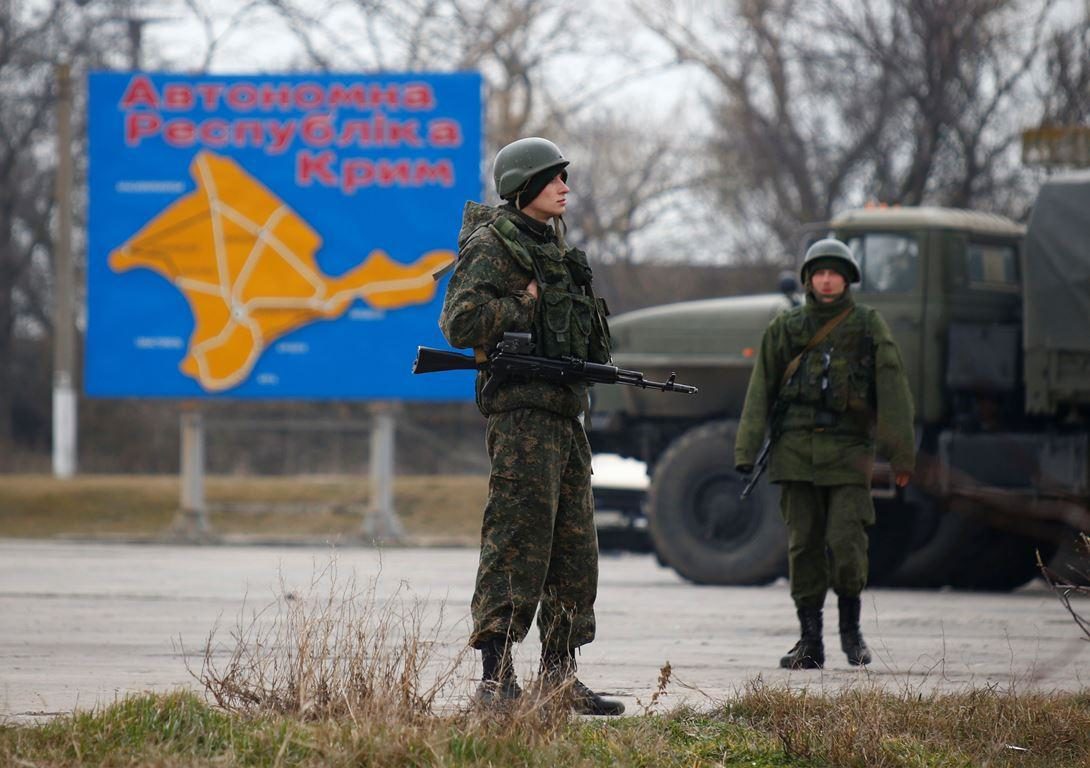
Photo: vectornews.net
To go to Donetsk region to the cottage village or to Donetsk that was already occupied, did not make any sense. Therefore, the family decided to take a chance and go to the Czech Republic ‒ the country, where their grandson was going to get an education. So they did.
“I’m really looking forward to coming back home”
The family of Valentyna wasn’t in Ukraine for 4 years. They do not know what is now with their property in Yalta, the cottage, what’s going on with an apartment in Donetsk. Valentyna could not find her place in the European environment, she says ‒ the age doesn’t allow her to remake herself.
She does not even want to hear about the occupied Crimea, and says: “I will never set foot there until it is Ukrainian.”
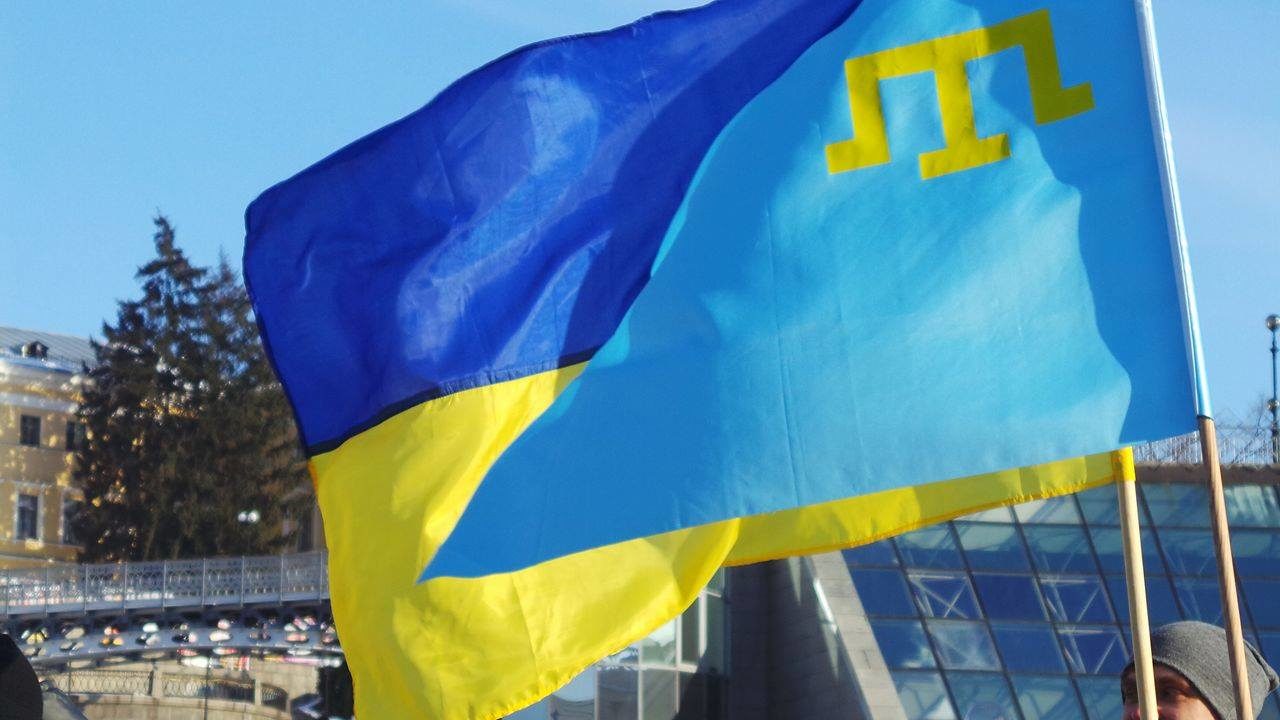
Photo: censor.net.ua
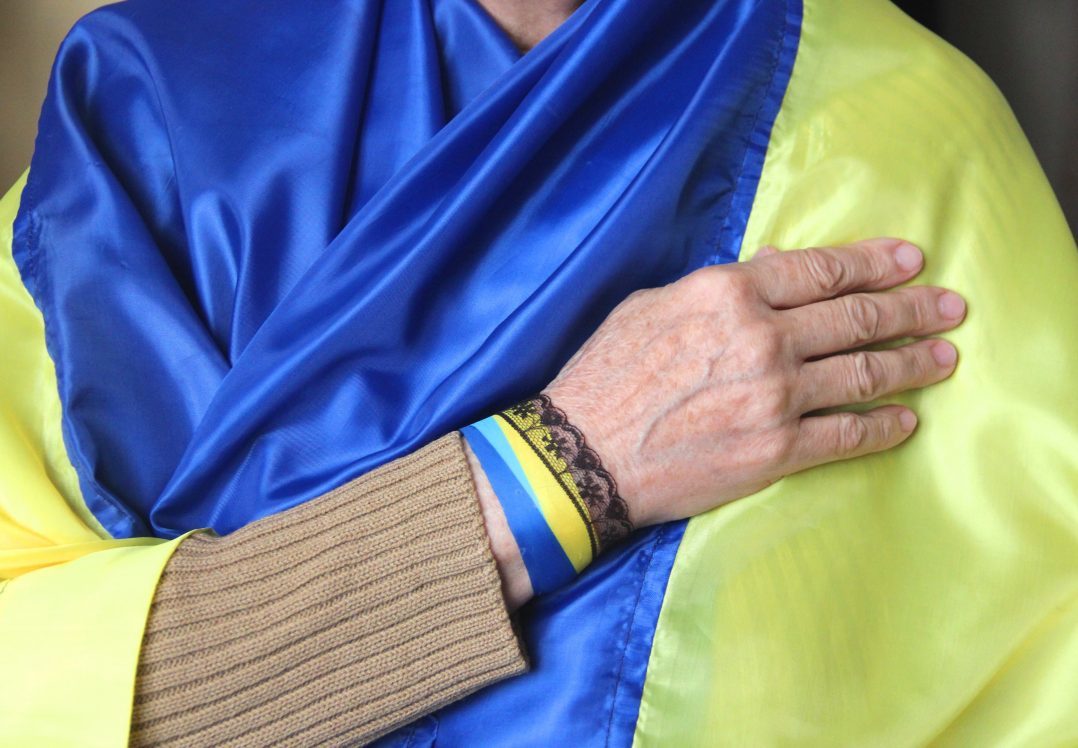
Now she is wearing a yellow-blue ribbon covered with black on her arm ‒ this is sorrow for Ukraine, the protagonist explains. “My life is completely destroyed; I was left without shelter, without a country, without a future. My husband and I even thought about joining the army. Now, when I watch new documentaries about our war, I always feel pain and responsibility for the fact that we didn’t strike in full in Donetsk back then, didn’t take seriously what was happening. I am very ashamed of that. I remember how strangers appeared in Donetsk. And in order not to see this, we sometimes just closed the windows.”
By Natalia Mizyukina