

The outgoing week brings us back to the five-year-old events. Everyone – from the ordinary Ukrainians to the president – recalls where they were and what they were doing when snipers killed people at Maidan. Someone honored the memory of fallen fellows and someone grabbed the chance to boost one’s PR. How far have we gone over these years, or have we remained in the post-“regional” January 2014? Read the traditional digest from DUMKA through the prism of weekly news.
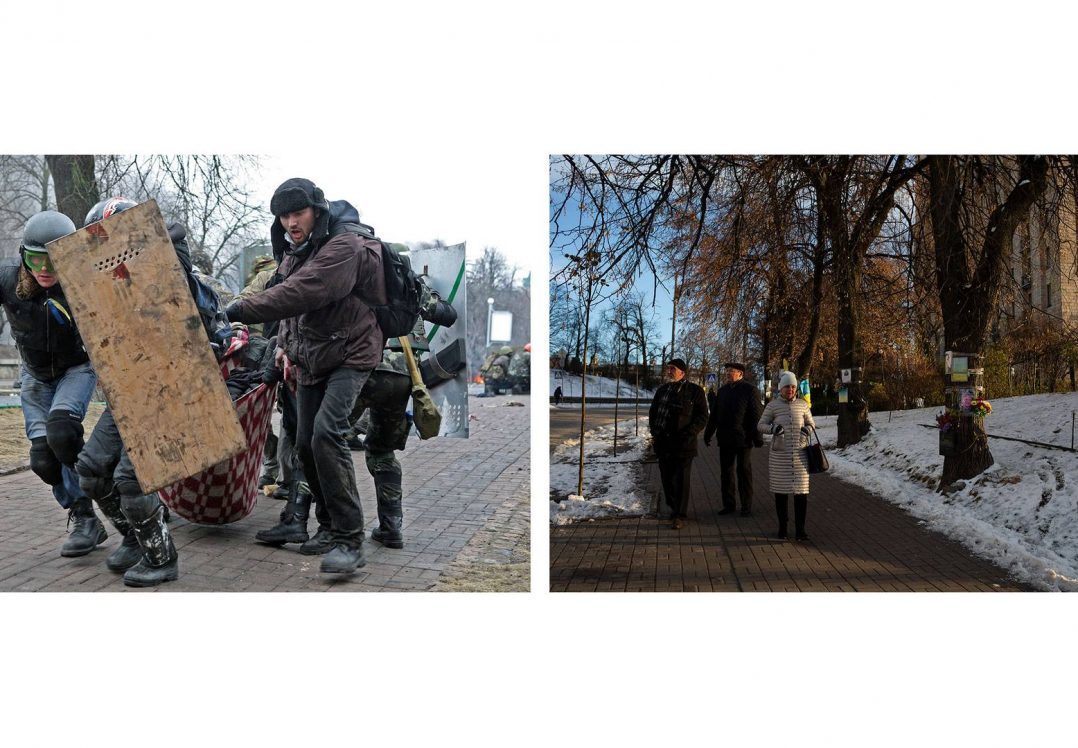
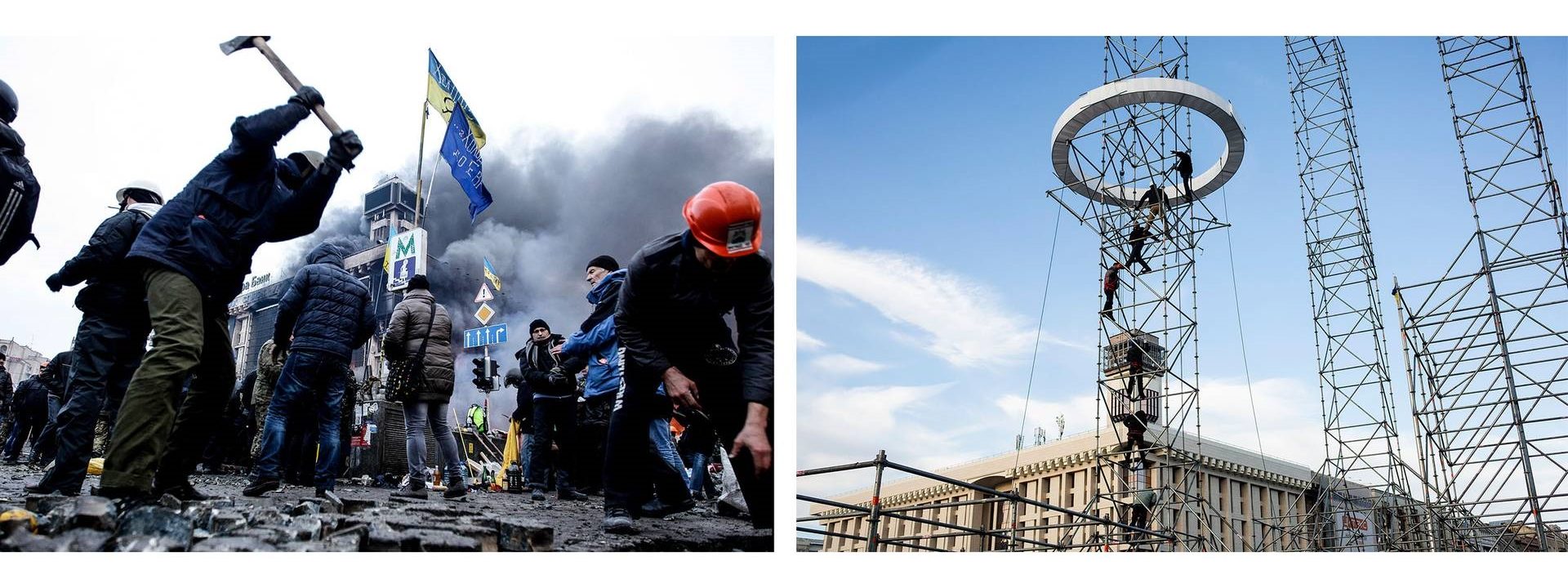
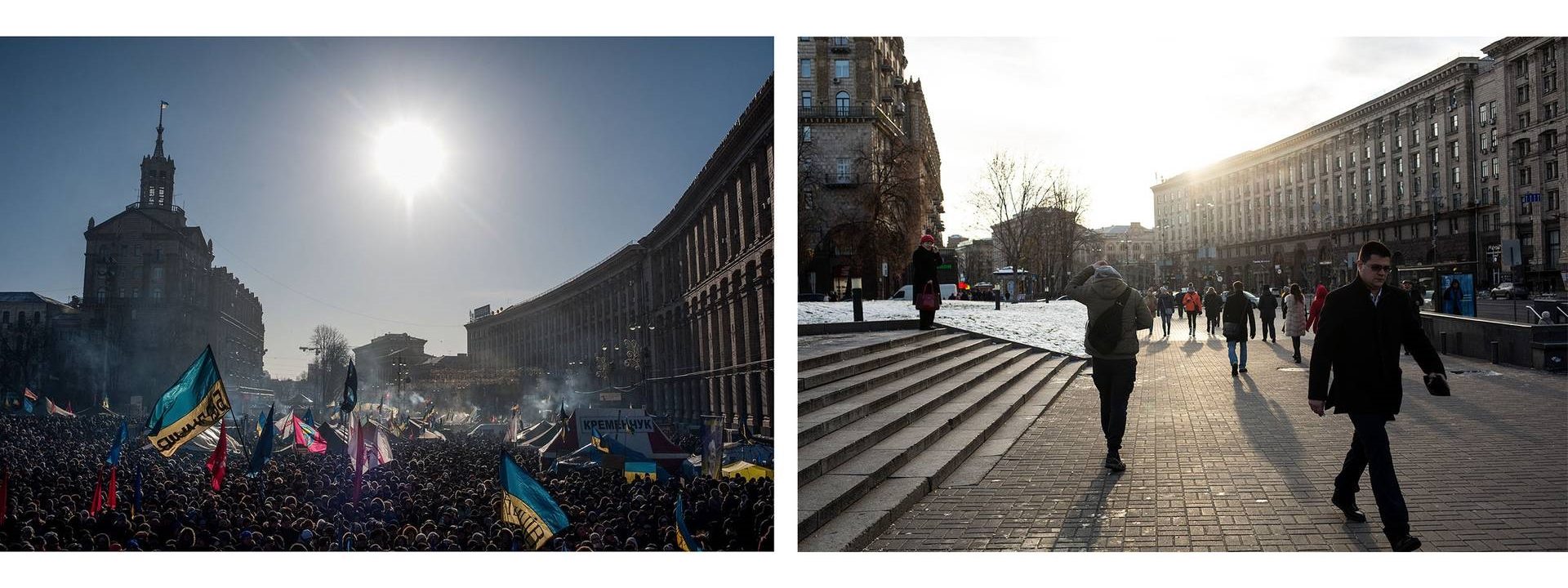
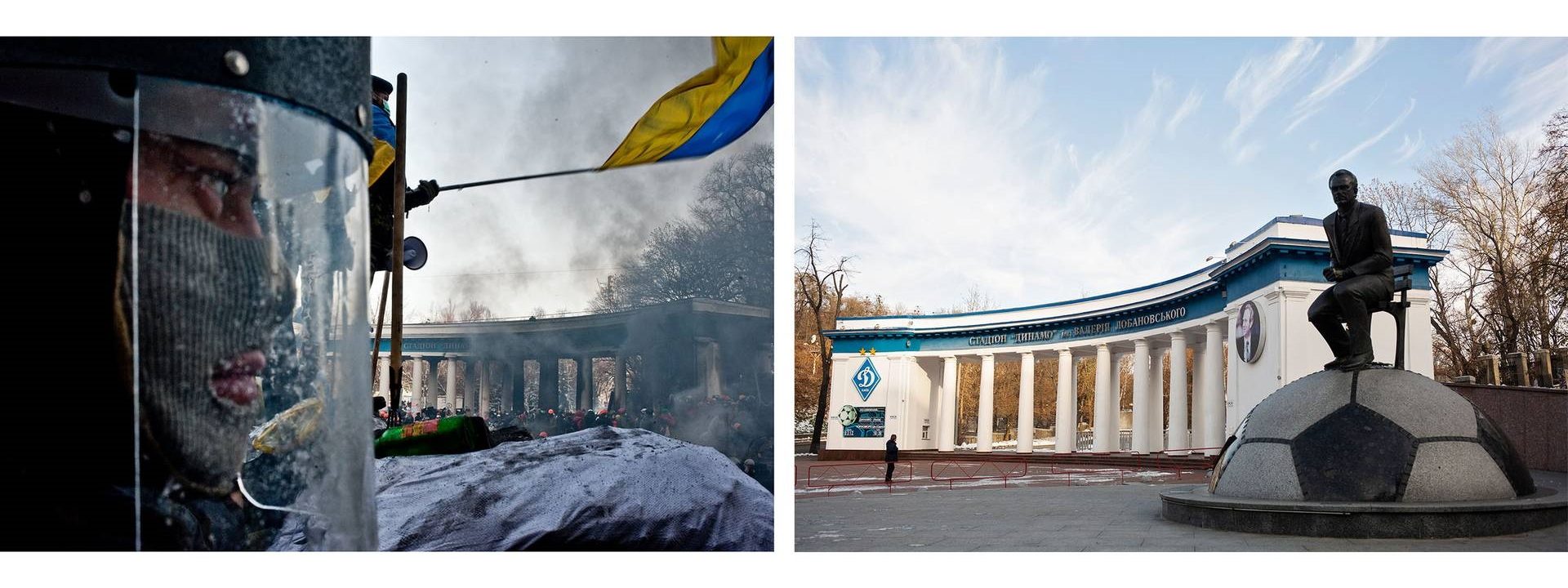
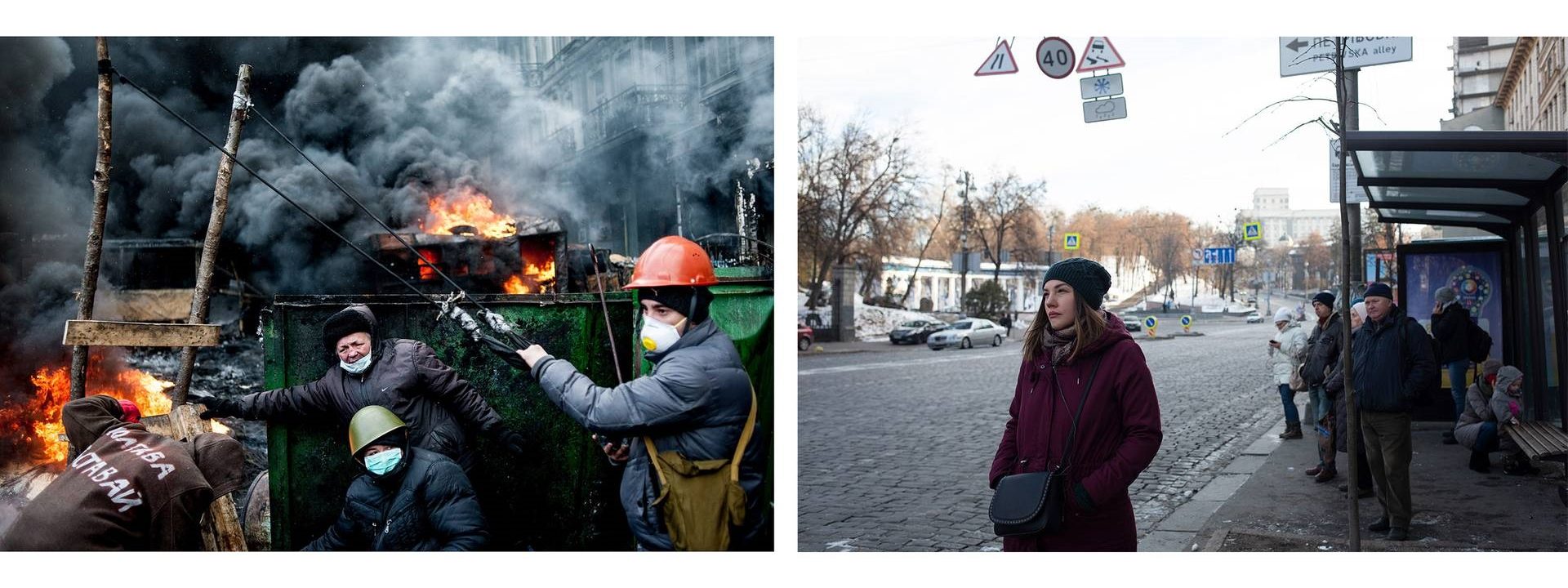
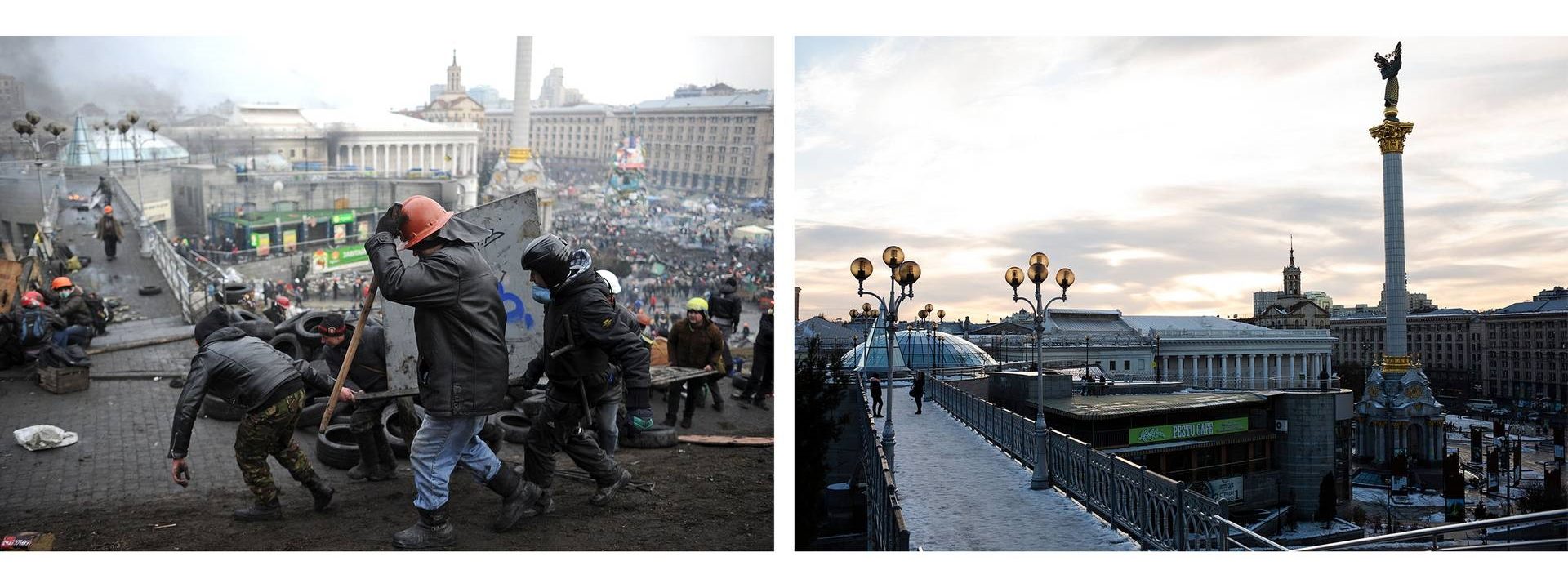 For the visual guidance of the text, the photo-project of Hromadske.TV “Revolution of Dignity in flashbacks: 5 years ago and now” was chosen. For the fifth consecutive year, investigators, lawyers, prosecutors, relatives of the victims are trying to recreate the events of those days. Separate episodes were collected per secondly. Again and again, they return to the central streets of Kyiv to answer the question: who and why killed people.
In 2013-2014, this was where the historical events of EuroMaidan took place. Hromadske.TV recalled the places where the students first gathered, places that eventually turned into an arena of bloody clashes between protesters and security forces. And so, from where the first volunteers went to the east of Ukraine. It was there where the fate of the country has been decided.
What were those places like then and what they are like today, over 5 years after the beginning of the Revolution of Dignity – in photo-project from Hromadske.TV. And we, in turn, will try to show how the daily events of 2019 differ from 2014 and how far have we gone.
On February 20, Ukrainian President Petro Poroshenko spoke at the UN General Assembly meeting in New York. He stressed that after 5 years of aggression, Russia “doesn’t show any intention to stop.”
“Almost every day, we lose our best sons and daughters. First, Russia seized the Crimea, then turned Donbas into the battlefield, and then spread its aggression on the Black Sea, the Sea of Azov, and the Kerch Strait. As a result, 44 thousand square kilometers, or 7% of Ukraine’s territory are currently occupied,” he said.
Poroshenko is convinced that stopping the aggression of Russia is possible only with the efforts of the international community. He gave an example when, in 1939, the Soviet Union was expelled from the League of Nations due to aggression against Finland, and this, according to the president, was a right and balanced step.
“So maybe it’s time to put Russia in its place? To start with the deprivation of its veto power, at least when it comes to the issue of Russian aggression against Ukraine. I ask this assembly to support us – to be with us in opposing the imperial ambitions of the Kremlin. Only together we can force Russia, an invading state and an aggressor, to take responsibility and stop aggressive action. And we believe that the UN should play an important role in this. When in 2018, Secretary-General of the United Nations Antonio Guterres included the issue of resolving the Russo-Ukrainian conflict to their priorities, we felt hope. Unfortunately, there have not been serious shifts, but they have to be achieved,” Poroshenko said.
The president talked in English without pauses more than 40 minutes. Diplomats rewarded him with dry applause and quickly passed to Venezuela issue. In the UN they are still deeply concerned as 5 years ago.
Meanwhile, the President of the European Council Donald Tusk has visited our Verkhovna Rada. He spoke in the parliament of Ukraine and gave the politicians and citizens five tips. He also thanked Ukrainians for believing in united Europe.
The special session of the parliament was devoted to the fifth anniversary of the beginning of Russian aggression against Ukraine. Mr. Tusk stated that “there is no Europe without Ukraine” and noted that Ukrainians don’t need to learn to be Europeans.
Argue moderately
According to Donald Tusk, the history of Ukraine and Poland shows that internal conflicts are the greatest gift from “that third country”, obviously bearing in mind Russia.
He reminded that Ukraine also has opponents in Europe, who are only looking for a reason for the deterioration of relations between Brussels and Kyiv.
“A sharp conflict between you may be the very reason for this,” Donald Tusk warned.
“Argue moderately and stay united in the issues of vital importance to Ukraine.”
Don’t become nationalism and populism obsessed
“Avoid the temptations of radical nationalism and populism as you did so far,” Donald Tusk said.
According to him, the answer to the nationalism of the one becomes the nationalism of the other. It contributes to the conflict.
“The foundations of united Europe are reconciliation instead of revenge, solidarity instead of selfishness, historical truth instead of propaganda,” he said.
The politician believes that populism is tempting for those who have complexes and feel weak, and Ukrainians have every reason to feel “proud and strong.”
Nurture democratic values
The President of the European Council urged Ukrainians not to believe those who said that the time of democracy based on human rights, respect for minorities, freedom of thought and speech have passed.
He stressed that authoritarian democracy doesn’t have to substitute freedom.
According to Donald Tusk, the heroes of the Revolution of Dignity died defending the values of democracy.
Build a virtuous state together
“I won’t give a lecture on corruption here,” the president of the European Council said.
He asked politicians to believe that honesty and transparency of power are needed not because it is “a requirement of the European Union,” but because citizens need it.
Believe in youth
Mr. Tusk told that he met in Brussels with the group of young people among whom there were Ukrainians.
“Their generation is ready to assume responsibility for the future of Ukraine. They are, in fact, this future,” he said.
Donald Tusk stressed that five years ago, the youth of Ukraine passed their exam, “paying the highest price.”
By the way, about prices. Belarus sold 800 times more coal to Ukraine, despite the fact that it is not mined there. The volume of anthracite export from Belarus to Ukraine for the year increased 307 times and amounted to 8.82 million dollars. According to journalists of Radio Liberty, the coal could come to Belarus from mines of the temporarily occupied Donbas. In particular, in this way, the coal is bought by Rinat Akhmetov’s DTEK, and the state-owned Tsentrenergo, which was planned to be privatized by the end of 2018.
Apart from Ukraine, Belarus sold most of its coal to CIS countries and to Lithuania. Belarus sold the biggest share of anthracite to the CIS and EU countries, in particular to Poland.
That’s how Ukrainian coal is warming Europe, enriching Belarus and giving the militants money for the continuation of Donbas occupation. Over the past 5 years, our authorities have not been able to clog this channel of coal smuggling.
A lot was said over these 5 years, less was done. On the eve of the election, Radio Liberty reminded what the current presidential candidates said, where they have been and what have done from 18 to 20 February 2014 during the tragic events at Maidan?
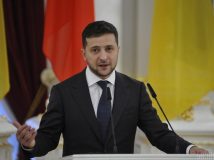
Well-known Ukrainian showman Volodymyr Zelensky, who, according to recent polls, heads the presidential ratings, in the winter of 2013-2014, publicly spoke about protests in the center of the Ukrainian capital.
In a comment to The Gazeta.ua in December 2013, Zelensky, for the first time, expressed his attitude to EuroMaidan. “I understand the position of people when they went out on Maidan. Then they beat other people. I am also ready to be with people for that position. If people continue to insult and beat each other, I will go to Maidan. And I was there, of course. True, not on December 1, when Berkut had beaten students, I came around the next day. In general, violence is uncommon to our mentality. When I see how in the Arabic countries, revolutions and looting take place, I take it with horror. Then I become happy that I was born in Ukraine. But our country was unlucky with politics and the top of government,” Zelensky said.
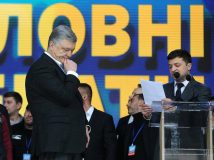
The acting president of Ukraine Petro Poroshenko was one of the prominent figures of the Revolution of Dignity at the times of the bloody confrontation at Maidan. During the February 2014 confrontation, he often took the floor on the scene, reporting on the course of events, particularly in the Verkhovna Rada. Taking floor on February 22 with Yurii Lutsenko, he appealed to the protesters, “Today, all Ukraine has shown that it is with Maidan. There is no more space for thieves in Kharkiv, Donetsk or Crimea, and there is no place for separatism because they have garnered it together with us! Ukraine is and will be united! And today, February 22, is the birthday of new Ukraine! Glory to Ukraine! And glory to you!”
Yuliia Tymoshenko, the leader of the “Batkivshchyna” political party, at the time of the shootings at Maidan, had been imprisoned in Kharkiv for a long time. On the evening of February 22, she was released and taken from Kharkiv hospital “Ukrzaliznytsya”, from where she arrived in Kyiv immediately at Maidan. She proclaimed her first appeal to people after the release already on the Maidan scene, “When I arrived in Kyiv, I didn’t recognize Kyiv: burned cars, barricades, flowers… But this is another Ukraine! Ukraine of free people! And you gave each of us, everyone who lives today, who will live tomorrow – you gave the country! Therefore, the people who were at Maidan, the people who died at Maidan are heroes forever!”
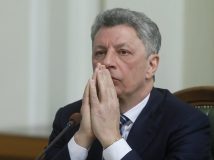
Sadovy from Lviv called on to stop the bloodshed, Koshulynsky carried the wounded during the shooting, Boyko “condemned aggression of both sides” and Hrytsenko participated in legislative regulation of the situation and said that “it’s early to celebrate”.
It’s early to celebrate five years after. But we are left not only to mourn for the dead but to build a really new country. The upcoming presidential election and the election of deputies to Verkhovna Rada will be the important brick. So, don’t hesitate, there won’t be any business done without Ukrainians.
Kostyantyn Rul