



Few days have remained to the most important evening of the cinema industry of the USA or, frankly speaking, of the world. Already on February 24, in the Dolby Theater (Hollywood, Los Angeles) the Oscars will be honored.
Who will win? The level of unpredictability of the decisions of the Academy of Motion Picture Arts and Sciences this year – one of the highest in recent times. Let’s try to figure out why.
First, let’s recall the contenders. We have 24 nominations. The main is, of course, for The Best Picture. It includes Black Panther, the director is Ryan Coogler, BlacKkKlansman, Spike Lee, Bohemian Rhapsody, Bryan Singer, The Favourite, Yorgos Lanthimos, Roma, Alfonso Cuarón, A Star Is Born, Bradley Cooper, Vice, Adam McKay.
Best Actor: Christian Bale (Vice), Bradley Cooper (A Star is born), Willem Dafoe (At Eternity’s Gate), Viggo Mortensen (Green Book), Rami Malek (Bohemian Rhapsody).
Best Actress: Yalitza Aparicio (Roma), Glenn Close (The Wife), Olivia Colman (The Favorite), Lady Gaga (A Star is Born), Melissa McCarthy (Can You Ever Forgive Me?).
Best Supporting Actor: Mahershala Ali (Green Book), Adam Driver (BlacKkKlansman), Sam Elliott (A Star is Born), Richard E. Grant (Can You Ever Forgive Me?), Sam Rockwell (Vice).
Best Supporting Actress: Amy Adams (Vice), Marina de Tavira (Roma), Regina King (If Beale Street Could Talk), Emma Stone (The Favorite), Rachel Weisz (The Favorite).
Best Director: Spike Lee (BlacKkKlansman), Paweł Pawlikowski (Cold War), Yorgos Lanthimos (The Favourite), Alfonso Cuarón (Roma), Adam McKay (Vice).
Best Foreign Language Film: Capernaum (Lebanon, Nadine Labaki), Cold War (Poland), Never Look Away (Germany, Florian Henckel von Donnersmarck), Roma (Mexico), Shoplifters (Japan, Hirokazu Kore-eda).
Best Original Screenplay: The Favourite (Deborah Davis and Tony McNamara), First Reformed (Paul Schrader), Green Book (Nick Vallelonga, Brian Currie and Peter Farrelly), Roma (Alfonso Cuarón), Vice (Adam McKay).
Best Adapted Screenplay: The Ballad of Buster Scruggs (Joel Coen and Ethan Coen), BlacKkKlansman (Charlie Wachtel, Kevin Willmott and Spike Lee), Can You Ever Forgive Me? (Nicole Holofcener and Jeff Whitty), Beale Street Could Talk (Barry Jenkins), A Star Is Born (Eric Roth, Bradley Cooper and Will Fetters).
The other nominations are also important, but the real impact on the development of the industry will have the aforementioned categories.
First, the very unusual “art-house” accent of the short list is striking. After all, it was not the pathetic historical attractions, or a packed with special effects blockbuster which has become quantitative leaders but chamber dramas The Favorite and Roma, marked by non-standard directorial thinking – in ten nominations each. As well as the radical political tragedy farce Vice which was marked in eight categories.
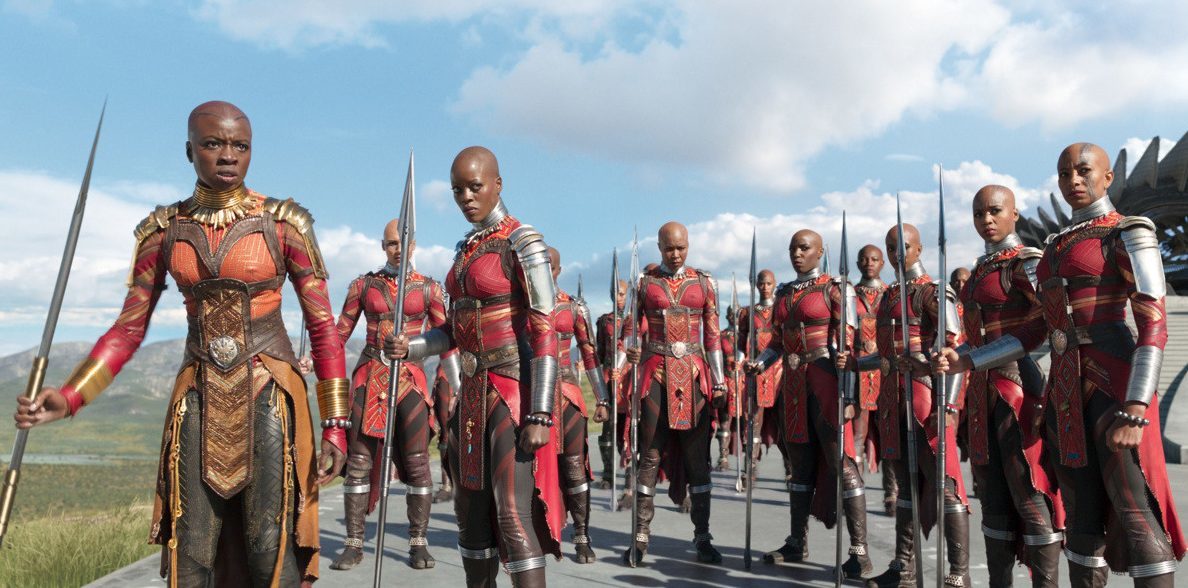
Shot from the film Black Panther
Everything is not so easy with blockbusters too. For the first time, the film-comics produced by the cult company “Marvel”, got into the top category. This is another evidence of how important for the Cinema Academy can be social order: because Black Panther collected last year’s largest box office – a billion dollars. The popularity of the story of what might be called Black Power embodied by the black superheroes and the imagined prosperous African country Wacanda, couldn’t remain unnoticed – so Ryan Coogler’s film has seven nominations.
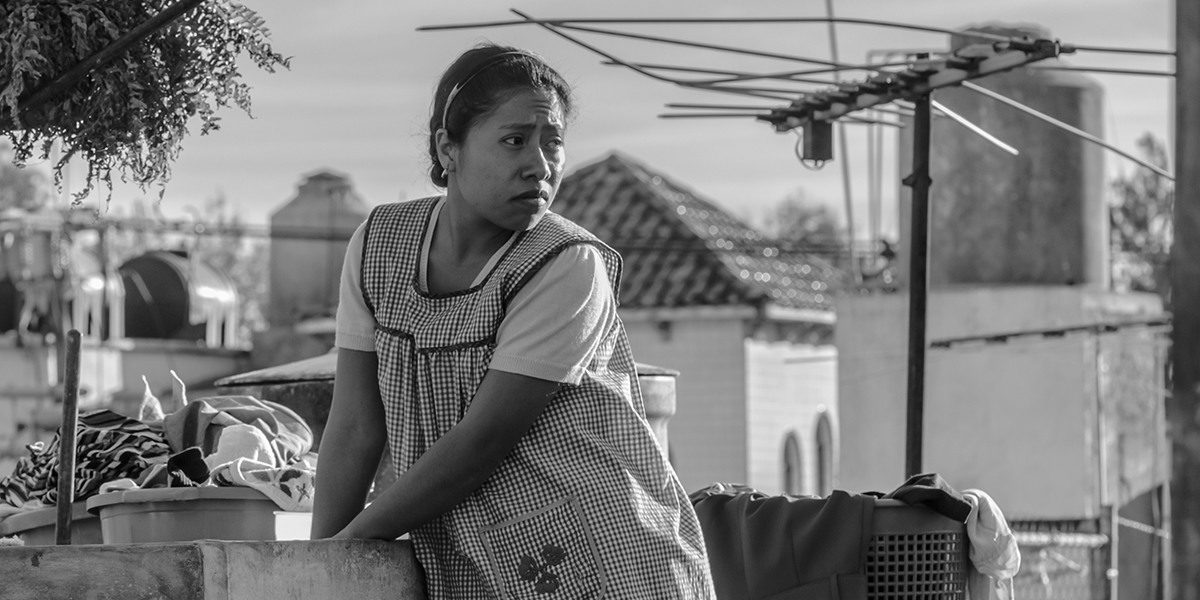
Shot from the film Roma
Generally, “for the first time” are the passwords for the current Oscar. Of course, it is about the leading role of Roma. It hasn’t ever happened to the award, solely concentrated on the English-language product. The previous similar precedent – the Chinese Crouching Tiger, Hidden Dragon (2000) by the Thai Ang Lee, which was also nominated in ten categories and ended up with four statuettes. But this movie was just a commercial, fully Hollywood-focused historical action movie, built on the battle scenes in the entourage of medieval China: swords, bamboo sticks, acrobatics with punching. And here is a Spanish-language, insane, and black and white picture of the life of a servant in the middle-class family in Mexico in the early 1970s. And her chances are great, considering the two Golden Globes: for the best directing and for the best foreign language film, the main prize of Directors Guild of America (intermediate between the Globe and the Oscar, but a very significant award). Equally important fact is that the distribution rights have been acquired by such a powerful player as Netflix.
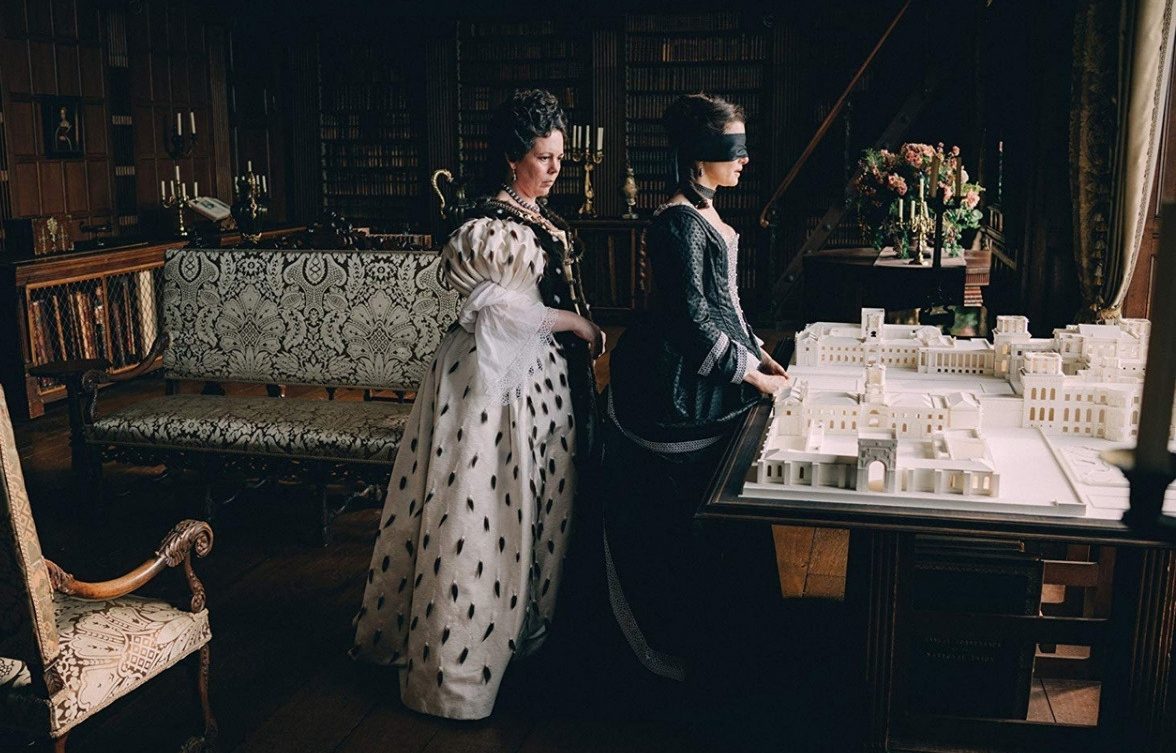
Shot from the film The Favorite
Another bright collision in the spirit of the American dream is The Favorite. Its author is also a foreigner – the Greek Yorgos Lanthimos. Since 2015 he has been successfully shooting English-language movies. But The Favorite is his breakthrough on the completely new territory since Lanthimos didn’t even approach the historical costume genre. This peculiar debut garnered complete success: directing, scenario, visual grace of the frame, impressive Olivia Colman in the role of Queen Anne, Rachel Weisz and Emma Stone in the roles of the favorites of the Duchess of Marlborough and Abigail Hill – everything is a top-tier.
Another generalization, which suggests itself: a large part of the scenarios is based on biographical material. Apart from The Favorite, this is BlacKkKlansman, Can You Ever Forgive Me?, Vice, Green Book, At Eternity’s Gate, Bohemian Rhapsody. Of course, the degree of relevance of these plots is high enough. For example, Green Book and BlacKkKlansman touch upon the issue of racism in the form of the grim comedy. The viewer reacts actively because American society is now experiencing Trump’s reign with an unpleasant side effect in the form of xenophobia exacerbation. Vice is equally close to the challenges of recent days. This is the story of the ascension of Dick Cheney, Bush the Younger’s vice president, to the White House. He was one of the most hated figures of the Republican establishment of the United States. Adam McKay deliberately connects in his provocative finale Cheney’s political customs with the present. By the way, Christian Bale who with terrible persuasiveness has turned into his character is practically guaranteed the Oscar.
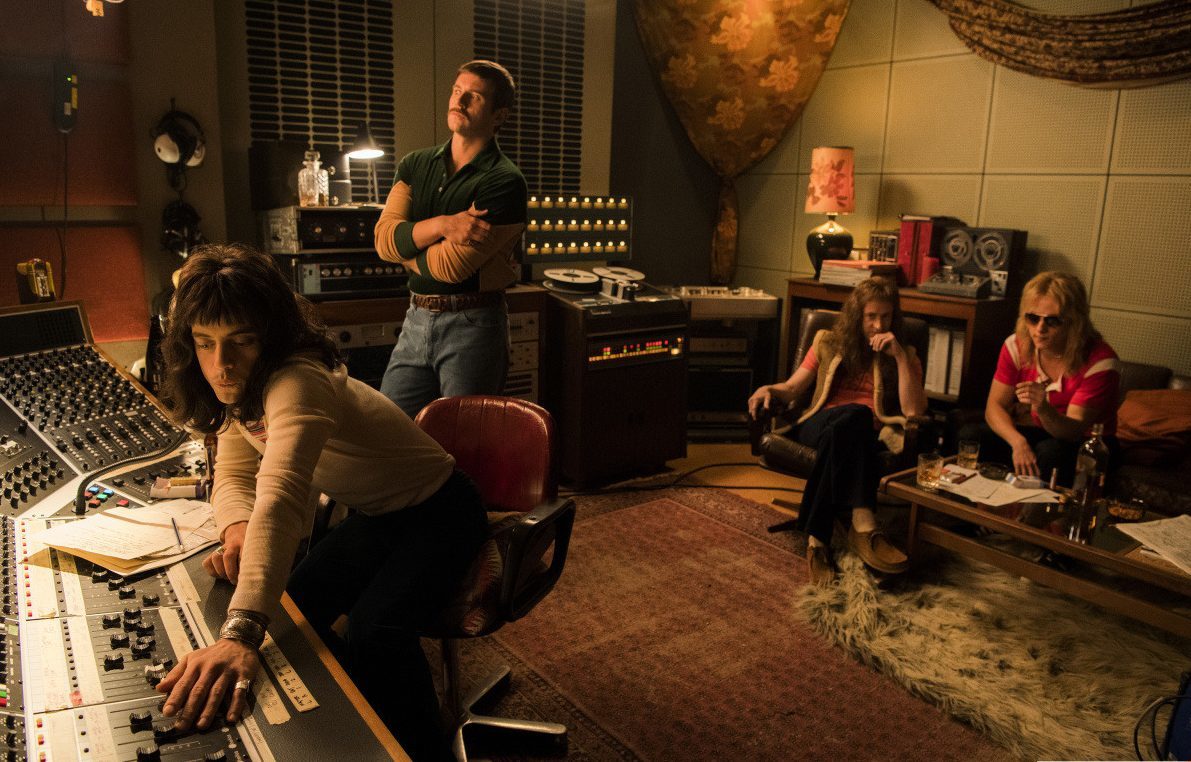
Shot from the film Bohemian Rhapsody
Previously, Bohemian Rhapsody seemed to become the best film. Cinema biography of Freddie Mercury seems to be incredibly distant from problems that in one form or another affect the Green Book, BlacKkKlansman or Vice. However, here again, “people’s voting” took place: Bohemian Rhapsody didn’t just become a box office hit, but also hurt a lot of people alive, regardless of age, led to the renewal of Mercury cult, refreshed the attention to LGBT-issues. But at the beginning of February, a huge scandal broke out: director of Bohemian Rhapsody Brian Singer was accused of pedophilia. Singer was immediately expelled from the list of nominees for The British Academy of Film and Television Arts (BAFTA), as well as from the list of nominees for the GLAAD LGBT-Prize. So, obviously, the chances of success in this musical melodrama have dropped sharply.
By many signs, Roma can get the main statuette. If this happens, we will have an unprecedented explosive sensation. The non-English-language movie has never become the owner of the main prize. For all such, a Best Foreign Language Film Ghetto is designed. But there are a lot of non-standard, uncommon and unusual in this Oscar. And, again, the mood in society can play a significant role: remember that Trump is building his policy on powerful anti-immigrant rhetoric, in the first place directing it against workers from Mexico, and with a maniacal passion tries to build a wall on the southern border. To give a prize to a Mexican picture would be a great excuse to prick the acting president and his far-right followers. And here is just a rare case where relevance and artistic qualities are almost perfectly combined.
It’s hard to honor the Oscars.
But perhaps, for the first time in the lifetime of this prize, political, artistic and commercial will come to a perfect balance. And it will be a real Oscar of ХХІ century.
Dmytro Desyateryk, The Day – specially for opinionua.com