

The phrase “nuclear arms race” was used 30 years ago, and disappeared from the active vocabulary with the end of the Cold War. However, it turns out, that mankind just took a break, and now those forgotten words have to be taken out of the waters of forgetfulness. Experts are sure, that the race can start again, and the new Cold War will be hybrid, much more complicated than in the second half of the twentieth century.
“No, no, no to nuclear explosion!”
For decades, the Soviet people lived in the fear because America wanted to destroy a peaceful Union with nuclear weapons. The United States expected the same “gift” from the USSR. I remember that terrible alarm, and us, first-graders when during the lesson our teachers evacuated us to the school basement. Middle school students and senior ones were directed to another shelter – a shooting range. That was scary, though it was only a civil defense lesson.
We were told what to do outside the populated area – how to lie in the holes and behind the stumps, so as to hide from the devastating wave of a nuclear bomb that will destroy everything on its way, how to protect the eyes and respiratory organs. We knew what to do at home when the radio would announce the aggressor’s hit. Meanwhile, on the radio and TV, there were songs condemning the nuclear threat. Joseph Kobzon’s put his words into each ear: “Yes, yes, yes to the sunny world! No, no, no to nuclear explosion!”.
The fears came to an end in December 1987, when Soviet and American leaders Mikhail Gorbachev and Ronald Reagan signed the Intermediate-Range Nuclear Forces Treaty (INF). The USSR and the USA have obliged not to produce, test, or deploy land-based ballistic and cruise missiles with short and medium ranges of (1000-5,500 km) and (500-1000 km). They had to destroy all the launchers and land-based missiles with a range of 500 to 5500 km.
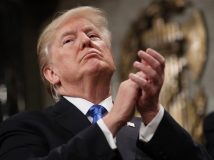
Time passed by, the Soviet Union disappeared from the world map, and the nuclear arms race was forgotten. And recently, Americans, including President Trump, assured that Russia (the successor to the Union) has broken the agreement. The United States decided to withdraw the Treaty on February 2 this year, which was announced by Secretary of State Mike Pompeo the day before. This is not a spontaneous decision since in early December the United States gave the Russian Federation 60 days in order to return to the INF. The very process of Americans’ withdrawal will take six months. The USA demands that the Russian Federation destroy all missiles that violate the Treaty, as well as launchers and related equipment.
“According to INF procedures, the USA has informed Russia and other parties of the Treaty (Belarus, Kazakhstan, Ukraine) that they will withdraw from the treaty within six months if the Russian Federation does not return to its full verified fulfillment,” Oleksii Izhak, an expert on security issues explained. “At this time, until a probable formal exit, the USA suspended the fulfillment of the INF. To the suspension, Russia responded the same way. However, Russia does not seem to have reported the United States and other parties about their withdrawal in six months. Russia had previously acted secretly, and now, after the announcement of the suspension, it will begin the work on the deployment of long-range naval and aviation missiles on land. However, Russia will try to do this without increasing the defense budget, because there is not enough money. The fastest work on “landing” a naval missile will end in several years.”
Who will make the first step?
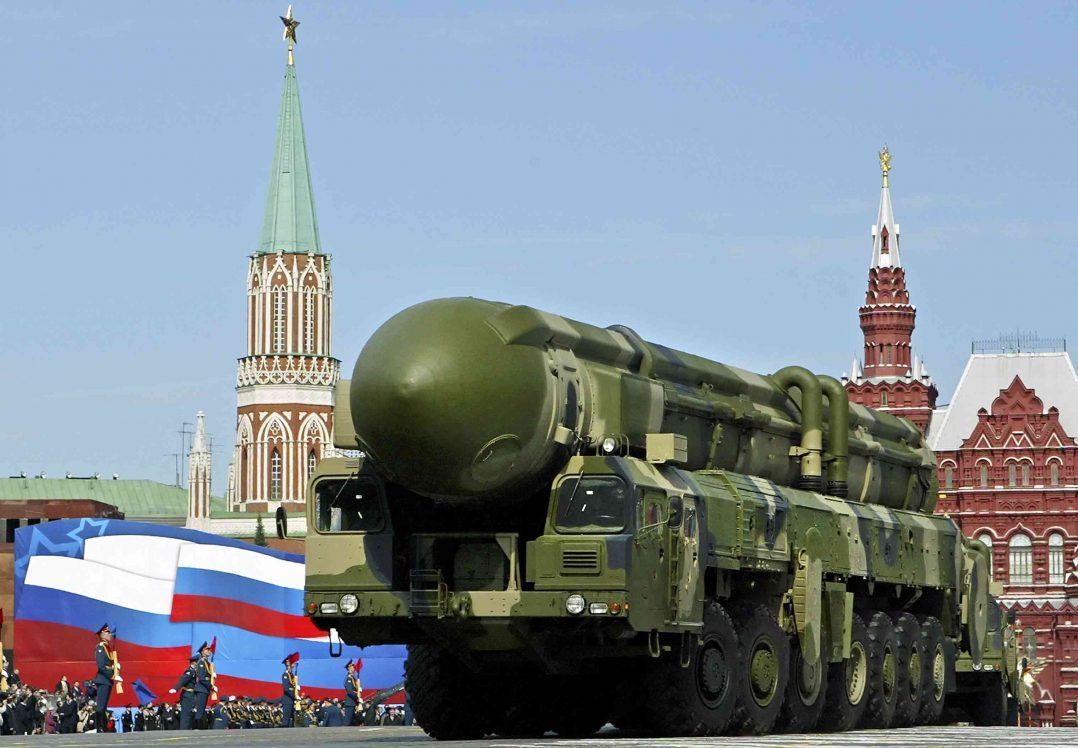
As expected, Russia denied all the blame. Dmitry Peskov, the Press secretary of President Putin said, that the decision of the United States is a pity. That is, the Russians always set themselves up as “goody-goody”. Although nearly a year ago, Vladimir Putin boasted of a new cruise missile with an unlimited range. He stressed that nobody has such weapons, and if somebody has, Russians will come up with something new.
But in order for the world not to sink into nuclear power again – despite the difficult relations between the countries, the importance of state interests and the leaders’ own ambitions – they have to make an agreement. Someone must initiate negotiations.
“I think the first step will be made by Russia because it has less financial resources and other capacities, and it will be forced to organize negotiations to lower the tension soon,” Viktor Yagun, the major general and the former deputy chairman of the SBU said. “In fact, this was the case during the Cold War, although then the situation was a little bit different. I hope common sense will win. If Russia ignores all the negotiations, then I think the West will do more wisely and make the right decision.”
On February 2, on the day when the USA withdrew the INF, President Trump commented on the new treaty, even with more participants.
“Negotiation of the USA, China and Russia regarding a new treaty, seems to be underway,” said Oleksii Izhak. “The last round on the INF before the announcement of the withdrawal was held in Beijing, which, as the Russians say, “symptomatic”. In his last statement (state of the union), Donald Trump has made a clear announced on the possibility of a new treaty including China and other parties. The first step has already been made by the USA, as it suggests a new general treaty.”
China has the most advantageous position! There are already dozens of small and medium-range missiles among the nuclear supplies of the PRC. China was not an INF party, but it has no reason to increase the number of such weapons if the United States and the Russian Federation don’t do that. The USA does not have the ability to quickly deploy land-based middle-range and short-range missiles but can compensate for any strengthening of Russian forces at the expense of sea and air missiles. There will be no sudden and quick steps, according to Mr. Izhak.
“Russians will not act as the initiators of the negotiations, because they believe that Americans have destroyed the treaty,” Mykola Beleskov, a deputy director of the Institute of World Politics said. “And here two parties are not enough. Donald Trump has clearly said that the new treaty will be multilateral and will be set up between countries with appropriate missile systems that have to be limited and destroyed. And it will attract the PRC first of all. But for now, the PRC will not be included in this process as they consider that for now the treaty must be fulfilled by the United States and Russia. So far, the negotiations are not being discussed.”
Russia will not succeed
“It’s hard to call that arms race, as it was during the Cold War because we cannot compare the economic potential of Russia and the United States,” Oleksandr Khara, an expert of the “Maidan of Foreign Affairs,” said. There will be a short distance that will exhaust Russia. Russia is a weak country, therefore, it violates treaties. It is not interested in solving this problem. Russians want to use one problem to solve other ones. In other words, the USA should abandon the deployment of missile defence systems in Europe – in Poland and Romania. But Americans are not interested in that. They are ready to talk about the new treaty, but Russia is not the only country they want to involve, it is not a threat to the United States’ interests, unlike China’s”.
Despite the Russians’ confidence, specialists do not trust the Kremlin’s information. They do not believe that the Russian Federation will be able to create a powerful nuclear potential capable of threatening the whole world. The words are not enough, to implement that they need huge funds.
“Russia will start the Cold War, it will spend more funds on research and development, equipment and weapons, and take money from the socio-economic sphere, which will lead to the same consequences as the Soviet Union had,” Ivan Vinnyk, People’s Deputy, the Secretary of the VRU Committee on National Security and Defense said. The USSR dissolution was a result of the economic problems within the state when a significant amount of managerial and financial resources was directed to the Cold War with the United States, and not to the socio-economic development”.
Viktor Yahun has a similar opinion: “We are lucky, that Russia does not have those economic capabilities that the Soviet Union had. And we all saw what happened to the USSR, it just collapsed. I think the United States has chosen the same way and can impose sanctions, even without violating any agreements, but simply reinforcing what has already been introduced. It will be damaging the Russian economy every day.”
“Implementation of plans for medium and long-range missiles’ production will take a long time. Appropriate programs are made for 5-10 years. And the USA is ready to play a long process: to invest, to deploy production capacity. Recently, Russian Defense Minister Serhiy Shoygu stressed that all relevant work should be completed by 2021. But Russia will not be able to produce missile systems at the same high speed as at times of the USSR”, Mykola Beleskov said.
Is Ukraine between hammer and anvil?
If Russia, due to poverty, does not increase its nuclear potential and intimidate the whole world, will it use its stockpile of medium and small missiles against Ukraine? Missiles located in the annexed Crimea will quickly reach any part of the country. The situation is possible, but in reality, there are very few such weapons on the territory of Crimea.
“A salvo of several dozens of cruise missiles is not a big deal”, explained Mykola Beleskov. “In case of a war, this amount should be sufficient – hundreds of missiles to break through air defence, to damage many objects. For example, Americans needed 60 cruise missiles to destroy the base in Syria. And the whole Russians salvo of the Black Sea Fleet is smaller. Even if they can destroy one airfield, it is not an advantage. When Russians produce hundreds of missiles a year and in 5-7 years reach the stockpile of a thousand units, it will be terrifying. In the case of a conflict, it will actually allow them to shoot any point in Ukraine. Everything will depend on the pace of producing of Russian missile systems”.
Despite the threat, our high-ranking officials have responded to the events around INF half-heartedly. And now the USA is offering a new treaty. Will Ukraine take part in the negotiations?
“Either a new treaty that will stabilize the situation on a new level will be established, and then it will be necessary for Ukraine to be a full member of it, or it will be an arms race that the United States will win and, once again, new negotiations will start, and then Ukraine will have to launch their own work on medium and short-range missiles,” said Oleksii Izhak. “In the new situation, whether there is a treaty or a new arms race, those who can produce medium and short-range missiles for their troops will win. Ukraine has such potential.”
Steven Pifer, former USA Ambassador to Ukraine, Stanford University researcher stated on Twitter that the termination of the INF would help Ukraine to develop and deploy appropriate missiles. The conclusions of the ex-ambassador are rather optimistic: “The treaty is now on the way to an end, and Ukraine will be free to develop, test and deploy ground-based ballistic and cruise missiles with a range from 500 to 5500 km. I wonder if Kremlin thought about it?”
Text by Victor Tsvilikhovsky