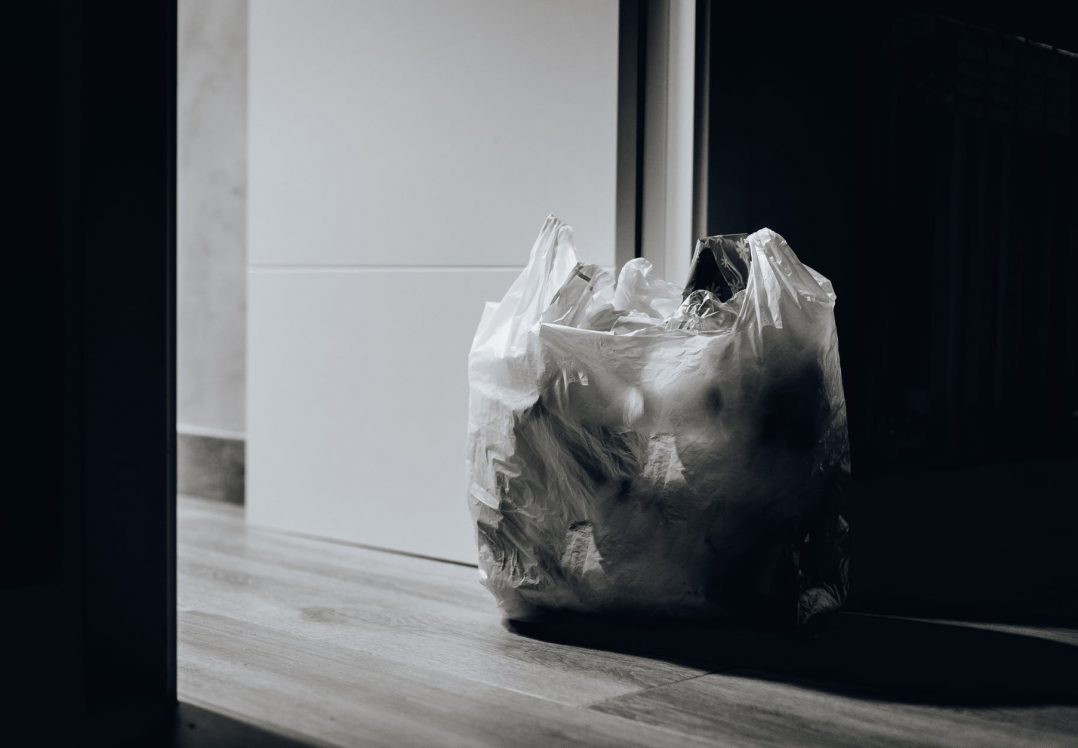


On January 28th this year, the Bill 9507 “On reducing the number of certain types of polyethene waste in public circulation” was registered in the Verkhovna Rada, that will introduce restrictions on the use of plastic bags in Ukraine. Therefore, there is hope that Ukraine will use the brackets in the title in a proper way.
“If something outlasts us on Earth, it will be our garbage. Chemical bonds in plastics or in vulcanized rubber are resistant to most digestive enzymes. After hundreds of millions of years, foreign geologists from deep space may be surprised to find sedimentary rocks full of tiny carbon-based particles that were once part of rubber tires or plastic bags. It is difficult to say what alien palaeontologists of the future would think about us, how they would explain our love for plastic…” So ends one of the series of “Entertaining Science” – “And what if humanity disappears?”
One of the most common types of plastic waste that litters the environment is plastic bags. They are hard to recycle. They are difficult to collect – bags are carried by wind through the streets, fields, and forests. Every year thousands of animals and birds die from eating bags. In Ukraine, one person annually throws out about half a thousand plastic bags.
On January 28th this year, Bill 9507 “On reducing the number of certain types of polyethene waste in public circulation” was registered in the Verkhovna Rada, which will introduce restrictions on the use of plastic bags in Ukraine. The public organization ReThink and over 50 deputies initiated the submission of the bill.
In July 2018, NGO (non-governmental organization) ReThink filed an All-Ukrainian petition to restrict the circulation of plastic. More than 25,000 citizens signed the petition. Since, apart from usual formal answers to the petition, the authorities took no steps, the public organization began to write the law on its own. The draft law was developed together with the People’s Deputies Serhiy Kiral and Boryslav Bereza, as well as specialists of legal offices.
“In order to find the best solution for Ukraine in this issue,” ReThink, the NGO website says, “we conducted a study of the policies of countries around the world in tackling plastic bags. According to its results, it became known that 33 countries completely banned the use and circulation of certain plastic bags. Kenya is known to be the most stringent regulatory agency, where you can sit behind bars for using the plastic bag for up to four years or pay a fine of 40,000 USD. In addition, Bangladesh became the first country, which banned thin plastic bags in 2002. In the European Union, Italy was the first to ban plastic bags back in 2011.
In addition, 53 countries have introduced a partial ban or tax on plastic bags. For example, Denmark began to tax producers in 1994. Georgia has limited the turnover of plastic bags up to 15 microns thick. In countries, such as the Netherlands and Iceland, besides the introduction of the tax, free distribution of these bags is also prohibited. After the introduction of the tax in Ireland for 22 euro cents, during the first year, the demand for plastic bags decreased by 90%.
There are countries, where there are voluntary initiatives by supermarket chains or other market operators to minimize the use of plastic bags. There are eight such countries. For example, in Singapore, networks removed plastic bags from the sale on their own initiative. It was this year that the leading of Austria agreed to do.
Unfortunately, Ukraine is on the list of countries, where no decisions have been taken, the issue is only being discussed. Production of plastic bags in the country is not regulated at all, and their quality and safety are not controlled. At the same time, bags from thick polyethene are subject to processing. Thin plastic bags for recycling are hard and economically not interesting.”
“The purpose of the bill,” the authors write in the explanatory note, “is to reduce the amount of hazardous waste from polyethene, created as a result of careless use of plastic bags.”
The draft law proposes:
- To prohibit the provision of plastic bags free of charge from January 1, 2021.
- To prohibit the sale of plastic bags with a density of up to 50 microns from January 1, 2022.
- Introduce mandatory certification of biodegradability bags (for biodegradable bags) in accordance with national standards from January 1, 2021.
There are exceptions for hygienic reasons. The ban does not apply to ultralight plastic bags with a density up to 15 microns and sizes of 225mm*345mm*450mm used for meat, fish and products from them, as well as bulk products for which the bag is the primary packaging.
Meanwhile, it is known that the threat is also provided by oxo-biodegradable plastic, which eventually breaks up into so-called microplastic. About the material from which the “right” bags should be made; whether there are any manufacturers in Ukraine, who could produce them, and also whether it would be better to direct the efforts to process and launch a line of inexpensive textile bags, paper bags, etc., which are used in the EU countries, which introduced the ban on plastic bags, DUMKA spoke to one of the co-founders of ReThink, Roman Puchko.
“Ukrainian consumers have long been familiar with the so-called “bio bags”. Which of them is really “bio”, and which are just oxo-biodegradable, impossible to understand,” he said. “Mandatory certification and labelling are missing. 99.9% of bio bags at the cash desks of shops and bio bags for garbage ‒ in fact, are not “bio”. Bags with which our market is saturated and which are presented by trading networks as safe for the environment and biodegradable, unfortunately, are manipulation. They also pose a threat, because in these bags there are 99% of polyethene, and only the salt additive of the appropriate formula is added, disengages this polyethene into small particles within one to three years if oxygen is available. Therefore, they are called oxo. Microplastic falls into drinking water and food. While the EU has decided to ban the bags, in Ukraine they are sold as environmental and do not pass any certification.
However, there is good news: from January 1, 2019, a manufacturer can certify its products for biodegradability and composting. By its order, the national standardization body introduced national standards and amendments for them, by which it is possible to certify products for suitability to biochemical decomposition, composting, and biodegradation. National standards are harmonized with European and international standards. This means that products, certified in Ukraine, will be evaluated according to the same standards as in the EU. According to our bill, the adoption of standards will regulate the use of the term “biodegradable bags” and will force manufacturers to certify them.
We are talking about bags, containing herbal ingredients. That is, it is vegetable raw materials. Not oil, not polyethene, but the starch type of substances that can be extracted from potatoes, corn, cellulose, etc. There are many suitable plants from which to do this.
Do we have such a production? Let’s just say: any production can adapt to the pellets of vegetable origin. This is where additional investment is needed. As for the pellet itself, now it is imported, but Ukraine has enough raw materials and technologies. I already know that Ukrainian developers can also make such a pellet. There just was not a market request before.
Indeed, textile bags are better. For, as a rule, are used repeatedly, and do not end up in a landfill. This is the ideal. Nevertheless, very often, people forget textile bags or nets, so they still need to provide some alternative at the points of sale of goods. It is very good when there are multiple alternatives. But if the disposable is also safe for the environment, this is a big plus.
The bill focuses only on bags. It defines what a bag, a biodegradable bag, the primary packaging of a certain size and with certain characteristics are. And, probably, market participants will interpret this each in one’s own way and each in one’s own favour.”
No less harmful to the environment is the kitchen film, which is used today for packing a lot of food. This may be the primary packaging for meat products, cooking and the like. “We do not focus on the film,” says Roman Puchko. “Perhaps this is also worth our attention. Perhaps, it is worth talking about disposable tableware. But we have to start somewhere.
In developed countries, there is separate legislation that regulates the plastic bags. Therefore, we follow this path and begin with this. However, we are not planning to stop at this at all. And if everything goes well (now the bill is at the stage of receiving the committee’s conclusions), we will create a public request for the following initiatives, we will consult with the signatories and other participants of the process, which is more urgent now.”
Text by Hanna Drozd