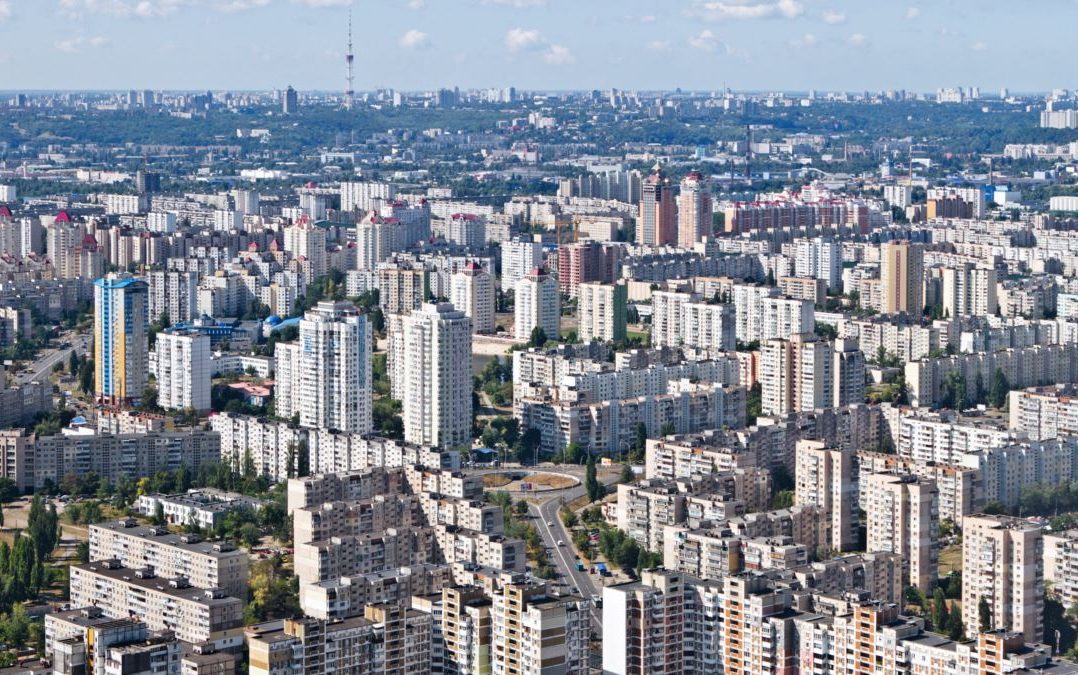


The flywheel of the reform in the field of housing services was launched by the adoption of a package of laws, since 2015. The year that is coming to an end is both intermediate in implementation and very important: the Ministry of Regional Development, responsible for this area, had to develop a multitude of legal acts that should enable these laws to work in full force. Therefore, DUMKA decided to find out what achievements Housing and communal services reform will bring to 2019.
Even those, who don’t keep track of this topic will easily remember that in June 2018 one of the main laws from the package of documents was postponed one day before the entry into force, that is the legal basis for reforming the housing and utilities sector. We are talking about the Law on Housing and Communal Services, adopted in November last year, which was supposed to come into force on June 10, but some of its provisions were postponed until May 2019.
Four more laws belong to this package: “On Peculiarities of Exercising Property Rights in Apartment Building”, adopted already in 2015, ‒ the notorious 417th law, with which many legal conflicts were created, and “On Commercial Accounting for Heat Energy and Water Supply”, adopted in June 2017, certain norms of which were also delayed in summer, and two laws that intend to resolve the issue of energy efficiency in our high-rises. These are “On the Energy Efficiency of Buildings” and “On the Energy Efficiency Fund”, which the Parliament also adopted in June last year.
Apartment owners do not want to become co-owners of the house
So, in order to connect A to B in this question, what was done in 2018 in the sphere of housing and public utilities, and with which they did not cope, DUMKA turned for comment to the Ministry of Regional Development, Construction and Housing and Communal Services.

“The reform began with the adoption of the law on the peculiarities of property rights in an apartment building, which identified the fundamental thing that apartment owners are co-owners of an apartment building and everything in this house ‒ roofs, basements, stairwells, etc., is common joint ownership, under which co-owners are jointly responsible,” Svitlana Startseva, deputy director of the Department of Life Support Systems and Housing Policy of the Ministry of Regional Development ‒ head of the housing policy department, explains to DUMKA. “This means that if you are the owner, you are responsible for everything that the ownership of this property requires. By this law, we have given the right to co-owners of the house to choose the form of management. And there are three of them: through the condominiums, through the choosing of a manager and through self-reliance, when the co-owners themselves gather and vote for each action with their property.”
This law obliged to transfer apartment buildings from a communal to joint ownership of apartment owners. “We have developed a procedure for writing off apartment buildings from the balance of utilities so that the management of communal property in the places would write off these houses as property since the property of the co-owners cannot be regarded as communal,” Svitlana Startseva continues. “Therefore, a separation was made: everything in front of the house (heat, water, etc.) is communal property, and everything in the house is communal property. Then, according to this law, self-government bodies should create the appropriate commissions, take inventory and write off houses from the balance sheet. In order for the co-owners at a general meeting to decide on the form of management and to choose, whom to hire for the maintenance”.
Now, most of all the problems are caused by the fact that half of the houses throughout Ukraine do not have the technical documentation that is needed in order to correctly calculate the cost of each of the services under the new legislation. The utilities that still service the houses (for example, the housing office) should hand over this documentation to the co-owners, so that they if they managed to organize, could move on. There are two ways to solve the problem: 1) the local council makes decisions and reimburses the costs of restoring documentation, is engaged in this restoration, and then transfers to the representative body of co-owners (the classic option is condominium); 2) people need to raise money for it themselves, order the production of documentation, and public utilities must then return these funds to them, which, given our realities, is impossible. The mechanism for settling this, especially if people cannot get together at a meeting (and the inertia of the co-owners is not the biggest stumbling block in this process), is not yet developed. As there is no hope that it will appear in 2019.
Soon we will have a new ‒ unified ‒ billing
The law on housing and utility services was delayed due to the fact that in order for this document to come into force, the line ministry must develop a huge package of legal acts. This, according to the head of the housing policy department of the Ministry of Regional Development, is 27 serious documents, each of which required a lot of time and effort. “This is a model contract for the management of an apartment building, the rules for providing management services, etc.,” Svitlana Startseva notes ‒ 14 of them have already been developed and adopted, some are in work and I hope that we will be able to do it by the end of the year.
For example, such an important document as the procedure for conducting quality control is now at the last stage of approvals. We actually deferred two standard contracts for the provision of water supply/sewerage and heating and hot water services, and several documents that the Department of Economics deals with. By the way, economists are developing a new form of payment – it will be unified for everyone and not the way it is now when each organization creates its own, and people often do not understand what is written there. And from the Ministry of Energy, we are awaiting the development of a decree on the list of works on the maintenance of domestic gas networks”.
The ministry noted that the main purpose of the implementation of this law is to create a competitive market for managers, who must have professional certification. “In November, a resolution of the Cabinet of Ministers of Ukraine was adopted, which determines the order of their professional certification, where all the requirements for this are clearly stated,” explains the interlocutor. “That is, any private manager or manager of an apartment building, such as a private notary or an architect, must have a certain set of knowledge and skills to provide quality service”.
But, as was explained to DUMKA at the Kyiv State City Administration, relying on the experience of Kyiv, all these wonderful progressive standards for creating a market of managers did not work instantly and the miracle did not happen ‒ and people didn’t rush to choose managers for themselves. Among the reasons are both inertia and disunity of people, and the fact that there are a lot of subsidiaries, and they are afraid that they will not bear new realities, it is better that there are habitual housing offices, who are not paid for something, while they pretend that they are doing something, because the money for subsidies does not come on time, and the Government does not like to voice this problem loud. That is why, they say in the KSCA, all these issues are not resolved, the creation of a market for managers is also slowing down. And even where they already work, it happens that private service companies initiate the abandonment of houses. The reason is that in order to work economically advantageous for them, it is necessary to raise the tariff, and people refuse to come up with it. How to look here for that “golden means”, which will suit everyone, is not yet clear.
We will pay for everything that comes into the house from May 2019
The basic principle that they want to implement with the help of the law on commercial accounting ‒ everything that comes into the house must be paid by consumers. Officials say that this law provides real tools to control the consumption of heat and water, supposedly should allow adjusting tariffs. And perhaps even in the direction of reduction, in which, actually, it is impossible to believe. This law, according to the head of the Department of Housing Policy of the Ministry of Regional Development, necessarily requires the presence of two types of meters: technological, which are installed in production and record how much of the same water goes into the network, and commercial, which must be installed in every house.
“Currently, about 80% of houses are equipped with heat metering stations, water metering centers are also around that,” Svitlana Startseva says, “but without a standard contract for water supply and drainage, heat supply and hot water, this cannot be implemented, so these provisions of the law on commercial accounting also postponed until May 2019.” That is, despite the fact that all the bylaws that accompany the entry into force of this law were developed, it “slows down” because there is not the entire legal framework in the law on housing services. True, this principle is categorically disagreed, above all, by those residents of high-rise buildings, whose apartments are equipped with residential hot and cold water meters, and sometimes heat.
Since it is already clear that these new bills, which are just to appear, will be with different numbers than counters in the apartment show. For example, if three or four people are registered in an apartment, and only one person lives, the numbers in the payment system do not differ much from its actual consumption. How to correct such situations is still unknown. But that they will become a problem is unambiguous.
Energy auditors will tell how to warm the house
Two more laws ‒ on the energy efficiency of buildings and on the Energy Efficiency Fund ‒ are closely related, because the first one says what measures need to be taken to improve this energy efficiency, and the second explains that it is quite a costly business to take funds. Since the most expensive service in the structure of population expenditures is heating supply, the goal of these laws is to warm houses and reduce maintenance costs, and the Energy Efficiency Fund is a source for raising funds for energy efficiency measures. The task is not an easy one, since there are more than 190,000 houses in Ukraine, and at least 60% of them need to be modernized.
According to the expert, co-owners should decide how to dispose of their property, and the state should help with some kind of resource. This resource is envisaged to be formed in the Energy Efficiency Fund at the expense of the state budget and the share that the Europeans direct to the modernization of our housing stock. All the necessary documentation was already developed for the Law on the Energy Efficiency Fund and was created a supervisory board, which will monitor its implementation. In order to fully launch the law on the energy efficiency of buildings, the “rules of the game” need to be further developed. But, they add in the ministry, the number of necessary documents is no longer critical: out of 15, there are 13, one is signed by the Minister of Justice, and another is working out by lawyers.
“Now there is a new specialization ‒ energy auditors, which, on the one hand, check how the house meets modern energy efficiency requirements, and on the other, give a financial justification, how much money is needed to reduce the loss of electric or thermal energy in it,” Svitlana Startseva explains. “Without the adoption of the relevant documents, we worked on during 2018, and not feeling how they would work, we could not postpone the entry into force of these laws, so the next year is a year of error handling. We will work out the mechanism of the action of laws in practice and correct the introduction of changes in those legal acts, which are not working”.
A glimpse at the problem
 Oleksandr Serhiyenko, the Director of the Research and Analytical Center “City Institute”:
“The reform in the housing sector has not moved from its place in 2018”.
Despite a certain number of adopted laws, the 2018 reform did not budge. Unfortunately, its engines, which are considered to be the parliamentary committee on construction, urban planning and housing and communal services and a certain group of experts, working for grants, have neither a clear understanding nor a statement of the essence of this reform. On the one hand, they adopted a set of laws, but on the other hand, they did not develop regulatory legal acts on time, therefore, mechanisms for implementing these laws are lacking.
As for me, this reform consists in moving away from the collective-farm principle of consumption and charging for housing and utility services, and to move on to the apartment. It is an apartment, not an individual, as written in the legislation. If the expression “individual counter” is understood literally, then this means that each resident of an apartment must have his own individual ‒ individual! ‒ counter and this is wrong. And there are a lot of such moments. That is, there is no articulated concept of changes in the housing and utilities sector, but there are general words about the reform.
What happens if the law is accepted, and the creation of a mechanism for its implementation is delayed? Under the law on the commercial accounting of heat and water, for general household meters, only residents of this house must pay. But there is no statutory act that would give a mechanism for the collection of these funds from citizens. In Kyiv, residents of 2,000 apartment buildings found themselves in such a situation: their heat meters were dismantled. At the same time, the Kyiv city government has enough funds to repair these meters. But they cannot do this, because it will be contrary to the norms of the law. If the government does this at the expense of the budget, the leaders of the heads of KSCA can be held responsible for the misuse of funds. Therefore, it is one of those “narrow” places that make reform slip. And it would be necessary to lay the component on the maintenance of meters in the tariff for the maintenance of houses, which no one did. I’m not even talking about the fact that it is socially unfair, because in 12,5 thousand Kyiv houses, these meters were set for free, but the residents of 2 thousand houses were not lucky because they were stolen from them, and now these people have to take money out of their wallet to install them again.
If we talk about common-house gas meters, the deputies banned them from installing without the consent of the residents. This is right because under the law on commercial accounting of gas supply on January 1, 2018, all apartments should be equipped with gas meters. This is not done, but the gas distribution organizations have begun to install in-house. And although the legislator has banned, he did not say anything about the houses, where they have already been installed, without, in any way determining, how gas consumption for such houses will be considered. Therefore, there is a problem.
I consider the return to the management of the largest thermal complex in Ukraine the biggest achievement of the housing and utilities sector ‒ the heat supply company Kyivenergo, to the community ownership. This is important, since in many cities of Ukraine, not public organizations, but private organizations are in charge. And it is especially painful in small towns where the National Commission for State Regulation of Energy and Utilities does not control the establishment of tariffs, and this is done de jure by the executive body, and the de facto mayor of the city that heads this structure. And in many cities, these tariffs are too high, and there are huge suspicions that the mechanism of arrangements between the private supplier and the city mayor’s office is working there. And the example of Kyiv proves that the problem can be solved in favor of the community.

Vira Radchenko, the Head of the Housing and Utilities Development Department of the Department of Housing and Communal Infrastructure of the KSCA:
“Now everyone is very interested in the method of heat distribution in the house, which still doesn’t work”.
The laws that update the housing and utilities industry have been working out for a long time, and they were adopted almost simultaneously. They have different terms of entry into force, but in order for them to work, it was necessary to develop a huge number of by-laws. And if a year was given for the law on commercial accounting, then for a very serious law on housing and utilities – only six months. And this has become a huge problem since it is simply unrealistic to cope with in such a short time. Accordingly, many by-laws have not yet been developed and adopted.
That is why, on an emergency basis, on May 1, 2019, the norms on the system for the provision of public utility services on the Housing and Communal Services Act were postponed. And now, from May 2019, people have to choose, during a year, the option of contractual relations with a monopolist. To do this, there should be held a meeting and decide how they want to continue to be, on direct contracts, or on collective, if there is a condominium in the house. If they do not do this, direct contracts will remain by default, and consumers will face a huge problem since no one will serve the domestic home networks. And if an accident occurs in the house, it is necessary to urgently collect money for this repair with the neighbors, and then look for someone else to make it. Because direct contracts provide the services to the water tap but in no way the maintenance of the house network. For this service, someone has to pay ‒ the way the housing office used to do. Would the housing office do it further, it is not clear yet. It depends on what kind of relationship with the housing department will be in the house and how much to pay for the work. Therefore, until May, people should decide on the type of contract, however, unfortunately, no one particularly tells this, because no one wants to take responsibility for it.
In the same year, all the rules of the commercial accounting law were to come into force. But since there was not a complete package of regulations, it was again necessary to give additional time. This law obliged enterprises to install 100% of counters while taking away the opportunity to use the money to install them from the tariff. Money for checking counters in the tariff now also not laid and no one informs people about it. It was because of the fact that with the entry into force of the law, it was possible to penalize enterprises for not installing counters, and the mechanism for holding a meeting of people that they agreed on the establishment of these units of accounting, was not created. That’s why they had to postpone the law in the part of imposing fines for unidentified counters, and also until May of the next year.
The regulatory base for ensuring reform has not been fully developed until now. And since we have the heating season, everyone is very interested in the method of heat distribution in the house, in the area of new legislation. Let me explain what the problem is: if the house has a common-house heat counter, then, according to the new law, everything that has come into the house must be paid by consumers. Now attention: somewhere, in some kind of riser, the air gets into the system. To fix the problem, it takes time, for example, a few days. At this time, the heat comes into the house, which is calculated by the meter. However, the people with that riser, where the problem was eliminated, had no heat for two days. The monopolist, as a result of direct transactions, gives bills, according to the meters and does not have an algorithm for how to take into account that there was no heat at this particular point in this riser. In order to properly resolve such situations, there must be a methodology that will regulate these issues.
The regulation, which has been in force until now, does not fit into the new realities when there is a meter in the house and everything must be paid by the consumer. That is, if the housing organization gave bills for heat, it would take the meter readings, would take away those apartments that did not have heat for two days, and would share what the counter shows, between others. But direct agreements do not allow the monopolist to act in this way, even if he knows that several dozen apartments in a particular house have not been warm for several days, he should not take this into account, since he does not have the necessary methodology for this. And he cannot do any recalculations either, because everything that came into his house must be paid. And the method itself – on 70 pages, with a bunch of formulas – is being processed and is now again made public for comments. Which ordinary people can understand this if the specialists do not understand very well what is written there and how it will be distributed?! And this is just one of the unresolved aspects of the reform, and there are actually a lot of them.
Text by Larysa Vyshynska