



Well, the film Kruty 1918 had its premiere. The film had been preparing for a long time and diligently promoting. The project easily won the Ninth Competition of the Ukrainian State Film Agency at the session of thematic feature films and got 26 million hryvnias of state financial support – the half of the overall budget. More than 1000 actors, 2000 weapons and numerous horses were involved in the shootings.150 actors of the cast were militants of the National Guard of Ukraine. Among the famous actors who starred in the film were Ostap and Dmytro Stupka.
Historical films often suffer from one trouble: the domination of costume over the actor. Usually, we don’t know much about the feelings and talks of the participants of old events but we can say more about how the dressed and lived. So, we have the scenery. We need only a play.
And here where the questions arise since the scenarists of the historical genre consider their duty to fill this imitation of the past with boiling passions. The events are historical, determinative, so the scale of emotions should be relevant. In result, we have melodrama, which was set to show the work of dressers and decorators.
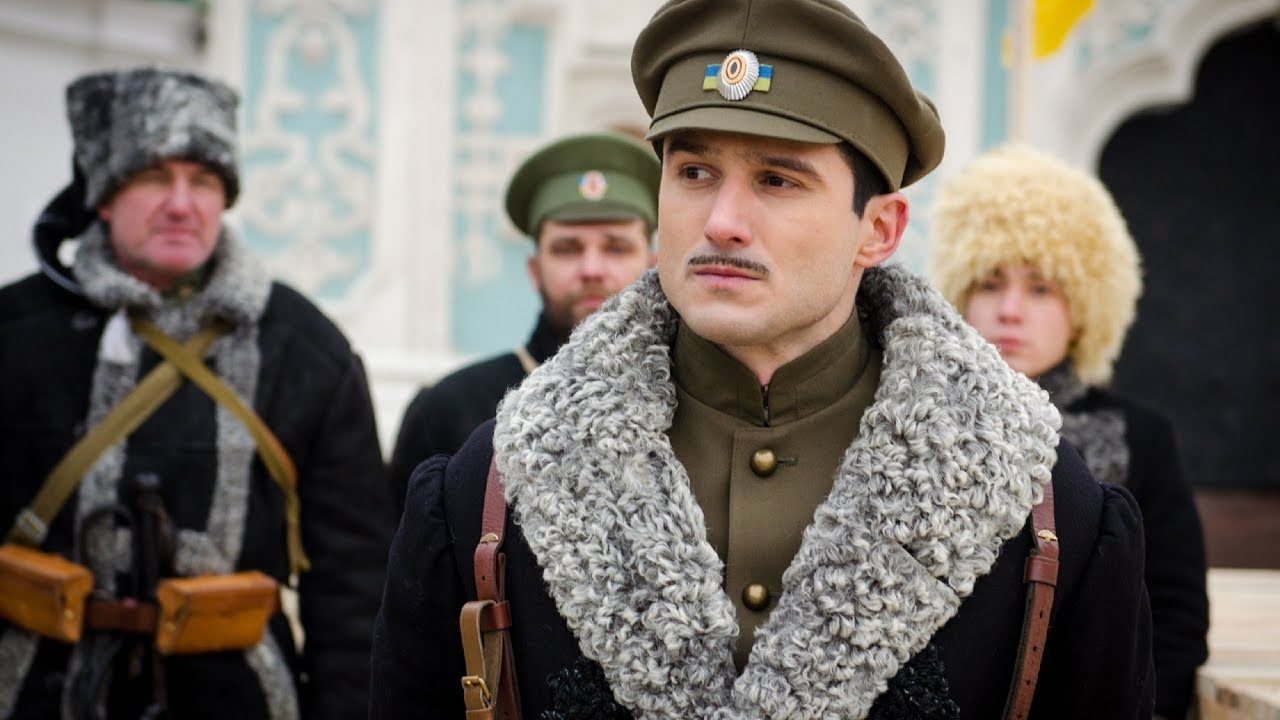
Shot from the film Kruty 1918
We can find the rescue in irony or unusual curve of genres (how it was done by Yorgos Lanthimos in his The Favourite, which has been recently released on the big screens, or by Tarantino in Inglourious Basterds) but only the authors with the necessary level of talent can cope with it.
And it’s a complete disaster when even beautiful costumes and special effects lack funding and experienced specialists. This is, actually, about our cinema. For instance, despite all scales, it seems that Kruty 1918 ran out of money to unfold large-scale battle scenes or to built the convincing city decorations and thus the historicity of the entourage is achieved by strewing the cobbled streets with hay or by shootings in the ragged interiors of the Kyiv fortress.
Again generalizing, our peculiar features are added to the whole mentioned above: in Ukraine historical genre is not much an artistic issue, as social or even public one.
It feels like either officials or directors or producers are smashed by a load of responsibility. The burden of this pathos is felt to the fullest in Oleksii Shapariev’s film. First, in abundant melodramatic techniques – both in directing and acting. When they don’t shoot, they cry with glycerin tears. When they do this to Vakarchuk’s song Kholodno (from Ukrainian – It’s cold), the cheesiness becomes unbearable.
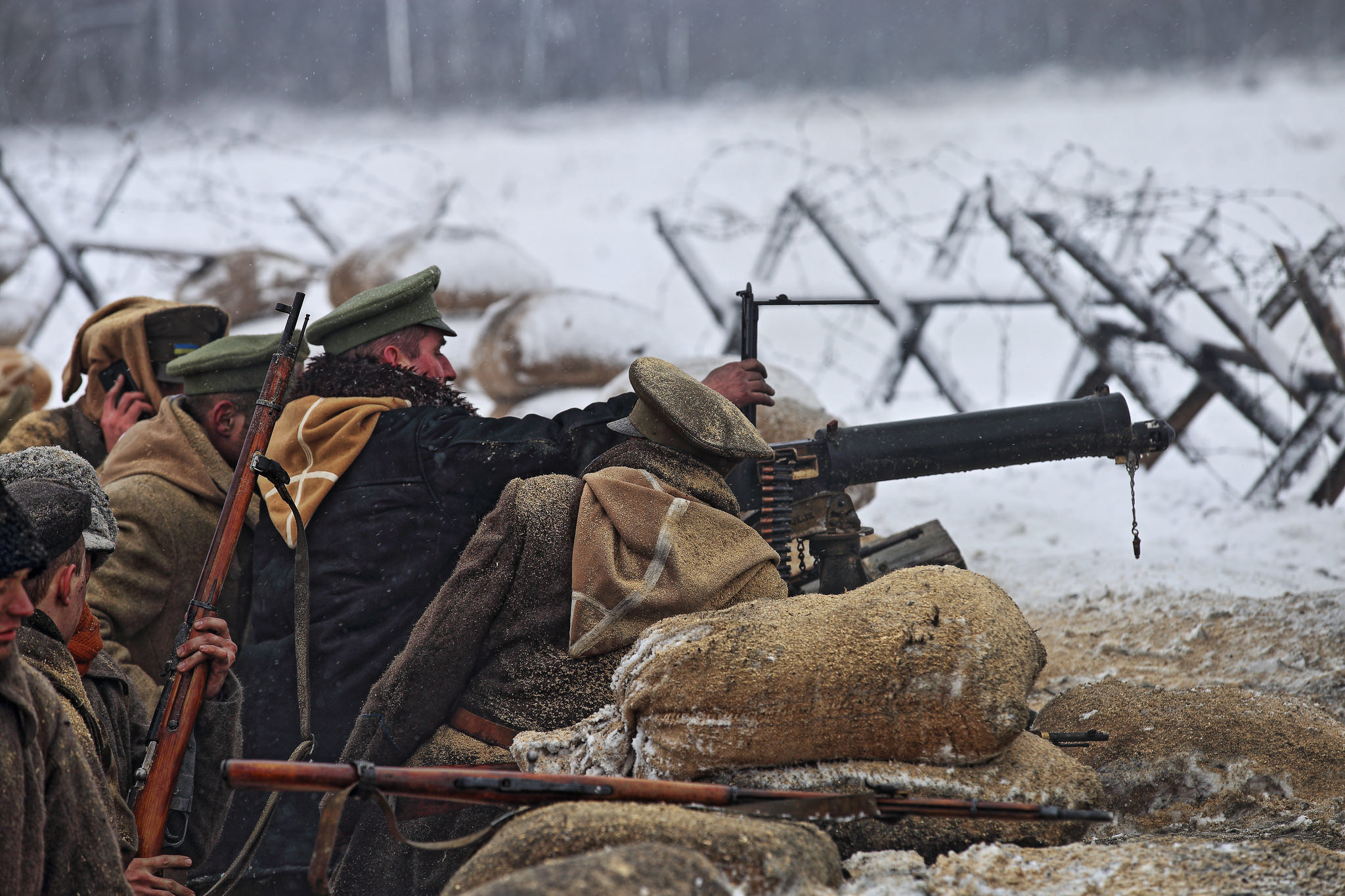
news.liga.net
The problem with acting is also typical for our cinema industry: the performers don’t feel natural on camera, they draw the roles out on the theatrical and hence strained and unsincere techniques. The exceptions are few. Here’s Vitaliy Salii who effectively reincarnated into Muraviov – a junkie, psychopath, and an earthly demon. Or Oleksiy Trytenko who turned into a gruff but fair non-commissioned officer Averkiy Honcharenko, a real bomber and the father of soldiers, or Dmytro Stupka – into an organized strict leader of the revolution, Petliura (there is another problem with this character, which is described below). Among female parts, unfortunately, no one was captured in memory as the rest of the male cast. And this is not the actor’s fault because the game rules on set are determined by the director. Obviously, Oleksii Shapariev himself has not decided what he makes: a military drama, melodrama, or a spy action movie. This uncertainty is especially felt in dramaturgy.
For example, the line with a Russian agent Berg – a master of intrigue and dogfight – looks odd within the main plot. Some exploding letter, French intelligence, an absolutely groundless murder of the red commander Piatakov which was organized by a super evil Berg, the riots at Arsenal which end up with nothing, clashes with unknown whom and why, the denouement when the eldest of Savitskys brothers saves the younger, disrupts special operation which could – no more, no less – save Ukraine.
A slightly drafted love line leads nowhere. That is, a beauty Sofiia, for whom the brothers Savytskys compete, could be or she could not. As well as her grumpy mother, similar to other female characters, doesn’t impact the plot. A male cast suffers from this indistinguishability except for aforementioned characters plus Evhen Lamakh in the role of Andriy Savytsky – just because he had more screen time. The rest melts into a homogenous mass without peculiar features. And finally, the question is to historical authenticity – it is not very clear what Petliura-Stupka does on the stage of the memorable riot on Sofiivska Square – at that moment he was dismissed and he couldn’t have the floor.
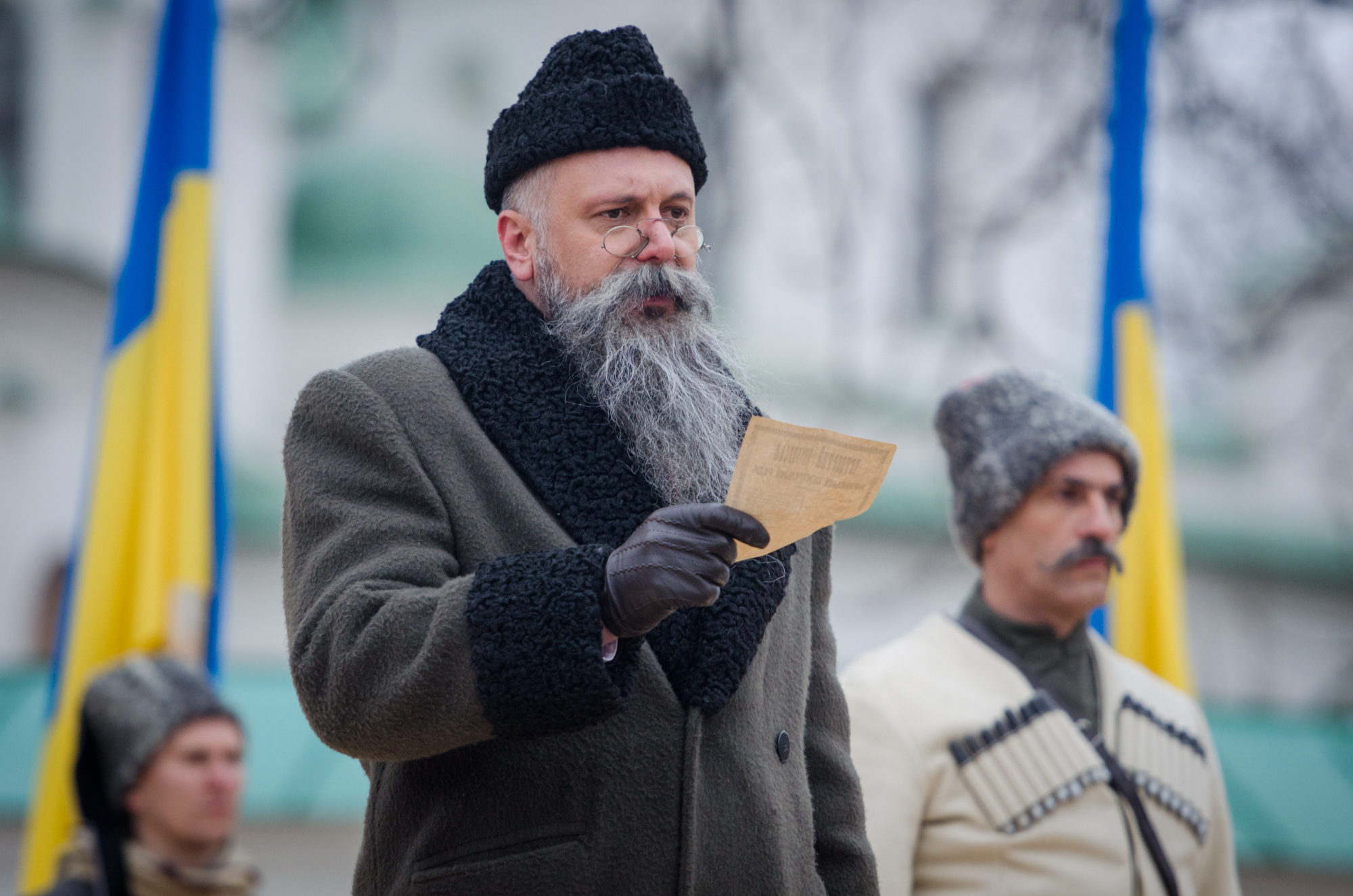
Shot from the film Kruty 1918
Operator Serhiy Pivnenko is one of the few successful things. He works qualitatively, shows luxurious panoramas and general plans but his contribution exists somewhere separately – it seems that this accurately reproduced Hollywood scenes are from a different picture.
Hereby, the cloth of highly important film (considering at least a public resonance) is falling apart in the face of it. Unsurprisingly, because under Shapariev’s belt by that time was only TV series National Guard which was weakened by the same shortcomings.
A shoddy directing, as a wicked fate, haunts our historical cinematography. To make this genre qualitative, we have to change our attitude towards the genre itself. But this question is beyond the solely artistic realm.
Dmytro Desyateryk, The Day – specially for opinionua.com