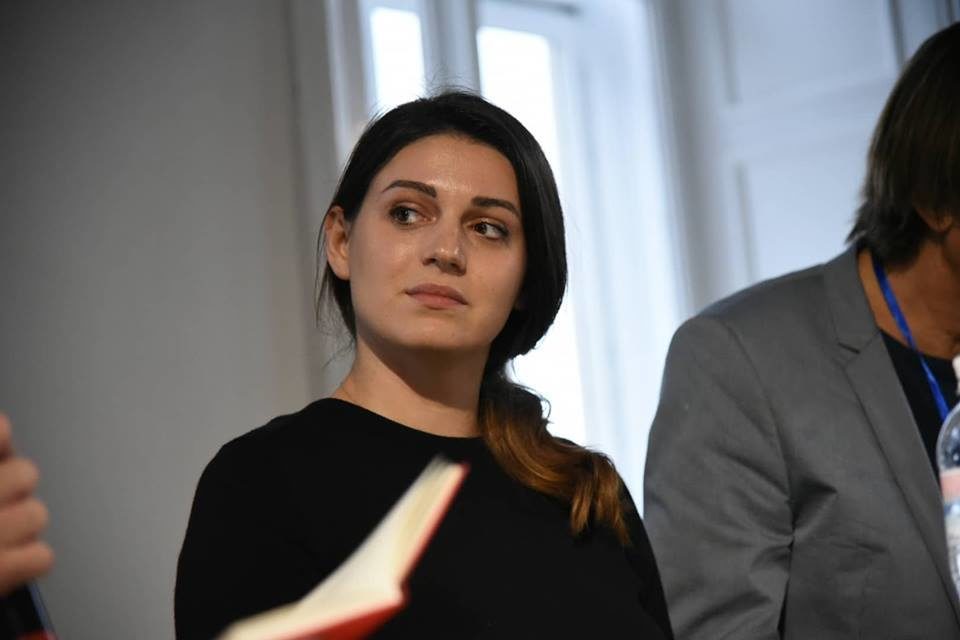


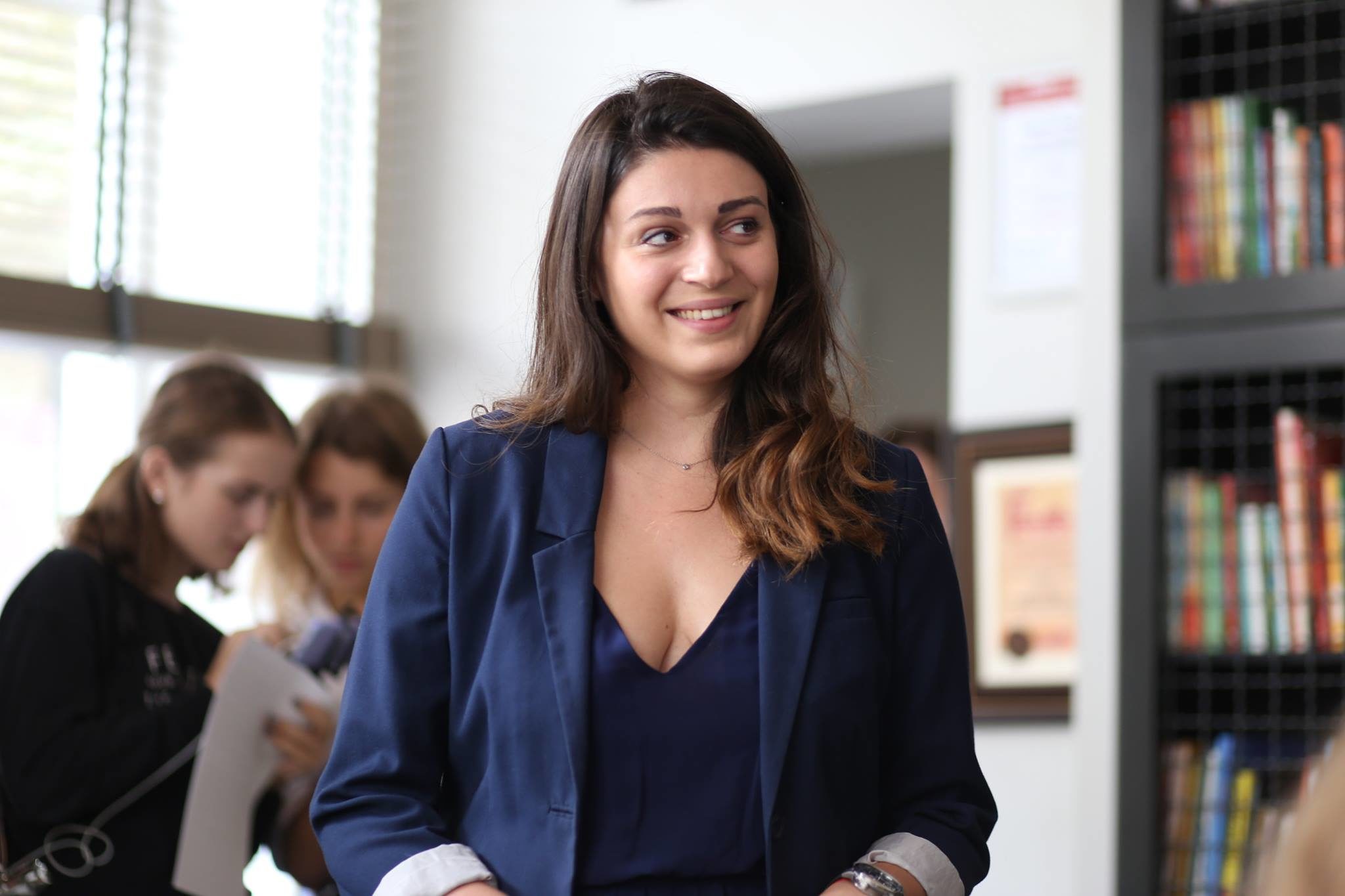
She had become director of the international literary festival at the age of 18 and now combines this work with the post of editor-in-chief of the publishing house as well as curator of international projects that promote Ukrainian literature abroad. Meridian Czernowitz, this is what she thinks of every year, every day, it even seems, 24 hours a day. She thinks and implements. About organization of one of the main literary events in Ukraine, a team that turned into a family, fulfilled the promise of Pomerantsev and letters with instructions for Zhadan, in an interview with Evgenia Lopata on DUMKA.

I meet Evgenia during the last Meridian Czernowitz, somewhere between the Celan center and the Palace of Culture. She’s in a hurry because she needs to do… everything. We try to record the conversation on the move. I only have time to ask if she is sick of all this for three days of the festival. She laughs, says no, because she likes it. Voice recorder can’t manage to catch words. We run to Kobylyanska street she discusses something with Zhadan and Pomerantsev, grabs a bunch of flowers and runs again: in five minutes she is on the air. I hardly manage to follow her. I’m waiting for the end, finally, we sit down somewhere in the Palace. I still can’t take a breath after that race. And it seems as though Evgenia wasn’t running at all.
I will repeat the same question again: aren’t you sick of it?
No! (laughs)
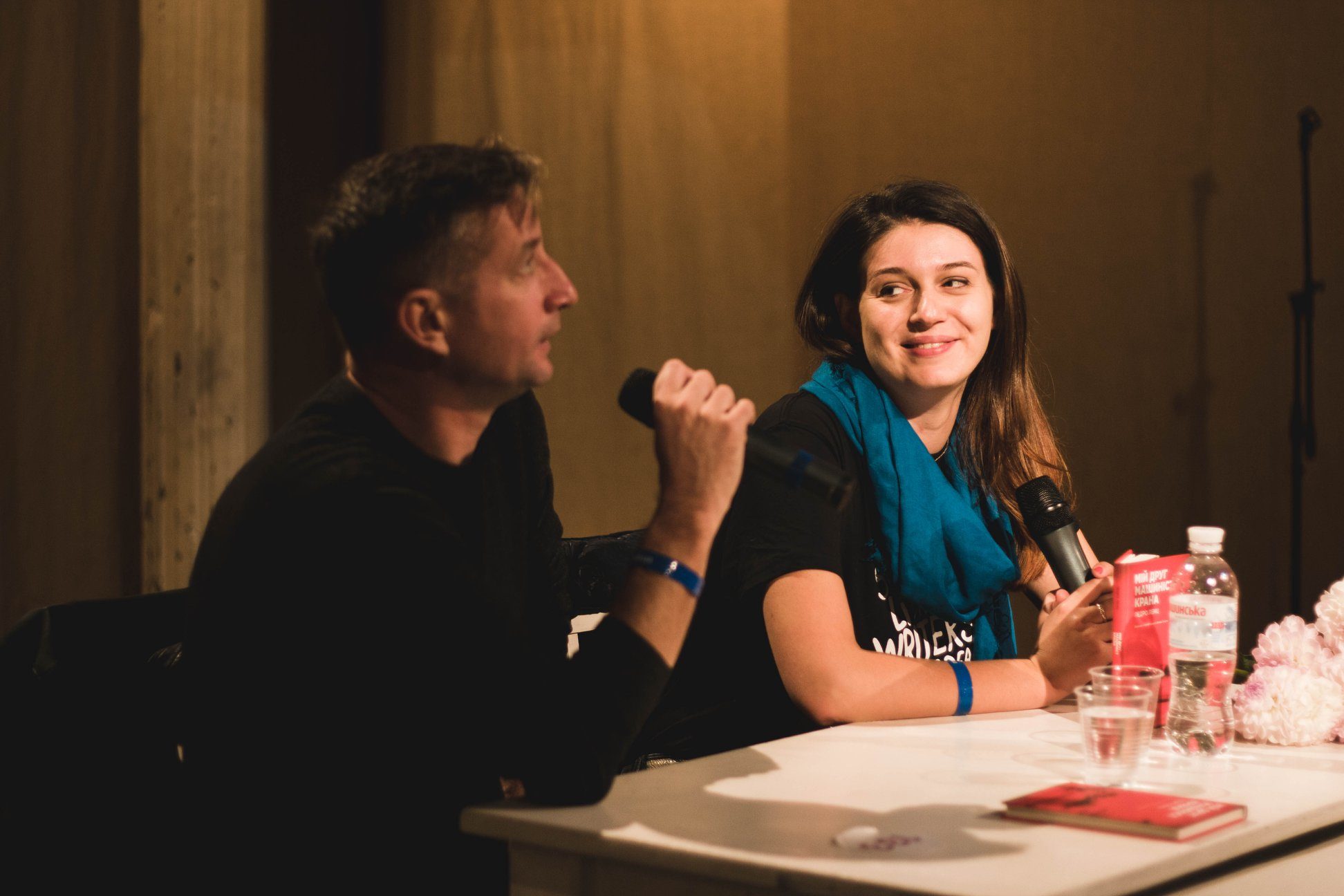
You got your post in more than young age. Actually, you were 18: yesterday you were volunteering, and today you are director of the festival. I don’t think that “scary” is the right word. Wasn’t it awkward?
Apparently, all this was possible, because there was neither fear nor awkwardness. I have this adventurous spirit. When Svyatoslav (Slava) Pomerantsev (the president of the International Literary Corporation Meridian Czernowitz – author’s note) invited me to become a director, honestly, I thought he was kidding… I didn’t take it seriously for the first time.
One very brief, but terribly important for both of us conversation resolved everything. It was the summer of 2013. We met with Svyatoslav in the evening before my departure to one of my regular scholarships, which I was constantly attending and he as an employer wasn’t very happy about this fact (only when the time passes he will let me go for a month or half a year to Austria and Germany to study, and for now he is not happy with my mobility). We were sitting in the place, behind the doors of which my father was waiting for me in the car with suitcases, in order to take me to the station. And then, Slava says, “Whether you’re going away now, and we stop our cooperation at all, or you stay, and I will make you one of the most influential Kulturträgers in Europe” (laughs). And then I thought: it doesn’t seem that he’s fooling around, I must try. I will have a whole bunch of scholarships in my life, and such offers are not made every day. “Dad, we’re going home, today the scholarship is canceled.” And it’s been more than five years, and I’ve never regretted my decision.
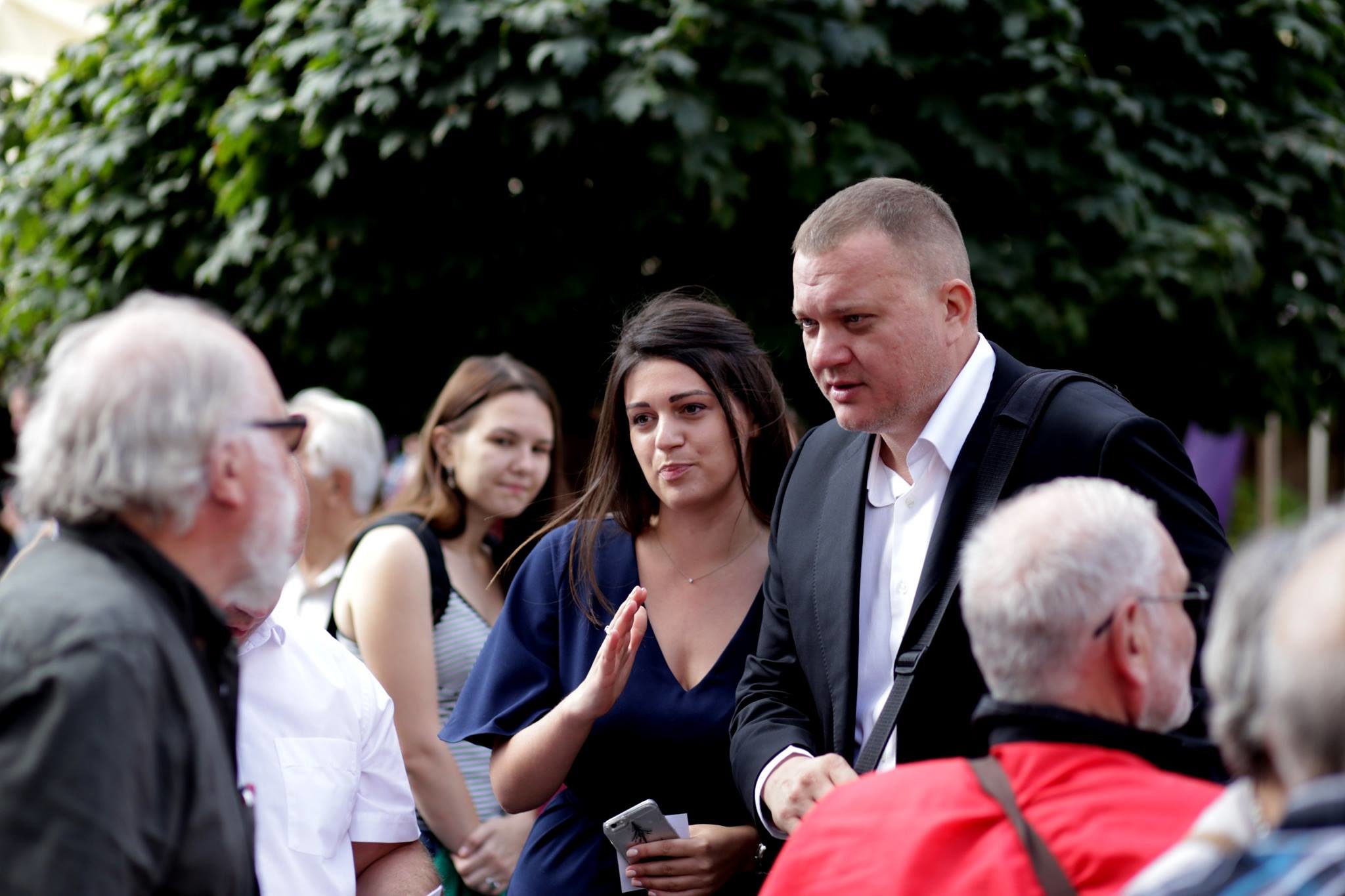
I stayed and was an assistant to the former director of the festival at first. I seriously accepted my future position only when, after three months of my internship, Slava introduced me to Serhiy Zhadan in a new way during our first tour in Germany in autumn 2013: Evgenia, our future director. Whether, Slava was talking about it seriously, whether Serhiy perceived it the same way, I don’t know. But for me, it has already started right then, during a transfer in Amsterdam, between Kyiv and Berlin.
Apparently, in the context of my success story, we need to talk about two factors. At first, the conceptually German-speaking component of the festival is dominant, the knowledge of the German language plays a vital role, and in my 18 I have already passed the exam for the level of native speaker and graduated from the German gymnasium with merit. On the other hand, I’ve always loved and I still love to organize, manage people, and I have a degree in management. Also, I have a degree in German studies. Everything just happened this way, I was given an opportunity, and I took advantage of it. Of course, you had to be in the right place at the right time. However, I have already seen Meridian Czernowitz and realized that the festival is only emerging (in management, this is the period of enterprise’s childhood), I clearly understood that in the next 10-15 years it will have awfully great prospects. So it would be nice to be a person attached to this project. But I didn’t expect that I would be fully trusted the director’s work. The first year we made the festival together with Slava. And the third festival he trusted me completely. No hints, no favor. Of course, it was not like I was thrown into the water as a kitten, and I was trying to float somehow. People helped me, they showed me how to do it. Somewhere I got bruises, something left me with scars. There was no genius in me. I was just taught correctly. And when I completed my education, I was able to add something from myself, to unleash my potential in full.
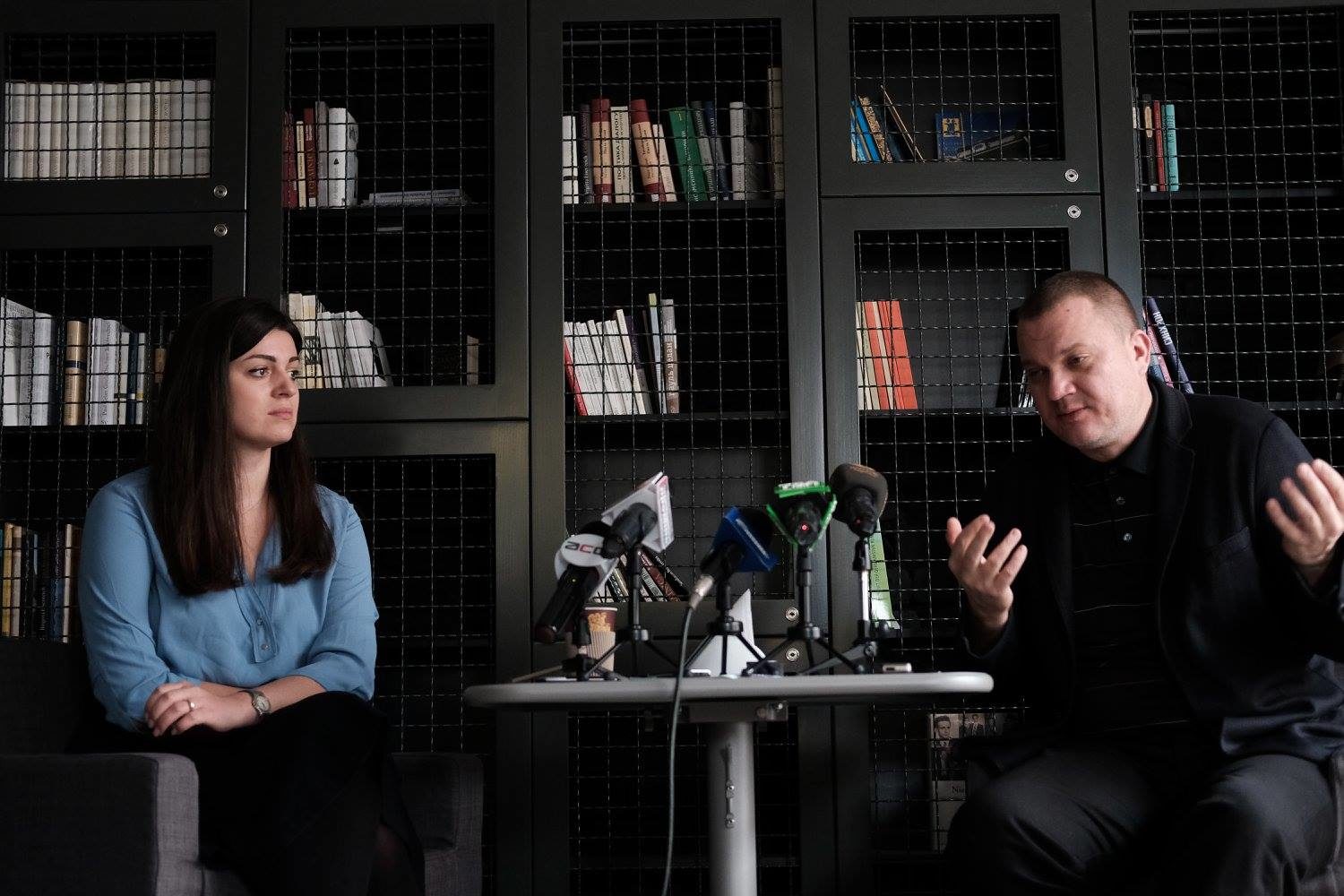
What do you think, Slava has kept his word? Have you become one of the most influential European Kulturträgers?
Yes, Slava did it. (laughs) And this is true: both festival and I are very well-known. When I come to Germany, Austria or Switzerland and say “where I’m from” – they recognize me. Perhaps not my name in particular, although today after 5 years the name is also known, but first of all the festival itself. And they don’t just know it – Kulturträgers of Europe reckon with me and ask for advice. They’re often asking for advice, which of the writers to invite to some speech, project, festival. And they invite. Moreover, now they’re asking not only about Ukrainian writers but also German-speaking ones. It’s nice that they trust me this too. So the word of Slava was kept for sure. So, yes (smiles).
Slava says that he has a dream: to do nothing during the festival, so that Evgenia will do everything, and he only drinks wine and enjoys the action around. And he is already enjoying this opportunity for the second year, and I’m glad about this, because I myself, in turn, is high from the fact that I control everything. However, I’m not alone with everything: we have a professional team, we together make fantastic things together. And I owe this to the extremely talented and flexible people. This is our common success. There are no soloists in our team. But apart from the professionalism we have, we are all friends, in fact, a family. Perhaps this is the key to our success: we don’t have official work. I don’t perceive and never perceived Meridian as a job. For me, this is a hobby, a buzz for which you get paid – a full “combo”.
Was there a desire, the one Slava has: to become that very dude who doesn’t do anything, and who has her own Evgenia Lopata?
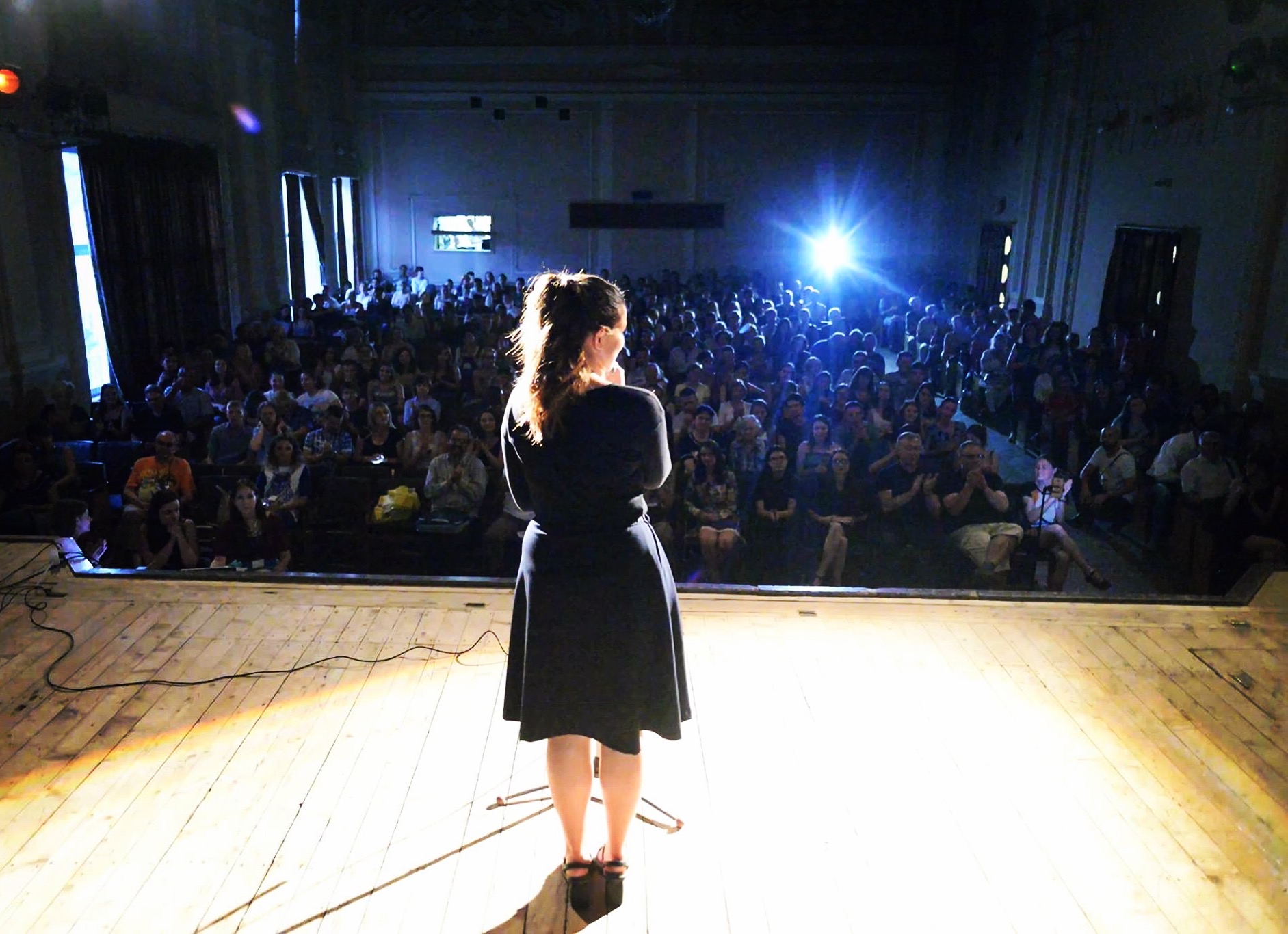
No, I do not want to, I’m not interested in it yet. I’m not old enough for it. Though Slava thinks the opposite. I still get this buzz from work moments. I am a person that, for example, writes to Zhadan a letter with the text, “Serhiy, today you perform here and read this, tomorrow that, and the day after tomorrow that you’re okay with this?”. And he writes, “Okay.” I want to remain fully involved with this whole workflow. Today I am absolutely satisfied with everything I do: I can arrange chairs in the hall, go to the store for water and plastic cups for the stage, I sit down to do slides with poems for readings, I distribute programs to people on the street if I see them asking about it, changing sneakers to the heels and going on the stage to do a speech… Although this festival I didn’t take my sneakers off.
You can run from the Celan Center to the Central Palace of Culture in five minutes!
I train three times a week in the gym for doing this (smiles). Seriously, I don’t have such a thing that “I’m a director, I won’t do this, because it’s not my job and not my task.” I understand that the festival lasts only for three days a year, and I want to do everything within this time, to make maximum, there is no right to make a mistake.
And how long are you preparing for these three days?
All year round. But in addition to the festival, there is also a publishing house where I am the editor-in-chief. We are constantly communicating with all of our authors whom we publish. We are planning new books, brainstorming, drawing, publishing, going on tours. We publish very few books a year in comparison with other publishers of the country, but personally, from my perspective of the editor-in-chief, it is at the same time a guarantee that each book will, as I say, “shine”. Every moment: cover, the fly-leaf, indentations, hyphenation, paragraphs, printing – absolutely everything. You see, this way I also “switching my brain”. When I am engaged in the preparation of the festival, translations of poems, applications for funding, budgets, and reports, it’s a special pleasure for me to make a book. I understand that I can contribute to the physical form of what people I love and respect had written. Pleasure, isn’t it?
So you’re saying, “I am writing to Zhadan to do this and that,” but when you’re 18 you are unlikely to perceive him or Andrukhovych as friends?
Honestly, I had no idea who they are until the 11th grade. Sad but typical for modern teens ignorance of their own. Then, thanks to the course of modern Ukrainian literature at school, I read somewhere on the Internet about Oksana Zabuzhko, Yuriy Andrukhovych, and Serhiy Zhadan. Shamelessly I was retelling during the class contents of the Museum of Abandoned Secrets and Moskowiada, without seeing a page from them and blinking, standing beside the blackboard. Today we regularly chat and call each other, celebrate holidays and travel together. And back then, I still google them and look at them like at icons. And then Meridian happened to me. I looked through the program of the festival, saw the familiar names of Andrukhovych, Zhadan, it became interesting. Although I actually went to Meridian just to practice my German. I knew that German-speaking authors will visit it. These are people that achieved something, they write books, perform, receive prizes, it’s all interesting. And I can talk to them and spend some time together. At school, I was a complete “nerd” with the highest grades and homework always done. The species “nerdus simplus” (smiles). And it was interesting for me to look at this high society, those bohemians, about whom I only heard at school.
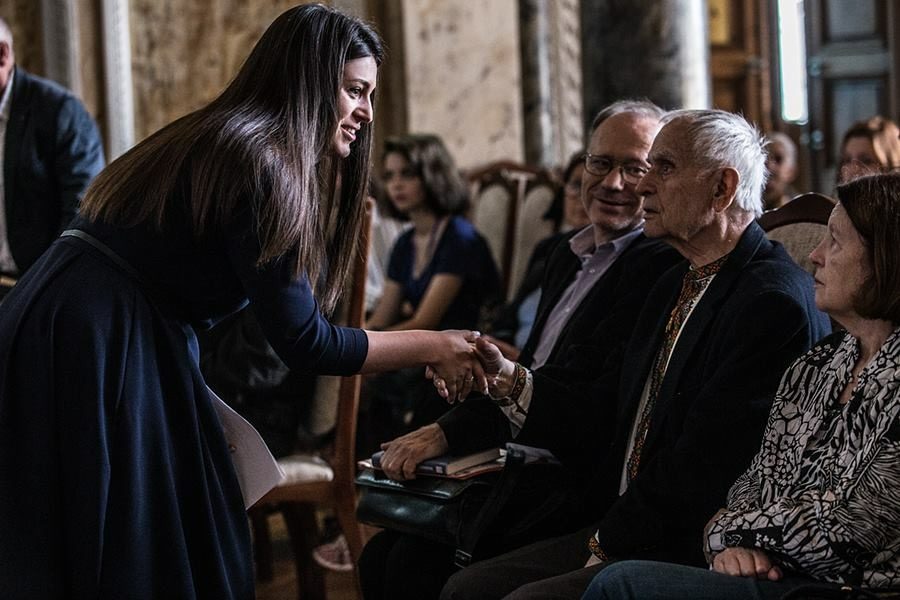
By the way, Zhadan himself was the first writer I met at the festival. I’m somehow lucky with elevators more than with ladders in my life.
Well, the “nerd” Evgenia Lopata that came to work as Meridian Director and the present day you: are there any things that have changed fundamentally over the years? It seems to me that back then Germans knew more about festival than Ukrainians. What about now?
You know, it’s like in the economy: every business goes through several life stages: birth, youth, maturity, old age, death. Five years ago, Meridian was only established, it was like a small child. And it’s natural that over time the festival becomes more famous, more people visit it. Also, this process is enhanced by high-quality input of content, organizational resource. I am actively working on it. But you understand, before me, there were interpreters and moderators: Oleksandr Boychenko, Petro Rychlo, Andriy Lyubka. Without Evgenia Lopata, they perfectly coped with it then and could cope for the next 20 years. But it seems to me that I’m facilitating their role: I take over a lot of organizational issues. And if before it was they who were running, preparing, explaining – now, they just come to relax.
Everyone has to do his or her own business. And when everybody knows what to do – it’s great. I am preparing the festival all year round, going over hundreds of times each event in my head, every performance, every presentation, and I always have a plan “B” in case someone fell ill/ died/ got pregnant/ couldn’t arrive. I think a few steps forward, that’s what Slava Pomerantsev also taught me. There were times when I was nervous and crying in the process, and now I know how the system works. And when everything that goes over in my head is implemented, and even ten times better than I imagined, I have a little orgasm. For me, the greatest challenge was June 2018, when we made the first Meridian in Poltava. I was involved in the festival remotely, from Chernivtsi, and I didn’t know what would be there. Although before that, I went to Poltava on purpose, knew the team on the spot, visited the locations. But you just go there and you don’t know what to expect, you do something for the first time, you go to an unknown city, basically, you’re an alien there. And at the same time, you have to be on every stage, provide contact with the public… And when everything turned out not 100, but 500 percent successfully, you know, I didn’t expect even a tenth of that. Then I realized: everything works, the main thing is not to be nervous. Believe in yourself and your strength. To trust. To motivate.
For example, this year, during one event in Chernivtsi, the power was gone, and at that time, simultaneous translation was working. It’s equipment matters, microphones, which at one moment just turned off. And then I silently give a sign to the interpreter in his booth, he simply goes out to the stage and translates the authors standing next to them; at the same time, the techs switch his microphone and headphones to another mode so that they could work without electricity. And for the next events of the same day, we together with volunteers buy 500 candles, a loudspeaker on battery, and we do it – we conduct our events as we planned. It’s a really great skill, this is a team. And one more thing, I was already going over this course of events in my head, so the plan B was implemented calmly, clearly in accordance with the instructions.
I attended such festivals, where the mere absence of a banner spoiled everything. It is completely different here, we’re getting pleasure from work. We all have grown up professionally in recent years. The team I came to was completely different. And over the years, apart from Lilia Shutyak, everyone has changed. We are “new generation”: young, ambitious, we get our financial and image dividends. We feel responsible for this success, we’re not getting a big head. Meridian provides an extraordinary platform for realization: you invent, implement, publish books, apply for grants, that is, you do everything you want…
I think Meridian is already a brand, so some of your applications for grants are considered very quickly and positively.
The Ukrainian Cultural Foundation has recently begun its work, and our project has taken the first place in the international cooperation projects competition. Yes, it says something: we were the first with whom the Fund has signed a deal throughout its history. There is a brand, history, reputation. But you won’t get far enough if you don’t have some relevant and interesting idea, project, content, concept…
By the way, about “work”. At the presentation of the book, Restless Poppies by Andriy Tuzhykov, Chrystia Venhryniuk asked what the difference between rational and irrational is. Andriy replied that rationale he can explain as “how it works” irrational – why. With the rational component of Meridian, we figured everything out, we understand how everything works. Can you tell me why this whole mechanism works?
The mechanism works because we work. Devoted, active, persistent. And we work because we love what we do. We have a rule: to do something until we are interested in it and enjoy it. If you hire a man, where he sits in the office from 9 am to 8 pm for 3,500 hryvnias, hating his boss, colleagues, wallpapers and even a mug from which he drinks coffee, this won’t last long. We have a flexible schedule, we work from where we want, we do everything with interest. There’s no pressure and no must do.
There are people who say “It’s easy to publish Zhadan, but publish Vasya Pyatochkin”. And we don’t want to publish Vasya. Just don’t want to. We do not publish the book and forget about it and its author the same day. No. We are not an assembly line. We bring authors to Ukraine, arrange foreign tours, travel. Meridian is successful because it’s an open group of people, not a closed community. Pomerantsev, for example, at the events treat everybody with wine: authors, an elderly man, passers-by. This is our feature: we invite everyone, we’re ready to share with everybody what we have. It’s not a job. It’s a pleasure.
Don’t you think that you become some kind of monopolists that take away the best authors?
And thank God! (smiles)
And what about competition, the market one?
You see, there are other authors, such as Andrii Kokotiukha, Vasyl Shkliar, Max Kidruk, they are published in other publishing houses, have an enormous print run, they are also strong competitors.
Well, you’re talking about relatively niche authors who found their place and don’t go beyond it. But here are the top names, such as Ihor Pomerantsev, Zhadan, Andrukhovych – they are with you.
This shows something (smiles). But we have no intention of being monopolists. Our print runs are not 20-30 thousand. This is not a super profit for the publishing house, nor sensation for the market. We publish friends who, as it happened, are also great and well-known authors. Our publishing house is united with love and respect for the authors on our part, and the trust of the authors to us on the other hand. Books are like a logical consequence of our common life with the authors, well, it’s like children, you get it?
However, the publishing market is developing, there are many authors that are taken by other publishers.
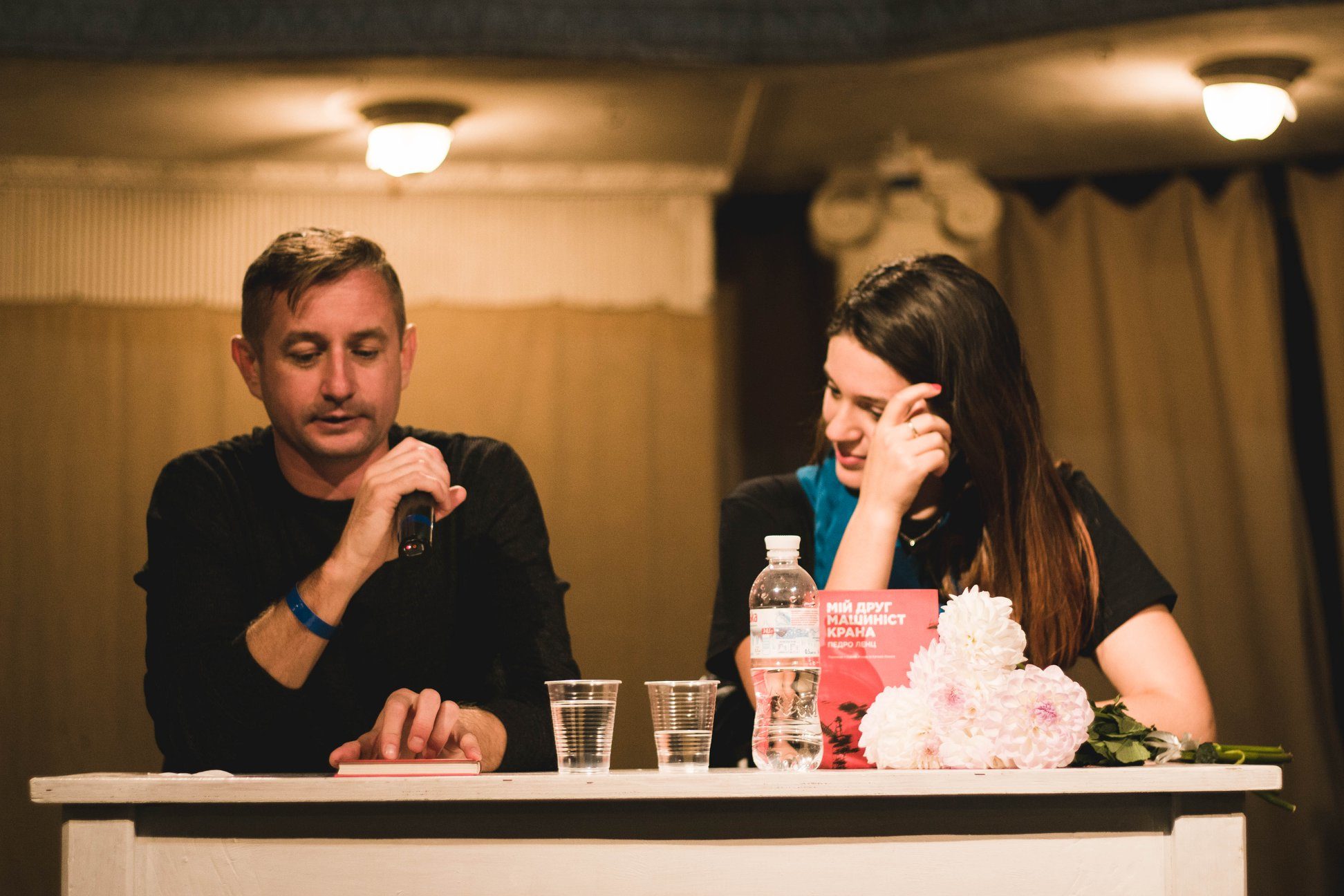
But now on the publishing market, there is also a new translator – Evgenia Lopata! (In collaboration with Serhiy Zhadan, Evgenia published a translated collection of poems My Friend is a Crane Operator – author’s note)
Yes! (laughs)
I think if you would like to do this six years ago, you could have published translation or your own text much earlier.
But no, I basically translate a lot and did it before, I love it. Actually, there was no goal you are talking about. There was simply a chance to make a book with Zhadan. Who will refuse this? It turned out absolutely spontaneously, but we both happy with the result.
In general, I have a pair of novel’s sections and I have been writing it for a very long time. The plot has been thought out, I see the course of events, the idea is something interesting and relevant, but I can’t pull myself together. That is, I have to go for a few months to the Carpathians or Nepal, or to some kind of village, or just close myself in the basement, and then I’ll finish writing it. But I’m only 23, so I have a whole life for this.
Interview by Dmytro Zhuravel
Photo provided by Evgenia Lopata