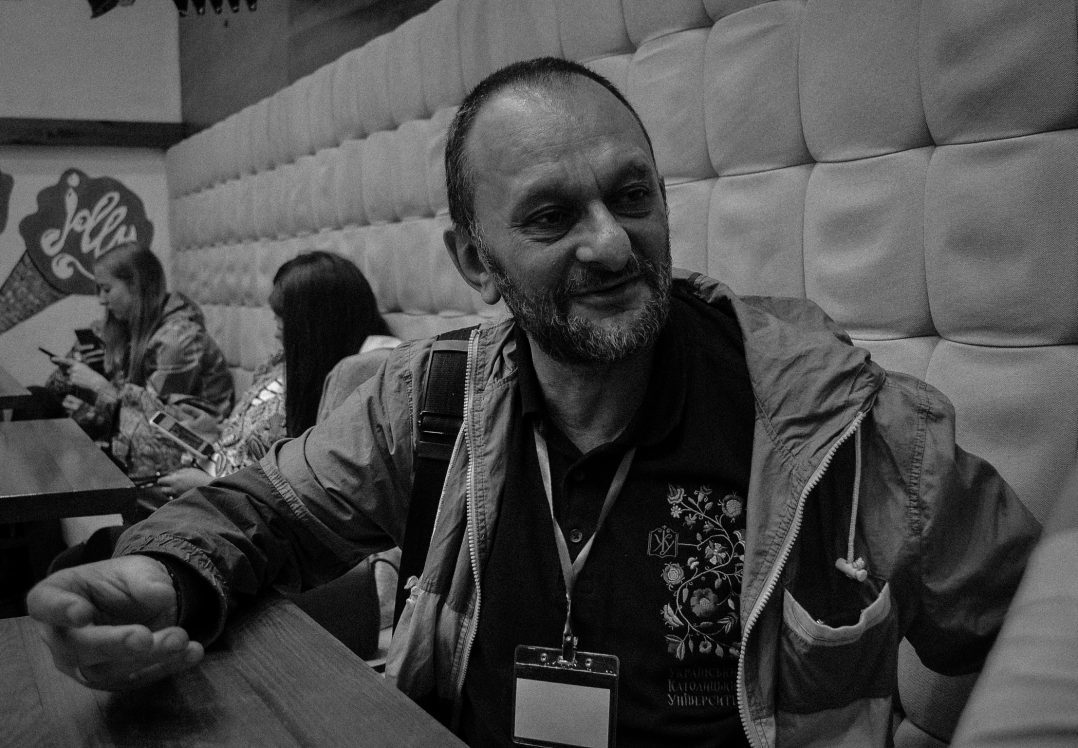


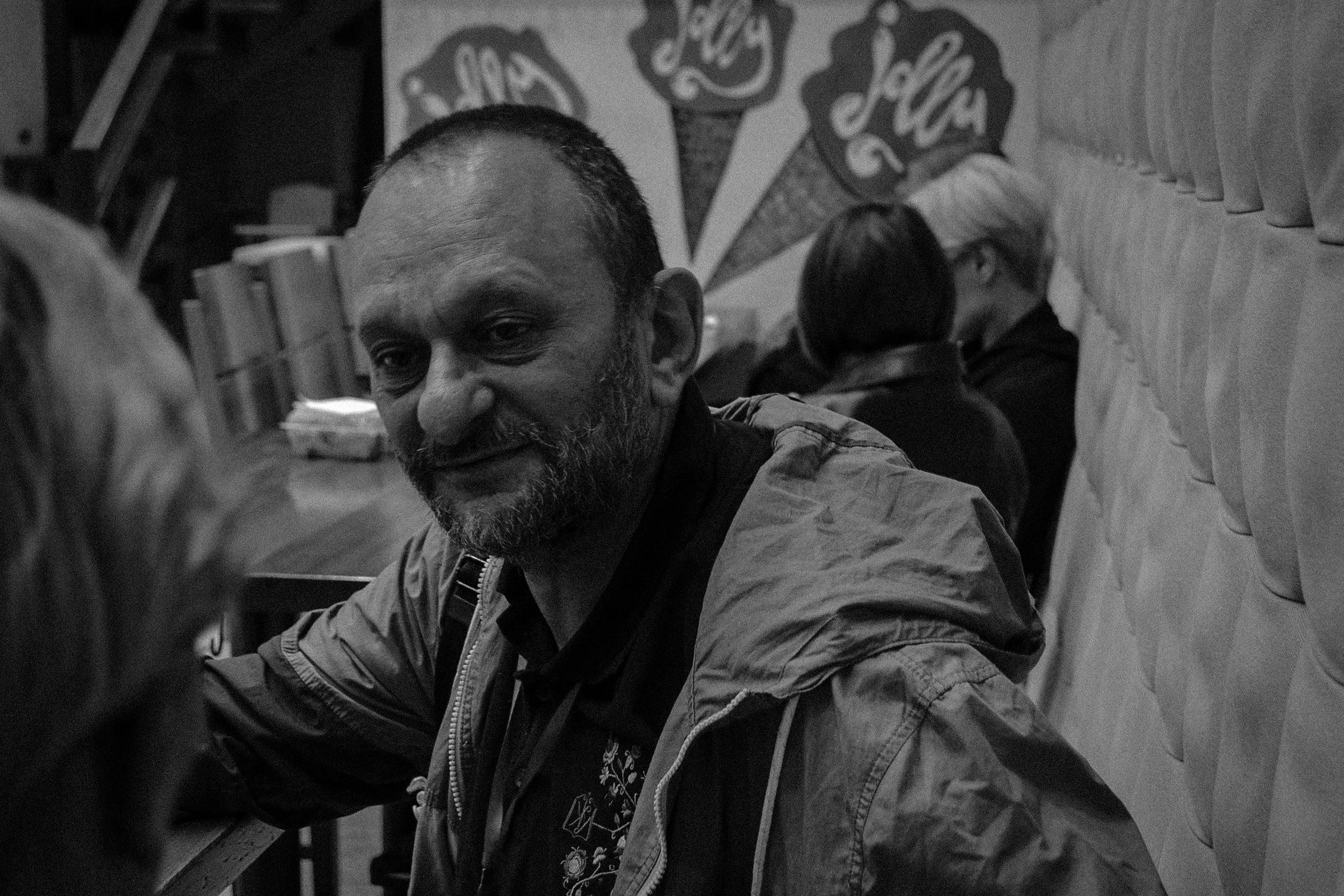
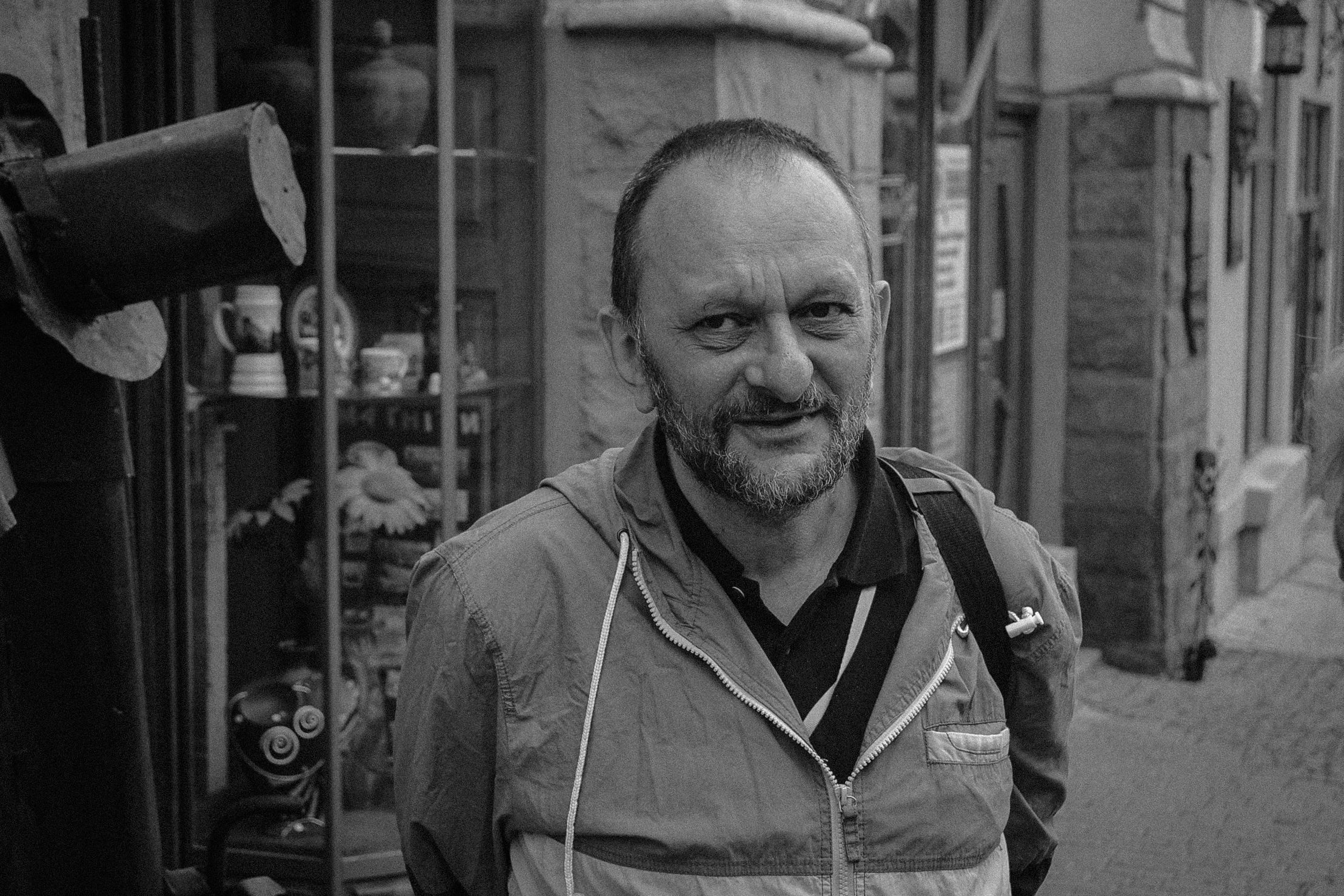
An official presidential election campaign has been on only about a month but people have got already tired of loud statements and politicians’ blame game, arguments at work and home. DUMKA asked Oleksii Panych, Ph.D., a media expert, how not to let yourself be fooled during the 2019 presidential race, how to cope with media’s manipulations, what “toxic propaganda” means, how it ruins communities, and whether “post-truth” is a new term.
Today, there is a common idea that the 2019 elections will take place in new conditions which experts call “post-truth”. What is your idea of this phenomenon? Is it true that the modern world has changed its attitude towards the truth?
I consider “post-truth” a paradoxical phenomenon. We can take any definition of the term but I can give an example from history – 500, 1000 or even 2, 500 years ago – when the phenomenon which is today called “post-truth” already existed in society. That’s why it is quite difficult for me to find something new which describes our modern world in any of the definitions. They say, “A post-truth era has come”. Show me something which has never taken place in history.
We can say the humanity has experienced waves of post-truth. When we lose the intuition of yesterday, lose what seemed an absolute truth yesterday, we are confused. Because we need to piece together the world again. When everything is so uncertain, a person can become a victim of demagogues, i.e. “popular leaders” – if we translate Greek word δημᾰγωγός literally. Even Plato wrote about demagogues in terms of disparagement. In this regard, if we define post-truth, it is not a new phenomenon.
I found another definition of post-truth in a British dictionary: post-truth is when facts are less influential than appeals to emotion. Excuse me, but any sophist used this idea. First, no fact means anything if we don’t take into consideration a point of view. A fact is neutral, we need to make sense out of it. What does “make sense” mean? Sense is important for a personal connection between two items. It is kind of an abstract explanation but try to apply it to anything – and you will see that it works.
Thus, we need to make sense out of any fact. “To make sense” means to put it in a row with another item, highlight the connection, and it is almost the same as to see a constellation among the stars. Stars in the sky is a fact. This is a person who sees constellations – this is how they make sense out of the stars. The same with a fact. There are no facts if we don’t take into consideration points of view. But when we deal with points of view, emotions always arise.
You can’t disagree that people have got tired lately, they don’t want to make any attempts to find the truth. It is easy for them to find a person who will show them this sense, make stars into constellations? That’s why much information is spread via so-called opinion leaders. Media work within a classical system, they need time for fact-checking and writing an analytical text. While a consumer doesn’t want to wait, they’d better read Joe Schmoe and his point of view. An emotion Joe Schmoe shares is more easily taken. Then, speaking with friends and colleagues, such people pretend it is their ideas and think they have got to the bottom. I guess this time-saving is one of the reasons why post-truth exists.
Perhaps, but there is a question – what is original in fact? There are so many “Joes Schmoes” that a person can always find their KOL – key opinion leader – according to their beliefs. This KOL will say exactly the same a person wants to hear. Thus, in fact, these KOLs don’t persuade people or change their minds; they just make stronger people’s intuitive beliefs they already have, offering them a fuller and prettier frame of these beliefs.
A person will never adopt a viewpoint which contradicts their basic intuitive world outlook beliefs. Rather vice versa, they will make the world outlook clearer and feel more comfortable within these emotional reactions they had from the beginning – they will just become stronger. A person will say, “I was given proofs for my emotional reaction.” An informational world has become so variable that you can find any proof you want. Everybody can find ready-made facts, consistent proof-points or maybe quasi-consistent, fake facts and poor proof-points.
Researchers say that people have not only lost their trust in media but started to share less quality news from traditional media. During the USA election, there was a dramatic number of fake news, people read and shared it much more actively. I am afraid the situation in Ukraine is even worse.
People still listen to classical media. But the number of scandal websites like BuzzFeed which can be the first to post some real information and next time some fake, overweighted and extremely inaccurate information, has really increased. Such websites seem to work within the “area of risk farming”.
In Ukraine, TV is still the most influential media. Thus, those 5-6 channels with the biggest ratings, in fact, call the shots and set their own agenda. What should Ukrainians do to protect themselves from being inculcated, not to regret their choice again?
You ask what Ukrainians should do but the subtext is what people who will read this interview should do (laughs). Or what Ukrainians should do in general…
Ukrainians who don’t want to be manipulated.
Toxic propaganda is always toxic for somebody in particular or a community in general. Toxic propaganda doesn’t ruin the mind of a particular person, it ruins social consciousness, connections with other people.
The main way to combat toxic propaganda is to thoroughly understand what community I belong to, what community I want to belong and what is needed to save this community.
I mean when I get any news, in any package – emotional, conceptual, world outlook, I have to analyze how and what for it was given to me, who gave it to me and how it has to influence me. The best thing is to look at it from the viewpoint of the community I belong to.
Today, Kremlin’s corrosive propaganda in Europe and Ukraine is aimed at setting a radical part of the nationalist community against a radical part of the social community – and vice versa. That’s why the Kremlin encourages a radical discourse of the left in Ukraine and supports Ukrainian far-rights at once, blowing their discourse as well. It even gives money – to Korchynsky (candidate for the presidency in 2004, main ideas: Ukrainian nationalism, anti-communism), for example, at least it used to give. Svoboda – a Ukrainian nationalist political party is told to have been funded also from there.
I have recently met our western colleagues, Americans and surprised them. The delegation came to Kyiv. I said that Putin uses the discourse of the left to undermine Ukraine’s defense capability. Putin employs left ideas to undermine Ukrainian national community. This message, this thought virus is “your main enemy isn’t in the Russian but Ukrainian government” – it is parasitizing on left ideas! It is the same thing Bolsheviks were doing to turn the imperialistic war into the civil one.
Today, the threat is that if the election is won by such a radical discourse of the left as the Kremlin is imposing on us, then Ukraine will split apart, a class, civil war will break out. The poor will protest against the “Chocolate President” (Poroshenko), i.e. this social thing may lead to disorders – and Ukrainian nationhood will be destroyed. Left ideas can ruin the discourse of the right and the state as it is.
We mustn’t think that a left idea has to always destroy the right one. Actually, I encourage the union of moderate left and moderate right-wingers against far-left and far-right radicals. This is what can rescue us – rescue Ukraine as a democratic, national and social state. It is hard to reach a compromise but we can find it if we will listen to each other. As for thought viruses which come from Russia, they are aimed at making us fail to listen to each other.
We used to be told where and how we should look at, but today, the situation, in my opinion, has changed. We face dumps more frequently. They make bad blood among people within one community, they do their best to make neighbours and colleagues fail even to greet each other. Is there such a tendency?
There is! They create an artificial “war against everybody” to raise a civil conflict in Ukraine, a civil war in an ideal scenario. To make true a prophecy about the civil war in Ukraine which has been promoted by the Kremlin since 2014 (the beginning of the Ukrainian-Russian war). The dream and strategy of the Kremlin are the following: if you say something persistently and for a long time, it can become real. Namely, a word will become reality. You need to put it inside of people’s heads – and finally, people will begin acting according to this word, and it will become reality.
The only thing I hope for is that authors of this strategy can outgame themselves because they will overexert themselves and people will fall out with each other so hard that the instinct of self-preservation will take over them. When you hear too many lies, you depreciate them as well, you are guided by your instincts when it doesn’t matter who and what says, the main thing is to survive.
Just after the tragic occurrences in Georgia, Putin stated that if Ukraine would be moving towards Europe, the Crimea would be left. But our mind is designed in such a way that it doesn’t fully believe in events it can’t fit into the global picture. That’s why almost nobody paid attention to that statement.
The same with most of the western policymakers. Luuk van Middelaar, the author of Passage to Europe, the book I have recently translated, just after the war in Georgia, North Ossetia said, “the Crimea will be the next”. It was already clear that the Crimea is a vulnerable place for Europe, that if Russia would go further and it was likely to do so, it was clear, it would go the Crimea and then to Donbas. It was clear, but for a western policymaker who is always quite conservative, it was hard to believe in it… these are such pages of political history which are rarely recalled.
Actually, politics is the art of balance when there are many countering forces and each of them pushes or puts pressure, and a policymaker is a person who manages to find a resultant vector of all these forces. To stand on a balance point. That’s why any imbalance is a challenge for a policymaker. They need to look for the balance again because a resultant vector is pulled by another side so counterweight arms need to be built from the very beginning. That’s why policymakers are so conservative. Western policymakers didn’t fully believe that Russia could be so aggressive.
Merkel burnt her fingers on her galling experience when Putin fooled her several times. Macron, thank God, doesn’t have such an intuitive memory, so he and Hollande were sceptical about Russia from the very beginning. However, it was, unfortunately, untypical for Europe until recently. That’s why there, the idea which was evident for some groups of experts, was moving inside politics quite difficult because policymakers are nearly the most conservative people in the world. Policymakers always try to live in the past, at least, those who are in the office. Though, there are also fringe politicians – prone to revolutions to make everything upside down.
Interestingly, it is hard to hide the truth today. But if someone doesn’t want it to be revealed, they put many so-called “alternative truths” on the media scene. How can one learn to see the truth among many half-truths?
The Ukrainian language has a lexical resource which western languages are lack of. It has two words defining the truth: pravda and istyna (the best correspondences in English are truth and verity). Before playing with these terms, we should find out what is the difference between them. What is a “genuine truth” and whether the truth can be different? Ukrainians even have a saying “everyone has their own truth”.
Actually, I need to make clear the hierarchy of the “truth” phenomenon before giving you an answer. Because there is the truth of fact but is there a truth which is above facts? For example, is it OK to cheat your enemy during the war, giving them lies instead of fact on purpose? It is. At war, lies are called a war ruse. Why? Because there is the truth which is above the truth of a fact – it is the saving of our community, of our life. We can say that honesty is kind of a norm. Is there anything more important than honesty at the level of facts? There is – it is a moral truth. Can a person lie from a morality point of view? Yes, they can when it concerns surviving. Not everybody acknowledges such kind of morality but we can espouse this view.
But what does the surviving of a community depend on? There is a phenomenon of the “historical truth”. The history runs its course, we can either like it or not, either understand it or not. But humanity develops in a certain direction. When the development of our community differs from the direction of humanity’s development, we start to lie more.
There is an amusing paradox, and it works. When a political force doesn’t have the historical truth behind, it is always a greater liar. Putin lies more than his opponents than Ukraine than western countries. Policymakers around the world also lie but differently. A greater liar is the one who needs to hide that they play against the history. In this regard, we can say whether a certain political force is historically right by the level of its playing with facts! When we feel that what we’re doing is right, we lie less. When we fool our enemy, we feel a certain moral justifiability – it is the surviving of our community. Putin is occupied with supplanting his community – the Russian Empire, his assistants at the war are lies. In this regard, his actions are absolutely consistent. The problem is the history won’t choose this path. He wants to get the XXI century back on the level of the XIX century. It is a thinking pattern, very stable in terms of a modern ideology of “the Russian world”, by the way, fantasy writers were the first to set it. 10-15-year old fantasy books were about an alternative history: let’s go back to the past and create an alternative scenario – the one where we win. Once, an American director was making a film version of Remark’s All Quiet on the Western Front, and a producer told him that the final scene was very sad and it needed to be changed. The director said, “OK, I can change the final scene and make Germans win the war – shall I?” This is how Putin wants to make another final scene so a historical competition between Russian and the western world is won by Russia this time. It will never happen, but…
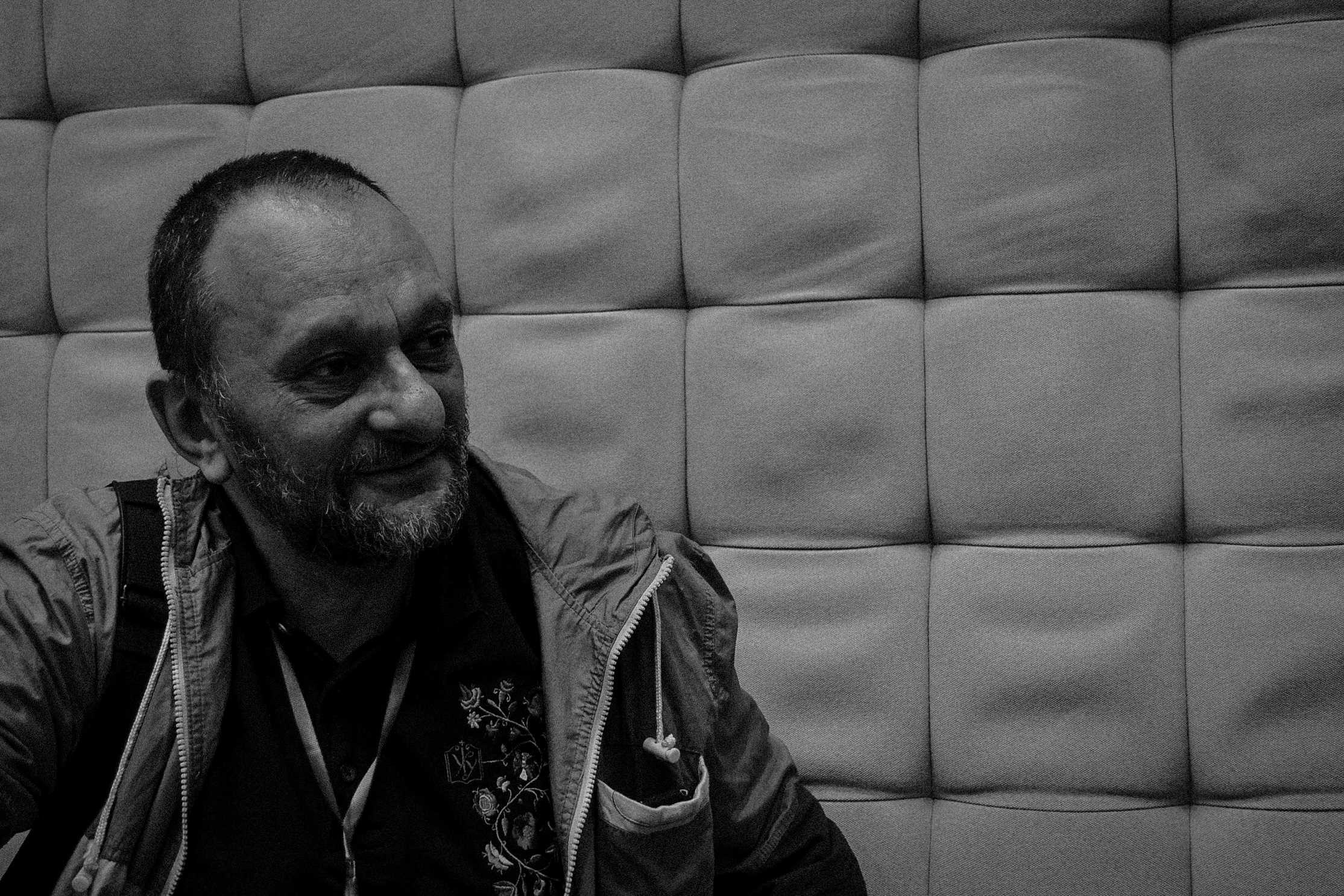
The price may be too high…
The price is too high, and we have to dispel these lies. Back to the community’s truth: when you are surrounded by many lies, you can finally disengage yourself from everything you are said and question everything. In the perfect world, you have to test to destruction every fact and make our knowledge of this fact absolutely authentic. But it is just impossible in many situations! As an epistemologist who wrote the thesis on the history of skepticism, I can say that there are a few facts which you can determine as absolutely authentic. From the skeptical philosophy’s point of view – there are no such facts at all. We have only our thoughts which are more or less correspond to reality. That’s why simple things can actually rescue us from a spate of lies. Things which don’t need any fact to be confirmed, “faith, hope, love – these three; but the biggest of them is love.”
Interview by Svitlana Bondar
Photo by Dmytro Zhuravel