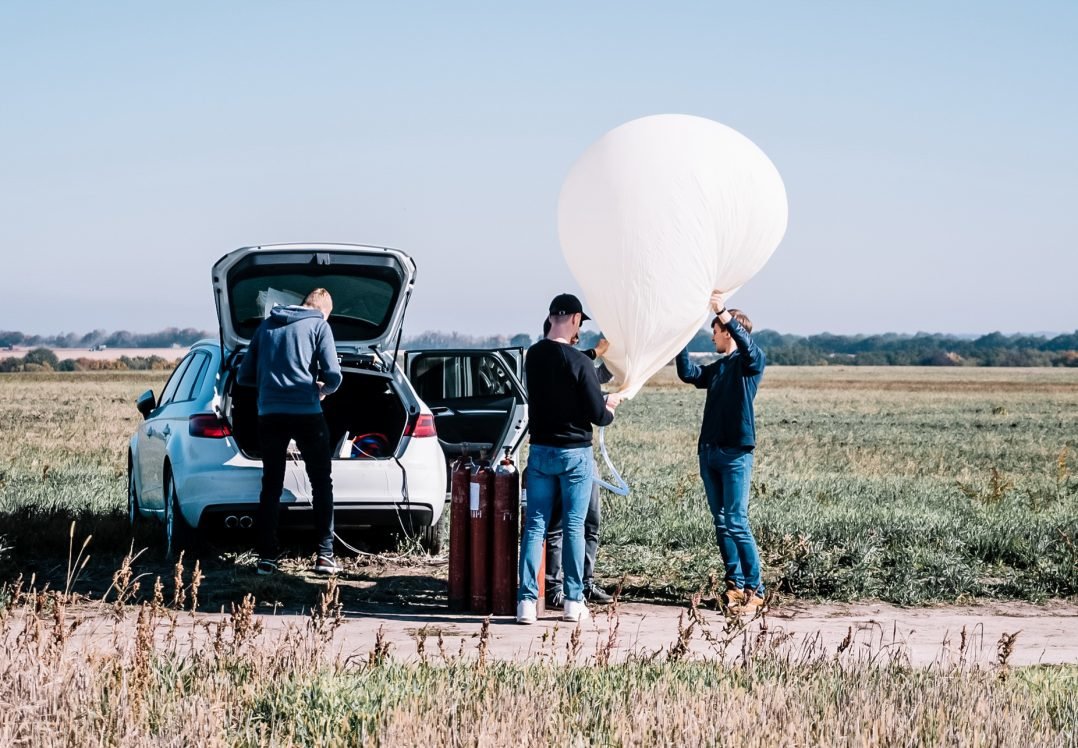


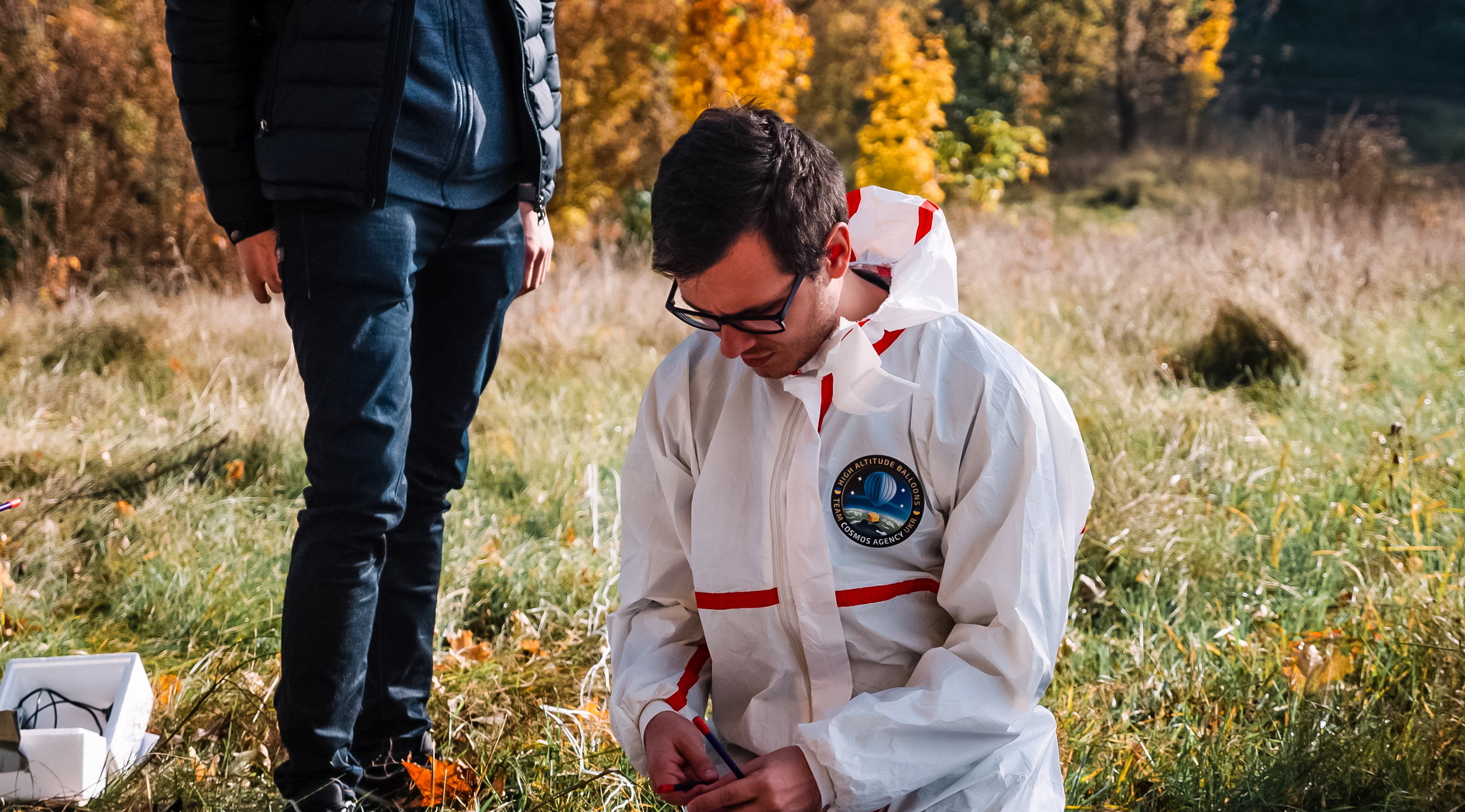
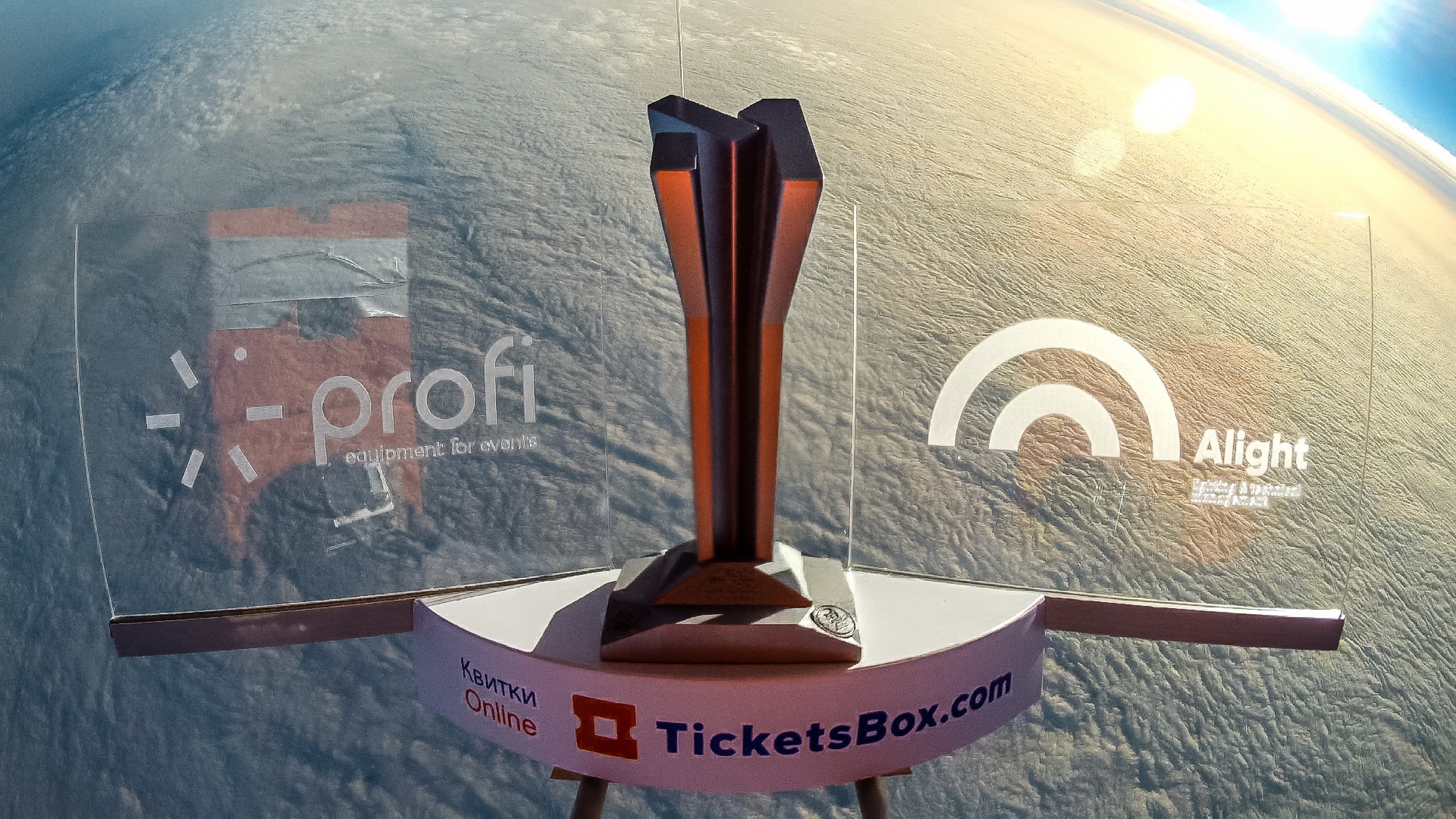
September 2018, Kyiv, 5:38 a.m.. Four men are loading a balloon, antenna, transmitters and other equipment into a white car. At 9:27 a.m., the car arrives in the town of Kanev. The men put white coveralls on, launch balloons they have put together. The balloon has a camera and “eternal” notebook and pencil on it – a promo-video is about to be filmed in the sky. The balloon is in the sky for two hours, the max altitude is 31 486 meters, the max speed is 30 kph. The balloon lands near the town of Kropivnytsky. At 1:56 p.m., the men start to look for the balloon. In a while, they find some balloon equipment and watch the video made during the flight – from 30 kilometres, the Earth looks like from space.

This is how one of the launches of the Strato Ukraine team took place. The team was founded in 2018 as a part of the Cosmos Agency project. We asked Andrii Muzychenko, the chief engineer of the project, about the idea and putting it into practice, why scientists are interested in space balloons and how a stratotourism could look like.
Back-story
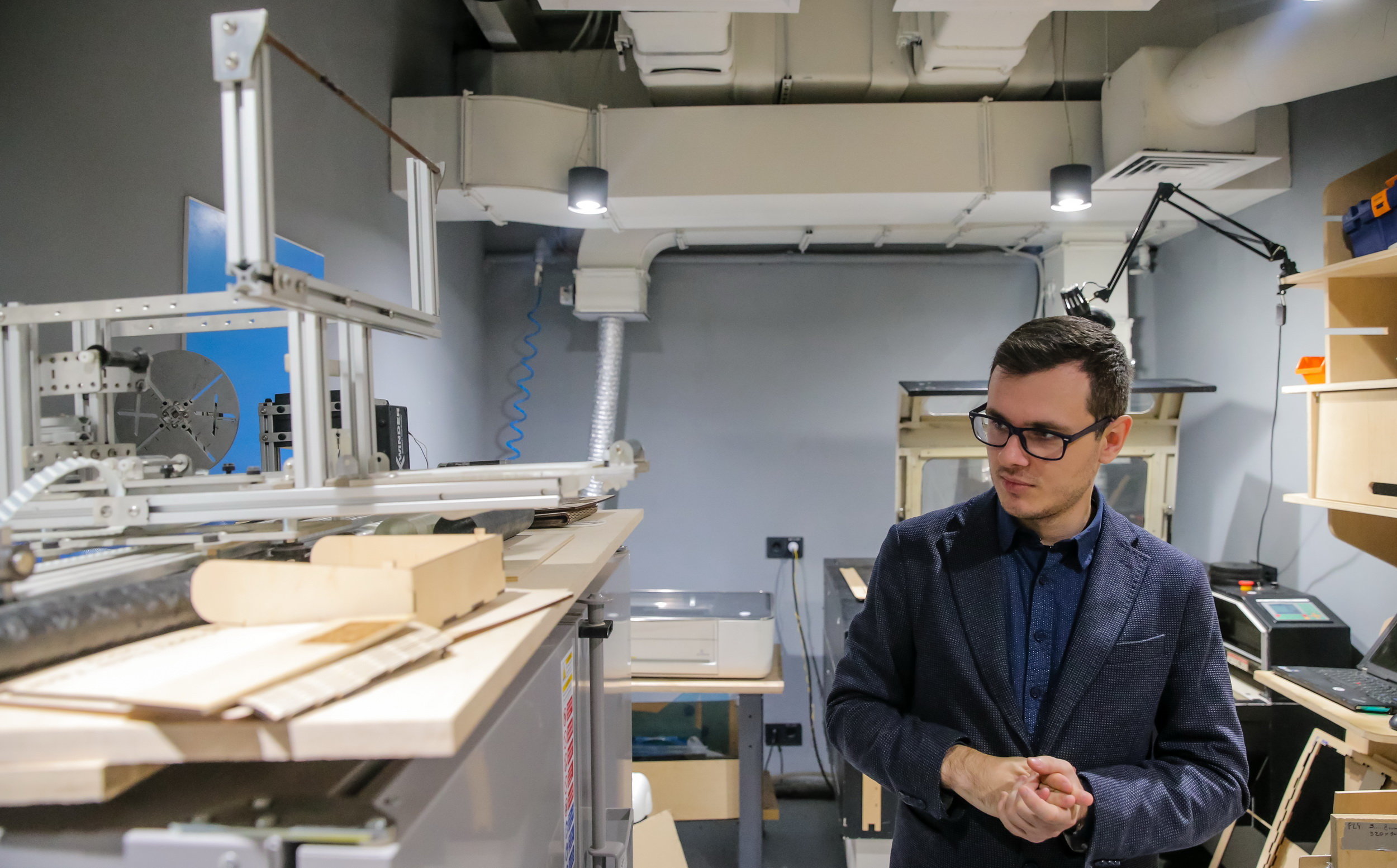
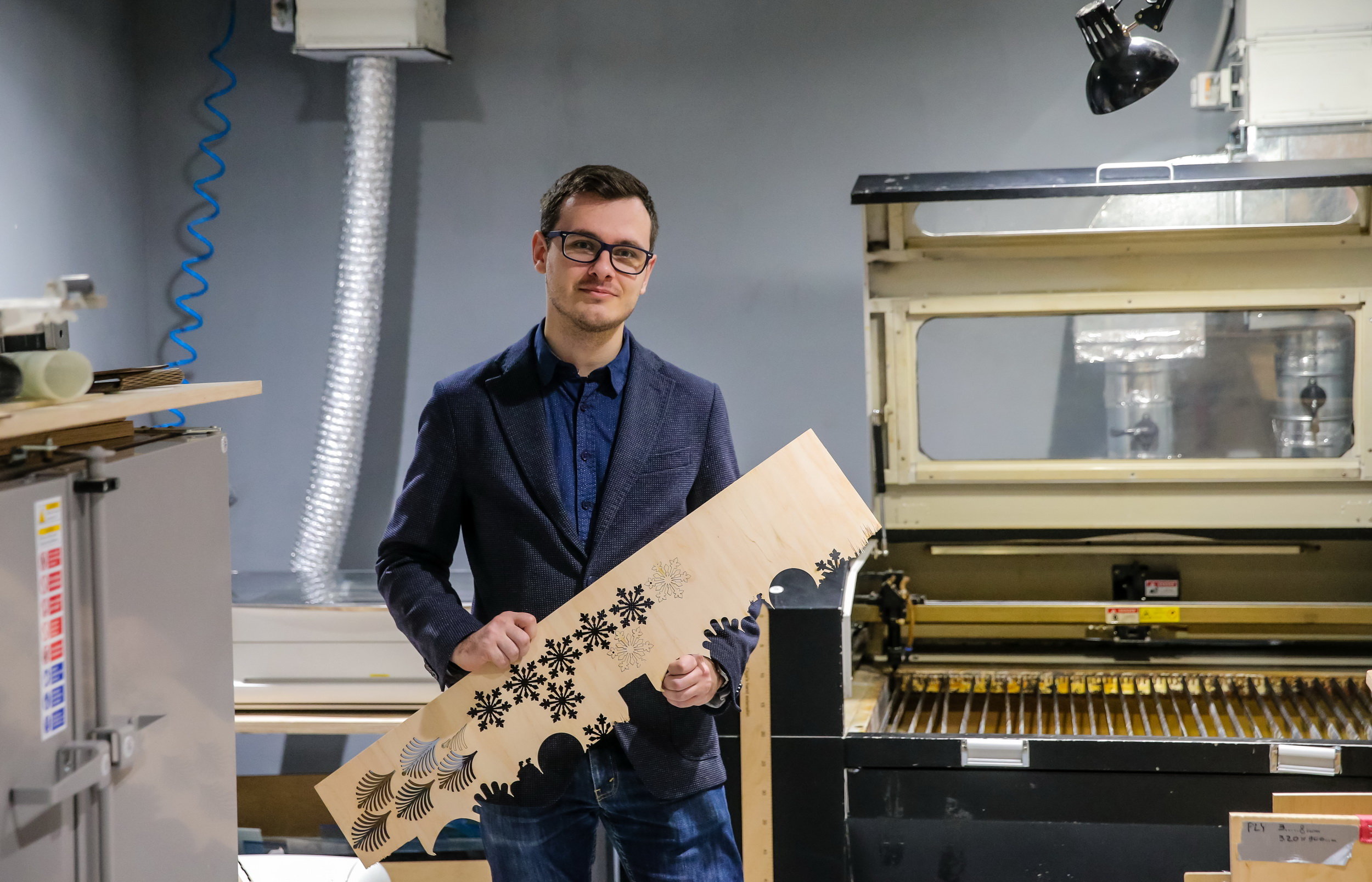
I meet Andrii in the FabLab Fabricator where team members make some details. They don’t have their own studio but they are going to have it in the future.
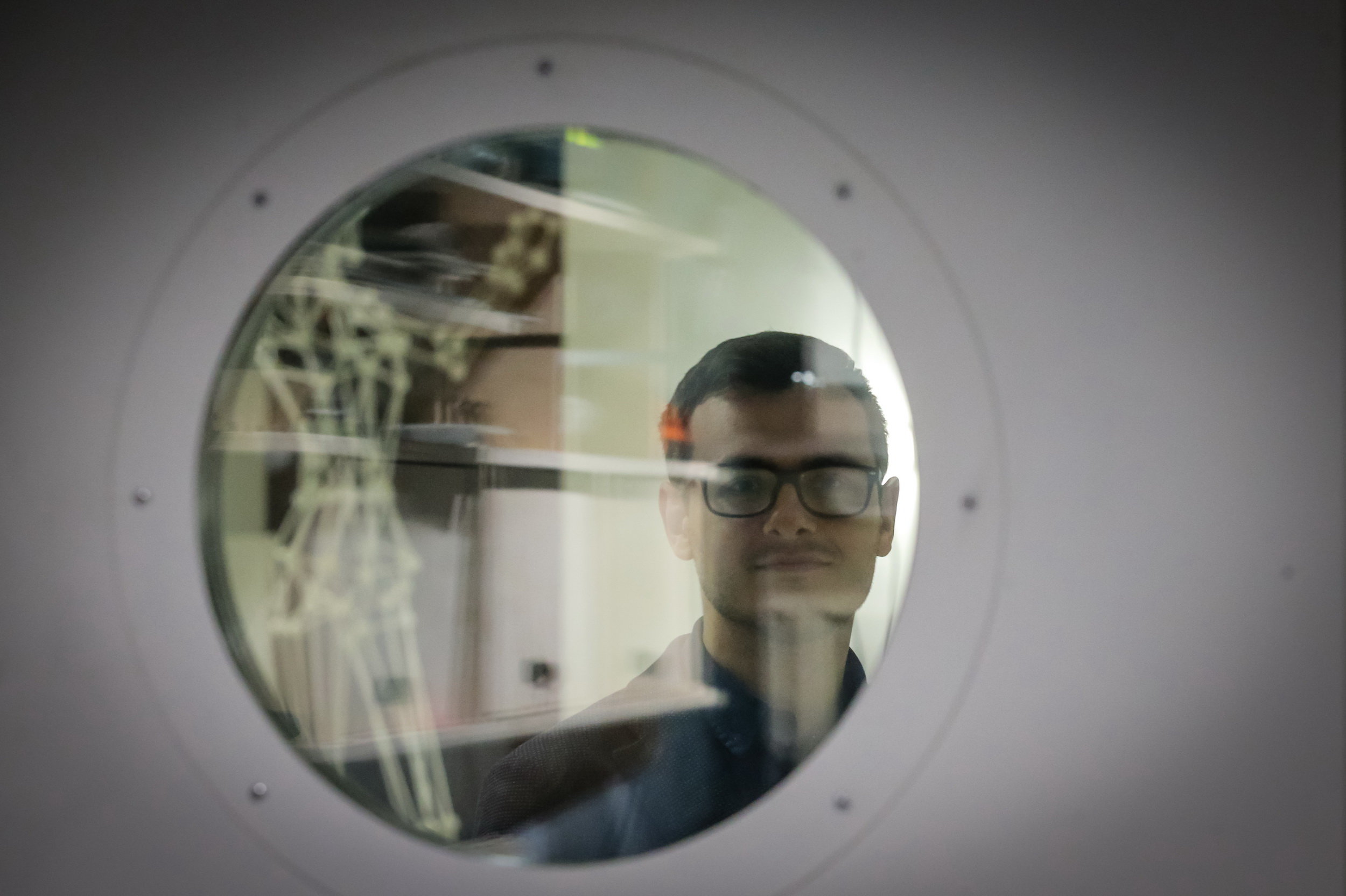
Andrii is a co-lead at NASA Space Apps Challenge in Kyiv, a major hackathon. Participants have two days to develop the concept of space exploration projects. By the way, two years ago, the Mars Hopper team where Andrii worked was awarded the People’s Choice prize. They were invited to the USA, to the Kennedy Space Center so they could see a launch operation.
“Last year, Philip Samarets, the founder of Cosmos Agency, took part in the NASA hackathon, and his team won the prize. In the beginning, he saw Cosmos Agency as an informational platform, kind of a space news aggregator from all the websites. But aggregators are not popular, so Philip decided to launch space balloons,” Andrii says.
Two first launches took place in January and February 2018 just for fun to see how it worked. Andrii was working in a project then which wanted to make an unusual promo-campaign for its “eternal” stationery so they decided to send the product into the stratosphere 30 kilometres above the Earth. Andrii connected with Philip, they launched a balloon, and then Muzychenko joined the team of Strato Ukraine.
History
Stratosphere is a layer of the Earth’s atmosphere with the bottom of 11 and the top of 50 kilometres above the Earth. The first man to safely ascend into the stratosphere in the early 1930s was Auguste Piccard. He must have been a very active person as he also invented a bathyscaphe while his son Jacque was the first to explore the Mariana Trench.
Today, high altitude balloons are launched in different countries, e.g. in Great Britain and in the USA. This is the way how weather balloons, mini-shuttles are launched as well as some observations and PR-campaigns are conducted. “Space balloons were, are and will be launched,” Andrii Muzychenko says. “They have been recently used by Google Loon program. Balloons are flying above Puerto-Rico and provide people with the mobile Internet”.
Cosmos Agency is the only company in Ukraine which launches balloons not once but constantly.
The team
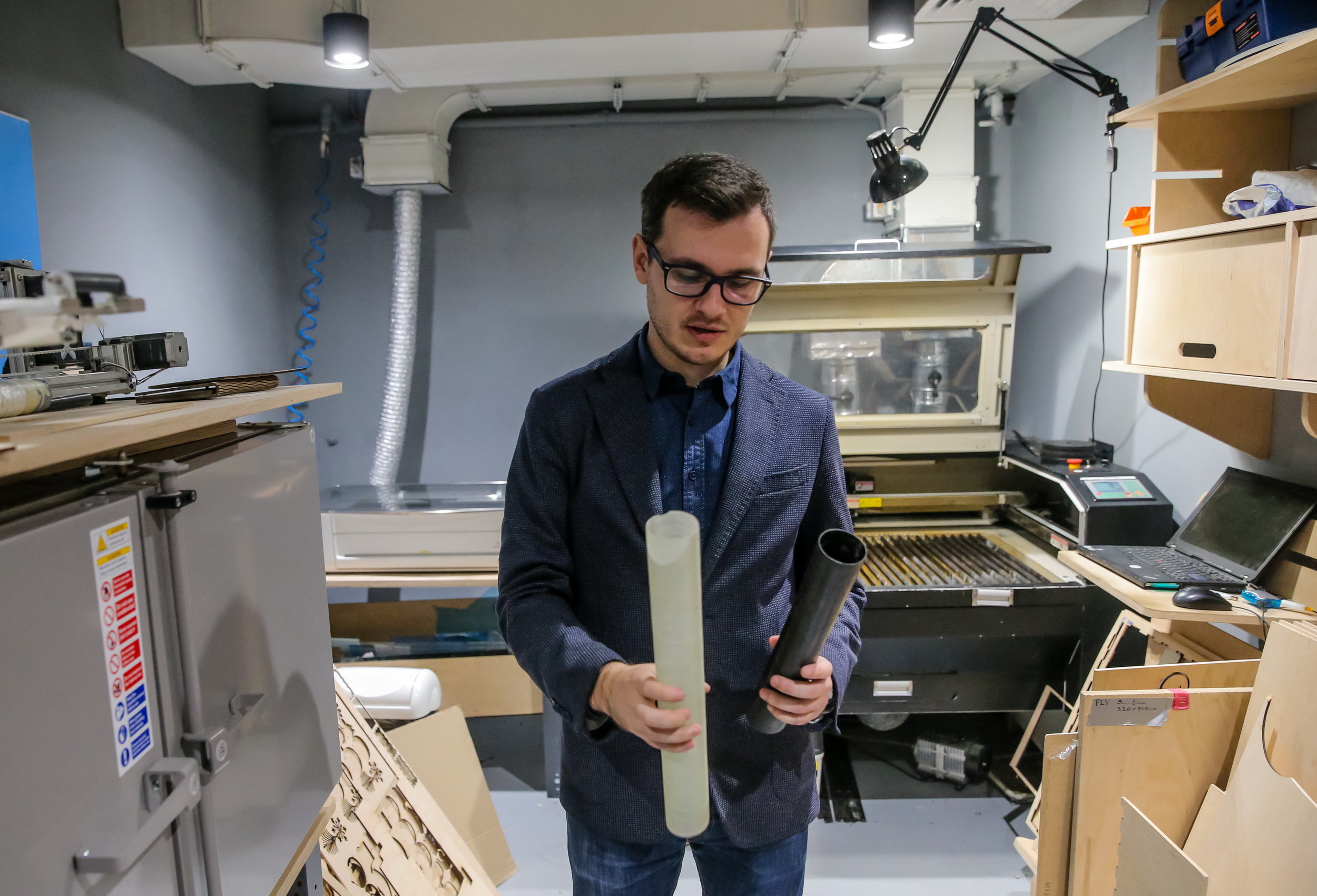
There are four people working on the project now. Philip Samarets is a founder and CEO. He is in charge of legal issues and communication with partners. Andrii Muzychenko plans the mission, where and how it will take place, he is also now working on a new-format controller. Maksym Maksymenko from Fabricator helps when a detail needs to be made by a 3D-printer, laser cutter or another “advanced” equipment. The fourth team member is Artem Melkunov, a student, who is keen on software development and also in charge of a new controller creation.
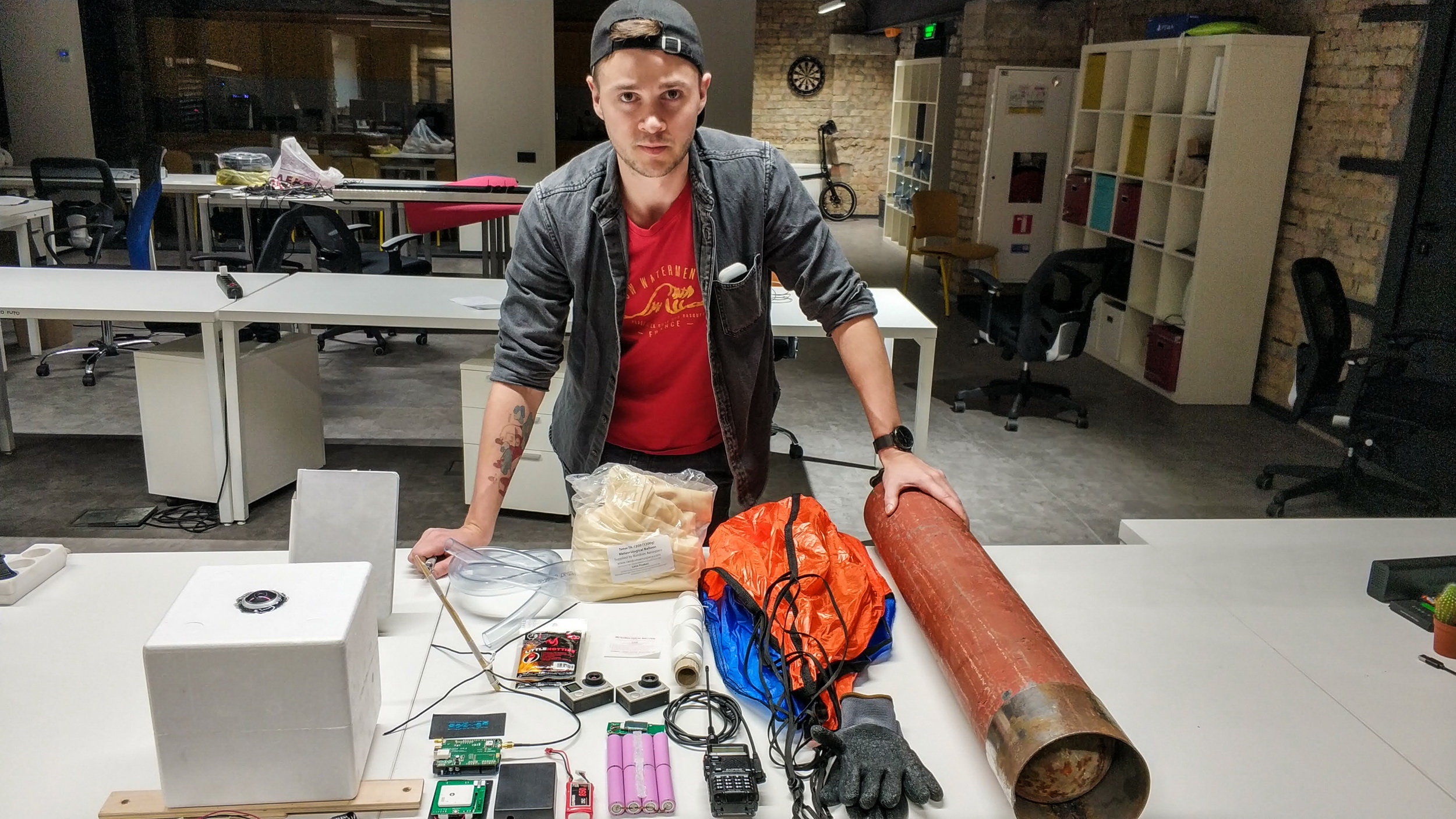
By the way, Andrii finished quite a regular program at the university – information security. He began being fond of space from the childhood. “I was five years old, I had a Soviet book with a stellar map in it, I liked exploring it, finding some certain constellations and then seeing them in the sky”.
Construction
Strato Ukraine’s balloons include latex balloon which is bought overseas, a working unit covered with styrofoam, and a parachute. A balloon is filled with helium – actually, it can be filled also with hydrogen, but it can blow up.
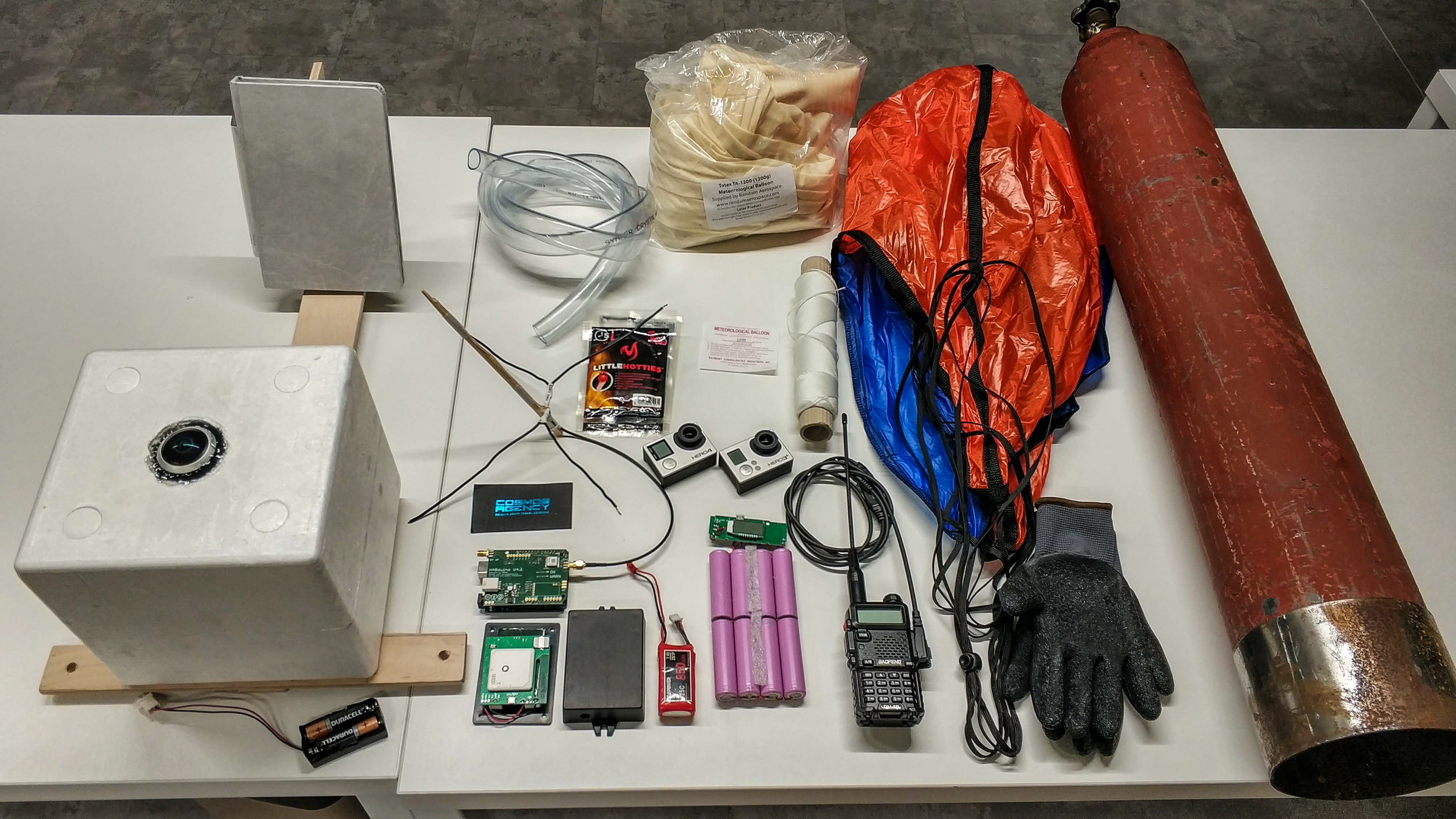
The main system functions in a so-called format of Hubduino, three radio modules are set on Arduino, a popular construction platform. “Professionals can say that it is ridiculous and only amateurs use it, but guys – come on! – it is impossible to do it another way for now,” Andrii Muzychenko says. The team wants to enhance a flight controller, but the development of a new module will take three-six months. As soon as it is completed, we can set anything inside a working unit, its functions will be the same as a smartphone’s”.
In 2019, the team wants to change a working unit. First, they want to make a frame not from Styrofoam but from anodized aluminum so it can be used more than one time. Technically, it will be a CamSat system (U3): three cubes (10*10*10 cm), each weighs up to 1 kg. One unit will be kind of an adapter, a gondola and other details will be attached to it. They will hold a product for promotion, for example, the second unit is equipped with video appliances for telemetry, i.e. for data collection and transmission from the sky to the earth, the third unit will be equipped with scientific appliances.
“We want to set a Geiger counter to measure radiation in accordance to altitude, sensors to measure UV radiation dependently on atmosphere, pressure, the temperature inside and outside,” Andrii Muzychenko says. Now, the space balloon can measure speed, temperature and wind direction.
CamSat will allow assembling a working unit just at home. Now, Strato Ukraine is producing some details at Fabricator’s, as soon as new modules are completed, they will just need to be set and aligned.
Flight
This is how Andrii Muzychenko describes favorable conditions for a launch: wind speed on Earth 1-3 mps, desirably without rain and clouds. Temperature doesn’t matter, however, it was a surprise, but once, a GoPro camera couldn’t work because of self-superheating though it was -60 C in the stratosphere. To model a flight path of a balloon the team the American NOAA’s Global Forecast System.
The next balloon is to be launched at the beginning of 2019. Andrii says that it is possible to launch space balloons in winter, but favourable, not windy days are rare. “Moreover, it is much easier to conduct a search operation in summer – if you launch a drone at 8 a.m., it will land not later than at 12 p.m. and in an hour, you come to its landing zone and start to look for the appliance. We try to make the time between landing and arrival of our support car no more than 15 minutes,” Andrii says.
As for a payload of the high altitude balloon, developers start to make it not more than 5 kilograms – then if there is an accident and the parachute doesn’t work, the load won’t be damaged.
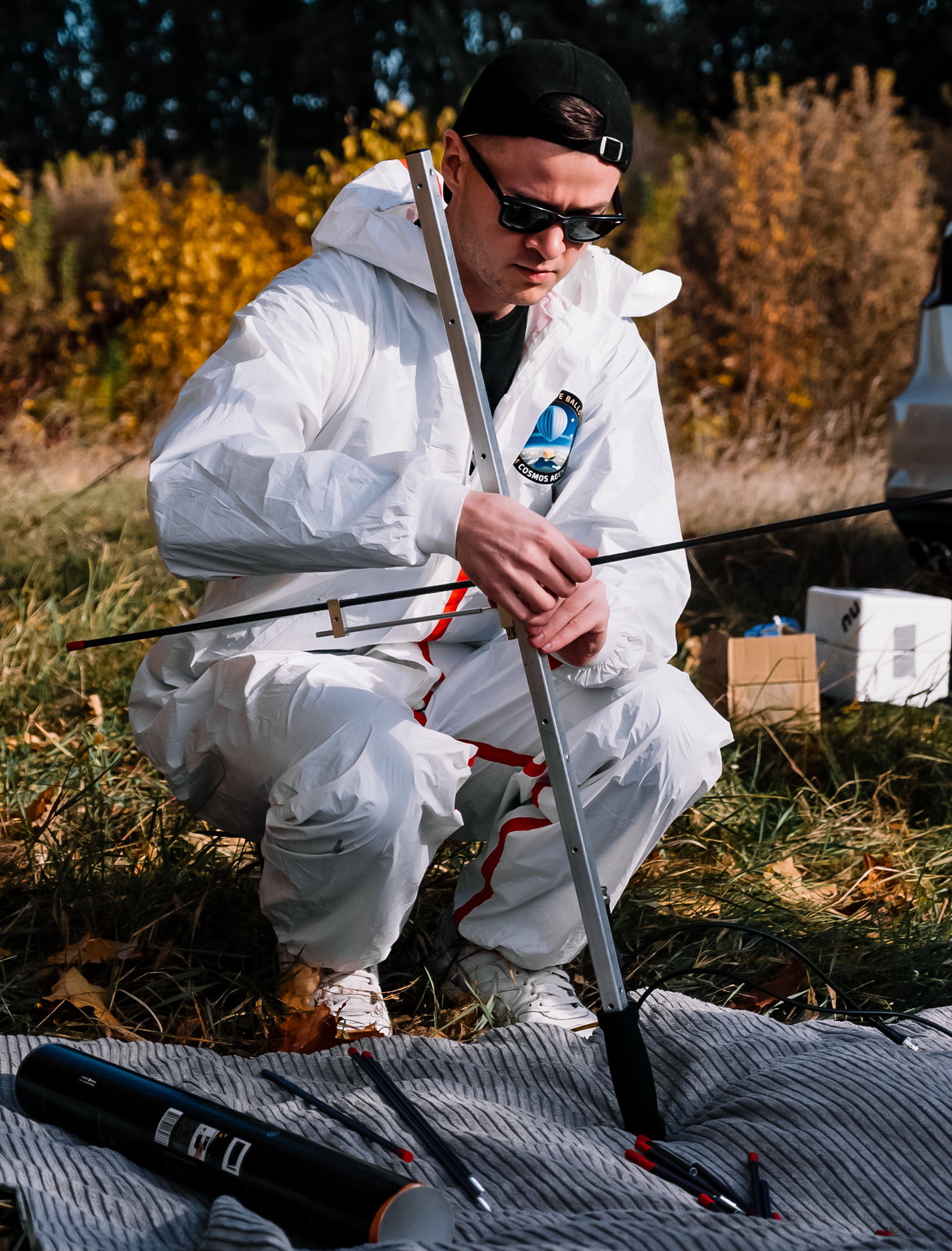
When the balloon is in the sky, it is controlled by the team on earth. The balloon sends data about the altitude once each minute, radio fans who have radio receiving stations get this data. The project team has its call sign, a location of the balloon is traced through radio fans’ channels.
The most difficult part of the mission is to find the balloon after it lands. Actually, it has to send its location data, but if that area doesn’t have Internet-connection, some difficulties may occur. “However, if there is no Internet but the balloon has fallen down with its antenna directed to us – it is OK, we will get the location data as any radio fan. Anyway, one minute before landing we know the area where the balloon is going to land. It is more or less 1-2 kilometres. When the balloon is on earth, the trackers get the data. If it’s not a tree, water or cornfield, it is OK, we will easily find it”.
By the way, an accident tracker which at the height of 500 meters and less, delivers the data where the balloon is going to land, is made of overseas details but in the Ukrainian city of Dnipro.
Obstacles
Obstacles during the landing are nothing in comparison with the things you need to do to make a flight happen. It is quite challenging to release a balloon from the bond. The key problem is that aerostatics and space industry in Ukraine has strict legislation so only the state can play a leading role.
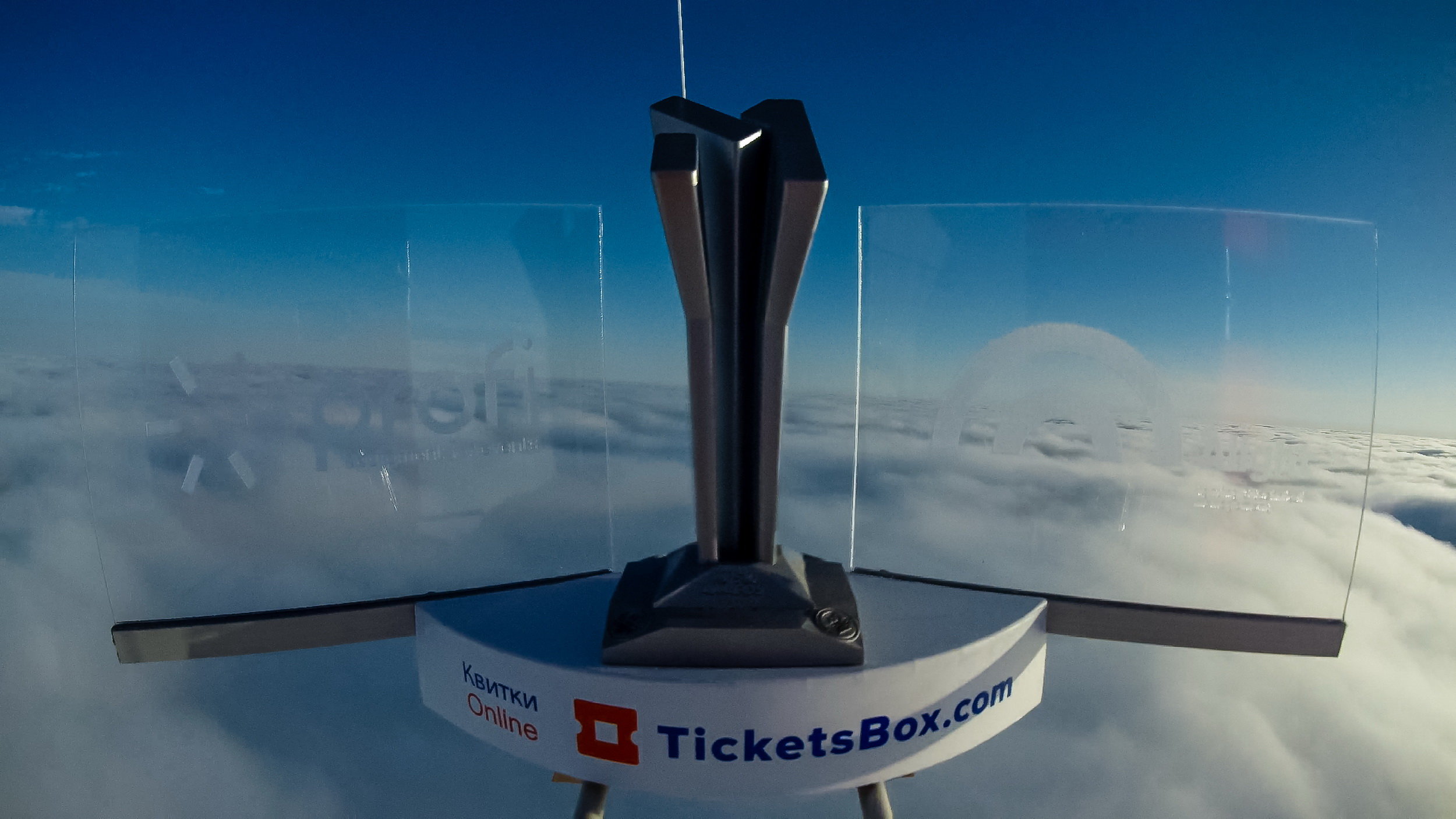
Only Ukrainian State Air Traffic Services Enterprise can allow Strato Ukraine to launch its balloons. “Before launch, we get permission, launch the balloon, inform about the time of the launch, burst, falling down, and the search operation”, Andrii says.
Muzychenko believes that the government has to slacken the law, give “free access to the sky” to private projects. The bottom line is that such projects have to give reports so it will be clear that a project isn’t connected with manufacturing arms.
“Tourists” in the stratosphere
In 2019, the team is going to conduct five launch operations and wants them to be even more. Andrii says they are ready to collaborate with overseas partners.
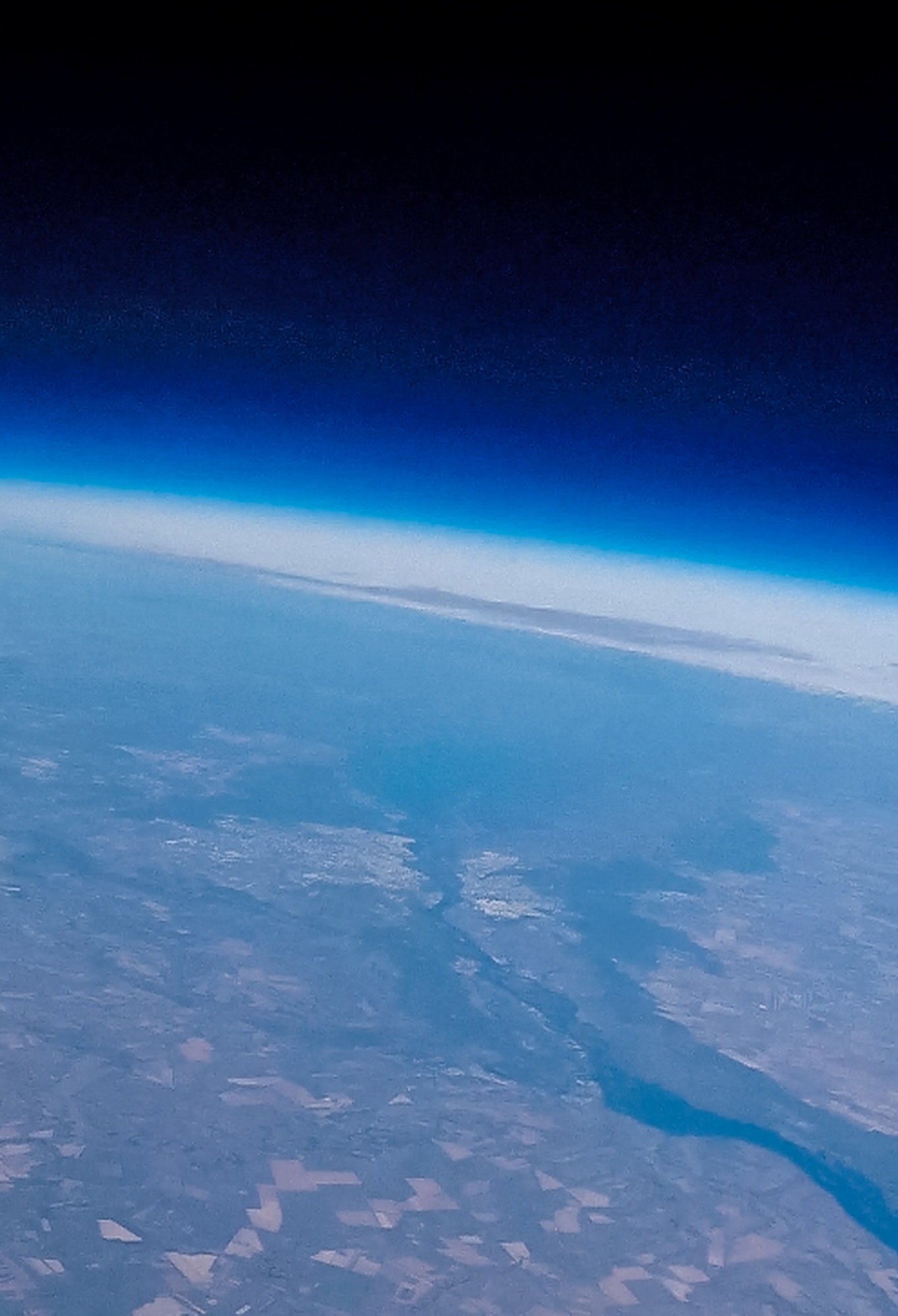
But the most ambitious goal is tourism on space balloons. Muzychenko says the idea isn’t new. Some companies, e.g. Elon Musk’s SpaceX and Jeff Bezos’s Blue Origin have thought about that. Moreover, Blue Origin and Richard Branson’s Virgin Group are planning to put people into orbit so they can get a weightlessness experience.
“As for stratosphere, people have already ascended into it on balloons to set parachute jumps world records. All the jumps from such height were conducted from space balloons, so why not to make the same balloon, the personnel rescue system, the attitude control system and a capsule for three people. In 2019, we are working on the development of the balloon’s model, and starting from 2020, we are likely to begin developing tourism. Perhaps, we will join some other teams which develop similar projects to try to do it”.
Deep space
If you cross the atmosphere and enter the space (100 kilometres and more above the Earth), this industry had much news in 2018. Andrii Muzychenko believes 2019 and 2020 to become even greater.
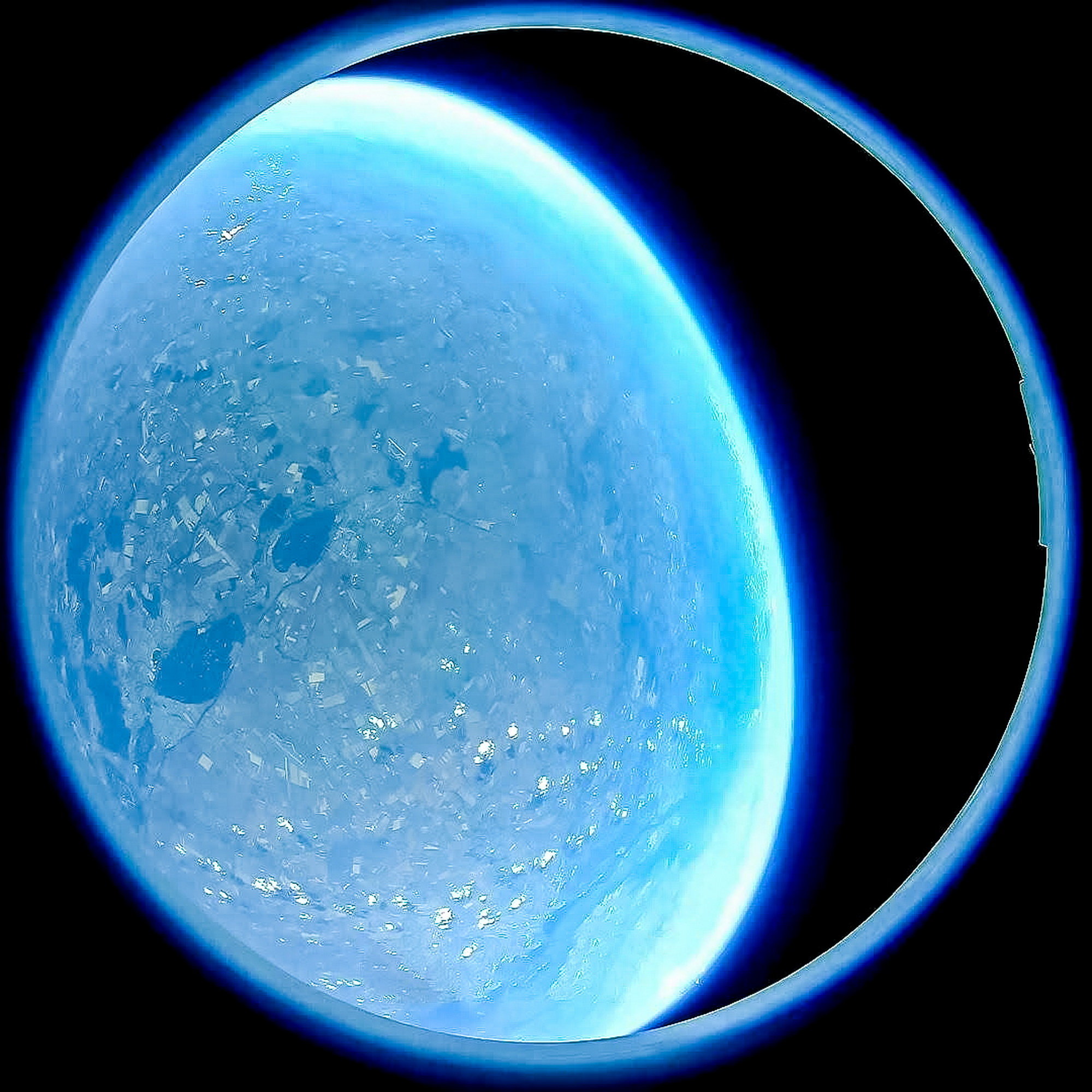
“In 2018, in my opinion, only launches of launch-vehicles were breakthrough: Falcon Heavy [was sent to heliocentric orbit which exceeds the orbit of Mars – ED.]and Electron by Rocket Lab in New Zeland. Rocket Lab showed that a rocket can be built from composite materials [besides, the rocket was made on the basis of 3D printing technology – ED.]. Also, all the classical launch vehicles use turbine driven pumps, which are, to put it in crude terms, mechanically-based. Rocket Lab started to use electric engines and lithium-ion batteries which give energy to pumps during the flight, and then two out of three of them are separated from the vehicle as overload, and they are quite heavy. That was a breakthrough. The company conducted the first test launch operation and then a “business” one, the last launch was on December 16, 2018”.
2019 will become a breakthrough, according to Andrii, because first test flights of Boeing and SpaceX modules with people aboard will take place.
Anyway, people’s flights to Mars are not going to happen soon. “First, we need to do it on the Moon, second, to build two big space stations – one on the Moon’s orbit, the second on the Earth’s orbit. I guess the station on the Earth’s orbit will be built by China and quite quickly. The stations around the Moon and on the Moon are up to Americans. I think the lunar exploration will happen in 2025, flights to Mars with flying around it and landing on the planet – in about 2035, and a scientific settlement – in about 2050. The base-settlement means that people will be constantly on Mars for exploration of the planet and extraction of the resources for an autonomous life there. But we can’t say for sure where the world will be heading. Perhaps, by 2025-2030, we will have developed artificial intelligence and other technologies immensely. For example, if autonomous intelligent robots will be able to fly on their own and collect data in the Solar system and beyond it, then it would be much easier and faster”.
Text by Mariana Zelenchuk
Photo by Ivan Pechenyi and Nikita Bereh