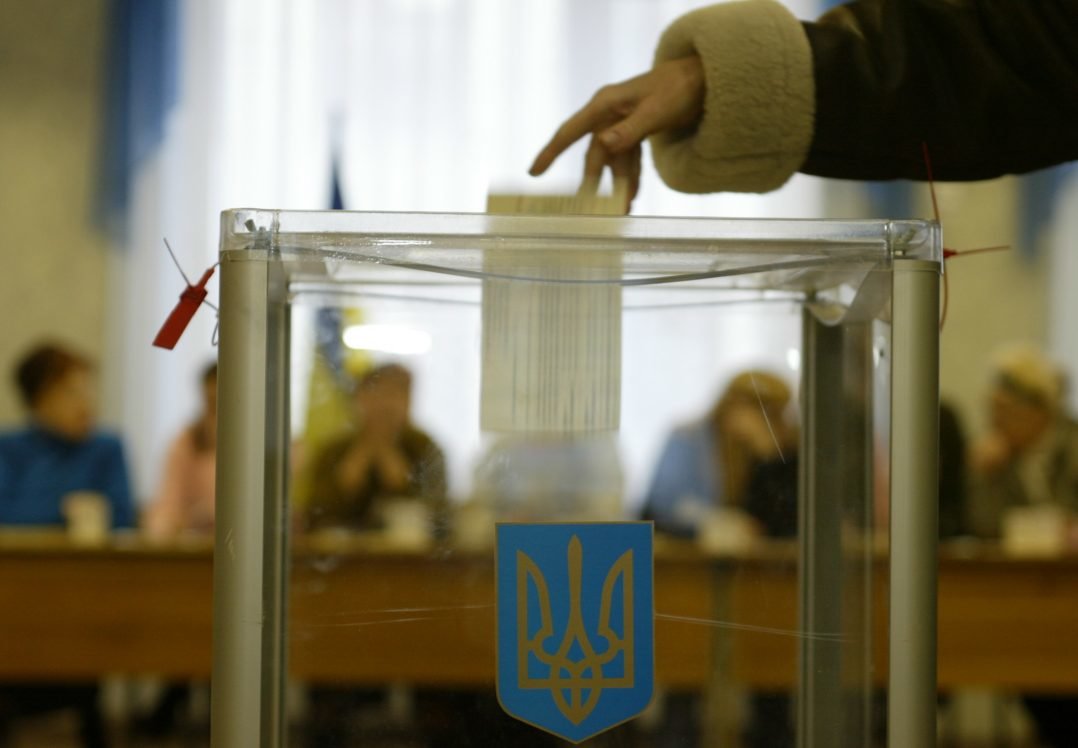


“If Ukrainian president had such powers as the German one, that is, representative, then I would vote for Zelenskiy”. These words are not of the ordinary voter, who is far from politics but of the first president of Ukraine, Leonid Kravchuk. The phrase of the well-known politician leads to the fact that in 2019, which will pass under the sign of the presidential and parliamentary campaigns, Ukrainians should expect for many uncertain, incomprehensible and unpredictable things.
However, Leonid Kravchuk, who turned 85 at the beginning of the year, stressed that he will not vote for Volodymyr Zelenskiy as in Ukraine the president is still the manager №1and, in his opinion, Yulia Tymoshenko can deal with it the best. In the second round, Mr. Kravchuk sees Tymoshenko and Zelensky, although he does not disregard the current President Petro Poroshenko. However, the opinion of Leonid Kravchuk is not the only one…
Forecasts for 2019 were given by current politicians and experts, who look at the political map of the country under a slightly different angle than the former ruler. In the course of the electoral campaign, one should expect “surprises”, which are rather uncertain, says the head of the Ukrainian Meridian Center for Public Studies Dmytro Levus. We are talking about “ratings” of presidential candidates, in particular.
“Most of these ratings are pure falsifications or a part of political technology, the most striking example is showman Zelenskiy (although, whether this puppet figure will actually go to the elections remains the question),” Dmytro Levus explained to DUMKA. “High ratings indicate that this is a ceiling in growth, and there will be no miracles during the elections, as in the case of Yulia Tymoshenko. In these circumstances, the acting president, who after the victory will continue to work in the same areas, the hardest in the foreign policy sphere, has the greatest chances. At the same time, new goals that can be demonstrated to the general public, such as visa-free arrangement and association (perhaps even joining NATO) will be announced”.
Most of the pre-election talks relate to the presidential race on March 31, 2019. However, half a year after it, there will be the parliamentary one. A lot of specialists place a bigger emphasis on it because the victory in the presidential election doesn’t guarantee the head of state a strong power. He should get the majority in the Verkhovna Rada, and this is not easy. Of course, with the new composition of the parliament, there will be another government composition, and, consequently, other approaches to incomplete reforms.
“The configuration of the parliament will change it and the Verkhovna Rada will become even less consolidated,” Dmytro Levus believes. “It is possible to predict the quantitative growth of various kinds of political or technological reincarnations of the former Party of Regions. In this regard, the formation of the government becomes a problem, there will be much more frank representatives of the FIG (Financial-Industrial Groups).”
“This will be a government that will find it very difficult to work, regardless of who will win,” said MP Olha Bielkova to DUMKA. “If the current president wins, then we can count on a certain sequence – there are no formal reasons for the government to change. If another candidate wins, more radical changes will come. This is one of the most difficult questions: what will be the government? I do not expect fundamental reforms from it. I think it will be the government of order maintaining”.
Will we put an end to the war?
Elections are coming soon, but the war continues. Everyone desires peace, but there must be peace through the victory, but apparently, it is not yet close. Is it possible to return Crimea to Ukraine and to stop the military conflict with Russia in Donbas in 2019?
“I don’t think so. It lasts for a long time, almost 5 years, and the external and internal factors of “getting used” to the occupied Crimea and the military conflict in the east of Ukraine are formed “not in favor” of solving this problem,” Serhiy Hayduk, a former commander of the Ukrainian Navy assured DUMKA. Obviously, the military potential of the Armed Forces is much smaller than Russian. An economy’s capabilities are not equal. Therefore, the intensity of the conflict between Russia and Ukraine, its outbreaks and the termination will depend on many factors: both of external – the position of NATO and the EU, and internal nature – the presidential election in 2019, the formation of the Orthodox Church of Ukraine, water supply to the Crimea. Russia benefits from the fact of long-term instability in Ukraine, not from a splendid victory factor”.
“Most of all, of course, we are waiting for peace”, Oksana Yurynets, People’s Deputy of Ukraine said to DUMKA. “Peace through the victory. Therefore, I hope that the war in the East will end as soon as possible. Speaking of the Black Sea-Azov direction, there are certain concerns about the Kherson region. The invader needs access to water to maintain viability in the Crimea. Aggravation and provocations are possible.”
In 2018, the Azov problem was added to the problems of Donbas occupation and annexation of the Crimea. Now, Russians set themselves up as the only owners of this reservoir.
“The actions of the Russian Federation will be relevant to the actions of NATO,” Serhiy Hayduk continued. “The price tag is where will the south-eastern border between NATO and the Russian Federation pass? In the east or in the west of Ukraine, and, possibly, through laying of some districts of Donetsk and Luhansk regions. Ukraine is the test-paper of this confrontation and in addition the land and sea polygon for processing the forms and methods of hybrid warfare in Russian interpretation. Geopolitical regional views of the Russian Federation go much further than the Black and Azov seas – the Balkans, the Caspian Sea, the Middle East, North Africa. They are of a “struggle for economic leadership” nature, substantiated by a power-based method of creating in Crimea one of the largest military bases in the world.”
The Kremlin’s prisoners
Meanwhile, our political prisoners are still held in Russian prisons. In particular, Oleg Sentsov, who in 2018 went through a long hunger strike, and later on became the winner of the Sakharov Prize for Freedom of Thought. The number of prisoners was also replenished by 24 Ukrainian sailors, whose ships were seized by Russian troops in the Black Sea, near the Kerch Strait. Will we be able to bring our prisoners home?
“The Russian Federation treats the hostages as “an exchange fund” or an object of trade, therefore, a systemic and synergistic process is needed,” Serhiy Hayduk says. “The only condition is the unification of efforts of leaders of the USA, NATO and the EU, international and Ukrainian state and non-state institutions. But the question has deeper roots, and one must demand the release of not only sailors but also the so-called “Crimean saboteurs”, prisoners held in some districts of Donetsk and Luhansk regions and political prisoners. These are the chains of one civilized process”.
“This is the matter of long diplomatic and political negotiations, in which human rights activists are unlikely to take part, but we should make a lot of efforts to promote the early release of Ukrainians,” said Valeriia Lutkovska, a programming director of the Ukrainian Institute for Human Rights public organization. “We can and should use the opportunities of civil society to bring impartial information to foreign partners to increase pressure on the Russian Federation in order to return Ukrainians home.”
Background information:
On December 3, 2018, a campaign of support for our prisoners of war started with the lifting of the flag of the Navy on the central flagpoles of cities, public and private buildings. In the early days, flags fluttered in particular in Odesa, Lviv, Vinnytsia, Kropyvnytskyi, Bila Tserkva, Balta, Nikopol, Smila. The event was joined by universities and sports organizations. The action was supported in the Czech Republic, USA, England, Georgia, Poland. Vice Admiral Serhiy Haiduk calls on all citizens of Ukraine to join the action, which will last until the return of seamen from captivity.
Crimean Tatars, who are temporarily forced to live in mainland Ukraine, still hope to come back to their homeland and believe that Crimea will be free. They hope to get positive results every year. No matter how critical events were in the Azov and Black Seas and in the Kerch Strait, they can accelerate Russia’s defeat and its withdrawal from the peninsula.
“There is a hope, that due to the aggravation of the situation associated with the seizure of Ukrainian seamen in the waters of the Black Sea and the continuation of Russia’s open aggression towards Ukraine, the Western world reaction to these processes will be tougher,” Eskander Bariev, a chairman of the Crimean Tatar Resource Center, told DUMKA. “Since 2014, Russian aggression has not stopped, despite sanctions, the annexation of Crimea, hostilities in eastern Ukraine. And now Russia is actively doing everything to ensure that the Azov Sea is under its control only. It’s too early to hope that it will stop. The adopted resolution of the UN General Assembly is some kind of a hint to the Russian Federation that it should end the aggression. We hope that in 2019, Russia will be the subject of adequate sanctions from the western world, and Russia will be forced to free the Crimea”.
The gas is cheap – the problems are real
The economic sanctions of the Western world against the Russian Federation work and they must only be strengthened. However, the question of construction of the gas pipeline “North Stream 2” remains open.
“North Stream 2” is a vivid example of political corruption in Europe, Oksana Yurynets is convinced. “When we hear Germany’s claim to Ukraine, we must understand that this is often the cover of its collusion with the aggressor. Unfortunately, the project was launched, even despite the warnings of many authoritative environmental organizations that were razing the alarm about its harm to the environment. We will resist as much as possible”.
” ‘North stream-2’ will become a reality when we give up and stop working on letters, resolutions, appeals, diplomatic public and non-public discussions,” noted Olha Belkova. Ukraine has something to offer. All my conversations with European deputies, as a rule, start with this: we are not concerned, this is Germany’s issue, commercial project, and we would do the same. But I give them all the indicators about the power of the Ukrainian system, that we have some excess, and now we can transport everything if they would like to buy. About the role it plays for our economy, and that it is a protection against military threat”.
After these arguments, according to the assurances of Ms. Belkova, her European colleagues can change their decision. They understand how dramatic the situation can be for the Old World, and not just for Ukraine. Recently in the European Parliament, the majority of deputies, including ones from Germany, voted to put on hold the “North Stream – 2”. It is encouraging, but it’s still not over.
The future of churches
At the end of 2018, the Orthodox Church of Ukraine was created, and on January 6, 2019, its celebrant, Metropolitan of Kyiv and all Ukraine Epiphanius will receive Tomos in Constantinople. These are important steps, but there is still a lot of systematic and well-considered work ahead. According to Yaroslav Kotsyuba, an associate expert on religious issues at the World Policy Institute, the UOC should set up governing bodies in accordance with the charter of the Church: to form an administrative office, to elect the first body of the Holy Synod, to choose eparchial top-rank officials, and so on. The organizational period can take several months. During this time, the Church has to be registered at the state authorities, re-register all the parishes which joined the United Church (nowadays they are about 7 thousand).
“In 2019, UOC will meet real challenges, primarily presentational”, said Yaroslav Kotsyuba. “It must not just become a fully autocephalous Church, but also to convince other local Orthodox churches, that the UOC is equal to them. Indeed, despite the fact that the UOC is recognized by the Patriarchate of Constantinople and included to the diptych of 15 local churches, the Kyiv Metropole should get their approval.”
Talking about the actions of the UOC-MP, which the Verkhovna Rada obliged to rename itself into the Russian Orthodox Church in Ukraine, we should say, that serious problems are unlikely to arise. Yaroslav Kotsyuba assured that the process of the flow of its parishes to the UOC will be peaceful, but local conflicts around certain temples are likely to happen. In general, it is clear that the Ukrainian parishioners will rather build new temples than fight for the old ones.
Background information
2019 Anniversaries:
30 years since the founding of the People’s Movement of Ukraine and 20 years since the death of Viacheslav Chornovil, its chairman since 1992;
40 years since the tragic death of actor Leonid Bykov;
80th anniversary of the beginning of the Second World War;
Valeriy Lobanovskyi would have turned 80 years old
The 90th anniversary of writers Dmytro Pavlychko and Yurii Mushketyk.
By Viktor Tsvilikhovsky