


In 2018, there were many debuts in contemporary Ukrainian literature but only a few bright new names appeared. However, the well-known authors didn’t disappoint. The writers mostly didn’t master the new genres, but they weren’t limited to the usual ones. For the most part, the real life was depicted on the pages of non-fiction books or was disguised as mysticism or fantasy. There was more beautiful poetry than prose but authors predominantly repeated themselves. In general, it wasn’t the worst for literature year however without any special fireworks.
Andriy Andrukhovych. Lovers of Justice
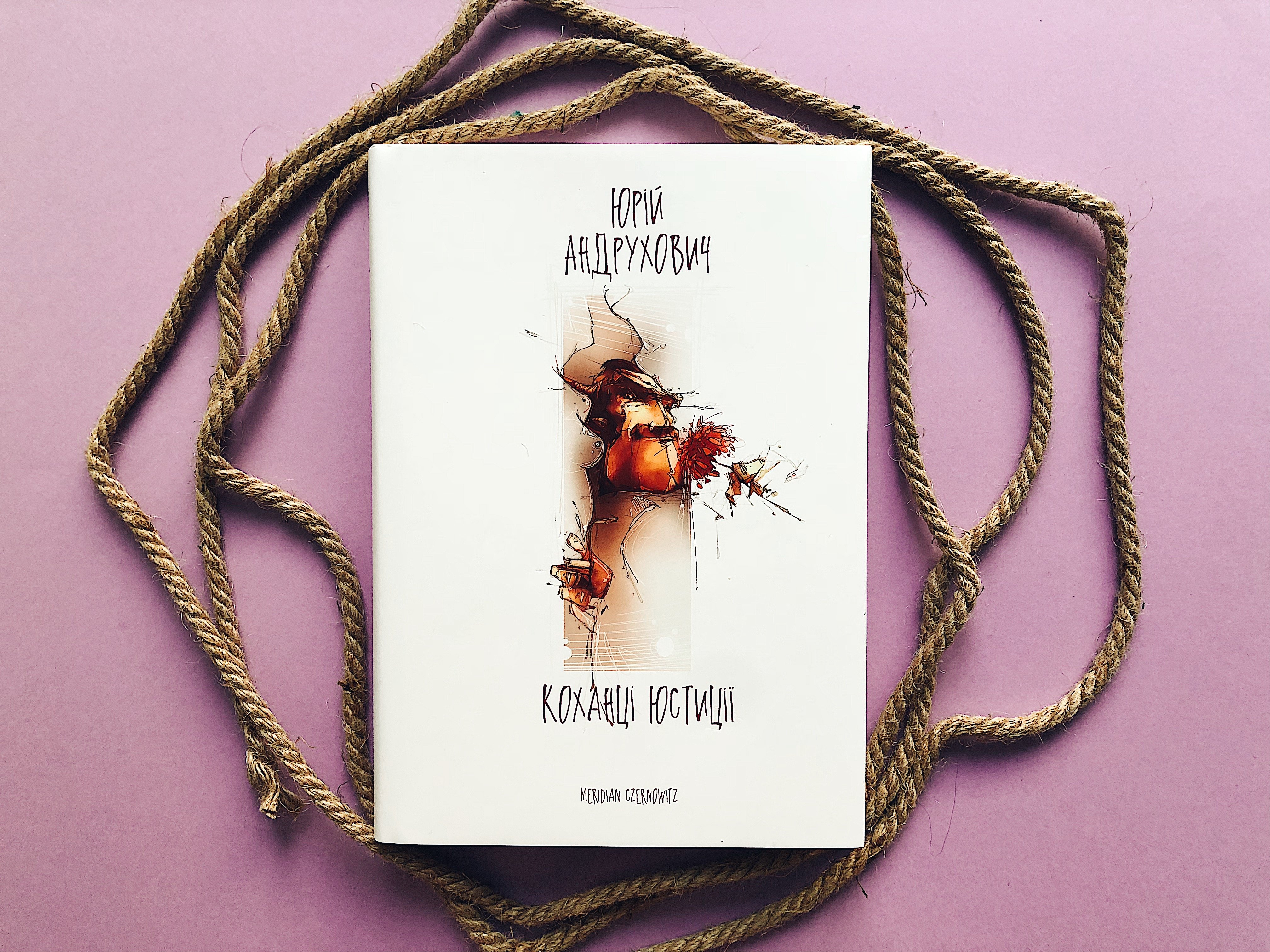
Photo: yakaboo.ua
Generally speaking about contemporary Ukrainian literature it’s worth being careful in judgments: even if you think in this or that book there’s “nothing special” (especially comparing with Umberto Eco) remember that “nothing special” is a widespread tendency… Remember and be more tolerant (always repeating this to myself… oh, no, I’m always said this!).
So, no matter how desirable it is to give Yuriy Andrukhovych another one Golden Bubble, to say that the author of Lovers of Justice didn’t surprise, repeated the same, this is not a novel at all and the award from the jury of BBC the Book of the Year is a demonstration of nepotism and a circular pledge, only three books from the long list 2108 are needed to be open to reassure once again: Andrukhovych is at least literature. And it’s a rarity in our times.
Yes, we’ve met these characters so they are our lovers to some extent – someone from exes is pleasant to see, someone continues to annoy and with someone, the thing can start again. Especially, if you don’t quote the poetry of the adventurer Samiil Nemyrych, the Podilsky nobleman and the exile, or didn’t go three times to “Albert, or the highest form of execution” about “a former circus artist and a novice of the Bernardine Order, a thief and a renegade” Albert Vyrozemskyi: then Anrukhovych’s book has all chances to become a new novel for you (in the sense of love).
Of course, this reading isn’t for everyone: it’s impossible to share intellectual and aesthetical here and to peruse author’s codes – another bonus for admirers. Truly speaking, most of the stories are intellectual melodramas since they are depicted by the author of Lovers of Justice – mostly unhappy losers; their lives end sadly. But this is where the charms of the book hide – dubious and beautiful stories about killers, provocateurs, cheaters who lose everything, striving for youth, love and glory. Stories that are written peerlessly and bring satisfaction. And this is a rarity in our times.
Max Kidruk. Where There’s No God
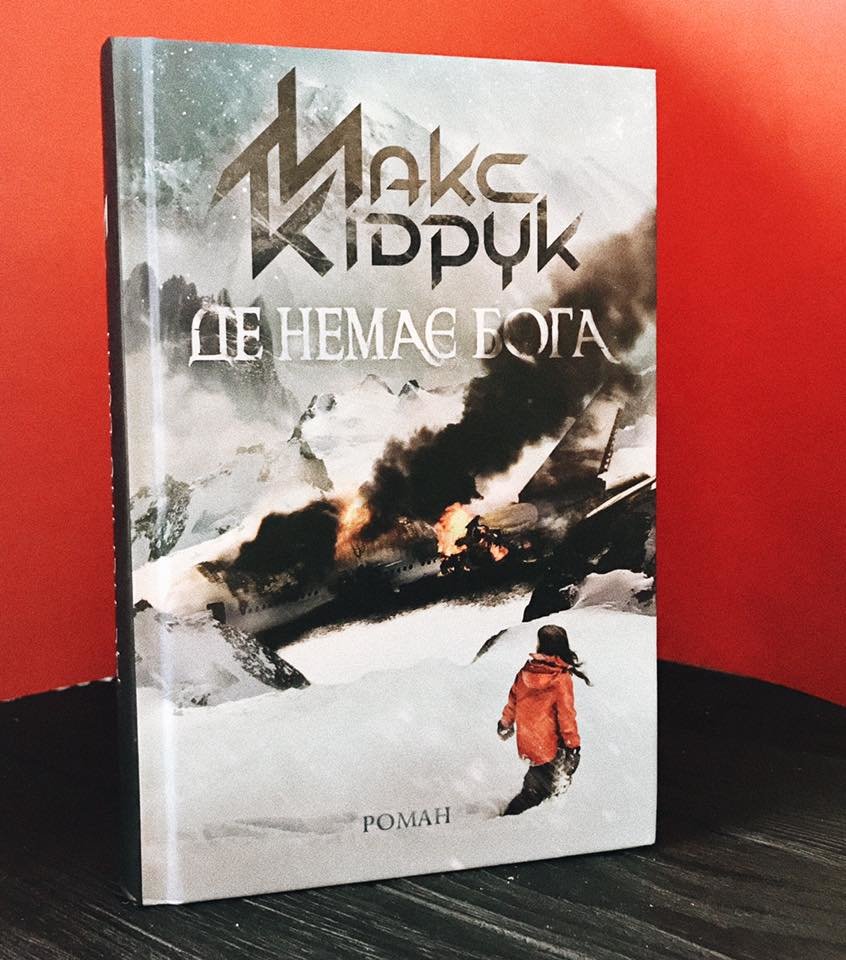
Photo: rivnepost.rv.ua
Despite Yuriy Andrukhovych, the author of the books in which the features of technothriller can be mingled with mysticism, fantasy, detective, psychological drama and social analysis, don’t make it long to wait for a new book. And after all, every time it’s a novel!
Max Kidruk is one of few contemporary Ukrainian writers whose example shows that it’s possible to write not only about the history of the family, sufferings of our people or the studies in the Soviet school, piling up non-plot fragments of the text and authors reflections because it’s a custom in postmodernism. If you’re interested in a quality genre literature – go to Kidruk.
Where There’s No God is a novel-catastrophe, that’s why many, overwhelmed with own sensitivity, drop reading just realized that a passenger plane will crash, for sure, in the mountains (actually, the cover of the book ambiguously implies this). On the other hand, the sense of Kidruk’s text is in personal stories of the characters who are hardly called typical for contemporary Ukrainian literature: a Russian pilot, a famous politician of Bavaria, a football player of American National Football League, a cardinal of the Catholic church, an Israeli doctor. In the mountains of Pakistan, a few of them survive but everyone undergoes personal initiation and all personal lines are skillfully intertwined in the general plot: if you aren’t interested whom Kidruk will kill till the end of the novel, you’d better choose another genre.
The tense plot, psychologically convincing characters of problem characters, who appear in the situation “where there’s no God” long before the catastrophe; easy style – this book is well worth reading. Well, except that there could be less of American football but it will be good for contemporary Ukrainian literature for a change.
Svitlana Taratorina. Lazarus
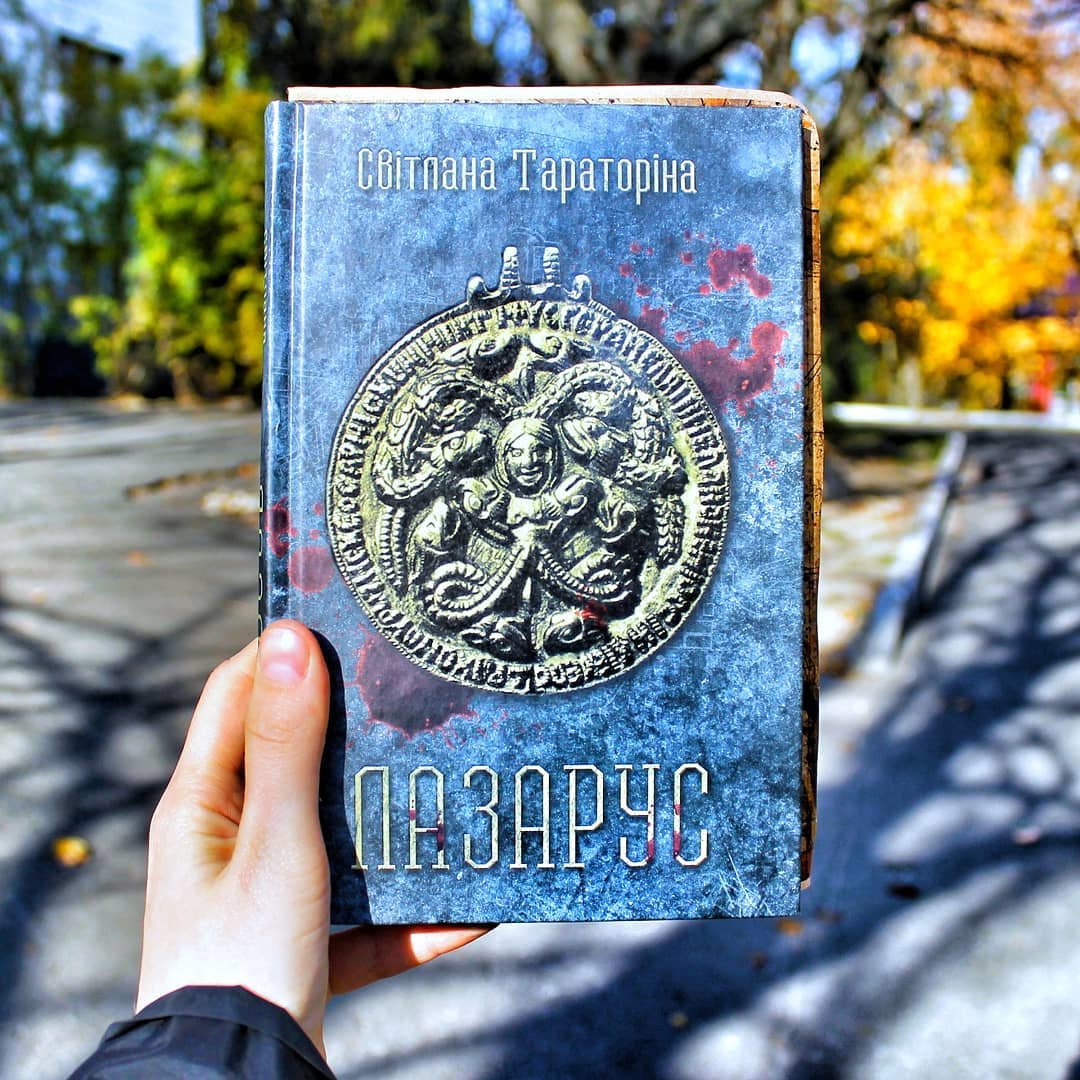
Photo: deskgram.net
Another one purely genre book – at the same time the author’s debut, whose name was unknown either to the wide audience or professional readers, tells about an utterly weird Kyiv of the beginning of XX century. There, people and humanoid creatures co-exist not very peacefully and historical allusions are easy to read through imagined situation: let’s say Kyiv is the capital of Mezha – the province of Empire. This is where the magic “dry jam” is made, necessary for treatment of the “royal disease” of the heir to the throne and strange crimes happen, which are investigated by Oleksandr Tiurin. The investigator from “the big land” is in Kyiv allegedly by accident, but he’s actually interested in a terrible secret connected with his father’s fate who died there in mysterious circumstances…
To tell you the truth, if I were told the plot of Lazarus novel this way, I would roll the eyes and tell that contemporary Ukrainian literature is literally flooded with melodrama and fantasy in the historical entourage (optionally with admixtures of steampunk or detective, Gothic or Burlesque, space opera or occultism). In recent years, only the lazy haven’t written something alike, since everyone thinks that it’s much easier to imagine any devilry than to write about important issues of modernity… As far as this belief is false, the texts themselves prove, which quite often don’t go together and are perceived as self-parody.
Well, in Lazarus everything is different.
Svitlana Taratorina unexpectedly masters the genre: she creates a quirky reality that is not in doubt and she doesn’t slip into irony and mockery, having kept the intrigue throughout the development of the action. It can be said that the author confidently breathes in the back of the best in this segment of contemporary Ukrainian literature: Yuriy Vynnychuk with his witches and devils and Volodymyr Yeshkilev with mysterious goddesses and planetary wars and catastrophes and Vladyslav Ivchenko with his hotbed of monsters and “the best investigator of empire” Ivan Karpovych Pidoprygora.
Of course, the end of this novel could impress more and at least one sex scene should have been written… But I think that everything is ahead for Svitlana Taratorina.
Serhiy Dzyuba, Artemiy Kirsanov. Codename “Banderas”
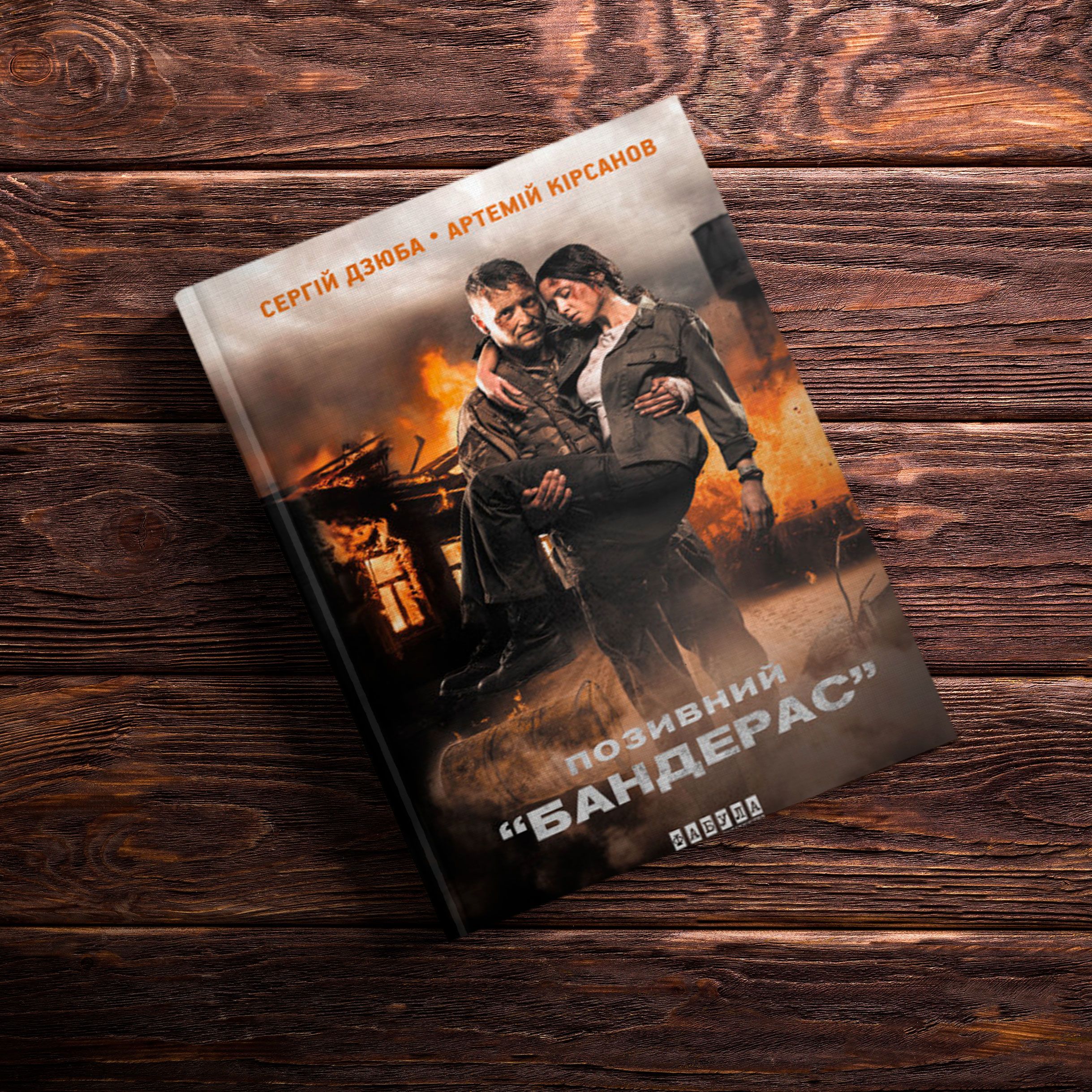
Photo: tsn.ua
If the audience of the previous book risk to be limited to the circle of fantasy fans, the next book can be recommended to a wider circle of readers. Yes, Codename “Banderas” isn’t an intellectual bestseller although it’s one of the successful attempts to talk about the war in the artistic form. There’re already many texts in the non-fiction genre (diaries of those who took part in the war) while the key novels “supposedly about the war” (Internat by Serhiy Zhadan and Grey Bees by Andriy Kurkov) are actually about the “grey zone” and character whom you can’t call the heroes of war.
Instead, in the novel of Serhiy Dzyuba and Artemiy Kirsanov, who wrote a script of the same name film (based on the diary of ATO soldier Serhiy Bashkov), there are many such heroes.
And it’s not only the protagonist, Anton Saenko, an agent with the codename Banderas whose aim is to neutralize the Russian saboteurs in the Ukrainian military unit but the rest of “ours”, such different and far from ideal in the military routine who at a decisive moment show the strength of character and readiness to give life for their homeland. And homeland is also different for everyone. Let’s say, for Anton and Lyokha who at first glance seems his antagonist (he flew from separatists but didn’t join Ukrainians) this is Donbas. In the novel and film, the most common stereotypes are voiced by the characters, the stereotypes which still border the East and West are named, so it seems that there’s no the tackling of problem.
Instead, the authors try to prove that such a tackling is possible and say it in intelligible language. Sometimes, they talk straightforwardly but without the use of pathos and didacticism (sure, if not comparing with Trier). Codename “Banderas” is a good action-thriller with elements of a detective and melodrama that does not squeeze out a tear but shows Ukrainians who fight and win. I rarely say this but it seems that we need this kind more for mass reader and spectator.
Katrina Haddad. The Night of the Strangers: 2 parts
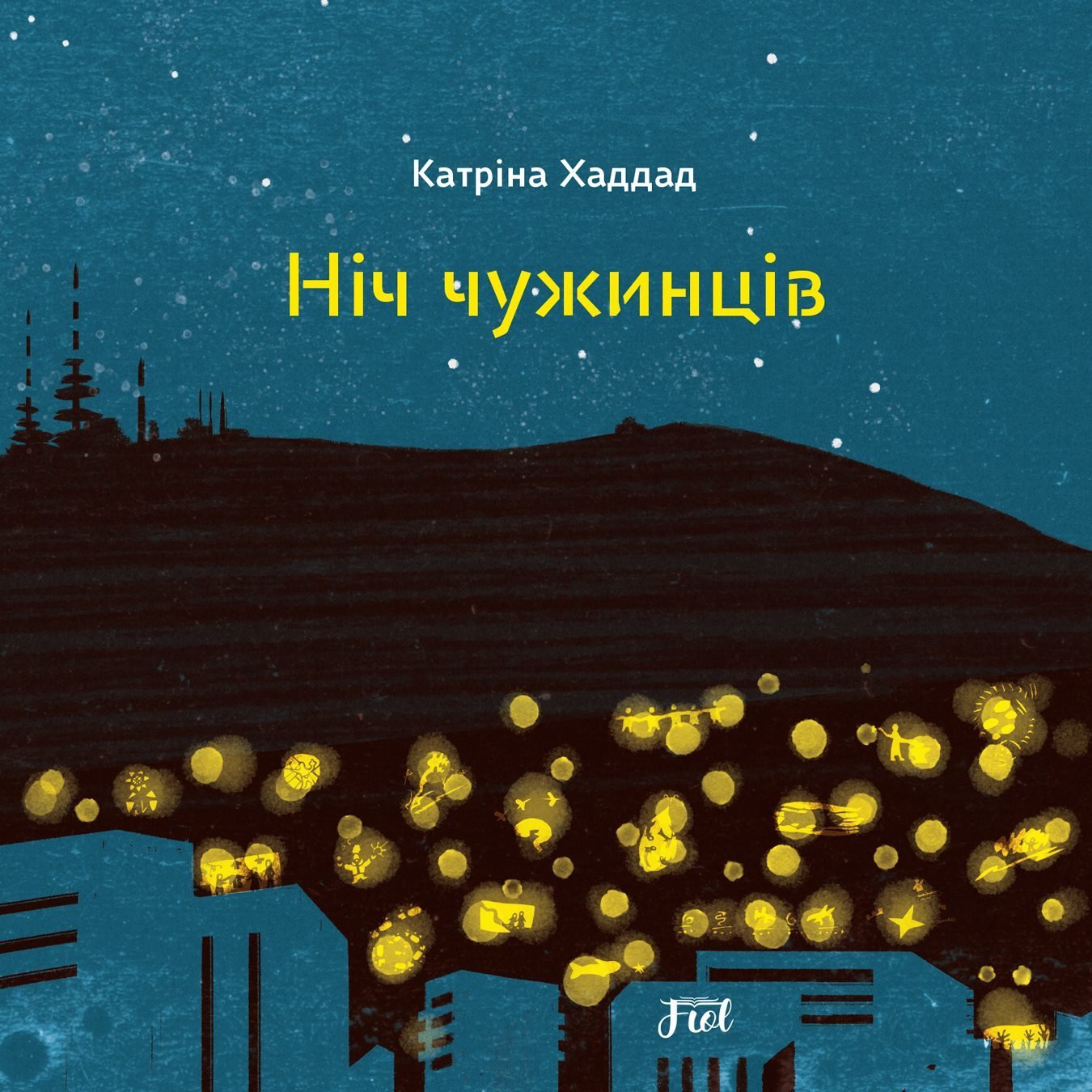
Photo: goodreads.com
Although poetry books in 2018 deserve a separate top, it would be a pity to not even mention them in this review at all, because the Ukrainian reader received good and different verses: with difficult and complex imagery and metaphor for intellectuals (Kateryna Kalytko and Ostap Slavynskyi); more hooligan and informal (Artem Polezhaka and Genyk Belyakov); prayerfully religious (Bohdana Matiash); tenderly anxious (Dmytro Lazutkin); such as Serhiy Zhadan has always been the last time (Serhiy Zhadan).
However, why only such as Zhadan? On the whole, all lyrics of 2018 takes after itself: poems from previous collections are reprinted, images, motifs, artistic techniques are repeated. Despite “real” debuts, “fictional” debuts took place in poetry when long known authors first published a printed book (Svitlana Povalyaeva and Oleh Kadanov). This also happened in the case of Katrina Haddad, whose collection The Night of Strangers contains relatively old texts (macabre story of the seller from the Kharkiv Barabashovo market or the poem Two thousand grey-haired revolutionaries) and new poetries which unfold topical spaces of Donbas, Сrimea, Maidan.
Haddad’s poems, on the face of it, are also common for the Millennium generation: the combination of difficult symbolism with irony and shock, formal experiments with philosophical content. At the same time, the author has own distinct poetical voice which is hard to confuse with any other. Mythological, folklore, baroque, biblical and apocalyptic images make the artistic reality of these poems bizarre and alienated (its leading metaphor is the mysterious Night of Strangers, which “comes and changes everything from the outside and inside”). Despite the fact that the depicted pictures arise before us brightly and noticeably, so that there is no difficulty understanding the paradoxical symbolism of time (“the death lays eggs in the nests of snipers”). Sometimes these poems seem horrible fairy-tales although they have more hope (in particular in the Christian sense) and identification with the lyrical heroine is very natural, after all, it’s almost a daily story – “we all try to slip between the bullets and the hail of machine gun bullets – and make it, and don’t manage to keep calm”.
Artem Chapeye. The Ukraine
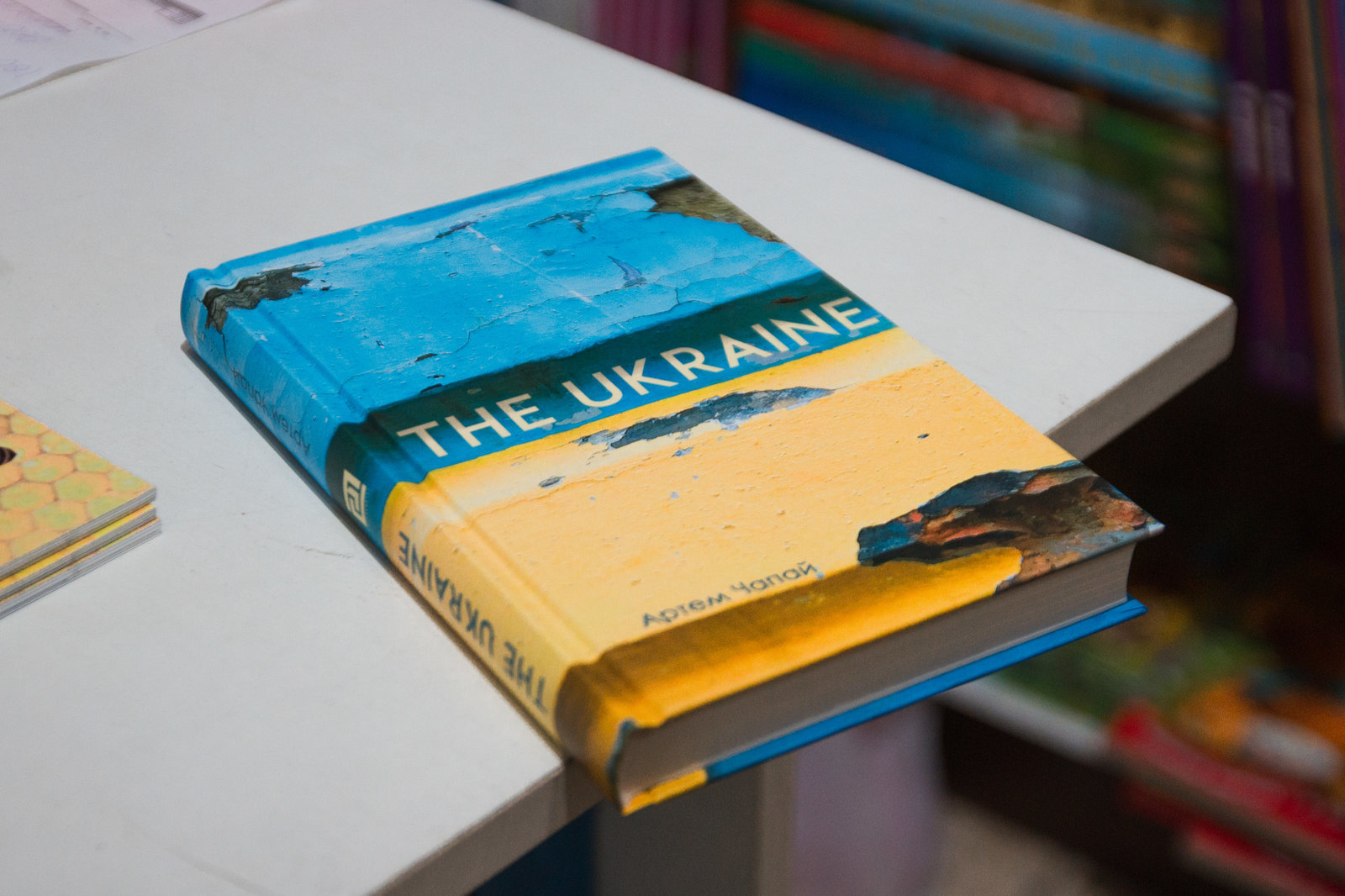
Photo: dzerkalo.media
Already the annotation to the collection of Artem Chapeye indicates that in the proposed texts “the boundary between the artistic and documentary was intentionally violated” – and it’s a key feature for the genre system of contemporary Ukrainian literature. While the nomination of “essayism” appeared in almost all “annual” prizes, what exactly we understand by the concept of “essay” – is not very clear yet, therefore, under this broad name, full-fledged artistic texts pass (Cerebro by Andriy Bondar) and reportages (Our Others by Olesya Yaremchuk) and general cultural reflections – echoes of dissertations (When I Hear The Word “Culture” by Vano Kriuher or Changing Ideologies by Volodymyr Yermolenko).
The Ukraine consists of short prose texts which had been already published. Many of them went over to this collection from the book Travels With Mamayota: In Search of Ukraine by Artem Chapeye (2011). Mamayota is a motorbike on which the author took a trip from Kolomyia to Luhansk and back, putting questions to people he met: “What do you dream about?” and “What does Ukraine mean for you?” (first of all, it’s brave). Of course, if you’ve followed this project and other publications of the author, you wouldn’t be interested. Instead, if you first take the book The Ukraine as a full-fledged product, it impresses by this billow of voices from different parts of our state, which the author fixates choosing artistic form to a greater or lesser extent.
Some texts, I can’t call anything other than short stories, because they are plotally completed and deeply psychological (the story “granny Nadia VS the police officer” named “Son, please!”); the others are closer to reportage – with unfiltered directs speech (“militia came and went away but now we are separatists for Kyiv, aren’t we?“); and other – absolutely random extracts of reality (a man who makes jokes about the bear or two Antons who help to put a chain on Mamayota). Together they create a realistic and not very aesthetic in its “romanticism of decay” version of the Ukraine country with its awful and beautiful people. Ukraine, which we all love but predominantly because of hatred.
Hanna Uliura. Everyday Book To Make An Impression Of An Educated Person
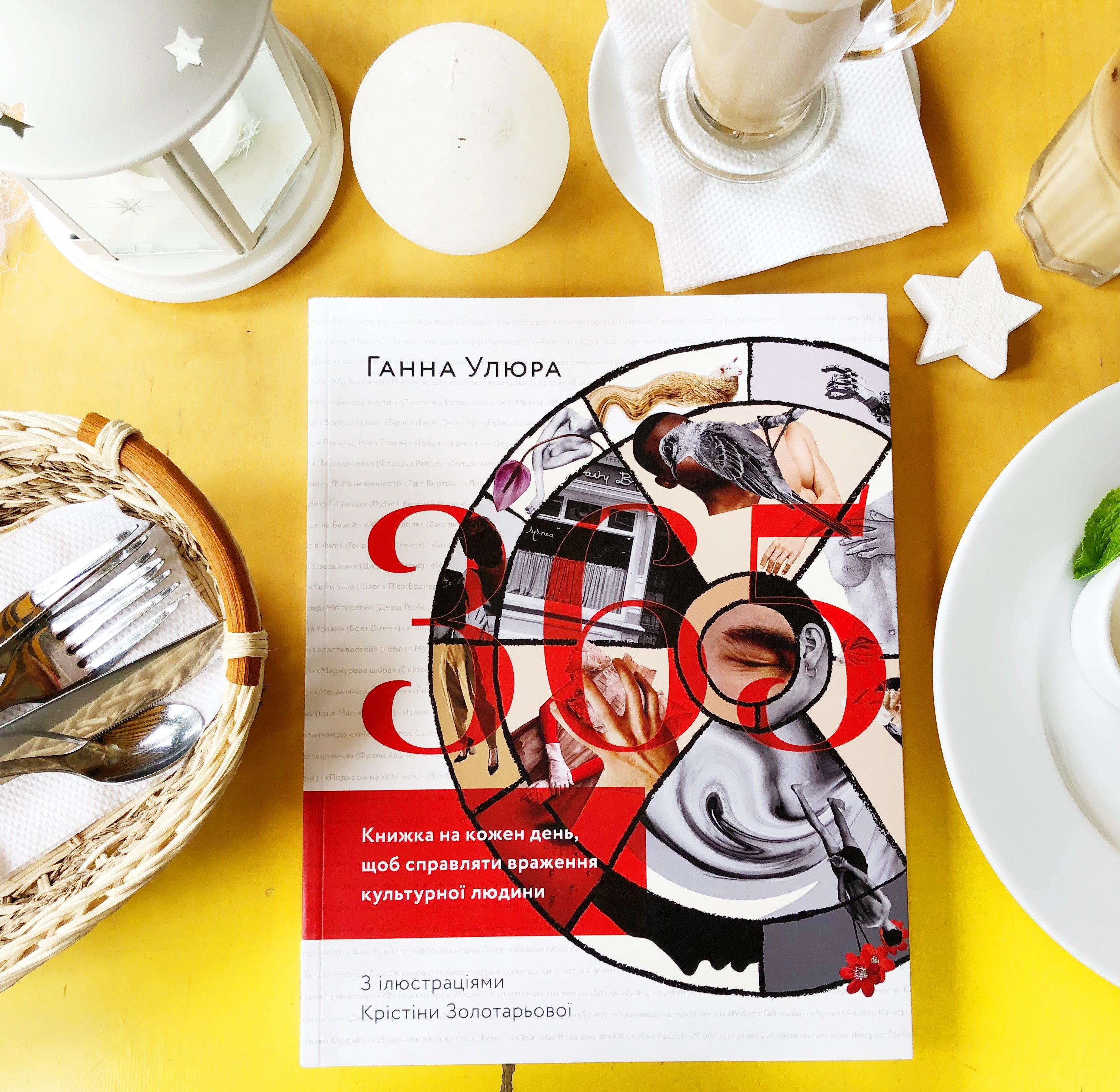
Photo: yakaboo.ua
In the end, the last book of our review, doesn’t have a clear genre: it didn’t hit the shots of essay books, although it’s hard to call it traditional literary studies (first of all because this term sounds same boring as “Shevchenkivska Prize” or “The newspaper of some university”). Hanna Uliura made an important and almost impossible thing for national non-fiction whatsoever: she wrote “365 exciting short stories about 365 exciting books” from 4 continents, 60 countries, from Ancient Greece to European 2000s (I’m quoting annotation) and wrote briefly, interestingly and informatively (I add from myself).
“365” isn’t the collection of spoilers or an educational project tailored to mass readers. The author has a thorough education, broad erudition and counts on the interlocutor, who will be “in context”. Along with this, those who monitor the tops and advisers “What books are needed to be definitely read till the end of the [next]year” will find this book a superb gift under the Christmas tree (there are pictures as well – original and unexpected collages of Kristina Zolotaryova) because it’s a chance to immediately set the top of the “list of literature” for oneself.
Actually, each essay here is the author’s version of the read book (either well-known to us from school, or exotic for most texts of the Japanese, Armenians, Koreans, Africans and others), so it could be arguable why this or that book of Salman Rushdie or Heinrich Böll had been chosen or it could be compared to own impressions. It won’t be boring: Hanna Uliura writes wittily and with humor, at the same time not “looming” above the reader and not turning the attention from the analysis of the object to herself. Informal intonations don’t turn into familiarity and this is a mental process that they provoke: “White boy, wait until the mad dad will be killed and go away to explore new lands” – do you recognize who is it about? In any case, you’d better go to Hanna Uliura.
Tetyana Trofymenko