

In recent years, everything that happens in Ukraine, unfortunately, has to be seen through the prism of the war with Russia. Whether it’s a victory or treachery. Summing up 2018, we focus on the top five most important achievements and losses. Let’s start with advantages.
1) Russia is an aggressor and invader
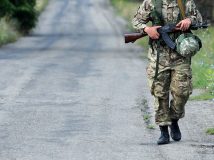
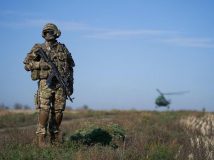
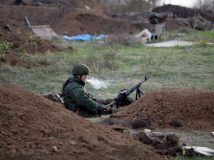
At the beginning of the passing year, the Verkhovna Rada adopted a bill “On the peculiarities of the state policy of ensuring the state sovereignty of Ukraine in temporarily occupied territories in the Donetsk and Luhansk oblasts”. Almost 4 years later, the fighting was called a war. In a document known to the public as the de-occupation of Donbas, the RF was first recognized as an aggressor and invader at the legislative level due to the annexation of the Crimea and the seizing of a part of the territories of eastern Ukraine. The command of operation in the east was changed from the SBU to the army. ATO headquarters was replaced by the Joint Operational Headquarters of the Armed Forces of Ukraine. This law does not contain norms on the severance of diplomatic relations with the Kremlin, but the Russian leadership reacted in a negative way to its adoption by gathering the National Security Council.
And at the end of the year, our state made another anti-Kremlin step – President Poroshenko initiated the termination of the “The Treaty on Friendship, Cooperation, and Partnership between Ukraine and the Russian Federation”. We, as it turned out, continued to be “friends” with those who took away Crimea, started a war in the Donbas and violated almost all the points of this document. The agreement has been automatically extended every ten years, its next term runs out on March 31, 2019 – on the day of the presidential election in Ukraine. Experts emphasized, that it is all about the termination of the Treaty, not the cancellation, and the last one did not have to be done either in 2014 or later – the points of the document, they say, will testify in the international courts of their violation of the Russian Federation.
2) Split in the “Opposition Bloc”
The draft law on the de-occupation of Donbas was supported by all parliamentary factions, except for the “Opposition Bloc”. But, despite the unanimous position in this and many other issues, this bloc can hardly be considered monolithic. And the time proved it. In November 2018 there was a split. Co-chairman Yuriy Boyko and the deputy head Serhiy Lyovochkin were excluded from the Opposition Bloc. Medvedchuk’s group parted with Akhmetov’s group, the oligarch’s infighting was a stumbling block.
Why the split of the “Opposition Bloc” should be added to victories? Because it is not about the opposition, which cares about its own state and its people, but about the fifth column of the Kremlin. The quarrels between its leaders give us hope, that those who play on the side of the aggressor will not decide on a single candidate for a presidential reign, and will delegate different candidates, which will lead to the division of their sympathizers’ votes. For this reason, scattered oppositionists may also join parliamentary races. This is a big advantage for the pro-Ukrainian forces. Of course, if the pro-Kremlin leaders don’t change their mind and once again make a tear-soaked reunion.
3) A victory over Gazprom
Traditionally, where Russia loses, there Ukraine wins, and vice versa – our losses are in favour of the Kremlin. In February 2018, something unbelievable happened – almighty Gazprom lost a lot of money. Naftogaz won the litigations with Russian monopolist in the Stockholm Arbitrage Court. “We are pleased to have won arbitration on the key issues. This is an important day for Ukrainian people and the future of the European gas markets”, said Andriy Kobolev, Chief Executive Officer of Ukrainian State Energy Company Naftogaz.
Happiness was poured like a thick honey from the media, they say, wow, we managed to replenish the budget of the country! Indeed, the sum was impressive – Ukraine won a dispute worth billions of dollars. The national joint stock company distributed infographic with the following texts: “146 thousand UAH in the event of a loss of Naftogaz, could make losses in terms of each Ukrainian family ” and “Naftogaz” won 5 thousand UAH in terms of each Ukrainian family”.
However, there is a fly in the ointment. The management of Naftogaz, a state-owned company, has granted themselves huge awards worth total tens of millions of dollars, which caused a wave of the disaffection of Ukrainians. Anti-corruption authorities were interested in this fact, but this did not change the situation. And later, the head of the company Andriy Kobolev also added some fuel to the controversy saying that he did not save a lot of money in Ukraine and therefore sent his bonus payment to his mother to America.
4) The union of churches
The union of Orthodox churches in Ukraine into a single autocephalous Church is another bone in the throat of the Kremlin. This year, the process, which lasted for centuries, went extremely fast. Constantinople promised to give Tomos to the new church, lifted the anathema from the leaders of the UOC KP Filaret and the UAOC Makariy. But to tell you the truth, the head of the ROC Kyryl tried to prevent the unification of the churches of the neighbouring state. He travelled to Constantinople to persuade the Ecumenical Patriarch Bartholomew, that he should not do this; he complained to the Pope, the UN Secretary-General and other influential world leaders, but this did not help him. The Kremlin was yelling about the alleged interference of Ukrainian authorities in the affairs of churches, although it itself does it regularly. Putin even gathered the National Security Council on this issue, promised to defend his priests in Ukraine.
The final stage in the union of churches was Unifying Synod in the Saint Sophia Cathedral in Kyiv, on December 15th. Representatives of the UOC-KP, UAOC and some of the UOC-MP took part in its work. Metropolitan Onufriy, who was invited by the Ecumenical Patriarch to join the event, forbade bishops of the last church to go to the Synod. At the Synod, Ukrainian Autocephalous Orthodox Church was created. Metropolitan Epiphanius, Metropolitan of Kyiv and All Ukraine, a former Metropolitan of the UOC-KP was elected as the primate of the Orthodox Church of Ukraine. The head of the UOC-MP Onufriy was defrocked.
5) Language quotas in action
Another humanitarian gain that makes Ukraine the Ukrainian state is the language quotas. The Law “On amendments to certain laws of Ukraine regarding the language of audiovisual (electronic) mass media ” came into force on October 13, 2017, however, transitional period took a year. Therefore, TV quotas came into force on October 13, 2018. From this day, national and regional channels have to provide 75% of Ukrainian-language content on the air, and the local broadcasters – 60%. The law also provides for three-quarters of the state language for news programs.
Experts consider quotas to be effective instruments. The amount of state language on the radio and television has really increased. In June 2016, the Verkhovna Rada passed the Law “On Amendments to the Law on Television and Radio Broadcasting” (regarding the share of songs in the state language in musical radio programs and radio broadcasts)”. According to him, by November 8, 2018, the share of songs in the Ukrainian language on the radio should be not less than 30%, and the share of programs in the state language – not less than 55%.
But the checks exceeded all expectations. In the first half of this year, the share of Ukrainian language songs on the air of national radio stations was around 54% and 48% of the regional and local ones, instead of the required 30%. Most of the Ukrainian songs were broadcasted by “Kraina FM” (100%), “UA: Radio Promin” (99%), “UA: Ukrainian Radio” (92%), “UA: Radio Culture” (76%). Since November 8, 2018, there has been an increase in quotas: the share of songs in the Ukrainian language on the radio should be at least 35%, and the volume of programs – not less than 60%. Perhaps, in the long run, Ukrainian will smoothly fill all Ukrainian mass media, and quotas for it will already be considered as a matter of form, or they will only deal with information and song products in the languages of national minorities. We hope that we will write about this achievement in the near future.
Text by Viktor Tsvilikhovskyi