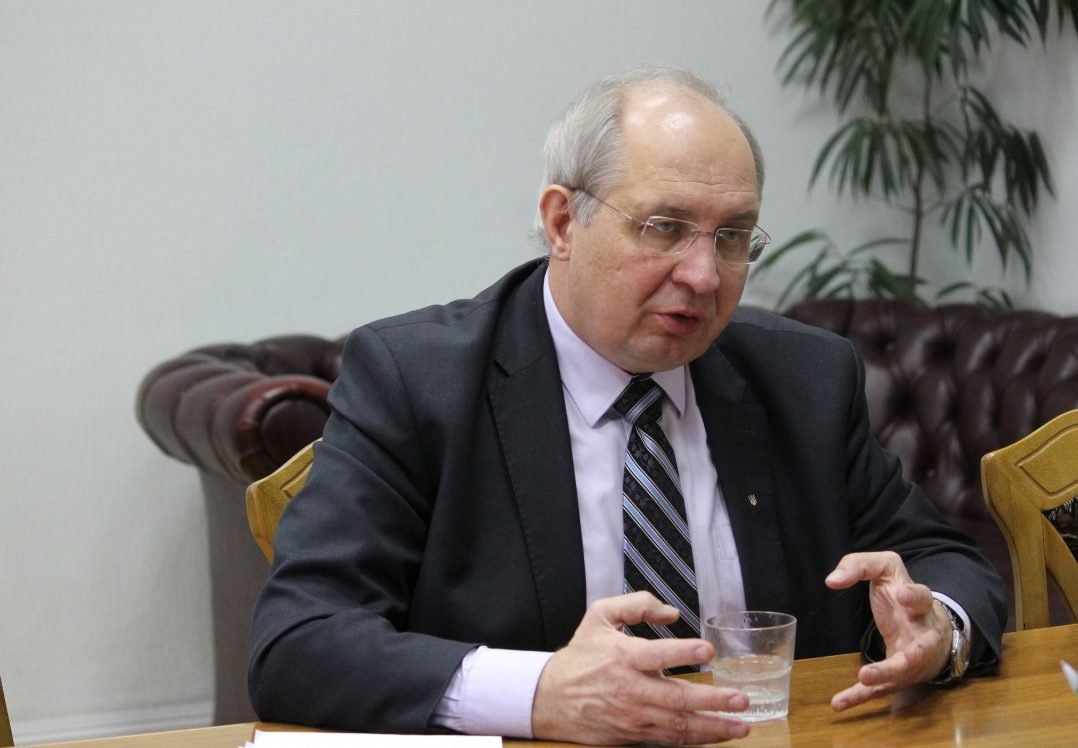


If last year first-graders sat behind the desk of the new Ukrainian school (NUS) in one hundred Ukrainian schools – this is how many schools were covered in a pilot project, this year NUS has covered all first-grade kids without exception. Even though the implementation of this educational reform doesn’t always meet the expectations of both teachers and parents, our society is unanimous in saying that this is one of those reforms, which, despite all the difficulties and troubles, didn’t remain on paper and doesn’t stand still. How everything is going on, why they weren’t supplying furniture and textbooks for so long, how teachers can cope with so many children in the classroom, and how much funds are foreseen for the further realization of the reform of the modern Ukrainian school, Deputy Minister of Education and Science of Ukraine Pavlo Hobsey is telling to DUMKA about all these.
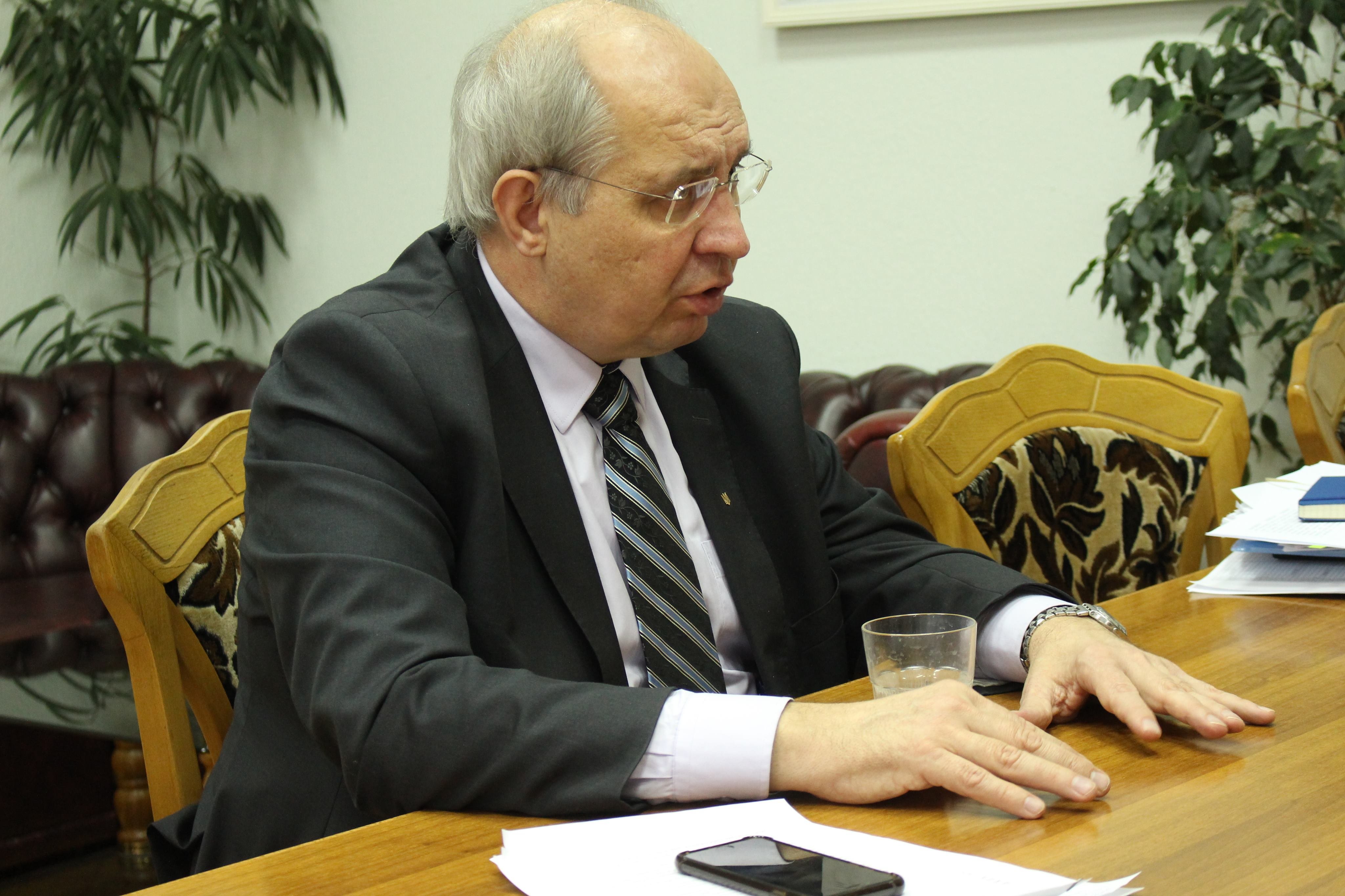
Mr. Pavlo, I would like to start our conversation with NUS…
And that’s the right thing to do.
…since it’s one of those reforms that is actively implemented and is extremely important.
Yes, this is a real reform that will eventually cover the whole school, not just the junior one. It’s not some kind of modification. Our current school is a continuation of a Soviet one, furthermore, in 26 years of independence, there were no global changes, not taking into account content and de-communization. Yes, we have some single schools where they introduced their own techniques. However, now, we’ve begun global changes in the system, of course, it has its own difficulties and critical moments, but believe me, the main thing is to move forward. NUS is primarily about values. In short, we have started the process of transformation of the authoritarian school, which is built up vertically, into the pedagogy of partnership. And I think that it’s a landmark that the process was started just in the year of 100th anniversary of Vasyl Sukhomlynsky, who had started all of it. That is, here we don’t have to look at America or Finland, Canada or Poland, we have our own Ukrainian examples.
I have always said that there will be no changes or reforms of the school unless a teacher changes unless he starts working in a new way. Unless a teacher doesn’t respect children’s dignity, whatever their age is, the dignity of parents and his or her colleagues. On the one hand, a teacher should be a leader and motivate children, interest them. On the other hand, he or she must do this so masterly that the child does not feel any pressure. That is, the learning process will yield results only when the motivation of the child to study will coincide with the teacher’s motivation to teach. If it doesn’t contain at least one of this components, we will have problems. If we don’t have both of them, there will be no result, not only the expected one, we speak about no result at all.
In October, it was announced that an online course for School principals “School Management. Workshop” was launched. How does it correlate with the principles of a new Ukrainian school?
We have the same schools, the same teachers, we’ve slightly changed the learning environment in the first grade and we want the school to become new. And for this, in addition to improving the skills of teachers, you need the leadership of the school principal and his deputies, only they can carry out this mentoring, or, as we now say, supervision. It is the principal with the head teacher who should contribute to those changes and transformations that must take place in the teacher’s environment, accompanying this process. To do this, in the 2019 budget, there are funds for the teachers’ professional development, so that the school council can order those coaches who would work with the whole team to change the culture of the school.
And how much money was given for exactly this thing?
In total, 247.2 million hryvnias are set in the budget for education. Almost 300 million are foreseen for teachers’ training. To train one teacher 300 hryvnias should be spent in average. Although it’s not too much, it is only the beginning, which will enable us to see how exactly schools will use that funds, that is, what effect it will bring.
And, of course, we need courses and work with directors, which should take place at the level of, let’s say, regional departments of education. I will give an example of the Lviv region: there the head of the Education Department made an academy for directors, where she had already held several training sessions. From the entire region, they’ve gathered 100 directors who have expressed a desire to undergo such training. Coaches for this purpose were invited from Kyiv, Odesa, Kharkiv and other cities, where there are people who are capable of conducting such workshops. Then there was another session – the all-Ukrainian one, so Lviv has already trained 200 school directors.
No matter how sad it is, but at this very stage, the capacities, even more, human than financial ones, are limited. So far we are working with principals who express such a desire on their own without being able to reach those who are still resisting.
Are there many of those who resist?
The reform has a very wide support. According to the survey conducted in the educational environment, 72% believe that reform is needed. If you take other 28%, then some of them haven’t determined yet. But, as for me, the resistance is represented by 10-15%. They say that this won’t last for a long time, it’s just another campaign, they may say whatever they want and we have to do what we have to, and so on.
All this work is primarily aimed at creating a comfortable environment for a child in school. But if we’re talking about comfort in schools, you can’t ignore the problem of bullying…
In the spring of this year, Nick Vujicic visited Ukraine. The man was born without arms and legs but still, he managed to succeed. So, especially for kids and teachers, he held meetings, which we recorded on the video. We made several films about what it is bullying, how to deal with it and what to do in the case when it happens to your child. All materials on this topic are available on the Ministry’s website under the “Safe School” section.
However, in our first new schools, projects on countering bullying were implemented, the problem actually hasn’t appeared till now. This phenomenon is widespread in schools all around the world, not only in Ukrainian schools. Unfortunately, the worked out practice has not always spread to other schools. Moreover, often after the end of projects, they are forgotten in the school where they were implemented. Although the worked out materials don’t vanish, and we will use them. Therefore, MES issued an order, which describes the algorithm of action in the cases of: on the one hand – bullying, and on the other – violence in the family, because often child needs to be protected from this. There are psychological services in schools, and they have to work with it, to find out the reasons, counteract.
Here, in fact, we need to talk not only about bullying but also about security issues in general. As for the bullying, children that appear to be a victim of bullying usually withdraw into themselves, lose the desire to go to school, become nervous, which prevents them from learning the things provided by the program. Therefore, for the Ministry of Education and Science of Ukraine, the war on bullying in schools is among our priorities. By the way, this negative can be not only among the children but also among the teachers…
It happens that teachers or school principals start bullying parents, whose position is, let’s say different, from the desired one. There is a well-known Odesa case when the school director bullied the mother of one of the students…
Unfortunately, it also happens. It happens that teachers are harassing their colleague, or school principal bullies some teacher or a teacher targets some pupil. The thing is that values are very deep and they don’t change after the 10-day distance learning course we provide teachers with. The values that worked in the school before are not changed at the drop of a hat. If a teacher used certain standards and approaches in his work, he had certain stereotypes and they are not so easy to break. So time is needed, and we understand it. Speaking about bullying, a relevant bill on countering bullying should be considered and adopted by Verkhovna Rada in the nearest future in the second reading. This document, which is very important, states the responsibility.
What kind of protection mechanism against bullying at school we have now, while there are no legislative tools for this?
In the case, if the child was pushed around and the parents know about it, they should immediately contact the class teacher, explaining to him what is happening. However, not always, a teacher can help, because he doesn’t always have a real influence among children. Then the class teacher should speak to the parents of those children who are bullying a classmate or other kid in order to make them influence their son or daughter. Because the upbringing of a child depends not only on the school but above all it’s a work of the family. In the most severe cases, of course, you need to turn to the police.
If there is an effective self-governing students’ organization in the school – and we need them everywhere today – these youth movements can help to solve the problem, because, in fact, informal school leaders may sometimes have a greater impact on such a school hooligan than adults. This’s very important when you act horizontally and communicate in one language.
From next year, an educational ombudsman should appear in Ukraine. What powers will he have?
So, the legislation stipulates his appearance, there’s already a statement on him and the procedure for appeal. For a new institution of an educational ombudsman, funds were budgeted for the next year already. And what will he do? If the right to education or any law on education is violated, a person may file a complaint with an educational ombudsman. Also, it will be possible to address the issues of bullying, about which we are talking with you right now. This service should protect the rights of schoolkids and students, their parents, educators, and academics, that is, all those who are close to the field of education. Although it is clear that it’s impossible to consider all complaints in a blink of an eye, the service should become one of the effective tools for improving the quality of education, in particular, the microclimate and security in schools.
In one of your interviews, you said that NUS will give the first real result in 2 years and that this philosophy is interesting for children. But if there are 35-37 children in the classroom, it’s an incredible pressure for teachers. And if this problem is not resolved, they will eventually diverge, in spite of any funding. Why not limit the number of children in the junior school, let’s say, to 20, maximum 25?
We can really see the overall results after the first round. We have started the NUS all over Ukraine this school year, that is the first classes. But we have the first results – in that hundred schools that last year had become innovative and now they are teaching second-graders. On the one hand, because of the competition, for the pilot project only the best schools were selected, they signed agreements with parents, because otherwise, you can’t enter the experiment if there is no consent of the parents. But on the other hand, the first results are already there. These children are not shy, they easily raise questions, move and, most importantly, they want to go to school, there’s no need to drag anyone there. These techniques did not take away their desire to study and to be in the team already from the very first grade, and this is a matter of health. This can be seen as the first serious positive.
It can’t be said that this happens in 100% of these schools, value changes can’t take place in half a year. Precisely because of this the ministry is introducing supervision now. At the meeting of the Cabinet of Ministers on December 5, amendments were made to the resolution so that we could pay the coaches’ work. I have already been in contact with primary school teachers, those people really liked the philosophy of NUS and they themselves can be coaches. Recently, I’ve visited a wonderful school: both the design and the attitude towards children, and teamwork, it’s all there. There are some elements in those schools where in development of teachers less money was invested. Therefore, at this stage don’t accuse teachers that they don’t want to do something – they are still in the process of reconstruction. Therefore, this coach will reconstruct and help his colleague to comprehend it. And here you better not to blame teachers, for they just need help.
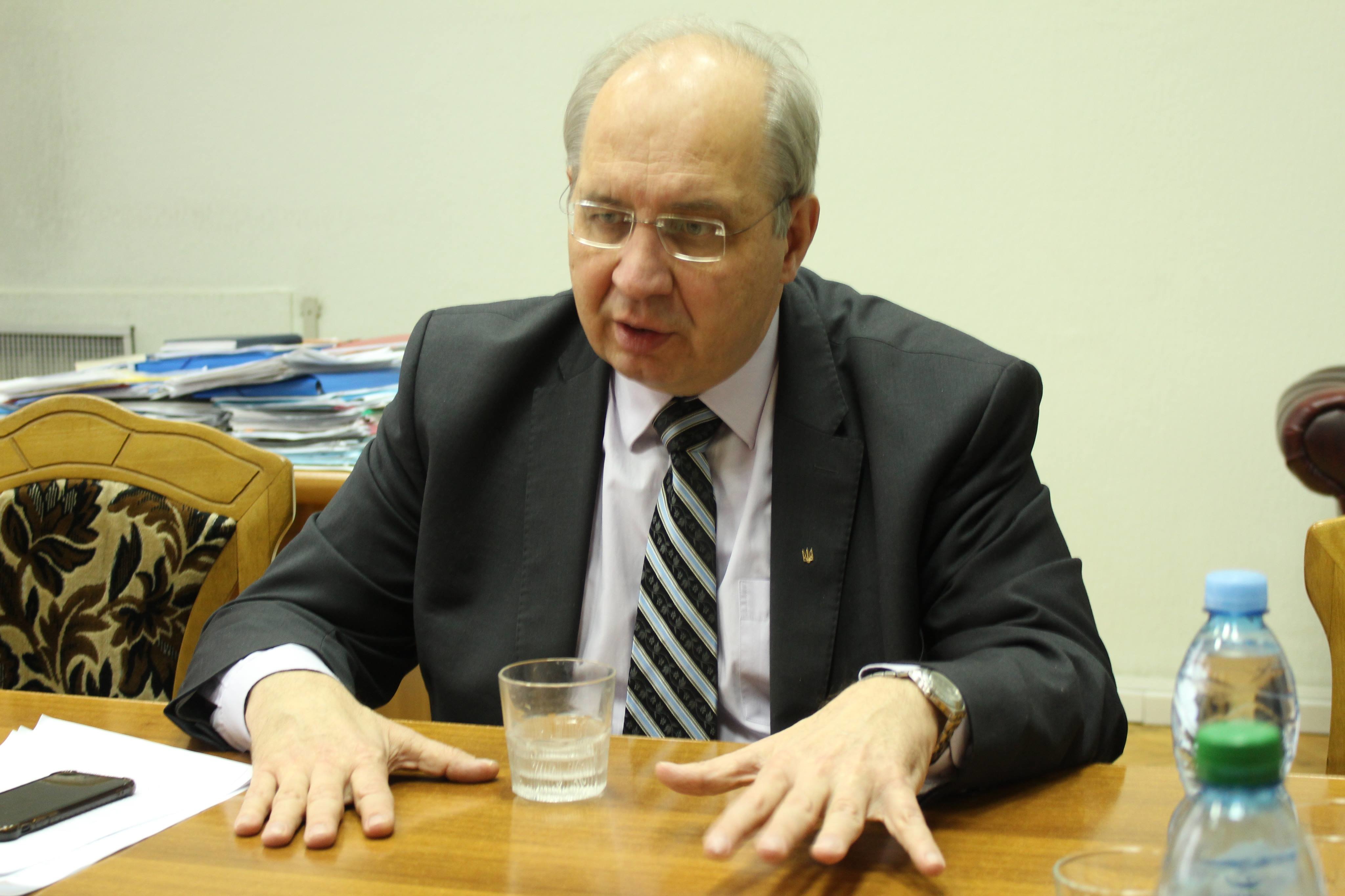
That introduction of new approaches in the work of teachers takes time, it is natural, but this won’t reduce the number of pupils in classes…
First of all, it doesn’t play a role for the senior school, but for the junior one, it would be very useful if parents started assisting teachers. That is, they just need the help of adults, even on the level of rearranging desks or something else, the teacher can’t do it, especially if there are many children. As well as work in numerous groups, they need help, and the teacher can’t be everywhere. Of course, it’s harder to work in those big classes, but in general, teachers say that it’s interesting to work, although their workload is much bigger than in the schools of the old system.
Recently I’ve read on a social network the post of one teacher, who wrote: I adored my work, but now in these few months of work within the NUS System, I hate it… Can you create a comfortable environment for children at the expense of teachers’ overload?
I will tell you what might provoke that attitude: the expectations of this teacher could be greater than it turned out to be in reality. Let’s say, somewhere copiers and another equipment necessary for work was bought, however, they hadn’t bought the paper. Materials that are required for the child’s education, are on our website in electronic form, but they need to be printed out. And then it turns out that they lack something else, although it was promised to be bought for budget money. The system needs to be worked out. So, again, we’re returning to the role of the director and his deputies, who must resolve such problems. Because if you help a teacher in his work, then there won’t be such problems. And if you didn’t give anything, and you just demand something from a teacher, it is obvious that he will hate.
NUS is not only schools in cities where we have more chances to bring them in order, but it also concerns villages. How those rearrangements were done? By whom? For example, I was told that in the Kyiv region, in those schools where they still have no first grade – the educational space was arranged with the help of their own resources and funds…
Of course, NUS is entire Ukraine, 22 thousand classes. And in places where there were no first-graders, they indeed did rearrangements on their own. The thing is that the billion allocated by the government in 2018 for the introduction of NUS is not enough for more than 16 thousand Ukrainian schools. Therefore, from the outset, it was about co-financing with local authorities, and these funds were aimed specifically at the first grade. Now, we’ve placed a billion for NUS in the budget for the 2019 year again. And we will gradually buy everything necessary, and in 4 years, when the first cycle of elementary school will pass, this educational space will be made everywhere. This year, a billion worth subvention was distributed as follows: 400 million was spent on furniture, another 400 on educational material, and the remaining 200 million was spent on equipment with the help of which schools can print out materials, that is, so-called printing factories. And Ms. Liliya (Minister of Education and Science – author’s note) insisted that in the first place rural schools, where they have nothing, should be provided with new furniture. It’s not a secret that parents and sponsors helped to solve these problems in cities, and the situation is more complicated in the villages.
By the way, Lego, which is needed to ensure the educational process, has been already received by all schools without exception, that is, everyone has that 6 bricks. These playboxes arrived in village schools, however, if the school is small, then it was not for the class, but for the entire school. Now we will teach and we are already teaching how to deal with them, how to arrange children, how to make them interested.
You’ve mentioned Lego, and parents are interested who should disinfect it, how, after all, to rearrange desks and wash rugs?
This is nonsense, which I’m frustrated to hear. Representatives of the Lego Foundation company taught the teachers how to use this tool, after all, it’s not just a toy that was given to children to play. So, we plan to conduct a study to find out how effective the use of lego is. If there are no positive effects, we aren’t going to order it, because it is a very expensive pleasure for which the state doesn’t pay anything. Maybe only local authorities are busy to bring it from Kyiv to a particular school. As for disinfection? Do we disinfect books used by children or desks and chairs on which they sit? Lego is made of a plastics, which can do no harm to the health of a child. So don’t look for problems where they’re absent.
A few months ago not everywhere there were desks and textbooks for first grades. What do we have now?
Textbooks are everywhere now. The fact that they weren’t at schools on September 1 was not a big deal: it was an adaptive month of studying when a child gets used to school, and everything needed could be printed out from the Internet. And for the second quarter, all the first grades were supplied with textbooks. We just finishing to print second part of textbooks “Ukrainian Language” and “I explore the world”, which will be used not earlier than the second term, that is, from the middle of January next year.
The situation with desks is different. There’s a prime minister’s order that we should arrange a meeting with producers because the following happened. When such big money was allocated for the furniture for the first grades, our factories, which won contracts in each region through the system Prozoro, were not ready for such volumes of production, because the government hasn’t made such investments in the development of school environment. In fact, the money was distributed as follows: furniture was proportional to the number of students, computers and printing factories – in proportion to the number of schools, and educational materials were given in proportion to the number of classes. According to these proportions, funds were received by self-governing units which held competitions for contracts. And not everyone managed to cope with it in a timely manner. On the one hand, it happened because they’ve launched the competition too late. On the other hand, prices had suddenly started to rise. So the Antimonopoly Committee will still investigate what and why it happened to prices. Another bad thing: some manufacturers promised furniture of one quality and provided us another one, so we had to return it. All this led to delays with the supply of that desks. But in fact, it’s better later, but of a better quality. As for today, from this billion, over a million of unused funds are left in the regions.
Do you know how many elementary school classes don’t have new desks at this moment?
It is difficult to accumulate such statistics. You see, the primary task was to equip the schools that needed it the most. And if in school desks were bought a year or two ago, why should we change them? It’s important to approach the procurement process wisely, and not just to spend money thoughtlessly.
Nowadays difficulties arise in the places where they have double desks. They are quite heavy, and a teacher should organize the educational space. Therefore, it would be great if we had a teacher assistant in those big classes. But so far this is unreal because money for this was not provided in the budget. Even though we have this idea. Especially, assistants are needed in those classes where children have a low motivation to study, for example, in depressed regions.
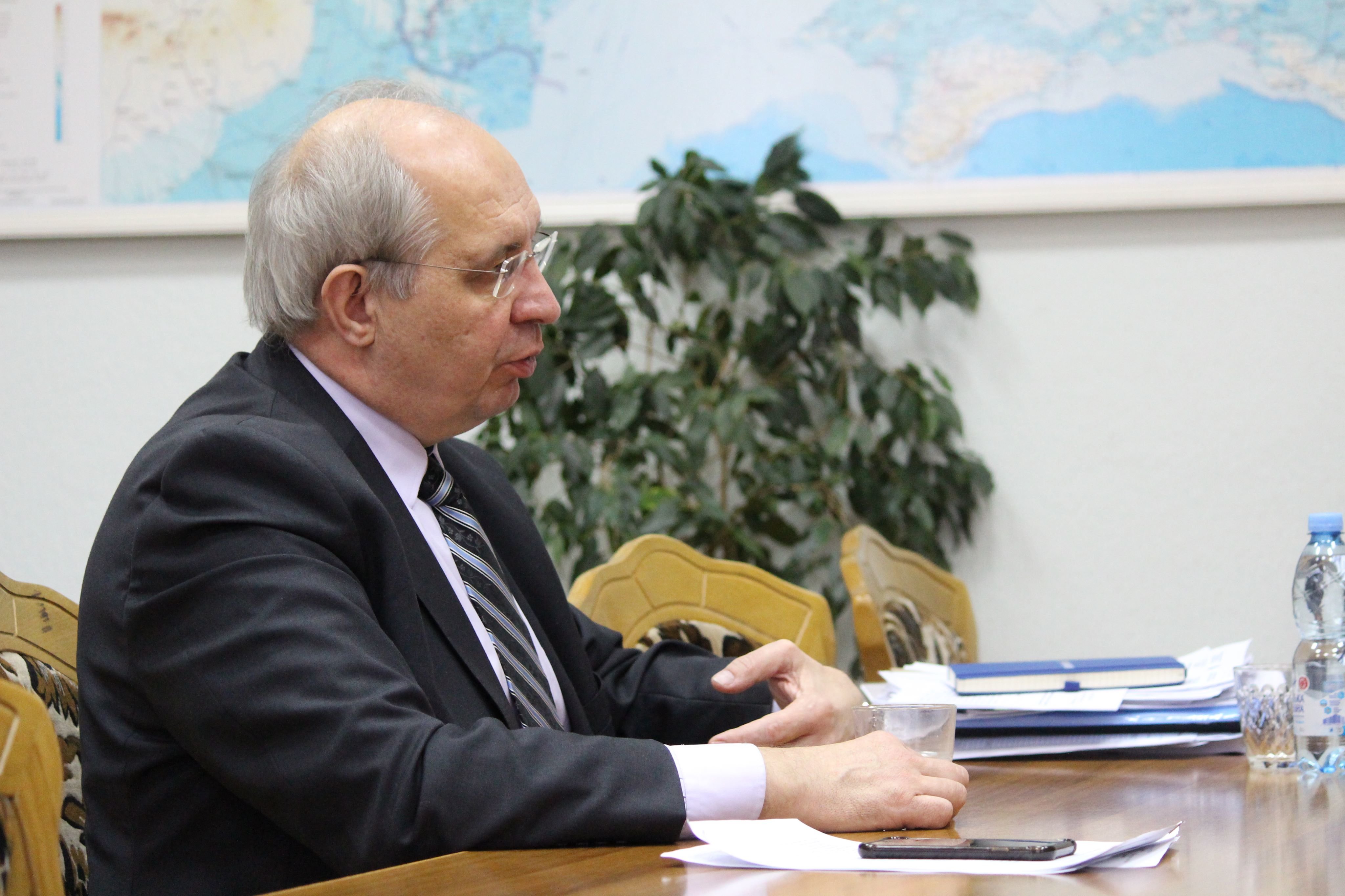
Teachers of elementary school were retrained at a fairly rapid pace, and it is unlikely that everyone immediately perceived everything as it was thought. So does the ministry plan to monitor them somehow?
No. We are planning a mentoring, which we call supervision, but it’s rather a help and not monitoring at all. As for the fact that not every teacher perform in a new way, then we must work on it. And here we come back to the principal and the head teacher – it depends on them how the educational process in a particular school will be organized. Now they are employers of this person. That is, on the one hand, you can’t fire a person for the fact that he or she is not overwhelmed with the philosophy of NUS. There is no such article in labor law. And everyone knows that.
But what can be done: you can transfer this person to aftercare, keeping the number of hours that he or she has. And these things should be done by the administration of the school because the principal is entitled to give one or another task while maintaining the workload. Parents’ attitude is also important. It can bring some pressure from the bottom, helping the teacher to change. Recently, the quality assurance state service has made audit, they tried to figure in the regions, whether teachers were trained, how this billion of subventions was used? What did they buy? What they’ve done? How is it used? The results of this study are not available yet, but this monitoring was launched.
Mr. Pavlo, there is an intention to introduce external independent certification for teachers. What will be the mechanism and who will carry it out?
Certification will only be voluntary and will only apply to elementary school teachers, and among a small number of them, as this will be a pilot project that should be worked out at first. Secondly, only for elementary school teachers, a professional standard has been adopted. And on the basis of this very professional standard, we will be able to carry out certification. It will consist of three parts: testing, such as External Independent Evaluation, where you test knowledge on the subject, as well as psychology, pedagogy, etc. You will also have to create your own e-portfolio.
And the third part, it’s when appropriately trained experts go to classes and communicate with parents whose children are taught by teachers that are certified. They will be watching their colleagues, how they teach, how they communicate with children, and so on. Some 1,000 teachers will be able to take part in such pilot certification. And those who succeed in it will have a bonus – a 20% salary increase. Therefore, as for me, there is a motivation to certify for those who believe in their strength. And we want the best teachers to take part in it. If we’re doing something wrong, then they will prompt us, and we will make adjustments. After all, the man who makes no mistakes does not usually make anything…
By Larysa Vyshynska
Photo by Olena Usenko