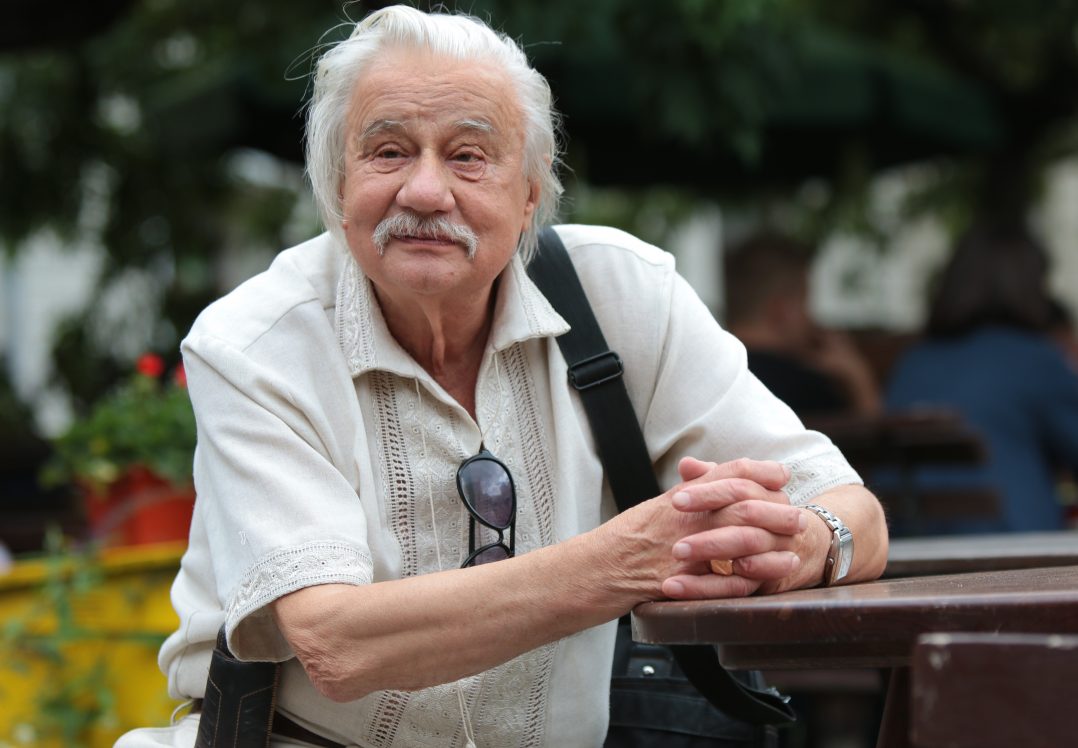


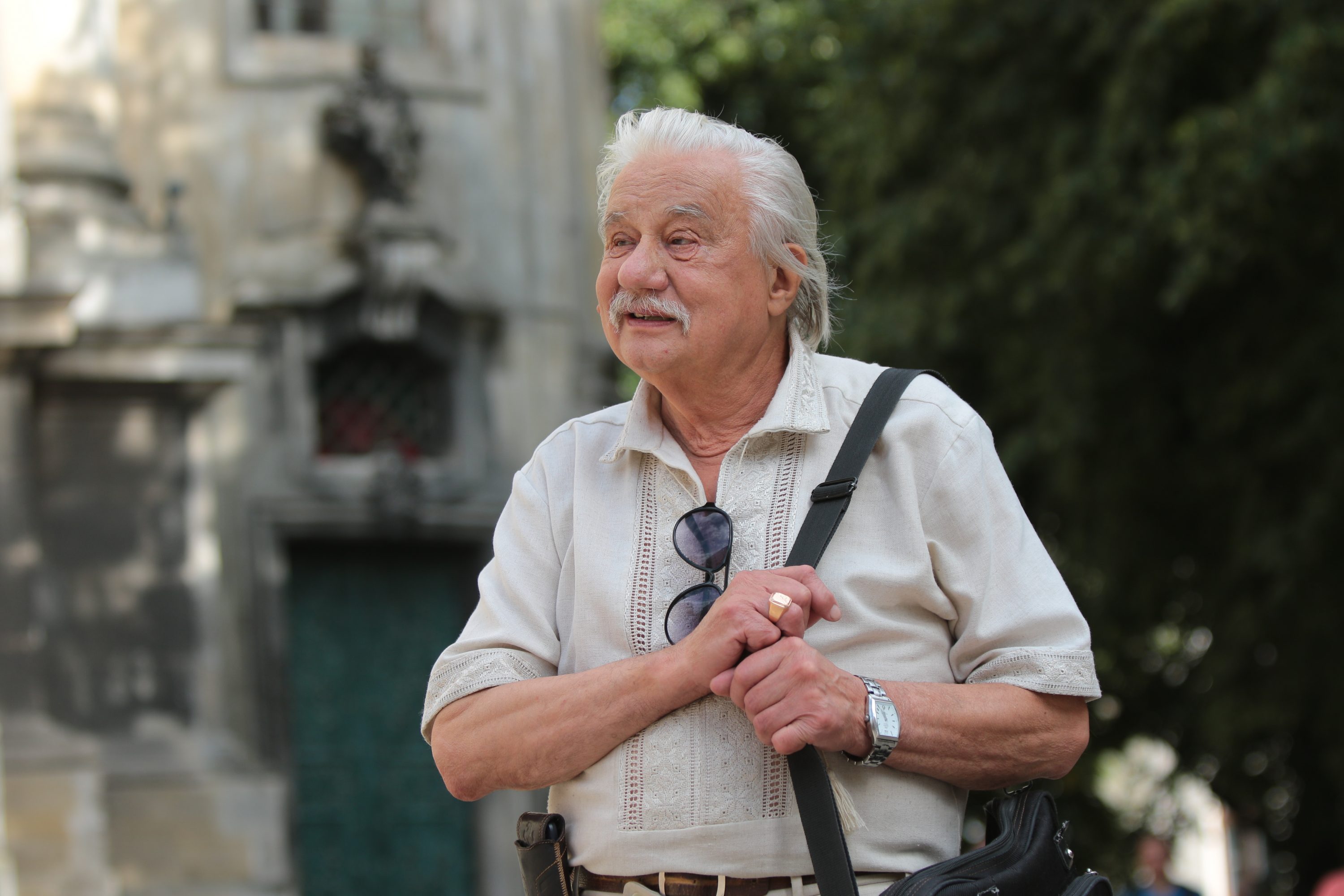
Ukrainian poet, dissident, political prisoner Ihor Kalynets told DUMKA why he felt happy in the camp, why he didn’t write propaganda poems, what political power affects him in Ukraine and other interesting things.
How is life, Mr Kalynets?
I don’t complain. As a widower, I have managed to arrange my life properly. During the last three years, I have published 12 books, 8 volumes of my wife, Irina Kalynets. I work a bit at the International Centre of Education, Science, Culture and Relations with the Diaspora of the Lviv Polytechnic Institute. I can cook. Dzvinka [Dzvinka Kalynets-Mamchur, a poet’s daughter – ED.] sometimes brings me something. Some friends also help. I love sweet cherries, I am just obsessed with them. When I was serving my time in camps, I had a dream – to eat cherries and sweet cherries. But when I came back home, I happened not to be able to eat cherries. I gained some problems with my stomach in the camp like almost everybody who was there. I have a hyperacidity. I can’t eat cherries. But I can eat sweet cherries. I don’t drink coffee, but I go out for a coffee.
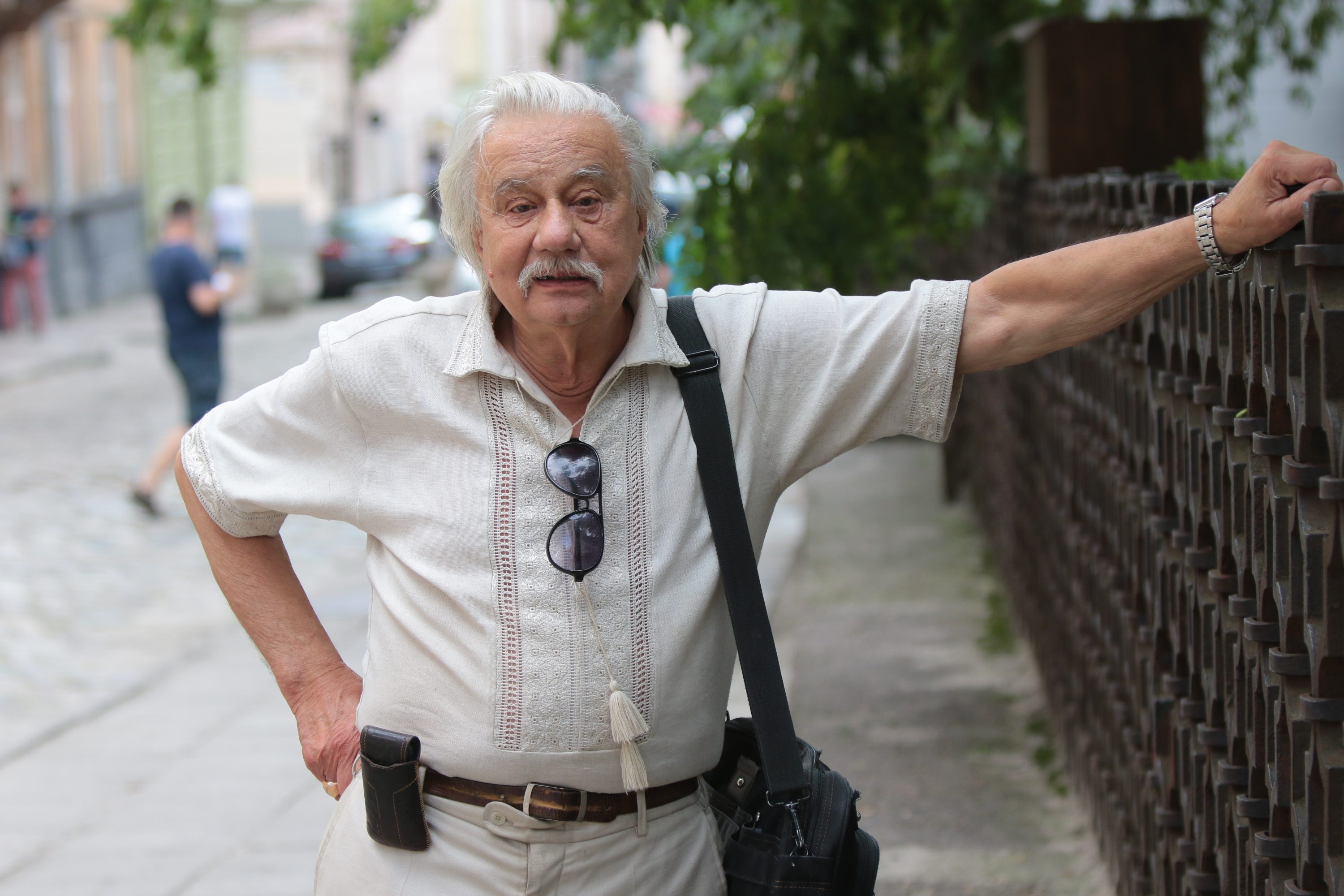
You mean, it is kind of a ritual?
Yes, kind of a ritual. My friend, Mykhailo Manuliak, a musician, goes out for a coffee every day, he can’t live without it. I just can sit beside him and watch how he drinks it. I have problems with blood pressure after the camp. That’s why I drink only tee. After coffee, my friend and I go to the publishing here, in the downtown, or to the bookshop, where there are my and Irina’s books. I get on well with shop assistants. Many people know me in the city, but they are mostly seniors. They remember me not as much as a poet – because I doubt whether they read me a lot – but as a leader and participant of many meetings. I was active in the 1980-90ss. I am also invited today to different meetings. But I refuse, I say that I have nothing to say and show anymore. But I am still invited. That’s why sometimes I can’t cross a street in Lviv. Young people are unlikely to know me. They don’t attend any meetings, don’t read books. I am living out being known or acknowledged, or it is just memories about me of the Lviv community.
Do you follow political developments in the world and Ukraine?
Yes, I do. In the coffee shop, where we gather with friends, there are men who follow political news on the Internet. I follow only on TV, and I can hear news from them which I don’t know, which is interesting for me, which is discussed on the Internet. We have very different views. For example, I have a neutral attitude to the President Petro Poroshenko. On one hand, I can imagine what it would be like with our army and diplomatic relations without Poroshenko. On the other hand, I don’t like all those HR, Ukrainian language, cultural issues. I even refused from an Order of Yaroslav the Wise or something like that. I said that I protest against his language policy. I have a friend, he is a respectable guest at our coffee meetings, he is a lawyer. He believes it would be terrible without Poroshenko. Sometimes, we agree, sometimes, we have to agree.
What is your opinion on the situation in the East, what are the perspectives of the Ukrainian-Russian war?
I have to think that we will win. What can I else do, how can I live if I don’t believe and dream of victory? I don’t have such bravado, but sometimes I think – why don’t our soldiers attack and answer symmetrically? On the other hand, I realise that such actions would give a free hand to Putin in beginning a more powerful war, which we can lose.
Can they destroy us inside the country?
They are destroying, as you see. Because many people in Ukraine want one more Maidan. Although I say to such people – you will just let Putin act this way. If we make one more Maidan against the current government, which we don’t like, but we have to support and handle it.
Will you vote at the next elections?
Yes, I think I have to go. But I don’t know yet who I will vote for. I can’t see such a political entity or just a particular person. I used to support the Svoboda Party (Nationalist party). I thought so. However, Svoboda couldn’t handle it, it spoilt, it took a strange position… In a nutshell, it destroyed itself.
Even so?
Well, what has remained of it? Maybe, some decent men who are in the East now. For example, Yurko Syrotiuk, I respect him. But there are few of them. However, I don’t see any nationalist party, at least here, in the Galicia. I have been a nationalist since my birth, I grew up in a nationalist, patriotic environment. A nationalist, patriotic, Bandera movement has always been close to me. I wish there was a party like the Organization of Ukrainian Nationalists. But unfortunately…
Valentyn Moroz, a famous former political prisoner, shares your thought.
Yes, that’s why I don’t understand the position of Stepan Khmara, who is vehemently against Poroshenko. I see and hear it on TV. Mr Khmara sometimes crosses the line. Well… I have always been against the mayor of Lviv, Andrii Sadovy. But he is still very tolerant to me. I am an honorary freeman of Lviv, and the mayor takes it into account. However, he says I am rude and so on… I was against Sadovy because he was, for example, against the monument to Sheptytsky, we were fighting. We had some more arguments. I don’t know candidates for mayor that’s why I can’t say who I will vote for.
Are you in touch with your literary contemporaries? By the way, are you a member of the Writers’ Union?
No, I am not a member of the Union. As for my literary contemporaries, I knew Iryna Zhylenko, we got on well. I wasn’t close to Drach. I communicated a bit with Vinhranovsky. When he and Ivan Dziuba came to Lviv in 1962, they impressed us a lot. After that, I decided to write. Because before that, I had been… Well, what a philology student doesn’t write poems? But I had never thought it could be serious. In addition, Pavlychko was trying to steer us onto the wrong path: he said if we wanted to write a good poem we should write 10 poems against Bandera movement, nationalists, Eastern Catholic Church etc. He brought up some writers that way, as Lubkivsky, for example… In other words, he perverted many young writers. I didn’t want to write that way. I didn’t want to enter that Soviet literature at all to drag my name through the mud for the sake of one poem about language or whatever. But when such people came to my city, it helped me to begin moving. I started to write. I wrote as I could. But I was writing sincerely. I mean, I haven’t written any propaganda work in a Pavlychko style.
Did you know Vasyl Stus (Ukrainian famous writer, dissident, died in prison because of starvation)?
At first, I knew him but we hadn’t met. I saw him in Kyiv once when Zhylenko was taking me to different meetings. And we came to some Taras Shevchenko poetry reading. It must have been 1964. The event was forbidden, and we came to a park. There, I saw and heard Stus for the first time, he was reading something. I don’t remember what exactly, there were many performers. After that, I was following his activity from Lviv. Until he came here for Christmas in 1971. We met then, and he came to my and Irina’s place. He was at our place on Christmas.
What person was he?
Iryna wrote about him in her memories. She even communicated with him through those camp wires in Mordovia. They could throw notes over walls, shout something. I didn’t know him well to give him a characteristic. I liked him in Lviv then, I was just hanging on his words when he was telling something at our place, it was so solemnly… But we had no time to become closer.
Do you recall the camp from time to time?
Yes. Especially now. There is a film which people from Lviv have recently made “Ihor Kalynets. The Enslaved Muse”. Many people have watched it already. I gave this film to Vasyl Herasymiuk, a poet, a showrunner on the Culture Channel in Kyiv. It is a good film, not because it is about me, it is just good. I don’t know whether Herasymiuk has shown it.
What was the hardest for you in the camp?
It is hard to say. Everything was hard, and everything was good. We had a good companionship. We communicated well. We fought the worst moments with our communication, humour, jokes, work. Well, we felt good. We were reading a lot, subscribed to all newspapers and magazines we could, books – “A Book by Post”. To catch up with those who are on the outside. It was hard because we had to fight for our rights. We wanted to be treated as political prisoners. We required such a status. We didn’t have such rights, and our protests ended with terrible pogroms.
Did they beat you?
No, they didn’t. But we were deprived even of those poor soviet rights. We were sent either to prisons or deprived of visits. I was deprived, however, my mother with Dzvinka came.
Was the food OK?
No, they gave us mostly soups and porridges. Porridges caused stomach diseases. I can’t say we had nothing to eat – we had bread, food was warm and so on. But I was always hungry. I was lack of something to feel full, even though I could eat much food. The creators of “The Enslaved Muse” film tried to show something of that.
You were in camp with political prisoners. But during prisoners transporting, you met some real criminals. You are a young intellectual Galician person. How did you get on with them?
Yes, I met some of them. When we were being transported, it took almost a month to take us to the Ural where I was. They separated us, political prisoners, from others. Criminals treated us in different ways. Some shouted out “Lead us to the battle!” Others took away our belongings. In other words, we didn’t know what to expect. Whether they kill you while you are on your way or something else. It is interesting that Ivan Svitlychny likes trains. He said that he liked communicating with criminals. He began talking to them, persuaded them or what…
Did they try to hurt him?
No. He was calm. I was in the middle. Neither this nor that. They didn’t beat me but took away my belongings. When I was on my way from home – I was taken to rehabilitation – I was allowed to put everything I wanted in those rucksacks. I always had to share it with criminals.
What does rehabilitation mean?
Well, they had such a thing in the KGB: when you are already in a camp, they take you “for rehabilitation”. They bring you to your native heath. When I was brought to Lviv – and I had already known about some peculiarities of the “rehabilitation” – I wrote: please give me an opportunity to visit a theatre. Or something else. To have a TV in the ward, access to friends.
Were you imprisoned during rehabilitation as well?
Yes, in the KGB prison. What was I doing? I was reading, tried to write something. I wrote the list of writers and dissidents-sixties who were on the outside and whom I would like to meet. They brought Mykhailo Horynia, we had a meeting. As for writers, they brought Mykola Ilnytsky. I had a bit funny dialogue with him; I was showing off – what heroes we are there and so on. He was very modest and shy man, he couldn’t say anything as there was a KGB agent with us. Later, we laughed at it.
Did you then return from “rehabilitation” to the camp in the Ural?
Yes, I returned. I lived there, read books. Then I had a meeting with my parents, with my child. It was the most important. They were blackmailing me, of course. I was advocating for Iryna’s release. I was writing reports that if two parents are imprisoned, one of them should be with a child. Our daughter was in Lviv with her grandparents, Iryna’s parents, in summer, she was with my parents in the town of Khodoriv. KGB agents demanded to give them my confession so they would release me or my wife. But I didn’t agree. As for my demands during the rehabilitation, they put me in a big car (there were KGB agents with me, of course) and drove me across Lviv so I could see new buildings etc. We were driving by my house…
Was it hard psychologically? Did it hurt that you couldn’t be free, drink coffee, beer?
No-no. I felt differently, I already lived in another world. It hurt because my family was close. My daughter came to visit me, with my and Iryna’s parents. By the way, parents understood everything. They knew who we were and what we had done. Naturally, it hurt them that we are not at home, under bad conditions, but they understood everything.
Did you have famous co-prisoners?
Yes, there were many people. Svitlychnyi, Mykola Horabl, Zynovi Antoniuk, Yevhen Proniuk. Taras Melnychuk, a poet, was serving time in prison for 18 months with us. He was an interesting man, very nervous. He had to drink strong tee the whole time because he couldn’t do without it. He was writing much, he could finish a notebook in some hours. I was criticizing him a bit, I said, “Taras, return to those poems, choose the best ones and throw away the rest.” We communicated on the outside later. We even received the Shevchenko Literature Award in the same year. It happened in the culture palace “Ukraine”, I guess. Taras came on stage without shoes. He was telling something like that there… “All rise! The court is in session!” Something like that (laughs).
There was also Semen Hluzman with me in the camp. He became attached to Ukrainians a lot. Though he didn’t study Ukrainian. Well, he didn’t study any language (laughs). There were many Jewish people in the camp. They were studying Engish and Hebrew. And he didn’t, he didn’t want. He didn’t have time. As well as I, I had to write poems, read. Hluzman got on well with Jewish people, but he ate and communicated with Ukrainians. Svitlychny was his best friend. No, Svitlyhny was like his father, and Valeri Marchenko was his best friend.
What is your attitude to awards? Are they important to you: Shevchenko, Nobel Prize – you were a nominee, I guess?
Well, the Shevchenko award was a true euphoria for me. But I didn’t crave for it. I saw that Boris Antonenko-Davydovych was on the list of nominees. I wrote to the Literaturna Ukraina literature magazine and asked not to put me on the list, because I couldn’t be in front of Antonenko-Davydovych. I was answered that Antonenko-Davydovych and I were in different nominations, so I agreed. Well, I didn’t ask for the award. As for the Nobel Prize, it all was against my desire. Later, I learnt that I was in the top 10 of nominees. It doesn’t matter whether I received it or not. Perhaps, it is for the good. I don’t care about it. I have always been saying that the most decent possible nominee for the Nobel Prize from Ukraine is Vasyl Holobordka.
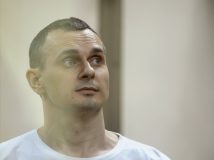
Oleh Sentsov, a director who was illegally imprisoned in Russia, is starving now. Do you follow what is happening around him?
Yes, it is terrible. I can’t even imagine that. Our guys were starving for a long time in camps – for example, Valentyn Moroz. The longest hunger strike in our camps lasted one month. However, after about 20 days they fed us through gastric catheters. We had some protests: we gave up our Soviet passports. Sentsov has been starving for so long… How can he give it up? It is terrible. I am afraid even to think of it, how he handles it.
Interview by Pavlo Volvach
Photo by Yaroslav Tymchyshyn