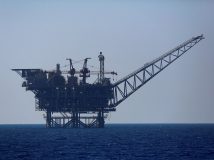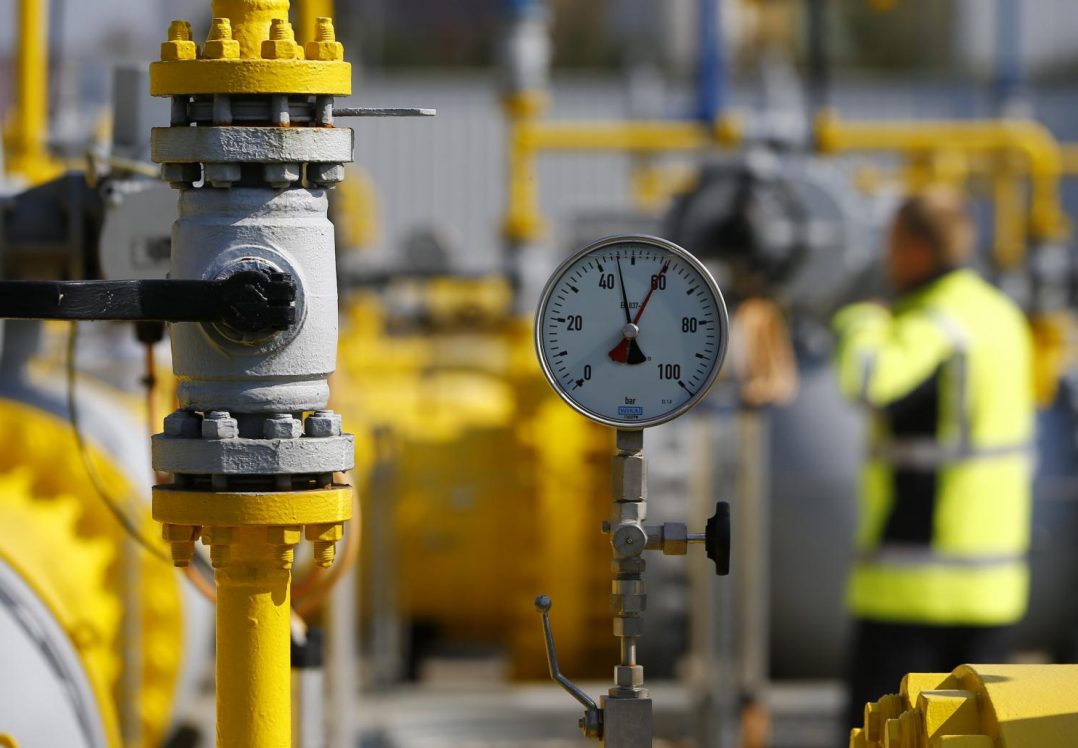


The question of gas prices for the population of Ukraine is very difficult and is situated both in the economic and political spheres. Looking ahead, it should be stressed, that the price of gas in the current situation depends rather on external factors than internal ones, although the internal factor plays its important role. The Ukrainian civil servants, one year before the election, are trying to keep prices at the current level, in order to minimize the risks of a sharp change in electoral tastes. Obviously, the issue of “prices for our gas” will not be missed by our politicians-populists, and if the price increases, they will milk this subject, speculating on the inconsistency of Ukrainian incomes with new tariffs. Nevertheless, Ukrainians should fix one simple position – the times of “cheap gas” for Ukraine have come to an end, and in any government the price will be either close to the market or the market. In other words, we are too poor to buy “cheap gas”, and this is and will be our reality for many years to come.
The inevitability of changes
On August 10th, Fitch Ratings, an international rating agency, made a release that highlighted Ukraine’s high dependence on the support of the International Monetary Fund (IMF). In turn, the delay in restoring cooperation with the Fund is a source of uncertainty and a threat to national borrowing capacity. In order to resume cooperation with the IMF and obtain a fourth tranche of about $ 1.9 billion, it is necessary to fulfil a number of conditions, including increasing the prices for natural gas for domestic consumers.
If at the present, the selling price of gas for the population is fixed by the Cabinet of Ministers resolution at 4,942 UAH (excluding VAT) per cubic meter, then the price may soon increase by various estimates from 18 to 60%. At least until the beginning of autumn, the price of gas will not change, because, at the end of July, the Cabinet of Ministers has continued the special commitments (PSO) for NJSC Naftogaz of Ukraine until September 1st, but nobody knows what will be after that. As a part of the rumour speculation, we note that the IMF continues to insist on rising prices, although they seem to agree on a gradual growth, that will potentially somehow reduce the political tension around this process.
It should be noted that one of the indicators showing the inevitability of rising gas prices is the statements of top officials who do not (within their competencies – author) directly decide on price increases but are quite authoritative and influential figures in Ukrainian power engineering. So, the head of the National Commission for State Regulation of Energy and Public Utilities (NCSREPU), Oksana Kryvenko believes, that natural gas prices for industry and for the population should be the same and formed on equal terms. According to her, if people can not pay for gas, then the state should directly compensate for the difference in the form of grants, but the gas market should work with market prices. A similar position was taken by her predecessor, Dmytro Vovk, who came under the pressure of public criticism.
Dead Souls of the Gas Market
In addition, except for external factors, there are purely Ukrainian factors, which push the government to raise prices for the population. Last week according to the Ukrainian Energy Exchange (UEE), which is one of the key areas in the trade of energy resources, the price of gas in the Ukrainian market reached 10 thousand UAH. The increase in prices was determined by the rise in prices for key European hubs and the increase in the price of supply on the domestic market. It is glaringly obvious, that the price of gas for the population and the market is in completely different areas, which causes a number of serious problems.
Thus, non-market gas prices for the population restrain the proper level of investment in gas extraction in Ukrainian deposits, primarily by the state-owned mining company “Ukrgazvydobuvannia”. In addition, according to Naftogaz, they create the preconditions for undisclosed earnings schemes by a number of companies, that are operators of gas distribution networks.
Thus, in a recent interview for Economic Pravda, the head of Naftogaz Andrii Kobolev directly pointed out the billions of losses, that the company receives due to manipulation with gas, which is realized on behalf of the population through the system of regional gas-distributing enterprises. In July, their debt to Naftogaz was over 21.4 billion UAH. At the same time, according to A. Kobolev, the regional gas companies recycle part of the gas intended for the population to commercial structures. “I have many facts, that directly or indirectly indicate that the population do not receive all of the gas, that we pass on to them for the population. We found in the database of “Kirovogradgas”, which was managed by a private structure, fake addresses. This is a fact”, Kobolev said. In his point of view, the same scheme, presumably, works with other regional gas companies, which are controlled by private companies.
It would be logical to assume, that if the price for industry and population is levelled, then the “business scheme” of the gas-distributing enterprises will be somewhat violated. And then the question arises whether they will be ready to work according to market transparent rules and whether, as a result, their subscriber base, which, according to Kobolev, has not been seen, will change. The lack of a transparent consumer base instead creates a great field for manipulations and shadow schemes, that drag the national economy down.
In addition, Ukraine, having sufficient deposits of hydrocarbons in the subsoil resources, should actively develop them, and for this funds are needed. If the price for gas will be marketable, state-owned companies will have sufficient financial resources to extend and expand their hydrocarbon production programs. We remind, that the era of “cheap” Russian gas in the past years has led to the destruction of the Ukrainian gas production system, which is confirmed by the miserable technical condition of the digging units of “Ukrgazvydobuvannia” for 2015. The situation has changed somewhat, but the need to increase financing for the industry is on the agenda. In addition, more active extraction of own gas will reduce the import of gas, which will undoubtedly support the exchange rate of the national currency and, in general, will have a positive impact on the economy. To clearly understand this, we take as an example the drilling of one cased hole. So, in order to drill one cased hole, 40 contractor companies are sometimes involved. When simultaneously 20-30 cased holes are drilled, a huge number of companies, people, capitals starts to move, and it reflects in all the economy.
DUMKA talked to experts and market observers to understand how reasonable is the increase in gas prices for gas.

Andrian Prokip, an expert on the “Energy” program of the “Ukrainian Institute of the Future” Analytical Center:
In mass media and social networks, expert considerations discussions on what the price of gas should be for the population, is it fair to expect the next gas price increase has started? Indeed, the cost of gas production in Ukraine is often lower than in the neighboring European countries; 80% of domestic production falls on state-owned companies (and these volumes are enough to cover consumption by the population and enterprises of the district heating company), and the population is unable to pay: the correlation between price for gas and wages is the smallest of the European countries. So, at first glance, the increase in gas prices in Ukraine is unfair and should not have happened. However, you can and should look at this situation from a slightly different angle.
The comparatively low cost of gas production is due to the fact, that most old cased holes are exploited. The low price for gas and lack of market did not actually allow domestic gas production to develop – the lack of investment funds over the years has gradually contributed to the moral and physical ageing of the sector’s assets, and private investors have not had any interest in the development of gas production in Ukraine.
The price differentiation of gas was, and in the end, still the subject of the machinations of individual companies and the enrichment for the oligarchs. Gas intended for the population at a lower price can be chalked up to “dead souls” or to the production losses, and then sold at a market price for industrial enterprises. In addition, the formation of a fully-fledged gas market in Ukraine is an urgent need to ensure the transparency and investment attractiveness of the sector.
And taking such an argument into account, the price for gas cannot remain “non-market”. However, what about justice? The output, in the end, is simple – to combine price increases and social protection. Increasing prices, in the process of introducing market mechanisms in the gas sector, should clearly be accompanied by a system of social protection in the form of grants. Though the grant system itself has to be changed. First and foremost, it should provide actions for saving energy for those, who use grants. A regressive system of granting based on reducing compensation when increasing gas consumption should be provided. And the grants themselves should be monetized. Regarding this, the important problem is that the population often cannot save heat independently – existing systems of heat sharing in high-rise buildings often do not allow to regulate the supply of coolant in a separate apartment.
It is clear, that the proportion of the population receiving grants will increase dramatically and will be significantly different from the situation in European countries. In the UK, the household is considered to be in need of a grant, if the cost of heating the dwelling exceeds 10% of income. In most EU countries, the proportion of such families does not exceed 15%. But, these are our realities.
Increasing gas prices to market levels cannot be an isolated end, detached from social protection. This should be accompanied by programs of energy modernization, updating the system of grants and stimulating the saving of energy use.

Henadii Kobal, the head of the consulting company ExPro:
Our price for gas remains keen than the price for the industry by 30%. If the final price for the population reaches 7 thousand UAH, then the industry pays 10 thousand. This situation will contribute to the fact, that the gas that should get the population will, one way or another, be used by the industry. Two years ago, the price for the population and industry was almost the same, and sometimes the price for the population was even higher. At present, companies, that sell gas under the PSO are in unequal market conditions, for example by private mining companies that sell their resources at market prices. It is obvious, that the price of gas for the population should be revised and corresponded to the market price. In addition, a system of grants for vulnerable groups of the population should work.

Ihor Maskalevych, energy columnist in “Mirror of the Week”:
The price for gas for the population should be at a level higher than for industry, the question of how quickly it is necessary to raise this level. At face value, the process should be gradual. Mollifying price shocks.
However, Ukraine’s specificity is that few of our external partners believe in the government’s ability to withstand such a schedule. Especially during the pre-election period, henceforth, the requirements (IMF, etc.) – “everything and at once”. Moreover, for a couple of years, the prices are artificially kept on the spot.
There is also a question of price pegging. The current formula for pegging to German gas hub (so-called Dusseldorf plus transportation (“Dusseldorf +”) raises a number of issues. In fact, 2/3 of the gas, bare no transport costs within Ukraine (about $ 32 per 1,000 cubic meters). This is a potential reserve for price holdings, that is, the formula “Düsseldorf + 0” or even “Dusseldorf minus” may be.
Text by Volodymyr Dolnyk