

As soon as the price of blue fuel rises, this will primarily entail an increase in tariffs for housing and utilities at least by 1.5 times.
Until now, the gas issue that the Government is trying to coordinate with the International Monetary Fund has not been resolved yet. For a year now it has been keeping Ukraine in limbo. The IMF insists to review gas prices semi-annually so that they are consistent with international market prices. If to go this way, then gas for the population can increase in price by almost 60-70% already in the near future. The options to change the formula for the price of blue fuel, proposed by the Ukrainian side, does not satisfy international experts, so the Cabinet is still looking for a compromise solution.
Recently another formula has been proposed for the IMF consideration, but there is no reaction to it yet. However, experts say that despite the allegedly clear position of the Prime Minister Volodymyr Groysman, who defends a more democratic price of gas for the population, Ukrainians have nothing to do with its rise in price. And therefore, another wave of tariff growth will set off in Ukraine, harming the budgets of most families.
Now a thousand cubic meters of gas cost almost 10,000 UAH for the industry. The tariff for the population for the same amount does not exceed 7,000. The Government offered a variant of a small quarterly price increase, which would not be critical for citizens, and the low-income families would not feel it at all thanks to the housing and utilities subsidies. Another option, according to the Cabinet, is to equalize the price of blue fuel for the population and industry, but for people to establish a preferential one for a certain social volume.
The component of the monetary tranches
However, IMF experts believe that it can be the basis for corruption abuses. Therefore, according to the Prime Minister, international partners want the price of gas in Ukraine to be the same: for industrial enterprises and for ordinary people. Otherwise, Ukraine may not wait for the next currency tranches. “Yes, we are trying to find a formula for the price to be fair and at the same time moderate for Ukrainian citizens, so negotiations continue”, Volodymyr Groysman said, promising price regulation mechanisms or targeted support for those, who cannot do without it.
The increase in gas prices was postponed by the Cabinet until August 1, which continued special obligations for Naftogaz of Ukraine. If this did not happen, the prices would have to be reviewed already, as last year’s decision of the Cabinet of Ministers from March 22 would have come into force. However, this document does not take into account the cost of gas purchases from abroad – the import parity, which the Fund insists on. Most likely, the Cabinet will still raise the price of gas for the population – with the beginning of a new heating season, Gennadii Ryabtsev, the director of special programs of the Scientific and Technical Center “Psyche”, said, then it would be painful for everyone.
As the expert explains, if we now take an economically justified price for gas, then it is higher than the price for the beginning of the past heating season, somewhat by 60-70%. “The same number is also mentioned in the National Commission for Regulation of Energy and Utilities (NCREU). If the gas tariff is increased to the level of imported parity, which turned into a real cornerstone of the problem, then a thousand cubic meters of blue fuel for the population will rise in price from 6,900 to 11,430 UAH. In this case, the price hike is absolutely necessary because the gas component will entail another serious rise in the price of our life, where housing and communal tariffs are not even “the peak of the iceberg”.
Tariff fever has already started
Although the rise in the price of gas is in the long term, housing and communal tariffs get ahead of themselves. The other day the residents of Kyiv were “pleased”: on the official website of “Kyivvodokanal” reported that the NCREU approved the new rates for cold water and water disposal. The residents of the private sector, as well as collective consumers like Communal Services and housing cooperatives, will pay 15 UAH 78 kopecks per cubic meter, where 8 UAH 30 kopecks – water supply and 7 UAH 50 kopecks – water disposal. However, for most residents of high-rise buildings was prepared another tariff – 16 UAH 70 kopecks, where 8 UAH 80 kopecks – water supply and 7 UAH 90 kopecks – water disposal. Interestingly, if the residents do not have a direct contract with the water utilities, the tariff may be even higher – it should be established by a structure (for example, the housing office or a management company) that will provide this service.
They also try to live “in a new way“ in Berdychev, where, without waiting for a rise in the price of gas, tariffs for heat have already been adjusted. The city people were informed about this on the official portal of the CE “Berdychevteploenergo”. Get it on the first try, what was the reason for this step? Correctly, an attempt “to bring the current tariffs to an economically justified level in connection with the growth of prices for electricity and the number of minimum guarantees for labor payment”. And similar examples are a dime a dozen in Ukraine. The gas, economists convince, will add at least 50% in housing and communal tariffs. So, according to the NCREU data, the gas tariff in the cost of heat and hot water is 70%. Therefore, if it rises in price by half, heat and water should “add” to its tariff at least 35%.

“That is, if the gas still gets more expensive, which is very desirable for NAC Naftogaz of Ukraine”, Oleksandr Sergienko, the Director of the Research and Analytical Center “City Institute”, said in the commentary to DUMKA, “This will automatically lead to a growth in tariffs for everything, even for sewerage and garbage removal. The fact is that the gas component is literally everywhere. First of all, a significant part of electricity is produced from gas at the thermal power stations, and this will entail not only the cost of heating and hot water, but also cold water. Therefore, if such plans are implemented, it will be a very tangible price blow for the wallets of Ukrainians”.
And this, the expert points out, will cause an even greater growth of the population’s debt for payment of housing and communal services. “It is still huge,” explains Oleksandr Sergienko, “and then it will become simply transcendental. And in the same way, despite attempts by the Government to limit the possibility of getting a subsidy in any way, the number of recipients for subsidies will increase dramatically, because the budgets of the majority of Ukrainians will be in a catastrophic situation”. According to the State statistics, says the head of the “City Institute”, in the first quarter of this year, Ukrainians spend on food and non-alcoholic beverages amounted to 42% of their budget. “If you add 7.6% to alcohol and tobacco here, we almost go to 50%,” he says. “That is, half of the earned money Ukrainians spend on food. I’m not talking about any expenses that go to rest, to education, pensioners – to treatment… Then it’s unclear what people will have left for communal services”.
Experts note that the increase in tariffs for utility services will mirror the increase in the gas tariff. In addition, the cost of gas directly affects the cost of other energy sources. According to the economic expert Valerii Klochko, it is not yet clear what the policy of pricing coal and electricity will be, and the national regulator has long been talking about the inconsistency of electricity tariffs to an economically justified level. And it rises in price because of inflation, rising prices for coal and gas. If we are talking about the prices for firewood, which are used today not only in villages and towns but also in urban private houses, as well as many budget organizations, the expert adds, they have risen in price from 20 to 60%.
Expensive “technological needs” and appetites of monopolists
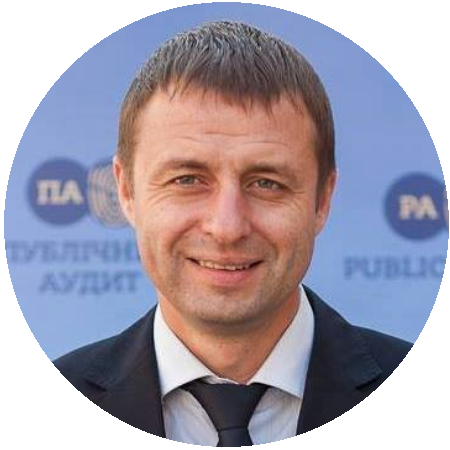
There is another important factor in the tariff issue. It is still common practice, when in tariffs, for example, on water or heat, lay the losses of this resource on the way to the consumer, calling it the technological needs. At the same time, nobody repairs the networks. “What was the level of expenses for technological needs and water losses in the distribution networks of water supply last year, it is unknown,” Taras Galayda, leading analyst of the public organization “Public Audit” explained to DUMKA. “Such calculations are carried out by the NCREU and publish them in its accounts. So, losses of thermal energy on separate enterprises reach 40%, water – almost 60%. And any law cannot cope with this problem, the situation can be changed only after major repairs and/or update of the networks”.
If we talk about what we had last year, then the water consumption rate for “technological needs” takes place – for the water channel in Slavyansk (58.8%). The next indicator is overtaken by the utility company Chernivtsivodokanal with 52.8% and the CCE Lvivvodokanal – 48.2%. Odesa LLC Infoks in 2017 spent on technological needs and lost along the way 27.6% of the water, put into the tariff. In the capital, overpaying for water was at least 19.9% – this is the figure, given by JSC “Kyivvodokanal”.
The geography of actual losses of thermal energy looks somewhat different. At the first stage for 2017 – Kherson region, where 39.9% of the losses were fixed. The second position is occupied by Sumy, with 25.6% of the lost heat. The third one is the Vinnytsya region, where 24.1% of the heat was lost in the networks last year. Kyiv residents overpaid for at least a fifth of the heat (losses – 20%), in Odesa, 16.9% of thermal energy was lost. If we take into account the data for the last three years, that is, from 2015, we can clearly trace the tendency to increase the level of losses. The same Kherson region, which owns the first place in terms of lost heat, lost 20.4% in 2015, 25.4% in 2016, and last year it was almost 40%, that is, the level of losses doubled.
At the same time, they are cynically trying to convince people that tariffs for housing and communal services in Ukraine are growing, because they cannot reach an economically justified level, but what is this “economic level” and why should it be exactly at such a level of losses of thermal energy and water, no one really explains to anyone. As well as not introducing to anyone a transparent and understandable formula for tariff formation, which would be able to convince people in the economic feasibility of tariffs, and not just in the appetites of monopolists.
“Theoretically”, Taras Galayda says, ‘the economically justified level is covering the justified costs of the producer and service provider plus the level of profit necessary for their development, are regulated by the state. In other words, this is the cost price plus the regulated profitability. Regulated by the fact that most suppliers and producers of housing and utilities are monopolists within the territory they serve, and allowing monopolies a free pricing, on the one hand, is dangerous, and on the other – antisocial”.
The expert notes that the amount of payment for ordinary Ukrainian 80% depends on the cost of gas and coal, which are components of tariffs for heating and electricity. “The cost of these resources is now determined by the Cabinet and the NCREU not by the expense method (cost price + profitability), but by import parity, so we see an endless growth in tariffs,” says the analyst of the “Open Audit”. “Now there are two identical formulas: “Rotterdam +” – for the coal of the authorship of the NCREU (ex-leader D. Vovk) and “Dusseldorf +” – for the gas, offered by the Cabinet of Ministers (V. Groysman). Everyone has already heard about the formula “Rotterdam +”, according to which is determined the cost of coal, even carried out investigations of the NABU and the GPU, but the same formula applies to gas”.
The expert explains that the cost of Ukrainian gas for the population is determined, depending on the cost of gas on the German stock exchange, to which the cost of transporting this gas is added (Germany-Slovakia-Ukraine). “This is the formula “Dusseldorf +”, approved by the governmental decree No. 187 from March 22, 2017,” he said. “According to this formula, the Government is obliged to review the cost of gas for the population every six months, depending on the changes in prices on the stock exchange. The same, paragraph 24 is also included in the memorandum with the IMF in 2017. Because of this pricing, Ukrainians pay for gas produced in Ukraine, as if it is being bought in Germany”.
In the “Public audit” it is noted that according to the official data of the NCREU, Naftogaz of Ukraine and Ukrtransgaz, 20.8 billion cubic meters of gas was extracted from the bowels of Ukraine in 2017. At the same time, the population consumed 15.8 billion along with heat and hot water for the population. That is, we have 5 billion cubic meters of gas in excess. “Since the population can be fully supplied with Ukrainian gas, its value is tied to the price of imports, which is not actually needed by the population, it is at least not just, and by and large is a veiled robbery of people”, Taras Galayda said.
Is there any light at the end of the gas tunnel?
On the one hand, some experts say that there should be a single market price for gas because billions of hryvnias are making a difference due to corruption, as foreign experts say. On the other hand, according to the economist Oleksandr Savchenko, at this stage it is possible to go this way, for example, to reduce the price for industry by tithe and pull the price for people to it. In the opinion of Oleksandr Sergienko, there are economic opportunities for not raising the cost of gas for the population in Ukraine. That is, it is necessary to abandon the peg to the import parity, but to take into account the Ukrainian one. And this is the cost of own gas production plus 15% of profitability, and not its sky-high figures, as it is now. Ukrainian parity, experts explain, is 2.6 UAH per cubic meter of gas, extracted from our bowels, including VAT and transportation costs.
“Everything is simple here: it is necessary to reduce the purchase prices for gas and, accordingly, to reduce the prices for its sale,” Oleksandr Sergienko says. “Since gas for the Ukrainians is a necessity, the state, considering that there is no gas market in Ukraine, and there is a monopolist – Naftogaz, should regulate its consumption and value. Almost 80% of gas is produced by the state-owned company Ukrgazvydobuvannya. Naftogaz buys it, with a few exceptions. That is, it can be due to the cost of gas, which NAC Naftogaz buys at Ukrgazvydobuvannya, to reduce this cost, and accordingly reduce the cost of gas for the population”.
According to Oleksandr Sergienko, this is important for the industry, since many industries (for example, metallurgy, chemical fertilizers, etc.) are “tied” to gas. “Its cheapening would lead to an increase in the level of competitiveness of these products,” the expert explains, “but the monopolist cares primarily about itself, not about the country and especially not about people”. Just like in the Government, they are unlikely to listen to such a position, since it is fraught with the loss of international monetary assistance.
Text by Larysa Vyshynska