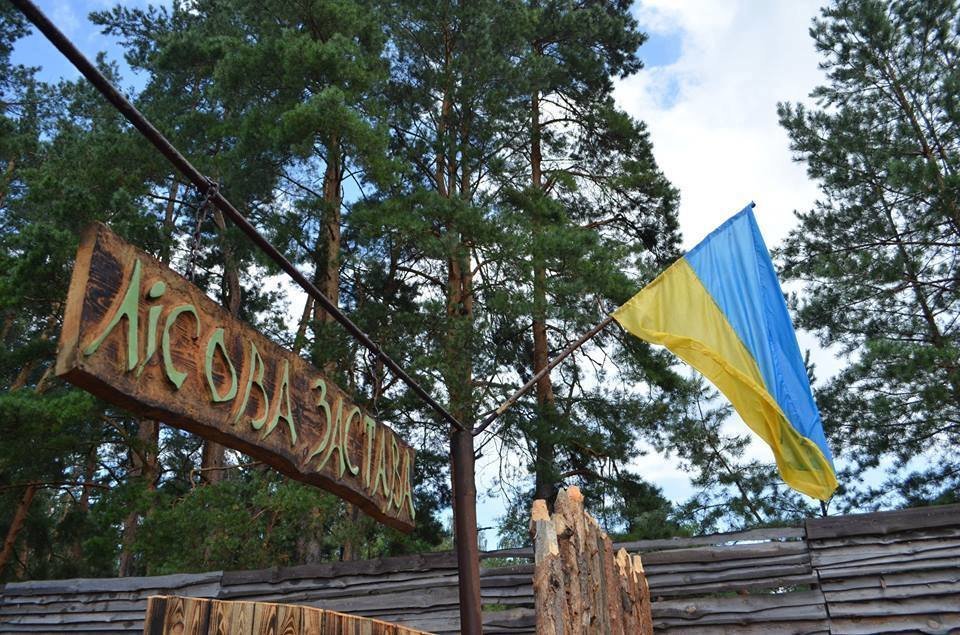


A long-awaited bus appeared from around the corner, and after a minute, turned from the pavers to the grass path, which leads to the forest camp, it stopped at the gate with cut out plaques – “Lisova Zastava”, and slightly on the side – “You’re a Human”. As peas from a pod, a noisy crowd of children of different age – from 7 to 17 years old spilt out of the bus. The first shift, somewhat belated and shortened in this summer – from June 19 to June 28, 10 days of security and stability for 48 children from the front zone: the constantly shelled Zolote, Zaitseve, Toretsk…
Acquaintance
Children already got acquainted on the train, got sympathy and broke up into pairs. One girl even left the bus with a bouquet of yellow roses.
The team that met the children is looking closely. Children are examining the team. The ones, who have already been in the camp of social and psychological rehabilitation “Lisova Zastava” are with a joyful expectation. The ones, who came for the first time, are somewhat distrustful and skeptical.
Just a few seconds – and life in the camp began to boil. Children get acquainted with the staff. According to pre-compiled lists, they are divided into teams (by age), which is the responsibility of adult curators; and teams of peers, who were already in the camp and showed themselves well, and for whom the “Lisova Zastava” is a value – will take care of them.
Each child receives a bracelet of the color of his team. Next – a physical examination, photo on the passport of the future citizen of the “Lisova Zastava”, resettlement, lunch and psychological diagnosis. These are the invariable components of the first day. Like the quest after dinner, “Another World”. Its goal is to introduce the territory, traditions and program of the camp to the children. Fairy-tale characters (instructors and curators), each in their location (located in different parts of the camp), try children with a variety of games, exercises and quests, and for their successful implementation reveal “secret knowledge” – they introduce the rules.
For example: “I never leave the camp territory without accompanying adults. This is a general rule, and it has no exceptions. For violation I immediately go home”; “I choose to be kind. And if something went wrong, I will help someone who feels bad. I refuse to steal, damage property, use alcohol, drugs, tobacco, profanity, fights, persecution of other children and sexual relations on the camp territory”; “I am grateful to all people, who not knowing me, gave part of their money for my rest”.
In addition, any mobile quest contains important information: for adults – how to read a child, and for children – how they work together. Tests also include the fact that in different age teams older children begin to take care of the younger ones. This is important, because kids with war trauma become “small old ones”, and they need to be returned to their biological age. A 7-9-year-old child should not be responsible for his family, village, which was bombed, and for the war in principle. A child should be naughty. And older children should call him or her to order, showing an example.
The game of the first day “Team Flower” helps to get to know each other better. Children are broken in pairs and each, according to the words of a partner, records information about him on a paper petal, for example: “I’m good and sociable”, “An eccentric and love eccentrics”, “I love drawing and walking”. Then a team flower is formed from the petals.
Another unchanged part of the program and the evening ritual of the camp are “podilyozhky” (from Ukrainian “dilytysya” – to share), which are held in single-age groups. On “podilyozhky” children learn to share with each other and with an adult curator and a psychologist their emotions and experiences about how their day went: what was unpleasant and disturbed – “a pebble in a boot”; and what pleased – their own successes and achievements. The rules are simple – mutual respect, and one microphone. No one has the right to interrupt or ridicule the one, who now has the floor. After the end of each speech, no matter what a child does say, everyone applauds him or her. This encourages even very shy children to talk about their worries and problems. “Podilyozhky” always ends with a general hugging, a small-large pile moves towards the exit.
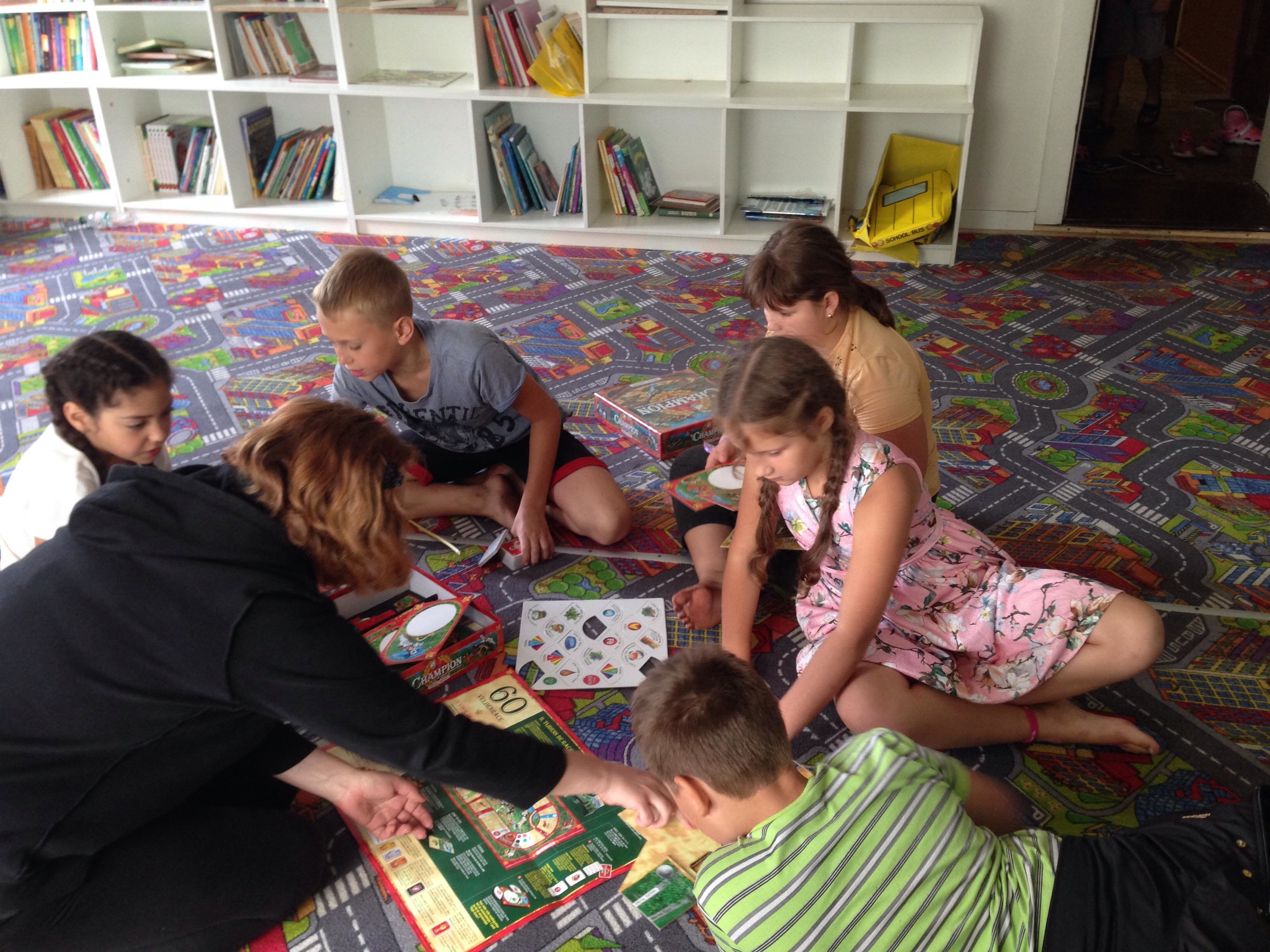
Photo from camp’s page on Facebook
Everything is not accidental
The program of the camp includes two components. The daily, constantly repeating part provides the child with a sense of stability, predictability and calmness while staying in the camp. This includes “morning exercises” and “team briefing” and “contribution to the universe” (the event, which demonstrates a child, the relationship between actions and consequences, the prevention of the “consumer” syndrome). The variable part allows a child to feel the multicolored world, fills it with bright feelings and emotions. This includes psychological, communication and resource training, “multi-therapy”, “team circle” and “evening activities”.
One of the important rules of the life of the camp is a space free from gadgets and mobile phones. In the daily routine, there is a specially allocated time – half an hour for communication of children with their parents. All the rest of the time children are immersed in communication, training, classes, walks, games and quests. This allows a child to return to the situation “here and now”, and does not provide an opportunity to escape from reality in the world of gadgets.
Parents can constantly watch the rest of their children – thanks to the daily photos and video reports on the website and the pages of the camp in social networks. They can also call the curators, and if necessary, talk with the medic and psychologist.
The camp attracts children not with a chic living environment. From this point of view, everything is quite ascetic (two separate buildings and four summer houses). Born with the great desire of many not indifferent people to create a place in which children are forced to change the habitual rhythm of life because of the war, they can feel protected, loved, surrounded by warmth and care, “Lisova Zastava” amazes the imagination by the fact that in an extremely busy camp program, which does not repeat exactly every shift, but is formed according to the needs of specific children, there is absolutely nothing accidental. Any activity is mandatory for each child and is aimed at obtaining a certain result.
The program is built on three pillars: psychological training, outdoor games and child volunteer movement, because the best way to help yourself is to help another person. There is also its own currency in the camp – “lisovychky”. The children can earn them by showing social activity (participation in games, competitions and training) or in socially useful matters, assuming additional responsibility, from which benefit the other children and the camp. The “lisovychky” is also being used with advantage: one can order an individual lesson on hippotherapy (two horses are free to walk on the territory: an adult Snowshoe and a one-year-old Maya), in a sky park or in a touch room, go to a bath with friends, have fun on a barbecue, “movie nights” or eating “cake made to order”.
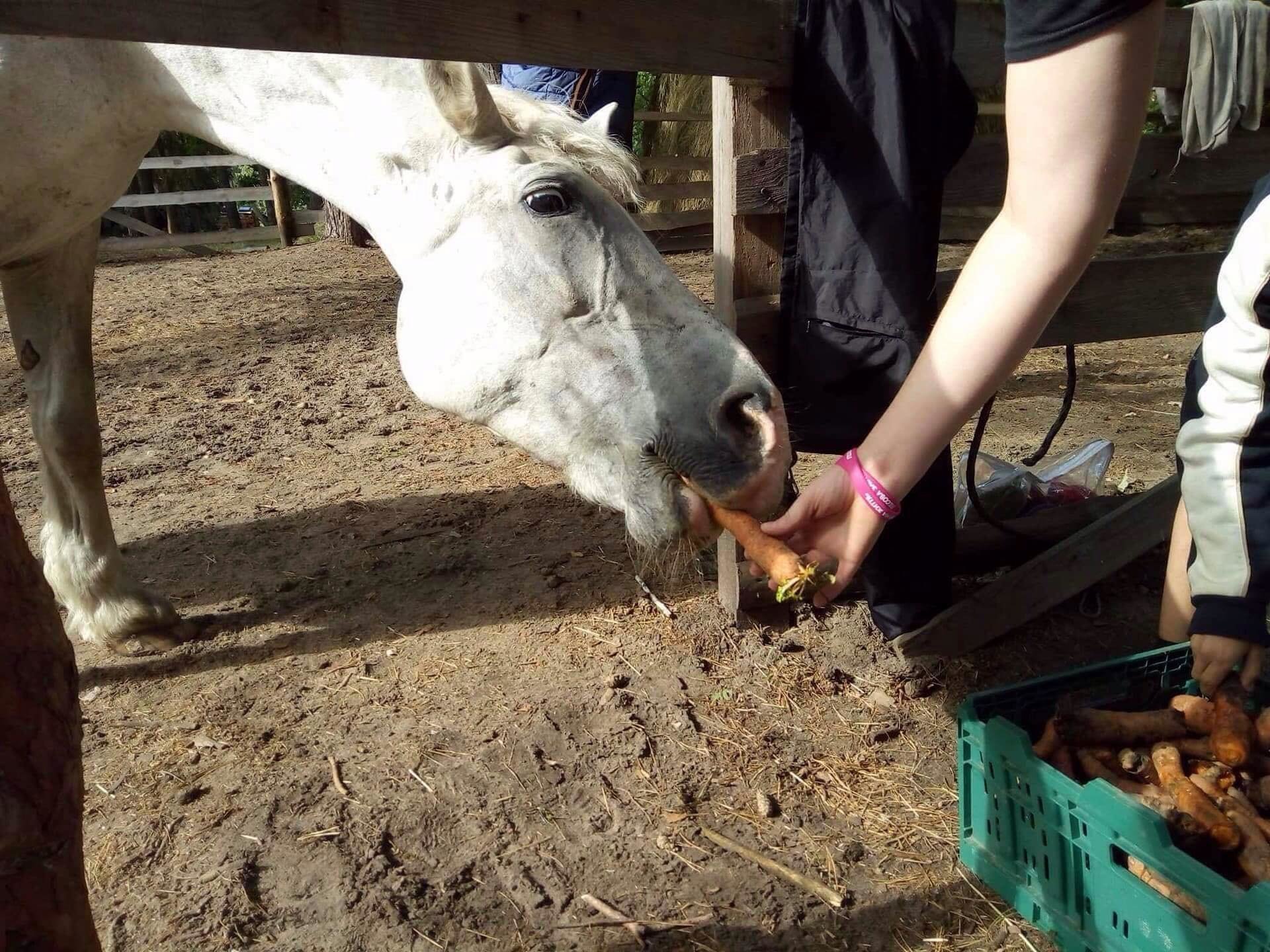
Photo from camp’s page on Facebook
There is a “City of professions” in the camp, there could be a trip to the forest “For survival”, a mandatory day at the Aquapark, Slippery Football in the inflatable pool, a training quest Doctor House, where children are taught to provide first, home first aid in an extreme situation, and many other interesting events, the list of which is constantly being replenished and developing. Children learn to communicate with each other, direct their own emotions in a positive way, acquire self-help skills.
They rejoice, laugh, get angry and indulge like any ordinary children. They are ordinary until you are alone with each of them. Only if you can hear, and if the children trust you, you, a person from a peaceful territory, will learn many shocking stories from front-line life, which, unfortunately, has become common for these children in the last four years of their childhood. All of them are eyewitnesses of some terrible events. Someone was seriously injured, someone lost loved ones, someone at the beginning of the stay in the camp is afraid and cannot fall asleep because of nightmares. You try to “warm up” the children, and they, with their immediate hugs, treat you instead, bringing you back to the realization that there is nothing more important than sincere emotions and feelings, and that, in fact, everything is much easier if you listen and hear another and learn openly speak to yourself.
The shift in the camp ends imperceptibly. And now it’s time to say goodbye. On the last evening – “Candle”, the general “podilyozhka”, on which the entire camp shares its impressions. Both adults and children thank each other, passing a candle to someone, who has become a little closer than others during this time. Much in the camp for both children, and sometimes, even for adults – for the first time in the life. Meanwhile, who the children are when they arrive and who they are leaving the camp is a very big difference.
They did not want to say goodbye. And there was a strong desire to return to the “Lisova Zastava” again. I really want the camp to live. It could become a unique platform for various social and psychological programs, with inclusion (“Lisova Zastava” had such a successful experience last summer). But for some reason the camp is being paid undeservedly little attention.
***
The first group of children from ATO zone came here four years ago, on July 7. Then this place was not called “Lisova Zastava”, and there was not even a camp – a small glade in the withered apple garden of a dilapidated sanatorium in the middle of the forest, in which hundreds of ordinary, unfamiliar people set up military tents and field kitchens, water and light were held, to create at least some conditions for the arrival of children. Then there was not even a word about the psychological work with them. Only that the children could just sleep, cry and cry out…
Given the circumstances under which the camp appeared, its employees call July 7 a day of remembrance, and do not celebrate, but remember it.
The second shift of summer-2018 (from 3rd to 12th of July) was able to take a little more – 60 children. But will there be more shifts – a big question. Last year, thanks to the action “Pope for Ukraine”, the camp of social and psychological rehabilitation “Lisova Zastava” was able to take a thousand children, for shifts of 14 days. This year there is no money. International foundations speak of sustainable development and prefer assistance on the front line.
“Lisova Zastava” is the camp that heals the souls of children from the gray zone, and is an embodiment of what sustainable development should be. The camp sometimes gets always necessary “hygiene” from them – toilet paper and detergents. But the trips and transportation of children from the front line territory to the town Dymer of the Kyiv region this summer are mostly troubles of volunteers, for which is becoming increasingly difficult to collect money for that.
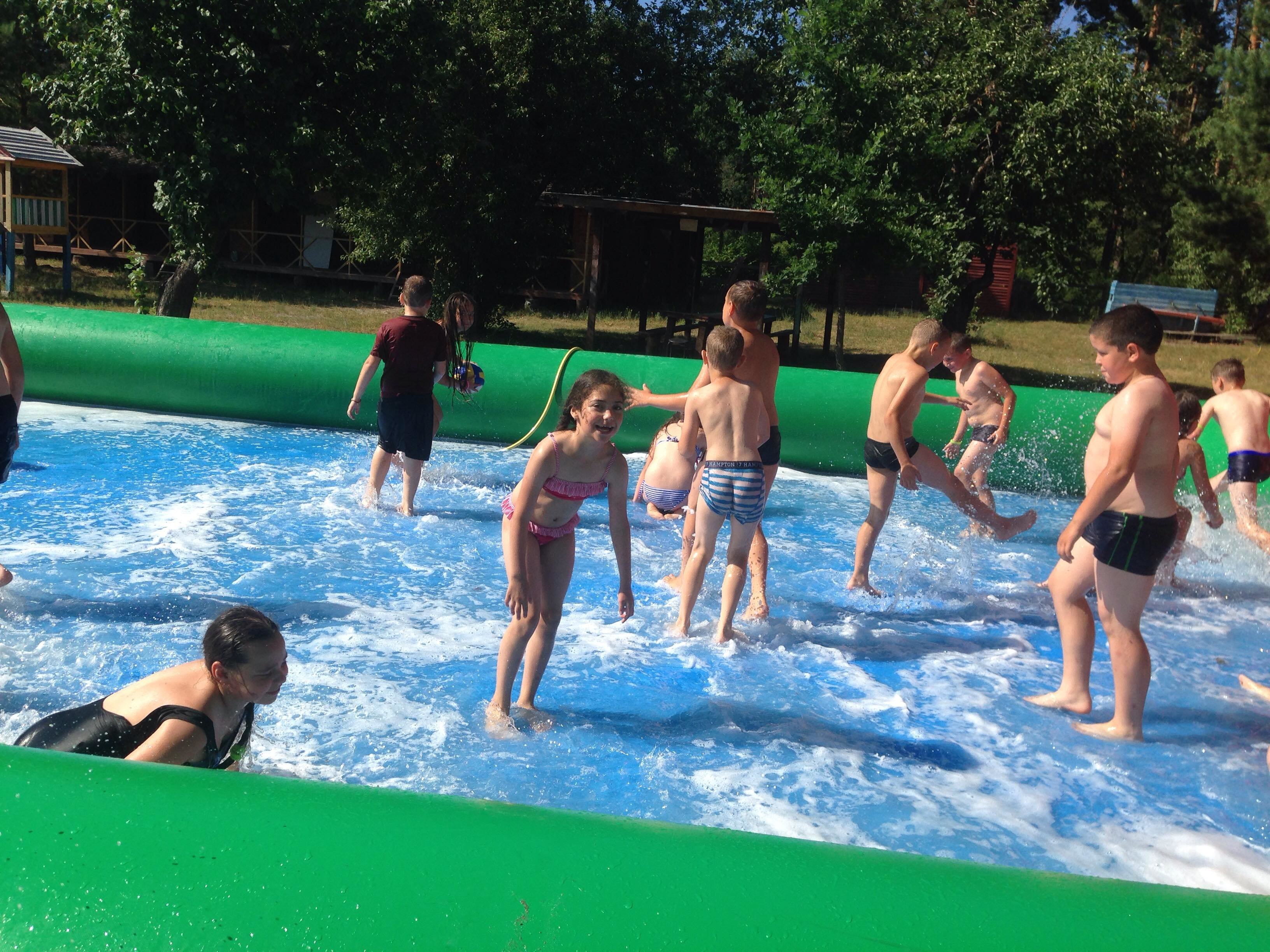
Photo from camp’s page on Facebook
We can help them:
ALL-UKRAINIAN CHARITABLE FUND “FOR THE RIGHT TO LIFE” Identification code 36632462 checking account 26005052685136 opened in PJSC CB “Privatbank”. Sort code 320649. Purpose of payment: Charitable donation from _______ (Your full name).
Text by Hanna Drozd