

The Netherlands is equal to the Lviv and Transcarpathian regions of Ukraine. People there know little about us. Almost everything is bad and connected with war, murders and corruption. It seems that Ukraine is far behind this Western European country. We have to run very fast in order just to stay where we are.
Borders: invisible and exhausting
In order to find out when is the moment of crossing the Dutch border, you need to launch the Google Maps app on your smartphone, turn on the GPS navigator and maximize zoom. Then you’ll see how a small blue dot (your bus or car) crosses a thin black line. If you look at the window at the moment, you can see three flags installed at the border: The Netherlands, European Union and the country from which you’re entering, for example, Germany.
To find out whether you cross the Ukrainian border is much easier. The Slovak or Polish border guard, after seeing your Ukrainian passport, will definitely order you to show how much cash you have. If he decides that you don’t have enough cash for a long trip, at this point the border crossing ends. Of course, you can show him your credit card, but this is not an argument. I had to use mobile banking app Privat 24 to prove to the border guard that I have funds in my account. And this is by no means the only obstacle Ukrainians face while crossing the border with the EU. This time, next to the border crossing point Rava Ruska, a giant queue of more than a dozen buses was formed. Inspection of each took from one to three hours. As a result, we were waiting for our turn for fourteen hours and when it was our time, we had spent another two hours eliminating all the meat we had. Border guards ordered to destroy even the sandwiches, which bus company had in the refrigerator for sale. Whole hour guards of the Polish border were trying to persuade three Ukrainians that they were not tourists but illegal migrant workers without the work visas. Looking at all of this you may have an impression that EU border guards are trying to hold back some kind of black evil’s tide from the East.
The Netherlands is not Holland
To begin with, we should sort out the proper name of the country, because some people sometimes call the Netherlands – Holland. This is like to call Ukraine Galicia or Volyn. Holland is just one of the twelve provinces in the Netherlands. In addition, there are Northern and Southern Holland. The biggest cities in the Netherlands are located exactly in these two Hollands: They are Amsterdam, Rotterdam, The Hague, Leiden, Delft and Haarlem. But inhabitants of Utrecht, Zwolle or Eindhoven, by no means can be called Hollander, they can even get offended. To understand why, just try to name the inhabitants of Dnipropetrovsk or Kharkiv regions “Galician”.
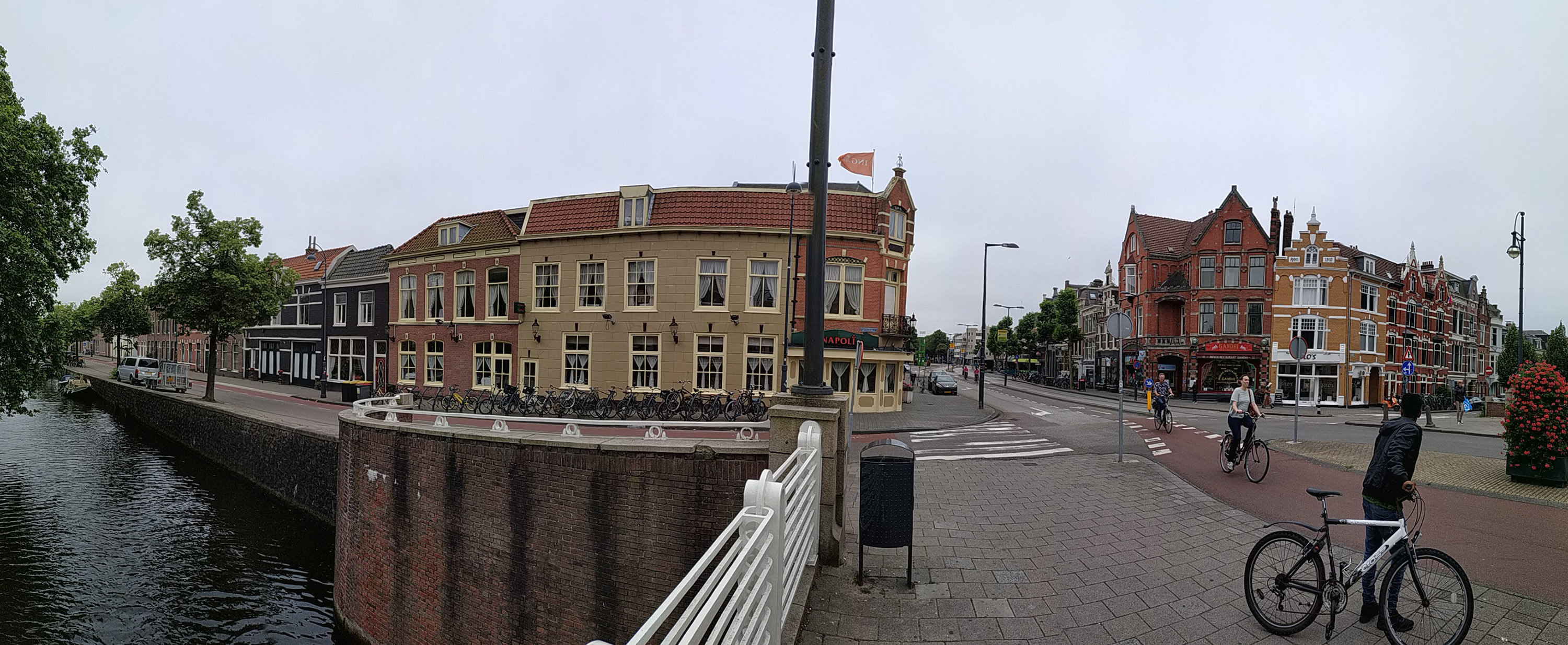
The small size of the country leads to two interesting consequences. At first, the inhabitants of the country are prone to travel everywhere by bicycles, an incredible amount of which is easily noticed. The rights of cyclists are so wide that even kings could envy them. If a cyclist is approaching the crossroad, the driver of the car will always let him first. This is a form of local etiquette
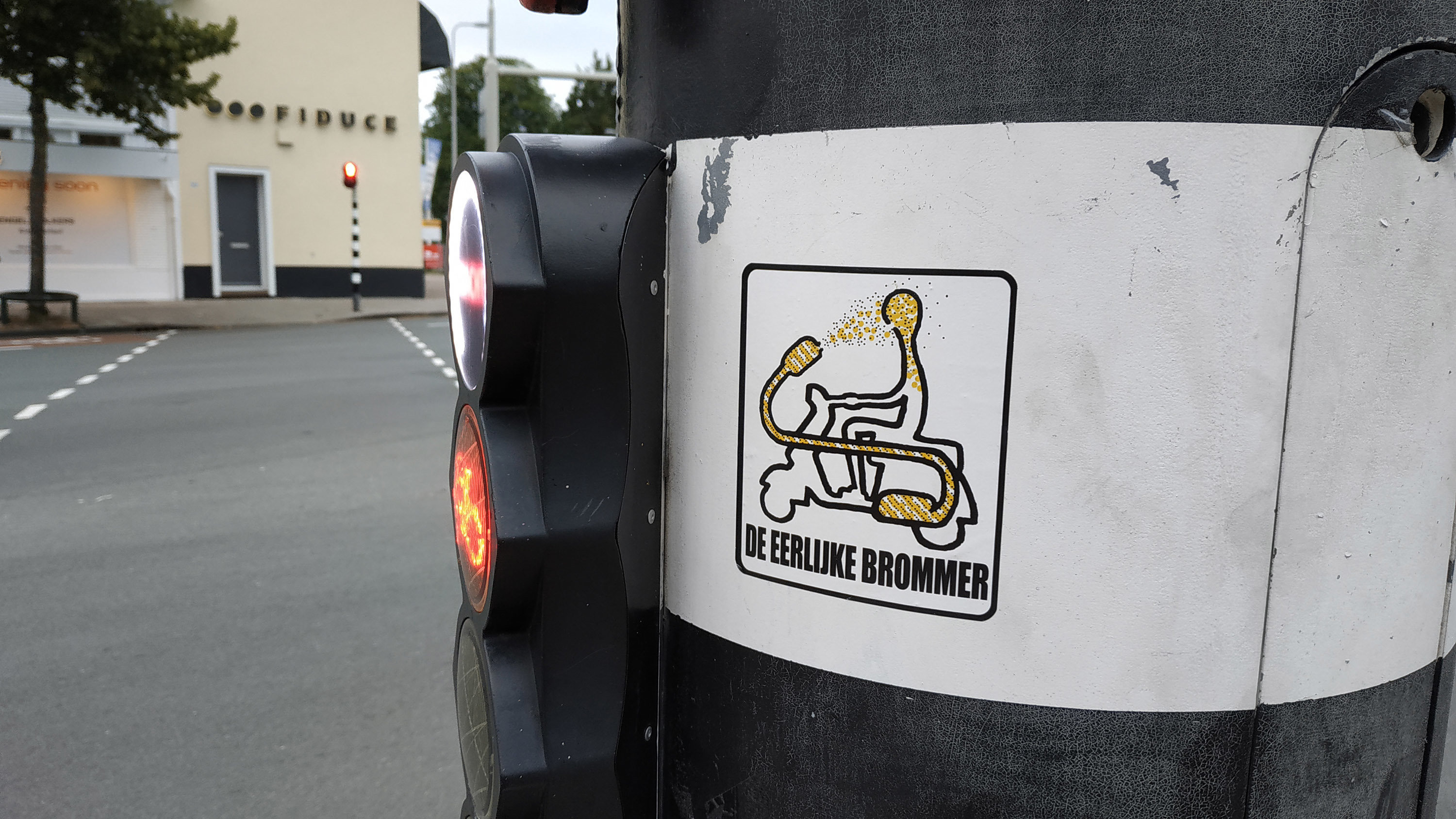
The entire territory of the Netherlands is covered with high-quality bicycle tracks. They are present not only in cities and towns but also between them. Using Google Maps, you can pave the bike route exactly on these cycle tracks and find out the approximate time you need for your travel. Bikes’ owners, obviously, distrust vehicles with internal combustion engines. At one of the crossroads I found a caricature. The inscription is translated “the Honest Moped”.
However, a cyclist in the Netherlands can navigate even without the help of smartphones. One day on my way back to Harlem from Leiden, I chose the wrong side of a small river. I was lost and there was no bridge alongside it. I stopped next to some henhouse and noticed an old man next to the road. “Don’t worry,” he told me, “I’ve been living in Harlem for seventy years. You don’t need to cross this river you can reach the city by using this road.”
Secondly, transportation in the Netherlands is very high-quality and expensive. A train ticket from Harlem to Rotterdam will cost you 25 euros plus one euro for being printed out by the vending machine. I haven’t noticed the ticket office at the train station. If you want to travel with your bike, prepare to pay another 6 euros. This ticket is a pass; it allows you to open automatic turnstiles both at the entrance and at the exit of the station. It will additionally be checked directly in the car by living controllers.
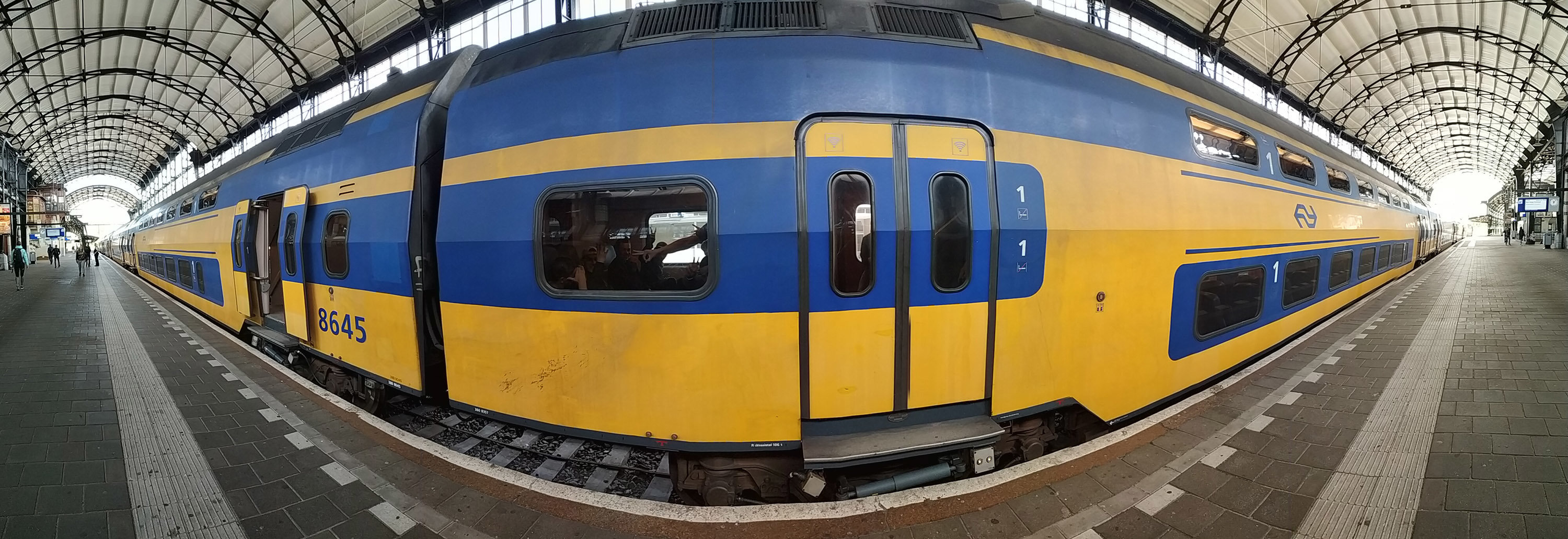
However, in some cases, it is not necessary to buy a ticket. In the year 1983, Dutch publishers and bookshop owners organized themselves into the Society for the Promotion of the Dutch Books CPNB (Collective Propaganda van het Nederlandse Boek) once a year they have Book Week. The one who will buy a local author’s book or something translated into Dutch for the amount of 12.50 euros, will receive a BookWeekgift. One of such gifts is an unlimited ticket for the train. You can use it during the last Sunday of the Book Week. This year, more than three hundred thousand Dutch received this ticket. There is even a joke about it: “Why have you bought a ticket? – controller asks. –After all, you have a bookWeekgift!” – “This is for my cat,” the passenger responds. “It can’t read.”
Public transport is extremely expensive in the cities as well. One-hour tram ticket costs three euros. In order to sell these tickets, there is a special place for a salesman with computer and printer in a car. You can travel for one euro if you buy a pass for a year. All in all, millions of tourists travel expensive.
Haarlem and Zantvoort
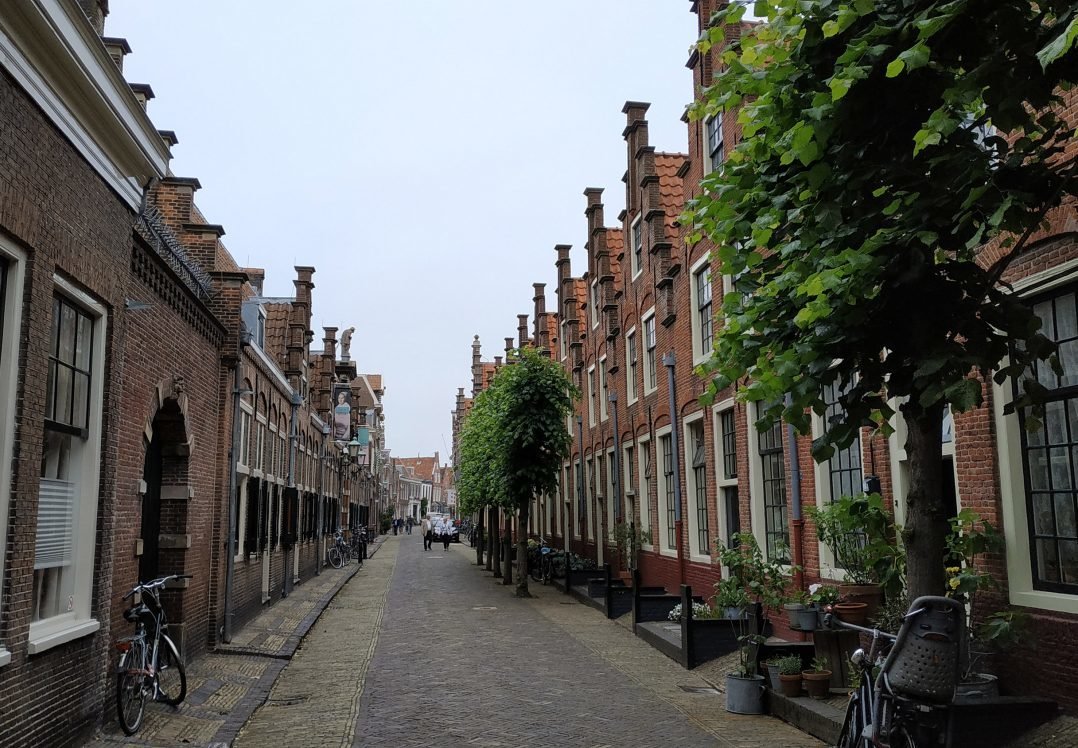
The capital of Northern Holland, the city of Haarlem is situated at the shore of the North Sea. About 150 thousand people inhabit Haarlem. A typical Haarlem family house was built approximately one hundred years ago, it has two floors and an attic. On the ground floor there is a living room, kitchen and a backyard with a flowerbed and a shed, where household inventory and three or four bicycles are stored. On the second floor there are two bedrooms, a bath or shower room and also a laundry room. On the third floor, the attic you can find one or two more rooms: Commonly these are the children’s rooms.
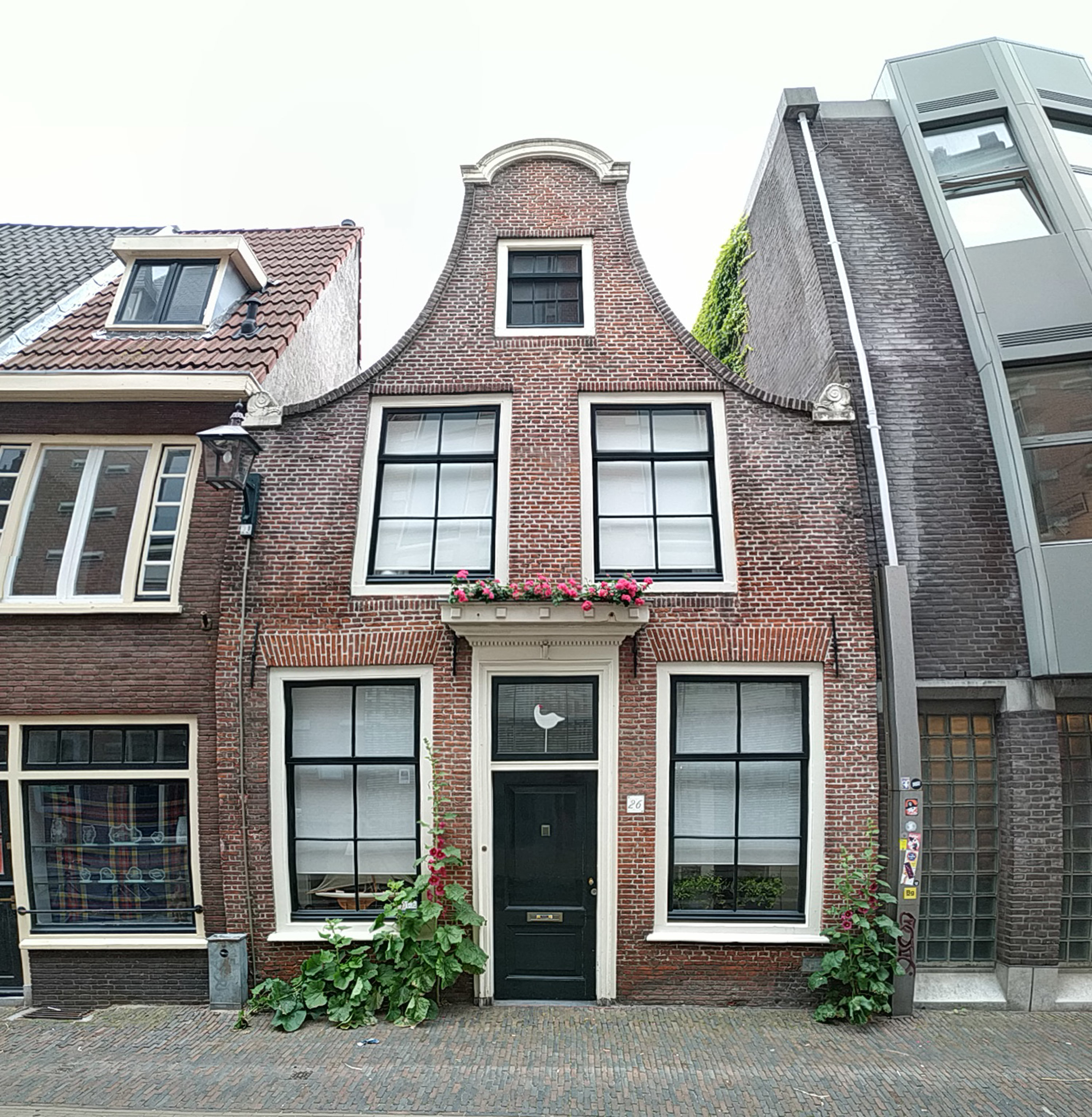
In the center of Haarlem there are many houses, some of them are more than four hundred years old. All of them are in excellent condition and attract numerous tourists with their front. There is also Frans Hals Museum. He was one of the Dutch “old masters”, who, in particular, made well-known portrait of Rene Descartes. Hals became famous for his unique and detailed depiction of human faces with all their defects and disadvantages. The great artist had twelve children, but he died in a charity shelter for the old and the poor, that now is his museum. By the way, entrance for journalists there is free.
In Haarlem I met with what they call “typical Dutch weather”. It’s about twelve degrees even in June, rain or mist and a strong, piercing wind that sometimes almost knocks you down.
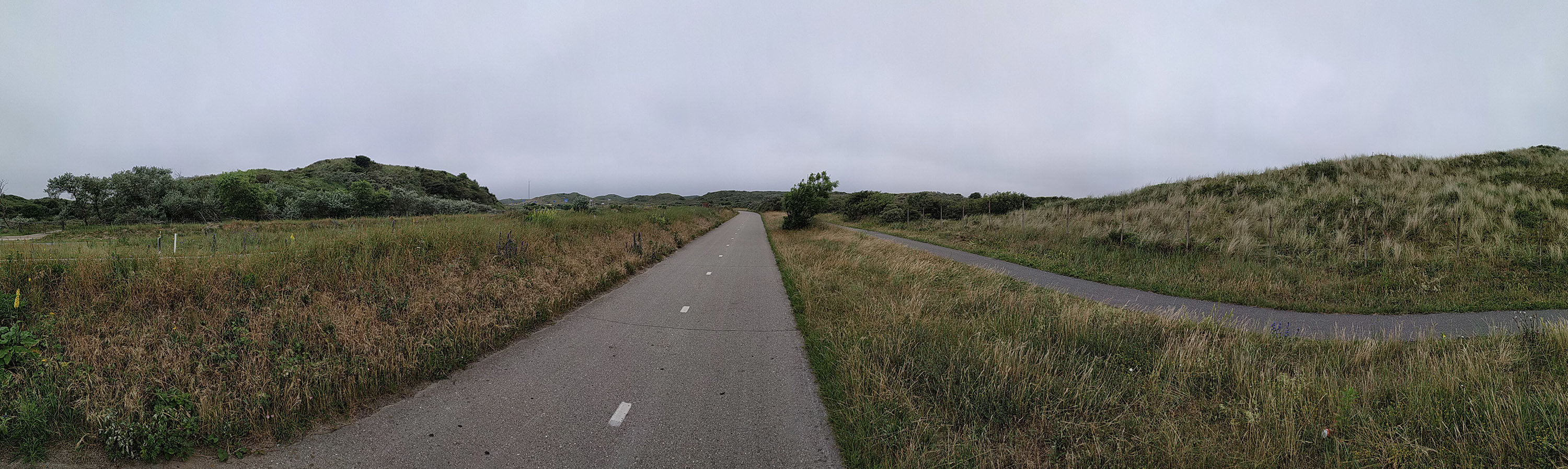
One morning, when there was such weather I went on a bike to the shores of the shores of the North Sea. You can get there in forty minutes from the city center; half of the way goes through the dunes. These are low, grass-covered, sandy hills. Their height is from five to ten meters and they are separated from the road by a metal fence with a wet net.
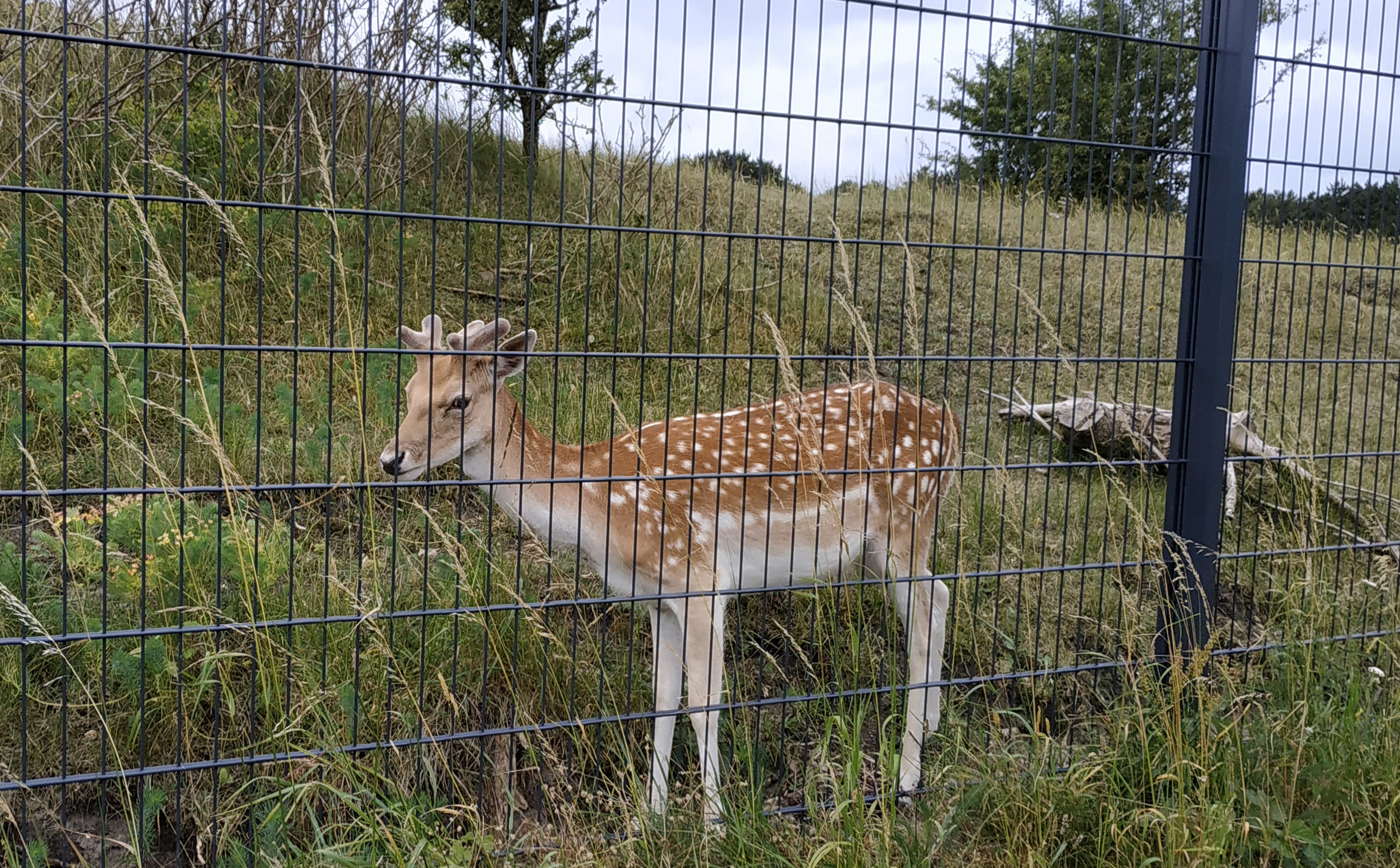
At first, I thought that it was made as an obstacle for those who want to choke the dunes up with plastic and other junk. It turned out that in dunes a lot of wild animals are living. The fence is there to protect their natural habitat. Passing by the town of Zantvoort to Heemstede, I literally met a young roe deer behind the fence. I had stopped and made some photos. The roe was not afraid of me, even though the holes in the fence were wide enough to let both of my hands there.
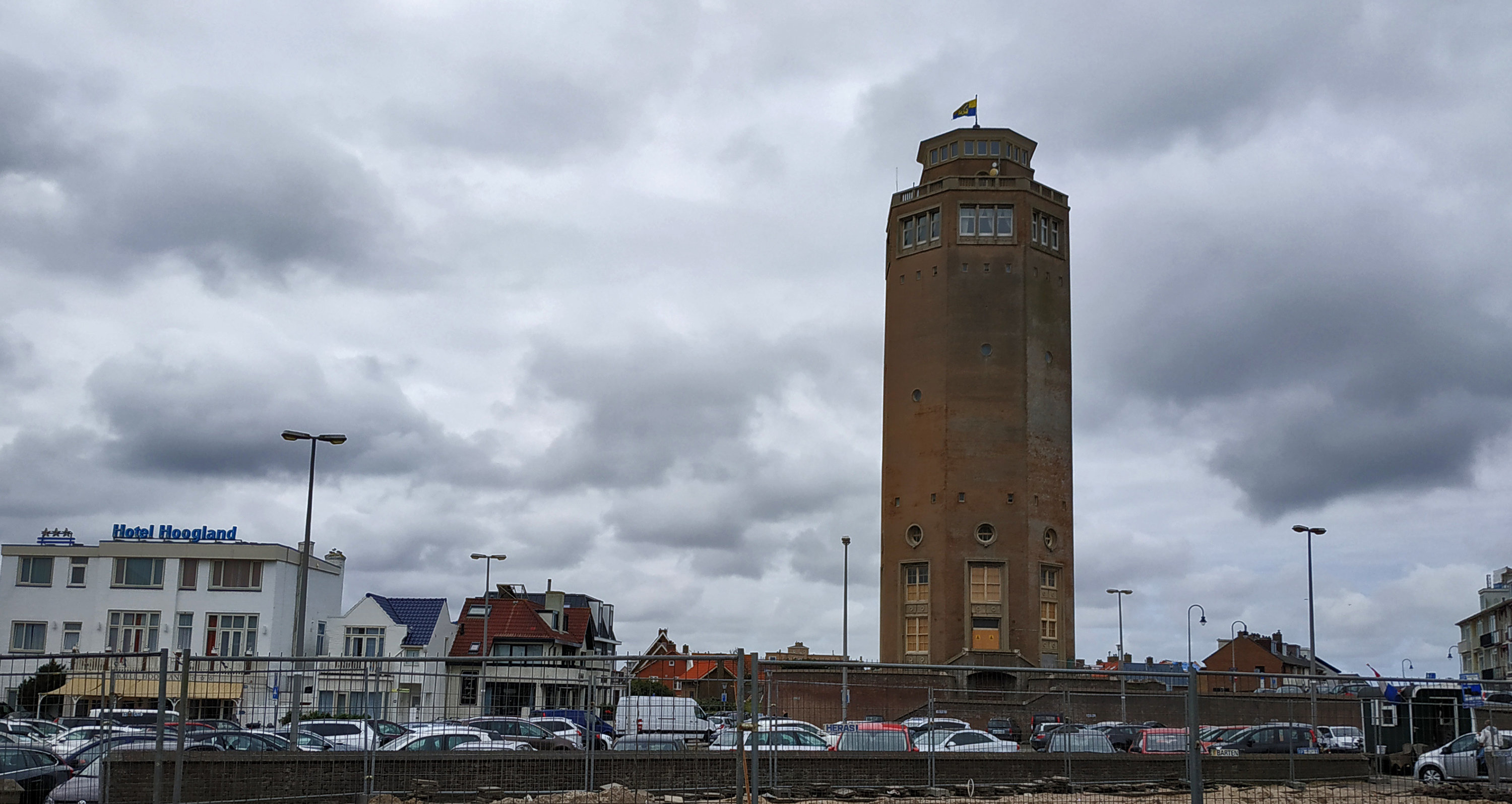
The resort town of Zantvoort has two very interesting features. The first one is its flag, that is completely identical to Ukrainian flag, only turned upside down. The second one is a water tower. During the Second World War, the old tower was bombed by Nazis. The new octagonal tower, 48 meters high, was built in 1952. At the top of it was a restaurant that closed in the 1990’s.
Often on the streets of the Dutch cities you can find three mysterious inscriptions “te koop”, “te huur” and “verhuisd” (read as “ferhoist”). They mean: “For sale”, “for rent”, and “moved”. Accommodation here is much appreciated and people are trying to get from it maximum profit that is possible. I even encountered a poster with an appeal to local businessmen to rent their own offices during nighttime for tourists
Some houses have a national flag on them; on the top of it there is a bag or a schoolboy’s backpack. The window may have a poster with an inscription “You did it”. Such a picture means that a schoolboy or a student who has succeeded during his exams, immediately afterward, threw his own bag on the flag so that everyone can learn about the remarkable achievement.
Amsterdam
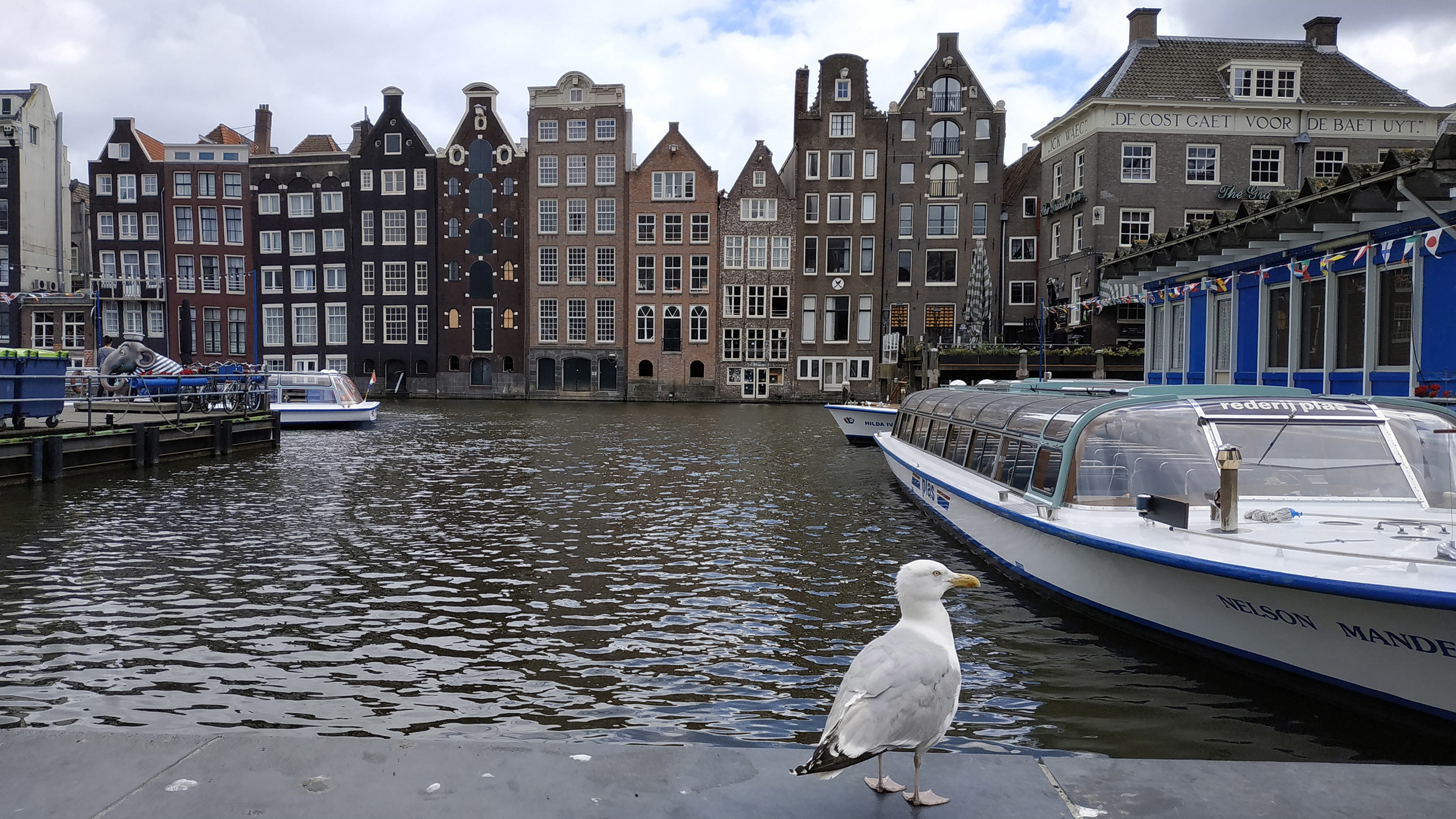
When you arrive at the gigantic Amsterdam station, you have two ways – straight to the touristic part of the town, to the South. There, hundreds of thousands of tourists compete who will make more photos on the bridge through the channel. There next to the flowerpots bicycles are parked and on the banks thousands of boats are attached. There tourists drink millions of liters of beer and smoke piles of marijuana, that is legally sold here to anyone who has reached the age of eighteen. Some local teenagers don’t like this restriction very much. They accost to passerby adults of bohemian look, so that they can buy them a joint with weed. It’s better not to do this because the police are watching the age requirement.
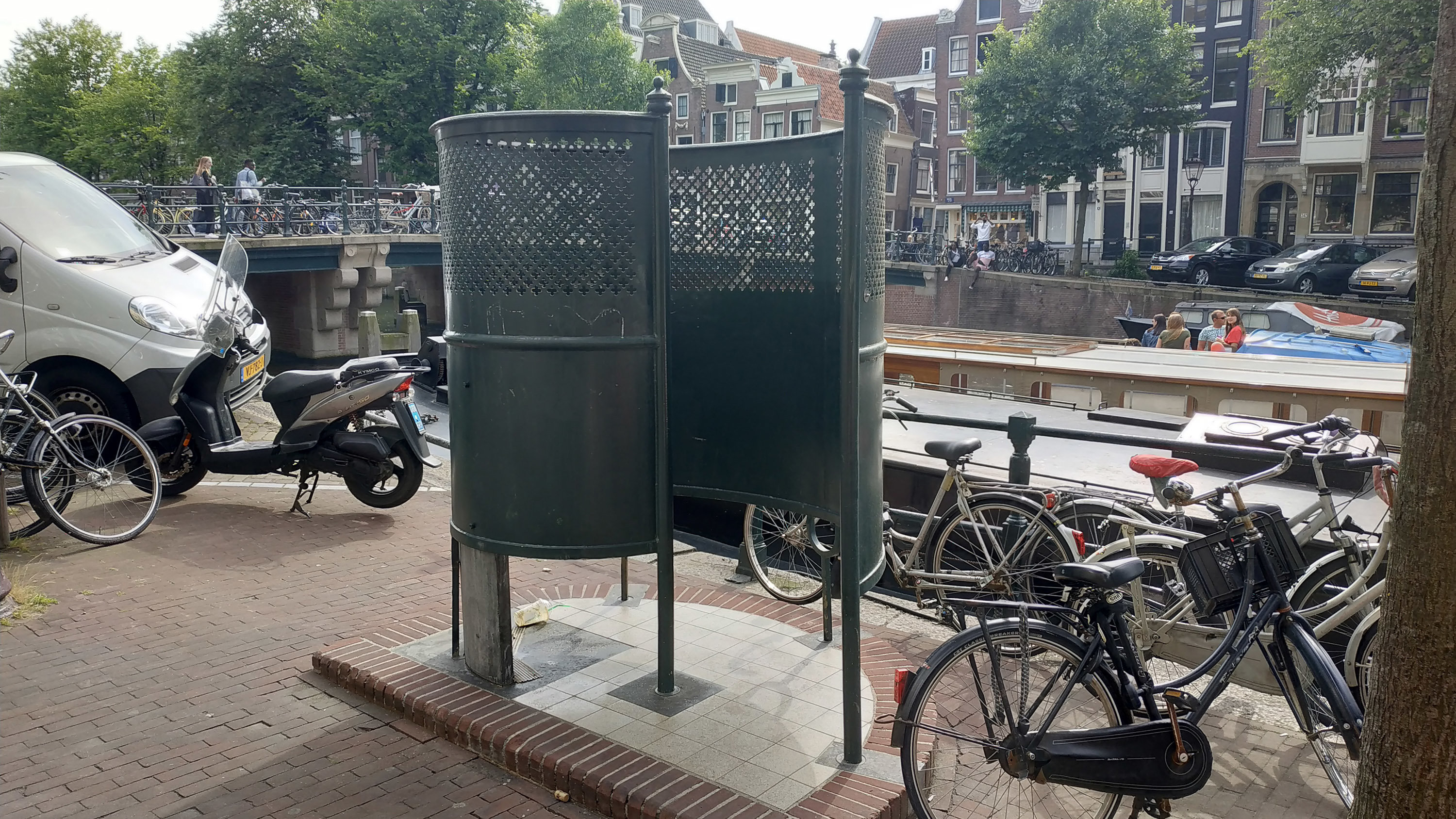
On the streets of the southern part of Amsterdam, besides the usual attractions for tourists, there is one interesting and important for modern culture archaism. This is “plaskrul” or “urinoir” – a special cubicle, similar to dressing rooms on the beaches. In fact, it’s a man’s street lavatory. There are only a few dozens left on the banks of the canals in the city center, but you can use them even now. A man goes in there, empties his bladder and the liquid from it merely flow into the river.
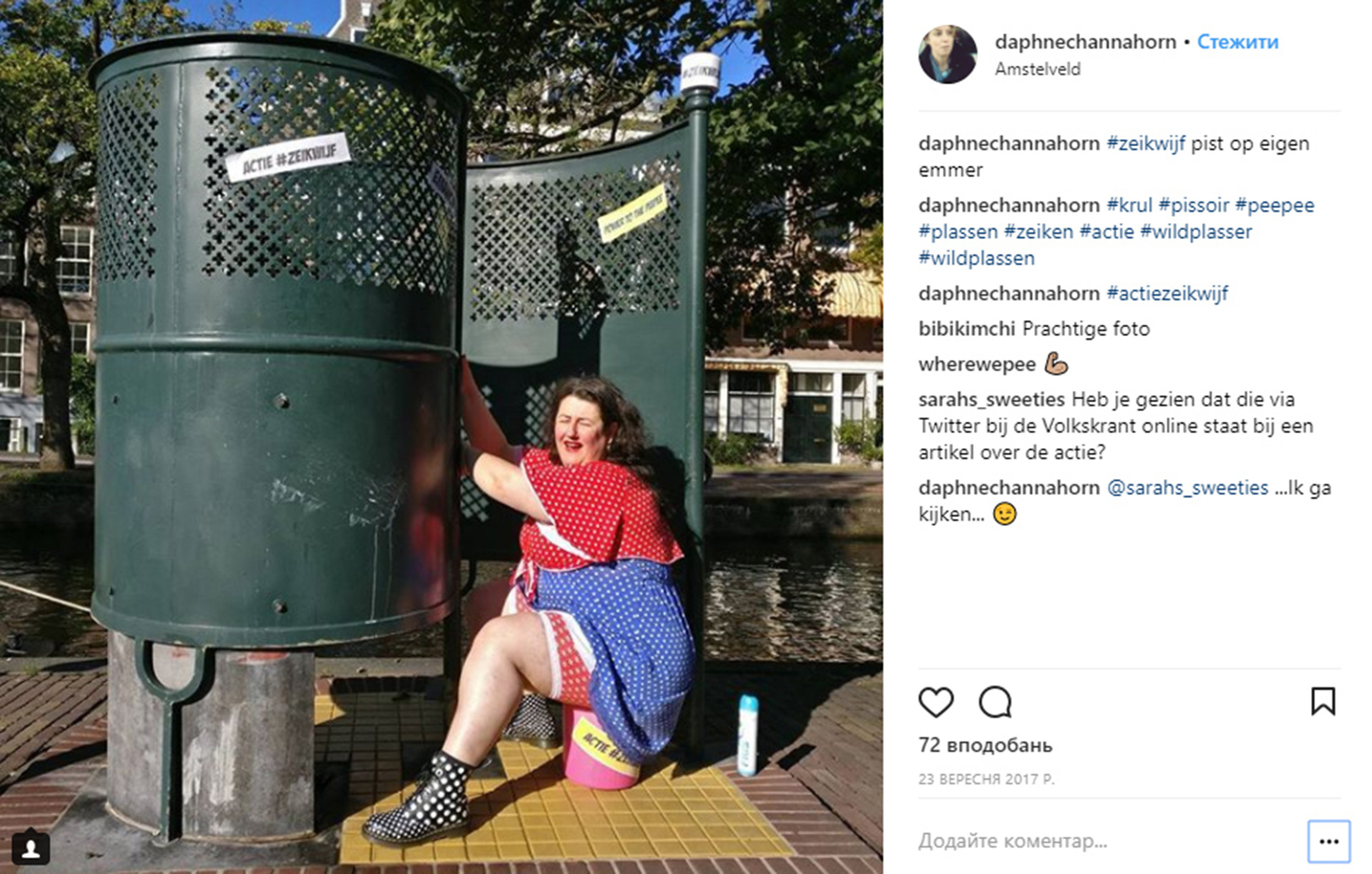
The problem with this urinoir is that it is intended only for men. The last year, a 23-year-old Geerte Piening visited the local bar and when it was already closed, she wanted to go to the toilet. Amsterdam has 35 toilets for men and only three for women. She had to run two kilometers to the nearest one, that’s why Geerte just asked her friends to cover her and did everything just in the middle of the street. It was noticed by the police and the girl was summoned to the court to be fined. But she did not want to pay fine and turned this trial into a true feminist action. “To meet your needs, you had to use a man’s toilet,” said the judge, “even if it’s unpleasant, it is possible.” Geerte contested this decision and her protest was supported by several thousand women. They uploaded thousands of photos to Facebook and Instagram. They depicted the same unlawful act performed by Geerte Piening. You can find all the photos under the tag #wildplassen
Among the wonders of southern Amsterdam is the “Café ‘t Monumentje” at Westerstraat 120. It was opened in 1973 and it seems that it hasn’t changed at all since then. Coffee is very good there and cheaper for the whole euro than in other coffee shops. In addition, they give two cookies as a compliment. But this place is valuable for people who appear there. A Dutchman that looked like a punk star Iggy Pop was sitting next to me. He was drinking his beer and scrolling through the phone. Meanwhile, I was looking through the books from the bartender’s counter.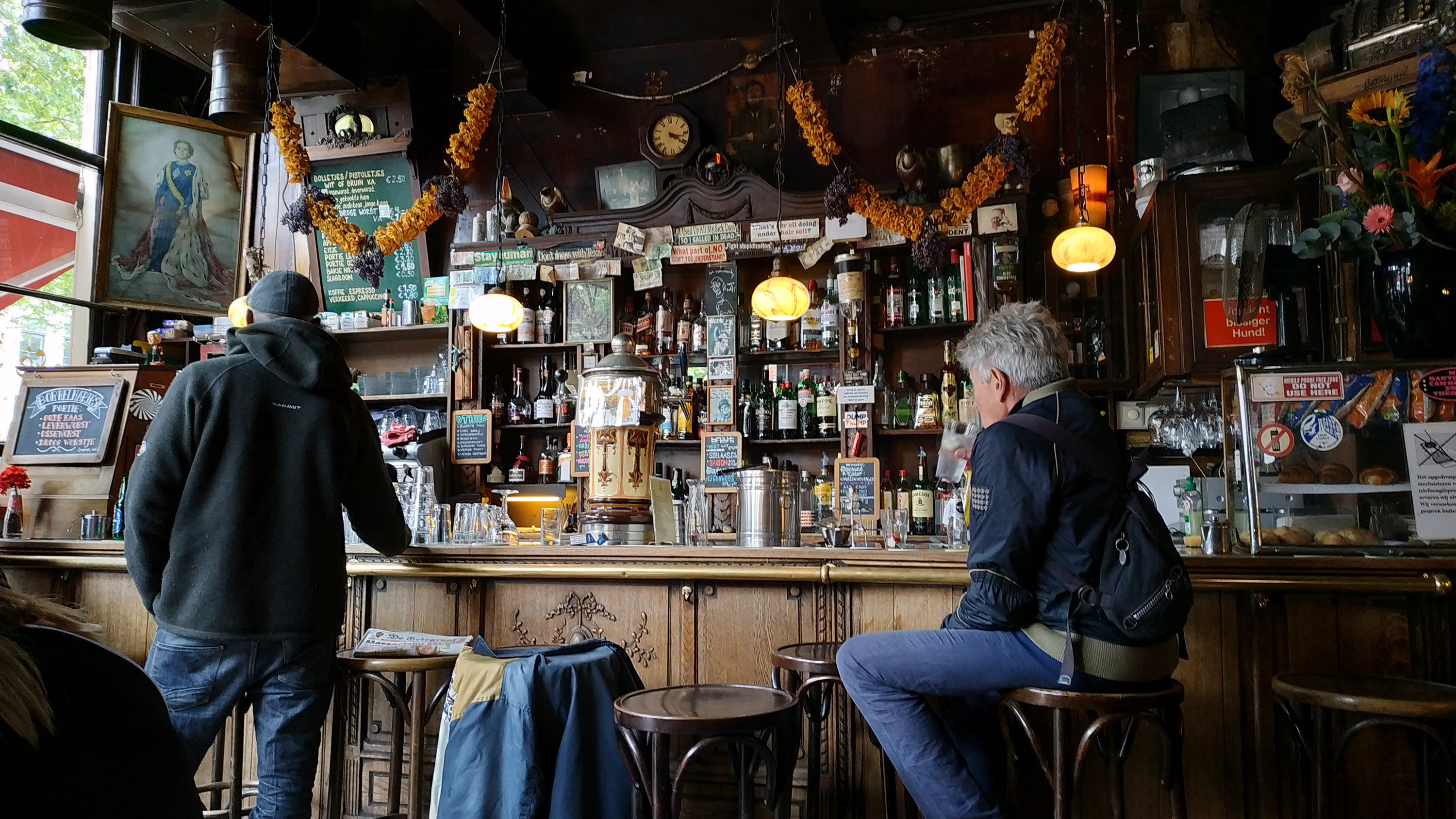
The other way leads you to the north. Right by the exit from the station you can take a few free ferries that will take you to the other side. The most typical route is to the Cinema Museum “Eye film”(Cinema-Eye). This avant-garde post-modernist building literally attracts the eyes of observers. The museum was designed and built by Vienna Delgan Meissl Associated Architects in 2012.
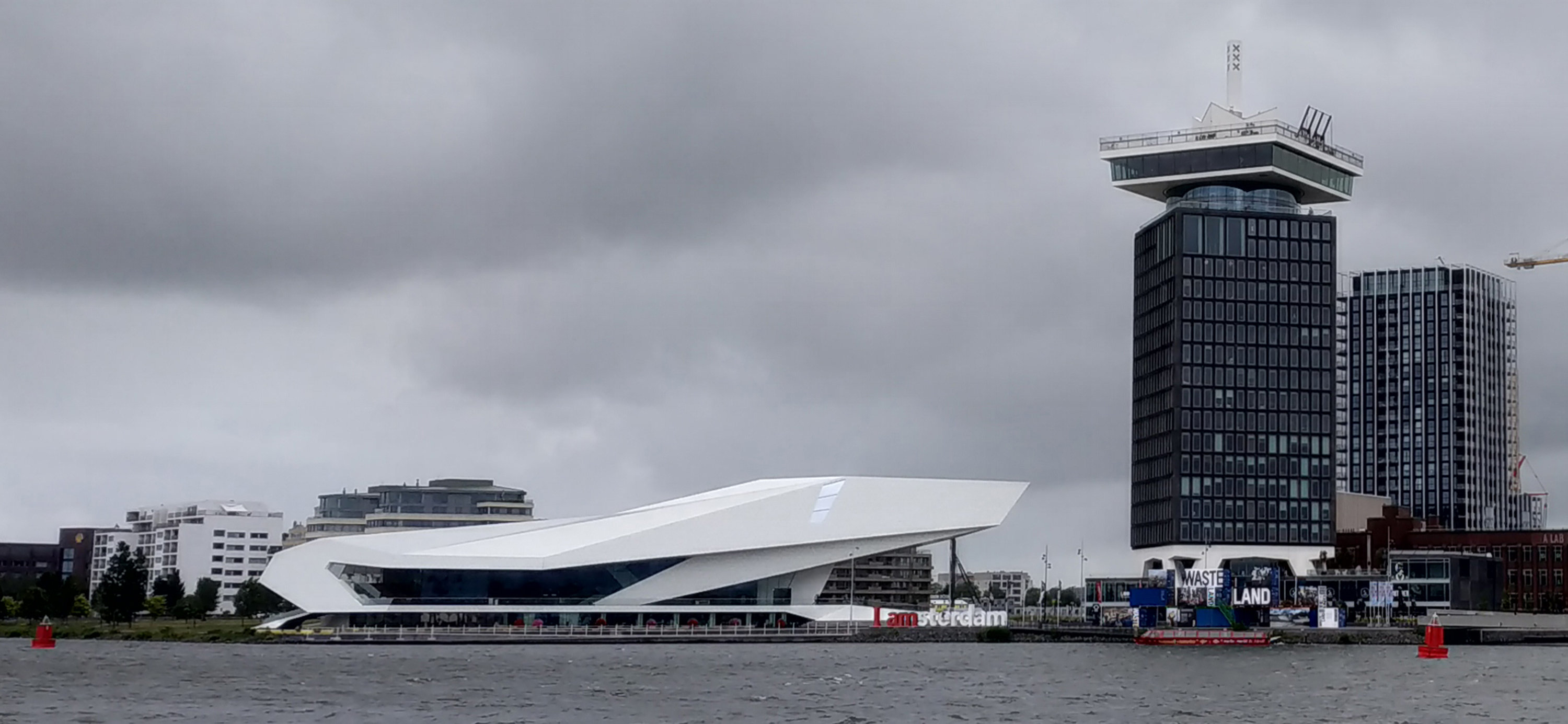
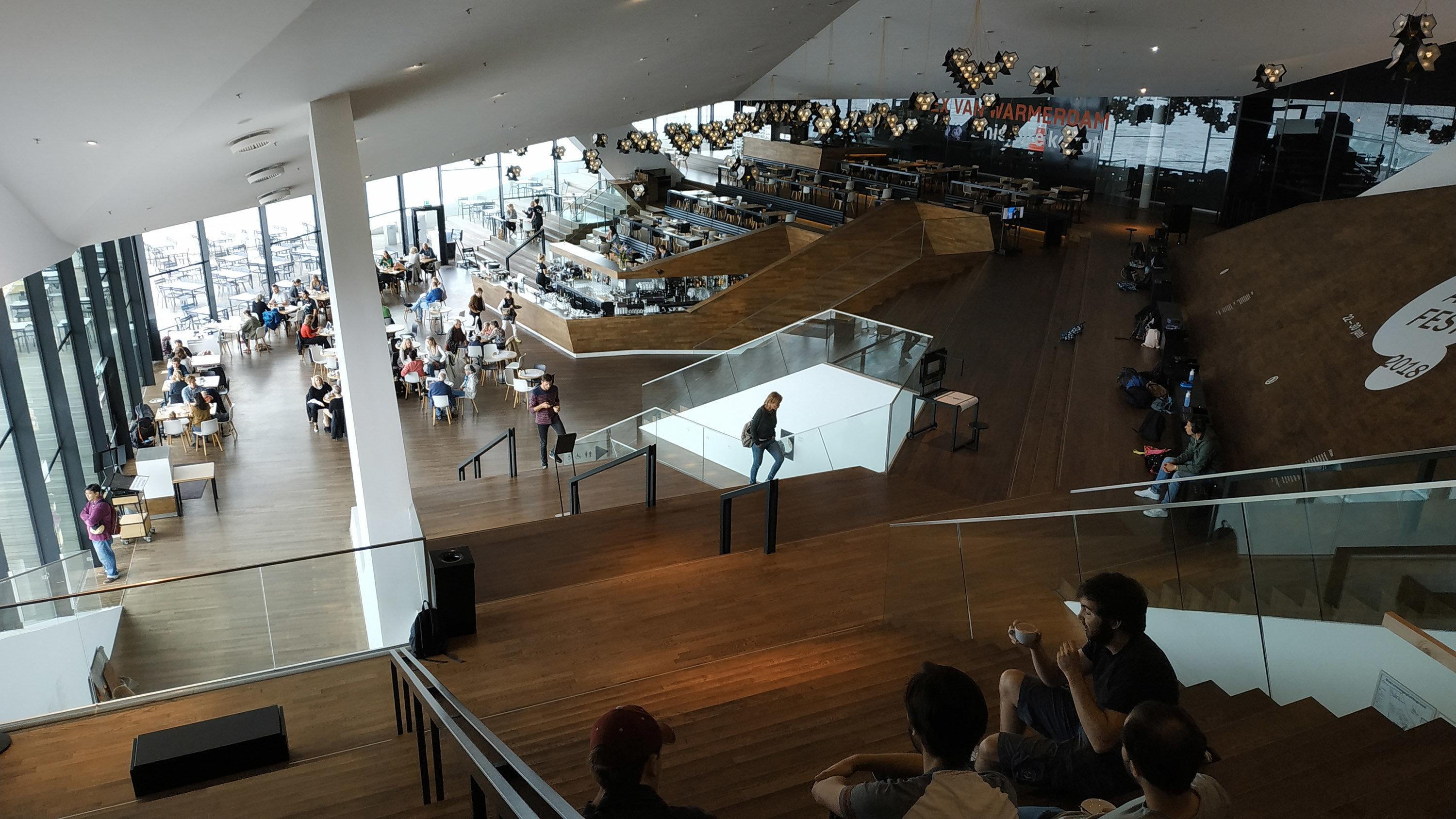
You can enter there for free, but you’ll need to pay 8 euros for visiting the exposition, or you’ll have to pay even more if you want to watch a movie. I was very lucky to get to the new exposition of my favorite director, Alex van Warmerdam. There were some very interesting mechanical sculptures. One of them, “The girl who went missing” is especially ominous and mysterious.
I was surprised that only two or three visitors were interested in the Warmerdam exhibition. At the same time, there was simply no free space in the restaurant with its huge panoramic window and spectacular view of the train station and ferry service. Visitors were queued to have a seat at the table and drink a beer or a coffee.
If you go further after the Cinema Museum, you can find yourself in the following districts: Overhoeks, Van der Pekbuurt, Disteldorp and Volewijk. There you can get to the big marketplace and try one of the national products – herring. For two euros, they’ll sell you two pieces of unsalted marinated meat, put in sweet buns as for a hamburger. They also add there three slices of pickles and finely chopped white onion. Sometimes they stick the flag of the Netherlands in the upper bun.
My guide at these districts was a completely unique Dutch guy. Tobias Wals is 25 years old and he speaks almost perfect Ukrainian language that he learned in Kyiv.
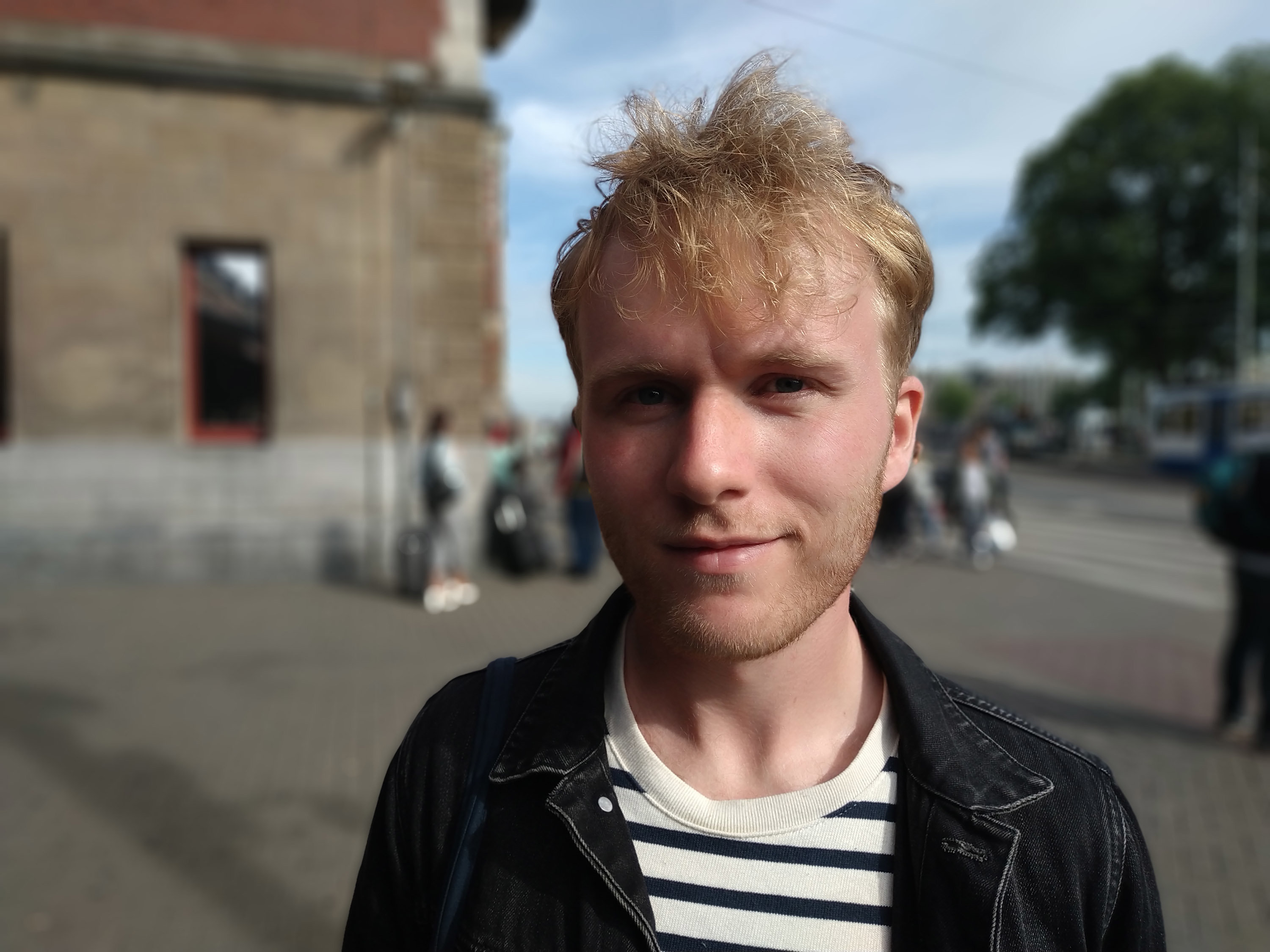
After school, he took Eastern European studies, learned Russian and was about to go to study in Moscow, but he didn’t receive a visa. Therefore, instead of Russia, he went to Kyiv, where he learned Ukrainian. Moreover, Tobias wrote Dutch novel “Kiev op de bodem van een glas” (Kiev on the bottom of the glass). This undoubtedly interesting book about the time of his studies in the capital of Ukraine has already appeared in collections of the Department of Dutch Studies at the University of California at Berkeley. Obviously, it should have been translated into Ukrainian, because such a look on us from a side would be very helpful.
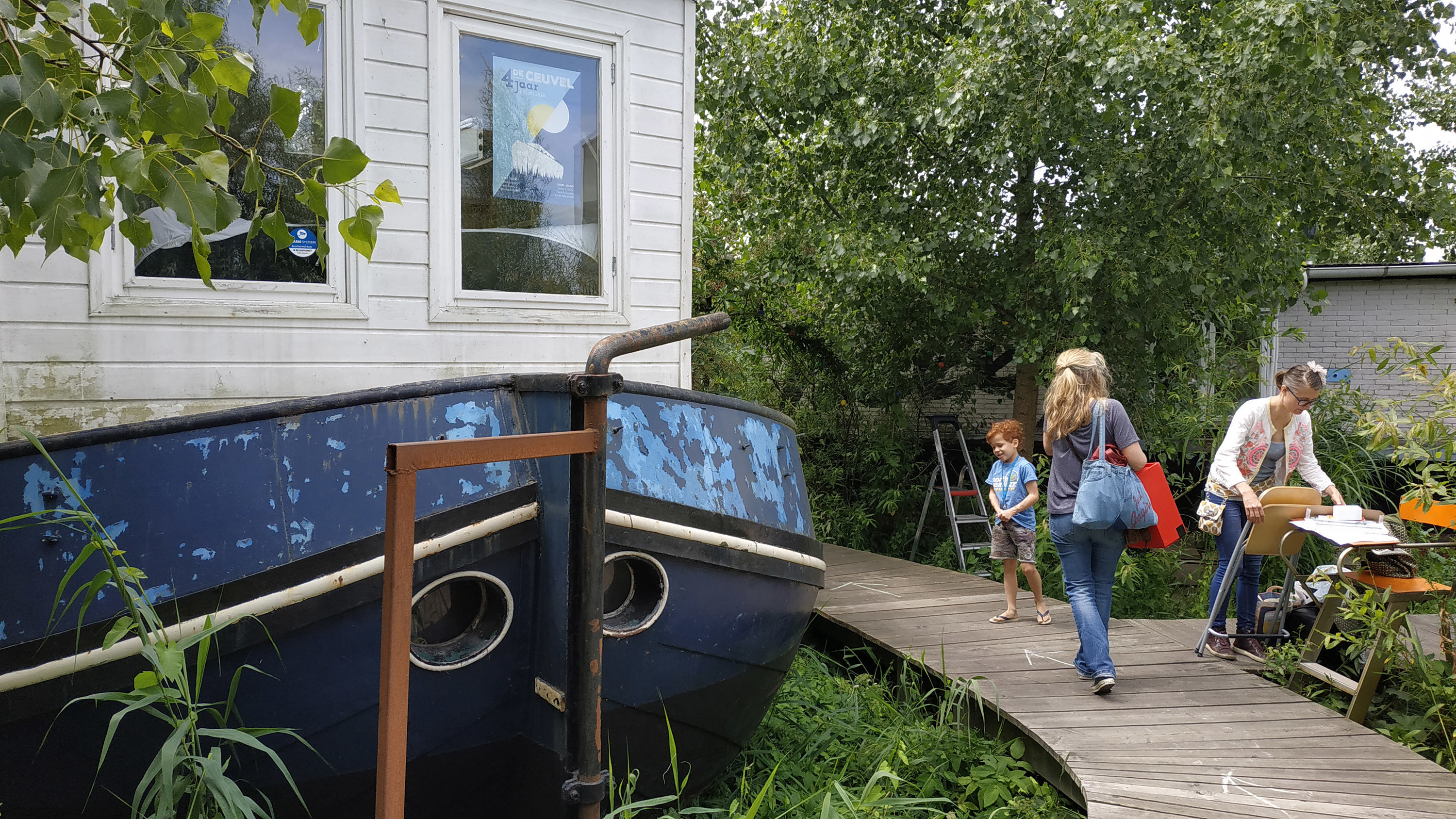
Next to the De Ceuvel art space, where students and artists live in a boat-huts, we went to a local flea market located in the workshops of abandoned factory. This facility offered us things that can be bought at Petrivka in Kyiv, only they were 10-30 times more expensive. Tobias even got a startup – to bring antiques from Kiev to Amsterdam. However, transportation expenditures can make the profitability of this adventure null and void.
Rotterdam
For many travelers Rotterdam begins with its railway station. This building is of such a strange shape that it takes your breath away. It was opened in 2014. The new station has only an old inscription “Centraal Station” and the clock; they were the elements of railway station back in 1957. By the way, eight years ago, before the grand opening of the new station, when the city mayor finally selected the project and it was decided to demolish the old building, letters from its name “Centraal Station” were changed in places and formed a phrase “Traan Laten” (shed a tear). In front of the new station even a 60-year-old tree was planted. Once it grew in front of the old building but construction workers dug it out so that it wouldn’t interfere with their work.
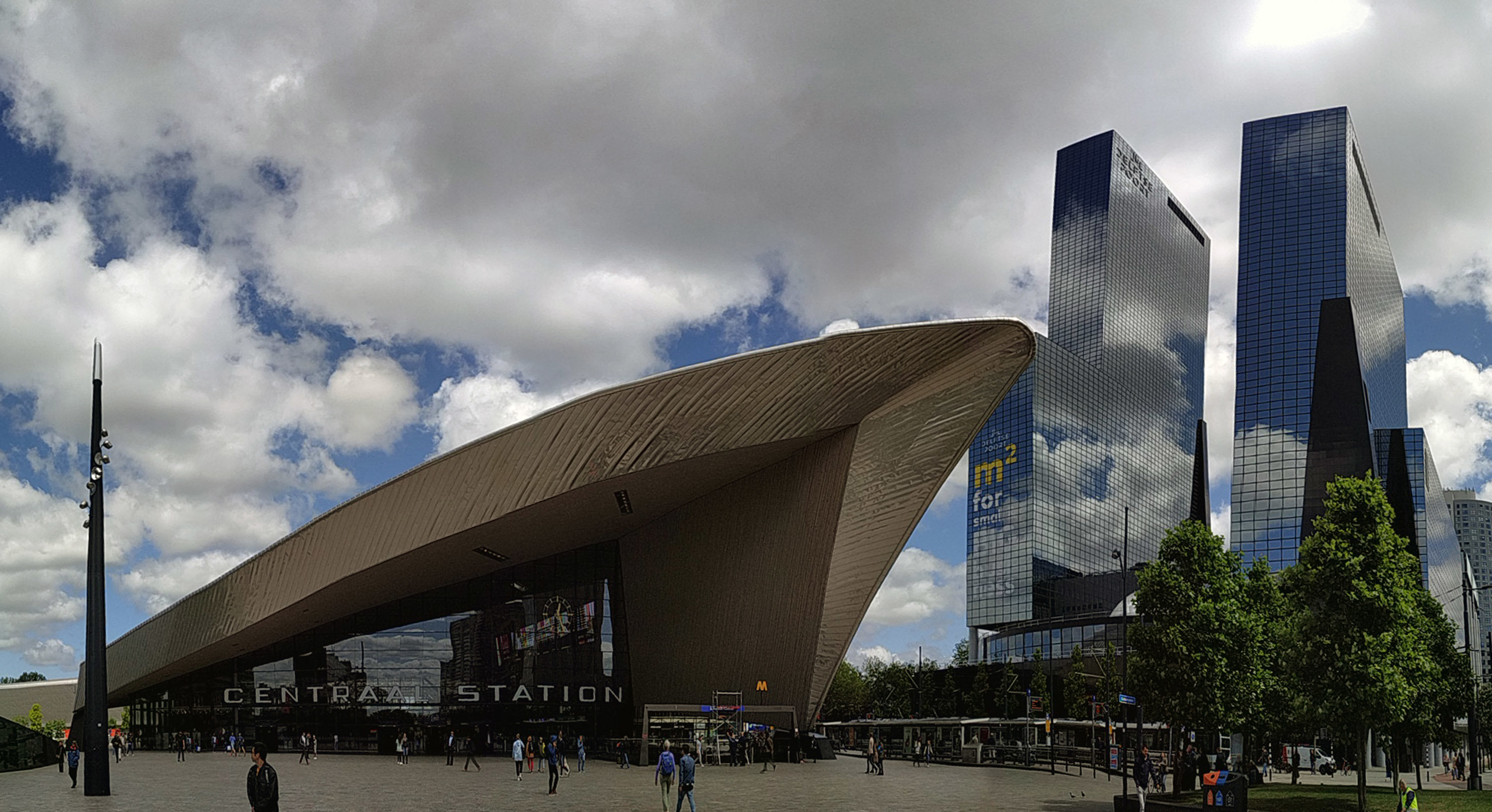
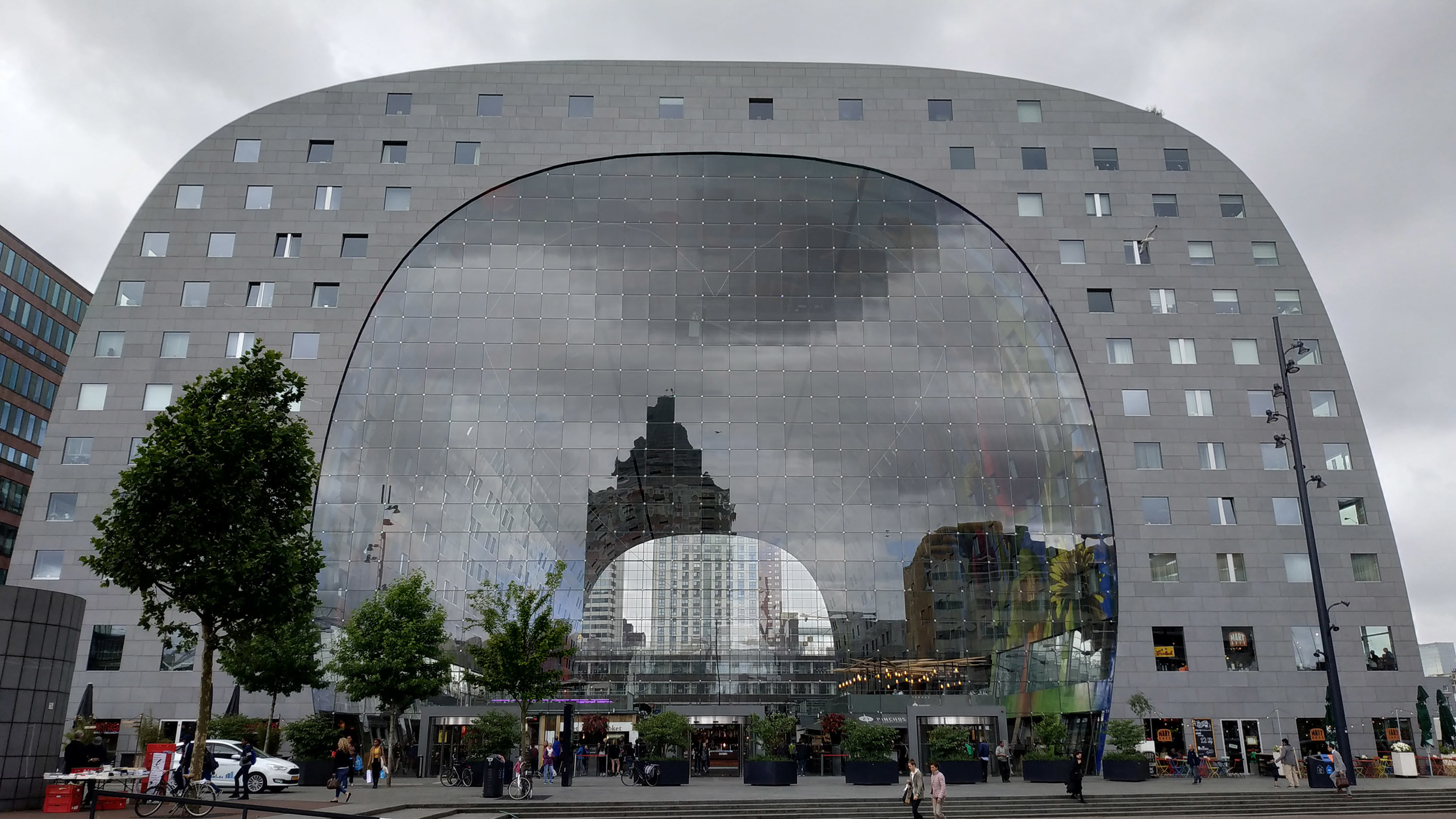
The most unique impression from the Netherlands is, for sure, an architectural shock. When you look at some buildings, it seems that they were designed by aliens and it is not clear how they exist at all. A lot of such buildings are located next to the Markthal – a huge indoor market with such thick walls that they have 228 apartments in them. Under the market’s roof – plethora of supermarkets, restaurants and shops with cheeses, sausages, spices, dried fruits and other delicacies. There you can have a diner for a sum from 5 to 20 euros.
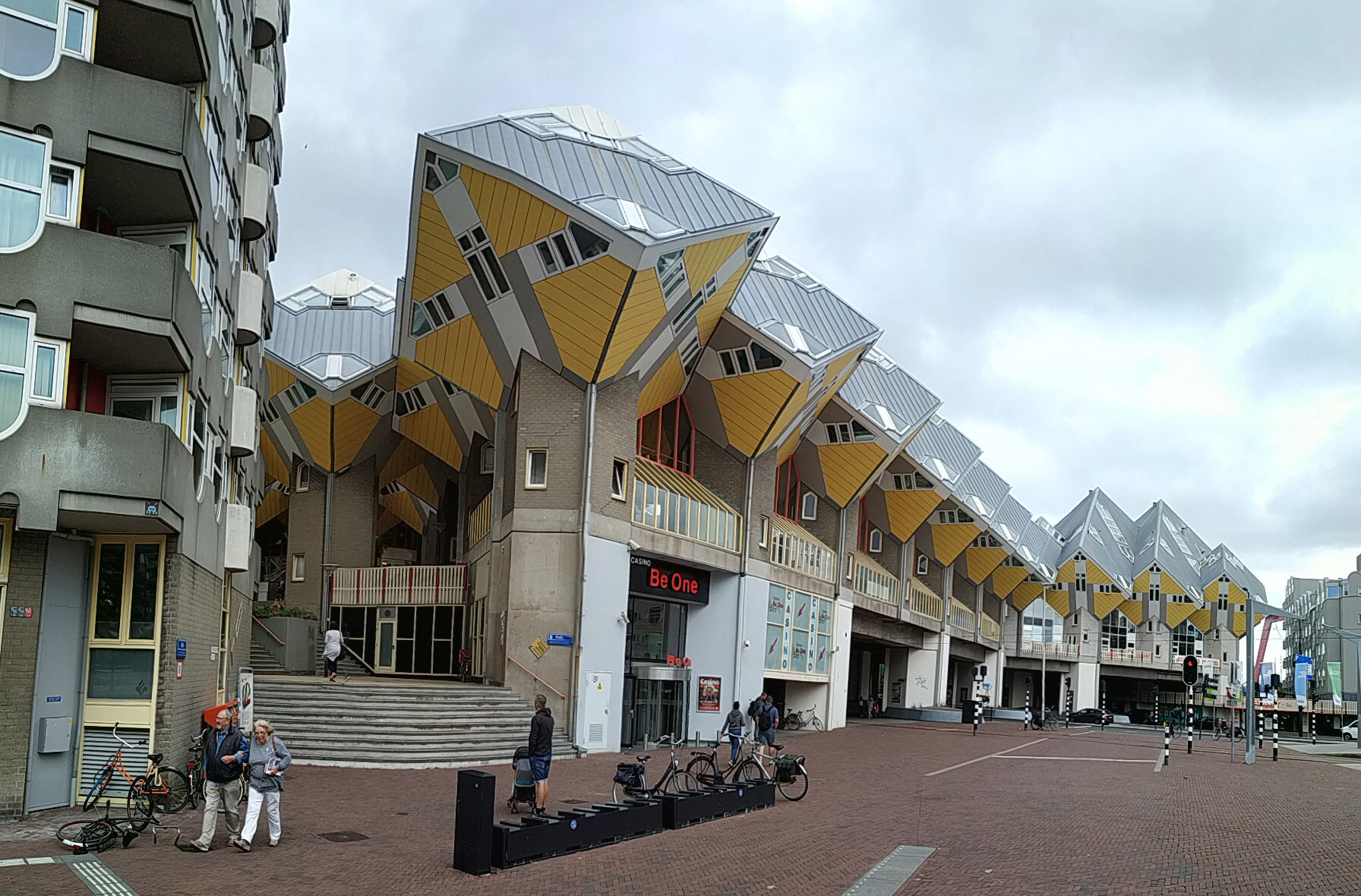
The next architectural wonder is called “Cubic Houses” (Kubuswoningen). The apartments, according to design of architect Piet Blom, are in huge cubes inclined at an angle of 45 degrees. They are placed on octagonal pylons, inside of which there is also a living space. Piet Blom said that he sees this complex as a village inside the city. There every home is a tree, and all of them together are the forest. 39 trees of this type appeared in Rotterdam in 1977. The living space of each house is 100 square meters. Inside there is a corridor, first floor with living room and kitchen. Second floor has two bedrooms and a bathroom. On the third floor situated a small garden. As you can see, the concept of housing of average Dutch is saved here. But unfortunately, nobody lives in these houses: Rotterdam citizens refused to buy apartments there. City authorities offered them for office rent, again they had no luck. Nobody lives in these unique homes yet.
The Maritime Museum is one of the main Rotterdam’s attractions. In addition to enormous and interesting exposition, you can see some real living exhibits there – old Dutch sailors. They just sit inside of old boats and teach children to knit reef knots. I had a chance to talk to three sailors – Bram Koppert, Kris Fennix and Theo Willems.
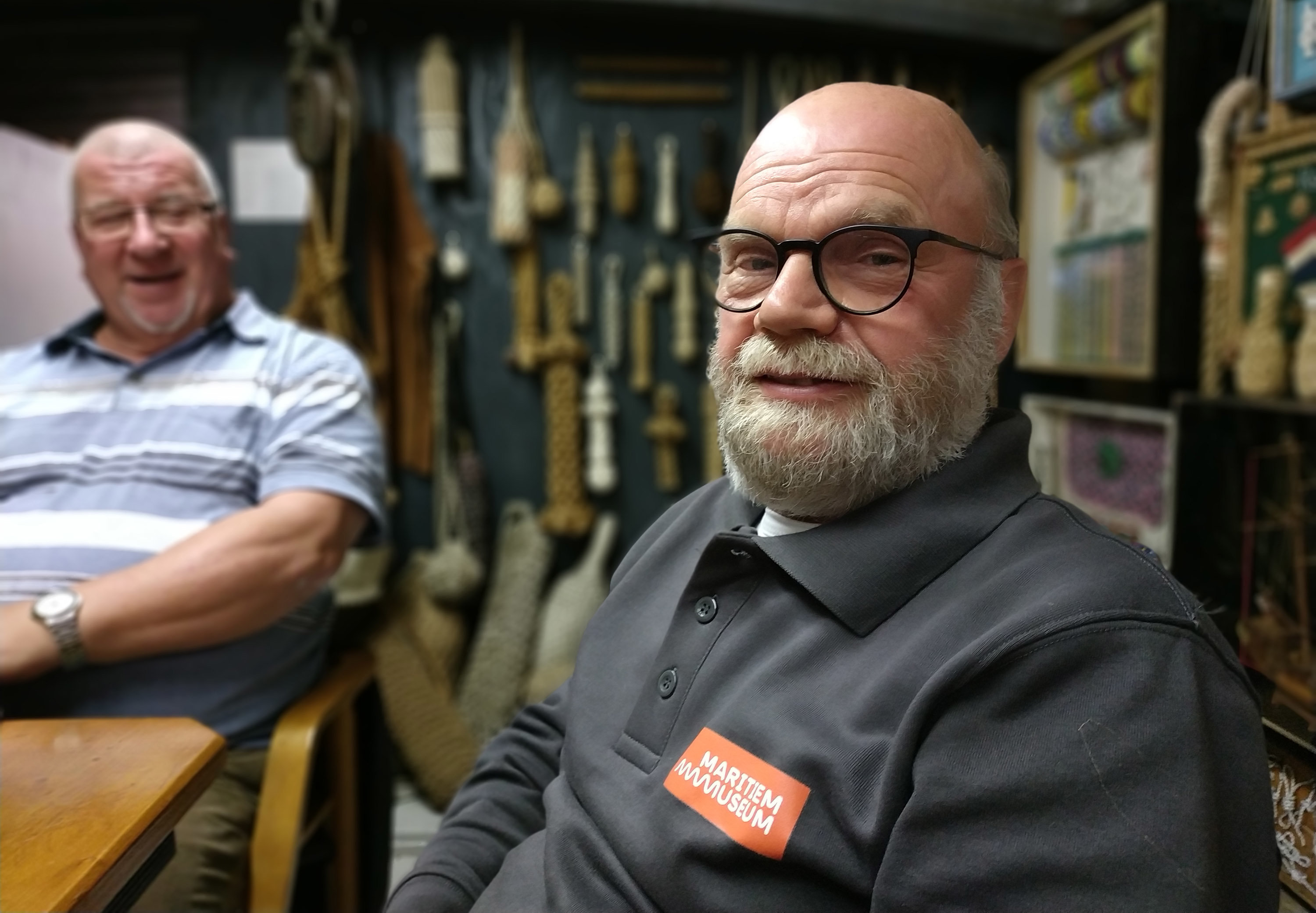
“We know that Ukraine was a breadbasket of the USSR. You grew a lot of bread there,” Bram Coppert told me, “But now we do not know what to do with all the problems that emerged in Ukraine. Russia shot down our passenger plane there and wages aggressive war. How to respond to this, we don’t know.” – “The only thing that’s left is to wait,” I answered, “because in case of any similar answer casualties will be greater.”
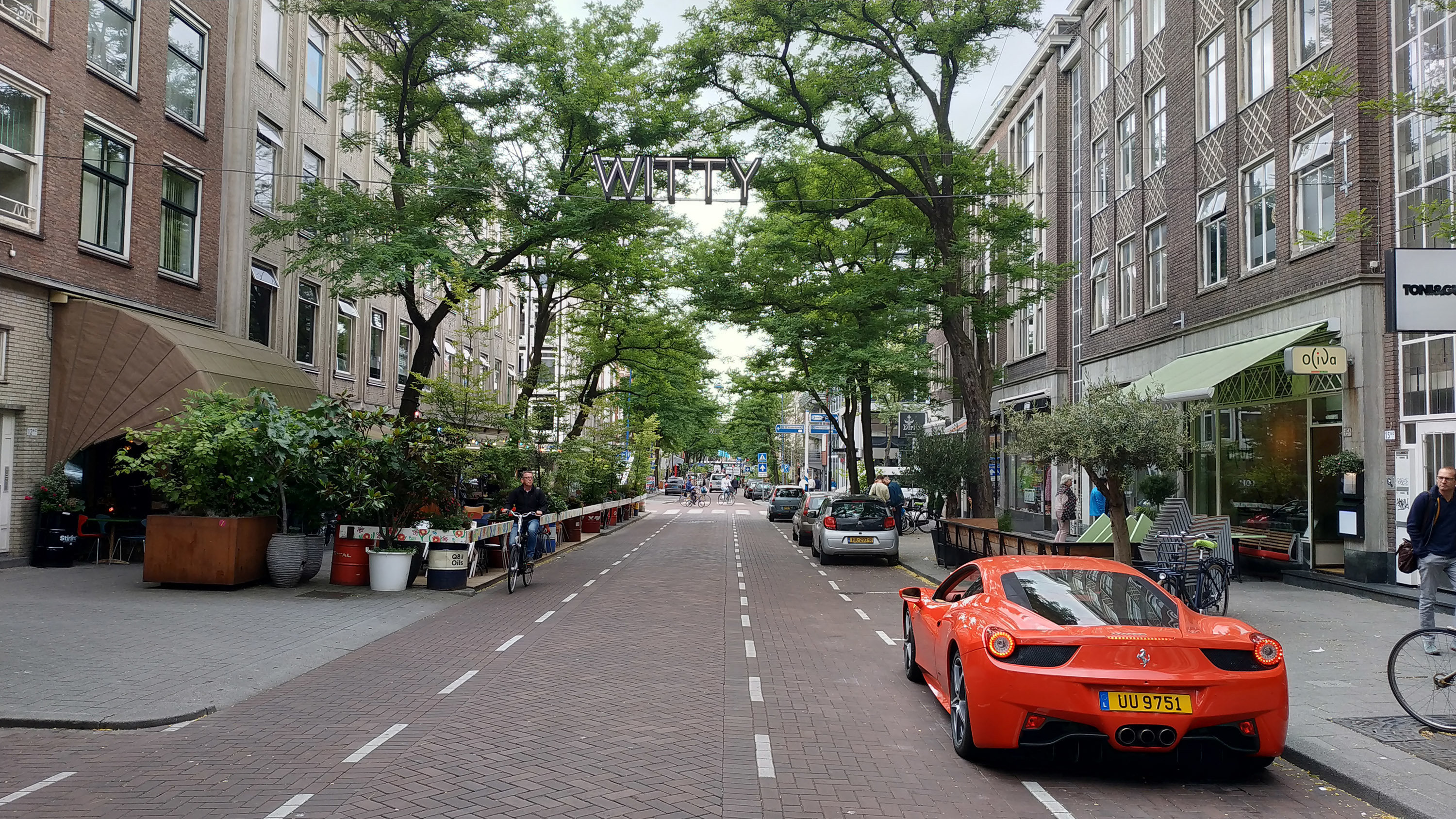
Right next to the Maritime Museum there is a street Witte de Withstraat – an analogue of the Kyiv Podil. It’s worth visiting, just to pop into one of its thrift shops or beer bars and admire awesome graffiti on the walls.
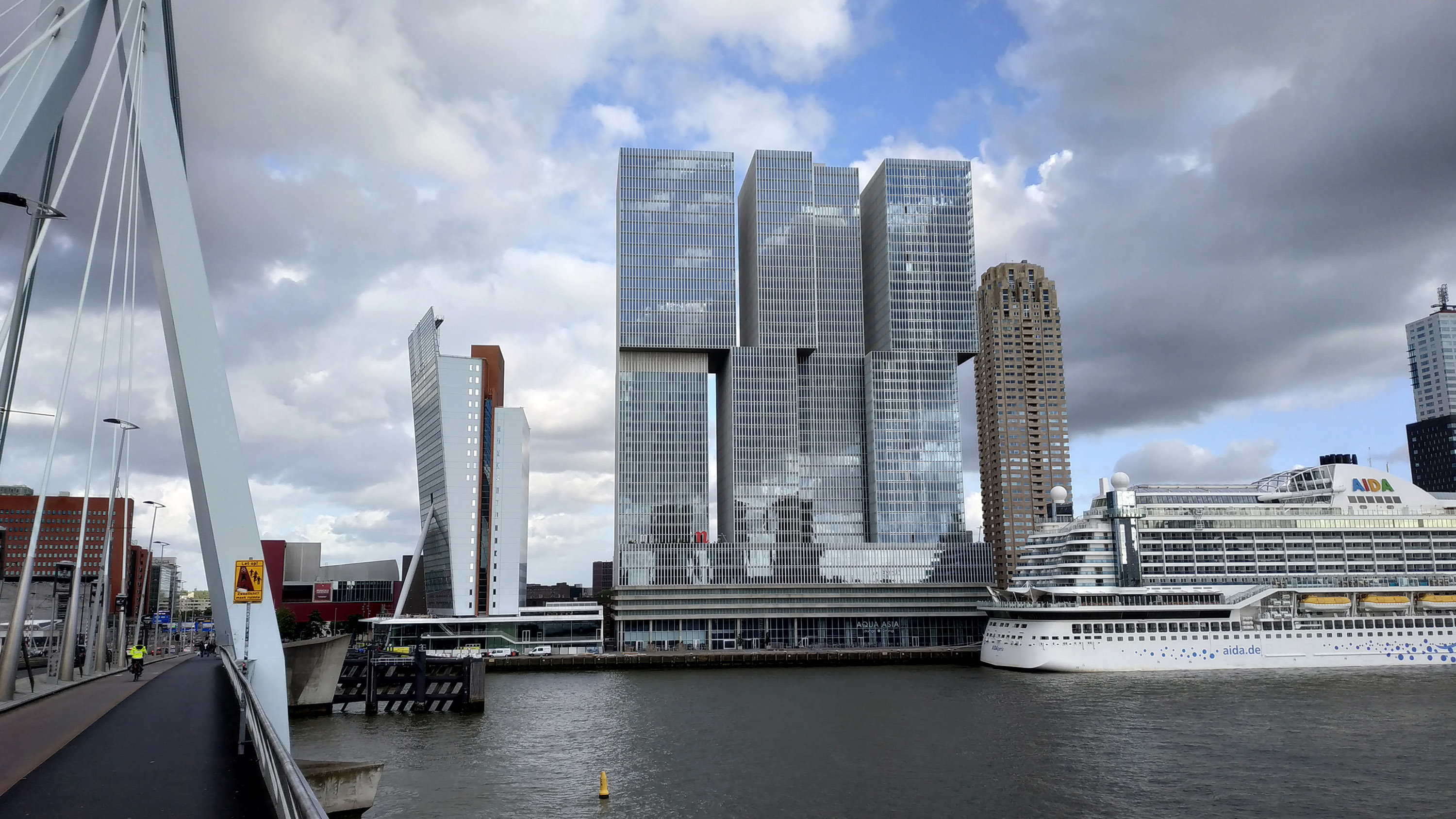
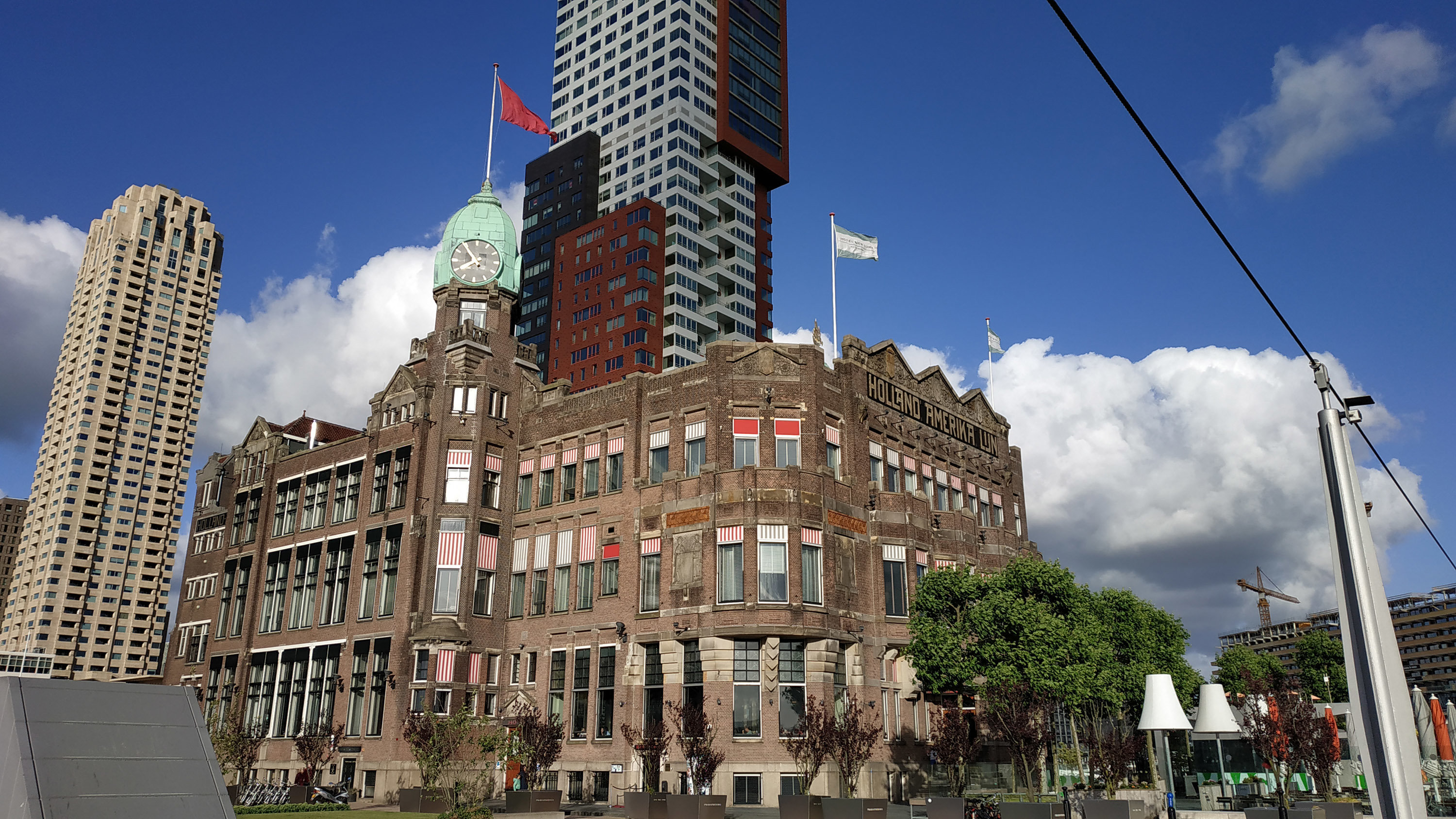
On the banks of the Nieuwe Maas river, three remarkable Rotterdam buildings are situated: De Rotterdam Complex, Hotel New York and KPN Ventures Tower. De Rotterdam was designed by architect Rem Koolhaas. He dreamed of the career in cinema and then he thought that these three strange towers would look very interesting in the film. Reflected in the glass of the car, sometimes they would split, sometimes they would combine. In fact, they resemble some kind of a puzzle. Nearby tower of KPN Ventures (or Southern Tower) looks absolutely fantastic: this is a 23-story house; it’s very inclined forward but doesn’t fall. It may seem that it happens only because it is supported by a giant column in a form of a ballpoint pen. Indeed, according to its architect Renzo Piano, this house would stay still without this column. Hotel New York is well known for the fact that there from the year 1873 to 1989 was located the Holland America Line office. It transshipped hundreds of thousands of European emigrants to the United States. The hotel building is designed in Art Deco style, elaborated and slightly sweetened version of modernism.
Coming back from the Netherlands, a few things that are not affected by the widespread globalization are worth taking. What can you take with you in addition to memoirs, hundreds of photos, bunch of shells from the shores of the North Sea and railway tickets? A bag of liquorice candies from the Harlem fair? A pack of round honey and caramel waffles from Amsterdam? Can of Rotterdam’s herring? Most of all I wanted to take Markthal and Hotel New York. Everyone chooses a piece of the Netherlands to their liking.
Text: Oleh Shynkarenko