


One of the most discussed episodes of the Lviv Media Forum-2018, which took place in May, was a scandal that erupted due to the sexist statements of the famous football journalist Artem Franko against women, particularly of the football journalism. Unfortunately, the stereotypes that determine the various public expectations regarding the roles, functions and powers of women and men in Ukrainian society are still very strong. And not only women but men also suffer from them. This was vividly confirmed by the results of the first national comprehensive study “Modern understanding of masculinity: the attitude of men to gender stereotypes and violence against women” conducted by the Institute of Demography and Social Research in cooperation with the Ministry of Social Policy and the Ukrainian representation of the UNFPA and presented in Kyiv on June 13.
“We saw an interesting thing,” said UNFPA representative in Ukraine, Mr. Kaspar Peak. “Men of all strata of the population, all educational levels and all parts of Ukraine demonstrate similar thoughts and attitudes when it comes to gender-related violence. The obtained results will help us and many others to formulate policies and programs that promote the equality of women and men in Ukrainian society”.
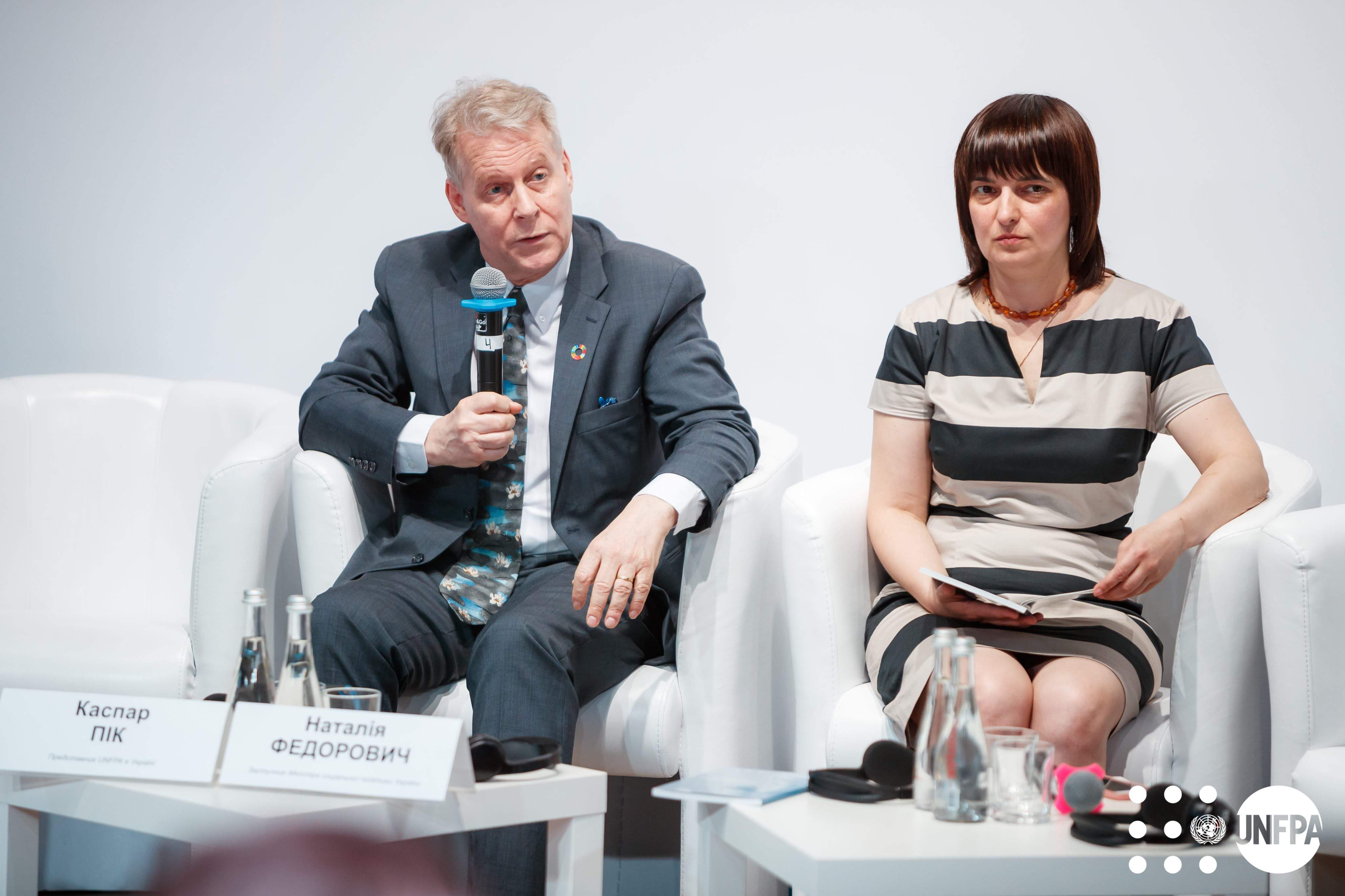
UNFPA Representative in Ukraine Kaspar Peak and Deputy Minister of Social Policy of Ukraine Natalya Fedorovych
Formation of the individual, particularly the male, has always been pressured by society and culture, and this, in some way, regulates life. Therefore, studies of sociocultural practices of men have obvious applied results not only in the context of promoting gender equality, but also in solving other social issues: creating a progressive education system, developing the health sector and improving the socio-demographic situation, improving labor market policies and enhancing social protection of workers with family obligations, raising public safety an so on.
“’Gender’ is a social construct, and people have the opportunity to influence the formation and content of the notions of “masculine” and “feminine, – said British Ambassador to Ukraine Judith Gough. ” Overcoming gender stereotypes that determine the behavior of adult men is a difficult task. Ensuring gender equality and finding effective strategies to address these important social problems remain among the priorities of the UK government”.
“Perfect wife”
In Ukrainian society, there are still stable expectations regarding models of marital relations, according to which, men are assigned the role of family breadwinner, and women are responsible for economic management, caring for the family and caring for children.
In particular, 67% of respondents believe that a man should have a decisive word in the family. 70% of the men interviewed agreed with the statement that the most important role of the woman is to take care of her own home and prepare food for the family. Today, on average, a Ukrainian woman spends 29 hours on homework and spends 49 hours a week with children, and a man, respectively, 15 and 22.
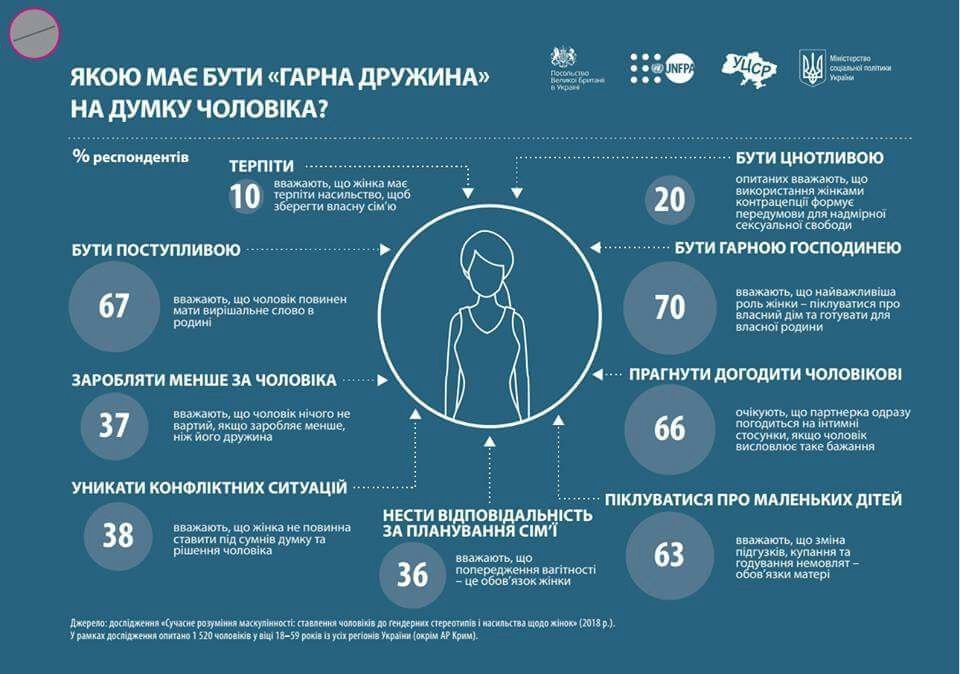
63% of Ukrainian men believe that changing diapers, bathing and feeding babies is the mother’s responsibility. Only 27% took leave to care for the child. At the same time, the leave was short: only one person was on leave during a year. Most of those, who took leave after the birth of the child, were divided into 4 groups: 1-3 days – 20%, 4-7 days – 24%, 8-14 days – 28%, 15 days and longer – 28%.
“In Sweden, every parent is given 90 days of leave, which cannot be transferred between family members”, – said Ambassador of the Kingdom of Sweden Martin Hagstrom about the experience of his country. “Now men take 30% of this leave. The process of changing the perception of social roles has been long in Sweden. Ukraine just begins it.
It is very important to talk about paternity. I see the modern generation of Ukrainian fathers, and I think it’s different. Walking with my child around the city, I see more men with children, I am very happy”.
The results of the survey demonstrate a gradual transformation of gender norms among young men. A significant part of the youth (18-24 years old) expressed the conviction that all family affairs should be carried out together or equally distributed between husband and wife. Among the younger men there are growing attitudes toward responsible paternity, they demonstrate a greater interest in their own children, interested in matters of pregnancy planning, are attached to partnered births. However, the distribution of responsibilities for further development of the child remains quite traditional even among young people.
Domestic and gender-related violence
The formation of a personality is greatly influenced by relations between parents. So, every 7th person witnessed physical violence against the mother on the part of the father. 50% of men experienced physical punishment in the childhood by their parents. This experience negatively affects the child’s psyche and can lead to the perception of domestic violence as norms in the relationship.
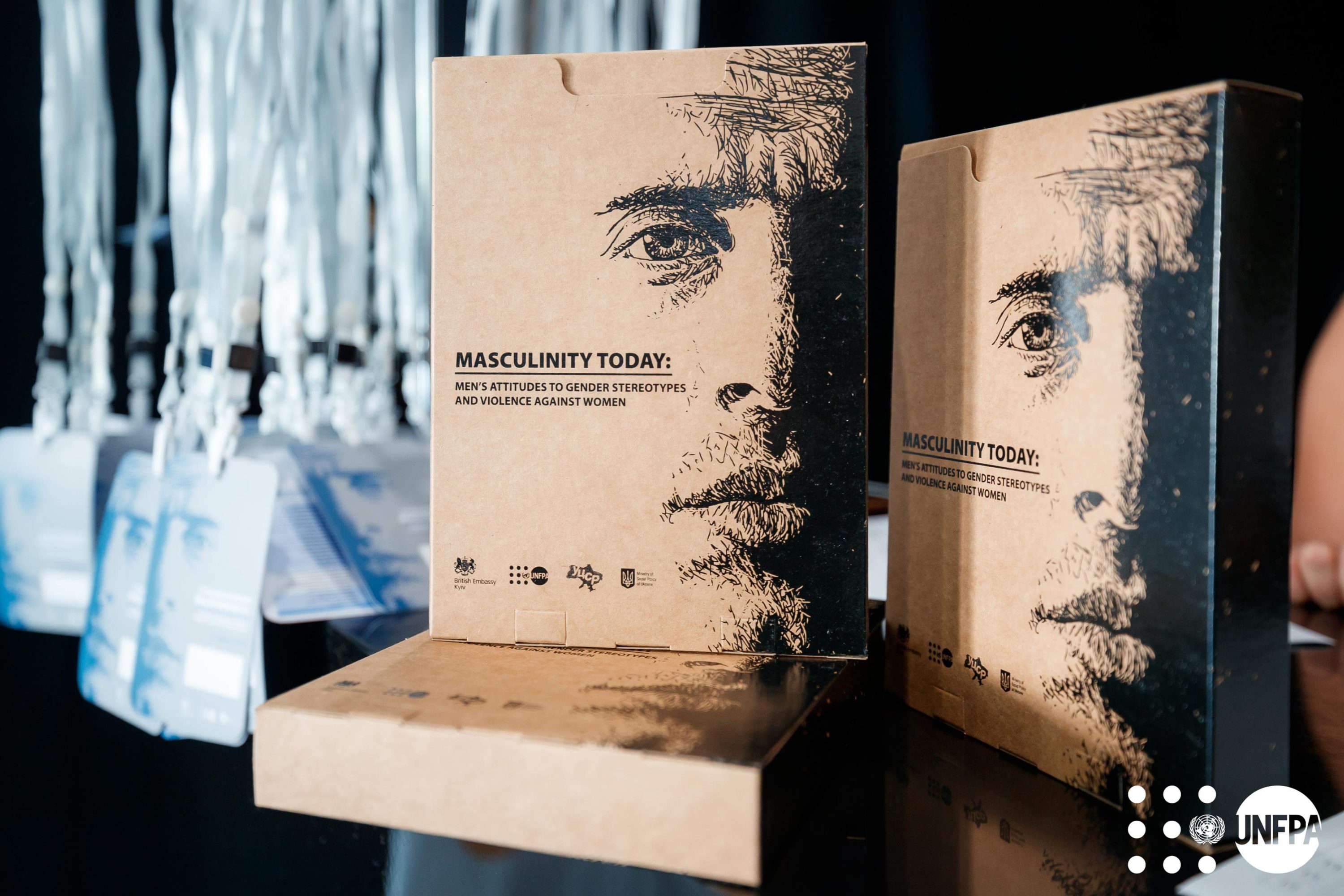
The study “Modern understanding of masculinity: the relationship of men to gender stereotypes and violence against women”
The results of the study showed a rather high tolerance of men to domestic violence (18% of respondents justify physical violence in case of adultery) and bias against victims of sexual violence, who are often accused of provoking crimes by their behavior or way of life (50% doubt the possibility of rape if the woman was under the influence of alcohol or drugs, 43% believe that in case of rape should be understood was a victim indiscriminate in relationships or had a bad reputation). 66% expect that a woman immediately agrees to intimate relationship if a man expresses this desire.
The formation of male identity is subject to constant pressure from society, which puts forward certain requirements, regarding norms and standards of behavior of men. The discrepancy between these expectations and their implementation in real life can lead to negative consequences. Men have confirmed that they are facing stress disorders. From 10 to 25% reported on anxiety attacks, depression, sleep disorders. At the same time, the appeal to psychologists is perceived as something unrealistic.
Because of lack of implementation, men can look for other ways to confirm their own masculinity, in particular – through the alcohol abuse, the spread of risky behaviors that cause extremely high mortality of men, or the manifestation of aggression, especially in the immediate surroundings.
Thus, 32% of the interviewed have male acquaintances, who committed physical violence against their own wives or partners. One-third of them consider this to be the personal affair of the spouses. 31% of men admitted that they committed emotional violence (insulted or intentionally forced to think badly of themselves, tried to intimidate, humiliated in the presence of others, damaged important things to hurt, etc.) against their partners. 15% committed economic, and 13% committed physical violence.
Domestic violence has a systemic nature, and the predisposition of offenders to aggressive behavior is manifested in relationships with other people. Thus, 83% of respondents had conflicts with affected family members more than once. 55% at the time of committing was under the influence of alcohol or other stimulants. 33% have come into conflict with other persons, not only members of the family.
Since domestic violence is often perceived as a private problem, 57% of respondents think that it should not be taken out of the family, the abusers are ready to listen primarily to their immediate surroundings – parents, relatives (31%) and friends (26%).
“A somewhat unexpected result of the research for us was that not an opinion of leaders or social institutions affect men, namely their immediate surroundings, – said Deputy Minister of Social Policy Natalia Fedorovich. “It complicates our tasks, but it also gives us a great chance: through working with parents, relatives, friends – the closest people for men, to create behavior, centered on respect for the dignity of every person”.
Who is better?
Although men assess the professional qualities of women impartially (79% agree that women and men with the same qualifications can equally do their jobs well, 81% consider that women should receive equal wages with men for the work of equal value, and 74% do not object, that women can be as good leaders of communities as men), 82% are sure that there are “female” and “male” professions. 50% – that men are better political leaders than women.
This forms a kind of vicious circle that determines in advance the prospects for development and a certain future path for both women and men – certain professions, certain types of activity, certain spheres, where they can realize themselves.
These expectations have other consequences – an attempt by men to control their partners. 53% tend to know all the time where the partner is. 32% believe that their opinion on the decisions, on which the joint life depends, is significant. 22% do not allow a partner to wear some clothes or make a certain make-up. 18% decide with whom she should spend time.
Unfortunately, gender stereotypes regarding the roles, powers and responsibilities of women and men are still being reproduced, for example, in the school system, are imposed by the media and advertising.
“Mammoths have become extinct, but the stereotypes, regarding the roles of men and women have remained, – said Deputy Minister of Education and Science Roman Greba. “It is necessary to finally define the concept and correctly interpret them, therefore, gender is not equal to LGBT, and gender equality not only promotes the right to self-realization but is also useful to men. In particular, now they live less precisely because of the pernicious influence of these stereotypes. Therefore, gender expertise of school textbooks is very important that it will contribute to the upbringing of a new generation”.
Reference:
The survey covered 1520 randomly selected men aged 18-59 years in all regions of Ukraine, except AR Crimea. Almost a third of the men surveyed represented the age group of 18-29 years, a quarter – 30-39 years, the rest were evenly distributed among the older age groups. The majority of respondents had primary vocational or specialized secondary education (42%), as well as full or incomplete higher education (38%). The selected population is representative at the national level.
Text: Hanna Drozd