
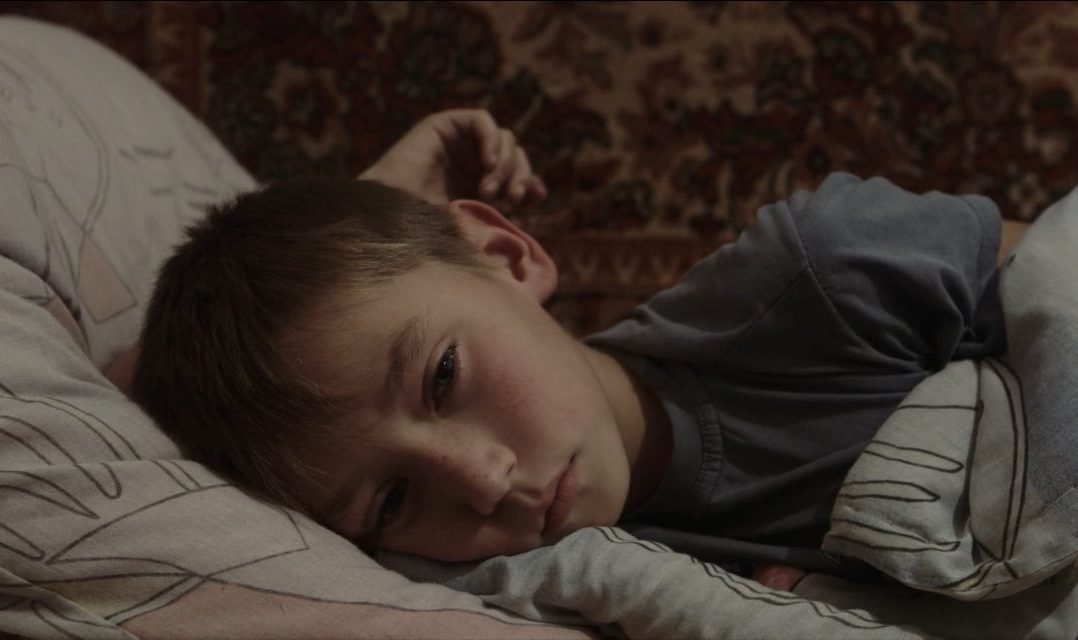


Danish film director Simon Lereng Wilmont has shot a deep and sensitive documentary about Ukrainian boy Oleg, his grandma and closest friends. They are living in so-called “grey zone” in Eastern Ukraine where anti-terrorist operation is taking place for almost 4 years already. Processes of growing up, building trust and losing closest ones – all of these are in “Distant Barking Of Dogs”. DUMKA has spoken to the director, who is currently in Serbia about his work and life in Ukraine.
Spoiler alert
Hello, Simon. What are you doing in Serbia?
We have a lot of screenings with this film, and now we’re at the documentary film festival in Beograd.
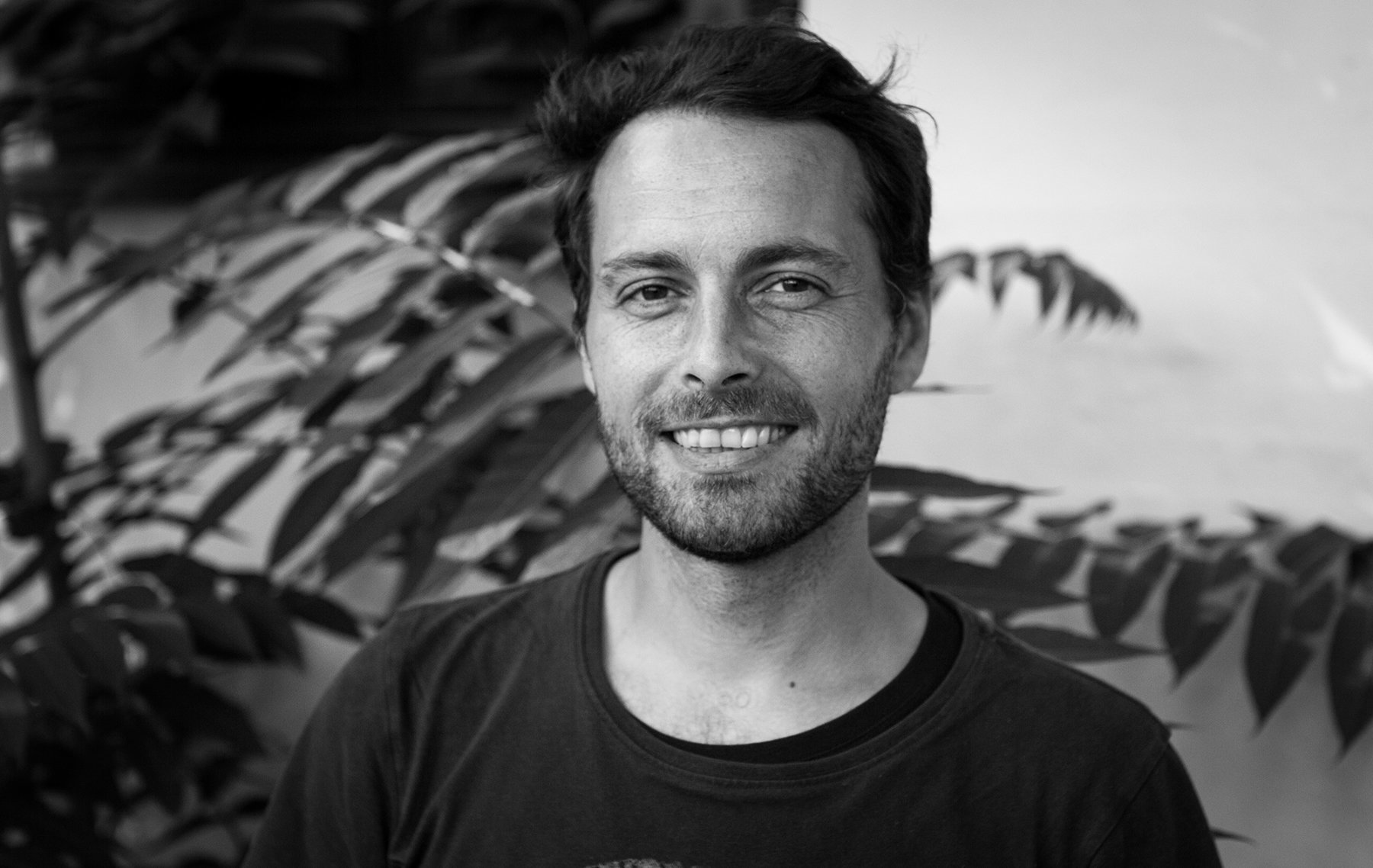
Simon Lereng Wilmont
And how’s the feedback?
Wow. It’s been an amazing Journey, actually, from the very beginning. We premiered it at the IDFA which is kinda Oscar for documentaries and we won a New Talent Award there. Since then it just exploded and we’re at, I think 19 awards now. It’s been fantastic.
Did your heroes see the movie?
Sure. I wouldn’t dream of putting the movie out without them seeing it. They were actually the first to see it. We went to the small cinema and we screened it just for the main protagonists – Oleg, Alexandra, Yarik and Kostya and Aliona. It was a wonderful screening. They were very happy about it. Kostya was a little bit worried about him swearing too much in the movie but anyway they all were having a really good time watching it.
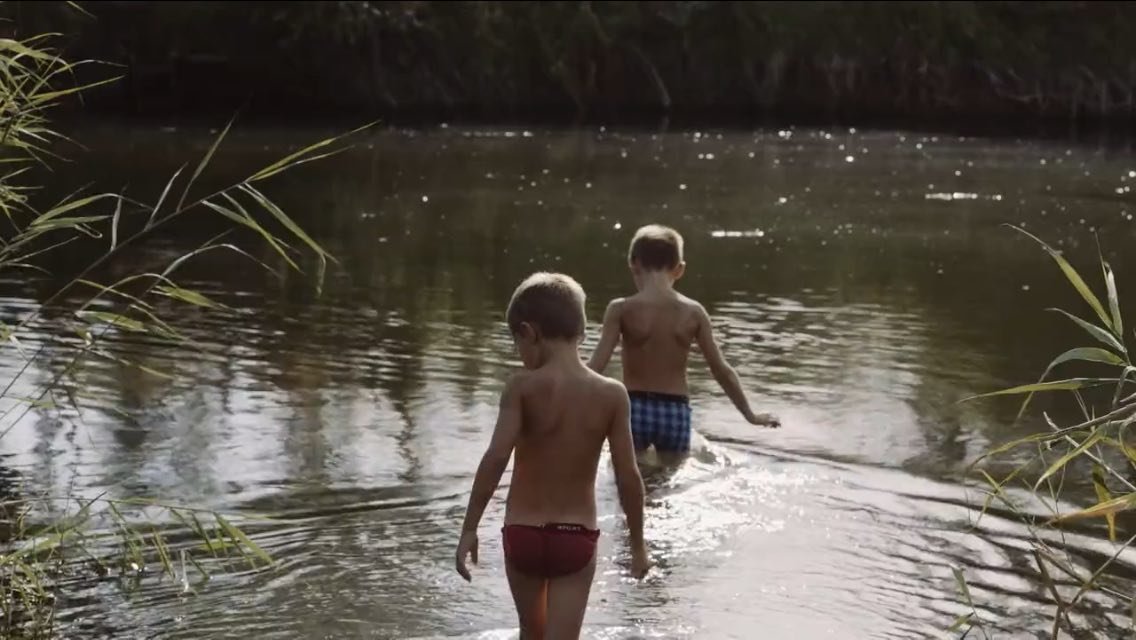
the scene from “Distant Barking Of Dogs”
And how are they at the moment? Do they still stay there in the grey zone?
Yarik went back to live with his mom and her new husband, so he’s not at Hnutove atm. But Oleg, Alexandra and Kostya are still living there.
Are they still planning on staying there?
You know, I always felt like Alexandra is discussing with herself whether they should stay or leave. I don’t think that she had made a decision to stay there “no matter what…” I’m sure she’s constantly trying to find out isn’t it too dangerous to stay there.
What was first? Your idea of filming this particular story or had you just found them and decided to make a movie after? How did you find them?
I was on the lookout for a kid who lived in a conflict area. I had this kind of interest in finding out how your childhood passes if you grow up in a conflict zone where your whole world is very unstable and dangerous. Where do you go to find stability and comfort, something to build your future?
So, me and my fixer, we both went down to this part of the frontline. We went to the school to ask if they have some pupils who were living close to shellings or may have been shelled. We’ve met a lot of kids there. And I would always ask them a question – Can you explain how does it feel when you’re afraid under the bombings? It gives you a good idea whether a child can describe his or her emotions. So, none of the kids we’ve met could really do that, until we met Oleg. He just looked at me, like it was an everyday question and said:” When the first cannon starts to fire it feels like an invisible hand reaches into my chest and grabs my heart. And squeezes it with an impact until my heart is a small cold rock. That’s how I feel when I’m afraid.”
I still have this on tape.
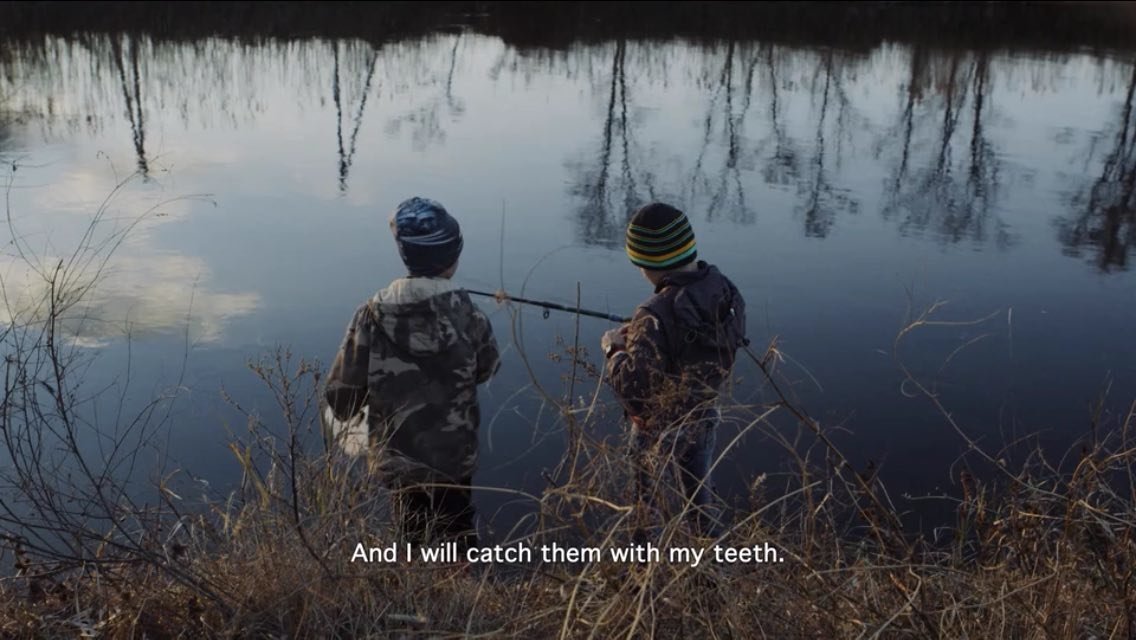
the scene from “Distant Barking Of Dogs”
And what about Alexandra? How she became a part of this? It looked like this was the only family in the whole world who could tell this story and you found them.
To be true, filming these special relationships wasn’t planned. It was something discovered by the way.
Really? In the movie itself you’ve never named Alexandra and it seemed like her character was planned as an Archetype character. Archetype of woman and defender. I was wondering if this was intended decision, but now I see it wasn’t and this is amazing.
Yeah, it’s always like this with documentaries – first you find out that you have this amazing boy, and then you also realize that you have this incredibly strong, caring and smart woman. She has a full custody at Oleg, they live together and she does everything she can to protect him from the worst of the war, while he in a way gives her a hope and a strength that she needs to keep doing this. And it was something that I’ve learned through filming process. This part wasn’t planned at all. There’s no fiction in this film and Alexandra really seems like the Archetype character, but it’s just because people are always looking to these red threads of collective experience. She’s just a regular woman in these extreme circumstances.
And what is your method of working with children? I’ve looked through your filmography and saw that you’ve been shooting kids before. How do you gain such level of trust as with Oleg?
First of all, you need to find a person who feels indifferent to the camera when it’s close. Some people have this ability of not paying attention at all. That being said – I’m spending a lot of time with kids, just hanging out with them doing same things as them, without a camera. Bathing in the river, hanging out together, chatting about everything. Then at some point I just say – ok, for the next hour I’m not here. At the beginning of shooting process they would always tease me – look straight to the camera, trying to provoke a reaction, but soon I realized – if you ignore them they start to think that you’re just a boring adult. After this magic happens.
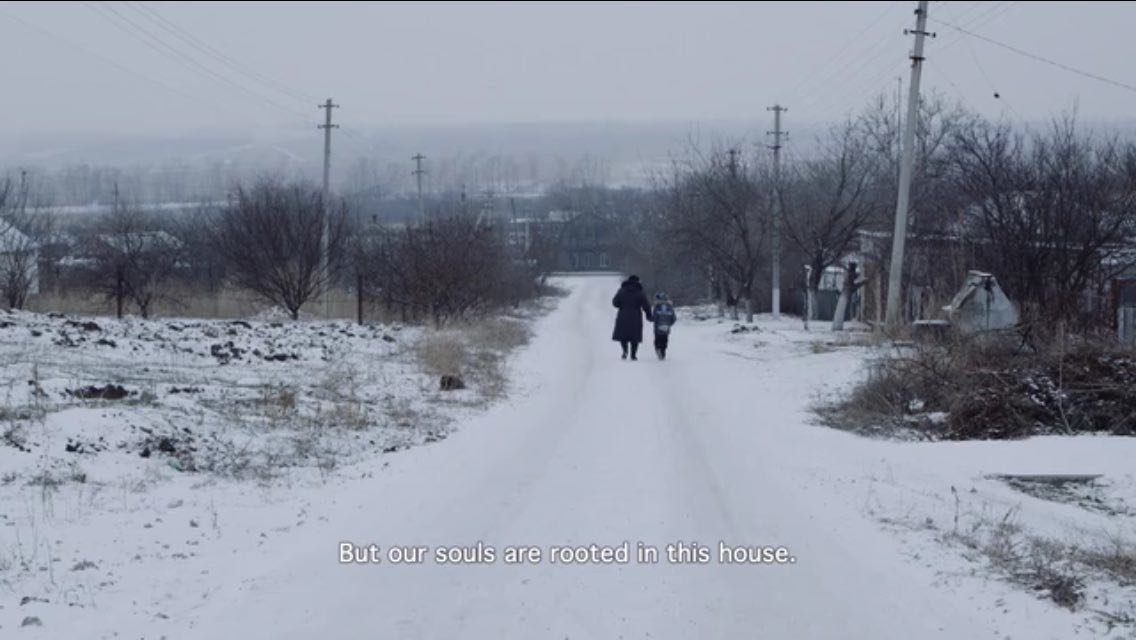
the scene from “Distant Barking Of Dogs”
Weren’t you feeling responsible for them at all those risky situations while shooting? Running under the bombings, shooting, swimming in the river? How did you balance your work and these ethical questions?
I had so many ethical questions during the process. In the very beginning I was very cautious and there have been a lot of things that I said we can’t do due to its high-risk nature. In that scene by the river I was worried and asked them 20 minutes before it was shot – should we go home, because the bombing had started? And then of course they turned to me and said – no way we’re going home, we going to stay here, make a fire and cook our potatoes. So I had this choice between forcing them to go home or to stay and shoot this very powerful moment with my med-kit ready if something happens. I had a lot of talking with my fixer of how not to restrict them too much so it wouldn’t all of a sudden become the world I created.
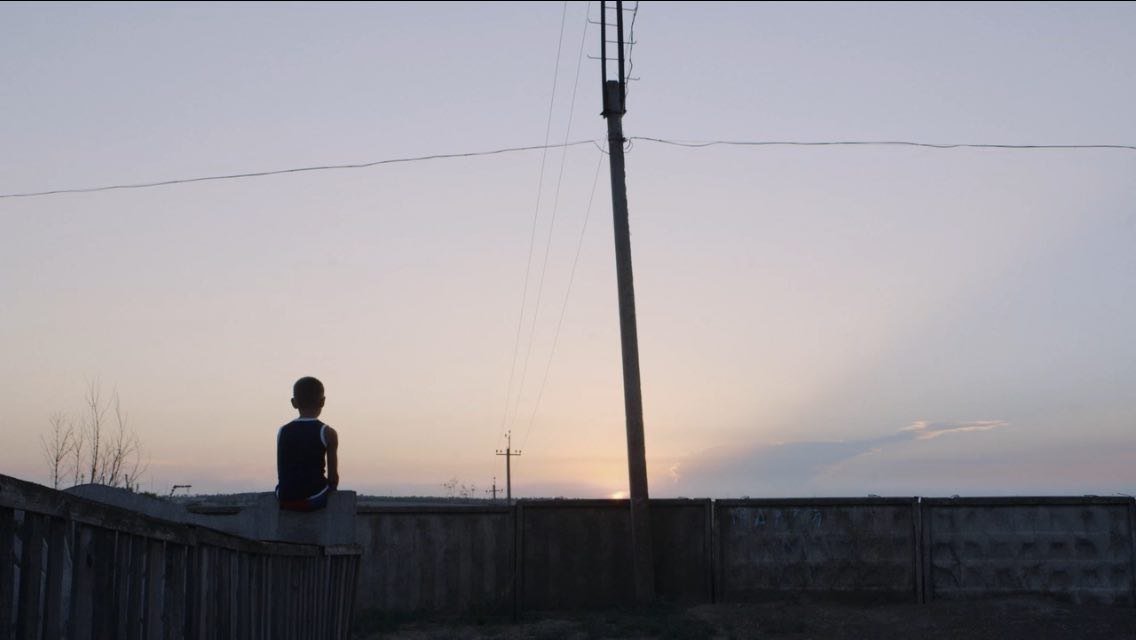
the scene from “Distant Barking Of Dogs”
And of course, at the beginning of filming they were hurting themselves all the time – cutting themselves, jumping from high points, fighting. So by the end I just got used to this way of living. We carried a med-kit all the time. At this scene when they’re playing with a gun and shooting frogs I also reached this level when I think – what’s the worst that can happen?
Tell me more about technical aspects of this work. How long did it take to shoot all needed material? We see seasons changing in the movie.
Shooting process took roughly year and a half. I would come back every second month for one week shooting. So it’s 10 weeks of shooting but spread over 1.5 years roughly.
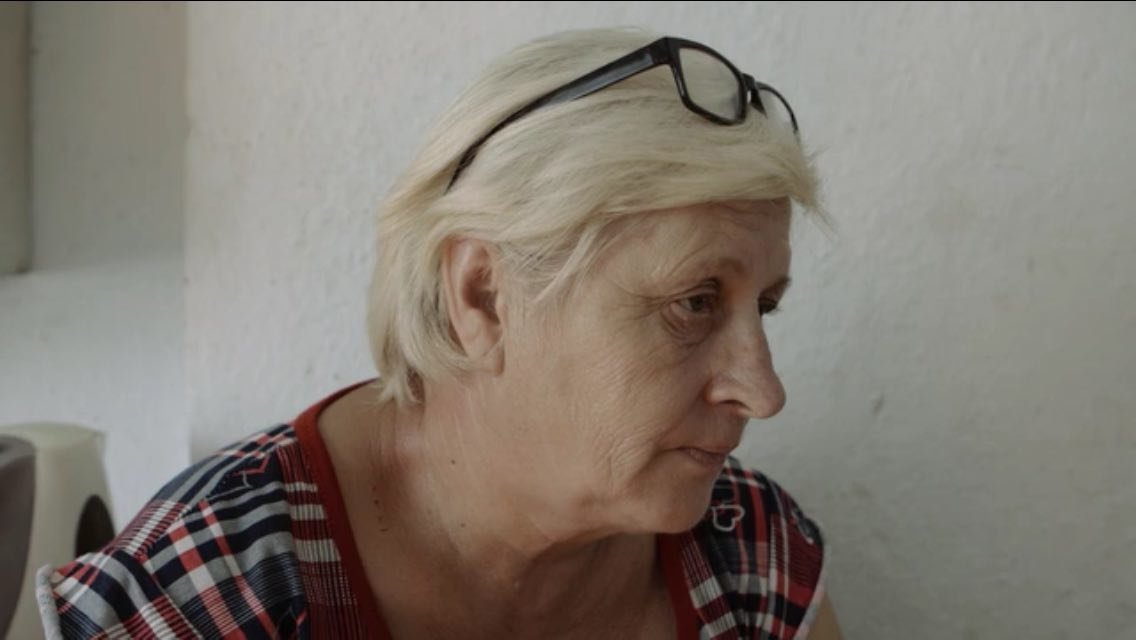
the scene from “Distant Barking Of Dogs”
Did you have a translator?
My crew was me and my brilliant fixer. He was also working as a translator for me. But he was away when we are shooting. He taught me 20 basic phrases that I would need during this. He taught the word “strelyat’” so I could understand they were talking about something important, related to war. Afterwards I would call my fixer asking him if he heard what were they talking about. Sometimes he did, sometimes he didn’t – then he would ask them to repeat.
Let’s speak about the last scene in the movie. Did you leave Alexandra a camera to shoot it?
I think half-way into the project I understood that even though I’m there I might sometimes be not there to film a really heavy shelling. And I wanted it in the movie. So at some point I asked Alexandra – could you film a little bit when it’s really rough if I’m not there. She was very happy to do it. She made 4 or 5 recording and this one was the most powerful and iconic. I also thought it would be a really nice thing to end the film with something that she provided.
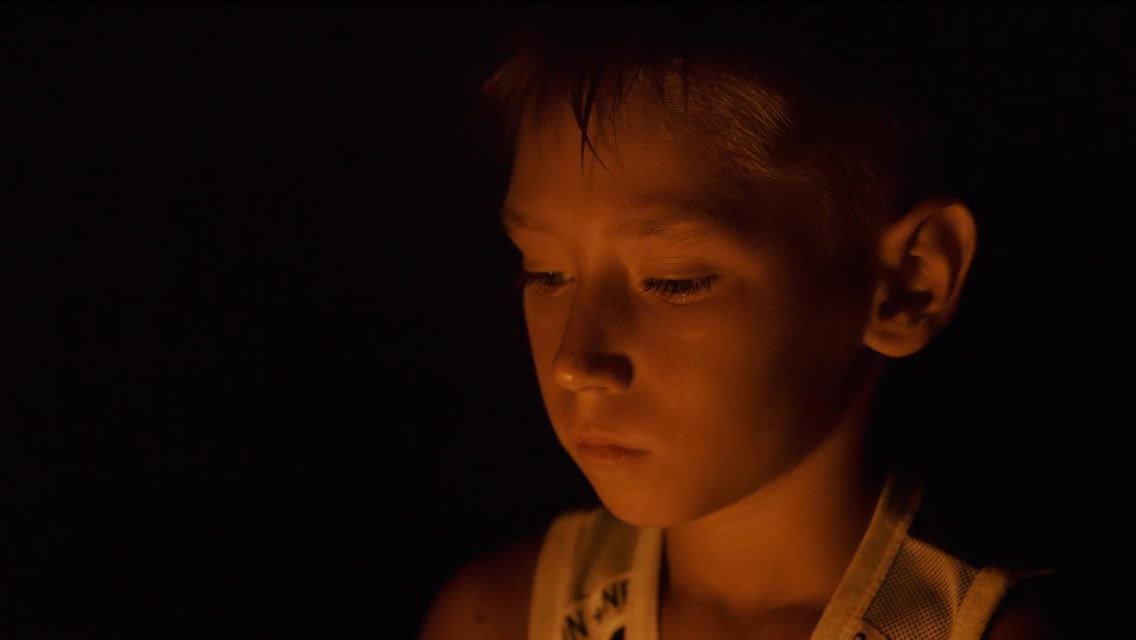
the scene from “Distant Barking Of Dogs”
And what about her lines? This very calm, philosophical manner of speaking leaves a sense of reading from the paper.
I usually don’t do interviews with my characters. But she was used to journalists coming out and this was the best way to calm her down. It also was the best way for me to get an update of what had happened since the last time I was there. I wasn’t planning to use these interviews in the film but at some point, my fixer said – listen, she’s actually saying things that sound really poetic. So I tried to cut those things out and place them there while editing.
Last question will be about the naming. Where did the title come from? We don’t really see the dogs during the film but hear them constantly.
There are a lot of reasons why it’s called like that, but the most predominant one is this thing that I’ve learned from soldiers. They keep dogs around because dogs are like primitive warning system. They can hear cannons being fired before people can, so you have more time to react. This sound of dogs barking becomes a sound of a constant danger that surrounds and approaches these people every day.
Sasha Naselenko

2 Comments
I loved the documentary, but how can we help this little boy.
Just finished watching this, and I’m wondering about the family, too. From my safe, comfortable couch, in my safe, comfortable home, loving kids and having a nephew of my own, this documentary really got to me. That those two, happy, funny, wonderful littles boys, that kids at all, have to grow up with that is unexplainably sad.