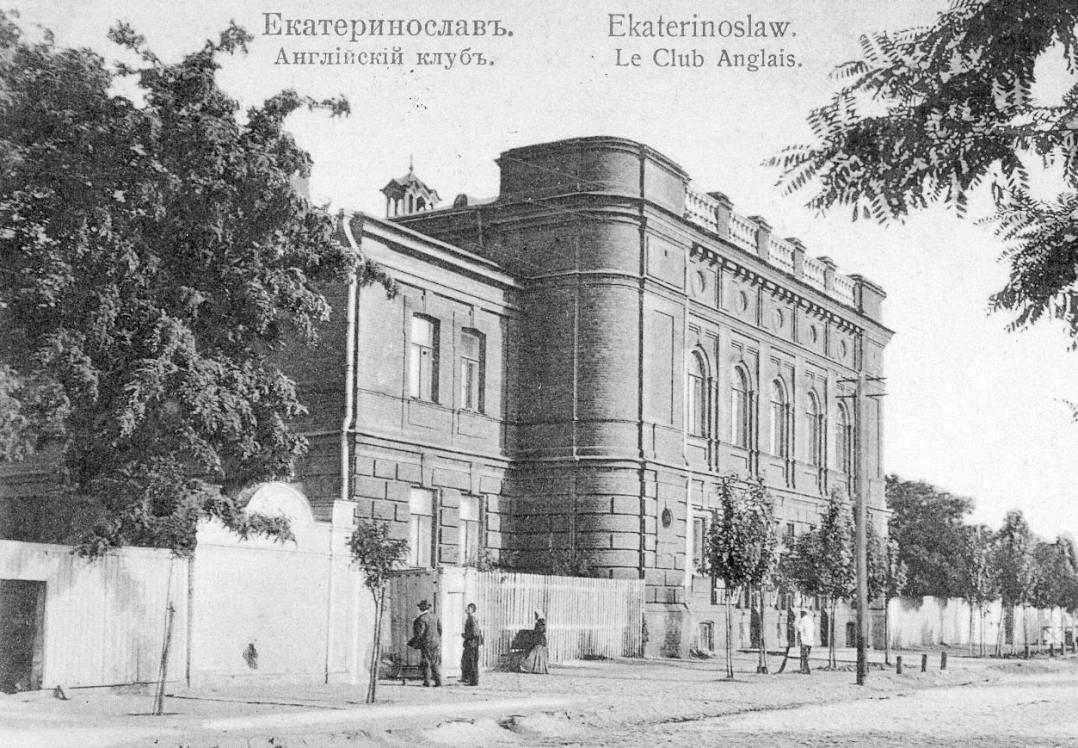


English Katerynoslav Club once was known as the most prestigious in the whole country. Today, it just collapses into pieces. And what did not fall off on its own, were taken away, torn off and stolen by vandals. English Club is not just a beautiful building, it is a great historical artery in the blood circulation of Dnipro city.
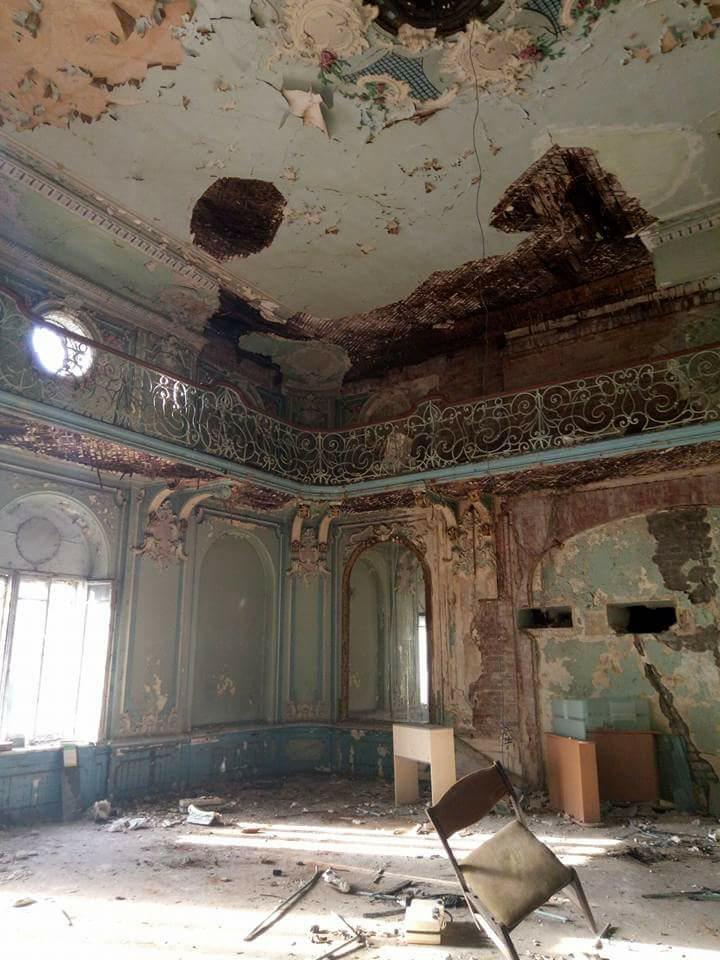
This will be a problem with an asterisk. There were: writers, merchants, architects, nobles, officials, charity, balls, creative evenings… There are now: homeless, alcoholics, drug addicts, devastation, stink, despair… Between then and now is about 160 years. Is it much? For a person, it is much, but for history – not at all. Experience shows that this period is enough to create devastation and despair in the organization of cultural life. This feeling does not leave me from the moment, when I first crossed the threshold of the English Club in Dnipro city. Why despair? I’ll try to explain…
2018, our days. Center of Dnipro, 3 Voskresenska Street. Opposite to the Soviet nine-story buildings is a majestic and at the same time simple and stylish building. This is the former English Club. Broken windows, the area around is cluttered. It stands silently – it dies. Just like a living being, it dies from within, because the view from the street is still somehow more or less normal, but the “insides” are almost lost.
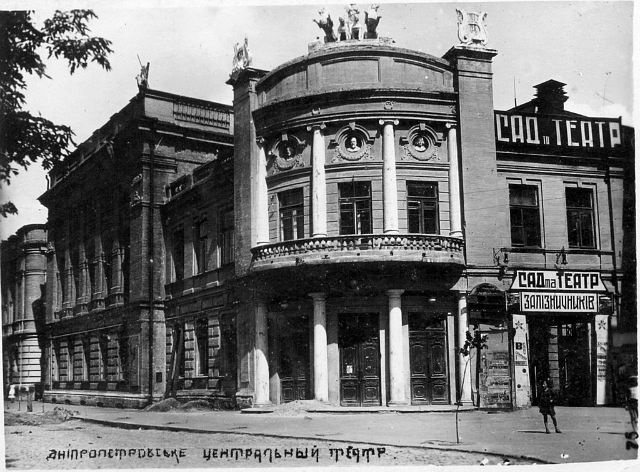
For a long time the Club did not have its own premises and was located in rented private houses: in the Potyomkin Palace, then in the Stein’s House in Kharkivska Street. And from the middle of the XIX century the Club stayed for a long time in the house of Major Shcherbakov at the corner of the avenue and Voskresenska street, it was one of the most luxurious and biggest houses of that time. And Major Shcherbakov did not allow to build anything on the territory of his garden near the estate, and the Club was forced to rent the City Garden for summer time. It was here that the summer theater of the Club was located, which was furiously popular in the 1880s.
Suddenly, in 1870, Shcherbakov’s heirs put the house, which was rented by the Club, up for sale. And the buyers were not in a hurry – the price of 60,000 rubles was biting. So, the Club “lived” in Shcherbakov’s estate for another 15 years, and only in 1887 had yet to move. The house was purchased for the apartment and the office of Katerynoslav Governors. It was from this year that the former residence of the English Club was named “Governor’s House”. And today everyone knows, where in the center of Dnipro there is “Governor’s House”, now there is a branch of a large bank.
In February of the same year, at a general meeting of members of the Club, a decision was made to purchase land for the construction of their own estate for the Club.
The Council of Foremen announced a competition for the project of the building with a premium of 300 rubles, and selected the first commission on construction issues (K. Staritsky, P. Avdeev, I. Krantz, S. Dzerzhanovsky, I. Grekov, G. Samoilenko, I. Miklashevsky and F. Hagen).
But not everything was so simple with the construction and acquisition of land. In September of the same year, the first decision underwent major changes. The Council of Foremen was instructed to agree with the city on free land or even with the Ministry of State Property on long-term lease of the Technical Garden. We do not know the details of these negotiation processes, but in March 1889, at a general meeting, they offered to buy out a courtyard place from the candidate of the rights Ivan Lovyagin. 84 votes, and this was the overwhelming majority of Club members, supported this decision. Long hesitated, it was not the best place – between two small rivers, flowing in the center of the city. They were so narrow and sometimes silted, that nobody called otherwise, like “ditches”.
In May 1889, it finally happened! The Club purchased a plot of 28×50 fathoms in the first part of the city. The price was 9,000 silver.
The building began in the same year, and by the end of 1891 the estate was ready to receive guests. The best concert hall in the city, several comfortable guest houses, a wonderful restaurant, summer terraces and a library with 10,000 books – it was all here in the new building of the Club. And even the street was renamed into the Club Street, which used to be called Protochna (Flowing, because of the rivers that we already mentioned).
It should be noted that the management of the Club, and then it was called the Council of Foremen, had outstanding knowledge and skills of entrepreneurs. During the construction of the Club they had to borrow, but the debts were managed to pay off quite quickly. In addition, the finance was sufficient for the summer terraces to be reconstructed into full-fledged halls, the office premises were completed, and even a wooden summer theater was built. And in 1898 and 1910 the Club still bought land – 2 allotments with a total area of about 2,000 fathoms.
Financial affairs were very good, and the managers of the funds arranged expensive entertainment: the lavish balls almost supplanted the familiar kinship evenings, in the summer the Symferopol Regiment’s orchestra was constantly invited, and the artists, whose fees were high enough were invited. In addition, the elite Club experienced financial obligations to its members. The children of the poor or of the members, who died have received scholarships on a regular basis.
The reserve funds quickly ended, and again they had to turn to the creditors. And again the management worked perfectly: the members of the Club, who stayed, organized an internal loan, canceled a number of expensive events and unexpectedly opened the Club Garden for all comers with the entrance fee of 10 kopecks. The Club began to hold evenings, concerts, balls. They took a rent for that. In public halls was allowed to play lotto and cards, of course, not for free.
This transformation of the Club was sharply condemned by the press, but, as they say, “the dog barks – the caravan goes”. The Club’s budget has grown threefold in a year! And in 1910 the amount of income was a record – 155,099 rubles, and the net profit increased 9 times – up to 73,000 rubles!
In the luxurious halls of the Club there were such legendary artists as F. Shalyapin, L. Sobinov, M. Zankovetska, K. Geltser, O. Skryabin. D. Doroshenko, A. Sinyavsky, D. Yavornytsky and many others, read lectures here.
Things went so well that in 1912 the members of the Club decided to build the Theater Hall. It was built by an urgent method, which was then called “American”. In less than a year a large building with an incredibly beautiful decoration grew, costing more than 150,000 rubles.
On the 75th anniversary of the Club the opening of the theater took place. And today on the facade of the Dniprovsky Theater. Named after T. Shevchenko we can see the dates “1838” and “1913”. On December 13, 1913, the first ball was held at the theater.
And now, in our time, balls are held in Dnipro city. Did you know? For families of fighters and volunteers. Couples dance polonaise, waltzes, tango, but not in such halls. The premises of the English Club would be ideal for such points. But devastation and despair live there now…
Even in times of wars, when in the majority of the hall was located the hospital for the wounded, the Club did not extinguish cultural life. And the destruction began, when the Soviets reached out to it with their tentacles. Even the Germans, while in the city during the Second World War, placed their variety theater in the Club. And the Soviets – the House of Officers, and in place of a luxurious garden – a plant of children’s food. The Club building was redeveloped, but has never been renovated.
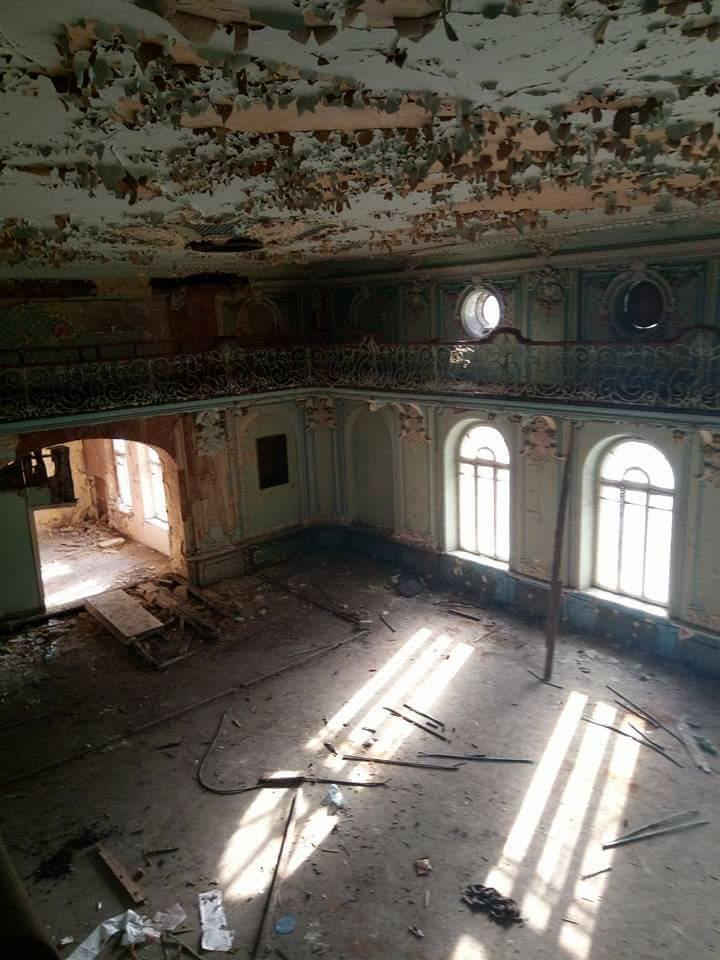
Hope appeared in 2014. Then the building became private property. There was planned an elite hotel, but something went wrong, and the project was frozen. So far, it is only known that this historical monument is not on the balance of the Management of Culture and Arts and the owner does not answer the City Council of Dnipro. True, the Dnipro people wrote a petition to pay attention to such a loss. But, will there be any benefit from that – we’ll see.
Meanwhile, the English Club goes in English. Silently and irrevocably.
Despair… You see why it dominates feelings and emotions, when I think about the history of the Club. This is a huge piece of the history of the city, that is in my heart.
How today, in the age of nanotechnology and mega-opportunities, we just watch silently, as a living piece of the era goes to nothingness? Or can we cope with this task with the asterisk?
Text and photo: Tetyana Zapаrya
Historical facts are used from the articles of the historian V. Starostin