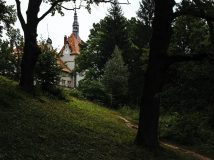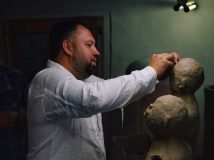


In the village Chynadiyovo, near Transcarpathian Mukachevo, the Saint-Miklosh palace is getting a new life. It is the Castle of Love, dedicated to the legendary duchess Ilona Zrini and her love. In 2001, the artist Yosyp Bartosh was the first person in Ukraine who took the historical monument to a private concession and created a new story, or a fairy tale…
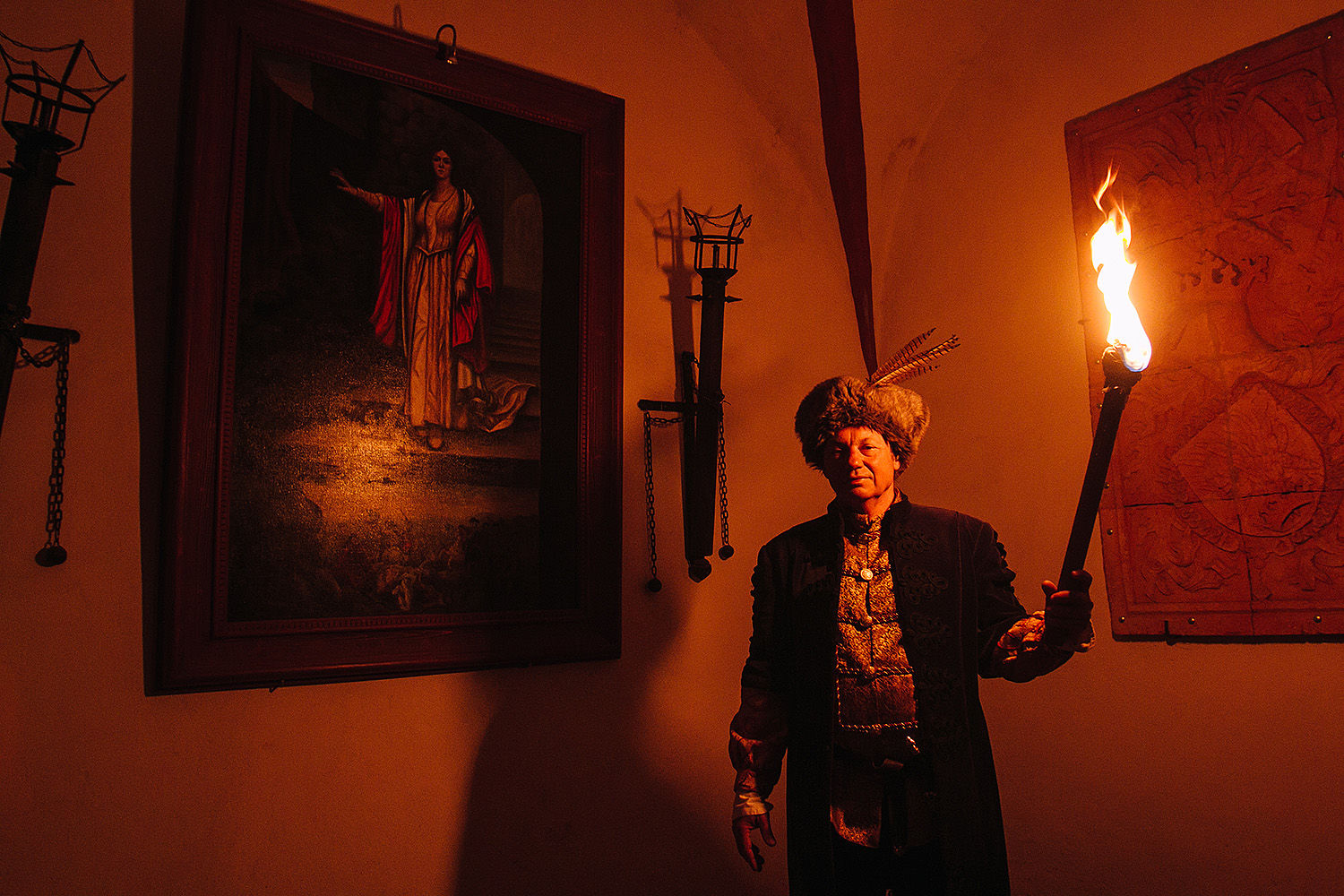
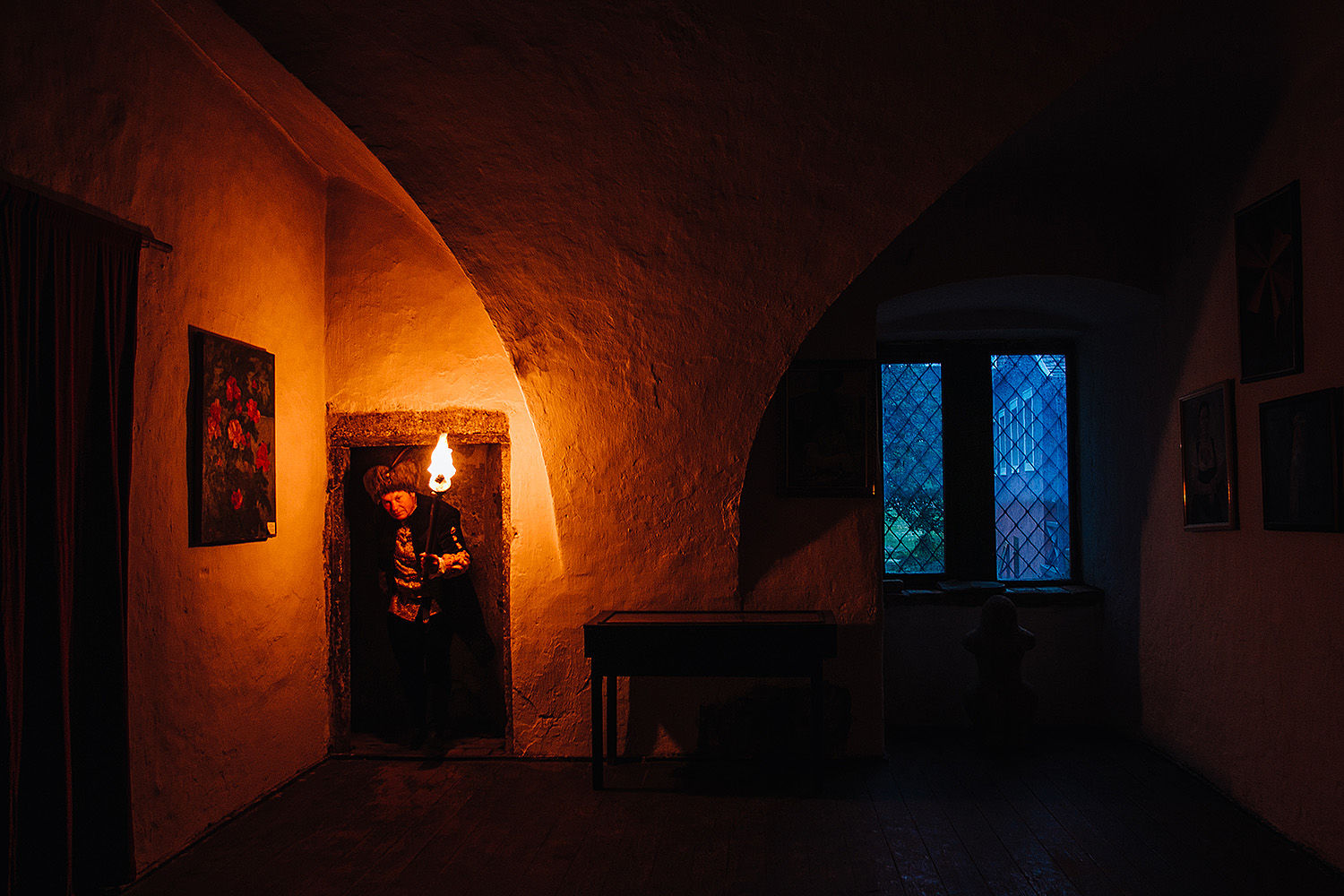
“This is our mistress! Ilona Zrini! A legendary wife, lover, mother and just an incredible woman of her time! Her birthday is May 22th, and we devote all our main events to her,” the journey begins with the acquaintance with the muse of this place – Ilona Zrini, whose elegant portrait is dramatically illuminated by Mr. Bartosh’s torch in the dark hall of the palace.
We are acquainted with this extraordinary personality, a special artist, and also an adventurer, who “invented” his own time machine, for quite a long time. “When you were making the first film about the Saint-Miklosh, there was no roof here, and I had longer hair and less wrinkles,” Yosyp Bartosh smiles and recalls that few people believed in his project then, which was more like a dream and an emotion. Yes, the strong walls of the harsh fortress attracted, but there were no windows and doors, or roof besides them – only, unfortunately, a rather trivial story of turning the castle into a prison, barracks, a village council, an office of foresters and a depot. But now, more than 15 years later, there is already something to show and almost everything has been done together with his wife Tetiana with their own hands, and even if it hasn’t, they do their best as well.
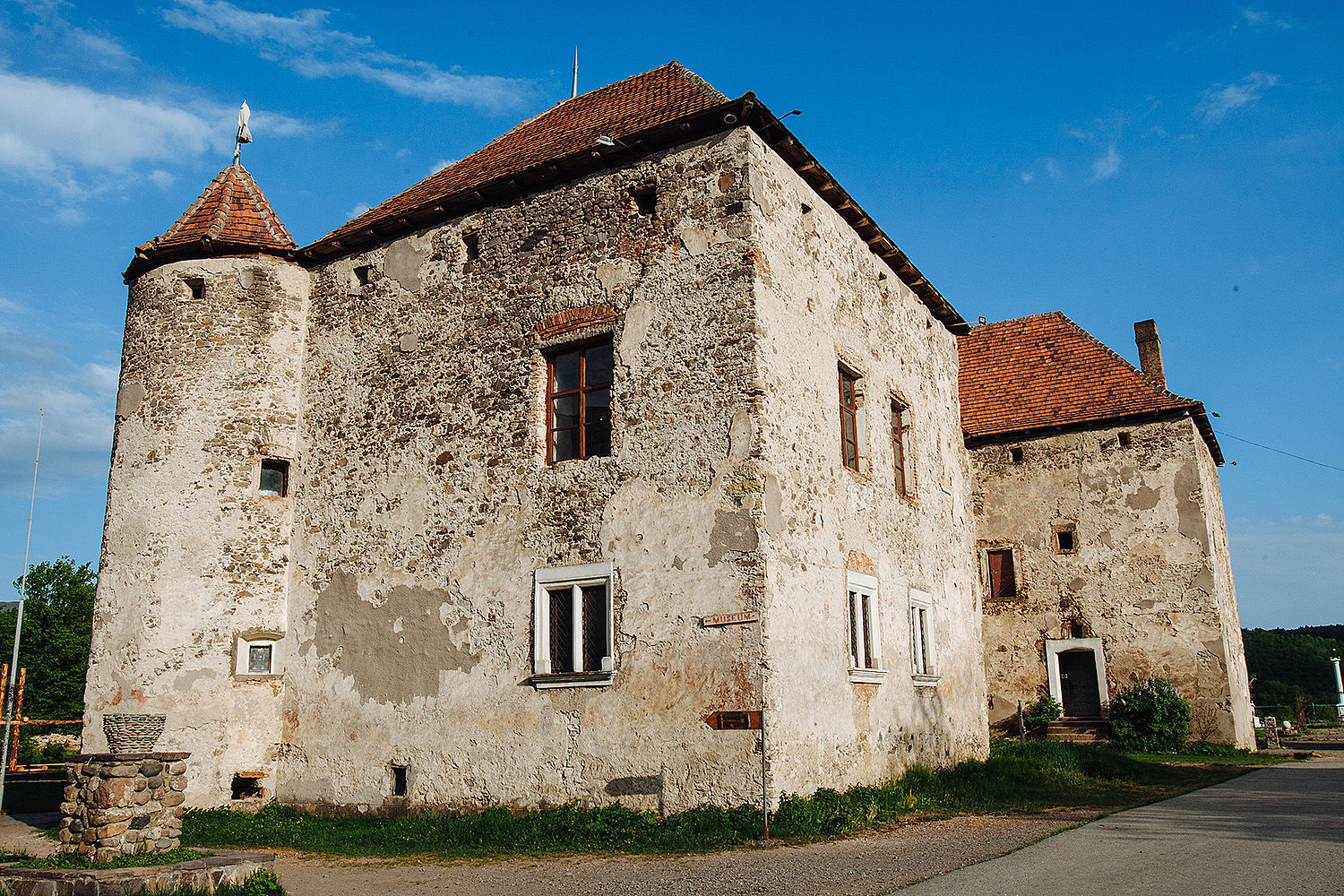
“You know that together with the castle we got a big problem with the territory around it. If you had said that this yard would be ours, when cars, garages and extra stuff had been here, – I would not have believed it, I would have thought that it had been sunstroke. Did I believe then? No, I didn’t. It was impossible. It became real by accident. One person helped us, it was a coincidence, and empathy, and the question “what would be, if?..” It happened that we could buy the yard. We had borrowed a lot of money and did it, people helped us with documents. I still do not believe in it… But you see – here are our household outbuildings, a forge and a stable,” Yosyp conducts a tour emotionally.
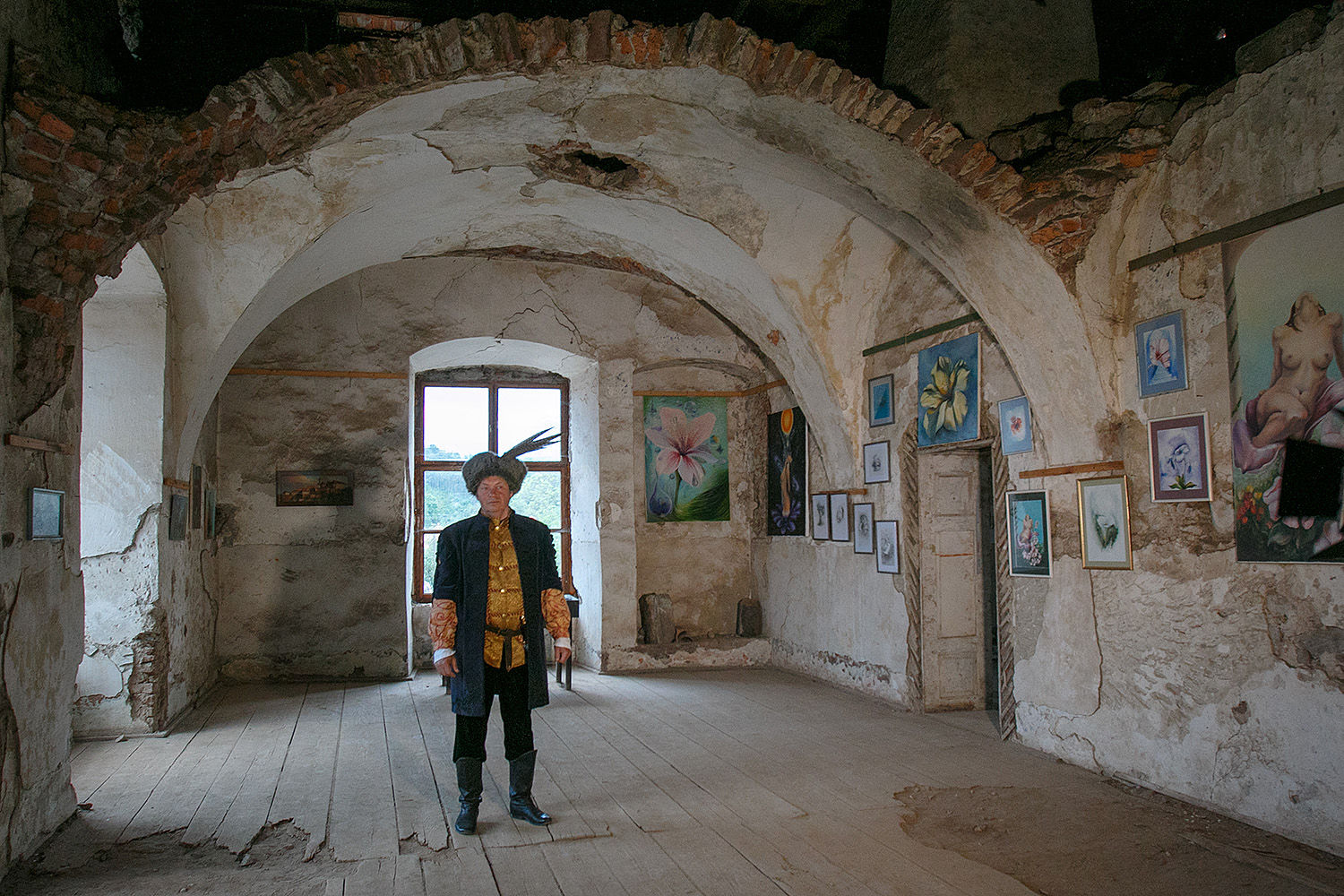
Later he will lead us into a spacious room with windows in two walls. I remember it, when there were furniture and easels, a large table with a mockup of the palace in the middle, and here for the first time Yosyp said that he wanted to create a park, it seemed to be only a fantasy because of an infinite number of needs to bring order to the castle. “Remember, we talked here? Tetiana and I had been living in this room for 10 years: there had been a workshop, a bedroom, a kitchen, a library, and a living room. I remember and still cannot understand how it was, how we managed…” – he says and shows the part of the wall, where the masonry is visible, it differs from the rest”. And we did not disassemble this masonry, did not look for the entrance or the exit, and so we lived all these years, probably, it was not necessary. Yes, there are many riddles here, I do not know if I will manage to comprehend even a small part”.
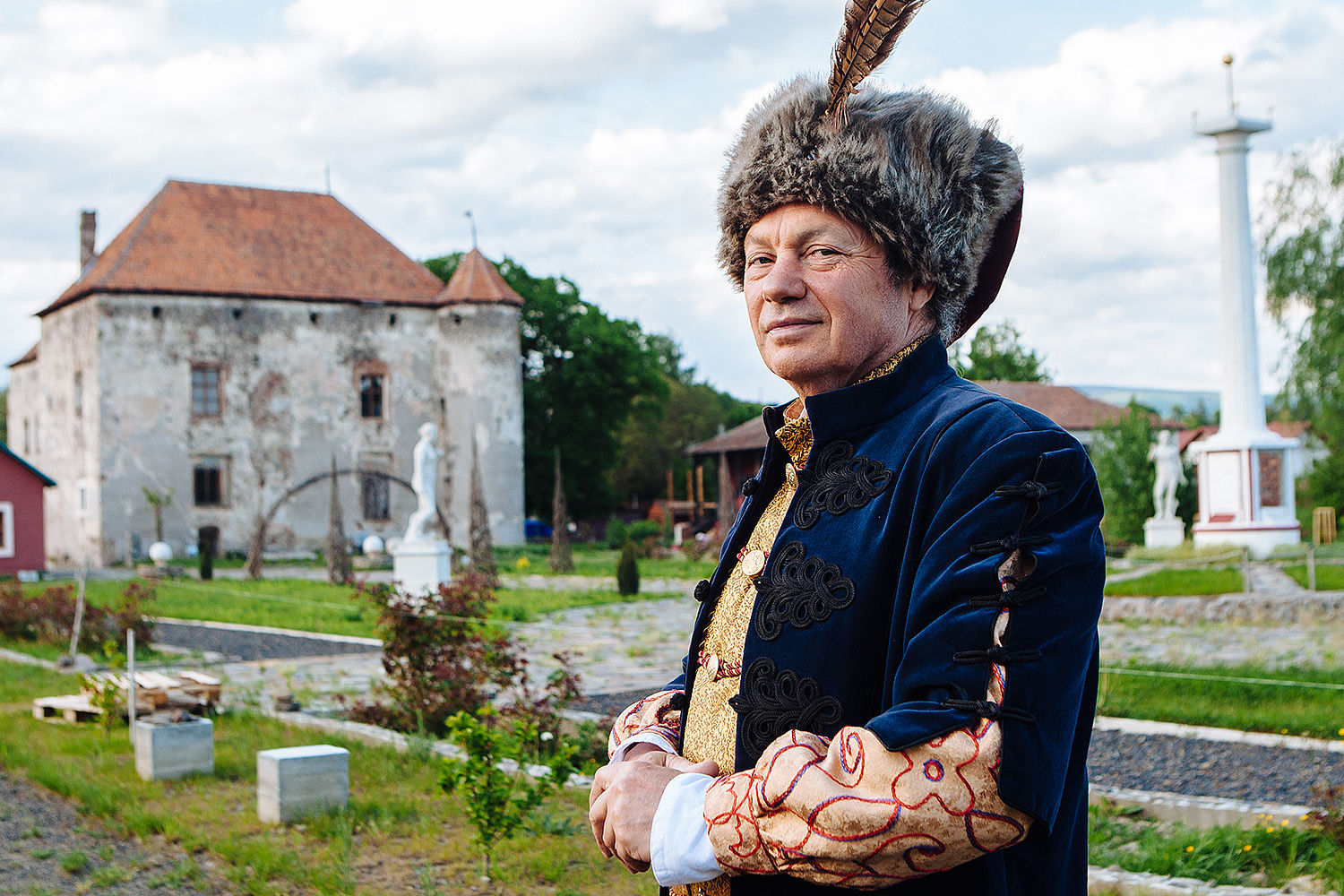
But there is a park. More than 30 species of exotic trees – Yosyp cannot dream (and eventually embody) modestly: styrax, white ash, paulownia, ginkgo… The park is not supposed to be a static monument. “Yes, there are sculptures, antiquity – Dionysus, Diana, Apollo and, of course, Aphrodite. The medieval park is a journey. Our journey is called “The Snow Queen’s Journey”. I have just started to describe the park, the details will be later. It was founded here in 1749 by Franz Boshinda, a well-known park master of those times, it is a partial reproduction, we can imagine what it looked like thanks to the works that still exist in Austria and France”.
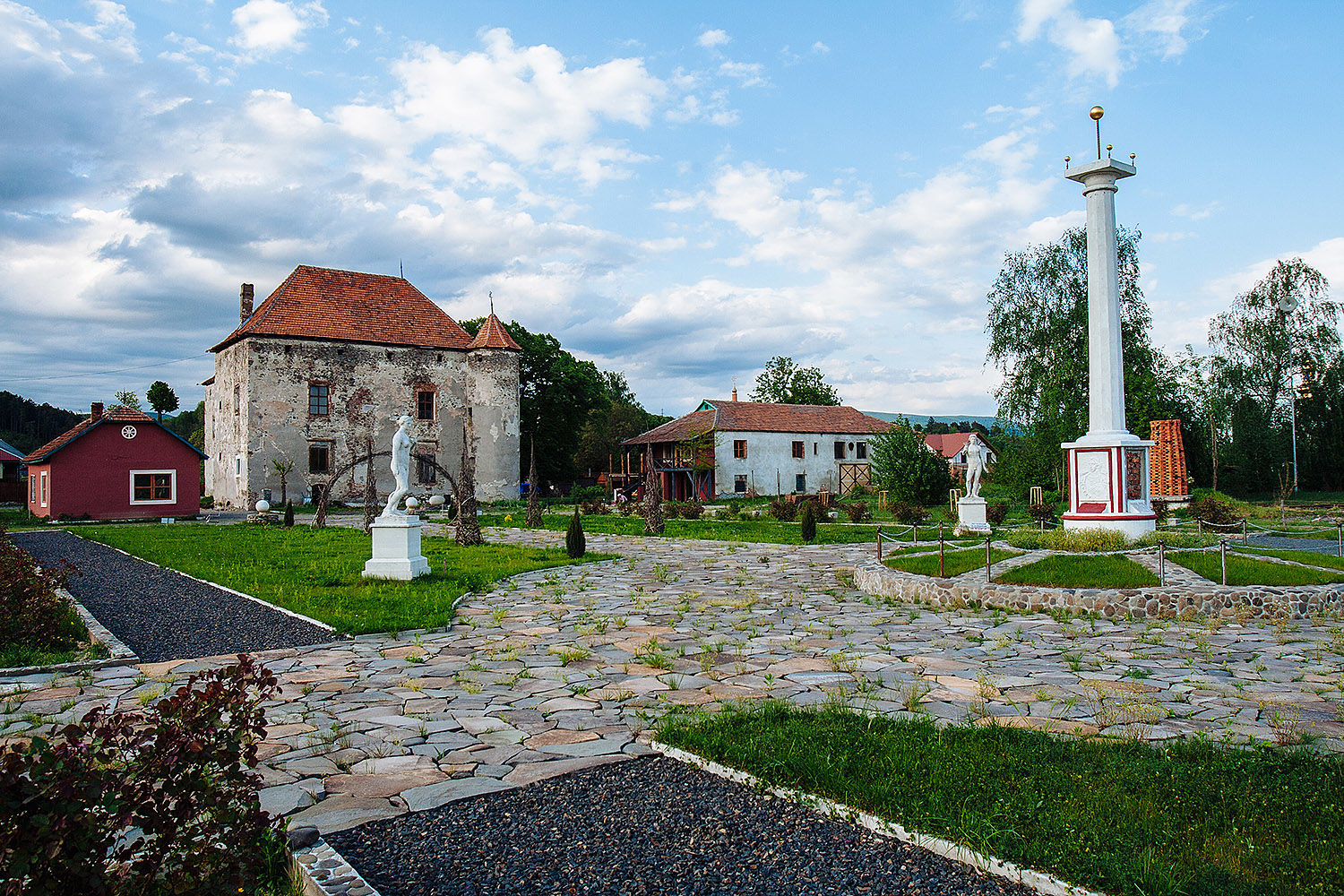
A walk through the park should make the guests reflect on the basics of life, according to the artist. And next will be … the temple of Apollo, the patron of the arts. “Yes, it’s ridiculous to hear it about this garage now (the legacy of the depot, which also has blocked the “palace” from the road with a concrete “box”). But nevertheless there will be a centre of art. The ballet school, instrumental musicians, young cinematographers and other creative groups already visit it”. By the way, the Saint-Miklosh is also the place of international sculpture symposia and, logically, archaeological camps, where they continue to explore the history of the palace.
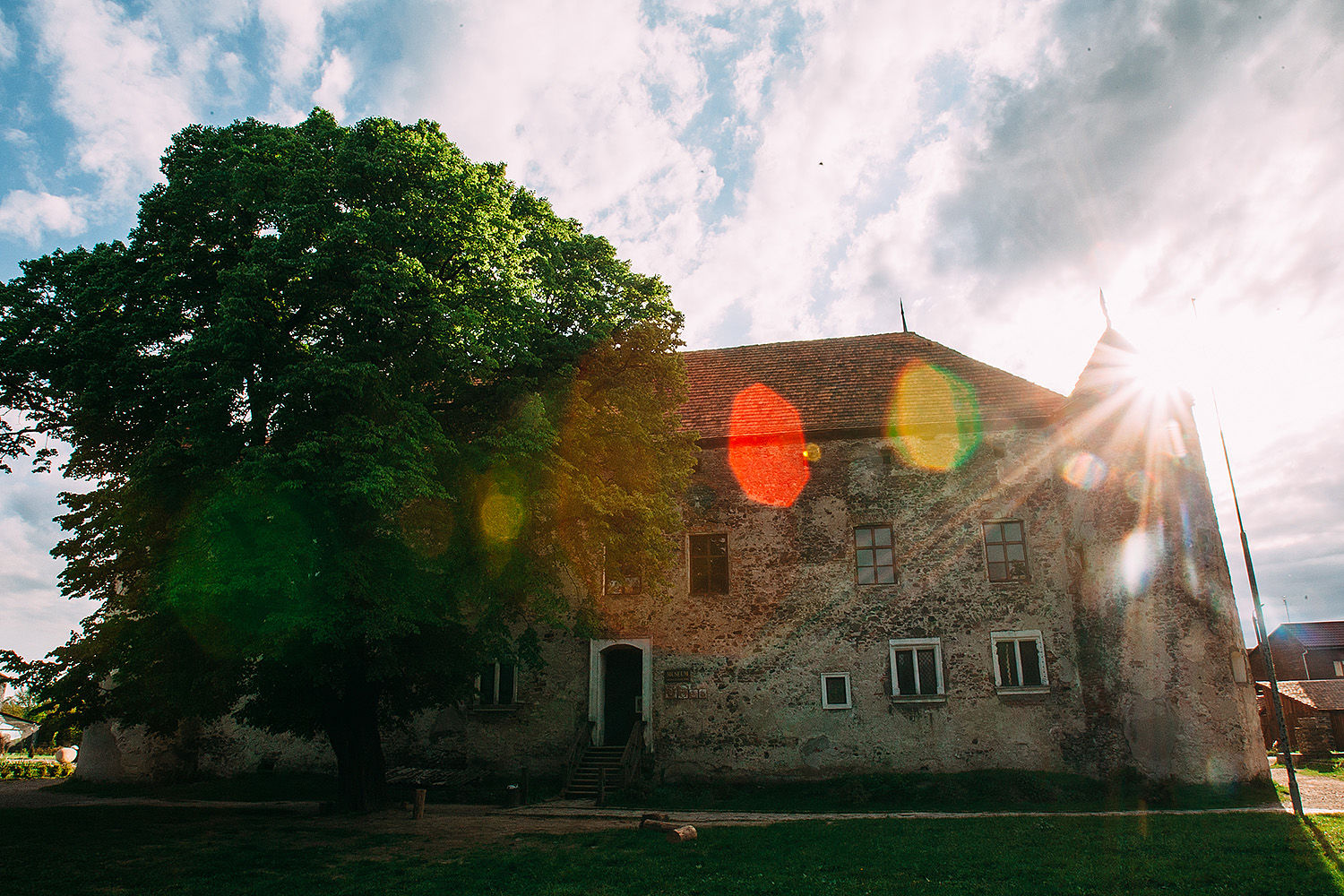
Yosyp stresses that the Saint-Miklosh was granted the status of the palace later, and it had been erected as a real castle, that is to say, a fortification, and it is confirmed by archaeologists and architects. By the way, although the beginning of the castle’s life dates back to the XIV century, there are reasons to believe that fortifications had been there before. Outdoors the owner will definitely show bas-reliefs to four iconic figures of the Saint-Miklosh Castle: Ilona Zrini, Francis II Rakoczi, Katalina-Sydoniia Petrovtsi (a famous poet of her time, “the first woman writer of Hungary”, a cousin of the Countess, a widow of the commander of the kuruc army) and the Baron himself, Zhigmond Pereni, who built the castle. This is a reverence for the main people of this place, memory and respect. “I thought that my acquaintance with Barons Pereni dated back to 2008, when a representative of the family was here in the castle. I was wrong. Our ties date back to 1475, when my distant ancestor was a confidant of King Sigismund. And then, our friendship continued, when a descendant of the Perenis was the Ambassador of Hungary in Morocco and invited me to the exhibition there,” the artist says.
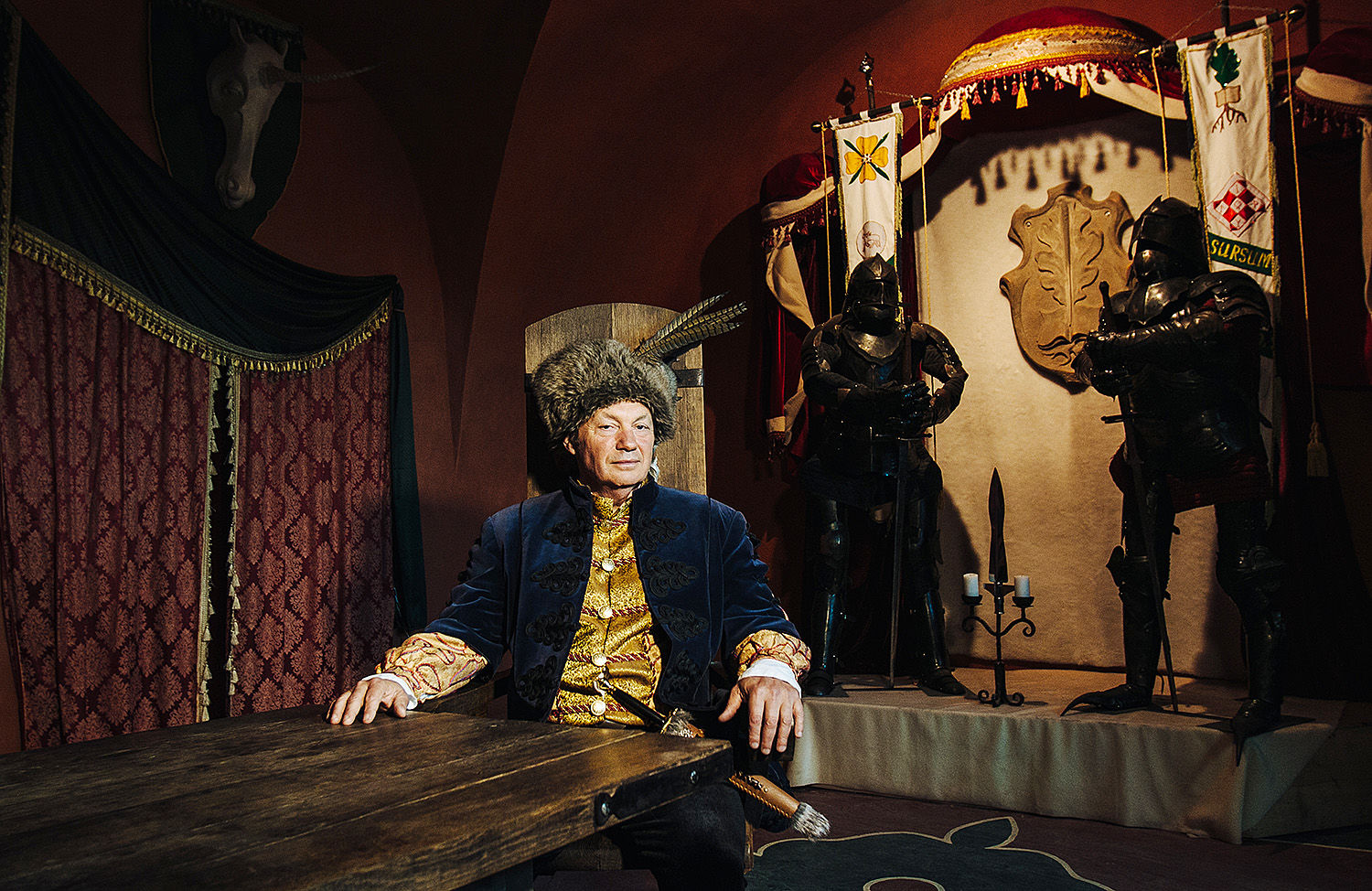
And here is a new history of the palace – a living history! Her most beautiful incarnation’s name is Inara. This is a Tori horse, and together with its three sisters, it restores the historical truth here: the garages of the car depot are the stables built in the XVI century: “I guarantee that now there will be only stables, as it was at the time of Rakoczi, and as it should be! Everything is falling into place…”
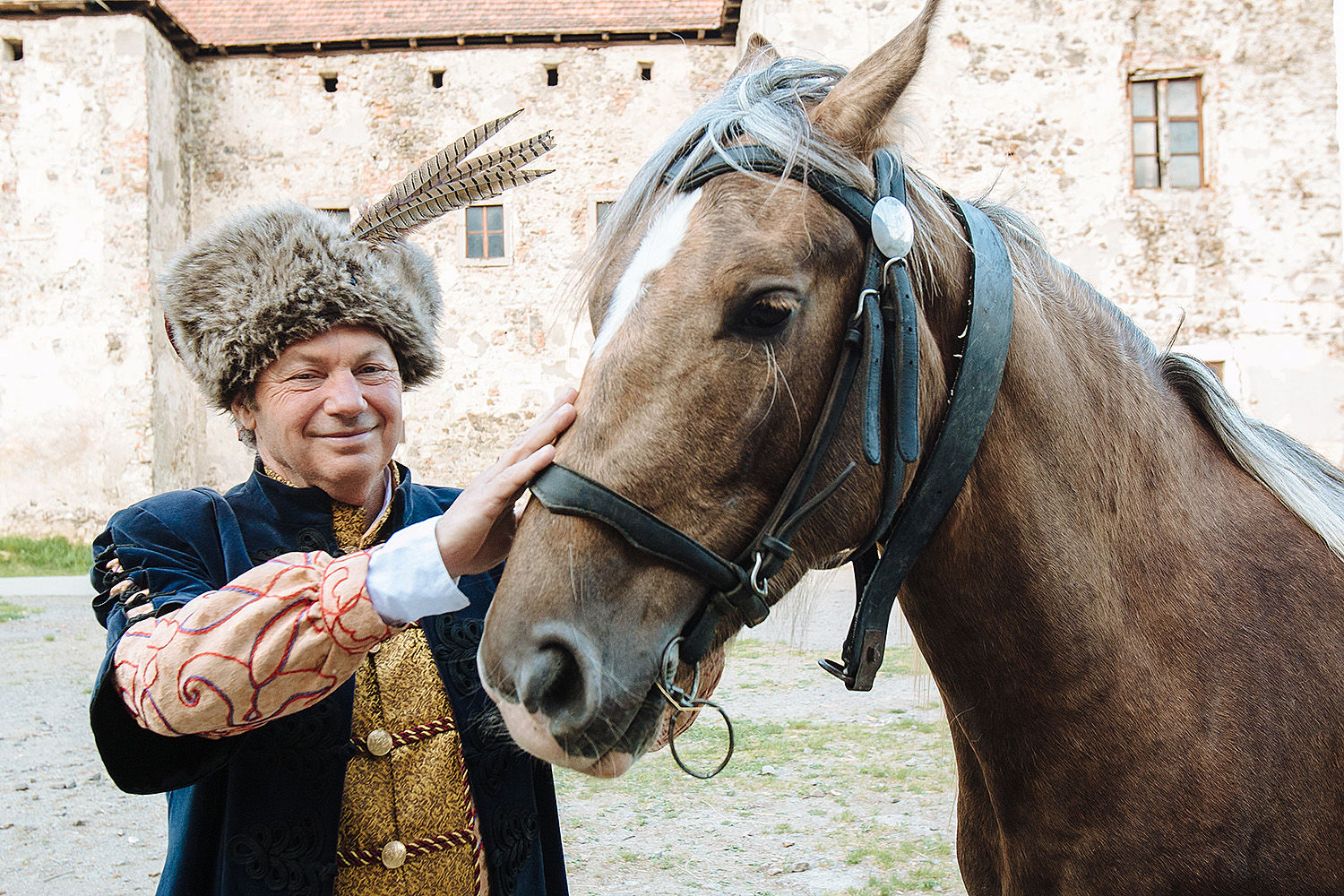
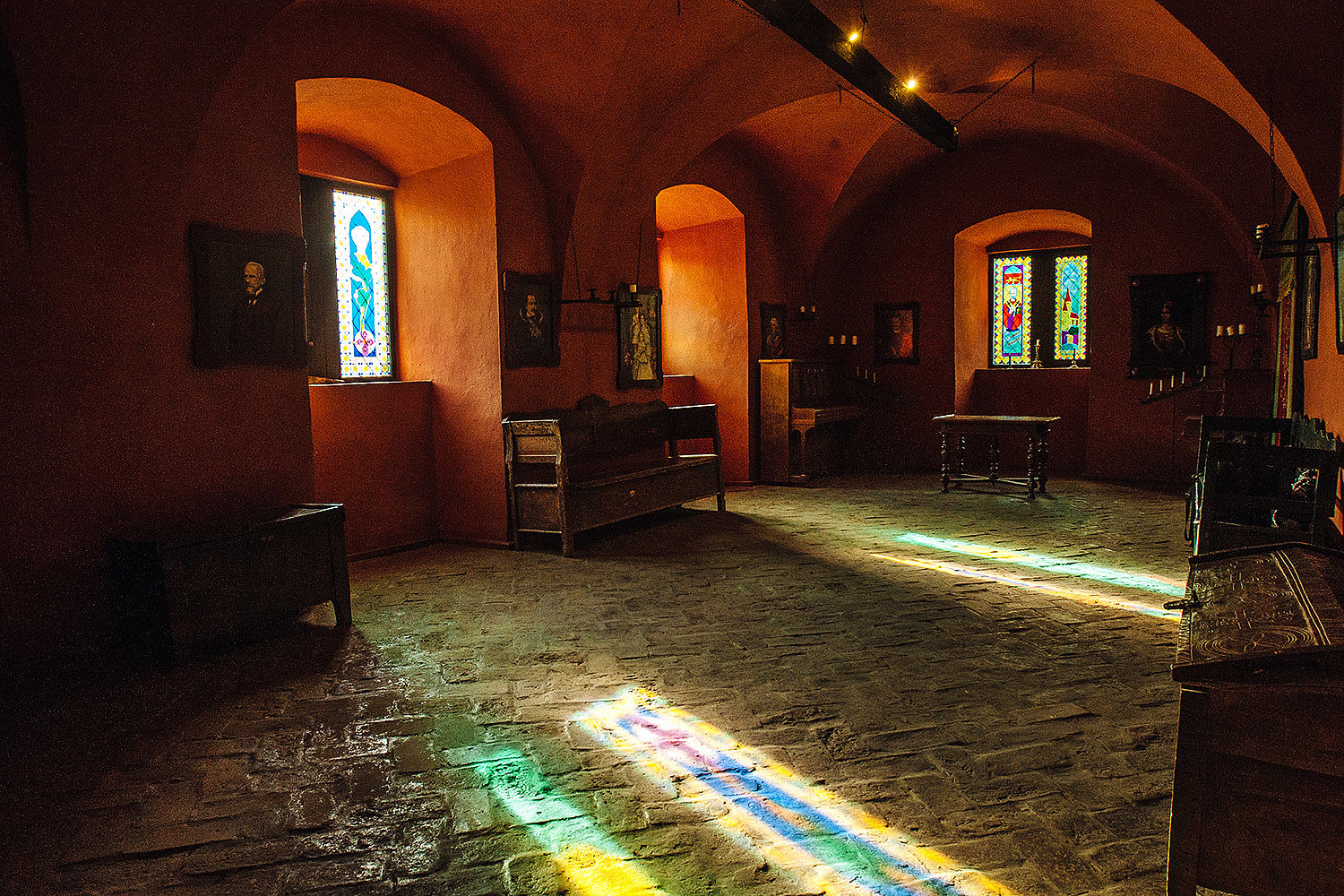
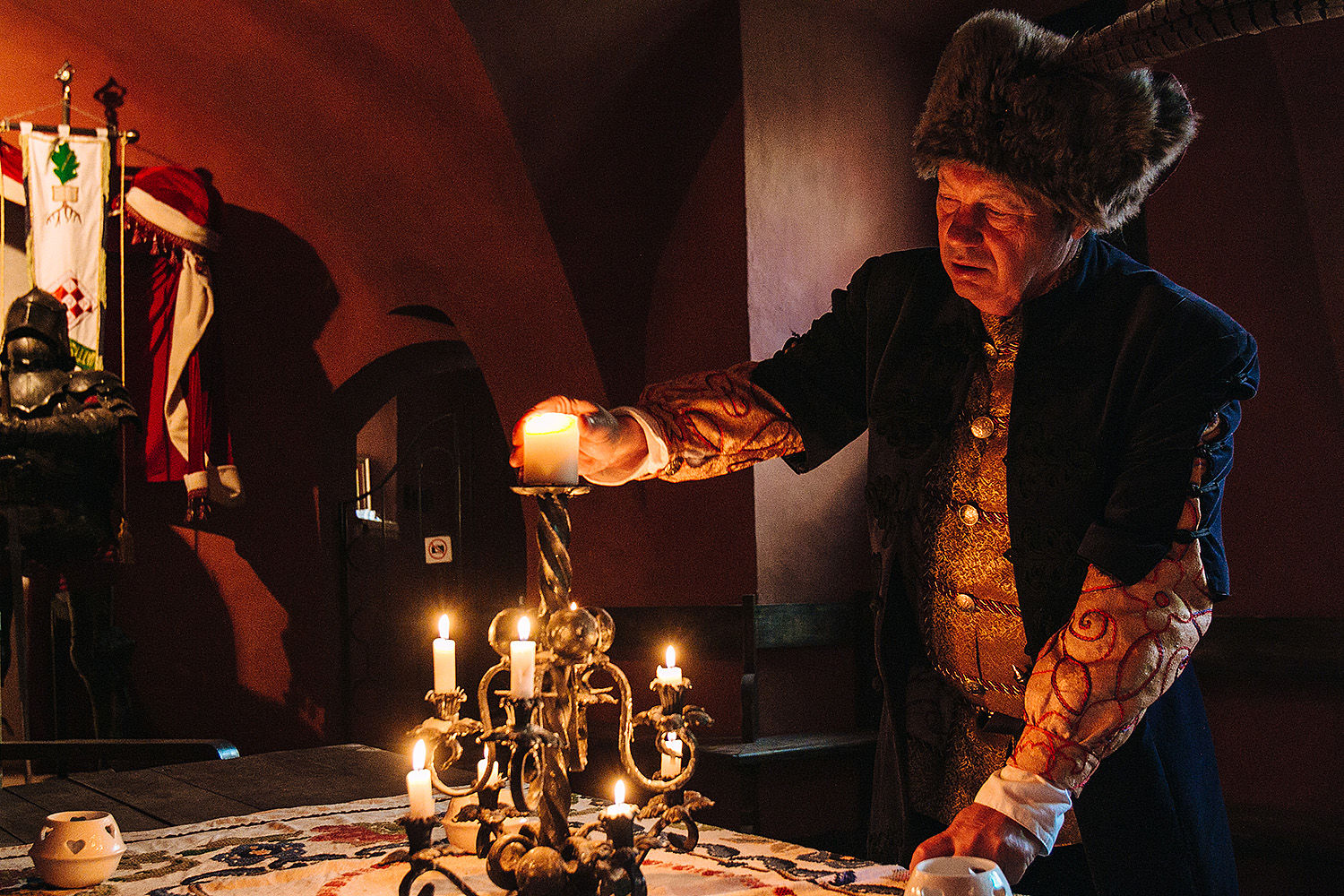
Passing the entrance with memorable bas-reliefs and the hall with the portraits of the rulers, painted by Yosyp himself, we enter the knight’s hall. Today the main things here are monumental armour, an exact copy of the knights’ armour of the XVI century, and a table under a forged chandelier, where the meetings of the Order of St. Mykolai are held (the Transcarpathian club of historical reconstruction has the same name as the castle, because Saint-Miklosh is Saint Mykolai in Hungarian).
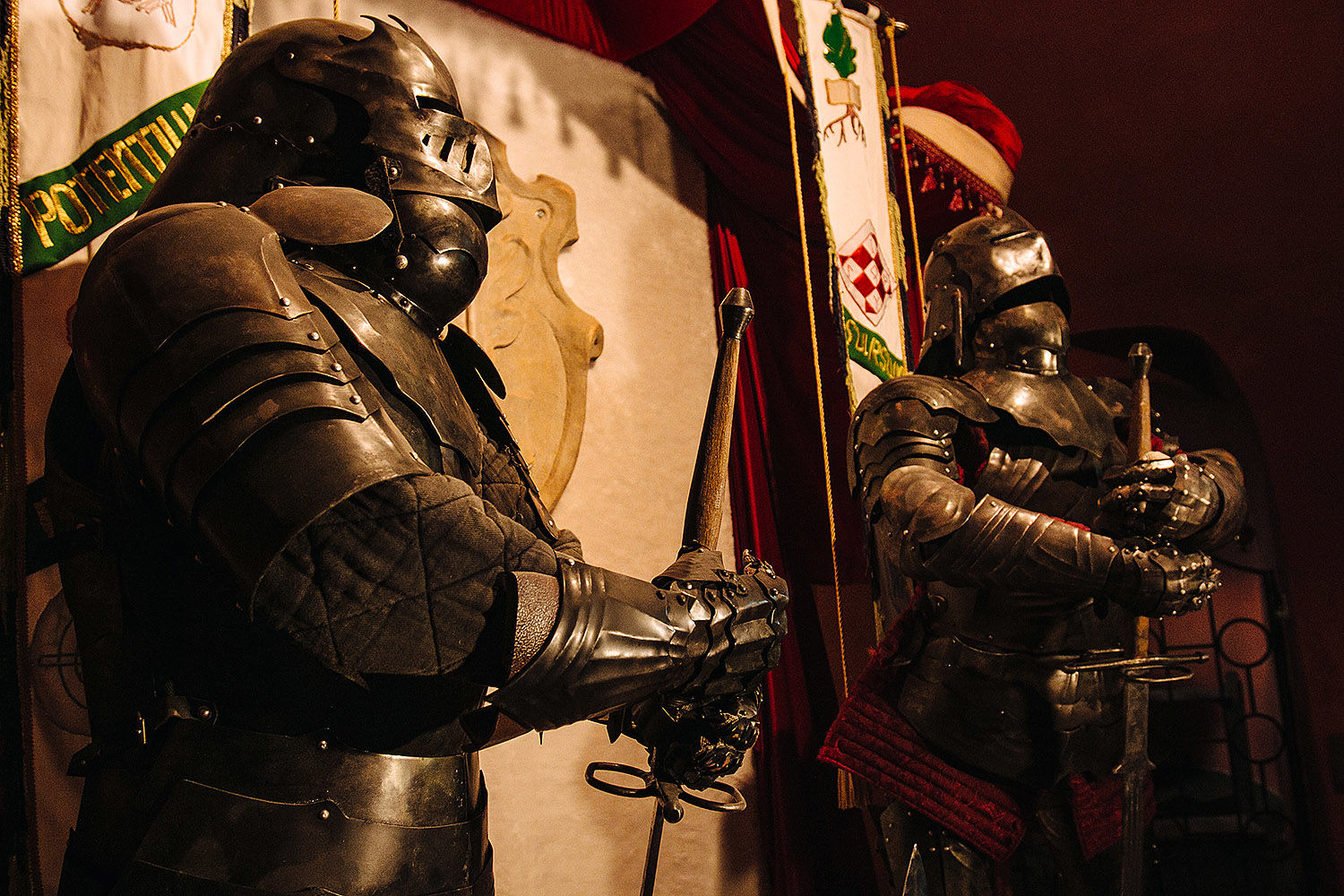
The walls of the hall have a colour of dried blood, it is common for such palaces of the 17th century, but Yosyp still regrets that the hall had to be plastered: “Our task is to save, not rebuild, so that someone likes it. We appreciate historical truth more than attractiveness. We had to save this room, but we lost the authentic Romanesque style. We will try not to make the same mistakes”. At the time this room was the first exhibition hall in the new “Renaissance” of the palace. Everything began from art: Yosyp and Tetiana Bartosh painted and sold their works, and later they invited colleagues-artists to the plein-airs, and the proceeds from the works were invested in the arrangement, or at first, the restoration of the castle.
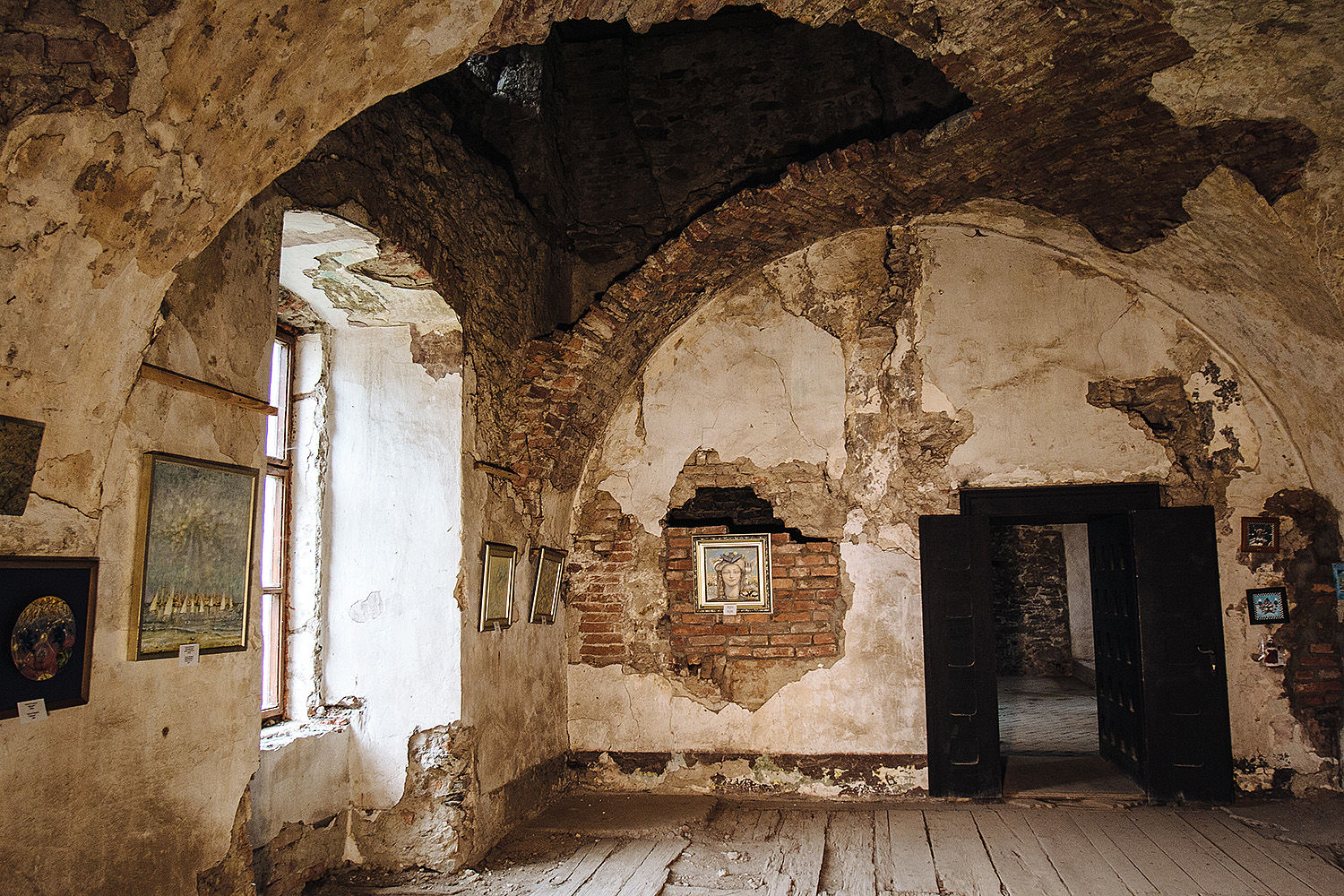
The first task was to restore at least the physical integrity of the building, stop the destruction and remove all unnecessary things. Remains of the Soviet “panels”, painted on the medieval wall with a rough layer of cheap paint, are still visible on the second floor. Yosyp does not plan to save this “artifact”. Though the masonry is dilapidated, but fantastic in its realisation and durability – the round cover is laid in one brick, and still it is possible to walk on it, and modern masters do not believe it – and he wants to preserve it like that: to impress people with the skills of medieval masons. “I understand why this is so. Ancient masons were something like an order, a mysterious community. They had a special ascetic way of life, because the master was the one who would lay the finest brickwork that would live for ages,” says Yosyp, who continues to unravel the secrets of this place.
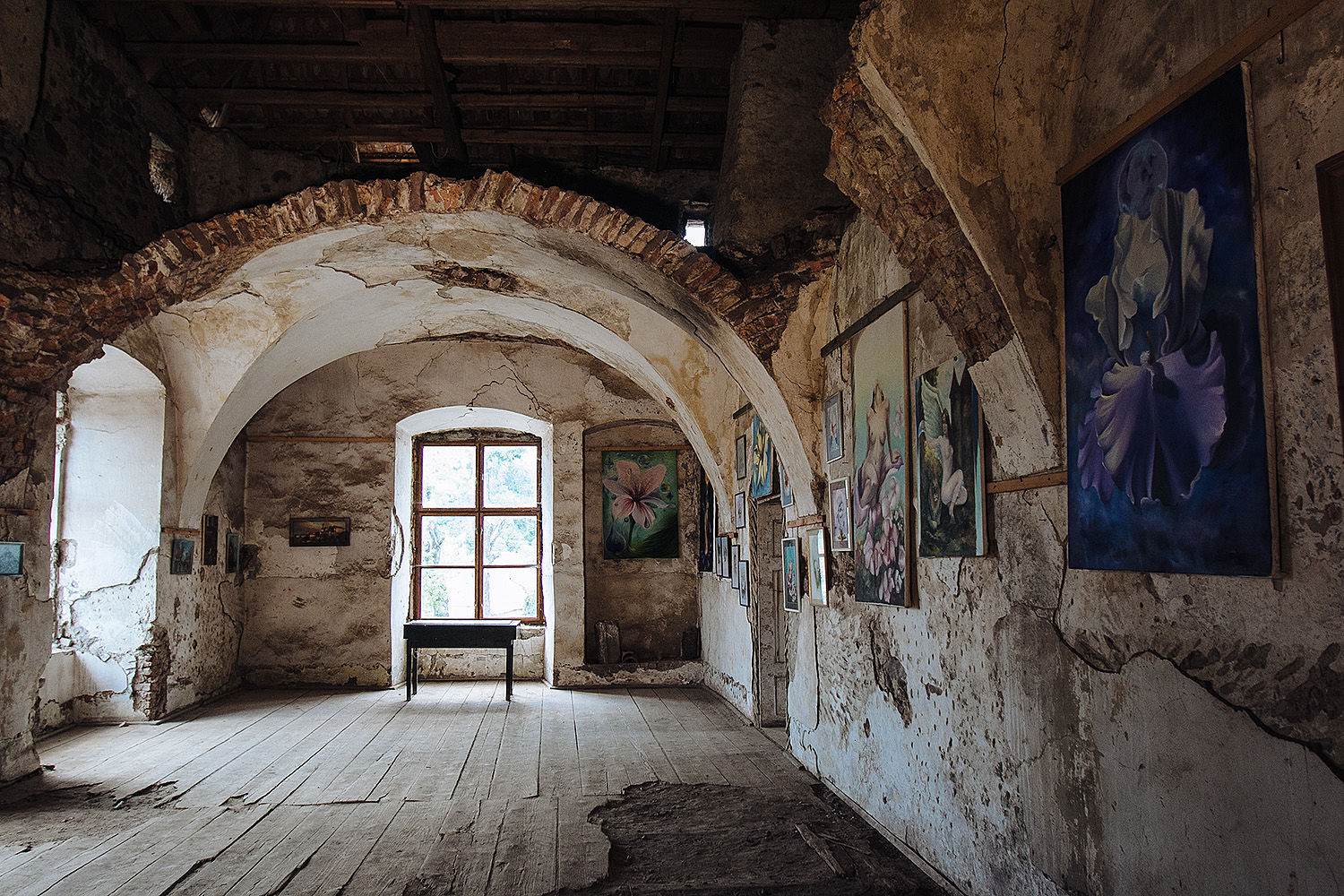
The castle responds to the attention: recently, in a pit, which at first was considered a dump, they have found valuable tiles, apparently from the furnaces, which warmed the palace. Yosyp smiles: the heating system, built in the XIV century, was better than that which was built in the XVI, it was more perfect: “They rebuilt it a little bit according to the fashion and lost the effectiveness”. But the room, which is the heart of the castle, the bedroom of Countess Ilona – is surprisingly energetically warm.
“Yes, this is just the room and the window, where she was waiting for her Imre (the leader of the kuruc-rebels, Count Tekeli, who was 25 years old when he met a 39-year-old noble widow). In 1682, the greatest love in the history took place in this castle. The one that changed the fate not only of two great loving hearts, but also the fate of the nation … Whole Western Europe was following the events that took place here on the second floor in the bedroom of Ilona Zrini…”, – Yosyp mentions the main love story of this place once again.
He interprets the story of a union of a man and a woman which became also a political one and it redistributed forces in military confrontations in these areas and in the struggle for the land: “It happened that Ilona Zrini gave her heart to the rebellion … And she was severely punished, they took away everything, she was imprisoned and then expelled from Austria-Hungary, where she died with her beloved husband. In fact, she sacrificed everything on the altar of her love. And of her people … And her people realised it and still preserve the bright image of this lady”.
The Countess, the muse of the Castle of love, was an outstanding woman. When Yosyp realised (or began to realise) the greatest adventure of his life, he received only one sheet about the history of the castle, now he knows about Ilona Zrini more than all the researchers, and he knows her letters by heart. We know the fact that the Countess is the only lady officially honoured by the Ottoman Empire for valour in the defense of Mukachevo castle, which never fell to the enemy, but we don’t know much about her everyday life”. She was a tender and nice woman, but, if it was necessary, she was very firm and poised, and prevents any ambiguities. She was the first woman governor, ruled Sarospatak district. And she became a mother of the national hero of Hungary – Francis II Rakoczi. She was brilliantly educated and brought up. English Queen was her good friend. Since childhood she could use different weapons, ride a horse and hunt. She did not live like other girls, but like a great woman. But if it was necessary, she cooked, made jam, preparing for the siege, and also treated the soldiers, and even organized an embroidery workshop and bought weapons for the sold needlework… How did she combine these qualities? The answer, perhaps, is the following: she was not looking for herself, but for what the state and the people needed,” says Yosyp Bartosch.
“The Union of Ilona Zrini and Imre Tekeli made it clear to Europe that there are values of the highest level, are principles that can’t be betrayed. After the death of her husband, she could marry a duke or a prince, the French king was in love with her, and she sold his gifts, to support the army… They wrote about her: “Those who looked into her eyes – were lost”. She chose the young rebel. Her children were taken away, and she followed the beloved in exile …”
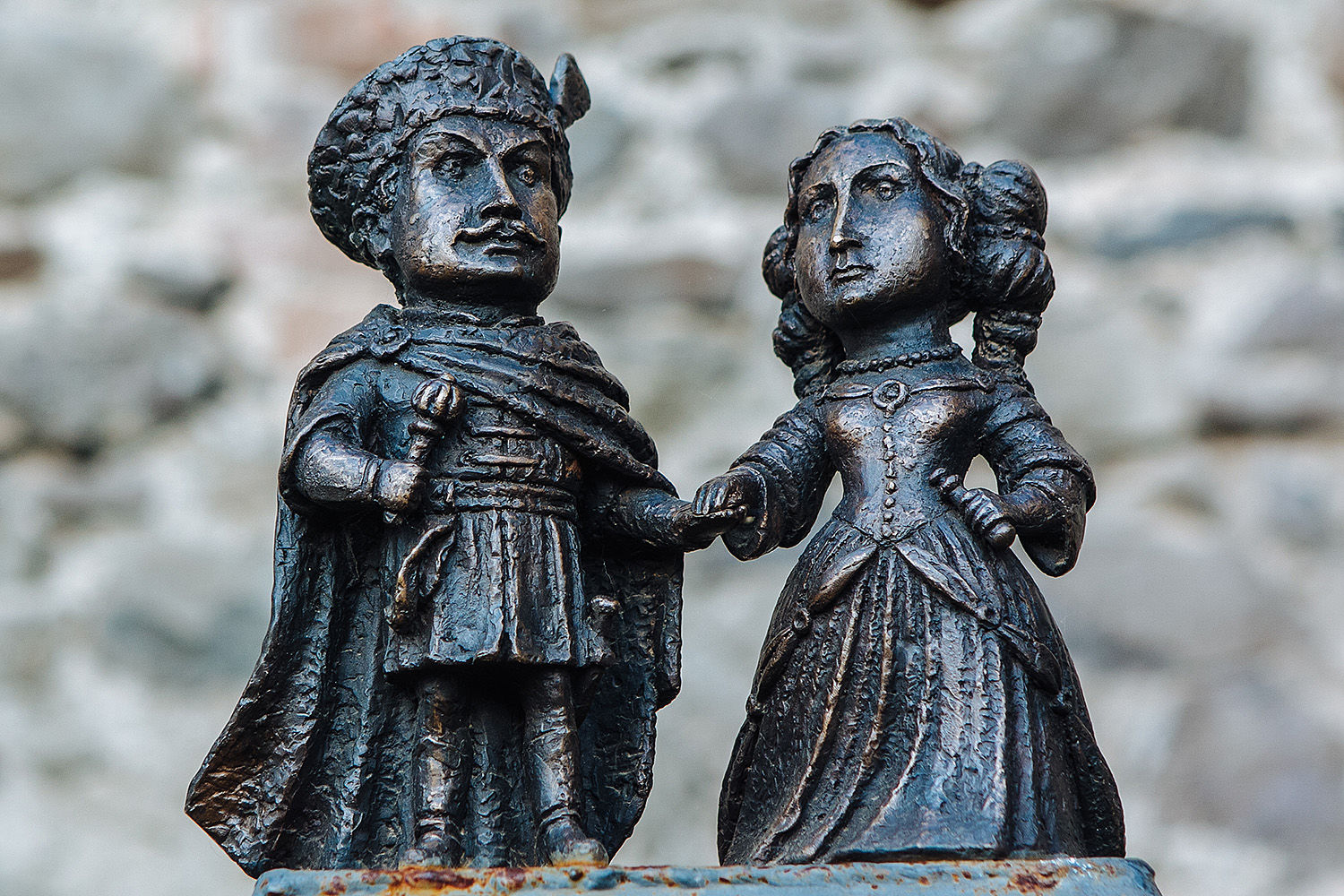
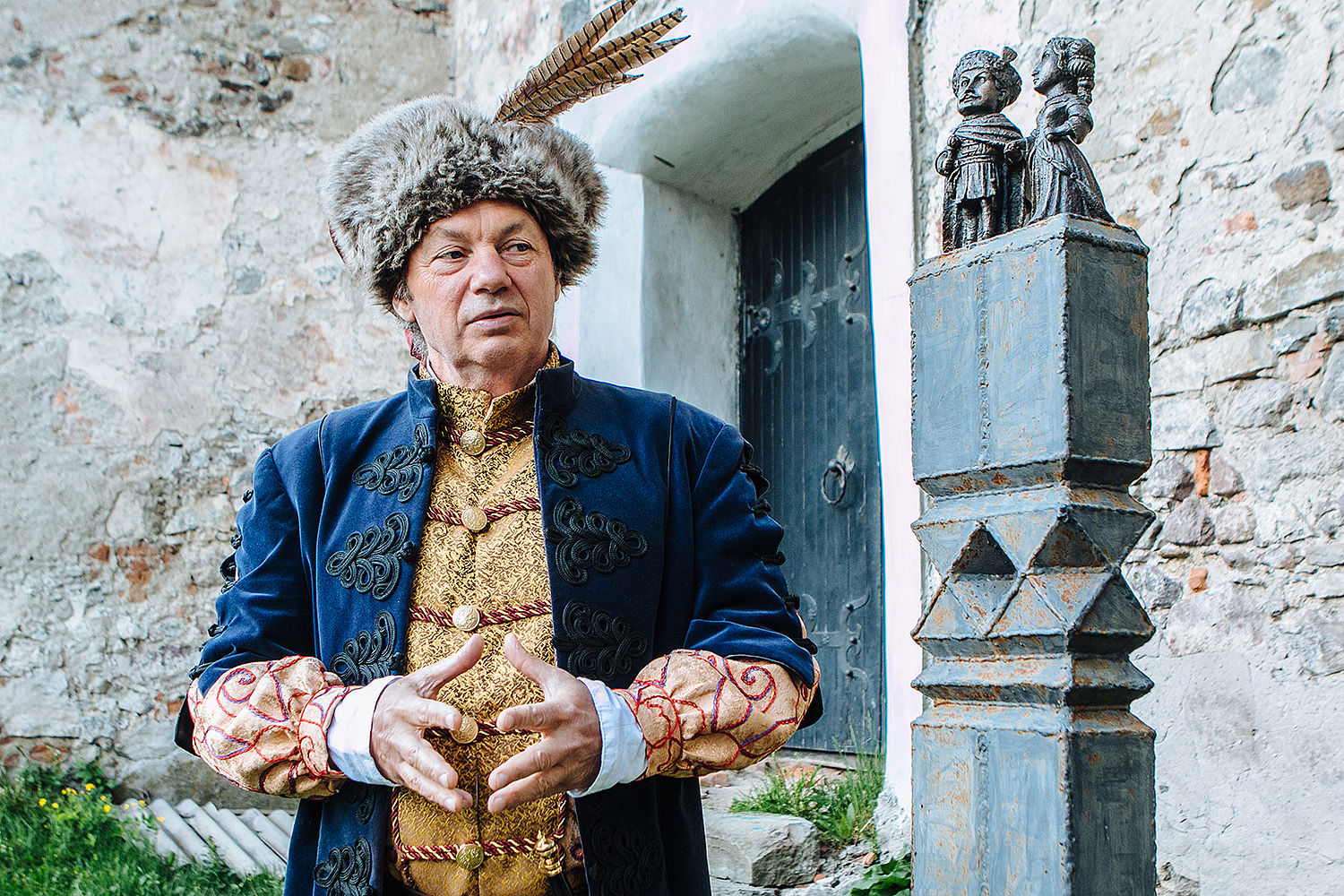
“Someone says that there was no love, that it was only a political operation of King Leopold. But we have studied enormous material, sources and research of several countries. And the most important is the personal correspondence of Ilona Zrini with Imre Tekeli. Every human who will read these letters will understand: it was real love. We not only believe, but we also know it. And also everyone who visits this bedroom will feel it,” – Yosyp Bartosh believes this romantic story of the palace is the main “magnet”.
Today wedding ceremonies take place in the Saint-Miklosh palace, the Castle of Love. “I cannot describe the emotions of couples. Some people went out to the courtyard and forgot their names… They come for one day from Kyiv, Kharkiv, Dnipro, there are 20-year-olds, 60-year-olds, with children and grandchildren… They say that here is another world, they have different emotions that they did not expect to have. This is what castles keep and what you need to feel”.
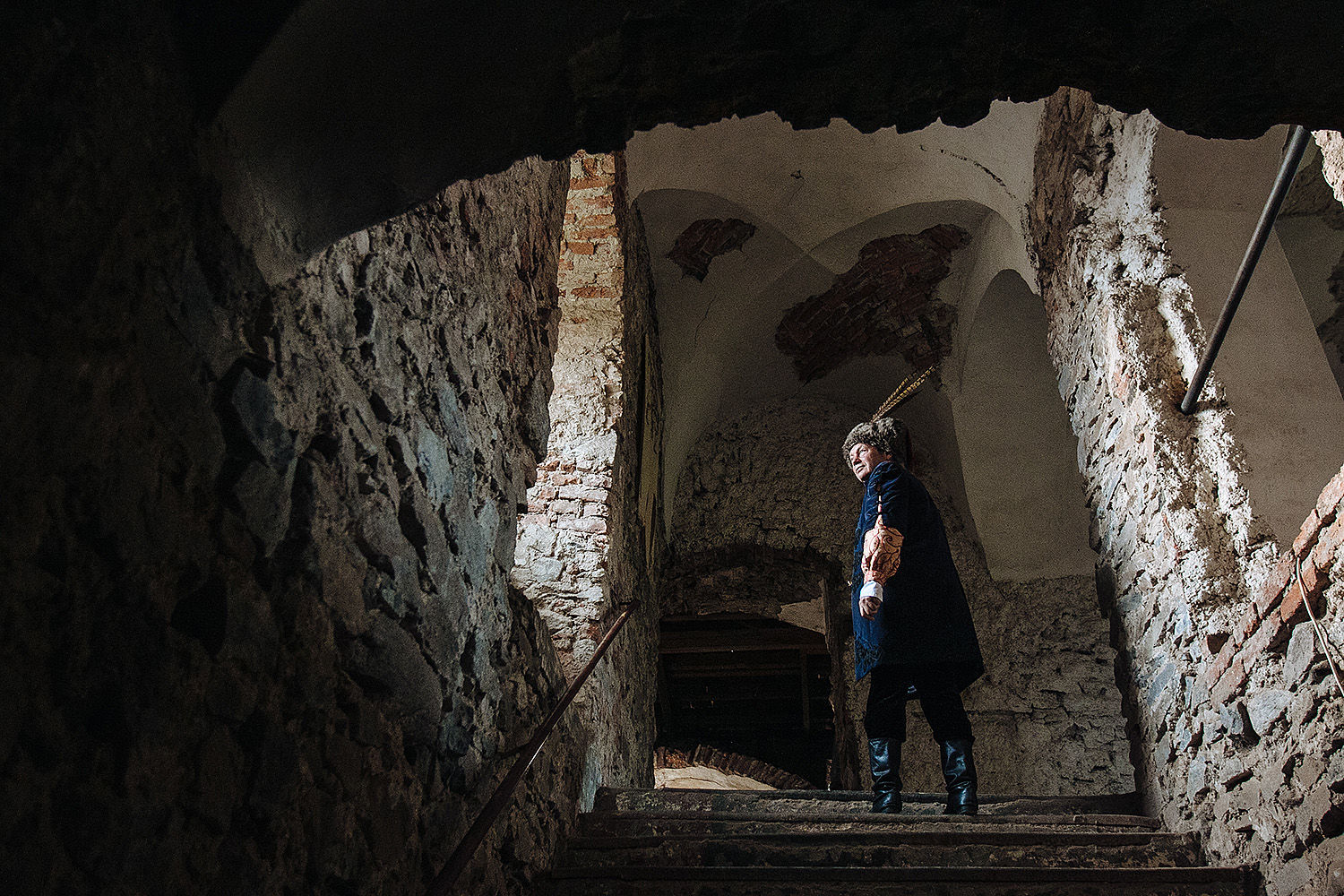
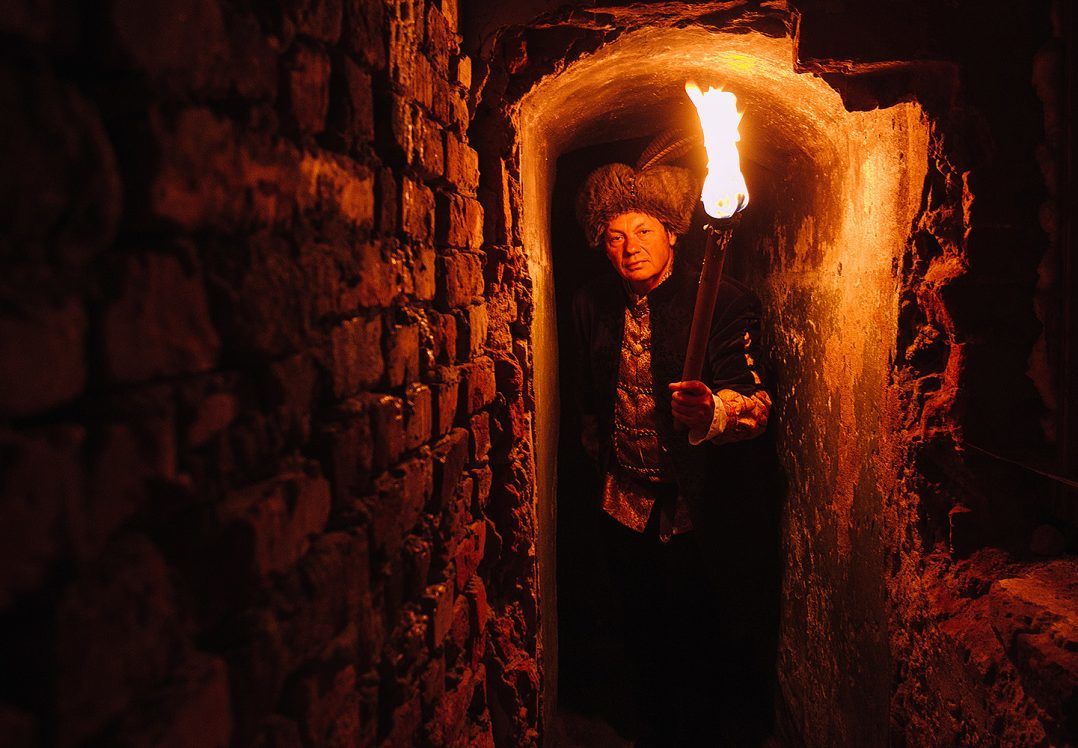
There are always some surprises: we found some interesting stones in the wall, then a niche, and then it turned out that the well had branching… And we still have not discovered all the passages. Yosyp will lead us through a secret passage in the palace, illuminating the path with a torch, and telling that now his main trouble is to drain the basement, which is not easy, because, unfortunately, the old drainage system is irretrievably destroyed. The next thing is to strengthen the exterior foundation. Then they should take care of rooms on the second floor: remove modern layers and maintain the authenticity.
“I know something about it and can say responsibly: the legends about lords of castles, who only hunted, had fun at balls and committed lechery, are just myths. Well, they didn’t have time for it, believe me! How many duties had the owner at that time – that’s awful! There were no time and opportunity, even no energy for entertainment: there were always problems and troubles: a mill burned down, a worker did not come to work, people fought, neighbours sued you, a manager is a slanderer, because he was sent by an enemy…” – says the owner of a unique house and tells, that he has already started preparing for the festival of medieval culture. “Silver Tatosh”, which is held here by the Order of St. Mykolai at the end of May, is a knight tournament, buhurts, horse performances and reproduction of the medieval life and an original artistic program. The Master of the Order doesn’t hide his happiness, because the Saint-Miklosh comes back to life with a holiday which suits it.
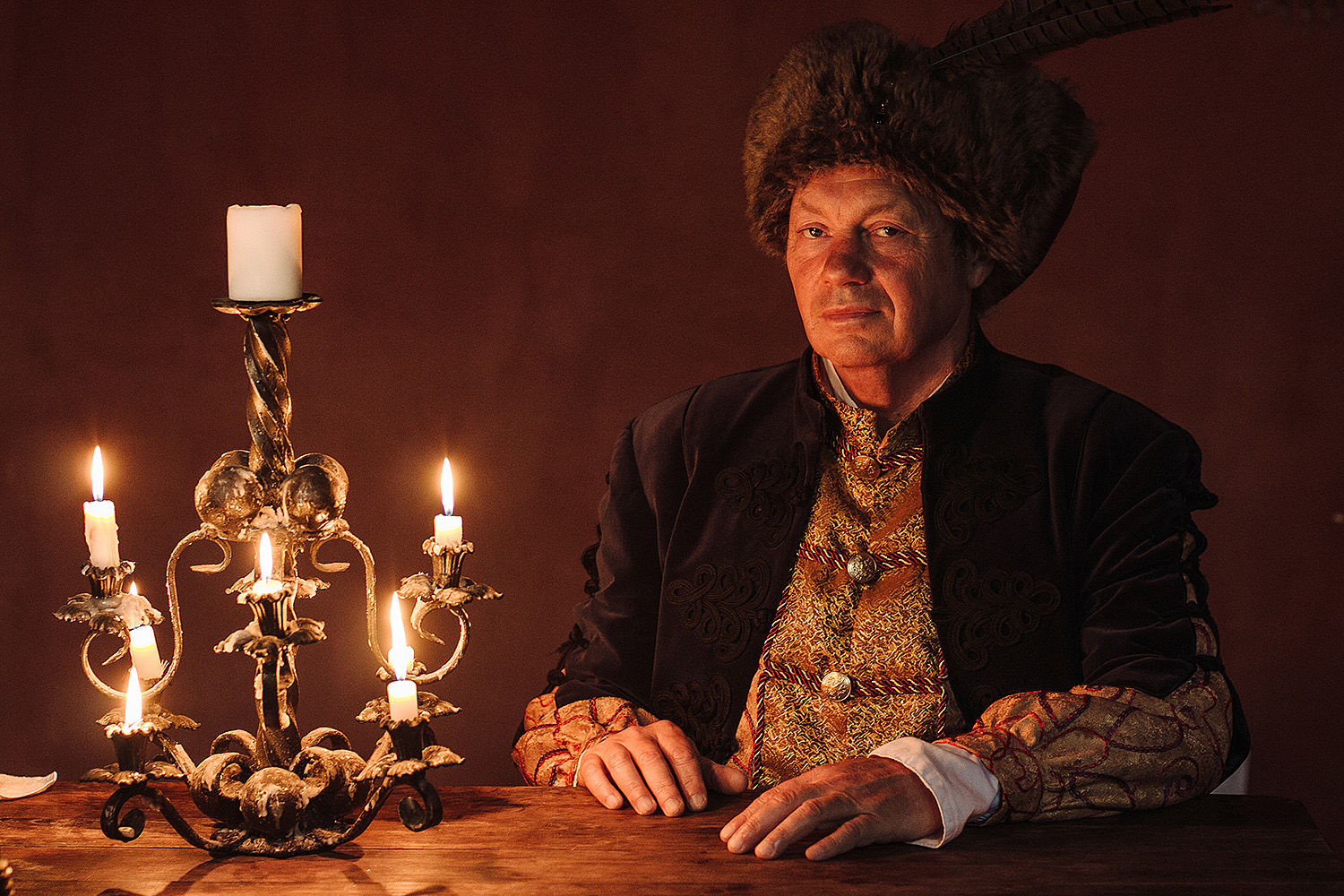
The Guardian of the Castle of Love admits: “I really cannot explain how I transform this place and cannot give a logical answer to this question. Every day we make something with our own hands, day after day. Yet, it succeeds, probably thanks to people who do not just live, but ask themselves: how to live, what to seek in life, and what to take as a basis… Castles save great secrets inside. Not White Virgins who walk as ghosts (the first thing the tourists ask is – whether we have a ghost, of course). No, castles give answers to important questions: how a man should look at a woman, how to perceive her, what a woman should be, what a man should be, in the end, what is important in life, in relationships …”
“People need castles. Not everyone understands it. When we started here, people said: what is it for, this is a waste of time, let’s demolish it and build something new. Well, you can destroy everything and build new things. But what will be in that house? If we do not preserve our cultural heritage and communicate with it, find answers, then we will have two ways: either we will receive new and alien thoughts, or we will live thoughtlessly. I believe it should not be so. That’s why I’m here. But I still do not know what for. But someone knows that, someone leads me and I obey, I go. What was the most difficult thing during this time? Understanding why I am here and what for. I’m on my way to this”.
Text by Alla Khaiatova
Photo by Serhii Hudak