

About the first days of the Crimea’s occupation and how locals got used to new conditions – in memories of Yana Dubynianska for DUMKA.
Triumph of lies
“Right here – military equipment? Really?!..”
A jeep gives me and my daughter a ride to the city: behind the wheel a gloomy man in a camouflage vest, next to him a little blonde. Russians. Looks like they were searching for a real estate in Crimea, it’s a popular amusement today. They were asking everything: will the dumpsite be removed from the hill soon, whether our life has improved in recent years, or whether the Crimeans don’t regret returning to Russia?
I was telling them. The fact that now, in the winter, that is, until April, there is no public transport connection to home, therefore, we have to hitchhike. The fact that pensions and wages do not follow the price hikes and the dumpsite has always been and will always be there. And the main thing: that personally I have never been asked by anyone, whether I want to live in Russia – it was just military equipment without identification numbers and soldiers without distinctive signs, who appeared in the city. Just a military seizure of the territory, the rest is just details.
A woman with a child whom you give a ride to the city is more likely to be a source of information than television, the media, and social networks. The blonde was looking at us with eyes wide open and all the time was asking: “Really?!”. And her husband put one question after another and eventually summed up:
“So, it’s true, our guys have taken it off.”
…Truth.
It was the first victim of Crimea’s occupation.
If during Maidan one could still see two sides with their own truth – what happened in the Crimea, was, first of all, a triumph of total lies. And over time, these lies grow and gain in strength, eroding the objective reality.
Unbelievably, but a huge number of Russians really believes that Crimea “went to Russia on its own will.” In spite of Putin’s self-revealing film about the “way back home”, despite the amount of information available to everyone in an open society. It may seem that all these people really understand everything perfectly, consciously take part in a general conspiracy, but no – they believe. This is how post-truth works.
The saddest thing is that Ukraine has its own post-truth about the events in Crimea. The vast majority of our compatriots sincerely believe that “the Crimeans themselves called Putin.” And now, when the Crimea, according to the Ukrainian propaganda, turns into a desert and a military base, it seems that they “begin to understand and getting sober”: a good reason for self-complacency and malice.
The only thing – it is a lie. This has nothing to do with what had happened in the Crimea then, in February-March of 2014. And with what’s going on till now.
“The friendship train”
Sometimes I re-read my records of that time in the live journal. Short, fragmentary – I have had a lot of things to do and bad internet connection. Dead chains of conversations from the past, when nobody understood what was happening indeed. They made shots of forecasts in the dark, took part in the battle of wits and demanded photo evidence. However, I didn’t have a camera with me back then. And if I had, I’m not sure if it could live through the meeting of the “friendship train” at the Simferopol train station.
However, let’s keep everything in order.
I remember well how I saw a repost of the journalist from the Simferopol airport that had seen the “green men” for the first time, and a brief comment: “It’s an occupation.” I was in Kyiv – two long weeks of continuous darkness and refreshing of the news feed. And then, at night, the mobile alarm system of the Crimean house was screaming: back then there was service, we could receive messages. In the morning, a neighbor called, he walked around the house and found broken bars on the window.
So, my husband and I went there; however, we wanted to go there with the whole family, with children, a little bit later, during the spring holidays.
There was still a train connection back then. My father was waiting for us at the station, the day before he said on the phone that everything was calm in the Crimea, and Ukrainian media were just “creating tension”.
He was meeting us alone.
It’s ridiculous, but then I hadn’t even heard of the “friendship trains”, full of armed Banderites. But, it seems that we arrived exactly by this very train, and it was us who were those “Banderites”. On the platform, we were instantly surrounded by the crowd of men in camouflage, with “St. George’s ribbons” on the sleeves, and boorish demands to open the suitcase. I asked who they were.
“Self-defense units of Crimea!”
Only much later, I comprehended the real danger of that incident: of course, they were not joking when they grabbed my hands, pulled, threatened to take me somewhere and interrogate there. However, back then – it was some sort of surreal gibberish. I refused to show my belongings to someone, I was screaming at them, demanding their documents. My husband moved me behind his back, covered me and his father showed his passport with the Crimean registration, it worked out. Someone from “self-defense units” also showed some military ID, it was not the main guy of the gang, no. Now I think that the main guy, most likely, had Russian documents.
From this absurd conflict on the verge of the fall, my “Crimean Spring” had begun.
Posters
In the room, where somebody tried to get through the window, the sole of a boot was imprinted: the thief got scared because of the alarm and immediately escaped. The idea of the police seemed completely pointless. Another thing – to call the welder and reinstall the bars better. To save our home, at least to try it, after all, nobody knew what would happen next.
There was almost anybody on the streets in the city: wind, rain, fog, and piercing March cold. However, in places where people were gathered – in minibusses, coffee shops, etc. fragmentary, nervous conversations immediately burst out: because the tension with which the Crimean people were living back then was impossible to keep inside. I was listening to it, and then writing it down from memory:
“This is a totally different mentality! Ukraine is greedy. It takes away all our taxes, everything we earn goes to Kyiv, to Kyiv… And Russia – there, everything is for the people!..”
“Actually, it’s all Uncle Sam. And the rest, they’re just pawns… I’ve lived in Crimea since 1944 – when they had moved out Tatars, we settled down. And I know that the Crimea is a tidbit… They want their military bases in the Crimea… ”
“I was watching the speech of the Lviv’s mayor. He spoke Russian! Everything is okay. Well, there are radicals there, and where are they absent? It’s all right here, no one comes here, we live as we were living…”
“Awful things are happening, everybody is nervous. I am Russian, my husband is from Western Ukraine, we’ve never had any disagreements on this topic… My relatives from Russia call and say that we have only Banderites here. Well, what kind of Banderites? And they tell me: ‘How can you say this, we’ve seen it on TV with our own eyes…’ And you won’t prove them anything.’”
“Whoever I ask among normal people – nobody will go to this (not for printing) referendum.”
Back then it seemed that it was important: what people think, what they are talking about. It really was important – but it had no impact on the course of further events.
In Crimea, a military operation was carried out, and the Crimea citizens, per se, were not involved in it: only their fears. It was fears on what Russian propaganda was working, and not for a year. In March 2014, all this work and materials collected over the years worked out. My town was covered with posters on which swastika and slogans such as “Ukraine chose Bandera”, “Maidan is fascism”, “Banderites have banned the Russian language” were depicted. On the eve of a “referendum”, all of them were changed to pictures with hearts “Crimea” and “Russia” united in ecstasy. All this was done at the headquarters of “self-defense units” (I even know the person who volunteered there after moving to Crimea from Russia two years before that), they were managed by Russian political strategists. If we were talking about the seizure, let’s say, of Galicia, they would use other social fears, in every possible way.
This, by and large, was just scenery. To tear off these posters from the walls, at first I was doing it, there was no sense.
And what made sense at all back then?
The X day
Frustration and social stress on the peninsula had quite real grounds: the war approached the Crimea very closely. Today, this word has been banalized – especially for those who hear about the war on a daily basis, but have never seen it – so it’s so easy to reflect on the lost chance to repulse the occupiers back then in Crimea.
However, back then everything was different. Crimea had become a precedent, due to which Ukrainians realized what the war is. At that time there was no understanding of it. There was a desperate belief that the war could still be stopped. In a separate Crimea, this eventually happened.
For some reason, it wasn’t spoken about in the Ukrainian informational space, where now we have militaristic rhetoric. But it should be reminded again and again: it was Ukraine that provided peace in the Crimea. Russia would have agreed for any option: from the “Crimean People’s Republic”, a wild field with “self-defense units” dressed in any possible uniform – to a nuclear strike that Putin was boasting of in the aforementioned film. It was in Crimea that the occupiers first showed their price for peace: back then, in March 2014, nobody knew it. Crimea in this war was on the front line – and that’s why it had become the first loss.
March 16, 2014. It was the X day, when anything could have happened, the climax of the social tension. The results of the “referendum”, of course, were drawn up in advance, despite this, until the last moment, it remained unknown. There was still hope for a rollback: one cannot be brave enough to seize other’s territory, in front of the whole civilized world… At the same time, there was readiness for any development of events.
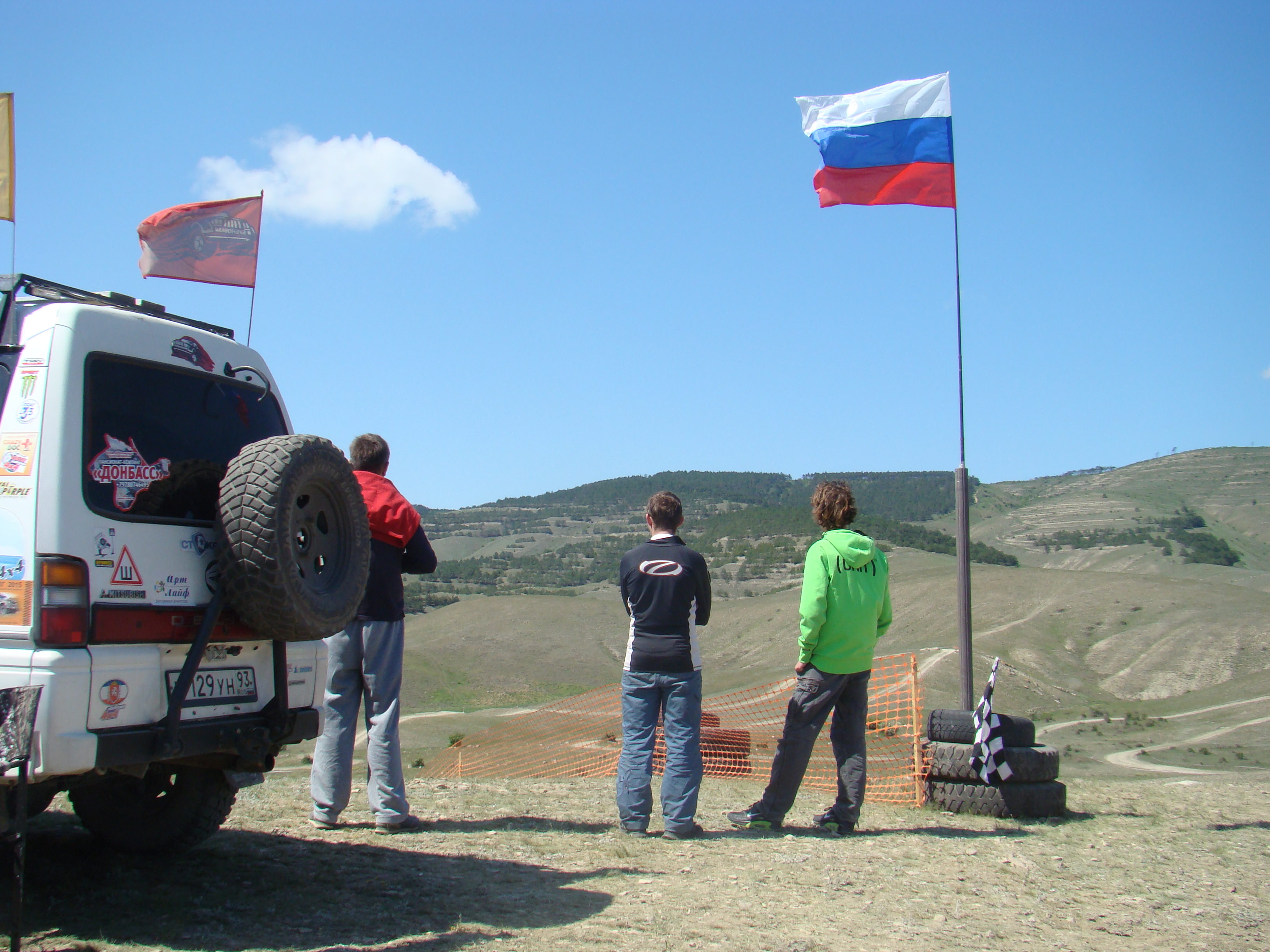
We left Crimea on March 14. Our children were staying in Kyiv, and an option of the “Crimean wall”, like the Berlin one, seemed not very fantastic back then – the isthmus was already controlled by the Russian military.
“The referendum day” meant a lot for the Crimean people – after all, it was the day when something should be decided, the day of getting out of this limbo. It is this day that canonical Russian propaganda targets the most, they received its media image of “peaceful expression of people’s will”. I’m sure, in similar circumstances, it would be possible to create it anywhere, even in Galicia.
However, even in May Donetsk circumstances were quite different – that’s why there was another image. Not to mention other regions that are now proud of the fact that they withstood, attributing this merit, first of all, to the patriotism of their citizens. However, don’t forget about many other factors, starting with the most important one: they weren’t the first, they hadn’t suddenly, without any preparation appeared on the frontline.
It’s important to remember: at the time of the referendum, the military seizure of Crimea had already happened. The propaganda performance, regardless of real or imaginary figures, didn’t matter at all.
It had no real value.
To move on
The next time came back home to Crimea in May. The train was standing at the “border” for six hours; the station was still patrolled by “self-defense units”, but they weren’t picking on people. Spring was incredibly beautiful, the vast majority of people were happy. Because the worst thing hadn’t happened. Because life was moving on.
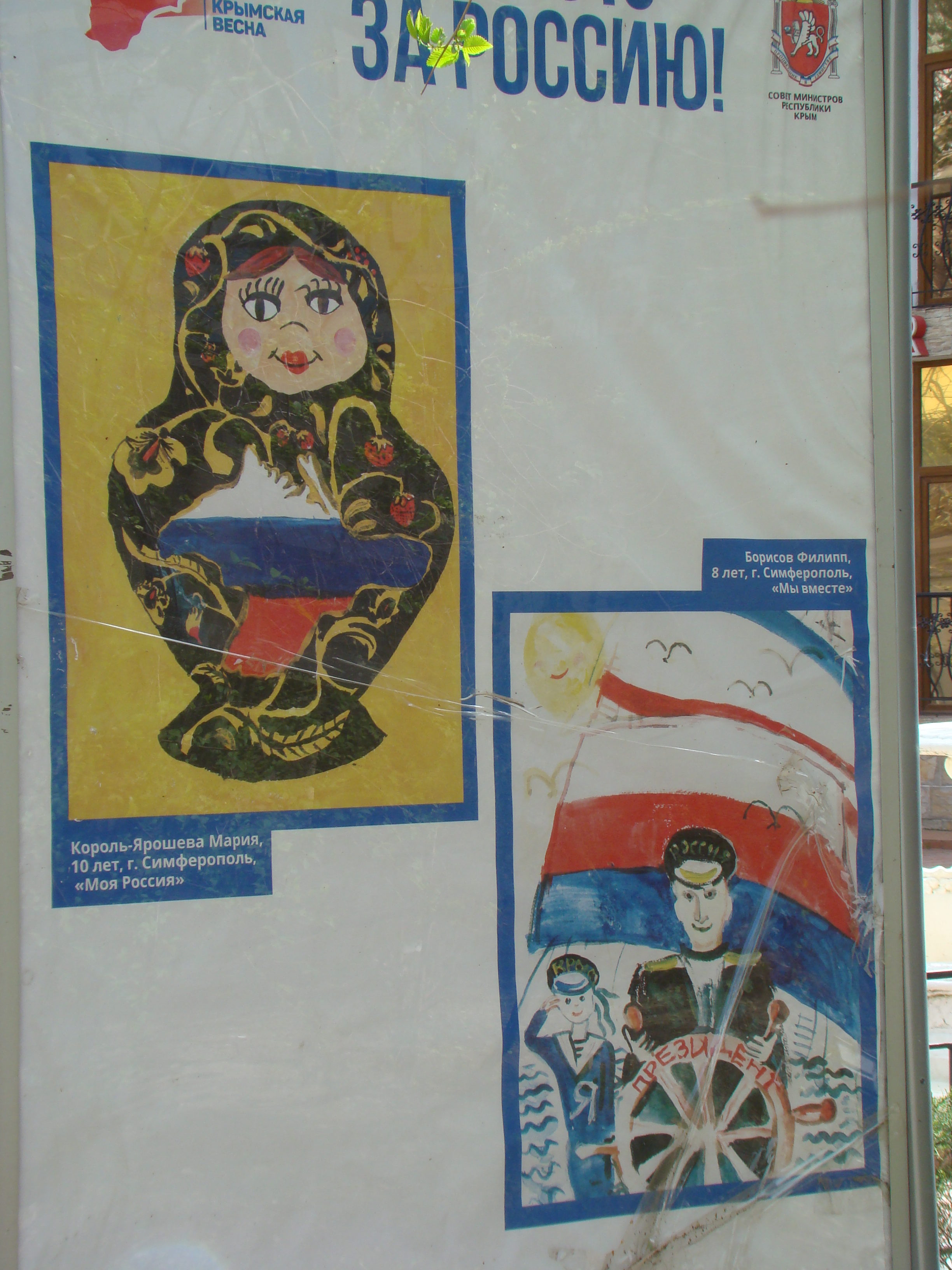
This life was messed-up, broken, turned upside down. That year there were no tourists, the institutions and banks were rapidly closed, big companies were leaving the peninsula, mobile service was bad. The payment of pensions and utility bills were made only at the post office, which had become a special kind of hell, and its head office became the FMS, where the Crimeans got their new passports and other documents, as well as numerous refugees from the Donbas got their temporary residence permit. The queue was formed at night by checking in a notebook, and in the morning the fight for the places in it was commencing – under the supervision of the Russian military. By the first of June, the manual transfer to the ruble was urgently implemented. All these were the “difficulties of the transition period”, on television and radio, they promised Crimeans that it soon will end, and a bright future will come.
In mainland Ukraine, there is a widespread stereotype that every conscious pro-Ukrainian Crimean had already emigrated from the peninsula by then. It’s not true: there is no direct correlation between emigration and patriotism of Crimeans. Firstly, young and ambitious people were leaving here, as always they leave any provincial region. Secondly, life circumstances are individual, and in many cases, decisive factors were professional or economic: for example, the relocation of companies’ personnel that left the Crimea because of the sanctions threat. And thirdly, staying on your own land, not knowing what will happen next, is also a choice that is worthy of respect and it’s often not easier than emigration.
…Today, the “transition period” is in the past, life has more or less settled down, acute problems have become chronic, and a tourist who wants to conduct his or her own “sociological research”, after talking to a taxi driver, a guide and several passers-by, will certainly hear that the Crimeans are happy and pleased to “live in Russia”. Those who don’t think so, most likely, just won’t talk to a curious tourist.
No social mood is stable. And no professional sociological study will show how many Crimeans perceived what happened as a natural disaster: it has already happened, it was impossible to repel it, therefore, its consequences should be minimized, as far as it’s possible – then to move on. For nobody has a magical time machine. For life continues despite everything.
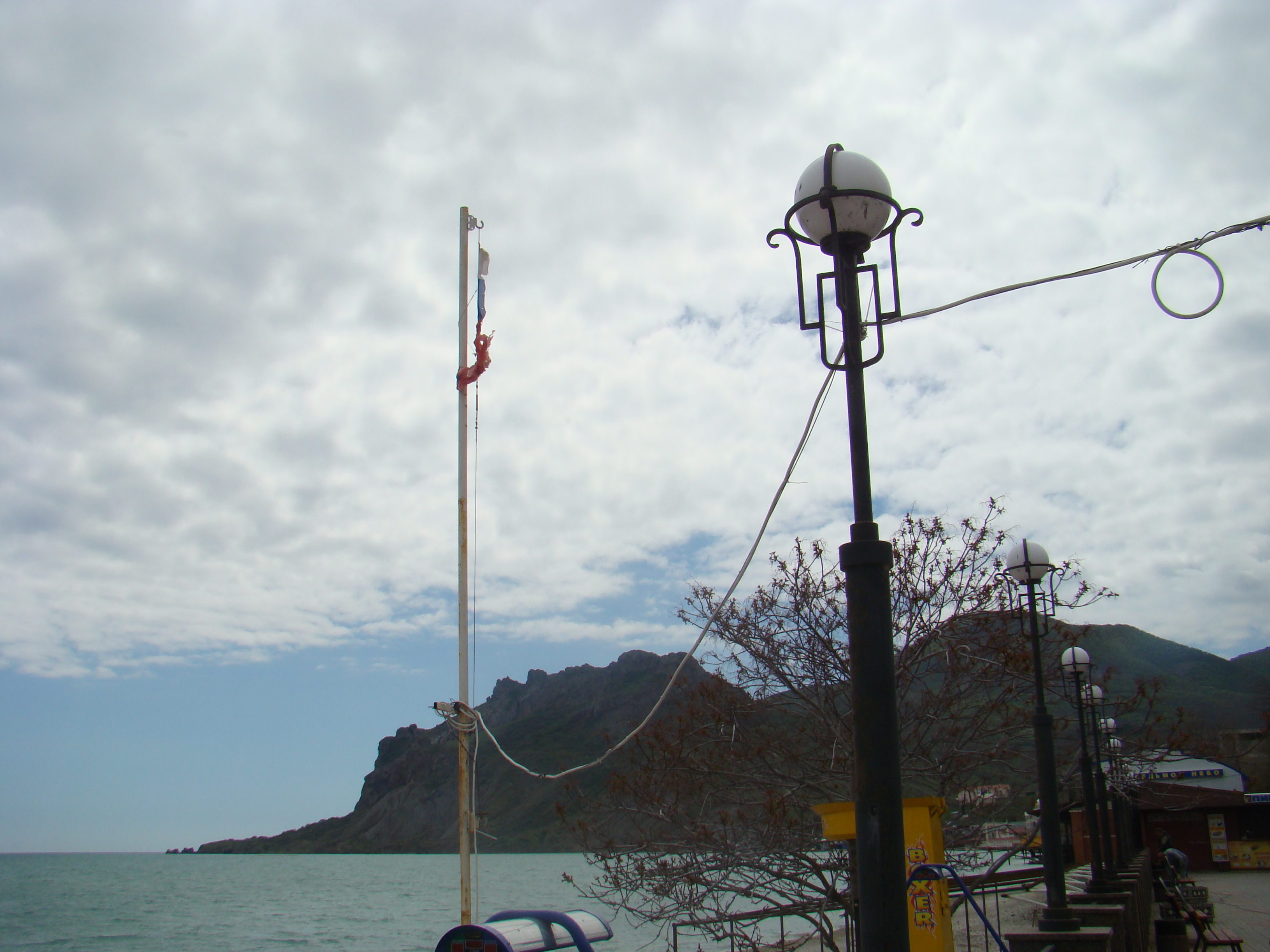
And most importantly, what is often neglected in controversy about Crimea. The very criterion “has it become better or worse” in the context of the events of March 2014 is absolutely false. Here there is no big difference, whether to admire large Crimean constructions, as pro-Putin Russians do or to gloat over the lack of water on the peninsula, which, unfortunately, Ukrainians do. After all, it’s not about how many problems there is in Crimea and how effectively they are tackled or, on the contrary, made by the occupiers. It’s about the fact that they are occupiers. It is about not forgetting what exactly had happened in Crimea in February-March 2014.
To separate the truth from lies.
And from that very point to build a strategy of what to do next.
By Yana Dubynianska
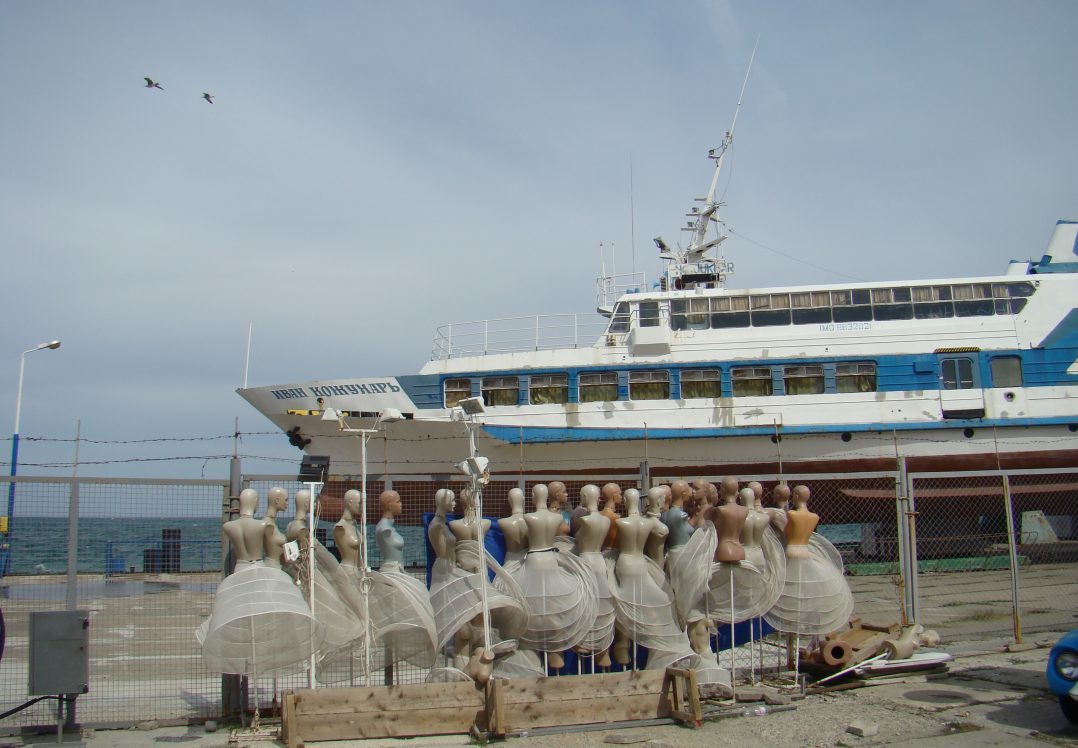
Photos of different years of occupation by Yana Dubynianska