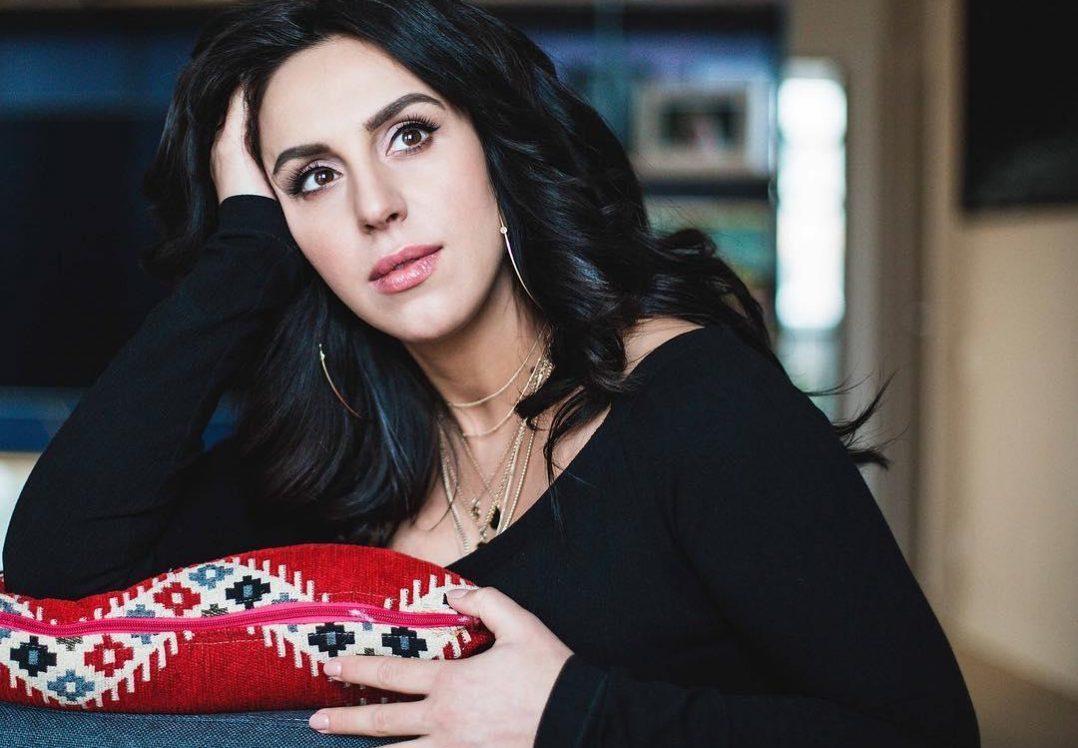


Her parents were among the first Crimean Tatars who bought a house in the Crimea. At school she was bullied for a long time, they were sending her “to Tatarstan”, although she was actually at her homeland. About the childhood and moving to Crimea, the love of music and the rejection of the word “success”, the return of the peninsula and grudge of those who stayed – the way Jamala herself sees it in the section “Who is…” from DUMKA.
“We were among the first Crimean Tatars who bought a house in the Crimea”
We used to call Jamal a singer from Crimea. However, do we know what was the road of the performer’s family to settling down on the peninsula at last? After all, the future winner of the Eurovision was born in Kyrgyzstan in a very difficult time: back then the Crimean Tatars were undesirable guests in the Crimea.
“In any attempt to return to their homeland they were sent back from the station. My mom is Armenian. So she could go freely to Crimea. However, as soon as her passport was opened and they saw that her husband is Jamaladinov, she was also automatically turned back. They refused to register, to hire, refused in everything. And she did not understand why it happened so? She was an honored pianist and could work at any musical school.”
“It was not easy. But finally, we had bought a house… Yes, we are one of the first Crimean Tatars who bought a house in Crimea. Others, who returned to their homeland, were already given land plots. Moreover, they provided those plots in very uncomfortable places, where even a car with cement or stone would worth twice as much because there were slopes.
Thanks to one scam we managed to buy a house in the Crimea. To buy a house in the very place where my great-grandfathers, great-grandmothers lived. The place where my great-grandfather dug a well. And I know for sure where it is.”
“Go back to Tatarstan”
It was not easy for the Crimean Tatars not only to buy a house on their native land. It was equally difficult to adopt again: even in school, Jamala felt biased attitude towards herself, the worst thing happened in the music school.
“I remember the time when in Crimea during history lessons at school when they talked about the Mongol-Tatar invasion my classmates were turning to me, they were looking at me all together and said that I should go to Tatarstan.
It was difficult for me to explain to them that I have nothing in common with the Mongol-Tatars that I am at my homeland. At competitions in Crimea, I also felt a bias towards myself. However, the most unpleasant thing happened in music school. My teacher, having found out that I am going to go to the Conservatory in Kyiv, advised me to change my surname.”

“Talent is super, but what can you do without a foundation?”
Jamala seems to know about her musical future since childhood. At least since she was three years old. She was fortunate enough to be born in a family of musicians. In a family where there was only one rule: a person should always work.
“I always wanted to study music. I had understood that it was impossible to become a professional without education and constant self-development. Talent is super, but there must be a base, a foundation, as in the house. Mom was a teacher at a music school, and I insisted on joining the piano class. I hated my specialization classes, but my mother blackmailed me: ‘Do you want to become a singer? If so, then you should be able to play the piano.’
‘You play at home in front of parents or somewhere on the stage at the competition – it doesn’t matter, you just love to do it. When you shift to a professional stage and study at a college or a conservatory, it is very important not to lose this initial impulse, this goal – ‘I want to sing, I like to sing, I can’t exist without it.’ You must remember this feeling. The main thing is not to sing in order to please someone.”
“I love singing for people who believe me”
We have all heard about the successes and victories of Jamala on many occasions. However, the performer herself perceives the word “success” extremely tough. She says it’s more like a trap. It is more important to do something important in order for people to remember you.
“I don’t really like the word” success “. This is just a trap for those who dream of becoming a “star”. After all, what is success? Passersby recognize you on the street? You can use your own name to get some privileges? Okay, today you can, and what about tomorrow? How many “stars” disappeared, how many famous artists ended their lives in complete oblivion. I would like to do something good, and really important. Not to be on Wikipedia but in the memory of people. To reveal yourself at full depth.
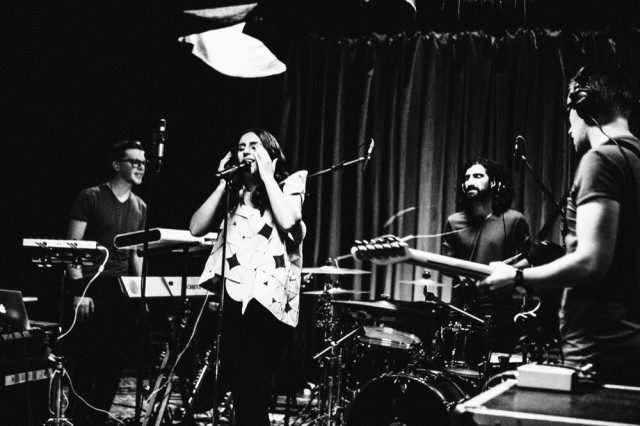
The artist calls her fans… relatives. After all, they understand her, know with what she lives, and therefore this “name” is quite fair. Moreover, Jamala recognizes that she is trying to answer almost every message on the network, and sometimes even records entire online lectures for beginners who seek for advice.
“The best praise is when fans come to you after the concert and say: ‘You know, this song is about me.’ So I reached their souls. As sincere you are with your listeners, as much they understand and respect you. It has always been and will be plentiful of silicone and made up. However, not enough of truth and honesty. I prefer singing to a small group of people who believe me.
I love my fans, call them relatives. They understand my music, they know how I live, they are close to me, that is, they are relatives. I always try to reply to posts on social networks. Students from the conservatory often write their records, ask for an estimate, advice. I give entire online consultations.”
“If publicity can help to handle a real problem, I can feel happy”
This is by no means the most well-known fact, but in the fall of 2017, Jamala had become the goodwill ambassador of the International Organization for Migration, which is a part of the UN.
“My work is to attract attention to this problem through my publicity, to update it in public opinion and in the media. I’ve learned a lot about modern slavery – the real stories of people, and they are all terrible! One of them is about a teacher who was invited to work in a certain village, and then her documents were taken, she was kept in captivity, they didn’t feed her normally, didn’t pay salary, treated her badly. When I found out about all these cases, then as a human, first of all, I wanted to help. If my publicity helps to handle this problem at least a little – I can feel happy.
Operation “Tulips” and “Jamala” flower species
The singer accidentally recalled how she was selling flowers grown by the father when journalists asked her about a Dutch company’s offer. It turned out that they wanted to name a new species of tulips… “Jamala”.
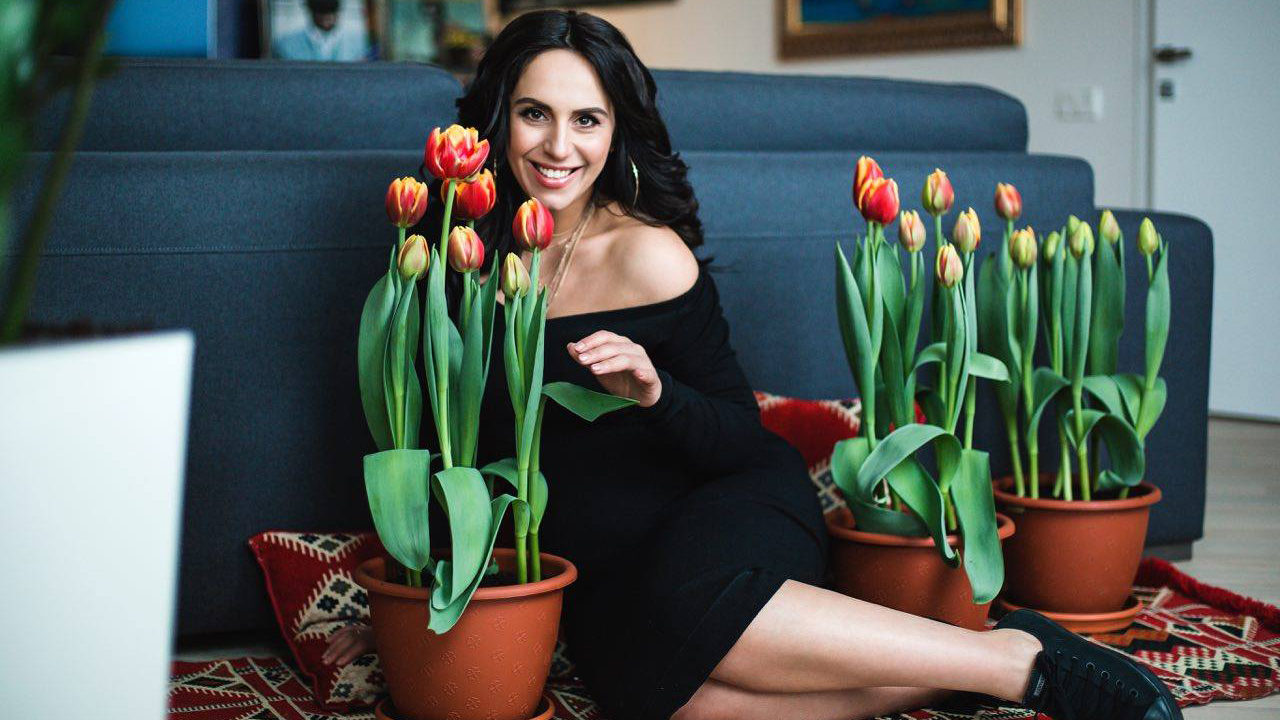
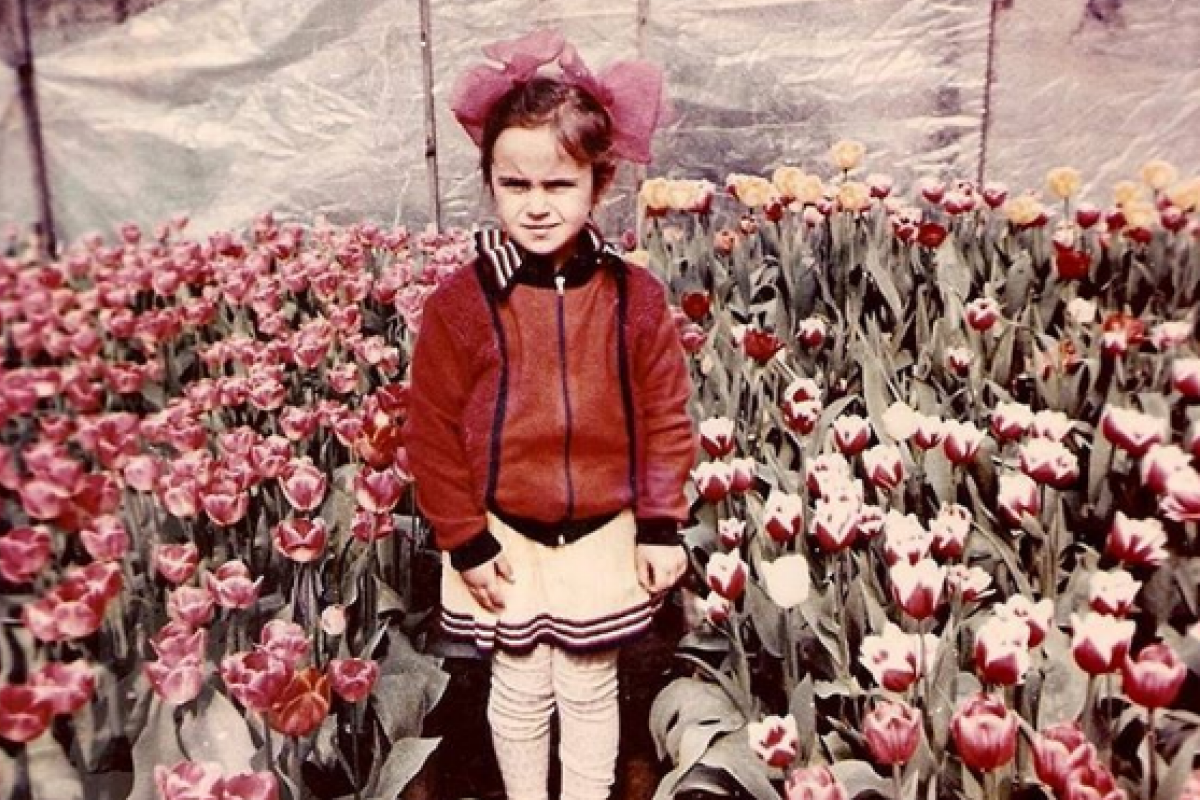
“The Dutch company StoKolex turned to us with a proposal. They said that they want to name their new variety of tulips “Jamala”. It was so unexpected and so enjoyable! The fact is that I was selling flowers in my childhood! While we were living in Melitopol, my dad was selling tulips to raise money for a house in the Crimea.
In my childhood, every 8th of March, we carried out our operation “Tulips”. It was my pain, it’s hard work! However, it really brought a lot of money. This festive day and two or three days before it gave us bread for all the year! Therefore I was terribly glad when I found out that I would have my own tulips (laughs). And the first one to whom I wrote about this was, of course, my dad.”
“I always knew that my land is Crimea”
Today the singer admits: Ukrainian patriotism arose in her long before the revolutions, because there was always a feeling that the Crimea is a part of Ukraine. Even when the Ukrainian language was not well taught at school, Jamala’s father asked her to talk with her sister in Ukrainian and turned on Ukrainian films. There was always a feeling of her own homeland, which you should respond.
“Crimea will return to Ukraine. I’m often asked what should happen or what I could advise. I do not know an answer to this question. It seems to me that a prerequisite for this is the transformation of Ukraine into a prosperous country in which people live well.
The Crimea is incredibly beautiful, I realize it. Previously, I hadn’t noticed it so good. Well, a house – just a house. You come back, meet everyone, eat and go back. Only now I understand why these wars were waged, for what was this struggle. This is an incredibly beautiful place, it’s a pearl on the map of Ukraine, it shines, it is beautiful.
The singer tells about the connection of her own music with the notion of the homeland. She says that it is an obvious thing, she has always felt that Crimea is her motherland.
“Irish people, whatever they sing, sing about their Ireland, Britons – about Britain. The Crimean Tatars have this notion of the motherland and native land instilled since birth. I always knew that my land is Crimea I was born in Kyrgyzstan, but I never felt that it was my homeland. It happened that I was physically born not in the Crimea, but in fact – it was there.
However, in another interview, Jamala admits: those who stayed in the occupied territory, feel a considerable grudge. Like, all the gravity of the situation felt on their shoulders, and we left them alone and live our own lives.
“However, this is not the case. If we talk about our family and about me personally, then I try to keep in touch with the Crimea. Our family always tries to transfer money or some things for kids of political prisoners. My dad personally was going and solving all these issues. That is, we, on our behalf, are trying to help, listen, give advice and support.”
By Dmytro Zhuravel
The publication was collected from numerous interviews, speeches, and appeals of the material’s protagonist.