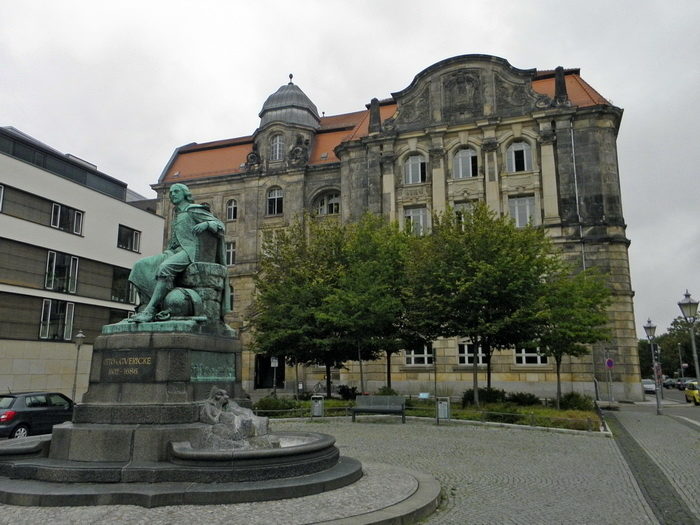


Ukrainians who live overseas for a long time face the problem of saving their cultural identity. The key problem is shaping cultural roots among children. A church often happens to become the centre of consolidation. If a community is initiative enough, it can open schools or kindergartens. This way is followed by the Ukrainian community in Magdeburg. It is based in the Ukrainian St Basil of Caesarea Greek Catholic Parish. Each first and third week of a month, a priest from Berlin comes to minister here. After that, some people stay to drink some tea and discuss problems of the community or Ukraine, others gather in the next room – despite their German accent they speak pure Ukrainian and tell how they spent their holidays at grandparents’. It is the Ukrainian Sunday School, which was founded two years ago by the Nikolaichuks – a young family. Now, about 15 children visit it, the youngest one is five years old.
We met Nadiia Nikolaichuk, a founder of the school, in Magdeburg. We talked about the school which was opened during her husband’s paternity leave, about ways to save the Ukrainian language and tips on how to make children speak it. We found out why children are ashamed of non-German accent at the Russian language lessons, about why women “lose ground”, about “children holidays” in Ukraine and many other things.
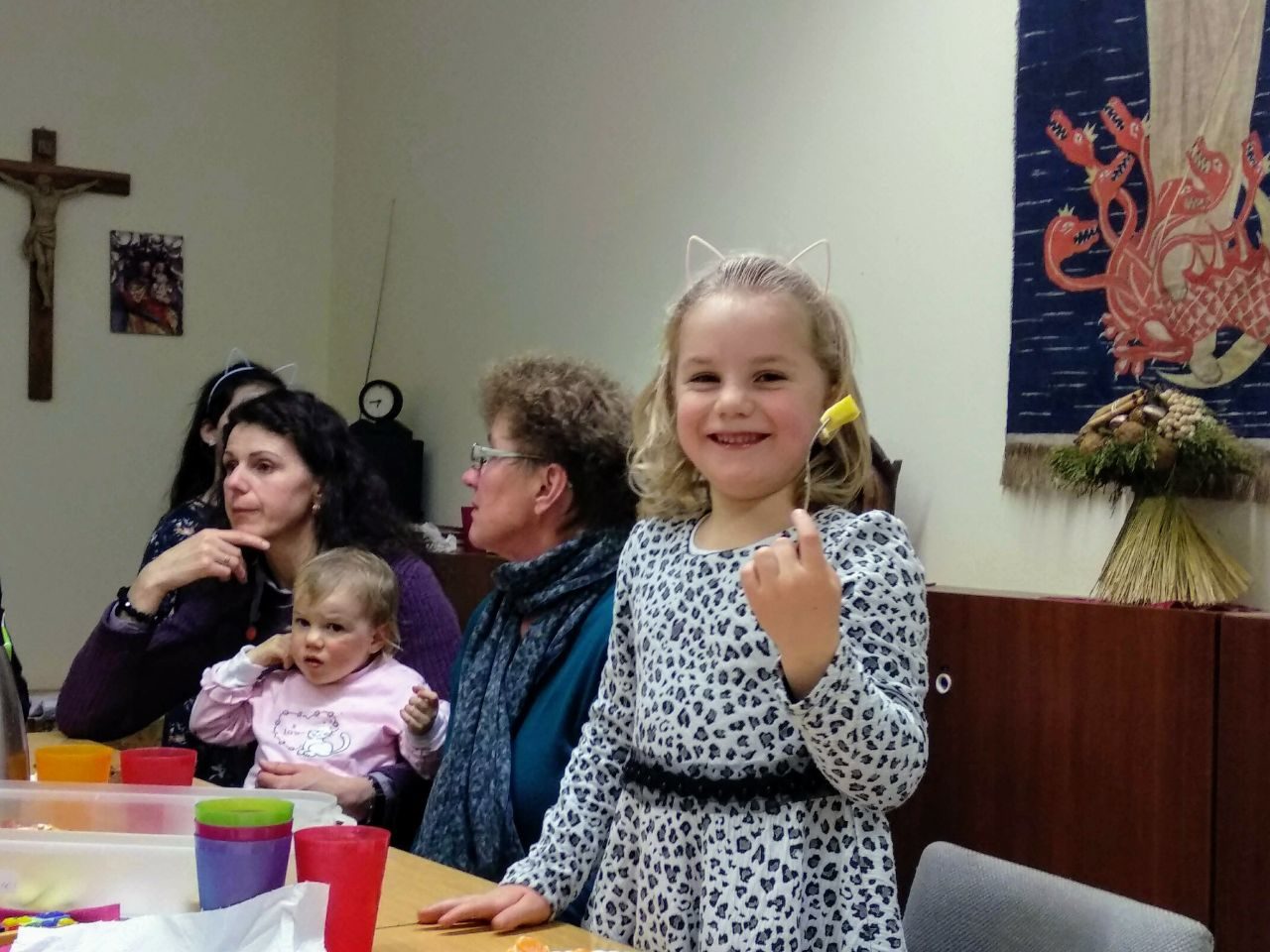
A daughter of Nadiia Nikolaichuk, Veremiika at her birthday party
Our school started two years ago, it was organized by my husband, our fourth child had just been born then. He was having his leave, we had some free time, so we started. We had had the idea and motivation for a long time already, but we hadn’t had enough children, but the fourth kid is one more pupil (laughs).
Do you mean your husband’s paternity leave?
Yes, in Germany you can take three-month or six-month leave. During it, he received ¾ of his salary – the state is interested in parents taking part in bringing up their children.
But bringing up one child is not the same as bringing up a group of children. Was this leave enough to make everything settled?
When the leave was over, my husband started to work again, so we had to close the school for some time. Besides, the problem was that there were children of different age and knowledge level. However, after the break, since the last year, we have worked hard. Now, we and other parents prepare lessons in turns, we have ordered some workbooks from Ukraine, made a plan of what we want to teach. The first part is the Ukrainian language, we want to teach children to write and read. The second is Ukrainian traditions and symbols, by the way, it is the theme of the last two lessons.
The third part is about spirituality. We are going to arrange Sunday classes with the priest. He conducts them, for example, in Berlin, helps children to prepare for a confession and the first Eucharist.
As far as I understand, the church is very important in the teaching process?
Yes, combining with a religious, church element – as the community is based in the Church. The Ukrainian language and spirituality are very important. We are still looking for a teacher in elementary school who would be able to teach our children regularly. But it is hard to find a person, preferably from the community, who would share our attitude, who would be able to tell what holy orders are, why people should visit the church because children don’t understand it yet.
Does the school have funding sources, patrons?
We don’t have many expenses now because we teach by ourselves. If we hired a teacher, we would have more expenses, but we are ready for it. We don’t have any support by any organisation, charities or the state. We do it by ourselves.
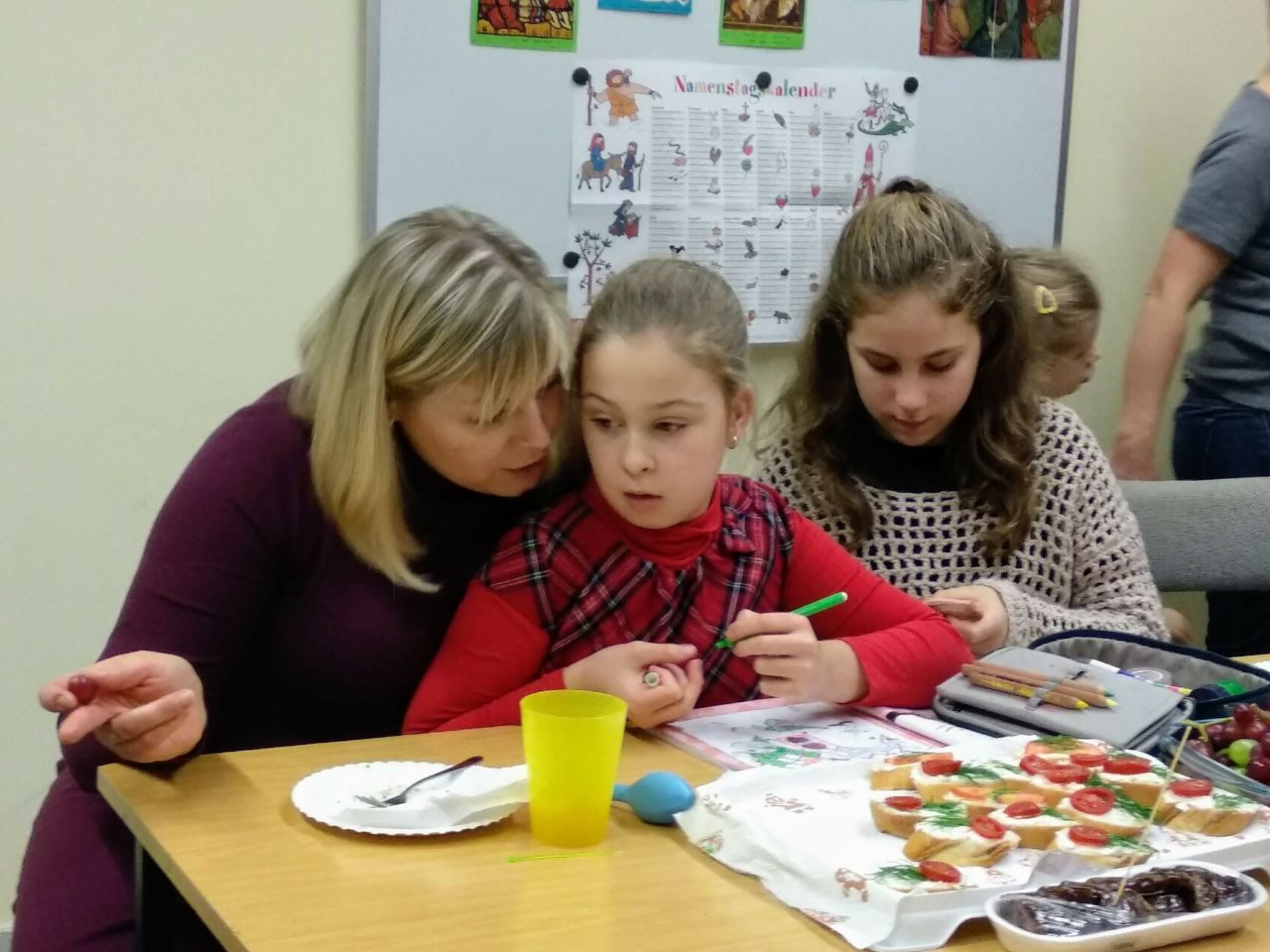
Olesia Shkiriak together with her daughter, on the right – elder daughter of Nadiia Nikolaichuk, Bozhena
The first part is the Ukrainian language, but one lesson a week is hardly enough to master a language. Do children speak Ukrainian beyond the church, the school?
Yes, they do. Some do it better, some worse. There was a boy in the group, whose parents spoke only Russian but wanted him to learn Ukrainian. My husband and I are both Ukrainian-speaking, so it was easier.
Parents should contribute to it, in the first place. All my four children were born in Germany, but we speak only Ukrainian at home. Only when Germans come to us, we speak German. We listen to Ukrainian music, watch Ukrainian cartoons at home when we go to Ukraine, we buy many books there.
Did you speak good German when came here? Because when parents don’t know the language of the environment they live in, it can put children off learning their native language. Because, for example, unlike their parents, they want a more successful integration.
I came here without virtually any knowledge of the language to my husband who was studying here. My husband knows German very well. Our children were at home up to three years and spoke only Ukrainian, they started to learn German only at kindergarten. It was easier for the third child because elder children sometimes spoke German.
But when the eldest child, Bozhena, started to visit the kindergarten, I wrote down translation of the most frequently used words for teachers. For example, “drink”, “toilet”.
But we decided it from the very beginning: let our children learn proper Ukrainian from us and proper German from the environment, then they will feel these languages better.
My husband was strict at this when children spoke German, he pretended he didn’t understand them. Then, they had to look for words to explain it in Ukrainian.
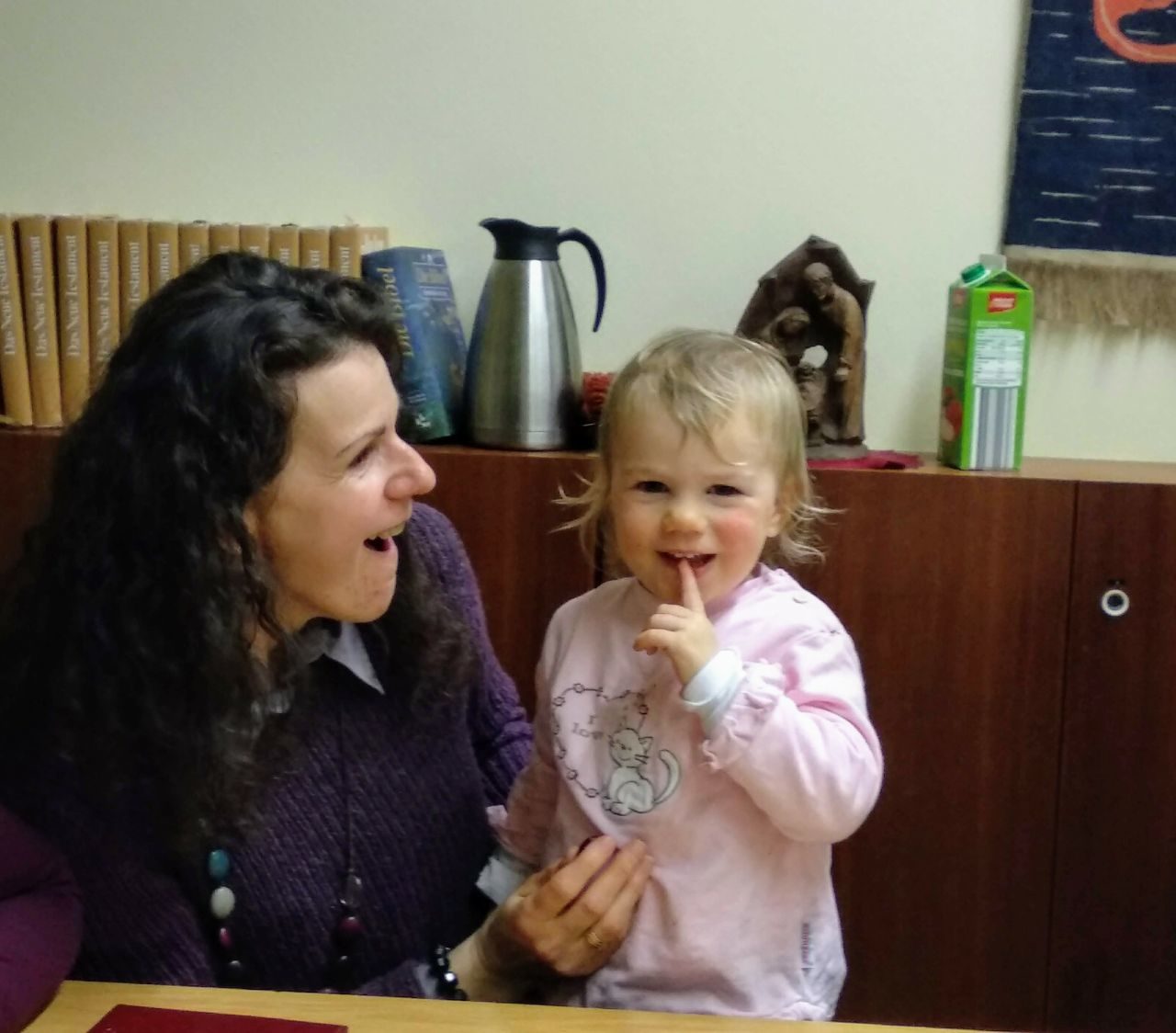
Nadiia Nikolaichuk with younger daughter
What is the position of parents who don’t have Ukrainian as their native language? I mean international families.
We have such a situation (it is said by Olesia Shkiriak, a mother of one of the pupils), my husband is a German, we speak only German at home. When we are alone with my daughter, we speak Ukrainian, but I can hardly say our dialogue is in Ukrainian, it is hard for her to pick the words, she has almost forgotten them. She is surrounded by the German-speaking environment the whole day, at school, with friends. I am literally struggling with her for this language.
Children sometimes have an insecurity of being not like others, when they are in the German-speaking environment. Their classmates know that they’re Ukrainians and sometimes wonder and ask: how this will be in Ukrainian, tell a verse or sing a song. And they feel uncomfortable. But they should be proud of that, it is their advantage: they know two languages.
I guess our children will feel their advantage in their Year 5 or 6 when they have the Russian Language classes. They would have known the letters by that time already.
Is the Russian Language a compulsory subject at Magdeburg’s schools?
In our school (private), children start to learn Russian as the second foreign language, from the first year. Not all parents support it, because many of them consider the French language more important. But it is hard to say that knowing Ukrainian helps them. At first, Bozhena (the eldest daughter) received only A, but then she started to feel uncomfortable because of her accent, which was different from others’. That’s why she tried to speak the way German speak Russian, not the way we do. The teacher wondered what happened to our daughter? But she was just adapting to the environment in that way.
That’s why I am very happy that we have our community, church. Our children have come here since they were born. Bozhena will soon turn 11, she has been in the community for 11 years. The good thing is that there are more children, it motivates them, they see – I am not the only one, there are also Lesia or Yura.
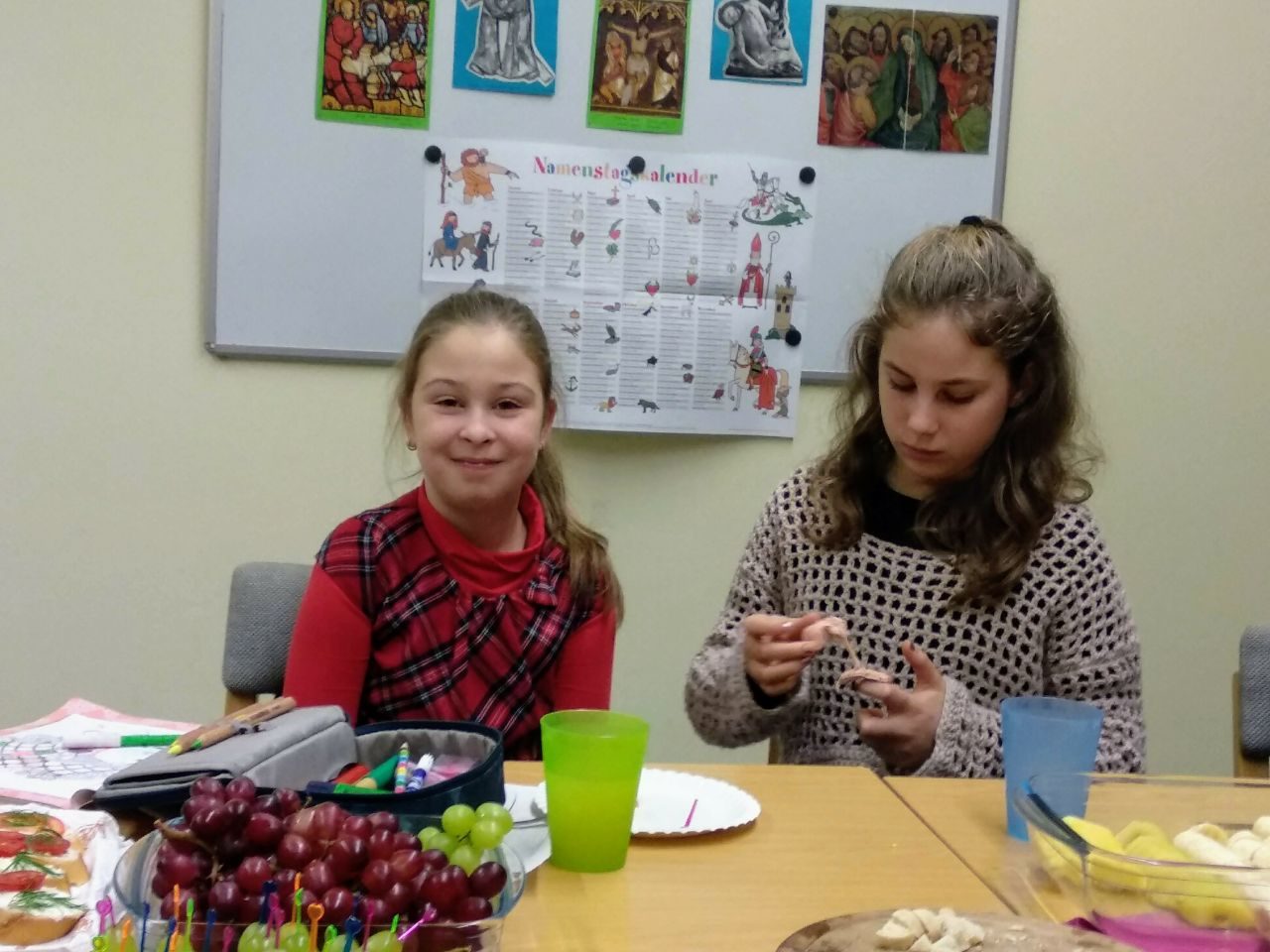
Daughters of Nadiia and Olesia
Is this insecurity common among parents – adapting to the environment at the expense of identity?
I know one family, where the mother is a Ukrainian and father is a German. He reckons that it is unnecessary and ridiculous to speak Ukrainian. Mother has to reconcile to it because she doesn’t want a conflict. But the drama is when this child comes to Ukraine and can’t communicate with grandparents. It is very sad, and it is a mistake of our Ukrainian women who don’t stand their ground. Take Olesia for example, her husband is a German, but he doesn’t forbid anything, even though he doesn’t understand Ukrainian, he brings them to the church, to the school every Sunday, they live in the suburbs of Magdeburg.
There are also many Ukrainians who speak Russian, they are not interested in teaching their children Ukrainian.
Yes, you can often meet Russian-speaking people in Magdeburg. As far as I know, there are Centres of Russian Cultures in the city.
Yes, they are very active. By the way, more and more Ukrainians join them, to Meridian in particular. They teach the language there, celebrate different holidays, for example, St. Nicolas’s Day. They have a higher level of organisation.
Are you thinking of coming back to Ukraine?
I want to but I can hardly say whether it will come true. Children are ready to go now, they go there on holidays, they take life in Ukraine as a total holiday.
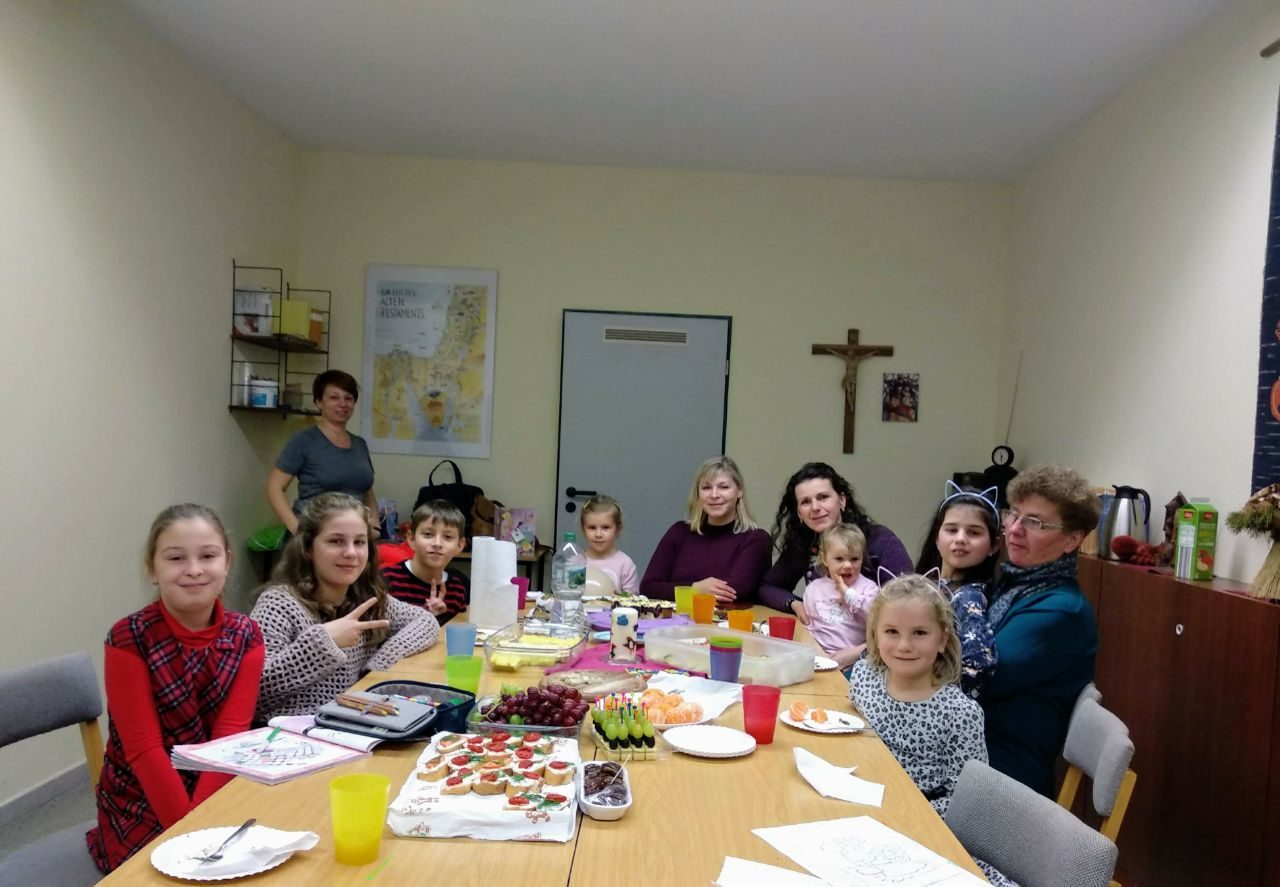
Daughters of Nadiia and Olesia
In your opinion, how easy it will be for them to adapt there? To the education system, for example?
I guess our children will find it very difficult to perform well in terms of the Ukrainian educational environment. Teachers have very different attitudes. According to my sister, teachers at kindergartens and schools still have some imperious behavior towards children. For example, here, a professor can invite students for a dinner to his place.
Olesia Shkiriak: My child was crying in a Ukrainian kindergarten when she started to visit a German one – she didn’t know a word. But it wasn’t a problem in any way. At first, she must have been uncomfortable but children adapt very quickly. Particularly, because the teachers are very friendly. Everything is made for children, if a child doesn’t want to eat, they mustn’t make them to. There isn’t such a rule as “you must do it”. Vice versa, they respect a child’ choice.
Nadiia Nikolaichuk: Meanwhile, there are situations when teachers at a Ukrainian kindergarten said “shut up” or could say a child had stolen something. It is hard to imagine it at a German kindergarten. Even if a child wets themselves at school or kindergarten, independently on age, they won’t be bullied. Vice versa, a teacher will offer to clean it together. A school will have other clothes – particularly, for such cases.
What tips do you have for parents who are bringing up bilingual children overseas?
Spend time with your children. Neither daily nor weekly schools can substitute parents’ work because it is key. Our Veremiia knew all Ukrainian letters, although the school didn’t work then yet. Our classes last one hour a week. Of course, we can’t give as much information as a child could get at home. However, group work motivates them more.
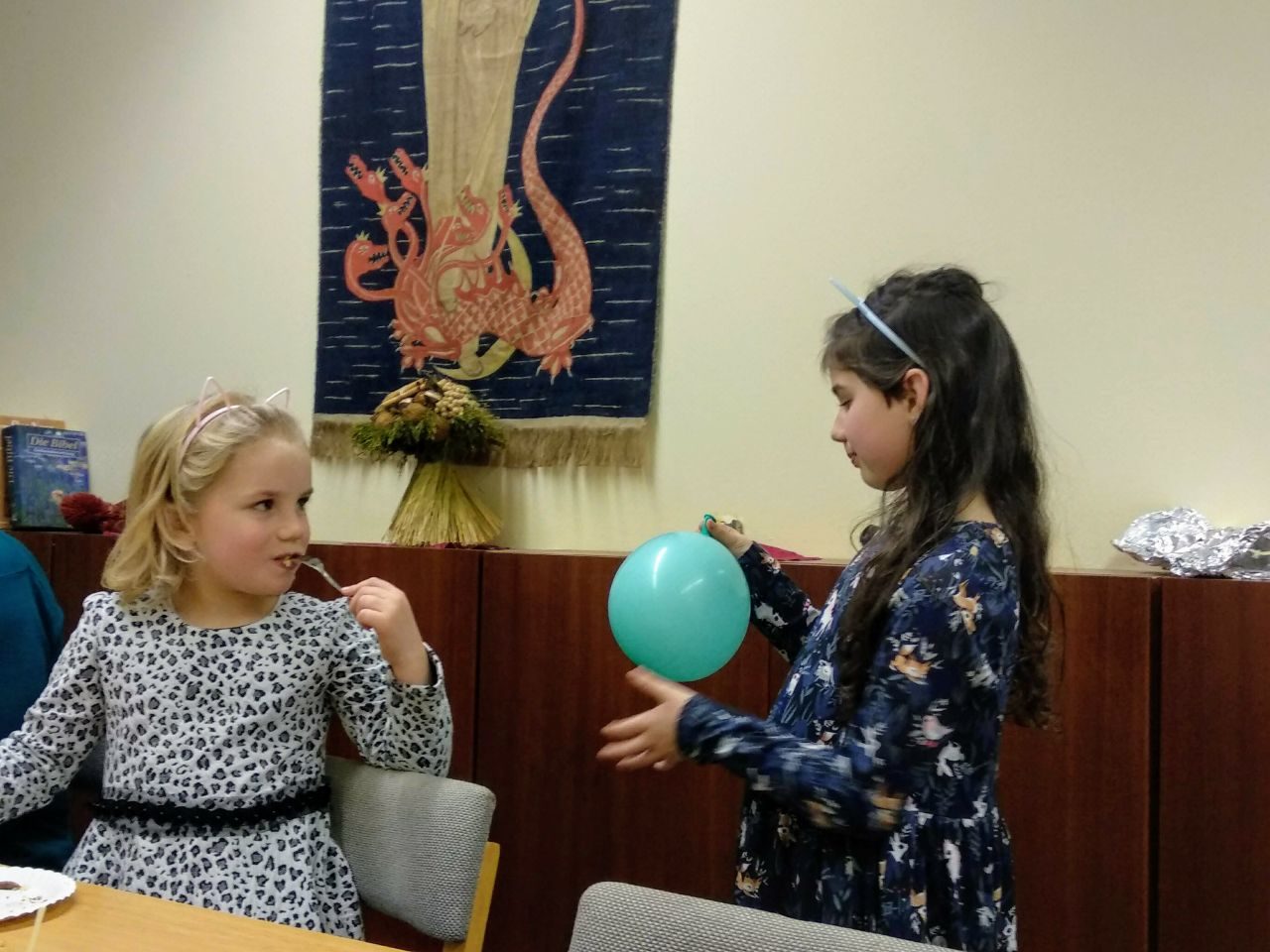
Nadiia’s daughters
It is important for mothers to have a possibility to stay with their children for up to three years, it is an important stage of shaping and perceiving a language. Yes, children can fail to understand many Ukrainian words but we help them. The main thing is they speak. This time we will correct them, the next time they will already know it. By the way, it is frustrating that they know the words which we don’t use daily only in German- for example, names of birds. That’s why we take this theme and speak about birds.
Taking into account the conditions you have created, do your children realise their Ukrainian identity? Do they ask you: why don’t we live in Ukraine?
They ask but only when we are in Ukraine. In summer, we went there for six weeks, they didn’t want at first, because they have friends here, but then, they didn’t even want to come back because they also have friends there. Because at their grandma’s in the village, they have freedom, mountains, river, forest, no control, they can do what they want. When they were coming back to Germany, they were crying so much. They are looking forward to going to Ukraine again.
Do you often travel to Ukraine?
Yes, it doesn’t matter how difficult it was, even when children were 6 months old, we took them into the car and were driving to grandma the whole night. Just to show them what Ukrainian Christmas, Easter are like. Because here, you can not always feel what Christmas Eve is like. Of course, here we also try to keep the celebrating tradition, but it is not the same, it is only within the family. But the holidays are about familyhood, in the first place.
Interview and photos by Diana Manucharyan