

The whole week Ukrainians lived in “visiting” mode. Almost everyone celebrated the New Year in a big company, with family or friends, shared experiences in social networks, and so on. It’s modern, it’s normal and cool. But unfortunately, in 2019, a large number of our people don’t feel like celebrating: Sentsov has been imprisoned for the fifth year, our sailors are in the Investigation Cell of Moscow, and another 80 Ukrainians are scattered around the prison camps of boundless Russia. In the traditional DUMKA Digest we propose not to analyze the events of the week (not to mention record crops of Olivier salad), but to mention those who, unfortunately, don’t feel like celebrating.
In Russia and in the annexed Crimea, there are 64 Ukrainian political prisoners, 27 of which are in Russian territories. Another 24 are the sailors of the Navy, who were seized after the shooting in the Kerch Strait. There is no sentence for them yet.
58 are detained in the Crimea or in cases related to the Crimea. These figures do not take into account the prisoners held in the territory of self-proclaimed republics. Of course, the format of the material is not able to cover all the prisoners, but it will show the main tendency, that Russia is a prison country.
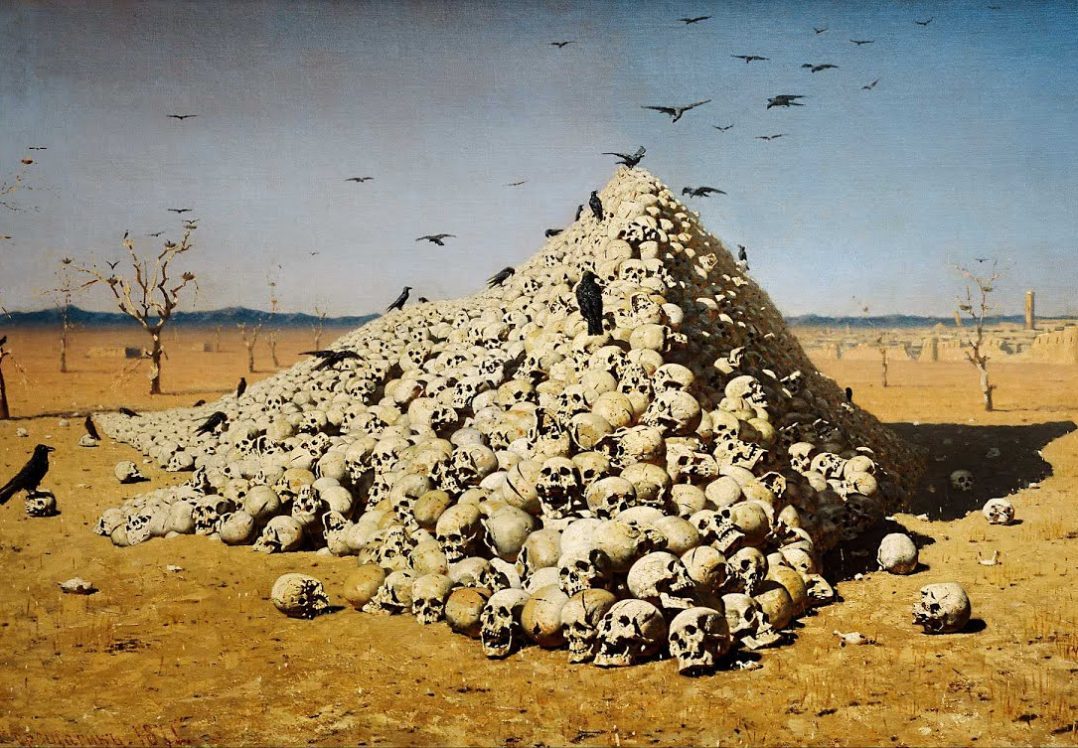
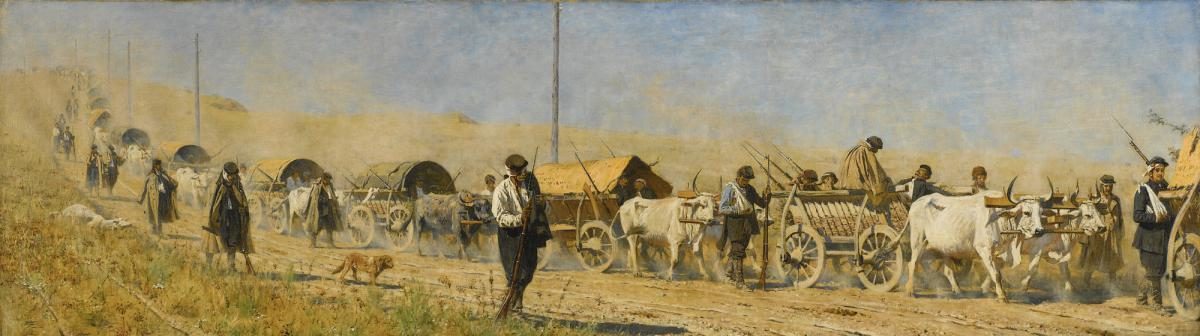
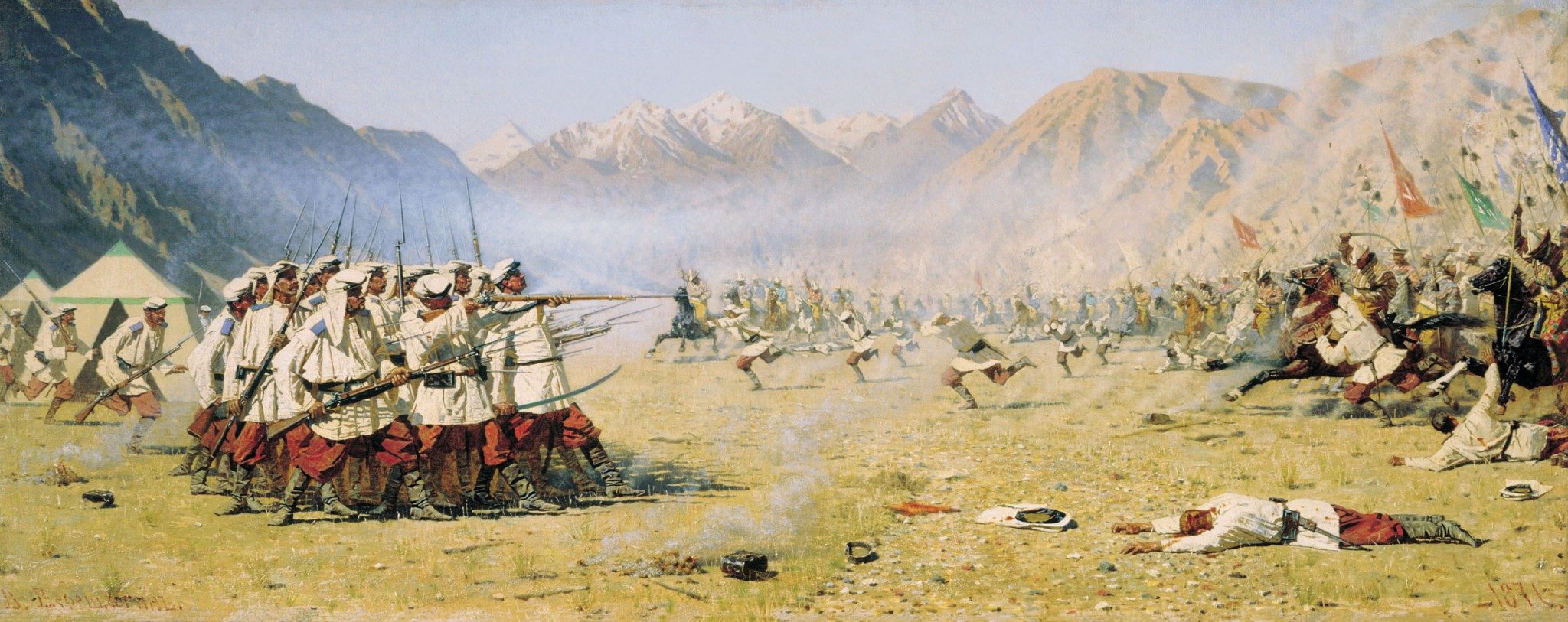
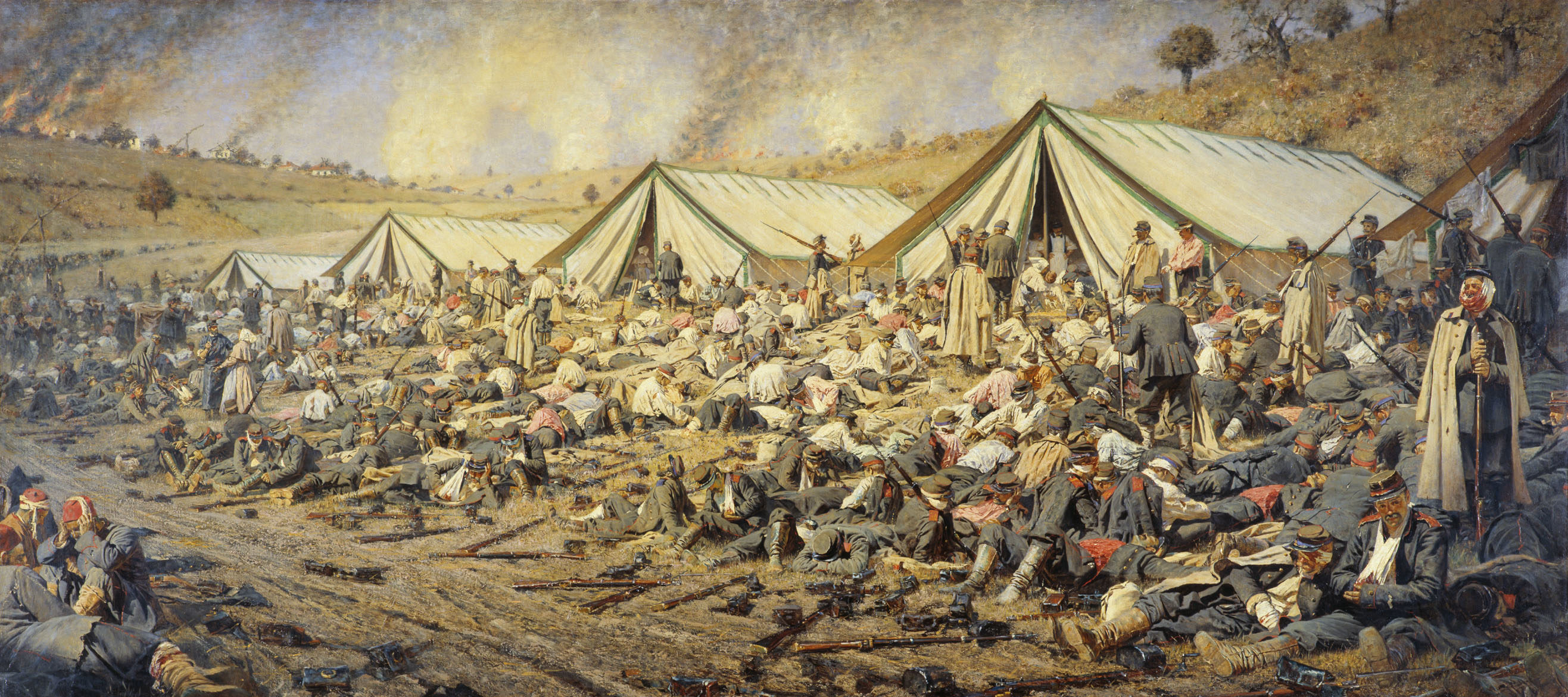
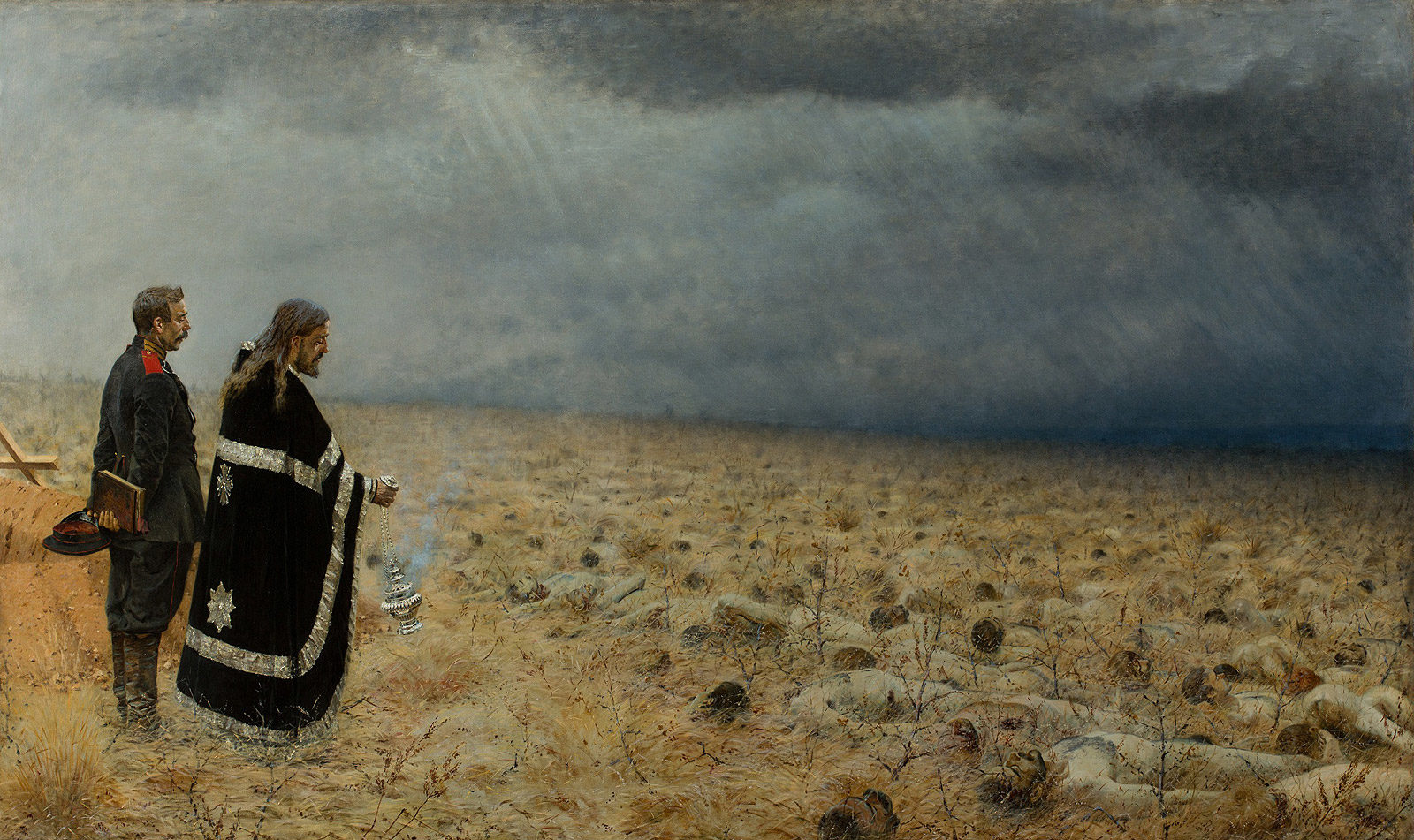
For the visual accompaniment of the text we have chosen the works of the Russian artist Vasily Vereshchagin, who was a nominee of the Nobel Peace Prize, but when he heard about the war, he just rushed to the bloody battles. Most of the text is devoted to events in the annexed Crimea and Russia, so who will better understand the cruel and dark soul of the enemy if not him?
The main ones are not distinguished here, but undoubtedly, the most famous Kremlin captive is Oleg Sentsov. For almost 5 years he has been imprisoned by Russia. He is currently detained in a prison camp in the city of Labytnangi, on the Yamal peninsula, in the Russian Arctic. The conditions there are so tough that people die there simply from the mode of life of the Russian prison. However, half a year ago, Sentsov declared a hunger strike demanding the release of all political prisoners of the Kremlin. It took 145 days. Sentsov said he had stopped starving since October 6 because of the threat of forced feeding through a special enteral feeding tube. International organizations compare such feeding with torture: they pull a tube with chopped food along a person’s intestine by force.
But he did not break, just moved to another level of fight.
Later, the European Parliament awarded the Ukrainian director, political prisoner Oleg Sentsov the Sakharov Prize for Freedom of Thought. His cousin Natalia Kaplan received the award for him. In Strasbourg, she made a speech and read a letter from Oleg Sentsov.
“You can call for making deals and surrender, but you can, on the contrary, call for resisting and fighting, even when there is no chance of survival, but there is only a chance to die… I hope that I will still be able to do something in order to feel that I deserve this. Thank you,” said Sentsov in his letter.
Ukrainian director Oleg Sentsov and activist Oleksandr Kolchenko were detained in Crimea on May 10, 2014. They were accused of preparing terrorist acts, Kolchenko is sentenced to 10, and Sentsov – to 20 years of imprisonment. Together with them Hennadii Afanasiev and Oleksii Chirnia were also arrested. Afanasiev was exchanged in 2016, Chirnia is still in a prison camp in the city of Shahty of the Rostov region.
Also, the reporter of the “Ukrinform” Ukrainian news agency in France, Roman Sushchenko, was detained in Moscow in September 2016 when he came to visit relatives in Russia. In October of that year, the FSB of Russia brought Sushchenko an official charge of espionage. On June 4, 2017, the court in Moscow found him guilty of “espionage” and sentenced to 12 years of a colony with a strict regime. Convicted Sushchenko in the last word did not plead guilty and asked for the release.
Ridiculous and cruel? Read on.
On May 26, 2016, the Chechnya court sentenced Mykola Karpiuk to 22.5 years in prison, Klyh up to 20 years. They were accused of murdering Russian militants in Grozny in 1994-95. At the same time, the prosecution did not provide any evidence that Klyh and Karpiuk were in Chechnya during this period.
Later Klyh even was transferred to a psychiatric hospital, they tried to make him a vegetable. The last time the information, that he is alive came a month ago.
Ukrainians are detained not only in hostile territory, but they are also arrested in friendly to us, as it seemed to be, Belarus.
At the end of August 2017, Ukrainian officer Ihor Hryb announced that his son was kidnapped by intelligence services of the Russian Federation in Belarus. According to him, the FSB draw out his son Pavlo to Gomel, under the guise of meeting with the girl and arrested.
Subsequently, it turned out that Pavlo Hryb, who disappeared in the Belarusian city of Gomel, is in the administration of the FSB of Russia in Krasnodar. Hryb is accused of terrorism in Russia. The court is still underway, a 20-year-old boy faces up to 10 years in prison. In the Investigation cell, he caught cirrhosis and his function of blood clotting decreased. Hryb can die.
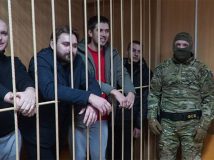
In the annexed Crimea, the “court” took Ukrainian sailors into custody for two months – all 24 Ukrainians were arrested. So our guys will celebrate New Year holidays in the Moscow Investigation cells in “Lefortovo” and ” Matrosskaya Tishina”.
Three of them are seriously injured but the boys are not in despair. They only ask for letters and for them to be remembered. At the moment, they face 6 years of imprisonment for allegedly “illegal crossing of the Russian Federation border”, although, in reality, the attack on the personnel of the Naval Forces took place in neutral waters. As all declared the status of “prisoners of war” in accordance with the Geneva Convention, Russian Themis has no right to judge them. Russia, in violation of international law, does not recognize captured Ukrainians as prisoners of war.
French President Emanuel Macron and German Chancellor Angela Merkel called on Russia to give sailors back to Ukraine, while US leader Donald Trump refused to meet with Putin while our guys are captured.
Russian president avoids talks with the President of Ukraine Petro Poroshenko about the release of seized Ukrainian sailors, Ukrainian political prisoners, and hostages held in the occupied territory.
“When, during an act of aggression in the Kerch Strait, I called him (Putin, Ed.) to talk, he refused to communicate. Not because of the electoral process in Ukraine, as he explains it. He refused because he had nothing to say. The whole truth is completely on the side of Ukraine, and there are pieces of evidence of aggression”, the president said.
Later, Putin proved this information, calling Poroshenko’s attempts to make a political PR on the eve of the election. After that, Russian president called his friend and the pro-Russian “Kingmaker” Viktor Medvedchuk to the negotiations. But will the process be more effective with him? It is unlikely because they do not have the release of the captives on the line, they only have benefits there.
Representatives of the militants in the Trilateral Contact Group refused to participate in the video conference on December 29, in which they should consider the exchange of hostages on January 5.
Iryna Herashchenko, representative of Ukraine in the humanitarian subgroup of TCG, noted that OSCE coordinator Tony Frish proposed to hold the conference on December 29 (instead of 27, as the Ukrainian side proposed earlier).
Then representatives of the militants sent a letter in which they refused to participate in the conference and called Ukraine’s initiative a “PR-stunt”.
Ukraine offers an exchange 22-22 formula (of detained and convicted in Ukraine in exchange for political prisoners) and 72-19 (militants in exchange for hostages in the occupied territories of Donetsk and Luhansk regions).
“Unfortunately, there is no progress on the track of the hostages and political prisoners release, because for all our compromise proposals, during the negotiations it was seen between the lines, that Russian Federation is not ready for any constructive steps and compromises. Similarly, the search for the missing has been blocked,” said Herashchenko.
The last exchange of hostages took place on December 27, 2017. This is the first and the biggest exchange in two years. According to the SBU, 73 hostages returned to the controlled territory. Ukraine transferred 233 people to the occupied territory.
Annexed Crimea doesn’t feel like celebrating New Year’s holidays, too. For almost 5 years, the name of the peninsula has become an antonym to “human rights.” The General Assembly of the United Nations at the meeting on December 22 adopted a resolution on “Situation of human rights in the Autonomous Republic of Crimea and the city of Sevastopol, Ukraine”.
The key points are:
- confirmation of the inadmissibility of seizing the peninsula and the obligation to return the occupied territories;
- condemnation of political persecution of Ukrainians in the Crimea and the requirement to release all those who are illegally detained in Crimea and Russia;
- condemnation of the forced introduction of Russian citizenship on the peninsula;
- recognition of Oleg Sentsov, Volodymyr Baluh, and Emir-Usein Kuku as political prisoners;
- an appeal to give the Ukrainian officials and doctors from international organizations access to Ukrainian citizens held in Russia and the annexed peninsula;
- a call to Russia to stop discrimination against those who do not recognize occupation.
But the Kremlin does not give a damn about these resolutions. The occupation authorities in the annexed Crimea said that on December 28 they completed the construction of the wall on the border with mainland Ukraine. The peninsula itself was turned by Russians into a militarized zone with mines, missiles, tanks, and ships. The status of a peaceful resort is not even mentioned.
The only thing locals can do is hope that Ukraine will once again return the Crimea back.
The head of the Mejlis of the Crimean Tatar People, Refat Chubarov, called the residents of the annexed Crimea to celebrate the New Year according to Kyiv, not Moscow time.
“I appeal to each of you, who live in the temporarily occupied Crimea, to go out on December 31, 2018, at 24.00 Kyiv time to your street or yard (balcony, porch) and celebrate with firecrackers, clappers, sparklers the beginning of 2019. Glory to the Crimean Tatar people! Glory to the Ukrainian nation! Glory to Ukraine!” wrote Chubarov on Facebook.
Currently, the time difference between Kyiv and Moscow is 1 hour. The annexed Crimea was transferred by the occupation authorities to the Moscow time.
By Kostyantyn Rul