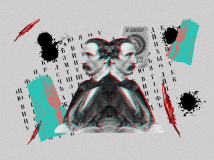


During her life and after her death, her name was wrapped in different gossips, rumors and guesses that modern stars who constantly become heroes of tabloids can’t hold a candle to her. Olena Pchilka (famous Ukrainian activist of the end of the XIX century) hated her, she called her nothing but damned “butcher”. A despotic nervous P. Kulish (famous Ukrainian writer of the XIX century) always swung from one extreme to another, either calling Maria “a silent goddess” or blaming her in being waste of skin or even in plagiarism. Turgenev called her a “dark Sphynx”. Shevchenko (Ukrainian national poet) called her his daughter, however, he seems to have realised that he had no strength to climb that Everest, he wasn’t young anymore. Marko Vovchok didn’t let anybody come close to her. Vladyslav Olevinsky, a Polish chemist, who was desperately in love with her, gave out and shot himself. She had friends, flirted with them but any man’s attempt to “moor” to her coast where “ancient pines were growing” always failed.
Psychanalysts say the reason of a problem lies in the childhood. Marko Vovchok is a perfect example in this regard, the best one to suit a psychoanalysis book. She was born on December 22, 1833, in a noble family. However, there are many nations in her family. Her mother belonged to a famous noble family of Radzyvil, her mom’s grandmother was half-Polish, half-Lithuanian. Father was Belarusian. The family spoke French in everyday life. If somebody has just imagined a cosy room with candles and piano, they are gravely mistaken. The childhood of Maria Vilinska since she turned 10 was – without an exaggeration – a true hell. The hell which you can find in the underworld. Her mother got married for the second time. Her stepfather was an alcoholic, liked gambling and chasing his family with a hatchet. The girl was very scared, leaned to a wall trying to blend in with it. This chaos lasted more than a day, a week, a year. Expensive dinnerware sets, pictures, tapestries, and carpets were gradually disappearing from the palace. Maria witnessed how the life was cracking and splitting apart. Finally, mother took the children and fled to her sister who lived in the town of Orel. Maria’s life was saved, but by that time, her mind was greased in blood and fear. He couldn’t get rid of the ghosts with severe eyes till her death. She kept men within reach. Never closer.
Life at aunt Kateryna Mordovynaia’s wasn’t also a piece of cake. She made it very clearly for Maria’s family at once: you are the poor relation here so behave relatively, you’d better be silent. Her aunt’s rich house had even no bed for Maria. She slept somewhere under the stairs – in good houses, even servants don’t sleep there.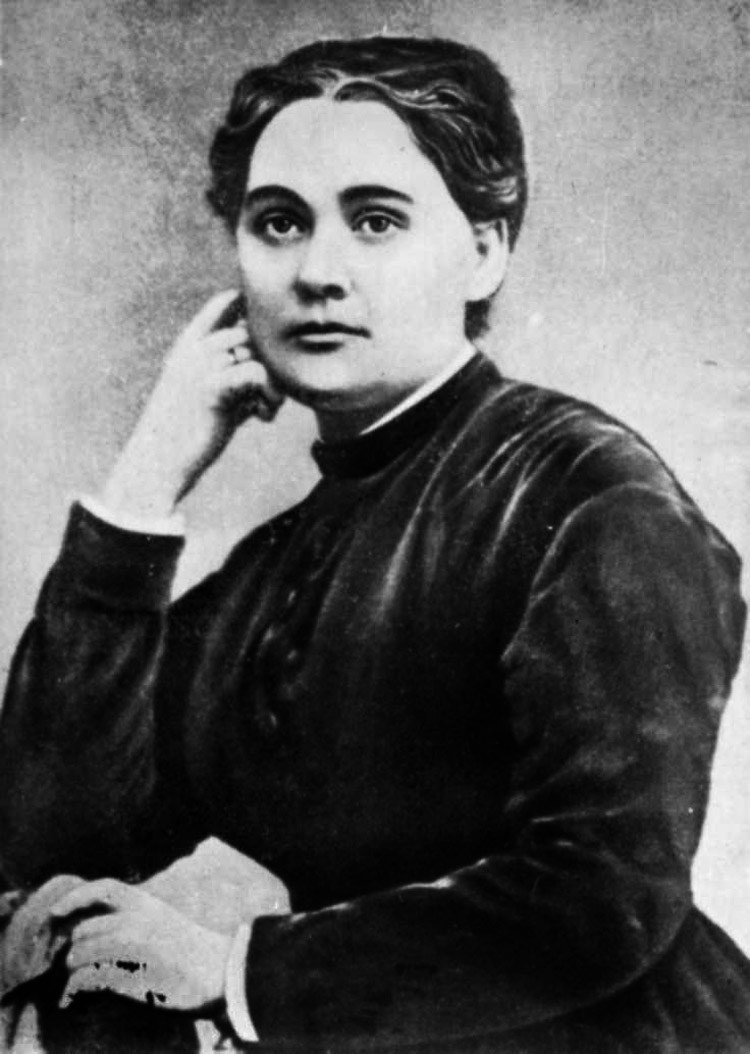
She was sent to a boarding school. She had had many traumas by that time – she was reserved, taciturn. At daytime, she danced, spoke French, clenching her teeth, while at night, as soon as the lights were off, her constant friends came to her – fears. She was too weak to fight them.
Perhaps, it wasn’t a surprise that when she turned 16, Maria caught the smallest opportunity. She met Opanas Markovych at her aunt’s saloon. Handsome. 11 years older than she. He was 27. In full vigour. Intelligent, educated, he spoke nicely with her. He was folklore and ethnic researcher, he liked history. He must have seemed the haven to her, a desirable shelter where all her fears would fade away. She responded quickly. She got married when she was 17. She must have not looked back at her aunt’s palace. She wanted to leave her past in the past.
Her husband and she lived in Kyiv, then in Chernihiv, then in Nemyriv. He, as he used to, was into folklore and history he loved so much. With his help, Maria learnt about the culture of Ukrainians, their language and way of life. Her first collection of tales written in Ukrainian – “Folk Tales” (St. Petersburg, 1857) at once became so popular that Maria, in fact, missed the stage of an unfledged writer. She became the first Ukrainian female writer. However, she had a male pseudonym – Marko Vovchok. She didn’t like this name. According to one of the versions, this pseudonym is a pun of her husband’s surname: Markovych – Marko Vovchok. Another version says that the pseudonym was made up by Panteleimon Kulysh because of Maria’s “wolf character” (vovk is a wolf in Ukrainian).
In 1859, Maria and her husband moved to St. Petersburg. She was getting more and more popular. She found herself in the Ukrainian writers and artists community. She met Mykola Kostomarov, Panteleimon Kulish, Taras Shevchenko. Ivan Turgenev and Nikolay Nekrasov were charmed by her. Just by chance. She didn’t do it on purpose – she just did.
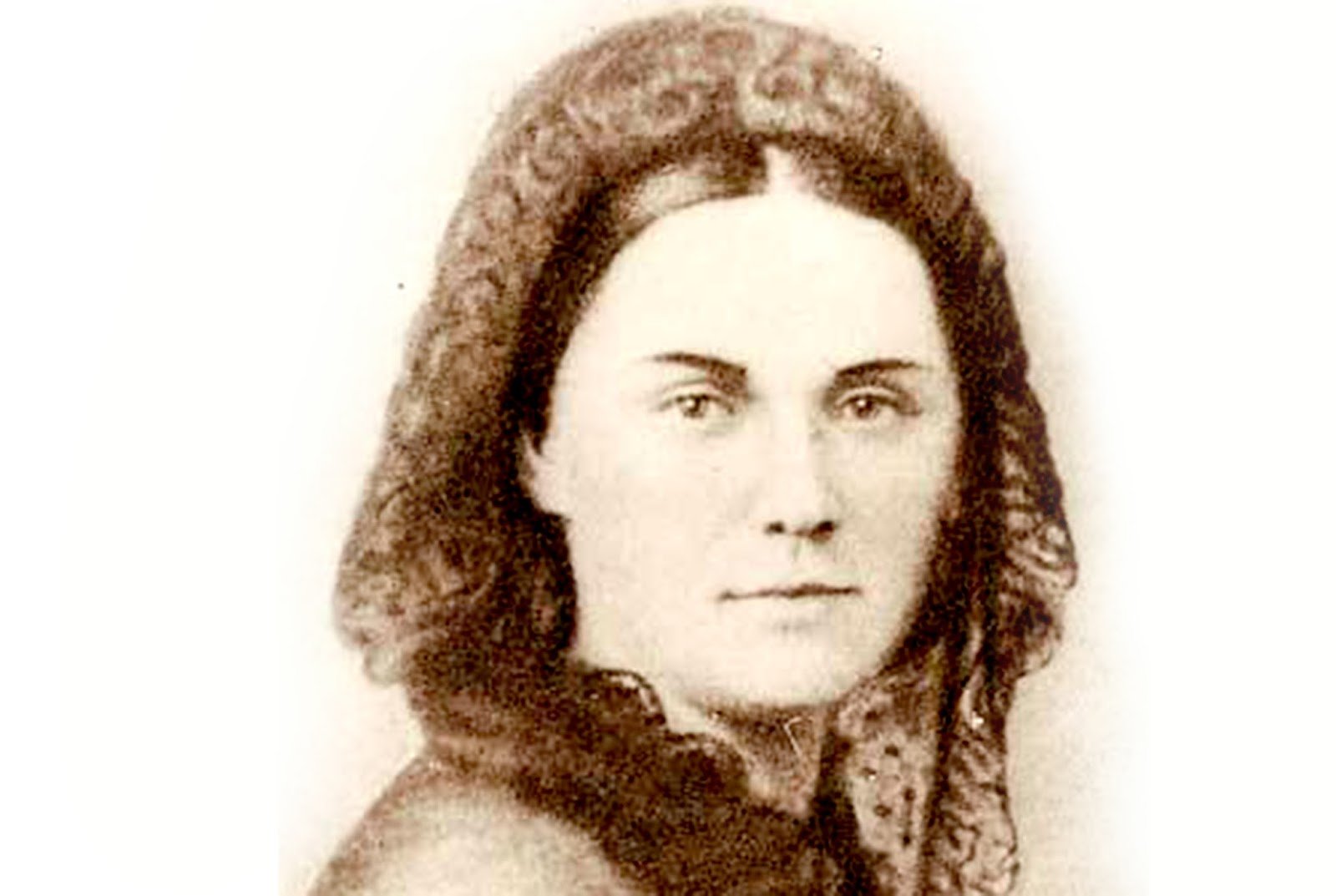
Her relationship with Kulish, who was very respected at that time, was different at different times. At first, Maria let him flirt with her, smiled, let him come one step closer, one more step, then one more. Kulish was charmed. His heart melted. He even started to advocate for women’ emancipation, said that family values went out of style. He called her a “silent goddess”. He compared her soul with a steep coast where tall ancient pines grew. He was happy to edit her works. Maria didn’t accept any amendments, almost at all. Kulish was angry – how dare she? Shevchenko accepts, and she doesn’t?! Kulish wanted something more, he always did. But she was happy with that expressively platonic relationship. Finally, when Maria showed Kulish that she was more into Turgenev, he gave out.
“Giving too much, I don’t want to get too little. Your cold soul hardly lets a little kinship between us exist. Enough, I don’t want to die because of a crazy fascination for a woman who isn’t able to love passionately… Thank God, I feel some proud calmness, realising that I deserve some other love, more passionate, overwhelming,” Kulish tries to master himself. He doesn’t speak about Marko Vovchok as “the best in our literature”, “the example for Shevchenko to follow” anymore, but says that he doesn’t know whether “it was a talent”.
Kulish goes on. He spread a classic gossip that if “a woman wrote a novel, then it was a long time ago and that was a man who wrote it instead of her”. No other option is provided. Kulish states that works of Marcko Vovchok are written in fact by Opanas Markovych. He states it so decisive that literature experts can’t still agree on the authorship of these works.
“Kulish showed himself here, with his stale-hard arrogance, eternal egoism, and egocentrism, with his insincerity, being phrase-prone. For now, we can see just a too much-hurt person who tries to make his haughty point. But he feels so hurt that actually, we see not a prod person in front of us,” Serhiy Yefremov writes.
As for Maria, she seems to be indifferent. At least, what she writes about Kulish doesn’t contain any exclamation mark, “We didn’t know each other with P. Kulish for long. It was a period of hard moral commotions and challenges. At that time, he was quite exhausted, pretty embittered, rather nervous and was to have a breakdown soon, however, he had much energy and love for his profession. Despite all the bleeding wounds, he was a sincere man, a passionate worker and one of the best sons of his region.”
Finally, Marko Vovchok got divorced with Markovych. Her behaviour was more than just brave in terms of that time. She travelled alone, even abroad. She let several men at once flirt with her. However, as soon as one of them tries to make the last step, he faces her frosting coldness. She pretends she doesn’t understand. Could he take her innocent jokes as a hint?… She is shocked… She gives up understanding… She is hurt, astonished… Who knows whether it was just a play?
Olena Pchilka, a remarkable activist of her time and just an extraordinary person hated Marko Vovchok, “… just some butcher who never heard Ukrainian language, wanted to learn the language with its peculiarities in just two days and started to write in Ukrainian – and how? – better than any Ukrainian tales writer. It is a disrespect for the Ukrainian language: what a language it is if any foreigner can write in it, especially so perfectly.” These words seem to have something in common with Kulish’s ones. Just a hundred times multiplied.
Marko Vovchok doesn’t care. She goes on writing. She publishes her works in Paris. She brings some new genres for the Ukrainian literature: a psychological short tale, fictional essay, social fairy-tale. She also writes in Russian, however, critics agree this time that her Russian works are definitely worse than Ukrainian ones.
In 1870, Marko Vovchok established the “Translations of the Best Overseas Writers” magazine. A huge scandal is connected with it. The point is that Marko Vovchok who had except for the magazine, much of other work, just wasn’t able to translate everything on her own. That’s why she – a woman of quite a practical mindset – decided to hire “ghost writers”: some educated girls who came from small towns. They translated, Maro Vovchok published those translations by her name. Everybody was satisfied. Until she started to withhold wages. She often gave half of the sum saying that the magazine wasn’t very popular and that was everything she could pay. Kateryna Kersten, one of the translators, decided to revenge. She took some Andersen’s fairy-tales for translation. But instead of her translation, she gave Trubnikova and Stasova’s translation which had been published some years before. An unwary editor published them in the magazine by her name of course… This sad story resulted in a Referee’s Court where 19 writers credited Marko Vovchok with plagiarism. Her reputation was destroyed. She couldn’t cope with the shame, so she escaped to her friends’ house in the Tver region, to the end of nowhere.
She wrote many works in Russian there. She even got married for the third time. The man wasn’t of her age, actually, he was a friend of her son – Mikhailo Lobach Zhuzhenko.
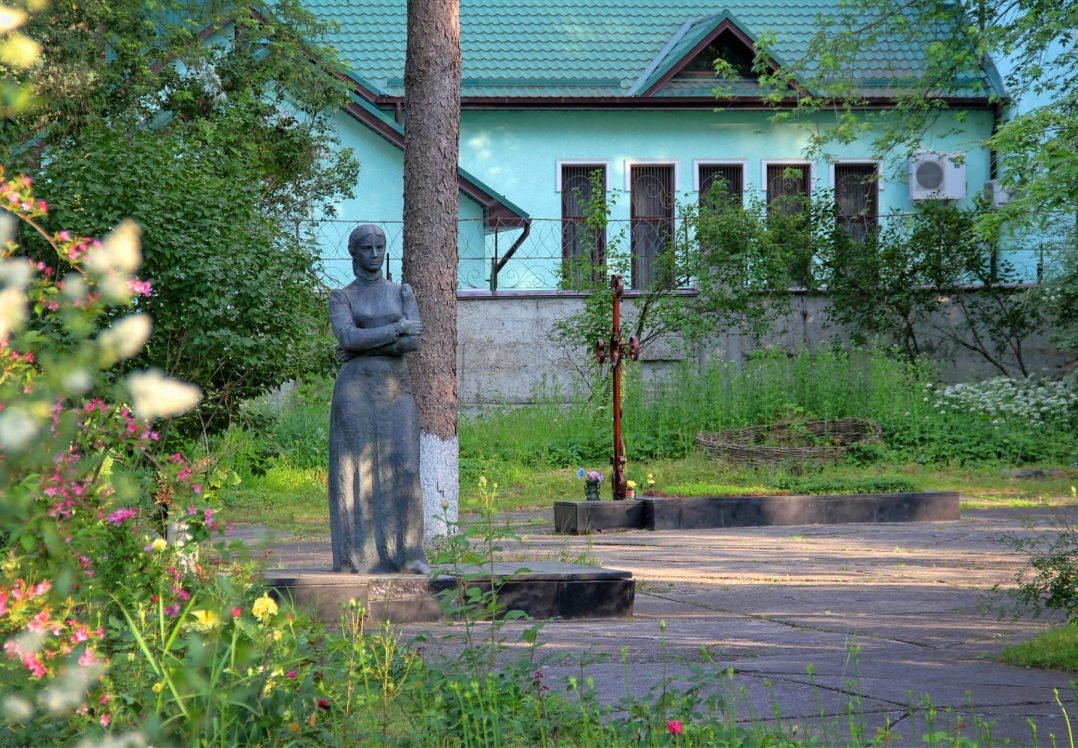
Her hair even wasn’t grey yet, when she found out she had a brain tumor. She even edited some translations, gave some recommendations to writers, wrote something. She was spending her time mostly sitting at the table which was put for her in the garden. She was sitting there under tall pear trees – strong, arrogant, titanium: a steep coast, dark Sphynx, silent goddess. She was found dead there – at the end of a hot July when pears were ripe.
She was often saying, “While I am alive – it is too early to write my biography.” After July 28, 1907, this door was open again – for new gossips, rumors, guesses, heavy lines which are usually drawn under people’s lives by other people, and it doesn’t matter whether they have got to the bottom of these lives or no…
For the Lord
Sent you to us, a prophet kindly,
One to reprove with sternest chiding
Cruel, insatiate men. My light,
You are my holy star in truth,
You are to me the strength of youth.
Shine upon me, blazing bright,
And give new life to my poor heart,
That all exposed to every smart
Still hungers here.
(Taras Shevchenko, translation by Vera Rich)
By Serhiy Osoka