

In Kyiv, a large-scale annual Tiger Conference, organized by the famous Ukrainian businessman and patron Adnan Kiwan together with his English-language media KyivPost, has begun. During the years of its existence, the event has become a fully independent discussion platform, where experts from all over the world discuss the most challenging issues that our country is facing nowadays. This year’s conference under the general title “Breakthrough Innovations for Ukraine’s Future” wasn’t an exception. In the spotlight of international experts’ talks – Russian aggression, the serenity of the West, martial law and attempts of the occupier to annex the Azov Sea.
According to Brian Bonner, editor-in-chief of the Ukrainian English-language media KyivPost, in addition to discussion of security and innovational development, the purpose of the conference is to inspire international guests and local experts to percept Ukraine positively. According to the event’s program, it is planned to conduct four panel discussions in total. Invited speakers are world-renowned experts on security, defense, business and innovation, ministers and MPs from Ukraine, analysts and advisers to the top Ukrainian government officials.
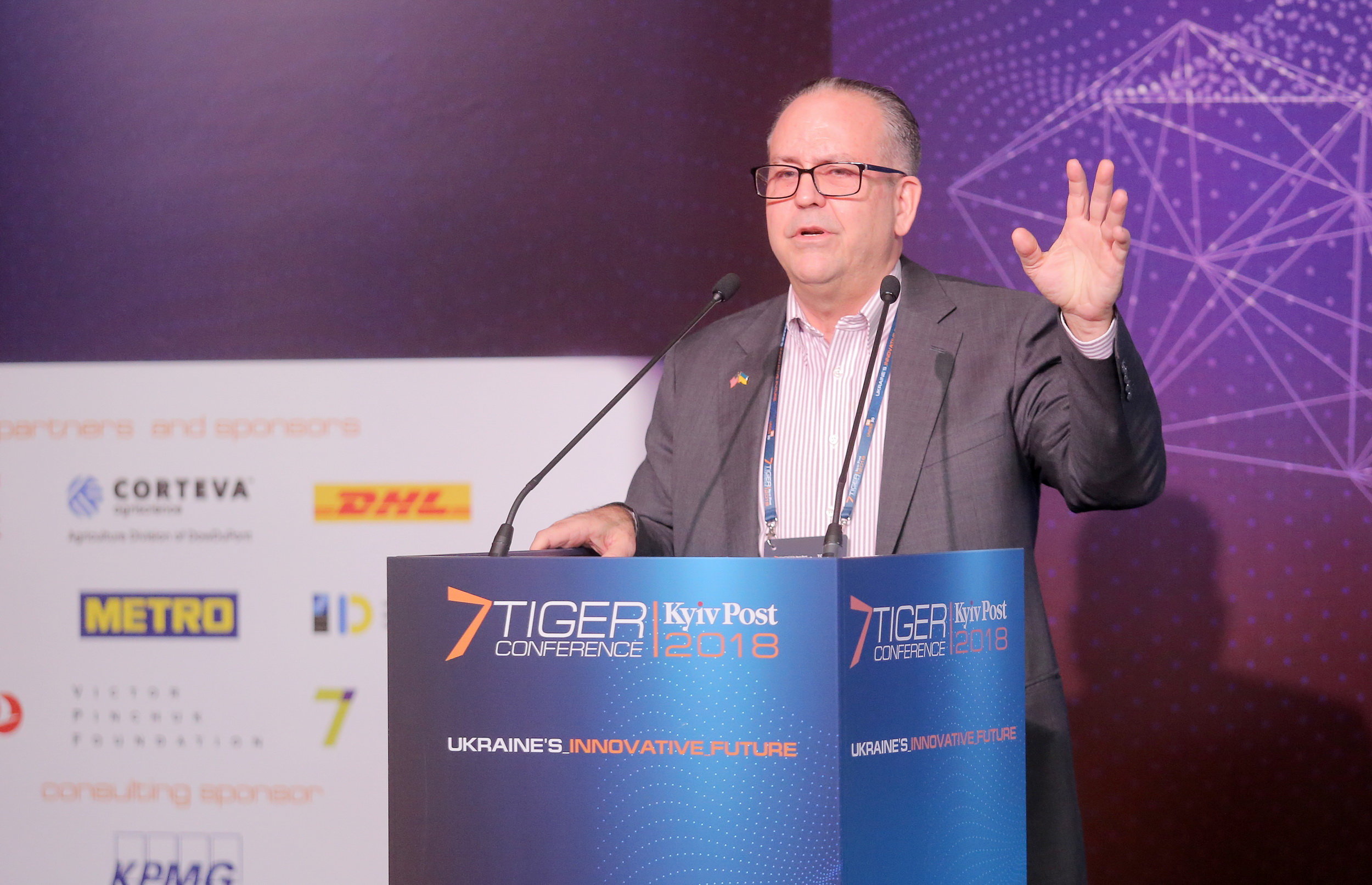
Brian Bonner, editor-in-chief of KyivPost
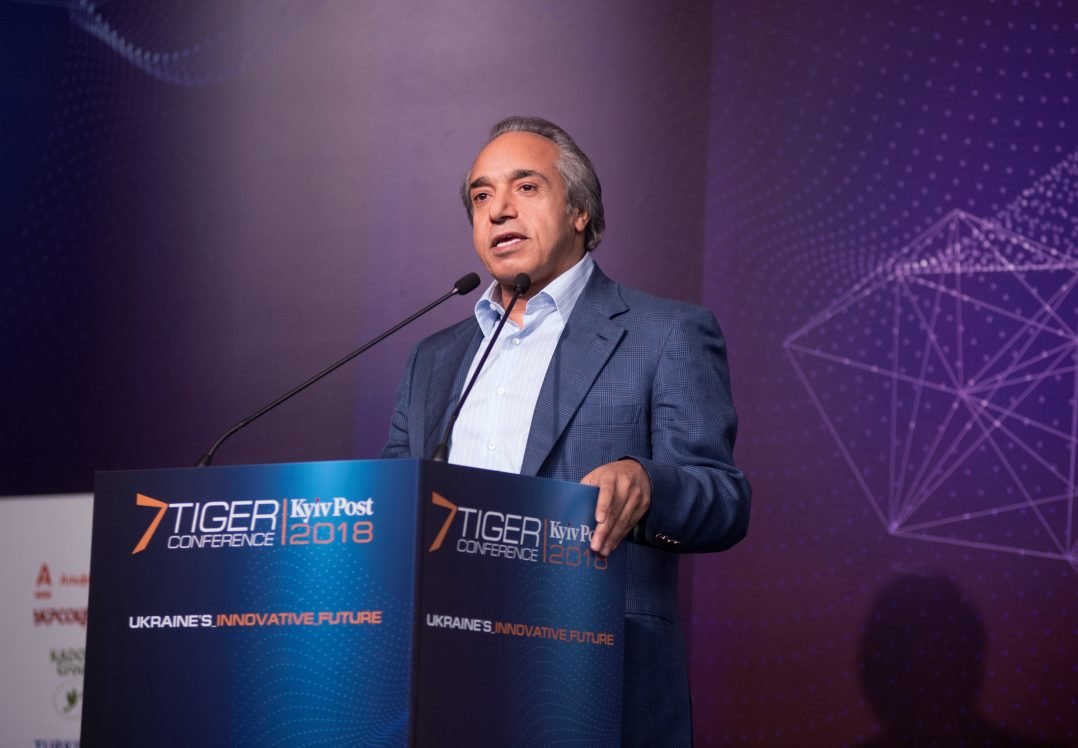
Before the first discussion’s start, Brian Bonner gave the floor to co-organizer of the conference and the owner of KyivPost, a patron and businessman Adnan Kiwan. Mr Bonner called him a philanthropist who fully supports Syrian refugees and a person, who prays for a freedom and democracy in Ukraine and Syria every day.
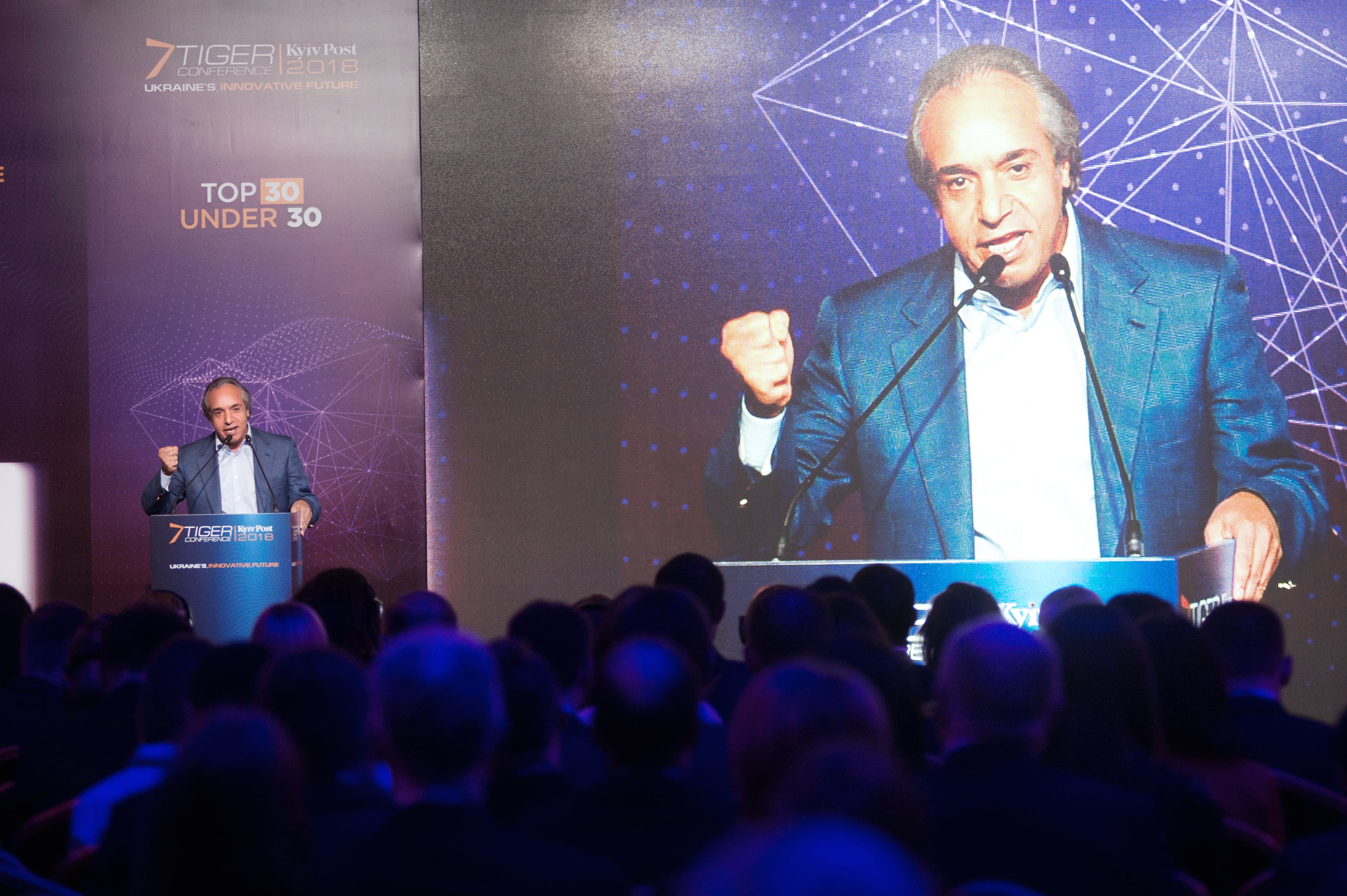
Adnan Kiwan, patron, businessman, owner of KyivPost
“The main locomotive in the direction of freedom, democracy, and prosperity is a freedom of speech, freedom of thought, freedom of the press, and freedom to do business in fair conditions. That’s what I’ve devoted to so much time and effort. And I don’t regret spending millions of dollars to support a free press. Friends, I can assure you that I am the only person here in Ukraine who does it without pursuing political goals. The Lord is with us, and we are with the Lord. We will gain freedom in Syria and in Ukraine, we will build democracy, providing everyone with the proper quality of life,” said Mr Kiwan, thanking guests and participants of the conference for the presence and willingness to discuss important issues.
In its structure, the Tiger Conference is a multifaceted event in which speakers will not only raise security issues but will also try to find new ways and means of Ukrainian economy’s development, strengthening of investment market and infrastructure. However, the main question, despite the diversity of the conference, is still security and Russian aggression. The first discussion panel entitled “Innovations in Security and Defense” was devoted to this very issue.
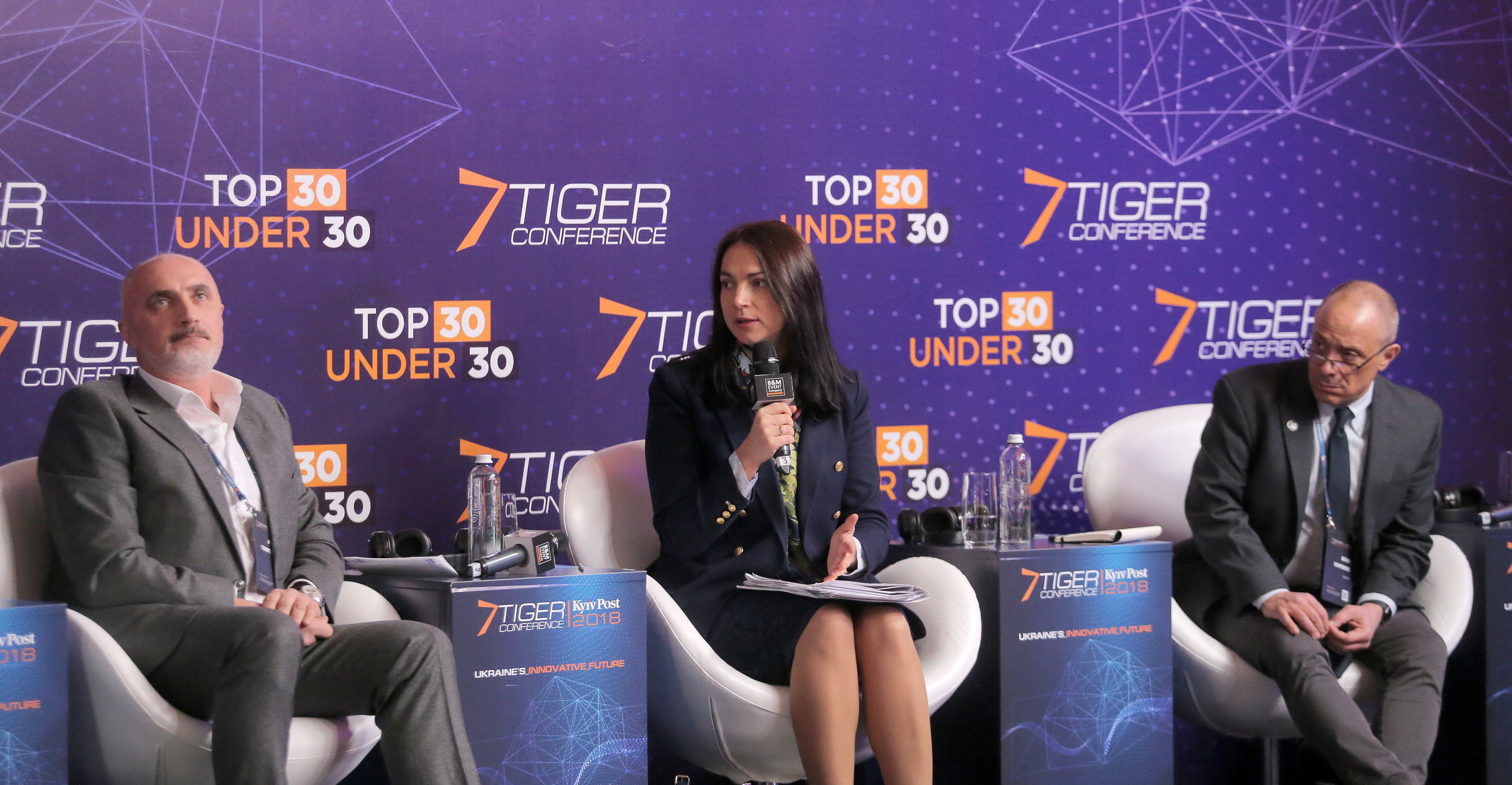
Archil Tsintsadze, Hanna Hopko, Brian Whitmore
The new fronts of the hybrid war, which Russia is actively waging against Ukraine and the entire modern world, were discussed by Michael Carpenter, former assistant of the Pentagon’s deputy head and director of the Biden Institute at Pennsylvania University, Brian Whitmore , analyst, Senior Fellow and Director of Russian Program at the Center for European Policy Analysis, Hanna Hopko MP, Chairman of the Verkhovna Rada Committee on Foreign Affairs, and Archil Tsintsadze , Georgian diplomat, Advisor on Ukrainian defense reform to the Prime Minister and Defense Minister.
According to Michael Carpenter, the thesis of a Russian-led war is not an exaggeration, moreover, it lasts not the first year, and it started not with the occupation of the Donbas and the annexation of Crimea. According to expert, it started since the 2000s when the rise of Vladimir Putin took place. The war itself has several stages. The first of one is an internal war within Russia, which Putin and his supporters waged against democratic institutions of the Russian Federation. Then the war was exported to Russia’s democratic neighbours. But Ukraine suffers the most since it is in the very centre of this struggle. And this is not a confrontation between Russia and Ukraine or Russia and the world. It is a struggle between two completely different systems – authoritarian and democratic.
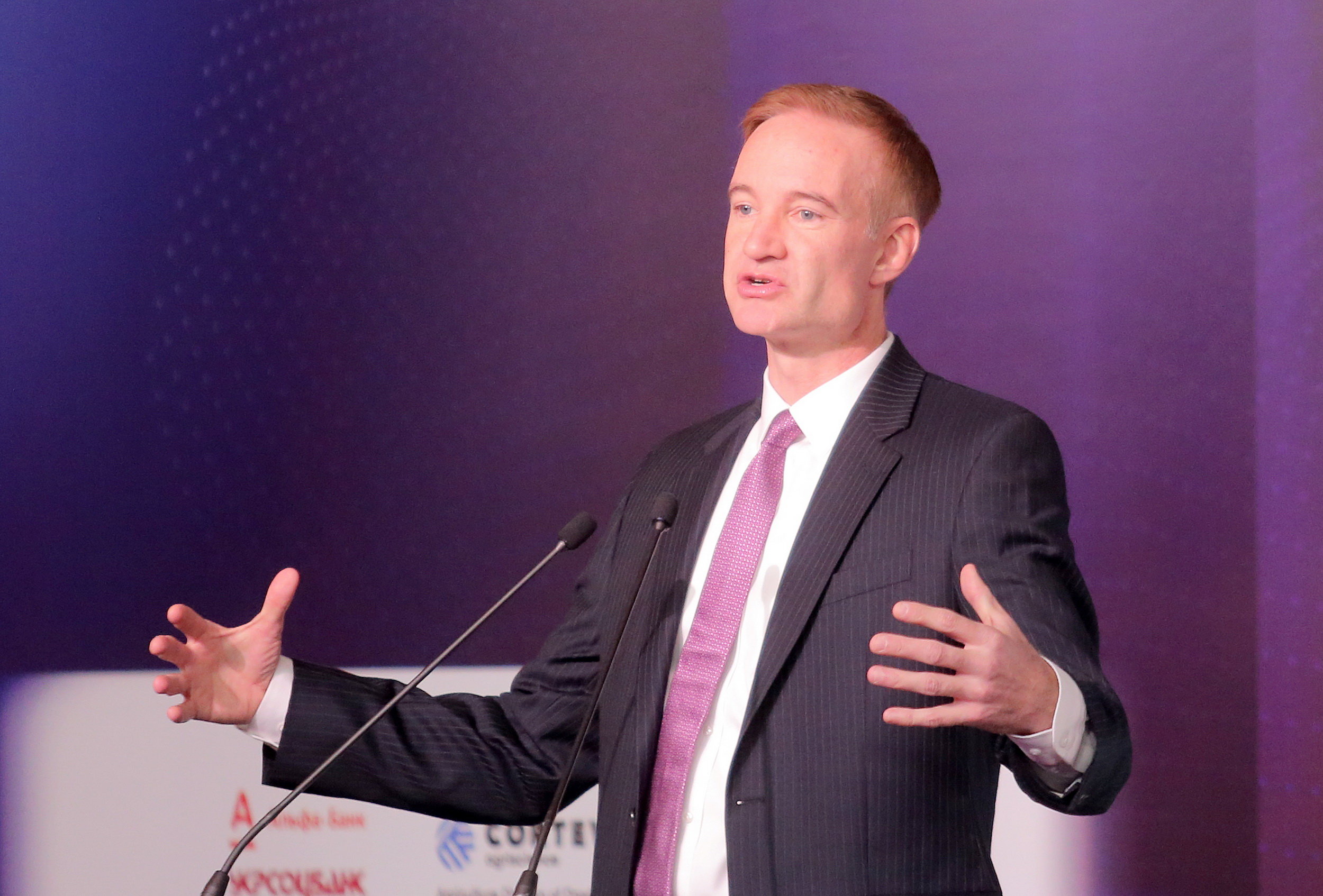
Michael Carpenter
“Putin’s military strategy in Ukraine had failed. He occupied the Donbas, annexed the Crimea, but eventually, he didn’t achieve his strategic goal, because he sees that Ukraine is about to get Tomos and autocephaly, after so many years of subordination to the Moscow Patriarchate. Ukrainians are expressing a desire to fight for their own sovereignty more and more actively. Putin sees the growing support of the European Union and NATO. And in return, he tries hard to undermine it. Donbas is a testing ground for various types of Russian armaments. Putin has launched cyber attacks, even against legal systems. It attacks political institutions, doubling the activity of murders, sabotage, misinformation campaigns, and so on. All these are integral parts of the Gerasimov doctrine. However, it’s rather a Putin doctrine,” emphasized Carpenter.
Another issue international guests were concerned of was the introduction of a martial law in Ukraine and the possible risks and consequences that our economy could face. However, according to Hanna Hopko, a martial law can’t affect the economic system, since banks and enterprises operate in the usual mode, and constitutional rights and freedoms of citizens are preserved and not limited in any way.
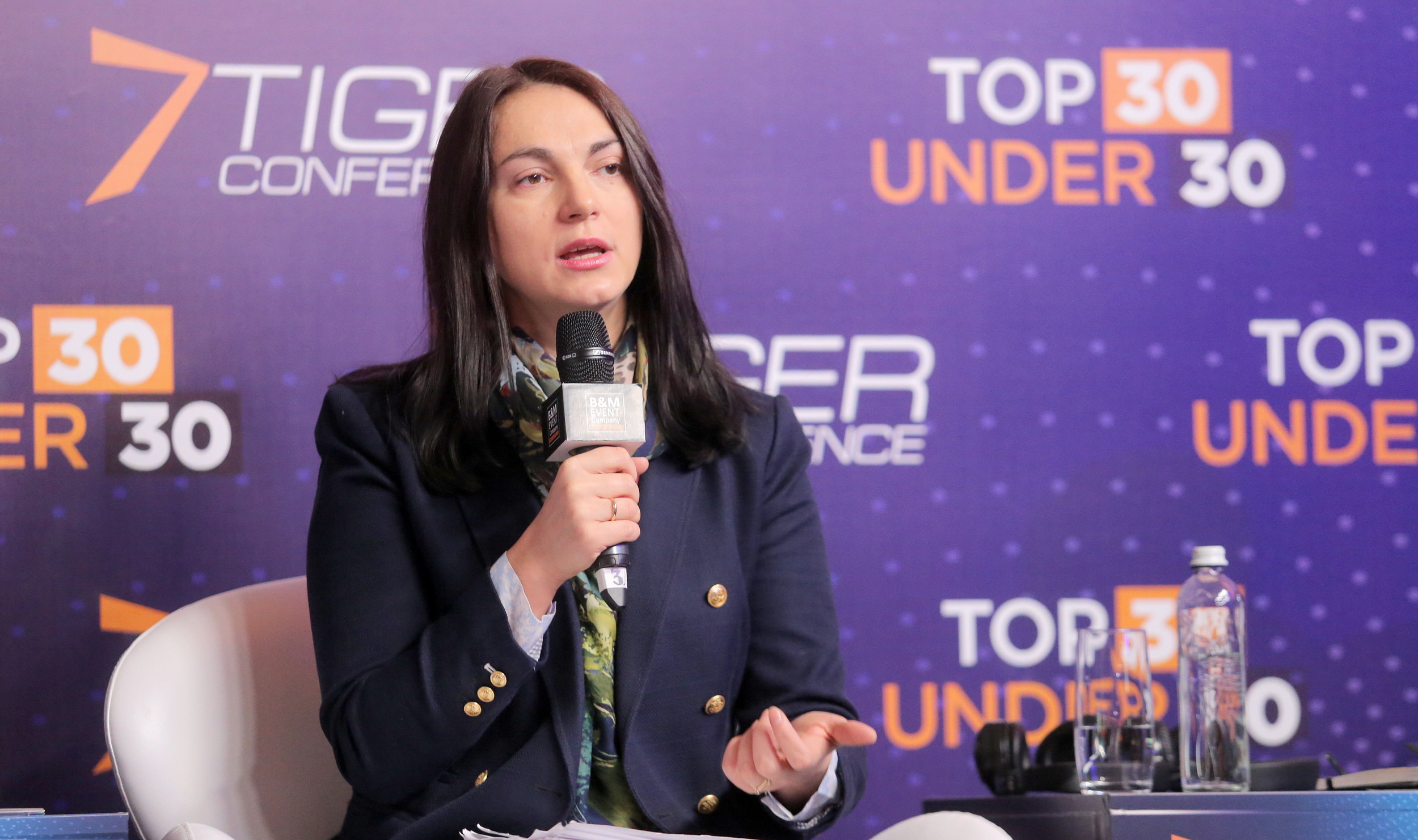
Hanna Hopko
“Of course, this whole situation with blockade of the Kerch Strait damages the economy’s development. It is important for the Ukrainian government to continue reforms and focus on privatization. The government should stop the current approach, it hurts Ukraine. Privatization should be useful, it should maintain our image. The martial law in its turn is very important, and in no way, it will hurt the economic situation of the country,” said the MP.
Archil Tsintsadze, thinking about the reform of the security system, compared it to a… restaurant where skilled chefs work with obsolete equipment. The change of «equipment» and development of “chefs” knowledge – this is what is currently necessary for the security system of Ukraine, according to the expert.
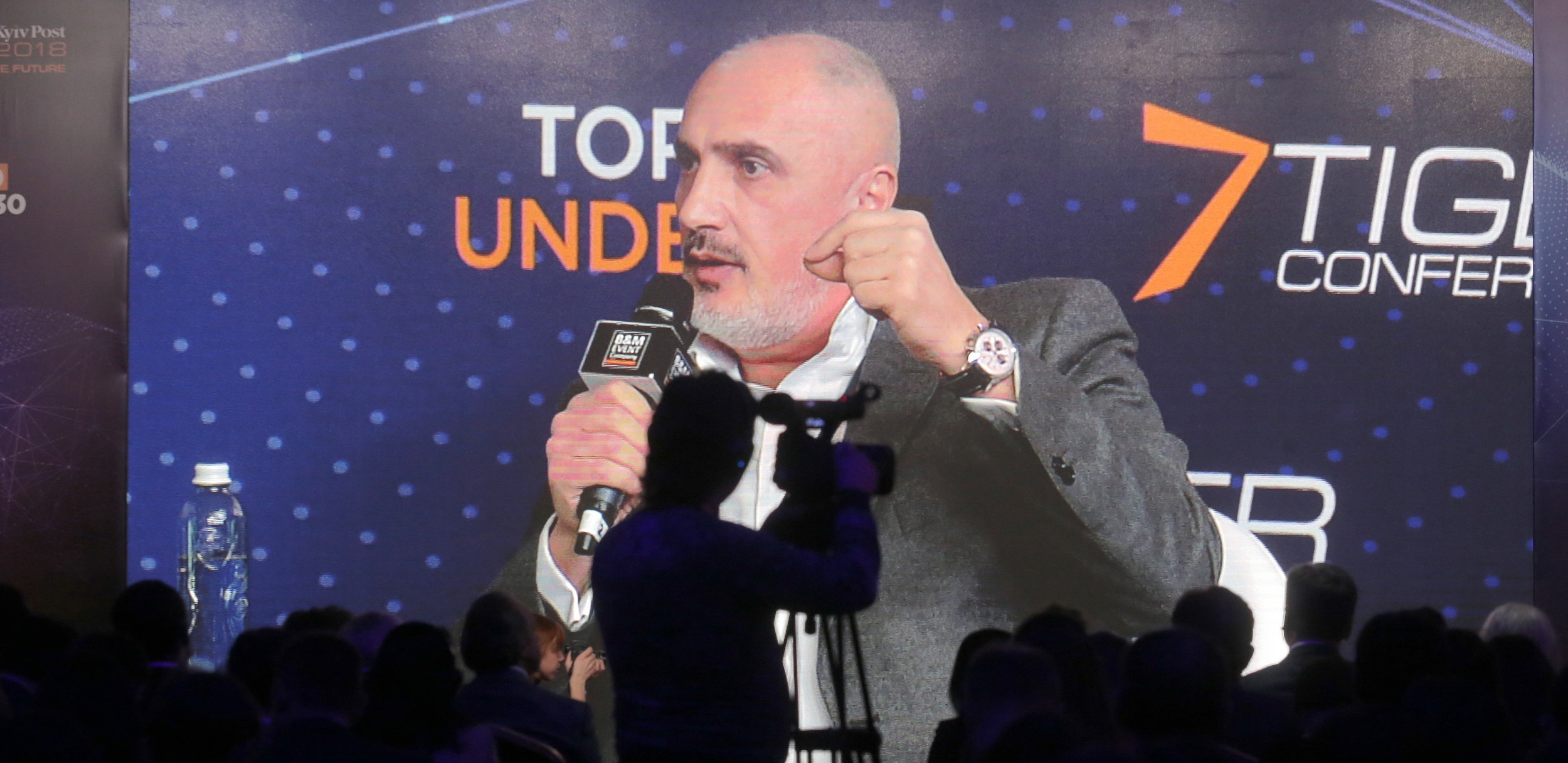
Archil Tsintsadze
“Let’s compare the security system to a restaurant. Here you are, sitting in a restaurant. Visitors are coming in, the line is forming, and you have an old-fashioned kitchen that has to serve everybody. However, this old kitchen has good chefs… They are working perfectly, they have wonderful recipes, but the equipment they work with is old. And they can’t achieve their goal – to serve all customers who are in the line. The problem can be solved easily: we just need at the conceptual level to determine that we need a new kitchen. This should be decided by senior officials. Neutrality topic is gone, it’s not relevant, joining military alliances is also far-off. There is a reality: we must build an effective institution that will be ready for integration with the EU and NATO. And now we have a new kitchen, our conceptual goals are, new equipment, new and shiny. But somehow there is no way to transfer old staff to a new kitchen. Because the rules of work are completely different. Therefore, it is necessary to work with both systems simultaneously, in order to keep the old kitchen working, while we build a new one. To train both new and the old staff. Let everyone work within a new team that can handle the clients of our ‘restaurant’,” with the help of allegories expert explained the essence of the reform.
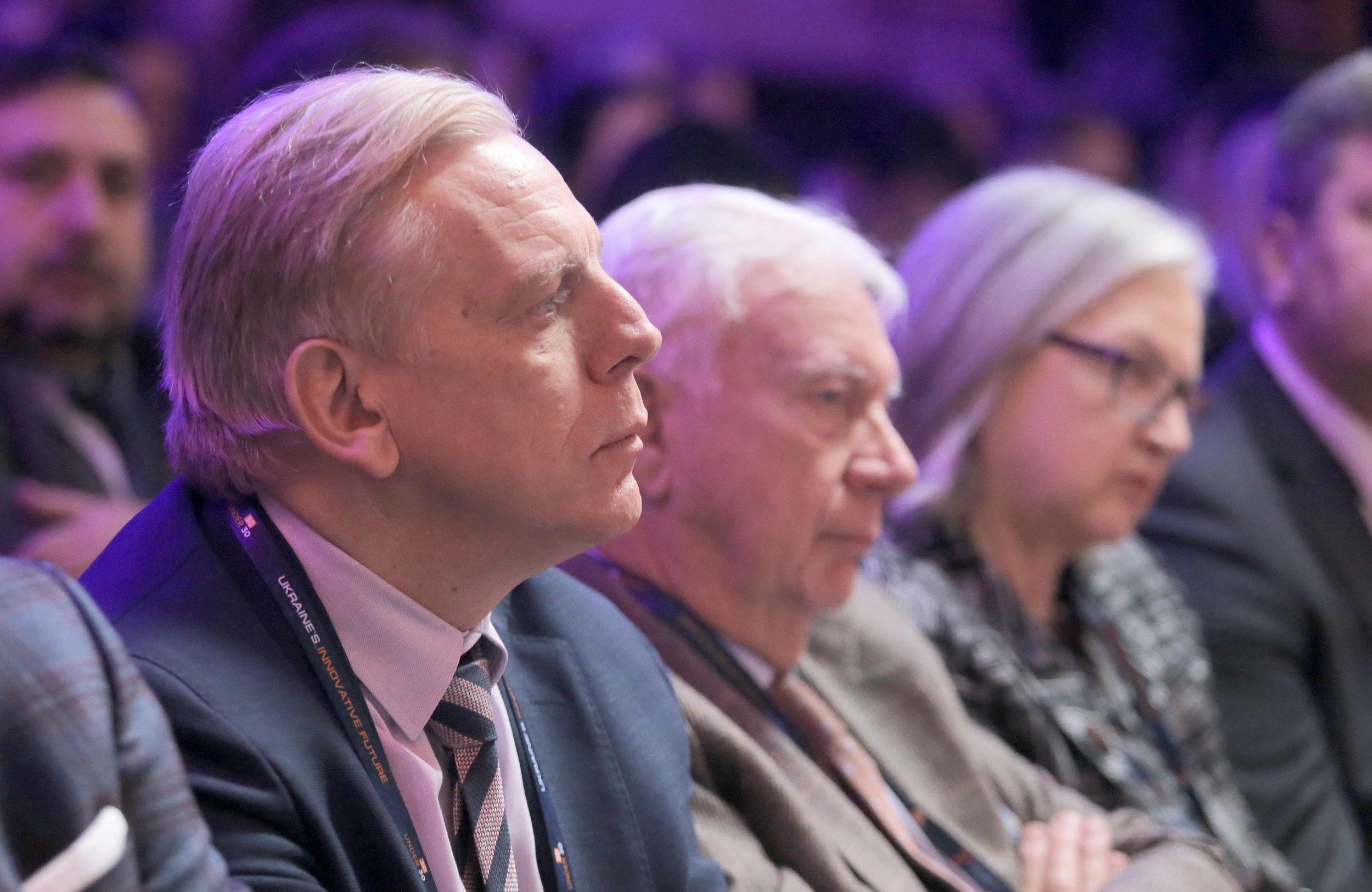
During the discussion of the security issue, all speakers agreed that the West should take a more active part in the war with Russia. Since the sanctions themselves aren’t working well enough: readiness to oppose the Russian authorities should be demonstrated. After all, this war is of a large-scale and it is global. Ukraine is in its very center however, Putin’s ambitions are more far-sighted: he wants to change political systems in other European states and recreate the Soviet empire. Thus, our goal is to do everything to prevent this from happening.
Text by Dmytro Zhuravel
Photo by Ivan Pechenyi