

“We did not just survive, but also built up strong muscles,” said Petro Poroshenko at the parade on the Independence Day. Indeed, during these 27 years, we lived in the words of the Ukrainian philosopher Dmytro Dontsov: “To build a new reality from nothing but your faith …”. There were a lot of mistakes, sometimes almost fatal, but the whole country grew up and became stronger. The key events of the last 27 years through the first photos of the independent country – in the traditional DUMKA digest.
In August, the confrontation between authorities and society reached its peak. On August 19, 1991, began the August Putsch – an attempt of the coup d’etat in the USSR – self-proclaimed “State Committee on Emergency Situations” tried to oust the President of the USSR Mykhailo Gorbachev from the power. The next four days in the republic were ruled by chaos. An extreme and off-schedule session of the Verkhovna Rada of the Ukrainian SSR was convened on August 24, 1991. The session began at 10 a.m. with a minute of silence in memory of the three Russians, who died on the night of August 21 during the rally of the Muscovites against the coup.
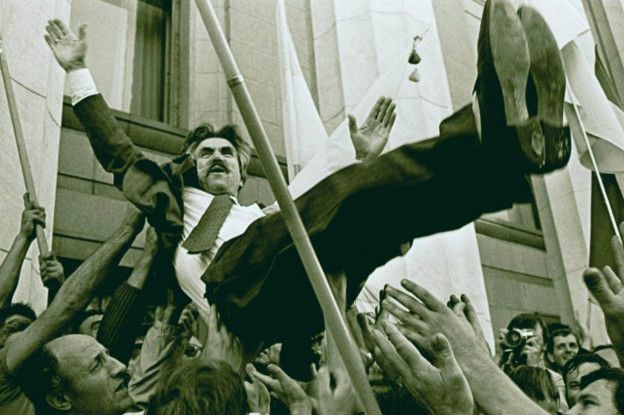
The fact, that it is necessary to declare independence was obvious, even for the communists and deputies from Donbas. Leaving the building of Verkhovna Rada the author of the Independence Act Levko Lukyanenko was lifted and cheered by the independent Ukrainians. That was a beginning of a new independent Ukraine.
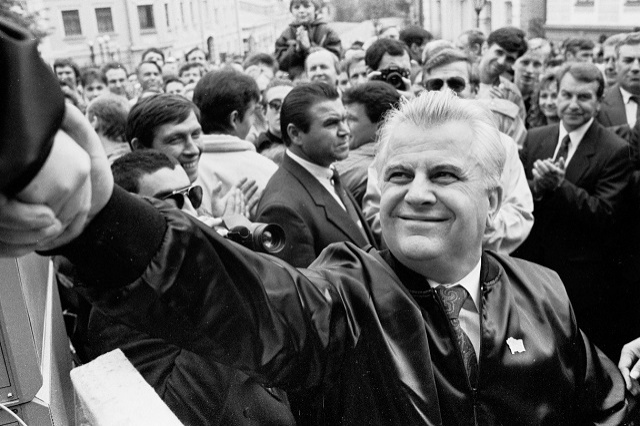
On January 10, 1994, Ukraine abrogated nuclear weapons. The great states have agreed, that the entire nuclear arsenal of the former USSR will pass under the control of Russia. Ukraine for some time went from the answer to the question whether it would give its missiles, which caused irritation not only in Russia but also in the United States. The strong pressure exerted on both sides and, in the end, Leonid Kravchuk signed a rejection. The country, which had the third largest nuclear power in the world after the USA and Russia, voluntarily gave Russians warheads and terrain-hugging air-breathing low-flying vehicles, undermined the silos, and 43 strategic super-bombers Tu-160 and Tu-95MS were sold to scrap. Instead, we received the Budapest Memorandum, according to which, the United States, Russia and other countries committed themselves to respect our territorial borders and to protect our sovereignty. Well, do these documents help up?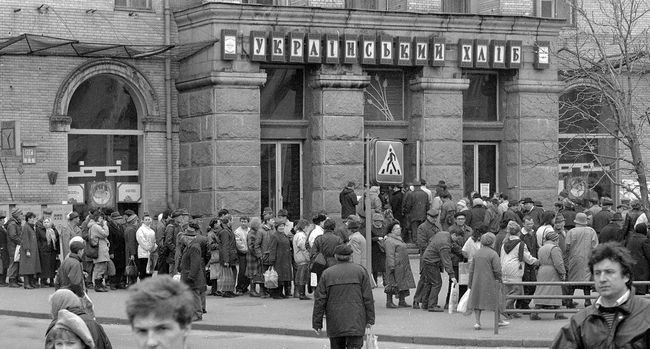
In 1996, Ukraine received the Constitution and the hryvnia. The stability and external well-being of the economy turned into a 1998 crisis. It all started in Russia, which at that time accumulated a huge debt, having built a giant pyramid of short-term loans. Our economy, closely intertwined with the economy of the deflated neighbours had a tough time, too. There was not enough money for anything – neither for salaries, nor for pensions, nor, moreover, for the maintenance of the hryvnia exchange rate. As a result, the hryvnia was decided to gradually devalue, at the same time difficulties for those who wanted to buy a currency was created. By the end of the year, the rate has fallen almost twice. The economy of the country was in a severe strife and a crisis of non-payment. We managed to find a way out only at the beginning of the new millennium.
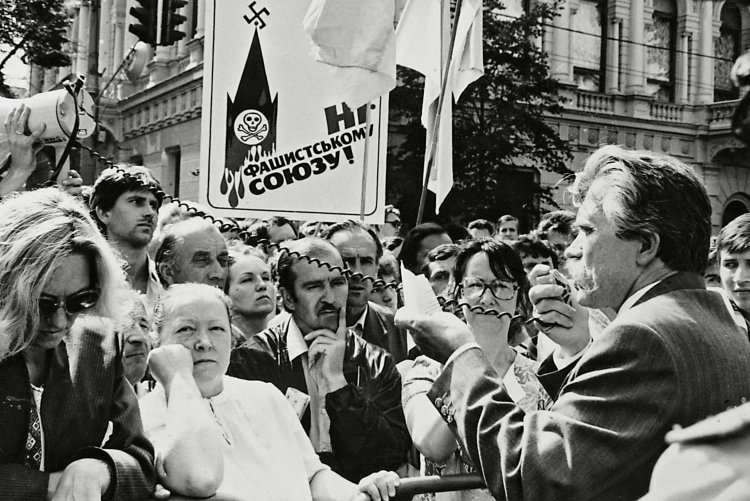
The period of 2000-2010 in Ukraine became a terrible bloody time: Viacheslav Chornovil died in a suspicious car crash in the year 99, and one year later Georgii Hongadze was killed – the main enemies of the acting president Leonid Kuchma. And in 2001, over the Black Sea water territory, a Tu-154M passenger aeroplane of Russian “Siberia” company, was shot down the Tel Aviv-Novosibirsk route. On the board, there were 78 citizens of the Russian Federation and 66 passengers from Israel and 12 crew members, nobody survived. According to the previous version, which still raises serious doubts, the plane was accidentally shot down by a Ukrainian missile during military air defence exercises in the Crimea. However, they say that the plane was shot down from the territory of the Russian Federation, and the young president, Volodymyr Putin, asked the Ukrainian side to assume responsibility. Dirty political games forced the Ukrainians to oppose Kuchma, and a few years later during the Orange Revolution – against the Prime Minister and almost the President Victor Yanukovich. However, the political crisis did not end there: Viktor Fedorovych subsequently became the Prime Minister, the Party of Regions took a revenge, Russia forced our government to buy gas almost for the most expensive price in Europe, and in exchange for a discount – allowed the Black Sea Fleet of the Russian Federation to set in Crimea for another 25 years. It should be noted that on March 31, 2014, after the annexation of the Crimea, the State Duma of Russia denounced this agreement unilaterally.
The last drop in the long-term political crisis was the suspension by the government of Mykola Azarov of preparations for the process of signing the Association Agreement between Ukraine and the EU. March to the Customs Union (read – USSR), eternal Volodymyr Putin. More than a million Ukrainians across the country went in protest on the streets and faced batons and shots of sniper on their own direction. Over a hundred people died, Yanukovych escaped, and Russia, taking advantage of the moment, annexed Crimea and began a war in Donbas. More than 10,000 dead and two million of internally displaced persons. Ukrainian artists, businessmen, directors and ordinary Ukrainians are arrested in Russia and are quickly jailed. Perhaps only after such a shock, we really began to realize the price of Independence and that it should not only be appreciated but also struggled, remembering the words of the Ukrainian ideologue of nationalism Dmytro Dontsov: “the one who believes cannot be neither knocked down, nor changed in his belief by any human “evidence”, he will go on the water, and no one can convince him, that the force of the body burden will drag him down.” And then everything will be Ukraine!
Kostyantyn Rul