

A romantic wave of Ukrainian revolution at the end of the 1980s – at the beginning of the 1990s resulted in the creating of the state documents. Thus, in July 1990, the Verkhovna Rada of Soviet Ukraine (Parliament) adopted the Declaration of State Sovereignty of Ukraine. Meanwhile, the USSR was to collapse. Meetings and sometimes armed conflicts were breaking out in regions. Taking into account all these, the next step was consistent for policymakers. On August 24, 1991, the Act of Declaration of Independence of Ukraine was adopted.
To reassemble what was happening those days, we talked to people who had participated in those events. In particular, to Mr Serhii Holovaty, who was elected an MP of Verkhovna Rada 6 times (1990, 1994, 1998, 2002, 2006, 2007), and who is also a co-author of two landmark documents. Also, we asked Stepan Khmara’s opinion, the MP and human rights activist.
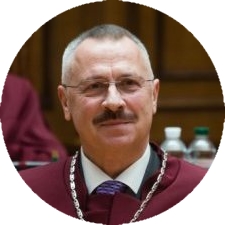 What was the atmosphere in the Verkhovna Rada the day before and on the day of the declaration of the Independence like? As far as I remember, these were tough days: Moscow held the State Committee on the State of Emergency, there was also the coup d’état attempt. People around the country were confused and lost…
The situation in the August 1991 was climactic on three days: August 19, 20, 21. It started on August 19 when there was the coup d’état attempt, Gorbachev, the President of the USSR was dismissed, and the power was seized by the enforcement agencies, headed by the Moscow KGB. Ukrainian communists appeared to be in that situation as well. They didn’t know about what was happening in Moscow. Communists had a majority, 300 MPs, in the Verkhovna Rada. As for the Rukh movement, which was called “Narodna Rada” (“People’s Council”) then and headed by Ihor Yukhnovsky, a member of the Academy of Sciences, it was represented as much as by 120 MPs.
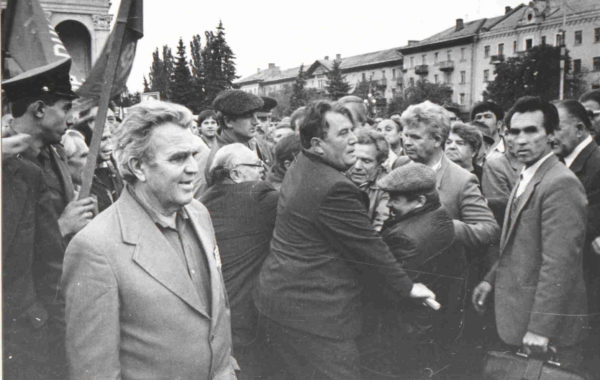
The repressive powers of the USSR seize the yellow-and-blue flag during an anti-communist rally. Red Square, Chernihiv
Was the opposition also taken aback with what was happening in Moscow?
No, vice versa. The Narodna Rada gathered in the House of Writers on 2, Bankova street (then it was called Ordzhonikidze street) to discuss a plan of actions. The discussion resulted in the decision: to use the moment and impose the idea of independence on the communists. Before that, Ukrainian communists weren’t ready for that. Despite that fact, the Narodna Rada charged Levko Lukyanenko with preparing the document. But we treated the situation in a system regard.
The Narodna Rada had a scheme: on August 24, to put as many as 13 points of legislative acts. The Declaration of Independence of Ukraine had to become the last document, the climax. What Ukraine? That Ukraine which was in the documents, which had already been adopted before the Independence declaration.
What documents exactly do you mean?
As far as I remember, the Ban of the Communist Party was to be adopted. It is №1. The Lustration Law – №2. The law making the property of the Ukrainian SSR the property of Ukraine. The Law on Ukrainian Border, the Law on Armed Forces, on Currency Unit, on the National Bank – it was the skeleton for a legal declaration of the Independence. Only after that, the Independence could be declared. That was the plan of the Narodna Rada. We were preparing these legislative acts, Levko Lukyanenko was preparing the Act of Declaration of Independence. On August 23 in the afternoon, he came up to me with the text of the document…
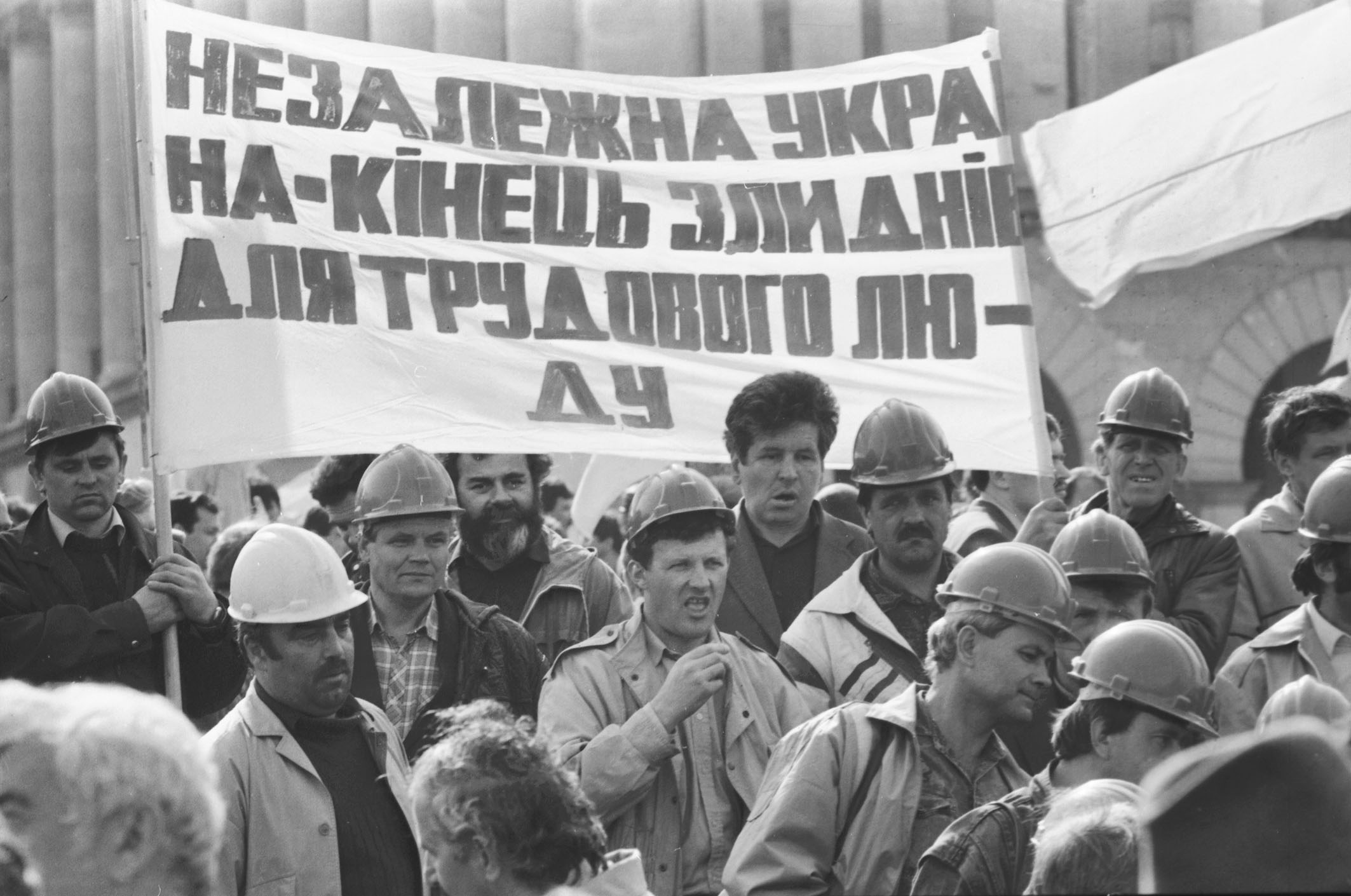
Miners are striking on the square of the October Revolution in Kyiv, April 16, 1991
Was it that famous text which Levko Lukyanenko wrote “on his knee” on a piece of notebook paper?
No. That one remained “on his knee”. Those were just drafts. The one, which was adopted by the Verkhovna Rada, I keep in my private archive. Because I contributed to that document much. It is 99% the document adopted by the Parliament. If we compare it with that “on his knee” text, they are very different. So, I take this piece of paper with the text typed by Levko Lukyanenko, we sit down and begin editing.
I said what I didn’t agree with, Lukyanenko wasn’t against. For example, in the beginning, he had such a title “The Act of Declaration of Independence of Ukrainian State”. I said: let’s not follow Israel’s example. Their official name is “Israeli State”. Let’s take the name of our country – Ukraine. Lukyanenko agreed.
Secondly. He had such a line, “Continuing the traditions of state development of the Ukrainian People’s Republic, declared in its Universals…”
I said, “Levko! If we write down about the UPR’s Universals, we will legally admit that before the UPR, there was no Ukrainian state.” Moreover, it is 1918. Neither Western Ukraine was a part of the UPR, nor was the Zakarpattia region, nor Crimea. That’s why I offered not to narrow everything to the Central and Eastern-Ukrainian regions and wrote down the following, “Continuing a thousand-year tradition of state development in Ukraine. One more thing which is important in legal regard. I wrote down on this piece of paper that after declaring the Act, we need a constitutional basis, which will be the ground for independent Ukraine. That’s why I offered to make the first Law of Ukraine this one, “Since the independence of Ukraine is declared, the Constitution of the Ukrainian SSR is valid on the territory of Ukraine until the Constitution of Republic Ukraine is adopted.” It was highly important to know what will be the basis for Parliament actions. It was on August 23 at 4 p.m. On August 24, we came to the Parliament building.
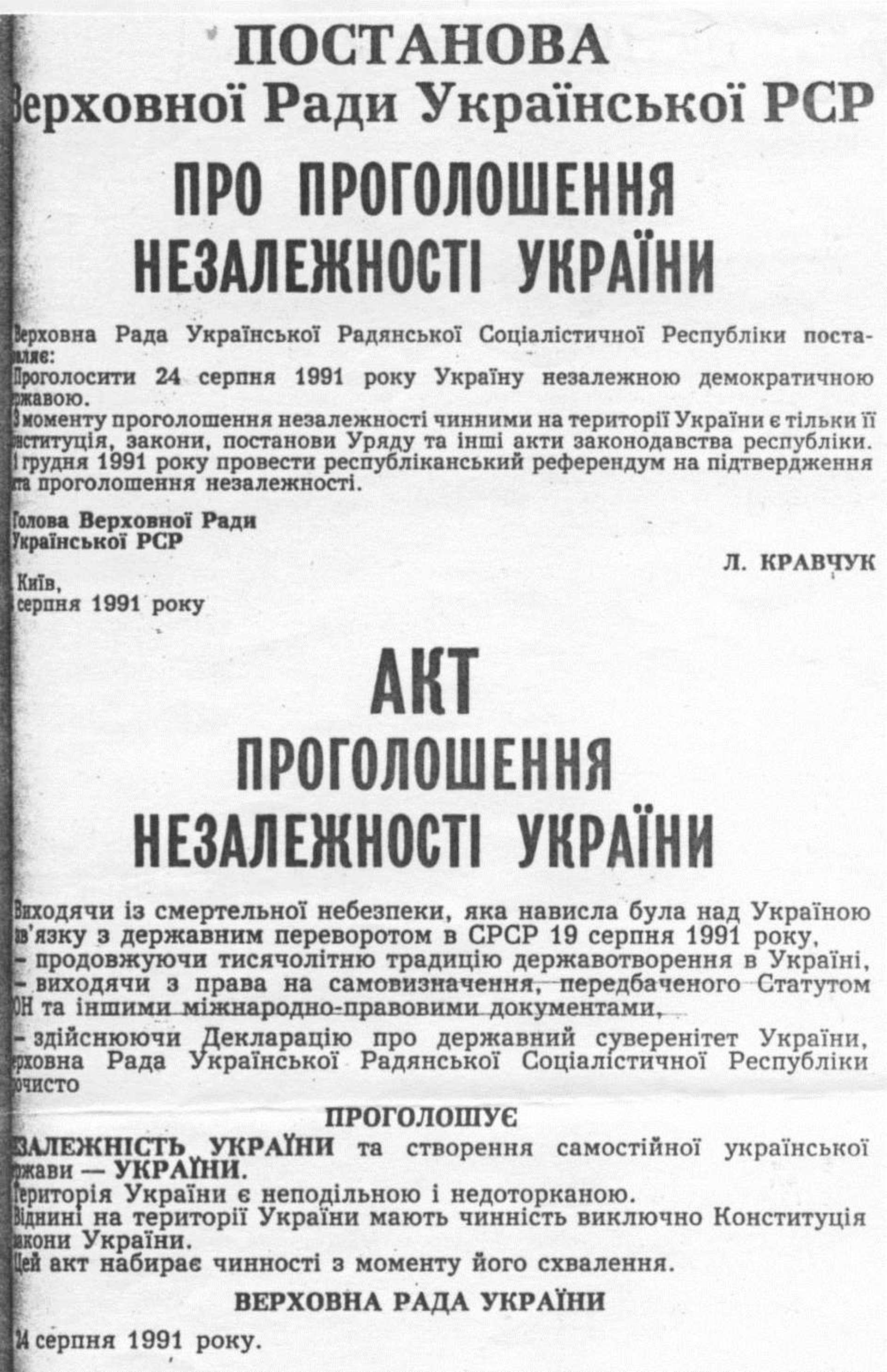
Resolution of the Verkhovna Rada of the Ukrainian SSR on the declaration of Ukraine’s independence, published in the newspaper “Uriadovy Kurier”, August 1991
Was it comfortable to work together with Levko Lukyanenko? Did you have any arguments?
No! Everything was OK! It was on the third floor of the Parliament where journalists enter their suit. We worked and Lukyanenko agreed with everything. The text of the Act proves it. But here I am approaching the culmination point. On August 24, we came for the session. Everything was going as we had agreed on the day before. But something happened which broke the plan made up and adopted by the Narodna Rada in the House of Writers! Who broke it? It turned out that at night, some representatives of the Rukh movement had a meeting with Kravchuk and communists, and they agreed on something. They gave up our plan to them, they let it down and agreed on another plan.
Can we call them by their names?
I won’t announce their names. Every intelligent man or woman will get it. I had always been sitting in the first row in the debating chamber since 1990, Ivan Zayets was sitting beside, someone else…
Well, at 10 a.m., Levko Lukyanenko sat near the first row with the text of the Act. We had to be attentive, we didn’t want anybody to sabotage anything. We have an agenda, we need to discuss it point by point: at first, we need to adopt all those basic acts – ban of the Communist Party, laws on armed forces, currency unit etc.
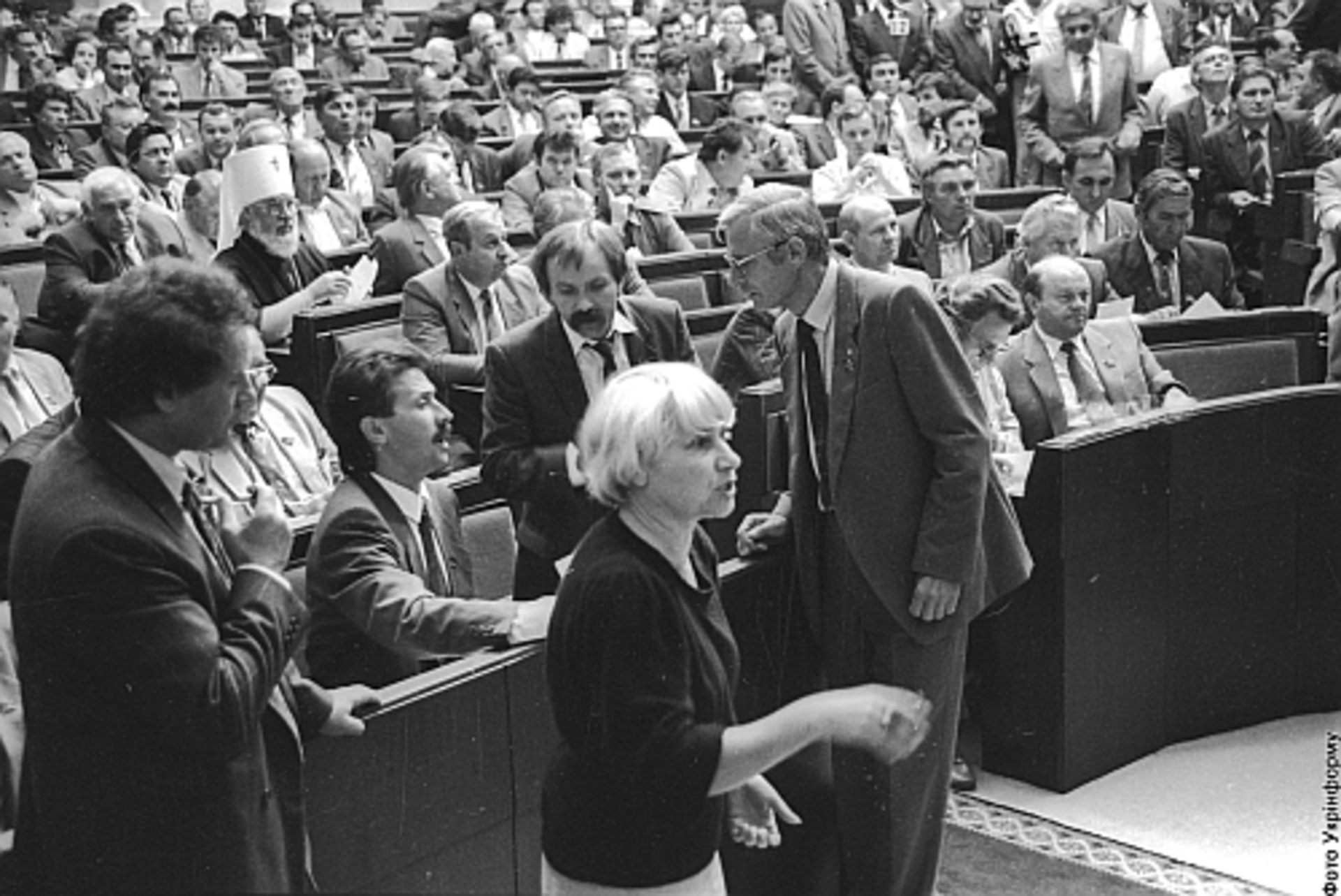
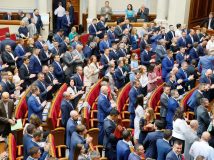
Special session of the Verkhovna Rada of the XII convocation, August 24, 1991
And suddenly…?
And suddenly, Kravchuk who was the head of the session just says, “I give the floor to Mr Yavorivsky, the MP, to read out the draft of the Act of Declaration of Independence of Ukraine!”
Mr Yavorivsky comes up to Mr Lukyanenko, wrests from gasps the document, comes up to the tribune and starts to cheerfully read out the text. Levko is sitting near me and his eyes stream tears. Meanwhile, Kravchuk puts the draft to vote, everybody votes and screams “Hooray!” After that, communists and Rukh members and all the rest, except for literally several MPs, go to drink and dance to the restaurant “Moskva” or something like that which was on the Khreshchatik (the main street in Kyiv), now this building is knocked down. They were celebrating their victory.
Valerii Ivasiuk, the MP, and I came to Yevdokiia Kolesnik, a journalist, for the first live program on the channel УТ, it was at 11 p.m. We said that we were not dancing, singing, drinking vodka with communists. Because we were betrayed. They voted for the independence, but what independence? Independence where power is still held by communists. Independence created by them with Rukh elite, which had betrayed us and let down. I witnessed that and I am responsible for my words. Such things cannot be forgotten.
Were any MP against the independence? Did they oppress or provoke?
No-no… Nothing like that. There was an absolute freedom then, nobody was trying to oppose. Absolutely. Communists were really very scared, they didn’t know how it all would end. Nobody could foresee whether the Moscow “junta” would declare martial law. Then, Mr Varennikov, a general of the army, one of the main figures of the coup, came to Kyiv, he was threatening Kravchuk… In a nutshell, I can say that there was no pressure. We were working absolutely freely.
Now, as time has passed, what do you think – was the declaration of the independence just a coincidence? Was it a gift from heaven as some people claim?
Of course, no. The Narodny Rukh declared at their meeting their overriding priority – Ukrainian Independence. It was in the March 1990. Then, only the Verkhovna Rada elections had passed, there had been no Parliamentary session yet. Nevertheless, the meeting of the Narodny Rukh Council had already been held in the village of Khust. There, they decided to head for the independence and even to create a party which will be a political alternative to the Communist Party. It means it wasn’t a coincidence, it is the result of a consistent struggle conducted by the core of Ukrainian society, which in due time, had fought with arms, had been sitting in camps, had been champions of human rights. It really was a victory. It is a momentous event. It is the landmark for Ukrainian people and Ukrainian nation-building. However, we counted on a different independence. Nevertheless, we can’t complain, anyway, we have our own state, and we have to make it as someone was dreaming.
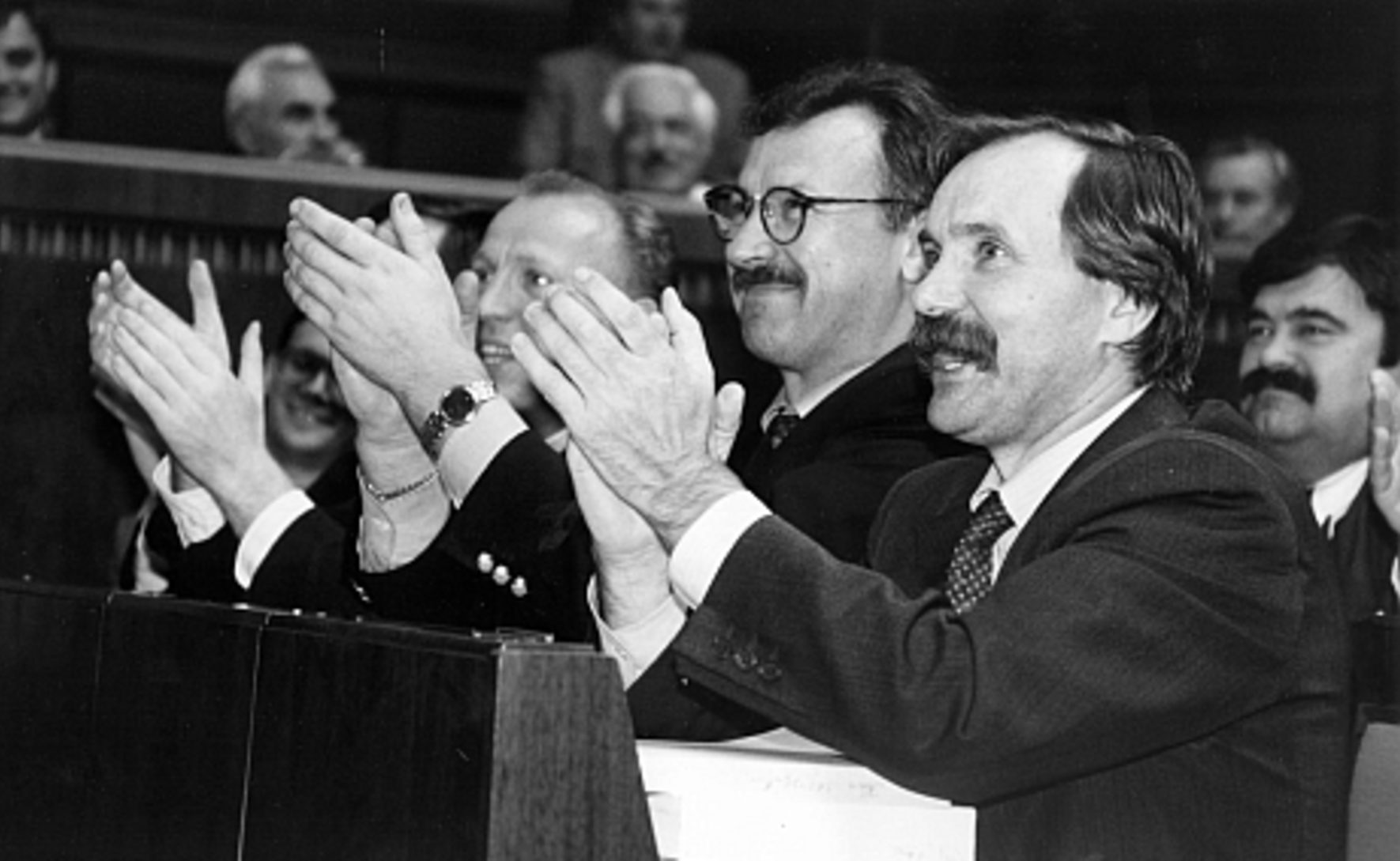
Declaration of the Act of Independence in the session hall of the Verkhovna Rada
Has Ukraine become an independent state?
Definitely. It is irreversible.
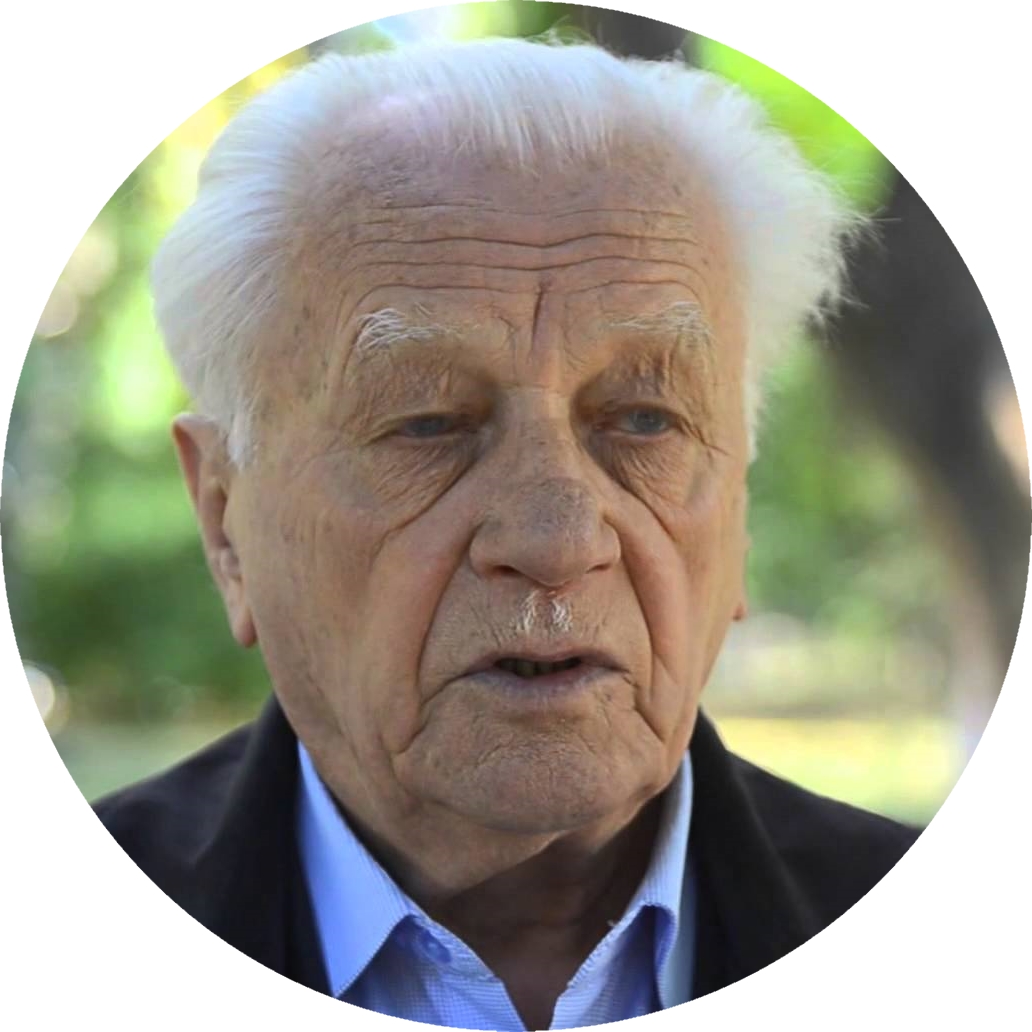
The point of view of Stepan Khmara, the MP, differs from the one of Serhii Holovaty. His view is more panoramic, concentrated on future, however it is usually radical for this policymaker.
The Act of Declaration of Independence is a landmark, without a doubt. But we have to remember the following. Each country lives within a certain environment, a context. We have to always remember that while the Russian Empire still exists, there is still a threat. Let’s face the reality: our neighbour is a terrible neighbour. It is the empire, not the federation, it is a Putinesque dictatorship. It will always, until its collapse, the dream of controlling Ukraine. The worst thing is that the government of this terrible empire is supported by Russian people. We shouldn’t chase rainbows. Saying that this is just the Kremlin government. That Putin will disappear, and everything will become OK. It won’t be so. Some political changes are possible but the strategy will remain the same. Donbas is just an element of a total war of Muscovy against us. In fact, a huge war is breaking out inside Ukraine. Via Russian agents within the highest authority bodies, enforcement system, the court system, media, comprador bourgeoisie. If we understand it, if we are attentive, everything will certainly click into place. And finally, Ukraine will become a normal state it has to be.
What is your idea of a normal state, Mr Khmara?
It has to be one of the most powerful countries in Europe. And respectful in the world. It has to be the aim of Ukrainians. Because, unfortunately, today, our political elite and especially the government are worthless people, who don’t understand what the national idea is, and what a state should be like. Ukraine must be strong. A weak state will always be under the threat.
Interview by Pavlo Volvach