

In his testament, Taras Shevchenko asked after his death to bury his body at the grave, but would Kobzar’s conviction change if he lived in modern Ukraine? Today, the debate about cremation as an alternative to the traditional burial is instancing the growth for many people: proponents of burning the bodies of the dead emphasize environmental friendliness and humanity of this kind, and the opponents remind of the long-standing traditions, to go back of which is not so simple. DUMKA has found out why in our country, cremation has replaced the usual burial, what role in this choice are played by rituals and psychological aspects, whether the church is forbids to burn the body of the deceased and what factors, other than environmental, should be taken into account when choosing one of the options.
Why is traditional burial in Ukraine prevailing over the practice of cremation?
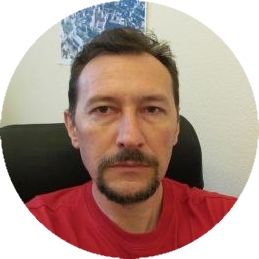
Hryhorii Luhovskyi, a historian, cultural scientist and journalist, explained to DUMKA that the tradition of the land burial is closely linked to the establishment of Christianity on the territory of Ukraine because the most widespread way before it was way of burning down, that is, cremation. Today’s admission of Christian customs is a consequence of the inertia of our mentality because in Ukrainian society there is no tradition stronger than Christian. However, according to Luhovskyi, over time these trends may change, especially in large cities.
“The tradition of land burial of the Slavs was formed under the influence of Christianity. Our pagan ancestors practiced burning-down, that is, cremation. Although since paganism is a decentralized set of cults, there was no general ceremonial act for all the tribes. Today, the practice of cremation is not widespread due to the inertia of the mentality.
Even if the deceased was an atheist or a person without any religious beliefs, he is likely to be buried by the Christian ceremonial act. When alive, people do not think much about death and subsequent rituals, and when this happens, relatives tend to choose the easiest option, that is, to bury in a conformist way.
In our society, so far there is no tradition that would be stronger than Christian, so most of the dead fall into the “sphere of influence” of Orthodox priests. But over time, most likely, this power of the church will be reduced, especially in big cities. Perhaps we will still see the well-being of alternative cemeteries and burial services that would satisfy the demand for unconventional burial practices. This is a good idea for start-ups”, Hryhorii Luhovskyi thinks.
What is the church representatives’ attitude to cremation?
Reflecting on this question, bro. Yakiv Shumylo the Order of Saint Basil the Great, the press service of the Basilian Order in Ukraine, the Ukrainian Greek Catholic Church, explained DUMKA that it is difficult for the Catholic Church to define clear theological justifications for the prohibition of cremation. It is not prohibited in cases where cremation was chosen for reasons that are not contrary to Christian doctrine. However, after burning the ashes of the deceased, it must still be buried in the cemetery, since the burial place implies bigger respect for the deceased.
“Talking about the biblical aspect of cremation, there is no mentioning of it in the Gospel. This issue is regulated by the Catholic teaching in the Catholic Church. According to the ancient Christian tradition, burial in cemeteries best suits the body of the deceased. After death, the soul separated from the body, during the second coming of Christ, will acquire a new life in the renewed body. The church advises burying the faithful on the cemetery or in a holy place so that they can be properly honored with prayer and memory.
Speaking about cremation, it is difficult to say about clear theological substantiation of its prohibition. As stated in the Instruction of Congregation for the Doctrine of the Faith Ad resurgendum cum Christo (“To rise up with Christ”), cremation is not forbidden, “if it was not chosen for reasons contrary to Christian doctrine”. At the funeral, one should refuse the deceased, who during his lifetime demanded cremation that contradicts the Christian faith reasons. I will continue speaking, according to this document.
Taking into account the ancient tradition, the Church advises the burial place to be in a cemetery or in a holy place, because it is an appropriate form of expression of faith and hope in the resurrection of the body. The Church does not prohibit cremation in cases where, for economic, social or humanitarian reasons, it is necessary to implement it, since it does not affect the soul and does not contradict the doctrine of the resurrection of the body. In such cases, the Church accompanies the deceased in cremation through prayer and appropriate worship. “In order to avoid any kind of ambiguity of pantheistic, naturalistic or nihilistic nature, it is not allowed to scatter ashes of the cremated body in the air, on the ground or into the water, or in any other way, nor to make souvenirs, jewelry or other objects out of the cremated.”
Thus, after burning the ashes of the deceased must be buried in the cemetery, in the temple or in the place, which is designated by the corresponding church authority. Still, the Catholic Church further recommends burying the body in a view of greater respect for the deceased”, said in the comments for DUMKA.
Why is it hard to make a decision on the cremation of a close person?

Psychologist and psychotherapist Olha Luhova-Stepashko told the DUMKA that in the confrontation between cremation and the traditional, for many, land burial, rationalism and traditions, sacredness of the event are contrasted with each other. However, no matter how much we discuss rationality and economy, the mental layers will not disappear by themselves.
“The issue of the land burial vs cremation really causes an ambivalent attitude. On the one hand – rationalism, on the other hand – the tradition and sacredness of the event.
No matter how modern people are, no matter how much we think about rationality, economy and common sense – these considerations force us to choose the cremation that is completely justified in the modern world – we still have deeper layers of the mental, which are far from rationalism. The feelings are archaic, close to the horror of “doing something wrong with the dead body”, “breaking the laws of nature”, “breaking the rules of the ancestors”, “committing something horrible in the terra incognita sphere of death for us”. Some of us overcome (or psychologically cease) their archaic horrors and ancient prejudices, and someone feels them and cannot resist them. Therefore, from the point of view of psychology, there can not exist any “right” or “wrong” decisions in relation to death and dead. There are solutions right for a particular living person and a particular family. Solutions generated by its feelings. And you should trust your own feelings, remembering that they can be different from the rest of the people”, the expert says.
Taking into account the above reasons, the psychologist has explained that sometimes it is difficult to be bent on the cremation of a close person, and the traditional grave with the body of the deceased can embody the presence of this person in the material world.
“To be bent on cremation can often be completely impossible. The unwillingness to burn the dead is due to archaic (absolutely normal) deep feelings.
Those, who oppose cremation can be guided by anything. And the manipulative intentions in particular. It is quite possible and natural that for many of us the usual grave and gravestone is the incarnation and presence of the deceased in the material world. But one may have the same attitude to the gravestone in a cinerarium”, Olha Luhova-Stepashko is convinced.
Is the rituality a part of the farewell to the deceased?
Ihor Lubkivskyi, a psychologist, analyst and coach, is convinced that the issue of cremation should rather be analyzed in a religious-cultural context, for example, for a Christian tradition, this may be totally unacceptable. Lubkivskyi also stressed that in the event of even a partial transition to the cremation of the deceased, it is important not to lose the ritual component, which helps the relatives of the deceased to outwear sorrow easier. The worst possible scenario is the transformation of cremation into a certain conveyor, in which nobody will ever remember either the dead or the alive.
“This issue, is more likely, not so psychological as religious and cultural. There is a crematorium in Kiev – and it is not standing idle. And sooner or later we will come to the conclusion that more and more crematoriums will grow in other cities or regions of the country because there is already no land under the cemetery. It is sad to admit, but for today we are a nation that is dying, and therefore needs more and more space for burying of the deceased. However, in the Christian tradition it is customary to bury the dead in the land, so cremation may be inappropriate for believers. And this is also their right.
In addition, one should not forget that in any case, even when older people die, the loss of a loved one under the conditional scale of stress is all 100%, the maximum stress that we can generally experience in our lives. Therefore, all these burials, churches’ burial services, commemoration meetings on the 9th and 40th day, etc., serve the role of those rituals that help us to outwear sorrow. Therefore, if we at least partially proceed to the cremation of the deceased, it will be important not to lose this important ritual component, which helps us to outwear the loss easily. Perhaps, we should ask an advice of the church, how the best is done – so that it does not become a conveyor in which there is no living or dead concerns, no one will ever be mentioned”, Ihor Lubkivskyi left a comment for DUMKA.
Cremation – an issue of ecology or of a personal choice?
 Viktor Tkachenko, the head of the press service of UEA “Zelenyi svit”and ecologist, is convinced that recent initiatives by parliamentarians to favor the cremation over ordinary burial cannot be justified solely by environmental considerations, since in reality this is also the interference of officials with the personal rights of citizens to choose the method of burial. According to Tkachenko, the ecological benefits of cremation are also doubtful, since it is not certain how safe for the environment such a way of dealing with the body of a deceased person is.
“Recently, the Cabinet introduced a draft law” On Amendments to Certain Legislative Acts of Ukraine on the Improvement of the Funeral Area “to the Verkhovna Rada, which preferred cremation over the usual land burial. And such innovations cannot be justified by environmental, economic or religious considerations. This is the government’s personal position that can be “substantiated” by European standards, and so on.
In fact, this is the interference of officials in the personal rights of Ukrainian citizens in choosing a burial method. After all, among Ukrainians there are different religious preferences, there are family traditions, parents’ wills. And everyone can personally choose for themselves the way of their rapture.
The current economic problems make citizens choose a relatively cheap way – cremation. The ash can be buried next to the graves of relatives, can be buried in columbariums (buildings for burial of the urns with ashes of the deceased), it can be put in a house on the fireplace or scattered above the earth.
However, the “utilization” of the body through the cremation goes in the funeral office of the crematorium, which can use ritual attributes in the re-implementation. With the land burial, it is difficult to make. And having received the body of the deceased at one’s disposal, workers of crematorium have the opportunity to send a coffin, floral tributes, flowers, even clothes of the deceased to a re-implementation, because these things are not actually spoiled. And the price for these items will not be reduced due to reuse.
Here you can consider such an entrepreneurial initiative as a moral or corrupt component of the funeral process through burning itself. No one controls the ritual offices, therefore the stated version of the enrichment at the deceased is quite real. Perhaps this particular peculiarity of possible material enrichment is lobbied by the government? After all, during a day at the Baikove cemetery in the capital, dozens of families use crematorium services. And the price of an ordinary coffin in Kiev is at least 700 UAH, and a varnished eternity box with handles are about 2-3 thousand UAH. It is not hard to calculate how much can be “weld on” in one day of a ” backbreaking job”.
Of course, if these ritual objects for burial through the burning were rented, it would be correct and fair from the ecological and moral sides. But the real lie of the land still needs a separate legislative attention of the Cabinet of Ministers.
It is difficult to say about environmental damage caused by burials. What is more environmentally friendly – to bury the body in the earth or burn the oxygen together with the dead and throw carbon dioxide into the atmosphere with other chemical impurities? I believe that a person is already harmful to the environment, which during the time of his stay on the planet causes environmental damage so much that its burial looks a little harmful droplet “, Victor Tkachenko is convinced.
The death of the body – the end or a new way?
Hromoytsia Berdnyk, a writer, culture expert and culture-bearer, is convinced that now it is not necessary to call cremation an alternative way of burial, because it looks rather obsolete. A more recent analog of land burial is bio burial, when the body of a deceased person is placed in a special capsule from which the tree subsequently grows. This is precisely the idea, that was initiated by people’s deputies in the form of a bill, not so long ago, led by Volodymyr Hroisman. According to the writer, life does not end with the death of the body, it is in fact only a tool for gaining experience in the living dimension.
“It seems to me, that talking about cremation as an “alternative way of burial” in the 21st century is outdated. In many countries, this has already become a customary tradition, especially in large cities, where there is always a problem with land for burials. Of course, in villages or small cities where there is no crematorium, land burial will remain the main way for a long time. But I really like this new idea of bio burials in special capsules, from which the tree grows. We all enjoy the gifts of the mother-land, it feeds us and nourishes us, and the idea that my death will give this planet a new life is very inspiring.
However, I will return to the issue of cremation. First of all, this is one of the oldest methods of burial, and in many countries – the most important in a sacral way. Just remember the Indian tradition of burning on a birch-tree on the shores of the sacred river Ganges – it is believed that this act frees from all the sins of the earth, and all religious Hindus seek to be burned down there. Many researchers believe, that our ancestors practiced the burning of the dead before the adoption of Christianity.
Actually, it is the Christian religion that secured the land burial as a non-alternative way through the concept of the Last Judgment and resurrection in the bodies. Because of this, nowadays, in some countries, cremation is prohibited because of religious beliefs – for example, in Greece. But in the 21st century it is naive to believe that someone will resurrect a handful of biomaterial …
I am convinced that life does not end with the death of the body; our “information luggage” – consciousness, mental and sensory experience – will prolong its existence in another being, but after the physical transition to the state (what we call death), the body no longer matter, because it is just a tool for obtaining experience in the earth dimension. “Oh, do not worry about the body! It lit up with clear fire, clean, scalding, as good as wine, with free sparks rolled up … “, no one has said better about a body after death, than Lesia Ukrainka, in the whole Ukrainian, and maybe the world literature.
We are formed by cosmic dust, by the stars of long gone, broken out and flown away. I’m very inspired by this idea because it means that in each of us the universe lives in the literal sense. And I’m glad to think that after my death my cremated body will return to heaven with the particles of ash, which formed each of us … “, the writer said in the comment to DUMKA.
Text: Dmytro Zhuravel