
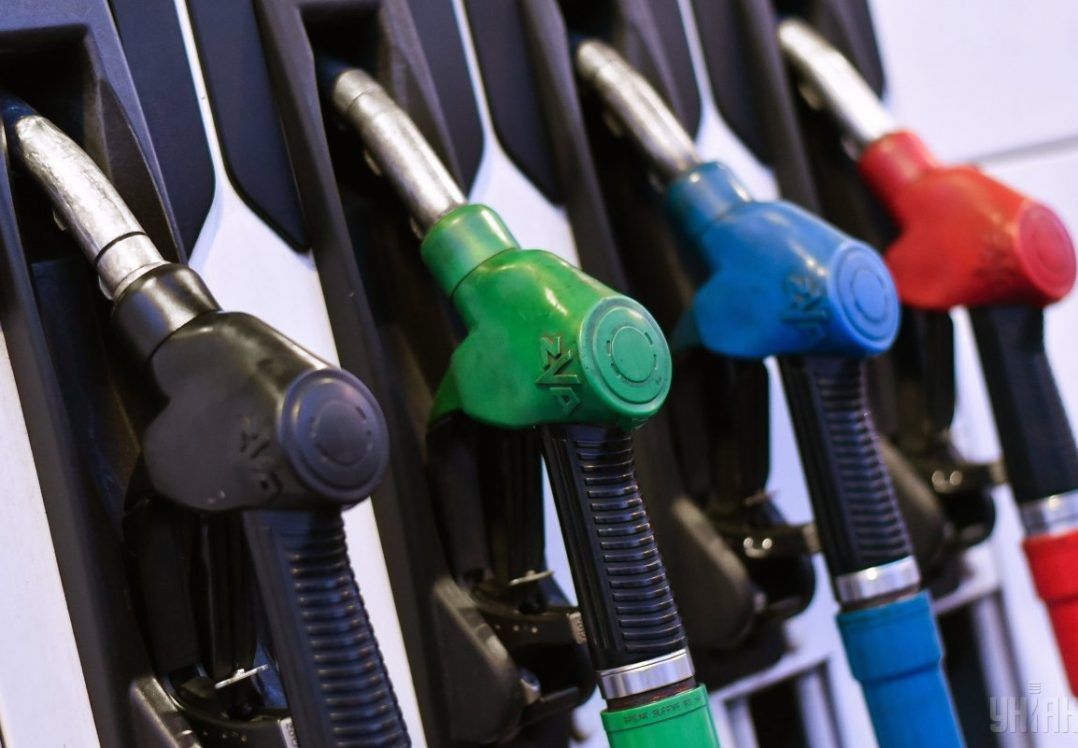


In January-March 2018, the trend, which was formed as early as 2016 – a reduction in gasoline consumption and an increase in the consumption of diesel fuel (DF), continued. The DF market, which is formed due to demand from the agrarian sector and industry, has not suffered significantly from the crisis. For its part, the gasoline segment continues to decline amid the powerful competition that is being formed by the demand for autogas. As a result, taking into account the increase in demand for DF, the balance of the gasoline and diesel market showed an increase of 6.7%. The LPG market grew by 9.2%.
Types of gasoline are losing positions
In the first quarter of 2018, according to UPECO, the gasoline segment decreased by 8.6%, to 409,7 thousand tons. The share of Ukrainian producers in the balance of gasoline was 43%. Domestic producers – the Kremenchug refinery plant and the Shebelynsky GPP – have overall reduced production by 6.5%, to 176,4 thousand tons. PEC Ukrtatnafta (Kremenchug refinery – the author’s note) reduced gasoline production by 4.4%, to 150 thousand tons. “Ukrgazvydobuvannya” (Shebelynsky GPP – the author’s note) reduced the production of gasoline by 16.8%, to 26,4 thousand tons. In addition, during the first quarter, gasoline imports to Ukraine decreased by 10.11%, from 259,6 thousand tons to 233,4 thousand tons.
Belarus continues to be the main supplier of gasoline, accounting for 75% of imports. It should be noted that the volumes of supplies from Mozyr Oil Refinery decreased by 22.6%, to 163,2 thousand tons. For their part, gasoline shipments from the Novopolotsk Refinery increased more than threefold, to 12,6 thousand tons of A-92 gasoline. The key buyer of the Novopolotsk “deuce” was the network of filling stations “BRSM-Nafta”.
The import of gasoline A-95 produced by the Polish-Lithuanian concern Orlen is 23.2% of the total volume or about 54,2 thousand tons. From the Mazeikiai Refinery (Lithuania) and the Plock Refinery (Poland), 41,8 thousand tons and 12,3 thousand tons of the resource, respectively. It should be noted that 20 thousand tons of gasoline A-95 were ordered to provide the Ukrainian OKKO gas station network. It should be noted that in the first quarter the OKKO network refused to import Hungarian gasoline produced by the Danube Refinery, which led to a decrease in gasoline imports from 5 thousand tons to almost 1 thousand ton. Also, imports of small volumes (about 2,4 thousand tons) of petrol A-92 and A-95 from Russia, Israel, and Serbia, which in Ukraine were delivered by sea.
Import of gasoline in Ukraine was carried out by about 70 companies, most of which are network filling stations. Thus, for the first quarter, the largest suppliers were BNK-Ukraine – 88,3 thousand tons, WOG – 30,7 thousand tons, OKKO – 20 thousand tons and “BRSM-Nafta” – 16,3 thousand tons.
Р
Russian diesel becomes the leader
According to UPECO, in January-March this year the balance of the DF market grew by 13.1%, to almost 1,23 million tons, against the backdrop of an increase in both imports and domestic production. Ukrainian plants increased diesel fuel supplies to the market by 2.8%, to 148 thousand tons. At the Kremenchug refinery, the output of the DF increased by 2.2%, to 125 thousand tonnes, at the Shebelynsky GPP – by 5.9%, to almost 23,1 thousand tons. It should be noted that despite the growth in production, Ukrainian producers occupy a miserable part of the market. Moreover, during the reporting period against the backdrop of the growth of import supplies, the share of Ukrainian producers in the market decreased from 13.3% to 12.1%.
In the first quarter of 2018, imports of diesel fuel in Ukraine rose to 1,08 million tons, which is 14.7% more than in the same period in 2017. During this period, Russia came in first place among the DF suppliers in Ukraine. Russian refineries in general shipped 526,3 thousand tons, which is a twofold increase of the level of 2017. In the structure of the Ukrainian market, the share of diesel fuel from the Russian Federation increased from 20.9% to 43%.
The share of Belarusian plants in the balance sheet decreased from 50.2% to 34.4%. So, in the I quarter, supplies from the Mozyr and Novopolotsk refineries fell by 23.6%, from 553,1 thousand tons to 422,4 thousand tons. Market participants forecast that during 2018, due to competition from the Russian resource, the share of Belarusians can decrease even more. It should be noted that the supply of DF from the Mazeikiai Refinery increased by 4.5%, to 82,1 thousand tons.
Against the backdrop of rising pipeline imports, sea supplies are losing appeal. So, if earlier tanker imports amounted to about 10%, in the first quarter it was about 6% or about 65 thousand tons. The largest volumes are delivered to Ukraine from Finland and Russia by sea. In addition, about 26 thousand tons of the resource came by sea from refineries of Bulgaria, India, Greece, and Turkmenistan.
LPG market slows, but grows
In the first quarter of this year, the Ukrainian LPG market grew by 9.2%, to 389 thousand tons. For comparison, we recall that the gasoline market fell to 409,7 thousand tons, which is indicative against the background of the competition of these types of motor fuel. However, compared with the same period last year, there was a slowdown in the growth rate of the LPG market (from 15% in the first quarter of 2017 – the author’s note).
In connection with the restoration of the output of petrochemical products at Karpatynaftokhim, the balance of the Ukrainian LPG market has changed. In 2017 in the structure of consumption of autogas (LPG, used as motor fuel) accounted for about 95%, then in the first quarter of 2018, its share fell to 88.6%. Now petrochemistry accounts for 6.5% of Ukrainian consumption. The remaining 5% falls on the communal and household, agricultural sector, as well as industry.
We note that according to UPECO estimates, in the first quarter consumption of autogas in Ukraine showed an increase of 2%, to 345 thousand tons, which makes Ukraine one of the largest markets for this type of motor fuel.
In January-March 2018, domestic gas production in Ukraine decreased by 7.9%, to 101 thousand tons. The main producer of LPG, Ukrgazvydobuv, increased production of gasoline by 2.6%, to 44,4 thousand tons. “Ukrnafta”, on the contrary, reduced production by almost 16%, to 29 thousand tons. The fall in the state company occurs against the background of the forced reduction of oil and natural gas production. At Kremenchug refinery, about 20 thousand tons of LPG were produced, which is almost 20% less than in the same period of 2017.
The first quarter was completed in various ways by private entrepreneurs. GC “Geo-Alliance” increased production of LPG by 11,8%, up to 3,4 thousand tons. “Poltava Oil and Gas Company” reduced production by 10.9%, to 2,45 thousand tons. “Regal Petroleum” increased production from 0.9 thousand tons to 1.5 thousand tons. In total, against the background of production decline and further import growth, the share of Ukrainian producers decreased from 30.8% to 26%.
According to UPECO, in January-March 2018, the import of liquefied gas to Ukraine increased by 16.9% compared to the same period in 2017, to 287,8 thousand tons.
The main supplier of LPG in Ukraine is the Russian Federation, whose share in the balance of imports is almost 45% – 158,7 thousand tons. However, compared to January-March 2017, Russian gas supplies fell by 21.7%. The main reason is the restriction, which in May 2017 was introduced by the Federal Service for Technical and Export Control of the Russian Federation for the export of LPG from Russia to Ukraine. However, the Russian share filled the Belarusian and Kazakh resources.
In the first quarter of 2018, the import of LPG produced by Belarusian plants increased more than twofold, to 88,6 thousand tons. In particular, gas supplies from Mozyr Oil Refinery amounted to 45,1 thousand tons against 2,4 thousand tons in 2017. LPG supplies from the Belarusian GPP in Ukraine also increased by 11.5%, to 43,5 thousand tons. Consequently, in the total market balance, the share of Belarusian producers increased from 11.7% to 22.8%. In terms of imports from Belarus, it should be noted that the increase in supplies by road, which account for almost 45% of all shipments from Mozyr Oil Refinery and Belarusian GPP. The advantage of auto import is the speed of delivery and cheaper logistics.
Since late 2017, Kazakhstan has been winning export positions in Ukraine. In connection with the price conjuncture, producers from this country in past years were more profitable to sell LPG to the nearby markets of Tajikistan and Afghanistan. The situation began to change in the second half of 2017, when due to the “gas crisis” and the record value, Ukrainian traders were able to agree on direct long-term supply contracts with the US-Kazakhstan company Tengizchevroil. As a result, in January-March 2018, compared to the same period in 2017, LPG imports from Kazakhstan increased from 0,9 thousand tons to 37,8 thousand tons. It should be noted that this is the highest figure in the history of liquefied gas deliveries from Kazakhstan to Ukraine.
UPECO notes that guaranteed supplies from Kazakhstan make the Ukrainian market more predictable. Now the Kazakhstan resource is already 9.7% in the balance of the Ukrainian LPG market.
In addition to the three largest exporting countries, the Baltic countries and Poland continued to participate in deliveries to the Ukrainian market with small volumes of gas – 2,7 thousand tons. In its mass, it is the LPG of the Mazeikiai Refinery of the Orlen concern, as well as small amounts of re-export gas from Russia.
In the first quarter of 2018, the largest importers of LPG in Ukraine were the companies of the network of filling stations BRSM-Nafta, which increased shipments by 36%, to 30,2 thousand tons. The next after BRSM-Nafta was Nadiezhda, which increased imports by 11%, to 27,7 thousand tons. Karpatynaftokhim Plant entered the top three. For three months the enterprise imported 25,3 thousand tons of liquefied gas.
It should be noted that WOG increased the shipments by 41% – up to 14,3 thousand tons, and OKKO – almost twice, up to 13,7 thousand tons.
So, for three months in 2018, the Ukrainian market of liquefied gas did not slow down, adding to its arsenal also a petrochemical direction. However, the main indicator and driver of growth continues to be the autogas segment.
Text: Volodymyr Dolnyk


1 Comment
Thanks for sharing an informative post. It was very helpful to know the reasons why ukraine reduce the consumption of diesel and LPG.