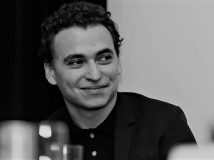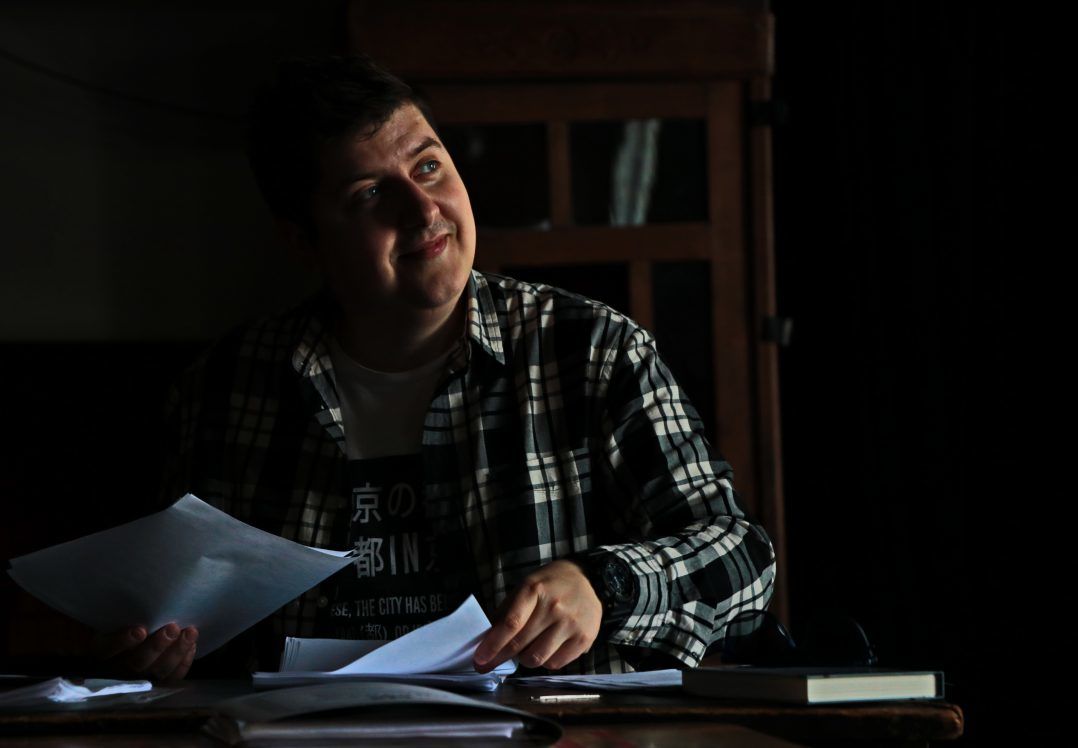


One of the youngest and most successful directors in Ukraine, creative and popular, who’s already got the title of People’s Artist of Ukraine, artistic director of the Golden Gates Theatre, direction professor in Kyiv National University of Culture and Arts – Stas Zhyrkov agreed to diagnose the state of modern theatre in Ukraine.
We met in the evening in the downtown. I introduced our photograph Valerii Puzik to Stas. Valerii didn’t like that I mentioned he had taken part in the ATO (anti-terroristic operation in Donbass). Stas became serious at once, strongly shook Valerii’s hand, his face showed his emotions. He said it was hard for him to finish the project with war veterans; their stories impressed him so much that it was very difficult to realize all that, “I gave up this project because, unfortunately, we made a mistake: I didn’t talk to a phycologist after every day of interviews (we had four of them every day)… The guys we were interviewing had very grave problems, frankly speaking: no arms, no legs. I realized that I couldn’t handle it and gave it up. That’s the story. Unfortunately.” Recognizing his weakness is a feature of a real man, a sign of his sincerity. It proves that the director is vulnerable and sensitive person, although there are different stories in media, where he is blamed for being aggressive and insolent – features common to young successful people. Someone is got annoyed with him, someone adores and puts hopes upon him. What is Stas Zhyrkov like for real? Find out in our interview.
You are called the main theatrical hit maker of the country. Do you agree with such a title?
I am not sure whether I should agree with that, but I like it. Many people who are connected with theatre are lack of courage. I have recently posted on Facebook, “You have to be a bit miserable, a bit shy…” I think that theatre has been in the sidelines for so long because it was uninteresting and hidden behind some curtains from young people. It was absolutely closed. That’s why now we have to use all methods: aggressive as well as non-aggressive. Because we are all different.
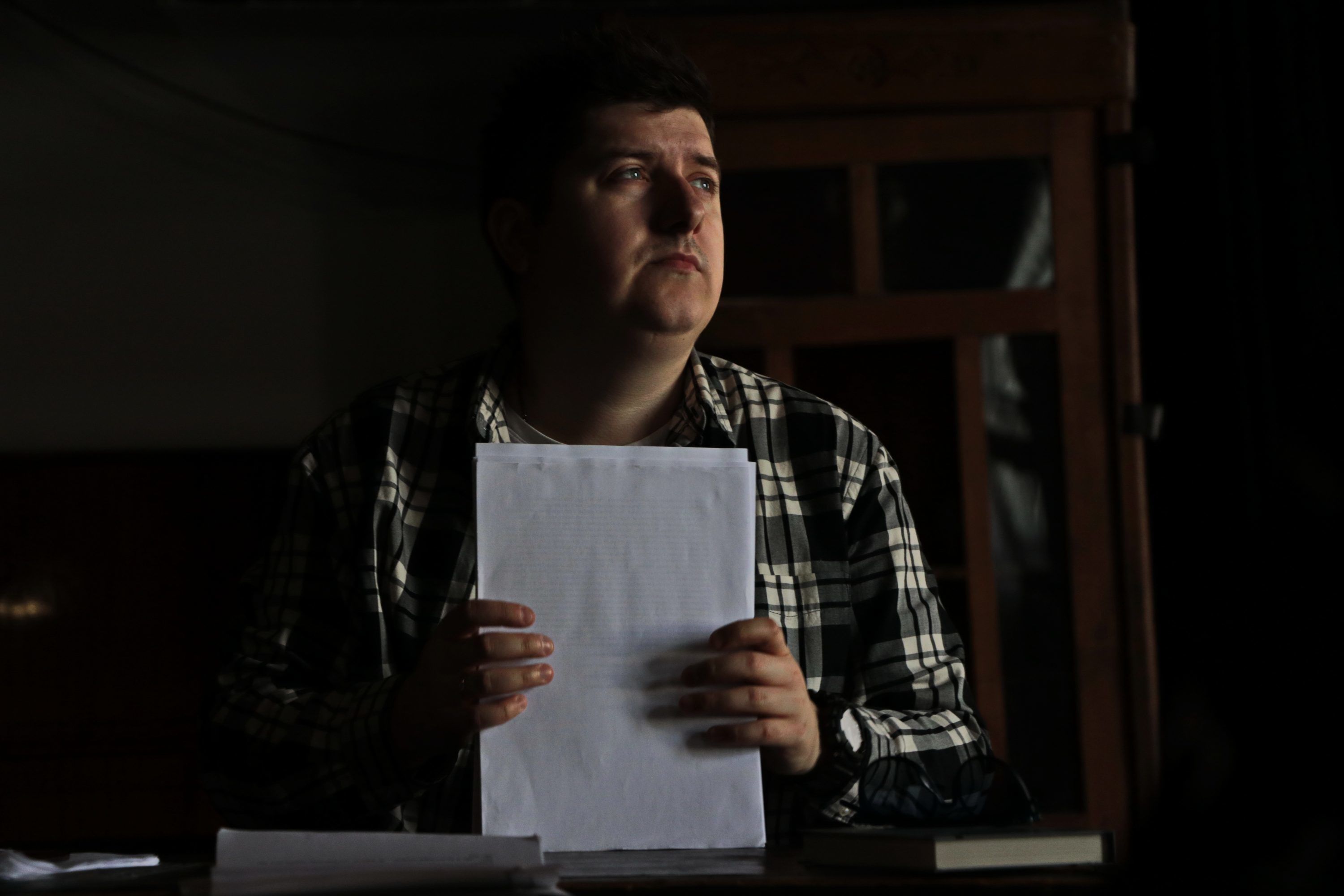
For example, I am a young director, and Vania Uryvskyi is even younger, and we are absolutely different. I am more brassy and scandal, Vania is more sensible and reserved. Everybody works in his or her own way, but we have one thing in common with other young directors as well: we are not ready to keep silent.
As for the previous generation, I think we can call it a “silent generation” – they were used to remaining speechless and not expressing their opinion. Directors were considered to express themselves only on stage. But time is changing now, and we can share our ideas.
I have departed from the question, but I’m just explaining the flow of my thoughts.
How exactly do you pick out material and why do you always get in trend? Or perhaps, you rather set it?
It seemed to me when I began working as a director that I should talk about what I knew or what I wanted to learn. I don’t understand directors who take Shakespeare’s “Coriolanus” or “King Lear” as their first or second work. I think to myself, “Man, you take “King Lear”! There are the king, three daughters, division of the country, what do you know about that? You’d better buy a car at first. I mean, gain some power over something to realize how it is like to get and then lose power. Combine what you’ve had in life with what you are going to do. Because you can imagine anything but the best works are made of what you know or at least want to learn.
However, I don’t know anything about old men who were at war [the “Glory to the heroes” play – ED.], our family has been spared the war, thanks God. Only my grandma was a war child, that’s all. I don’t have any granddads or great granddads who were at war. One generation was too old for the war, the other – too young. No war has affected our family. That’s why this theme was obscure for me, and I really wanted to study it.
I hated May 9 at school (The Victory Day is celebrated on May 9 in all former soviet countries), because we were gathered at hall, veterans came to us. I couldn’t realize what the war was like, why all that was so pathetic. I wondered why veterans just couldn’t tell us a real story. Because all stories they told us were absolutely pathetic. That’s why it was interesting for me to learn.
As for the UPA (The Ukrainian Insurgent Army (Ukrayins’ka Povstans’ka Armiya, UPA) was a Ukrainian nationalist paramilitary and later partisan army that engaged in a series of guerrilla conflicts during World War IIagainst Nazi Germany, the Soviet Union, Czechoslovakia, and both Underground and Communist Poland), I knew little about it, because I was growing up in the Odesa region, in the town of Chernomorsk. I have recently spoken to my History teacher, and she said, «Oh, I am so proud of you, I’ve watched your interview where you said I hadn’t told you about the UPA. I’d told you.” But she didn’t focus on that, didn’t tell so I could realize. That’s why I wasn’t interested in studying.
That’s why I work with the modern drama. I am more keen on that. Ideas of these people are closer to me. However, it doesn’t mean that I won’t work with classics, I just think that I should come to it later. It is a very serious material as far as it has been performed hundreds of times, and you enter into a dialogue with all those awesome guys, who have put that play on. For example, “Romeo and Juliet”, many directors have done this play and you enter into the dialogue with them. Meantime, you can make a new play, which hasn’t been put on by anybody, as you want, without these dialogues. It is kind of Odesa position (laughs).
So, the place of origin matters, doesn’t it?
Yes. Certainly, the place influences everything. Though I’m not an Odesite, moreover, I was born in Ufa (Russia) and only when I was 5, we moved to Chernomorsk, it was called Illichivsk then, it is an absolutely Russian-speaking town. If you spoke Ukrainian there, it meant you were from village.
However, among all TV channels, I was obsessed with “1+1” the most. I couldn’t explain that: totally Ukrainian-speaking channel with Mykola Veresen – quite sane and awesome. All these taboo in his show “Without taboo”. Verka Serduchka (Ukrainian comedian and pop and dance singer). I mean, totally Ukrainian-speaking channel. And I watched it.
Then I was impressed with the book “Shadows of Forgotten Ancestors” (the book by Mykhailo Kotsiubynsky, which features a detailed portrayal of Ukrainian Hutsul culture, showing not only the harsh Carpathian environment and brutal family rivalries, but also the various aspects of Hutsul traditions, music, costumes, and dialect). This text influenced me a lot at school; I couldn’t long come into myself.
Only later, I learnt that my mother was from Chernivtsi region (where Hutsuls live), my grandad was also from there, he had a mill; our family was wealthy. I learnt that our family had spoken Ukrainian.
My mother told me that when she was visiting her grandmother who stayed there, old wives called her “masters’ girl” and she couldn’t understand why. They told her as she was passing by, “Look at this kid glove.” Then I understood: perhaps, there were people who worked on them…
It means, everything could be differently, but it is as it is. It has always been inside of me, but moving to Kyiv revealed it. I began reading Franko (Ukrainian famous writer), getting interested in modern Ukrainian literature. Four years ago, I started to read only in Ukrainian, and now I read only in Ukrainian.
Anyway, modern Ukrainian stories, which are comprehensible for everybody, are not ticket to success! How do you pick out material and know that it is exactly what audience will like?
A text has to make me laugh about seven times and cry about two times. You just make a note, “Page 7, such words, I almost cried.” Then you check the amount of notes.
In fact, I became a director by chance. I read the “Natasha’s dream” and realized that I couldn’t forget this text. When you can’t forget this text, it is already inside of you…
I am doing a play now, and the text is appearing automatically. Meanwhile, ideas for interpretation of other texts appear. So, I am working now, while Dima Bohuslavskyi, who is the author of the play “Dad, Did You Love Me?” which I produced, is writing for me a stage version of “The Brothers Karamazov”. It is my favorite novel. And I want to stage it. There are tons of images in my head as for the “Karamazov”, and I have some bigger picture. It is as for a text.
I never put a text on a stage at once. At first, I read and then put it on a shelf. Then I need to find an actor for this role or offer this play to some theatre. And this text lives there on a shelf. There are texts, which survive, and there are texts, which don’t. I have texts on the shelf, which have been lying there for long, their time is going by and I’ve become indifferent to them.
There is a lot of work you need to do “before”. I need to make it clear; I need to understand who among these characters is who in my world. Where they are. Now I am going to say a very bad thing, but it exists. It is perfect when there are neither bad characters nor good ones. It is a common phrase. Chekhov said that, but in our life, we always divide anything into bad and good. In some reason, we love one person more than another. I have to make it clear for myself, who is bad, and who is good. Audience can fail to understand it, people may say that this character is third-dimensional, but I know who is bad, and who is good.
Can actors change your attitude to characters?
Of course, they can. Text always plays on stage and gives you a clue, it is flexible. Much depends on actors. They are royals on stage. And the coolest people in the universe during the performance. I don’t influence anything then, in fact. During a play, audience is watching, actors are playing. I can’t do anything. It is like shooting a film. I can change something the next time, but this moment is happening here and now.
When a director is not present at play, can actors show their own representation of roles?
When actors and a director find a common idea, begin being friends or at least respecting each other, it reflects on the whole process. When a director is watching a play, actors don’t want to let him or her down. Neither they want when a director isn’t watching, but it depends on self-discipline of actors.
In fact, only in a year or two after the premiere, you can say, whether an actor is a professional. Professionalism is how they play after that. I can’t believe that Slava Dovzhenko, who is playing in the “Girl with a bear” now, will play not that dedicatedly in two years. Iryna Tkachenko, who is playing in the “Natasha’s dream” or Irma Vitovska in the “Stalker”. I can’t believe it. Casting is also very important. I mean, during a casting I remember that it is 85% of a play’s success.
Is an actor your co-creator or material, of which you can sculpture your idea?
Every play requires different actors, but ultimately there should be a combination. Kurbas (a Ukrainian movie and theatre director, is considered by many to be the most important Ukrainian theatre director of the 20th century) was right when said that an ingenious actor is an acrobat with a philosophical mindset. It is a combination of what you’ve said, in fact.
You can take actors who can’t make up themselves, that’s why you can build them as you want, but you’ll feel lack of energy at some point.
The best variant is when you explain, show – and he or she is already doing it. I have a play “People’s love”, where Mark Drobot plays. He is now very busy with TV shows at “1+1” channel. He is one of the actors who doesn’t need any explanations, he understands everything at once and starts to do it. Combination is essential.
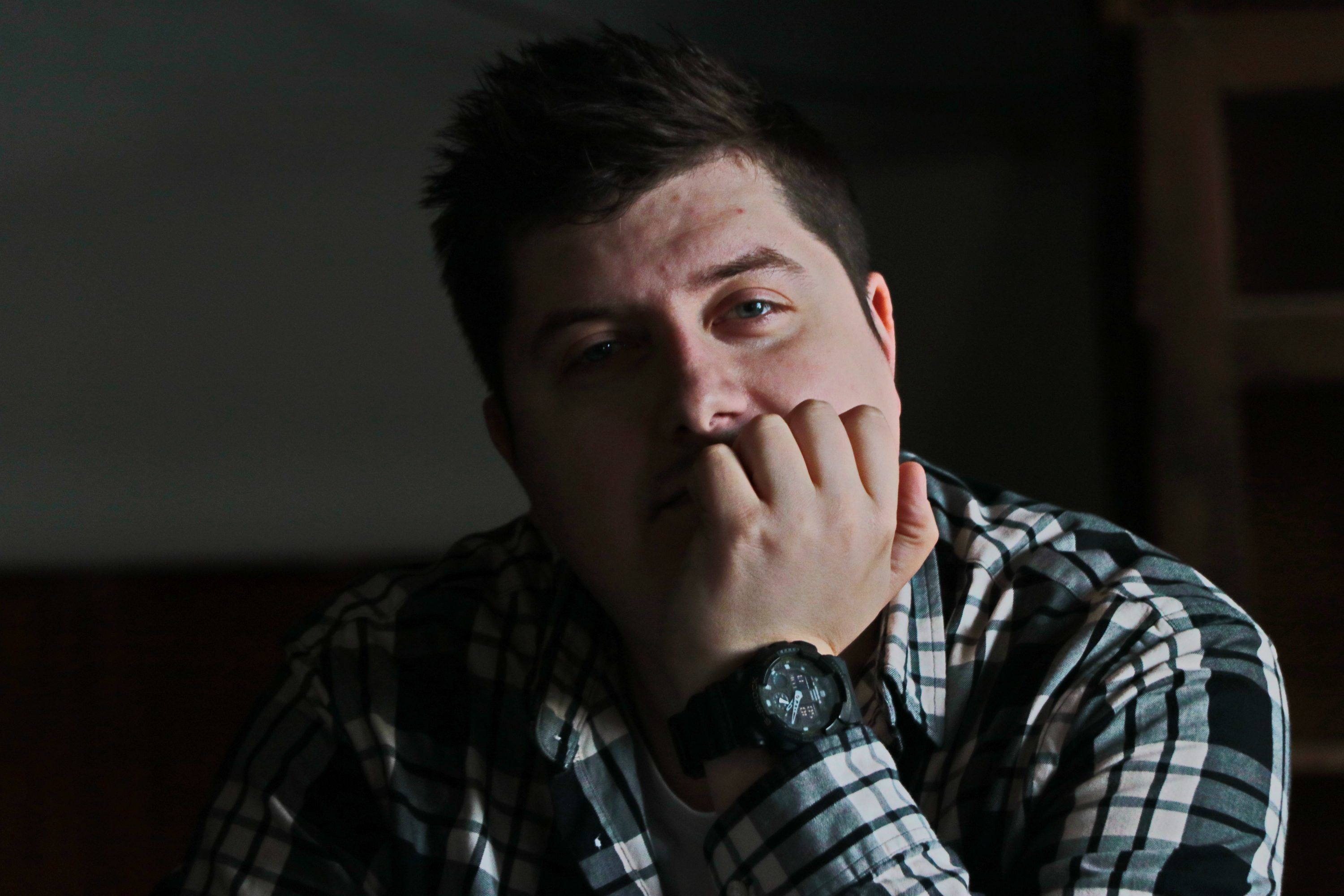
You are told to be an insolent director. Are you insolent in fact? Or is it just PR or haters’ nasty lies?
I on Facebook and I in real life are two different people, sometimes they meet. Sometimes I can be sincere, sometimes I do it on purpose because life has taught me this way: to beat first, to talk first, to come up first, to apologize first, to ask first.
Actually, already in university I could come up to a person and say what I wanted. I had such a story with Vitalik Linetskyi (famous Ukrainian actor). My friends and I were green as grass yet, we had a theatre “Open look”, Kseniia Romashenko – my future wife – ran it. And we had our first play at the Kurbas center – it was a prominent event for us. I saw Linetskyi and said to him, “Please come to our play”, I knew who he was, he was a legend for me.
He answered, “I can’t, I am busy.” I said, “If you weren’t busy, would you come?” He looked at me surprisingly and said that he would come if he weren’t busy.
I’ve had many situations when I just came up to invite somebody. It is all given the fact that sometimes I can’t make a call when I need, to ask something for someone, for myself, for my family. I just can’t overwhelm myself.
As for my insolence, I have such a feature. I can’t tolerate what I don’t like, I don’t have enough patience. I don’t realize why I don’t have a right to disrespect elders if they are douchebags. Why and what for should I respect them? I don’t have an excuse like: well, anyway, he is elder…
Actually, our theatre world is quite ambiguous. “He is so neat, so flawless…” And meanwhile, people are cheating, drinking, taking drugs. I think it is better to do it all on stage. I mean, I can’t combine play, that’s where insolence takes place.
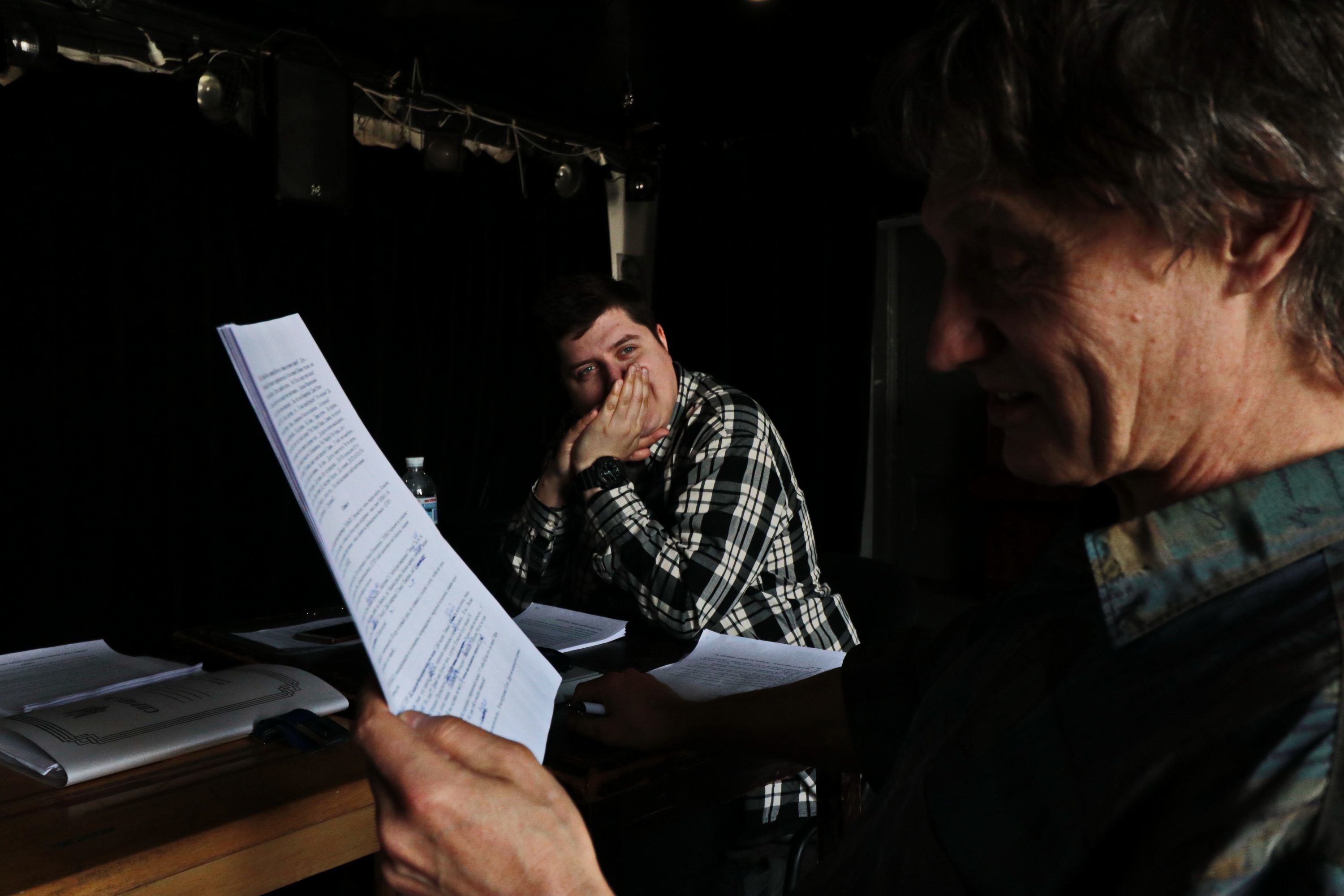
Personally I would call you “the king of the theatre networking”. You do not focus on one particular theatre, use all your connections, involve totally different people for collaboration, create co-production and it delivers the result.
I do it on purpose. Of course, I understand that the most convenient and pleasant for me is to work in the Golden Gate Theatre because I think that everything there is made in the way, which I consider right. An assistant director works there, as I need, everything is set up, as I need, as if it is made especially for me.
It is not as that in other places. For example, I came to Odesa. Stas Zhyrkov – the People’s Artist of Ukraine, famous director. Well, in a narrow circle of people (laughs). I come and a person at reception asks me:
– Where are you going?
– I’ve come for the first rehearsal, I’m a director.
– Well, nobody has come yet, no actors yet…
– Where can I wait?
– I don’t know, take a seat over there.
I think: why, it is me, indeed! And then I realize: it is right. As Bulat Okudzhava said, “When you consider yourself great, go to kitchen and do dishes.” It is the moment for me when you have to start from the very beginning, you have to prove to this receptionist, guard, assistant director, PR-manager, I have to prove to them all that I am awesome. They can come into conflict with me, but I’ll show them that I can handle conflicts awesomely as well. I have to enter this dialogue. It is my internal fight. Speaking about profession, it is an opportunity not to pronounce the same words, not to use Martian language – it is an opportunity to start from the very beginning every time, because you work with new actors who don’t understand you, don’t know you. You are nobody for them, they must have heard about you, but in fact, you are nobody for them.
A cool moment is not to be full of yourself. I have such a period now: everybody who has supported me is beside me now, and 50% think I’ve got too big for my breeches, not realizing my aggression. I can’t explain to them that it is not as that, because they are not connected with theatre and don’t know how people work here, how we communicate here, that we don’t have even a half of things which are common to other theatres. When a director is the god, the king. As for me, I can give my office for a meeting to a person I hardly know. In fact, my office is like a public thoroughfare.
The point is that sometimes a theatre is kind of princedom. There is a director, kind of ruler, and everything is spinning around his or her desires. There are few theatres, which work properly, make up something new, create something worthy. I can count on one hand the number of theatres, which work with many directors. Most theatres work only with one-three directors.
Theatre is like a sand hill. You make it, but it crumbles. Or when you write something on sand and waves wash everything away in a moment. You build up a mechanism, one actor leaves – and this is it. The whole castle you’ve built, is brought down as a house of cards. Theatre is a fragile mechanism. To make it work you have to make up something constantly. That is what theatre is like.
You have to be constantly on the move and invent something. Many directors do nothing – they’re afraid. What is it for? Who is it for?
If the Golden Gate Theatre had a big stage, at least for 250 seats, and it will definitely have, we could do awesome projects not only with Ukraine. Many European countries are open for us: Czech Republic, Poland, Belarus, Romania, Hungary. We could do very serious projects, but to everything there is a season, so now we should gain a new experience and a bigger stage. And make international co-production.
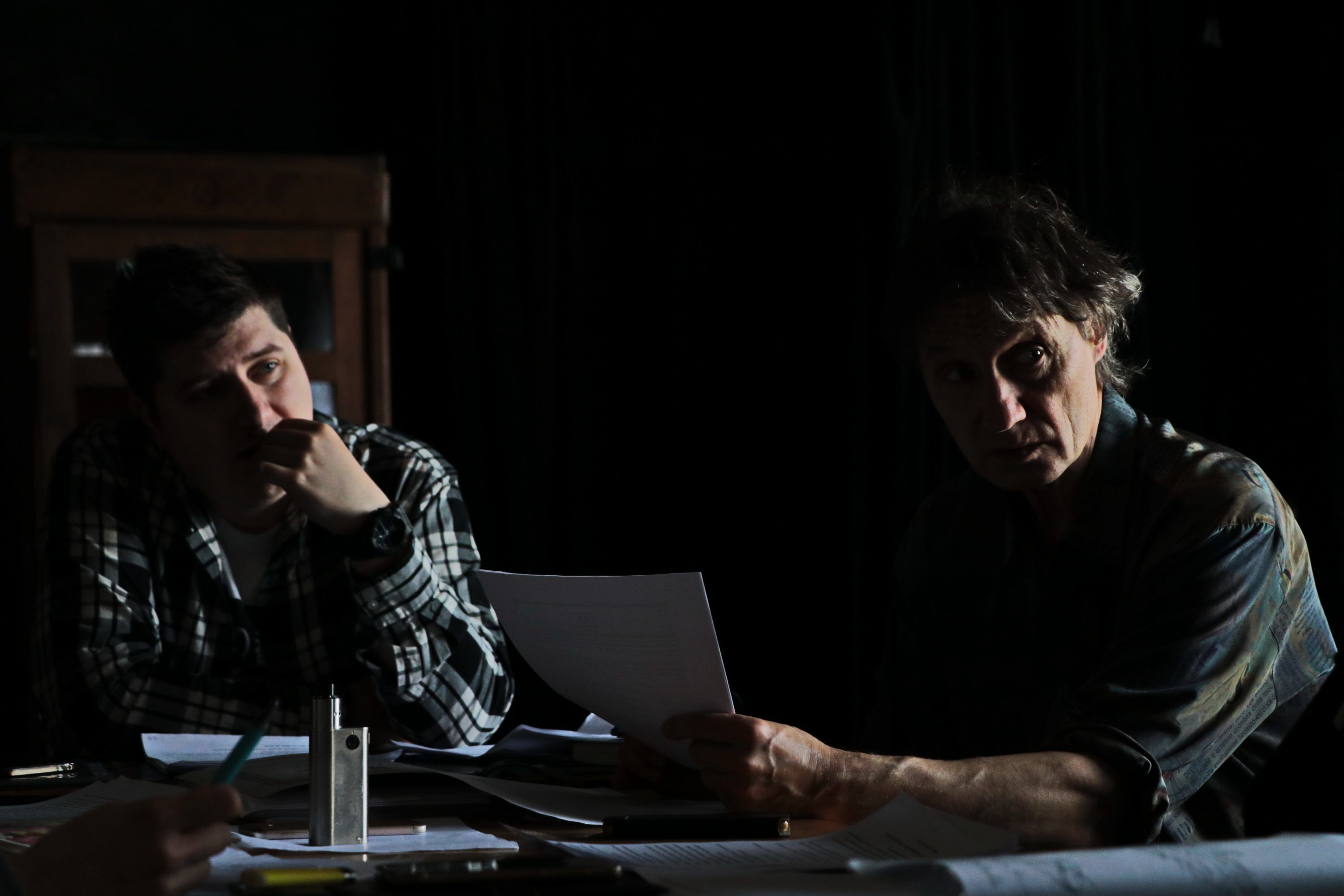
The theatre life in Ukraine has recently boosted, indeed. Our neighbors don’t bring low-quality performances to us anymore, so Ukrainians have started to visit plays of local directors.
Kyiv is experiencing the theatre boom now. The situation in Odesa is a bit different. We’ve never been on equal footing with them. It was an unequal struggle. Now the situation has changed and we have equal conditions, perhaps, we are even winning. I like it.
The point is that there’s a lot of work in Odesa. Something needs to be changed. The situation with the Russian theatre is very difficult there. When I am told that Odesa is a Russian city, I always wonder why then my friends from there have such surnames as Burgozli, Stoichev or Tedesku… I mean, it is a multinational city, which can be an awesome polyphonic, international center, where people from Greece, Romania, Moldova, Bulgaria could come. They could put different plays on, create something, then it would be possible to make something with the Russian theatre, just change the concept. But unfortunately, nobody needs it…
Why does nobody need it? It is, on top of all this, an additional income.
Theatres can be good and bad. Good ones make projects, products. A bad one is, for example, situated in Anytown, it is the only one theatre there, has 700-800 seats, a governor has repaired it, it is nice, it gives only about 15 plays a month. Someone visits it voluntarily, children are brought there with buses. Let’s move on, he has built a cottage house in the countryside for his family, bought a car, paid tuition fee for his daughter’s studying. But nobody thinks about actors, he pays bonuses to his confidants, they feel very well, they can go in the countryside if they need. Don’t mayors of some our cities live like that?
Nobody needs it. It won’t be changed soon. Artistic directors must be changed in the first place. We have no system. Everything depends on a person. If there’s a proper person, it will work out, if not – then it won’t. Now it is only like that.
A pessimistic forecast.
No, it is the truth, it is like that now. When there’s no system, everything depends on a personality.
As for me, the situation in small towns has been improving lately due to theatre festivals, which are becoming traditional there. They will certainly be unable to save the state of things there. However, you are the head of a theatre program at the III International festival “Carpathian Space”, which will be held on May 4-6 in Ivano-Frankivsk. What is your expectation for the festival?
I expect that we will see interesting plays in their form, performing and directors’ ideas. I expect a dialogue with professionals who will come. For me it is important to see something new and discuss, realize in this context where we are now. Because only European theatres are coming, there will be only European plays. My dream is to make my first festival “Carpathian Space” a certain springboard, to make the first the most serious Ukrainian theatre festival from the perspective of the content we make. No Ukrainian theatre since we gained independence hasn’t taken part in any serious European festival. However, Belarusians, Russians, of course, Romanian, Georgian have.
Why is it so?
Because of the cronyism we have talked about. They don’t need that! They went to Zhytomir for a festival, closed it, drank, announced winners from the stage, gave titles. They don’t need anything else! Who thinks about theatre seriously, about development as a dialogue, our place in this world – nobody thinks about that. However, there are people as Bohdan Strutynskyi [artistic director of the Taras Shevchenko National Opera and Ballet Theatre of Ukraine – ED.], who makes everything for Ukraine as a theatrical country, as a musical country to be introduced in the world, so that everybody could hear us. There are only few people who are open for a dialogue.
There was a period when you ceased working at theatre, but you came back. Why?
I had a moment when I didn’t have my own flat in Kyiv, it was inconvenient, and we decided to buy a flat. I had to earn money fast because we took out very big loan. And I became an event-manager. The moment came when I began earning fast – I could by a car in a month.
There was a moment when I could give up theatre, I became indifferent to it. I worked three days a month: one working day – and we could fly to Paris, the second one – to Berlin. But at this moment the Golden Gate Theatre appeared. I realized that it meant that theatre needed me yet. The God gave me a chance because he had plans on me and I had to be there. I am a believer. I know that nothing is given to you without a reason. The Theatre was given to me in a difficult way because there was a big contest for this position. By the way, as for my insolence. I had a meeting where I said that this position would be mine. If we are both appointed for this position, I will be on his back. That person was a serious man. I just faked him out, in fact, I had no friends. I just faked out the person who was 15 years older. But I had no choice. The next six months we were joining together with the Plastic Drama Theatre. We were throwing chairs, insulting each other. It was hard, but I realized that I needed that.
I always feel that there is someone who tells me the right things. When I think that there will be a failure it just passes by with no consequences.
You are young, and salary at theatre is small. How did you suppose to earn after such a wealthy period?
At that time, I understood that I had a car already, a big rehabbed flat. I didn’t need to think about how to buy something more, I realized that I could afford not to earn some time. That’s how we survived that tough period. Now it is OK, I don’t need much for living.
I need to travel once a year somewhere, given the fact that we travel with the theatre a lot. I also need to buy good cheese and wine. Within bounds of reason.
Creating and earning at once is almost impossible. Although a director can produce a play, ask for more money and enter a European market. In autumn, I am going to Germany to put a play on. Naturally, I will earn there twice as much as here.
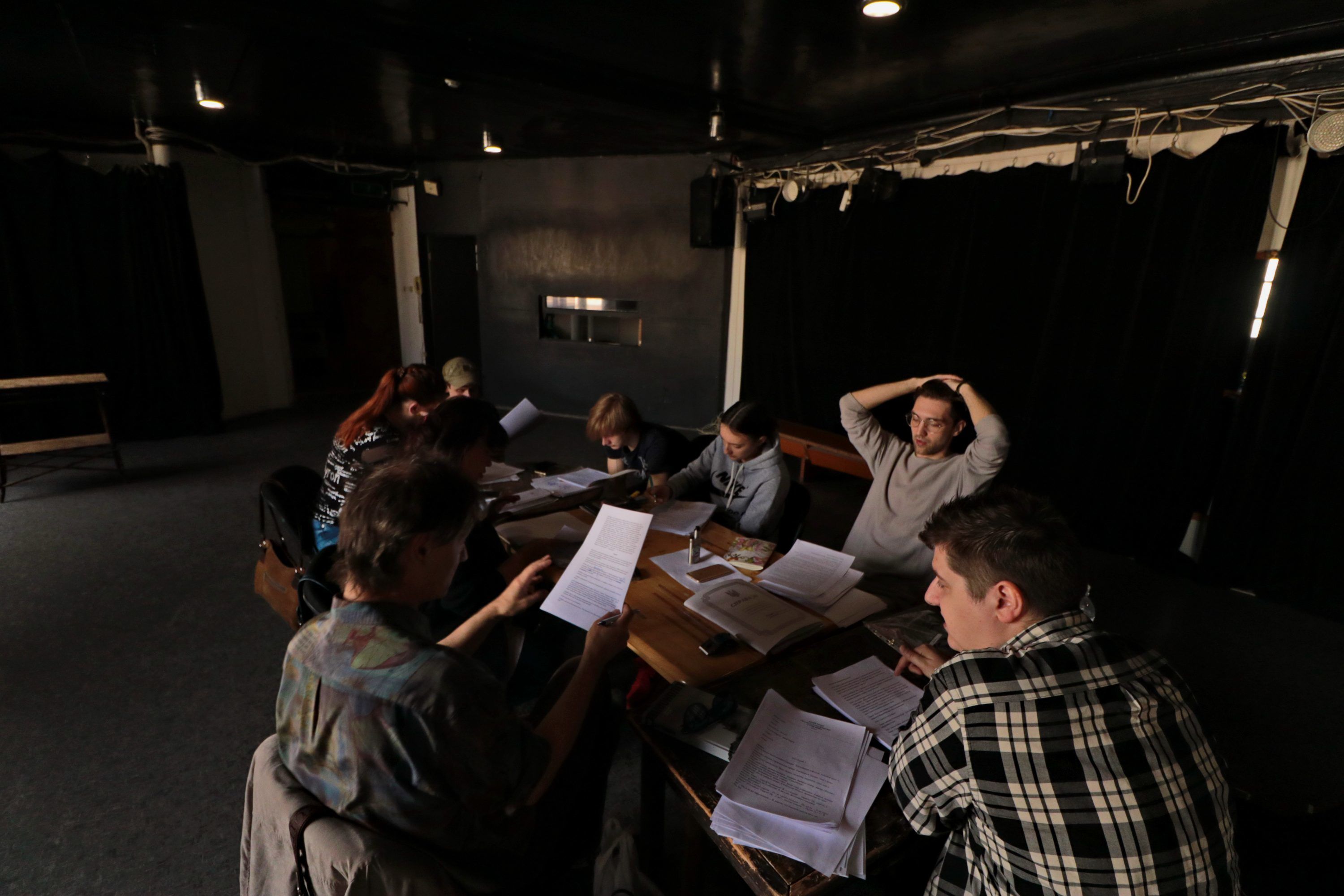
Can you tell about the play you put on in Odesa?
It is not a secret, we are working at the Odesa Academic Ukrainian Musical and Drama Theatre now at the play which is called “S uchilyshcha” (“From a college”). However, there is another tentative title “She loved him”. It is more romantic.
This story happened two years ago not far from Minsk. Belarusian drama is great, I work with it. I will produce a play there in autumn. They have more stronger playwriters than we do, unfortunately, or perhaps, fortunately. There is a playwriter Andrii Ivanov, a play “It is all her” by him is now at the Kyiv Academic Young Theatre, starring Rymma Ziubina.
They have a lab in summer when playwriters meet with directors and during 4 days create material. We began working with Andrii and made up a story when a girl falls in love with her teacher. But I was teaching at that moment and can’t say that was very interested in that topic. I said that I was interested and everybody looked at me wrong. In fact, I was interested in Andrii, I wanted to work with him as with a playwriter, only with him. We had made up this story, and in 8 months, he sent me a playscript and I understood that he didn’t change anything which we’d made up.
This story is about a girl who falls in love with her teacher. He argues with his friend, whether he could sleep with her. Then he falls in love with her and realize what awful things are happening, everything is turning into hell, which we create by ourselves because had made a mistake at the beginning.
I think, it is a challenging story for Odesa, but I agreed to make it only that way. When Yulia Pyvovarova [the head and artistic director of the Odesa Academic Ukrainian Musical and Drama Theatre – ED.]wrote me after she had been appointed the head of the theatre, I answered that I dreamt to work in Odesa but had no time, although it is almost my native city. It is honor for me to do something here, but only something challenging. I mean no compromises. She read the playscript and said she was interested. Theatre must change. I realized then that the Ukrainian Theatre got a new director. I also realized that there were actors who could do it. That’s how we started.
The premiere will be in June. I hope it will be engaging and astonishing at once.
Interview by Svitlana Bondar
Photo by Valerii Puzik