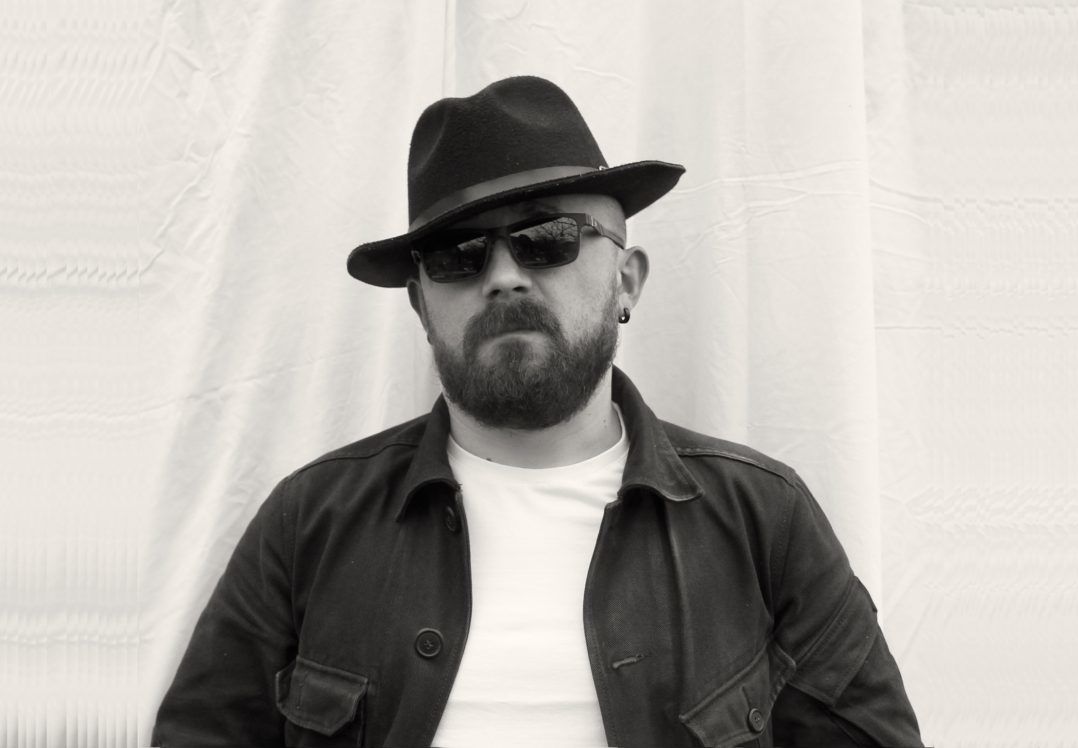


This artist stopped being a person who just creates images long time ago. He has mastered almost all kinds of media. Now he creates multimedia art-provocations. His goal is to take audience out of the automatic existence and make people think about what is happening.
You paint, embroider, sing, play, write books and blogs, host a radio show. How can you characterize yourself as a media person? How is such an activity called? Are there any historical analogues in art?
A multiskilled specialist– that’s how I call it. I think there is nothing unique about it, and there are certainly some analogues in the history. I am a common local mid-level artist, although with some skills, of course. I can hardly evaluate my significance in media. I have never thought about it, I mean, I just take it as a tool.
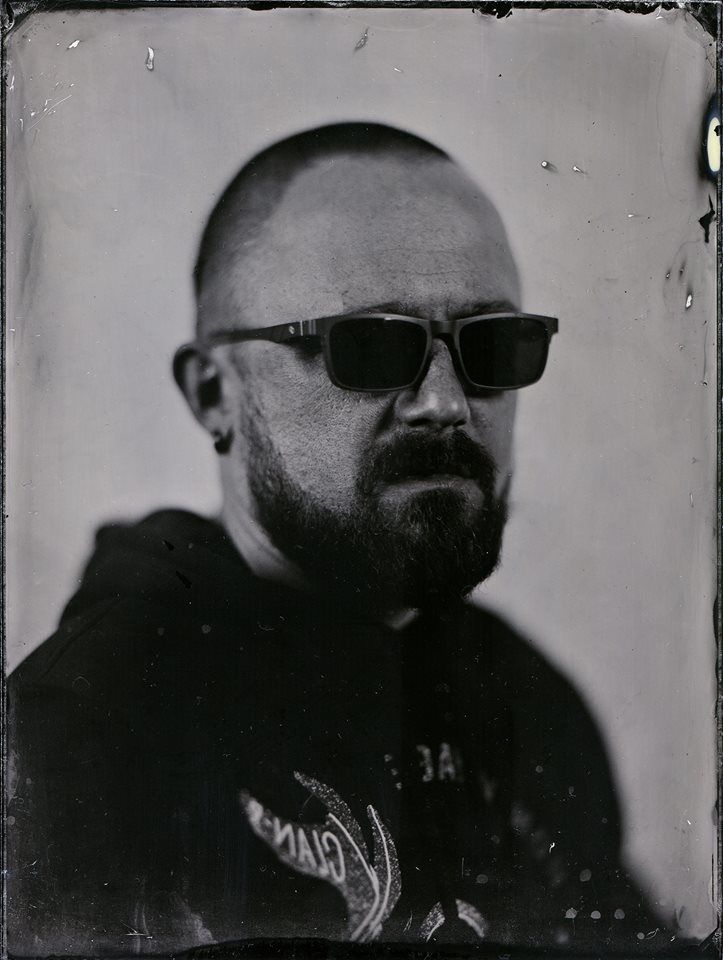
Photo: Oleksandr Malyi
You bring out your books at the Luta Sprava Publishing. Why do you publish them exactly there? Do you have a general artistic and ideological program? Similar aesthetic concept? What is it? By the way, does the name of the publishing come from your mottos “Lutuemo!” (“Let’s roar!”) and “Lute gaslo” (“Fierce motto”) which you made up during the Revolution of Dignity?
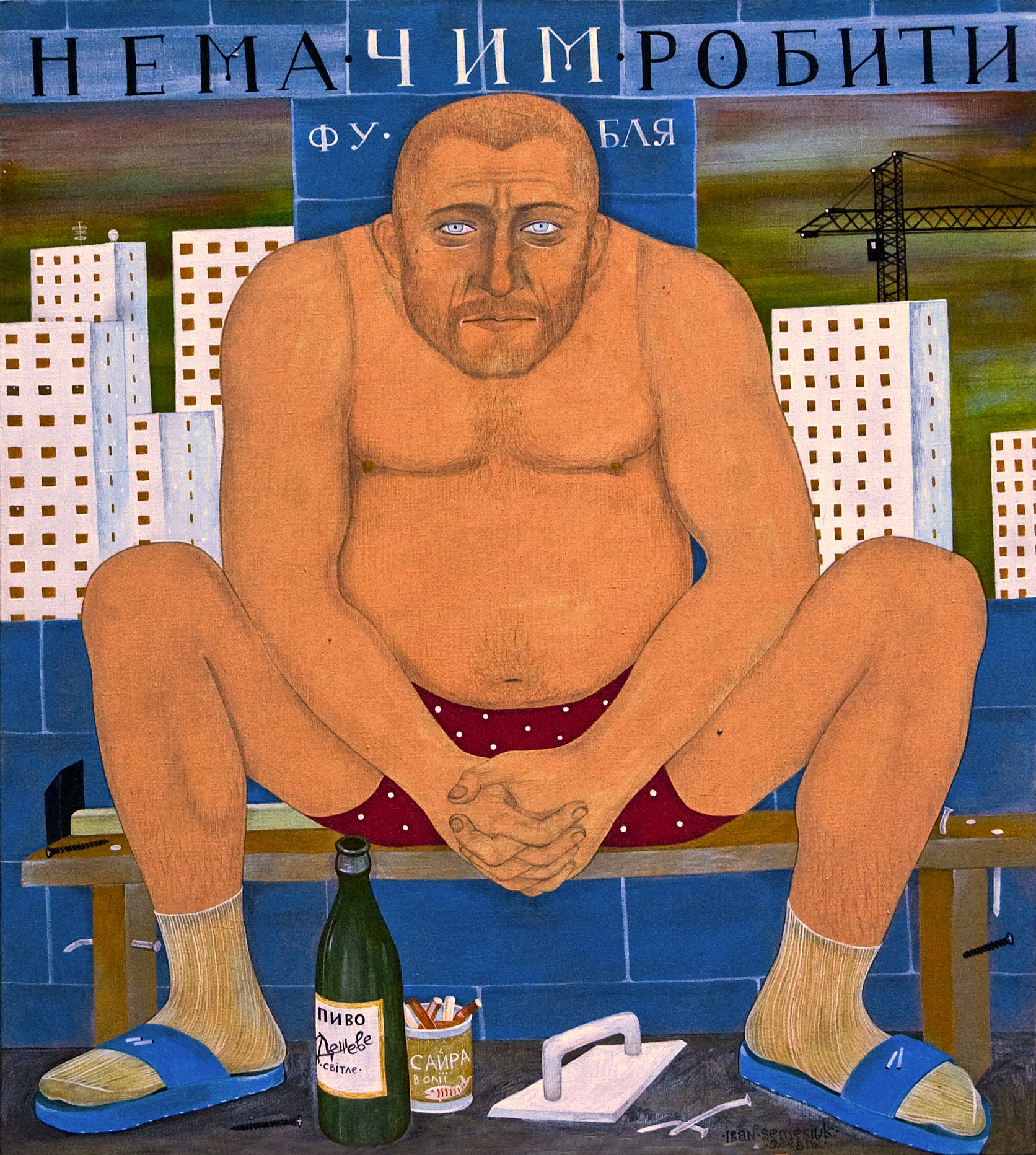
I bring out books not only at this publishing. A young publishing “Zaliznyi Tato” (“An iron dad”) has recently published my first conditionally poetry book “Nema chym robyty” (“Nothing to work with”). However, I’ve known Mr. Andrrii Honcharuk, a founder of the “Luta Sprava”, a long time. His aesthetic taste is very close to me, particularly his views on a page layout, typography design and other technical aspects. I can define the artistic and ideological program of this publishing as a vividness of soul, modernity, Ukrainian culture without excess archaisms, cultural “rowdyism”. I am very into such an approach, taking into account that this publishing was born virtually at the Maidan during the Revolution of Dignity. It got its name really due to my “fierce” mottos. In this regard, I am really connected with the founding of the publishing, although rather as a mediator. Frankly speaking, I am slightly proud of this fact.
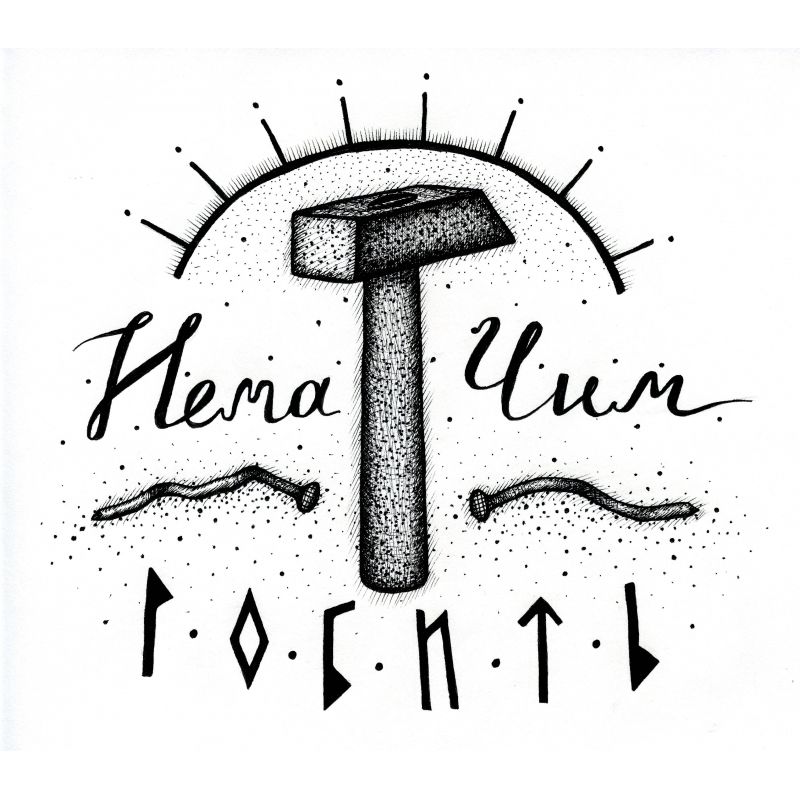
Your pictures on T-shirts sometimes look quite strange. For example, what does the image of a hammer and two bent nails against the sun going down and the phrase “Nema chym robyt” (“Nothing to work with”) means? Provided that the word “robyt” (to work) is stylized to resemble runes and written in the Cyrillic alphabet. Actually, we can notice here a deconstructed coat of arms of one of the so called people’s democracies, for example, as the DPRK or Pol Pot’s Kampuchea (as well as coats of arms of the USSR republics), which in fact, were left-wing radical totalitarian dictatorships. What does this image appeal to?
Oh! This image is an illustration to a song of the “Pyriatyn” band where I’m not only a front man but an author of all the texts as well. I didn’t think of any totalitarian coats of arms when I was painting it. As an artist, I am just very into a poster art. I use a lot of compact short symbols, that’s why some of my images are based on the emblem principle. This image reflects a local meme, namely, a phrase, which I once heard at the building site from a plasterer and turned it into the song. “We have nothing to work with again!” The plasterer just meant that he had no building materials. But this phrase has far more sense that it may seem at first. Perhaps, it has even too much sense.
Why?
It has too much sense because it can get any interpretation. For me, it reflects a current psychological type of a Ukrainian worker, his manner of urgent problems solving as well his manner of communication and so on.
One of the most famous and popular songs of your band “Pyriatyn” is called “The Artillery Anthem”. There are such words, “There are no rooskie, no rooskie, nothing at all, only damp ground, the artillery works, shells the holy f**ck out of them, one katsap is killed, the other’s soiled the pants…” In this regard, I remembered the propaganda essay by Ilya Ehrenburg called “Kill!”, which was printed in “Krasnaia Zvezda” (“The Red Star”) magazine in 1942 to stir up hatred against the enemy among Red Army soldiers. Your song is similar to this essay in its ideological appeal, namely – in an attempt to dehumanize the enemy. Don’t you consider it dangerous? On the one hand, imaginary, it reduces the danger of Russian aggression, but on the other hand, all participants of the aggression against Ukraine are announced Russians, although, in fact, they’re just citizens of Russia, and there are a lot of Chechens, Chukchi people and other nationalities among them. Moreover, quite a big amount of Russians (although, perhaps, not the majority) do not support the aggression against Ukraine.
Actually, the song is called just “Arta” (short for “artillery”). It doesn’t contain that main thing which can really stir up hatred, I mean– heroic pathos. You can’t stir up a fire of hatred without a proper pathos. Anyway, at first, we should deal with some definitions, because I consider the word “rooskie” (“moscal” in Ukrainian) and the word “Russian” to be separate words. They never come across each other. In fact, they are antonyms. That’s why it’s not about dehumanization of the Russians (ethnic Russians or political Russians in general) at all. It’s about making a modern “moscal” a part of folklore. In other words, “moscal” is a dedicated, ideological muscovite. He is a dangerous creature that considers Ukraine to be an object for hatred and disrespect in the first place. An ethnic origin of a moscal doesn’t matter, however, most frequently it is “rooskie”, indeed, how they often call themselves. Actually, it is a peculiar cultural category, but truly with quite an ethnic taste.
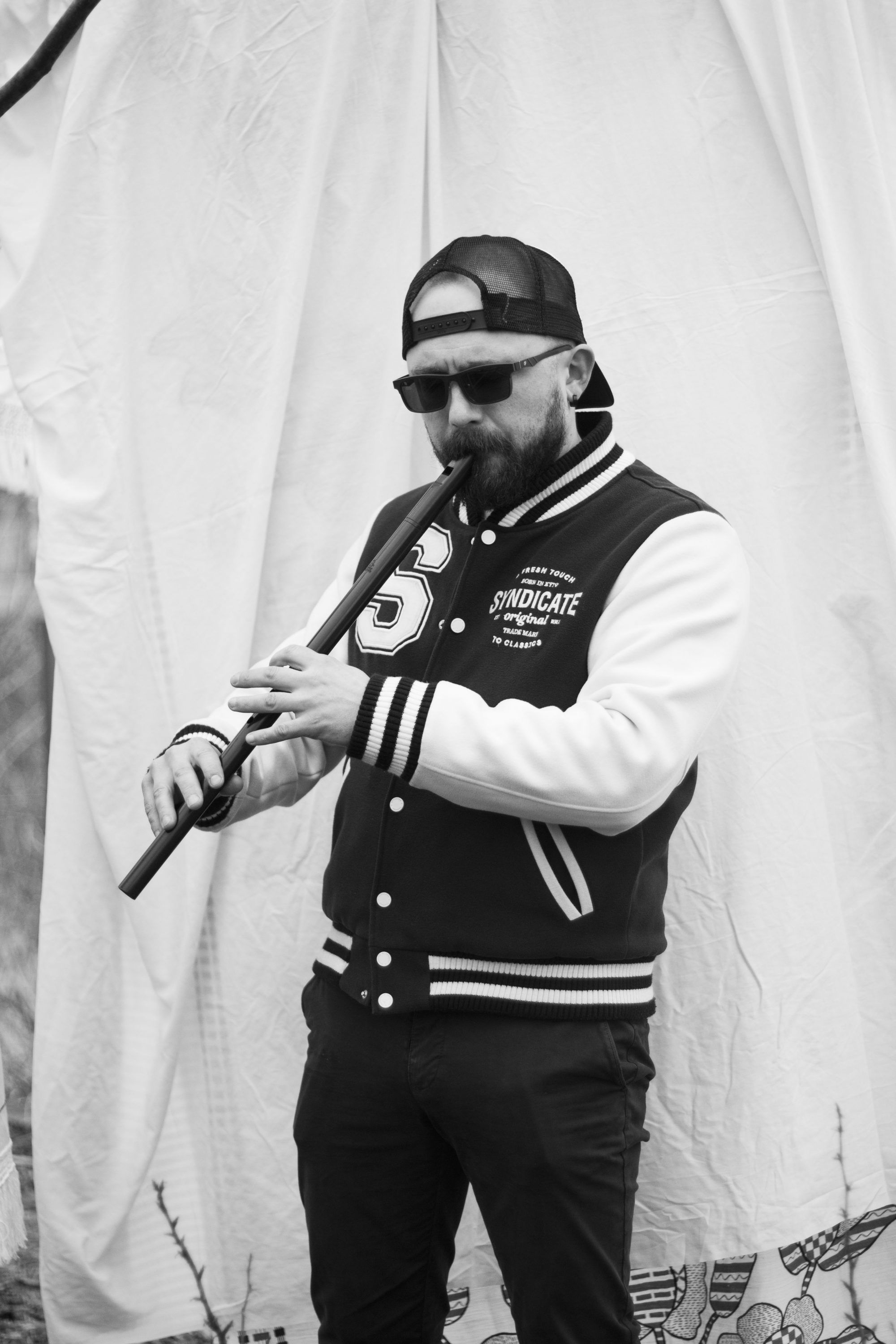
Photo: Mariia Volkova
Many of your works flirt with the aesthetics of kitsch. Some are a proper kitsch, some just imitate it. The Die Antwoord singer Yolandi Visser, who is the idol of a South-African kitsch, does something like that. It is called ZEF in the RSA. It is a slang word in Afrikaans language and is translated as “common” with a negative connotation – “boring”, “dirty”, “poor”. This style is associated not with the poorest social groups but rather with “white” pretty-bourgeoisie subculture of the South Africa.
As Yolandi Visser says, “It means you’re poor but fancy and sexy. You don’t have money, but you’ve got style.” In fact, Yolandi tries to achieve the ultimate bad taste and trash by using local relias. Are these ZEF ideas close to you? You’ve created a “Zhlob-art” project (Zhlob-art is a movement in Ukrainian art, which ironically depicts modern Ukrainian commoners. Zhlob means cheapskate in Ukrainian\Russian). Is this movement our ZEF? What is your attitude to kitsch? What role does kitsch play in modern culture and our life? Should we avoid it as something of low quality and poor?
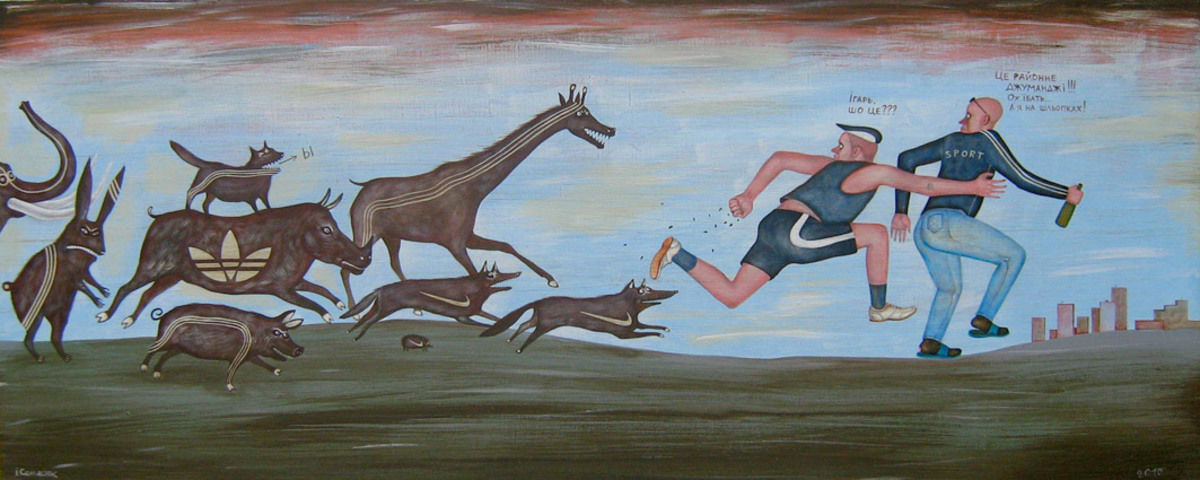
Actually, I just don’t have good painting skills as well as a good taste for art. That’s why it is quite difficult for me to evaluate or define my works. Is it kitsch? Primitivism? A folklore picture? Or maybe anti-folklore picture? I call it agricultural-mystical realism, but rather for my personal usage. For me, painting is rather an anthropological, sometimes analytical tool. It helps me to understand our country better. I work with memes, often illustrate them, sometimes even try to create and popularize them by myself. That’s why I take kitsch as a tool. It can be flexible, sensible art tool but also can be just of an accidental art usage. I don’t see anything wrong with kitsch. The point is it should not become an aesthetic dictator in space and time. “Zhlob art” was neither a genre nor a movement. It was rather a project, which almost became a movement. In the first place, the project was aimed at solving cultural challenges not necessarily with art methods, though mostly with them. I think that the biggest achievement of the “Zhlob art” project is the fact that it was closed on time. Just perfectly. On November 21, 2013. It had been arranged beforehand. It was the first day of the Maidan and my birthday, by the way.
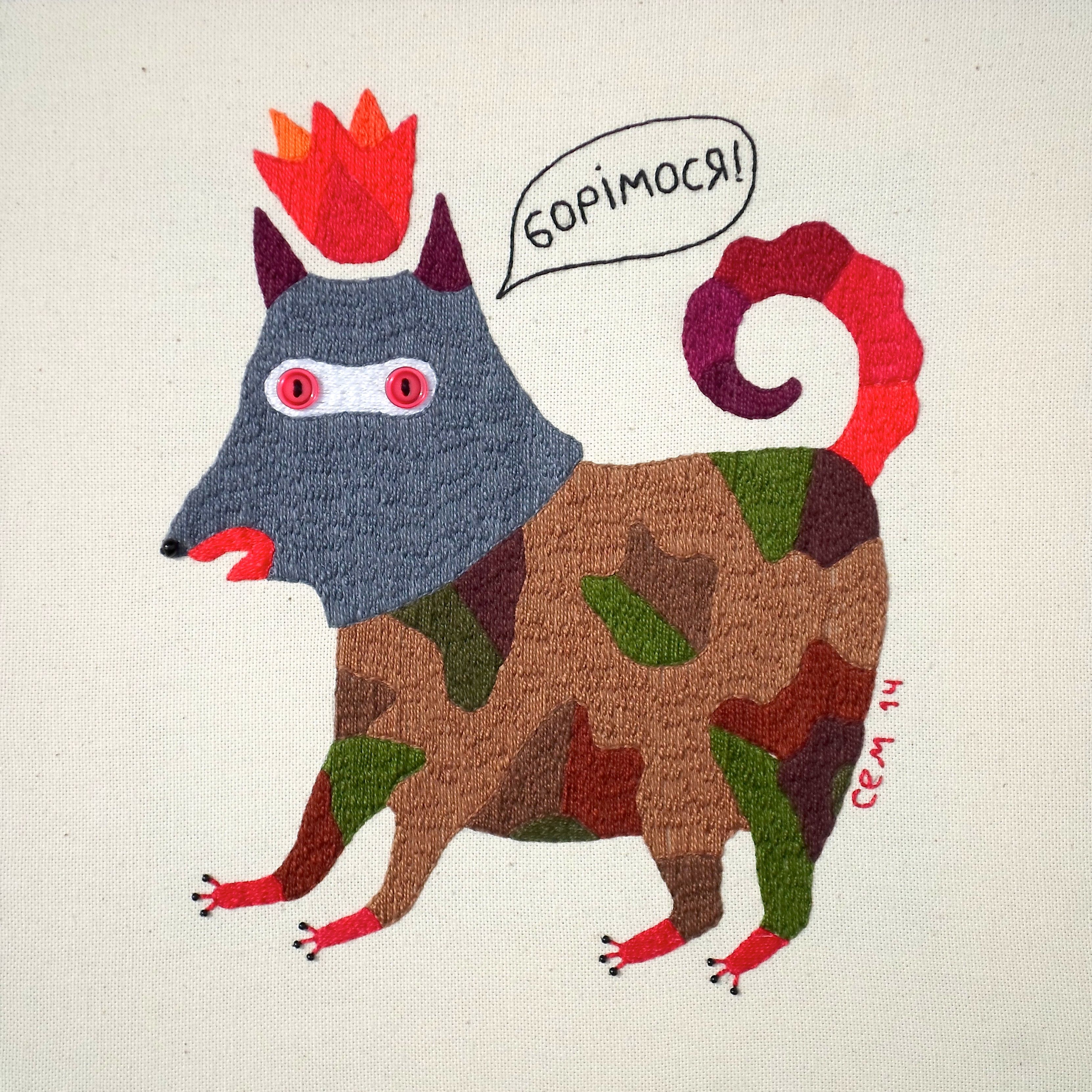
Your novels have such a character as Mavpoon (“mavpa” means monkey in Ukrainian) or Mavpoukrainets (“Mavpoukrainian”). It is a strange and bewildering creature. It resembles a typical trickster – a novel character that resents its environment, behaves boldly, destroys everything around it and itself as well. When you read about Mavpoon, a lot of literature characters come to your mind: from the Rabelais characters to Poligraf Sharikov (from “Heart of a Dog” by Bulgakov). Where does the image of Mavpoon come from and what is its purpose?
There’s nothing strange and bewildering about Mavpoon as far as if you’re slightly keen on the Indian mythological philosophy and on the nondualism philosophy. Although the image of Mavpoon came to me accidently, during a morning hangover, in fact, it seems to have been born after I’d read the book “Yoga-Vasistha” (one of the most popular and influential ancient Hindu texts) and the biography of Bankei Yotaku (a Japan widely acclaimed Zen masters of the XVII century). Actually, my books about Mavpoon are aimed to deliver kind of a worldview sermon. The rest is just upper cultural layers of different depth levels, an important texture but not the crux of the matter. Moreover, the monkey seems to get stuck between two worlds – animal and human ones. This gives a good plot twist and variability. A perfect character for idiotic adventures.
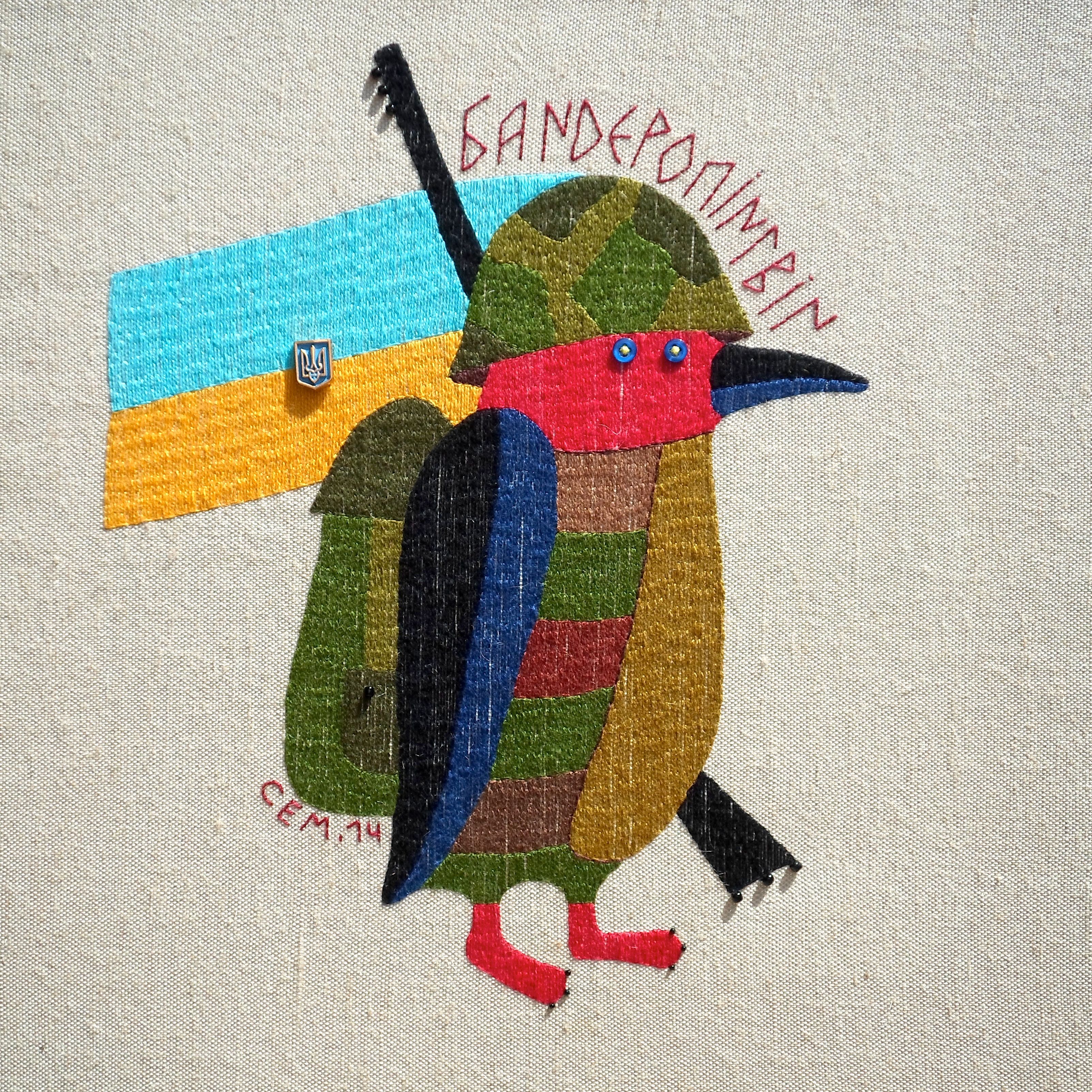
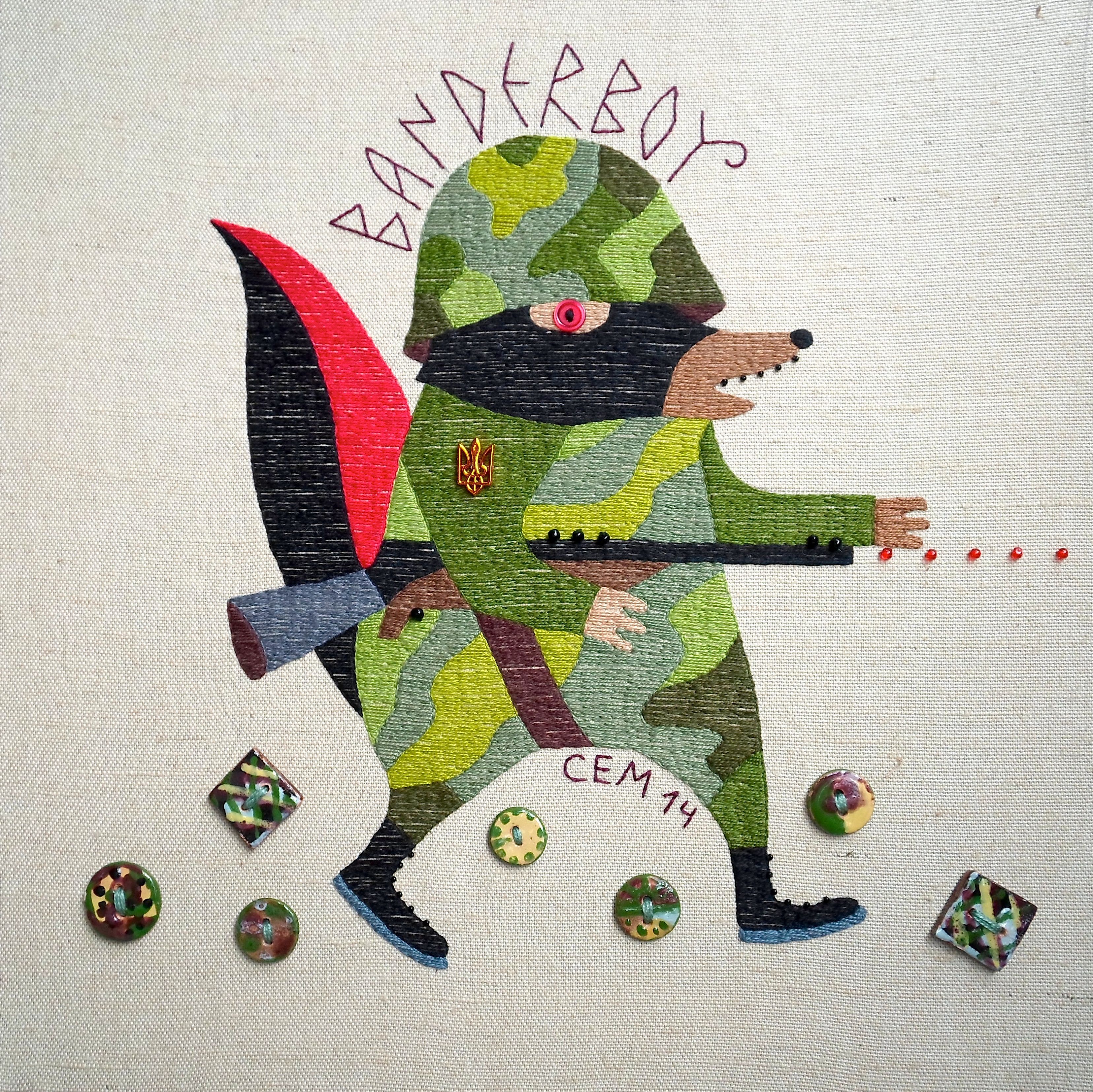
You have a collection of embroideries “Banderyky”. Does it mean that you support ideas of integral nationalism by Stepan Bandera, the Organization of Ukrainian Nationalists (OUN-B), and national renaissance? Do you believe that “Bandera will come and sort out the mess” (a popular motto among Ukrainians, especially among nationalists. It is often used ironically)? If no, does it mean that you just exploit the theme of Bandera movement as Adidas exploited hammer and sickle, swastika?
“Banderyky” is a reaction to an informational pollution of 2013-2015 years, when the word “banderivets” became popular, comprehensible and started to get new interpretations and connotations. It is, again, a work with local modern memes and new mythology, which I consider ultimately important for our surviving. Obviously, words “banderivets”, “bandera” as a definition of a modern patriotic Ukrainian have a wider, more sophisticated meaning since it was firstly coined. Actually, when a new myth is being born on the basis of the old one, we can’t evaluate it straightforwardly. In political regard, I am a nationalist, although a bourgeois one, but still.
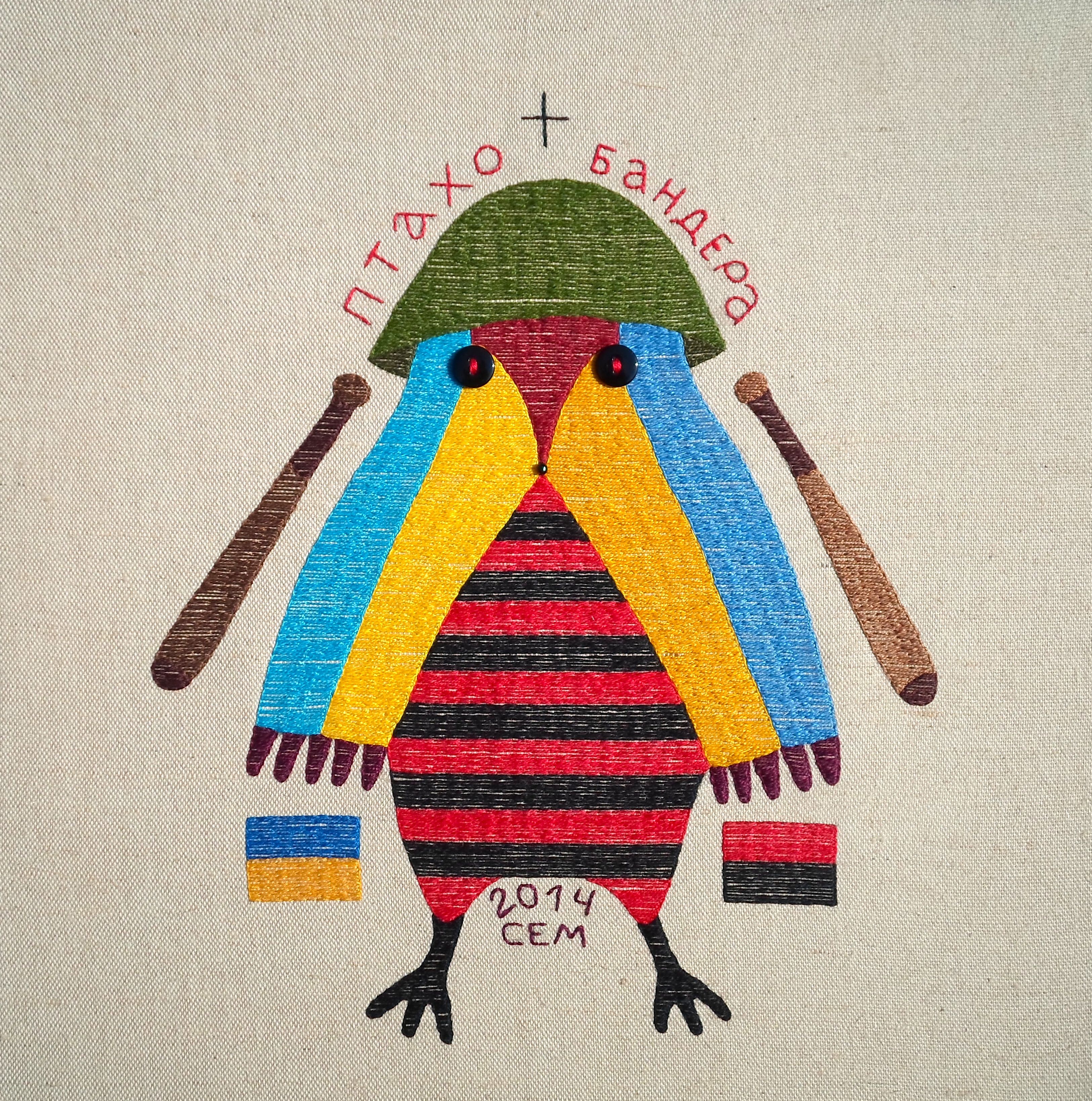
Does it mean that you like the idea that Stepan Bandera’s beliefs are relevant today and the OUN- B must run Ukraine?
I can’t get if you’re serious. It looks like trolling. How can a person of the 1940-s (Stepan Bandera) run effectively the post Kuchma huge country? I consider Ukraine to be quite an effective and modern project and don’t think that an archaic figure from the middle of the XX century can run it.
Do you mean there is no direct political connection between “Banderyky” and Bandera’s ideas and no propaganda of OUN-B’s narrative?
It is irrational. I once painted Hitler-Cat. I want Hitler-Cat to run Ukraine. Actually, what you’re talking about has a brightly subcultural connotation today. Bandera, Melnyk etc. Today we can only play with it as with a subcultural toy.
What you are doing now I consider to be decorative art: embroideries on pillows, prints on T-shirts. Do you agree? If so, do you think that now it is high time for decorative art? It is decorative art, which forms the art-market: from T-shirt prints to iconic staff which is made by modern top artists to sell them for hundred million dollars. Other kinds of art are experiencing decadence now or have gone to kind of ghettos. Do you agree?
No, I don’t. I use decorative methods, but my art is not a decorative one, indeed, because the most important thing for me is to deliver the point. I mean, decor, namely images in it, are of secondary importance. I am rather an illustrator of certain points and meanings, than a decorator. I am not into sugarcoating, creating the interior, designer highlights, patterns etc. As for decadence of some arts, no, I don’t think there is any decadence. Today any art has its audience just because there are too many people in the world. As for decorative art, it will be always basic one, which gives birth to all other forms, because it’s always relevant.
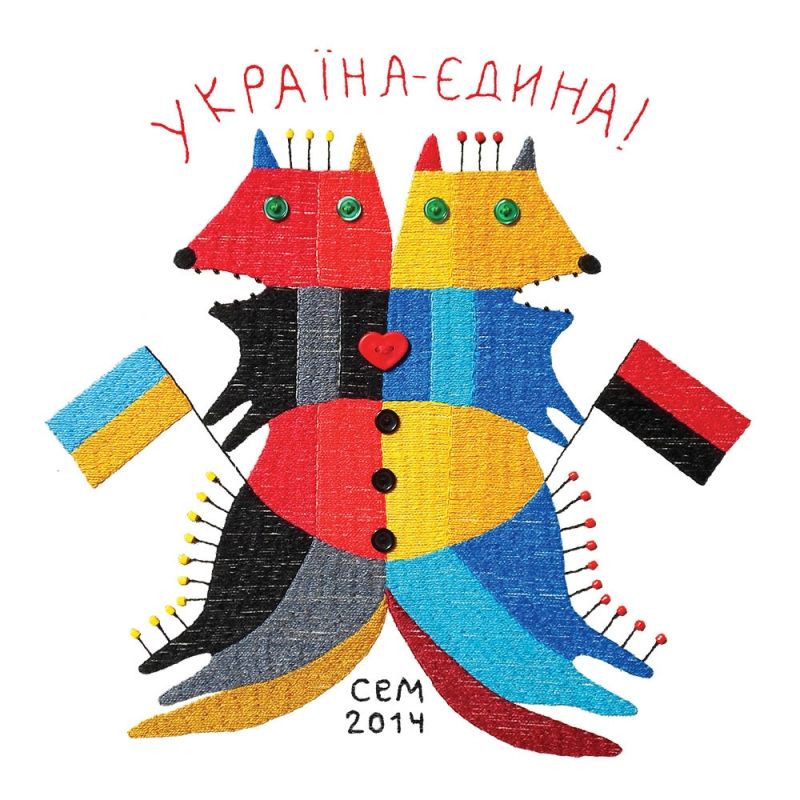
The print on one of your T-shirts says in Ukrainian (with rhyme), “Life is passing, so are days, and you are in deep shit. At such moments, you resemble me a Ukrainian.” Have you ever got criticized by any Ukrainian right-wing extremists because of such writings? What is your attitude to these groups in general? What is their use for Ukraine?
No, I haven’t been criticized by any right-wing extremists. But we should also deal with the definitions here. What does a “right-wing extremism” mean? Someone used to consider the “Narodnyi Rukh” to be a far-right party (“People’s Movement of Ukraine” was founded in 1989 as a civil-political movement as there were no other political parties allowed in the Soviet Union but the Communist Party). However, taking into account primarily socialistic directions of the projects, which are called “radical right” in Ukraine, I consider them to be left-wing extremists. As for their use, yes – some of them played a significant and even crucially important role in developing of volunteerism during the first armed opposition to the Russian aggression as well as in intimidating local vatniks (Russian patriotic rednecks) and people who were showing their pro-Russian position. It is far more important than it may seem sometimes. It is quite enough if we are speaking about their use. Virtually all those left-wing extremists which are called radical left in Ukraine haven’t performed well, they’ve just f***ed up.
What does it mean?
They all turned out to be incapable of a direct physical extremism when it was appropriate and necessary. They used pacifistic methods. These extremists can only talk and take part in different “round tables”.
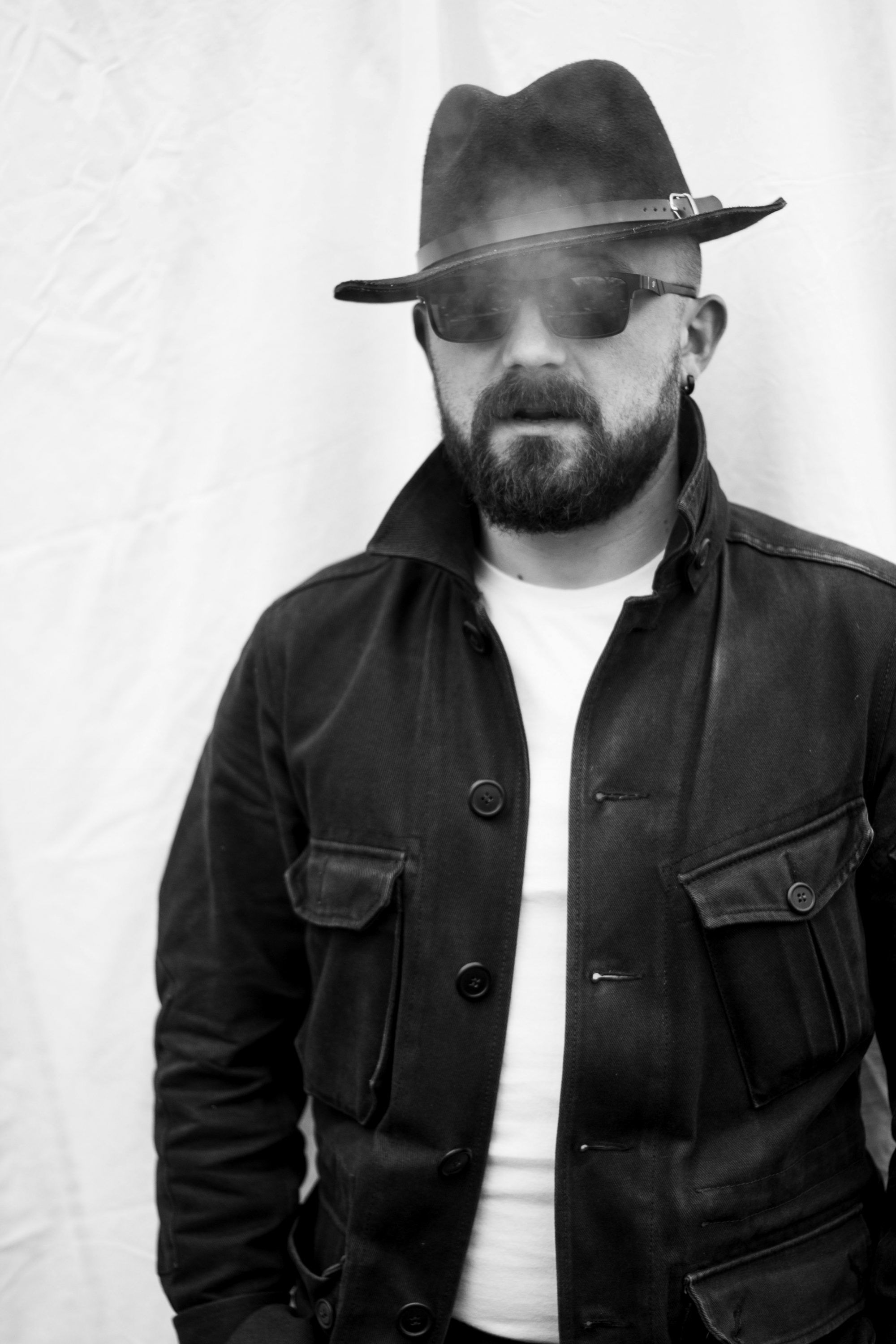
Photo by Mariia Volkova
Whom exactly do you mean?
There are some belligerent anarchists, some vague ‘autonomists” in balaclavas, just some leftist artistic in-crowds and other politicized young people who have already banned me on Facebook for “fascism and social racism.” That’s how they determine the “Zhlob-art”, for example.
Are these the biggest problems your art has provoked?
I was threatened by some f***ing traditionalists, quite in an unpleasant way, because of having insulted some sacrosanct principles. I didn’t get any threats from any organizations because somehow I have a reputation of a right-wing artist. It may be because I work exceptionally with Ukrainian, national topics. Well, it seems, my “social racism” has also played its role.
You host the “Evolution or death” show on Old Fashioned Radio. What has this experience taught you? Do you feel that you have become a journalist or a person whose voice is recognized everywhere?
It’s hard to say. For sure, I haven’t become a journalist and never will do because objectivity and sensibility are not my interests. I didn’t have a goal to learn something through this project. The show was accidental, chaotic and exactly that’s why interesting for me. It’s already closed, by the way. The “Evolution or Death” has recently been on air for the last time, and it was devoted to the adventures of Mavpoon, by the way.
I have been interested in the authenticity of your surname – Semesyuk.
An interesting question. It has an agricultural origin. As far as I know, it is mostly popular in the villages of the Volyn and, surprisingly, Hutsulshchyna regions. However, in my case, it is the south of the Kyiv region, which is strange. I don’t know the etymology of my surname for sure and I don’t have a certain version.
Твоя мати – художниця, батько – архітектор. Вони тяжіють над тобою естетично? Кажуть: «Що це ти таке намалював? Не ганьби батьків! Повернися до традиції!»? У чому полягає їхній вплив?
Your mother is an artist, your father is an architect. Do they press upon you aesthetically? Do they say to you, “What did you paint? What a shame! Come back to traditions!”? What is their impact?
Unfortunately, they died several years ago, virtually one after the other, so they can’t press upon me, aesthetically in particular. Actually, they never really did, and our family didn’t ever refer to any traditions. The biggest their impact on me is that they managed to show me what was certainly not worth doing in life. I wish they had showed it to me not on their own example. They were very difficult but in their own way vibrant people. I miss them.
Interview by Oleh Shynkarenko
Illustrations by Ivan Semesyuk